Wednesday, Jul 08, 2026

Credit: NASA/JPL-Caltech/University of Arizona

Monday, 29 June 2026

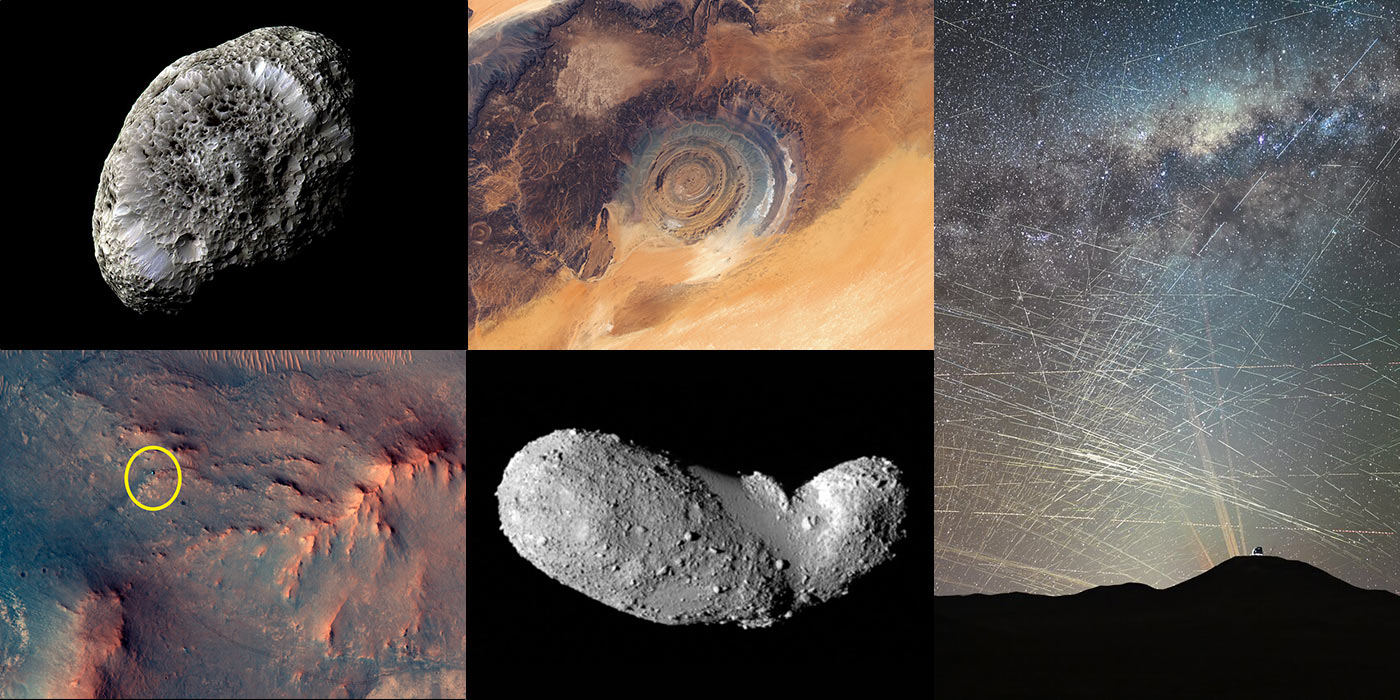
HiRISE Captures Perseverance

NASA’s Perseverance rover appears as a green speck on the Martian surface on June 13, 2026, a day before the robotic explorer marked a distance milestone, having traveled a full marathon (26.2 miles, or 42.195 kilometers) on the Red Planet. Perseverance reached that distance after five years and four months of driving — on the 1,890th Martian day, or sol, of its mission; the previous record holder, NASA’s Opportunity rover, took 11 years and two months to reach the same milestone.

This image was taken by NASA’s Mars Reconnaissance Orbiter (MRO) using its High-Resolution Imaging Science Experiment (HiRISE) camera. The rover’s tracks can be seen tracing the surface. The rover is in an area west of Jezero Crater that the science team is calling “Arbot.”

Credit: NASA Earth Observatory/Lauren Dauphin

Tuesday, 30 June 2026

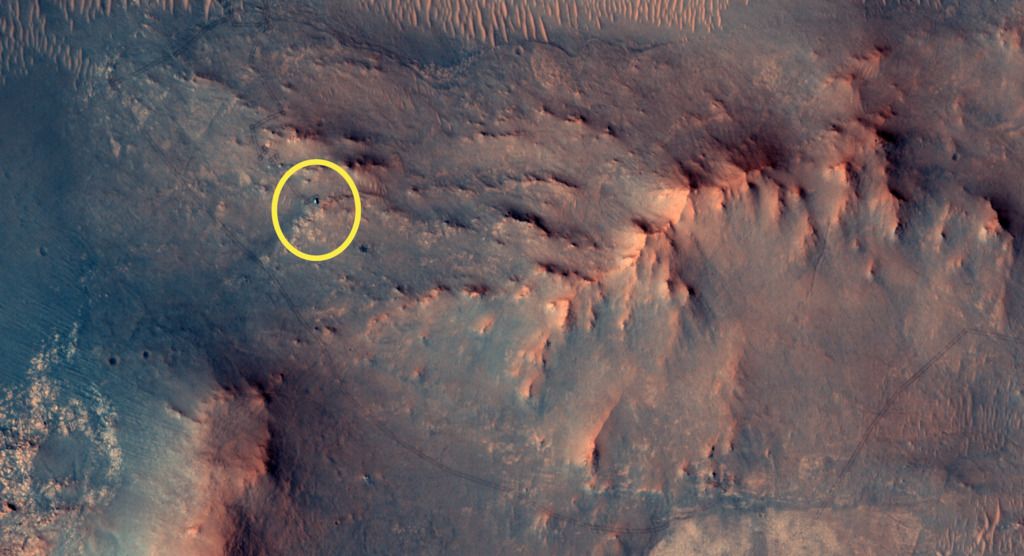
Eyeing the Richat Structure

In a remote part of northern Mauritania, on the Adrar Plateau, lies a desert landscape that appears to be shaped primarily by natural forces. The region's most eye-catching feature when seen from above is the Richat Structure—a large geologic formation made of concentric ridges on the eastern side of the plateau.

The 40-kilometer-wide structure was initially thought to be an impact crater. However, researchers later showed that it is actually a deeply eroded geologic dome formed by the uplift of rock above an underground igneous intrusion. Over time, differing erosion rates among rock types in the exposed upper dome led to the development of circular ridges known as cuestas. The orange and gray colors reflect differences in sedimentary and igneous rock types across the structure and the surrounding landscape.

Credit: JAXA

Wednesday, 1 July 2026

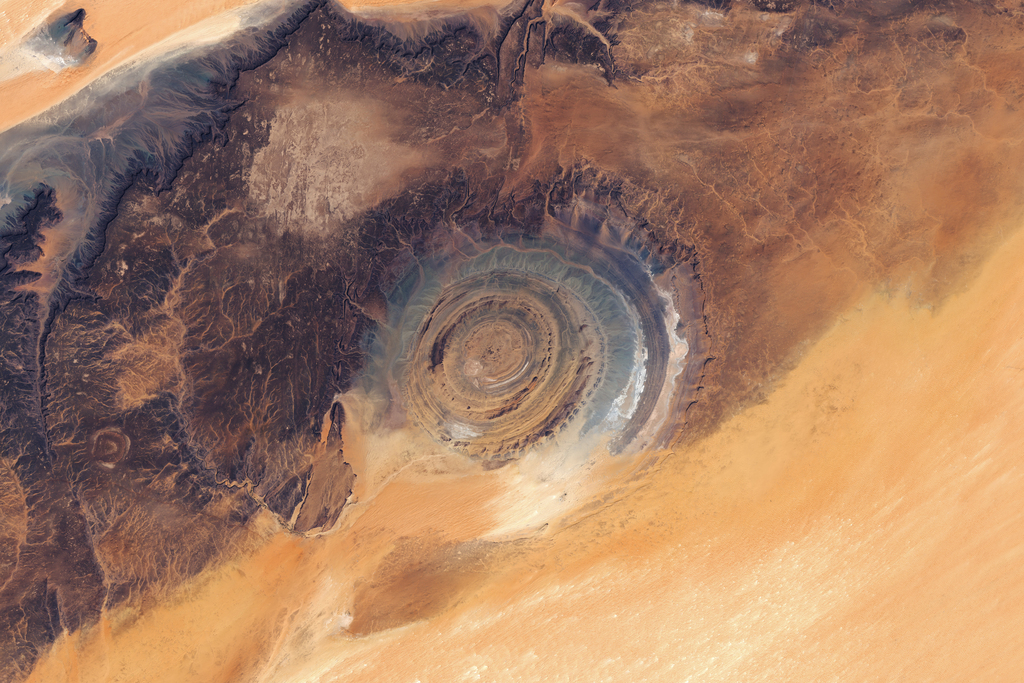
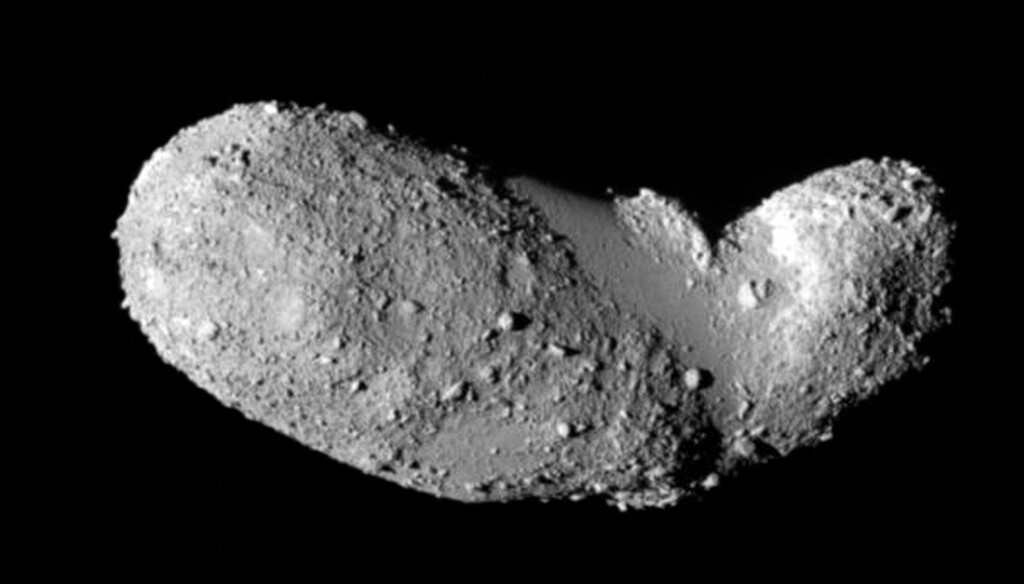
Asteroid (25143) Itokawa

Taken by the Japanese spacecraft Hayabusa during its close approach in 2005, this very detailed view shows the strange peanut-shaped asteroid Itokawa. The 500-meter "rubble pile" asteroid features distinct smooth surface regions, such as the MUSES Sea. These areas are formed by seismic jostling that causes size segregation and erodes impact craters. By making exquisitely precise timing measurements using ESO’s New Technology Telescope, a team of astronomers has found that different parts of this asteroid have different densities.

Credit: NASA/JPL-Caltech/Space Science Institute/CICLOPS

Thursday, 2 July 2026

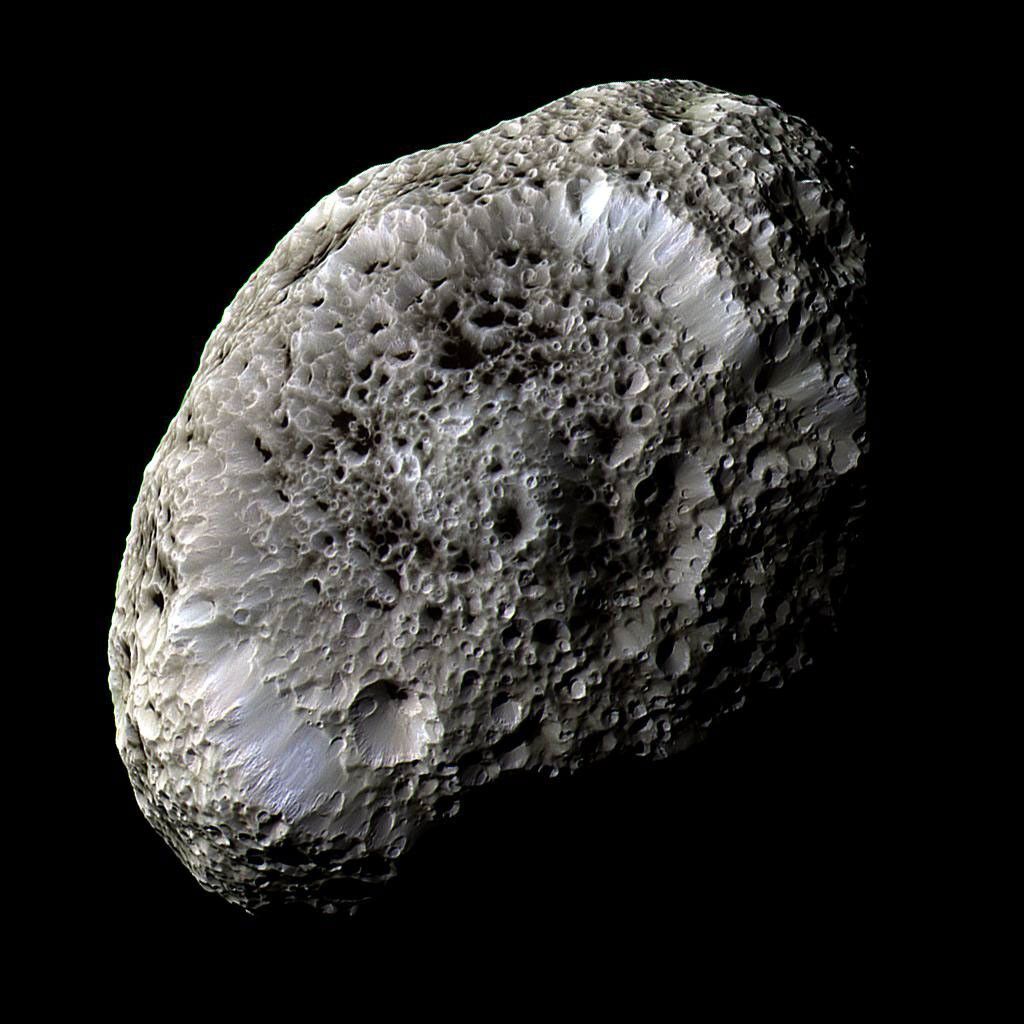
Hyperion

This stunning false-color view of Saturn's moon Hyperion reveals crisp details across the strange, tumbling moon's surface. Color differences could indicate variations in the composition of surface materials. The view was obtained during Cassini's close flyby on Sept. 26, 2005.

Hyperion has a notably reddish tint when viewed in natural color. The red color was toned down in this false-color view, and the other hues were enhanced, in order to make more subtle color variations across Hyperion's surface more apparent.

Cassini scientists think that Hyperion’s unusual appearance can be attributed to its unusually low density for such a large object, which gives it weak surface gravity and high porosity. These characteristics help preserve the original shapes of Hyperion’s craters by limiting the amount of impact ejecta coating the moon’s surface. Impactors tend to make craters by compressing the surface material, rather than blasting it out. Further, Hyperion’s weak gravity and correspondingly low escape velocity mean that what little ejecta is produced has a good chance of escaping the moon altogether.

Credit: F. Kamphues, ESO/M. Kornmesser

Friday, 3 July 2026

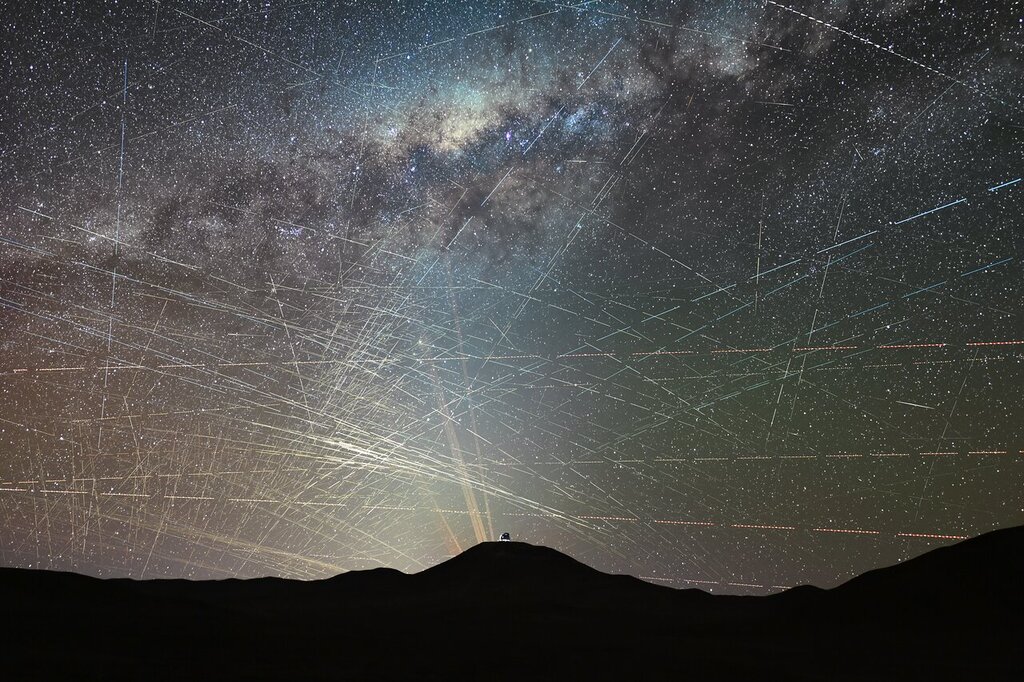
One Hour of Satellites

This image shows satellites crossing the night sky above the northern Atacama Desert in Chile over just one hour. It is a stack of a time-lapse video taken on 15 October 2025 about two hours after sunset. A few streaks are caused by planes and can be easily identified by their blinking colored lights, but most trails are due to satellites.

In the foreground, we see the dome of ESO’s Extremely Large Telescope (ELT), the world’s largest optical/infrared telescope, currently under construction atop Cerro Armazones. Behind it we see the lasers of ESO’s Very Large Telescope (VLT) at Paranal Observatory, 22 km away from the ELT.

News

Related News

Featured Image
Sep 2, 2026
Planetary Picture of the Day - Week of August 24, 2026
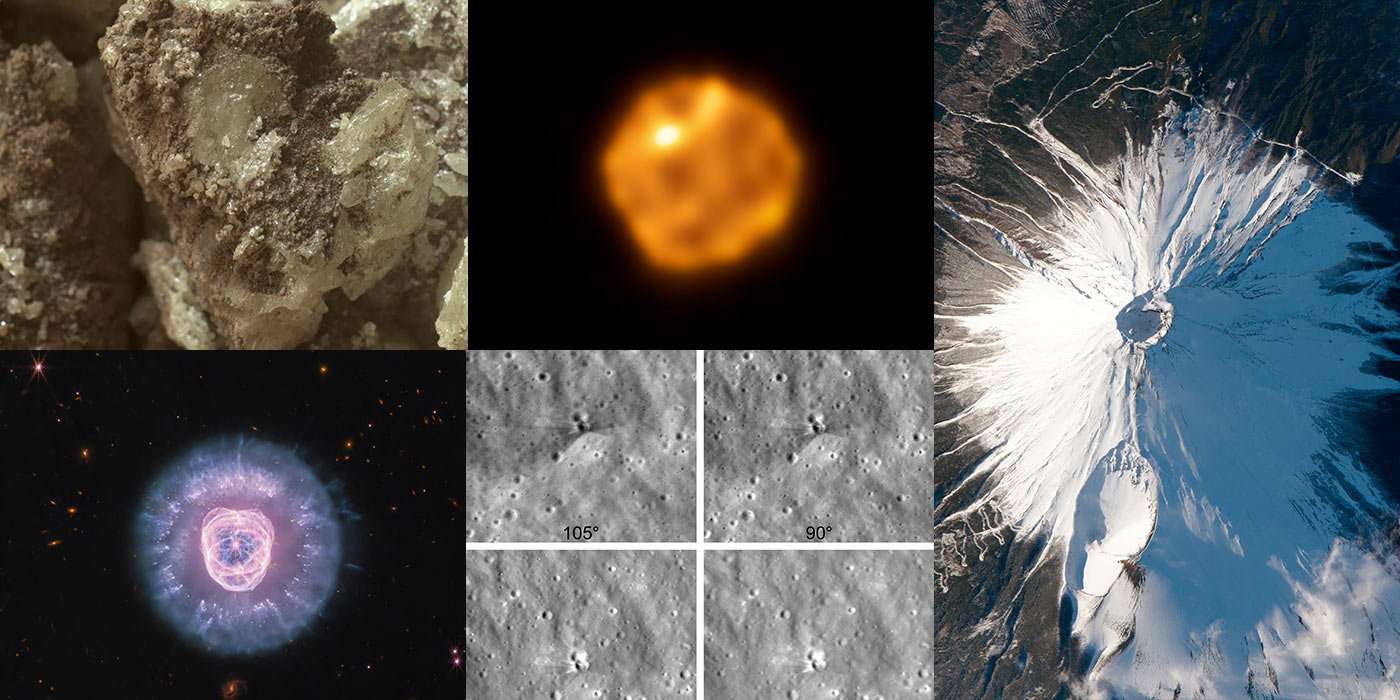
We journey from Mount Fuji as seen from orbit to the bubbling surface of Betelgeuse, exploring the forces that shape planets, moons, and stars across the cosmos. Along the way, JWST reveals the remains of a dying star, Curiosity uncovers clues to Mars’ volcanic past, and a fresh rocket impact on the Moon gives scientists a new opportunity to study how collisions reshape its surface. #PPOD
Featured Image
Aug 26, 2026
Planetary Picture of the Day - Week of August 17, 2026
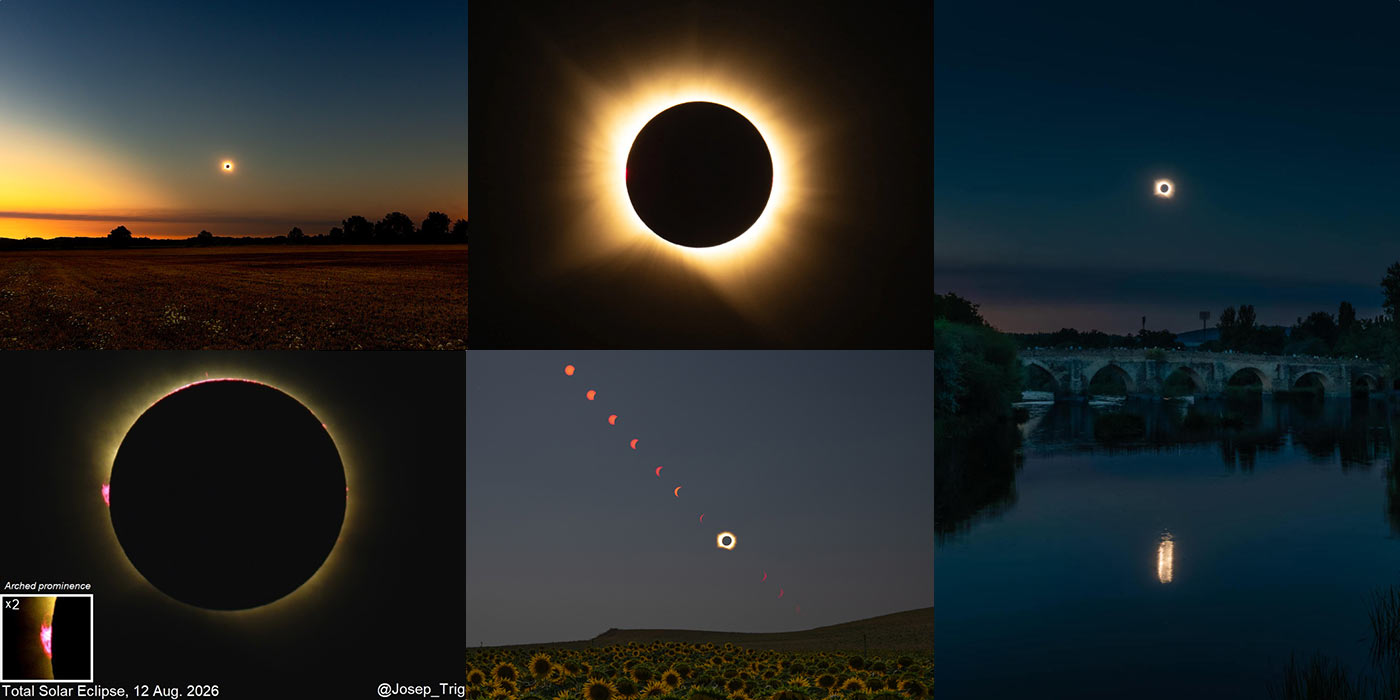
Let's celebrate the August 12 total solar eclipse through the eyes of photographers who experienced the Moon’s shadow sweeping across Spain. From Baily’s Beads and a glowing solar prominence to totality reflected in a river and framed by fields of sunflowers, these images capture both the science and extraordinary beauty of one of nature’s most spectacular celestial events. #PPOD #Eclipse
Featured Image
Aug 19, 2026
Planetary Picture of the Day - Week of August 10, 2026
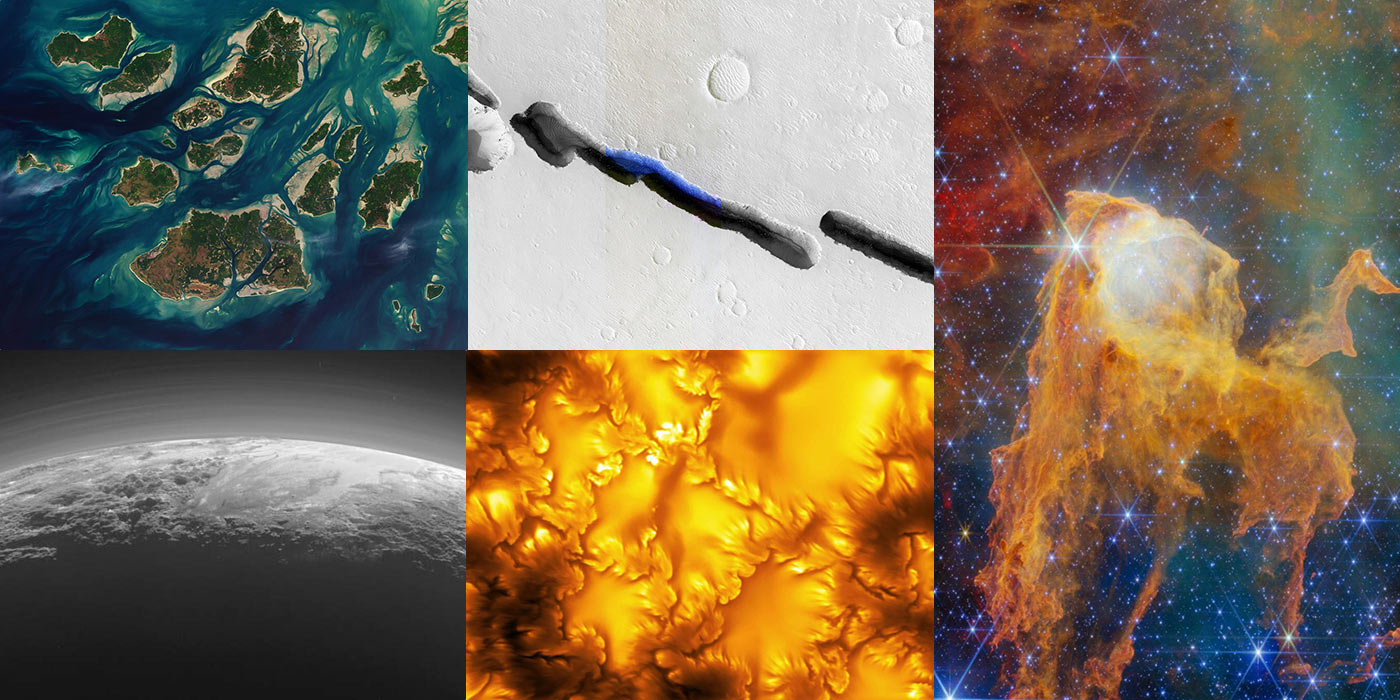
The universe is shaped by forces both immense and intricate, from fractured terrain on Mars and shifting tidal landscapes on Earth to tiny vortices dancing across the surface of the Sun. Farther afield, dramatic views of Pluto’s icy mountains and hazy atmosphere and a treasure chest of newborn stars in the Carina Nebula showcase the remarkable detail revealed by spacecraft and telescopes exploring the cosmos. #PPOD
Featured Image
Aug 12, 2026
Planetary Picture of the Day - August 3, 2026
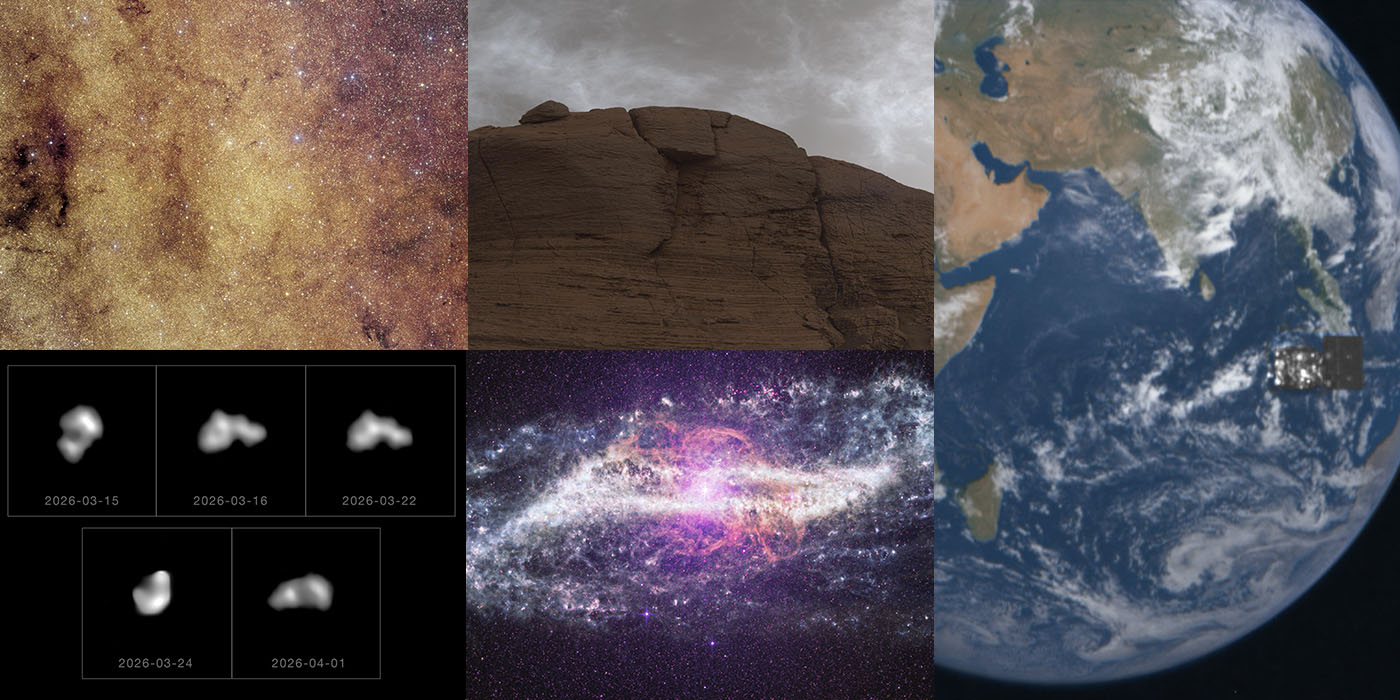
This week, we reveal hidden wonders across the cosmos, from delicate Martian clouds and a dust-shrouded galaxy to an asteroid with a never-before-seen shape and the crowded heart of the Milky Way. Together, these images showcase how new missions and advanced observatories continue to uncover surprising details about our solar system, our galaxy, and the universe beyond. #PPOD
Featured Image
Aug 5, 2026
Planetary Picture of the Day - Week of July 27, 2026
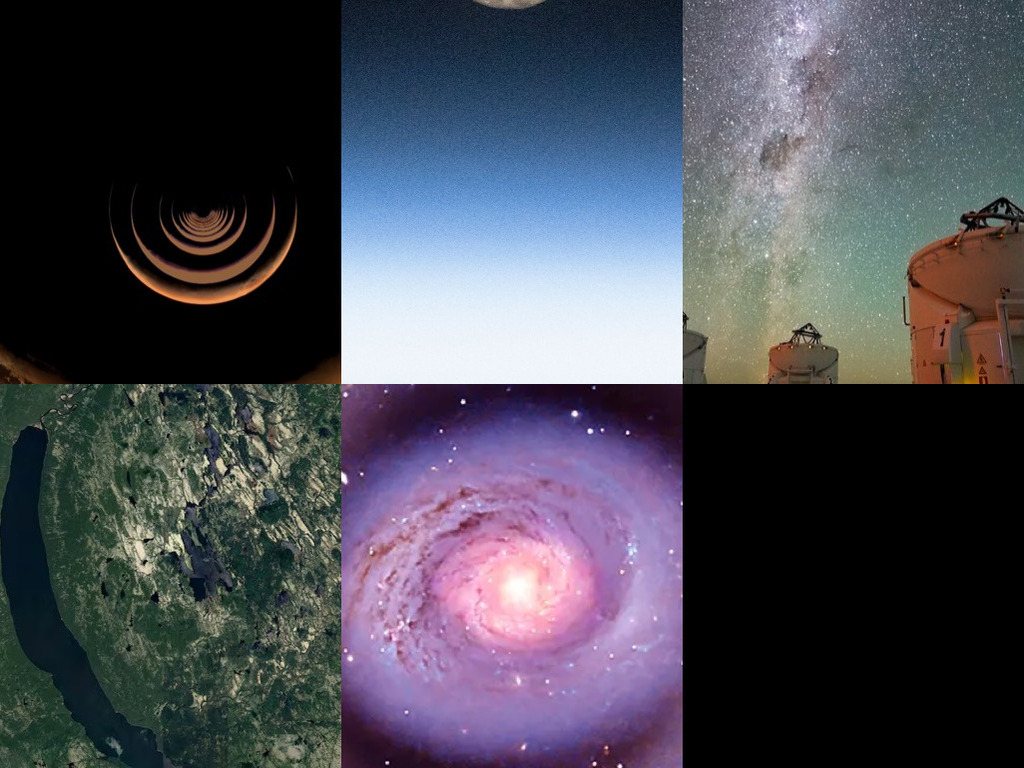
These images span the journey from our own backyard to distant galaxies, featuring Mars, the Moon, breathtaking night skies, and a fresh view of the star-forming galaxy Messier 94. Along the way, we celebrate exploration and discovery—from NASA’s Psyche mission preparing for its asteroid encounter to the revelation of a previously unknown impact crater on Earth —reminding us that there are still new wonders to uncover both on our own planet and across the cosmos. #PPOD
Featured Image
Jul 29, 2026
Planetary Picture of the Day - Week of July 20, 2026
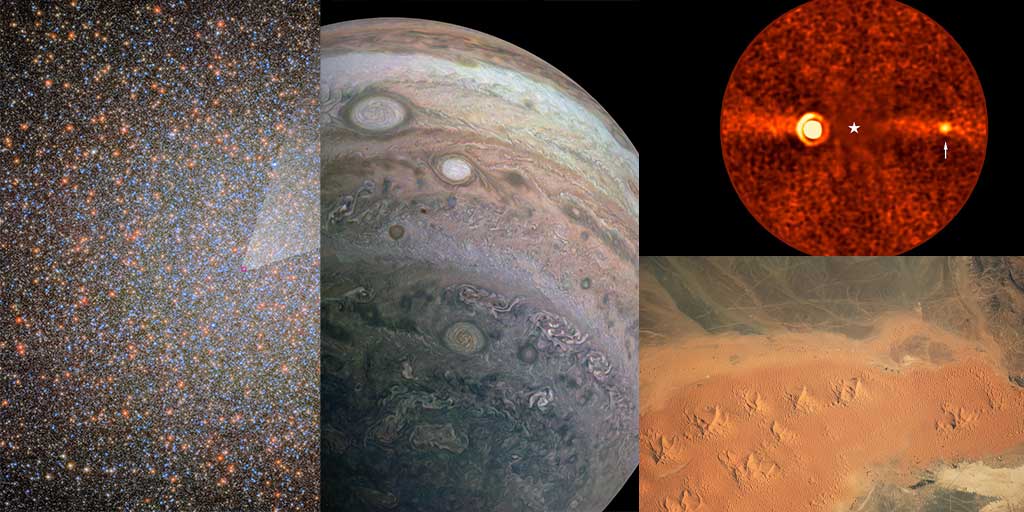
This week, we celebrate fifty years since Viking 1 became the first spacecraft to successfully land on and photograph the surface of Mars, alongside stunning new views of worlds, stars, and galaxies that continue to expand our understanding of the universe. From sculpted Sahara sand dunes and Jupiter’s colorful cloud bands to a newly discovered exoplanet and the first stellar-mass black hole identified in Omega Centauri, these images showcase the remarkable diversity of cosmic exploration. #PPOD
Research

Related Projects

Featured Image
SkyMapper • SETI • Citizen Science • Astronomy
SkyMapper: Expanding Access to Real-time Astronomy Through a Global Astronomical Network
SkyMapper and the SETI Institute are connecting educators, students and the public to live astronomical observations through a distributed astronomical network. #SkyMapper #SETI #Citizen Science #Astronomy
Featured Image
VPL
Virtual Planetary Laboratory
How can we best assess whether an exoplanet supports life? #VPL
Featured Image
Discovery and Futures Lab
What happens if life beyond Earth is discovered? The Discovery and Futures Lab at the SETI Institute fosters novel and anticipatory research at the intersection of science, society, our planet, and the search for life beyond Earth.  #Discovery and Futures Lab
Support Us

Support the
SETI Institute

Scientists are getting closer in their search for life beyond earth. But with limited federal funding for the search for extraterrestrial intelligence, supporters are the reason cutting-edge scientists can keep their eyes on the sky.