Wednesday, Oct 01, 2025

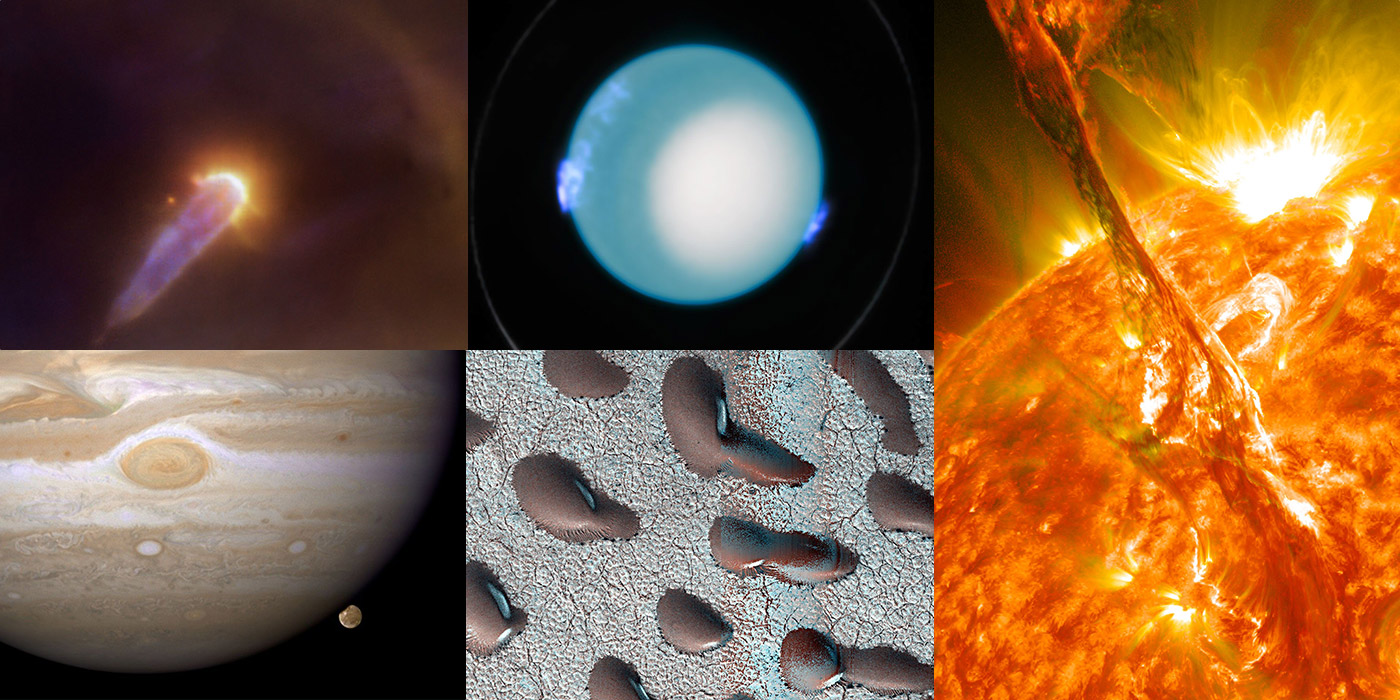
Our solar system is a wonder, from the star at the center to the planets and moons in orbit, as seen in these fantastic pictures taken by Hubble, the Solar Dynamics Observatory, and the Mars Reconnaissance Orbiter. Now, we know of many other stellar systems, and we're even starting to see systems in their early formation, including proplyds like the one captured by the European Southern Observatory.

Credit: NASA, ESA, and E. Karkoschka (University of Arizona)

Monday, 22 September 2025

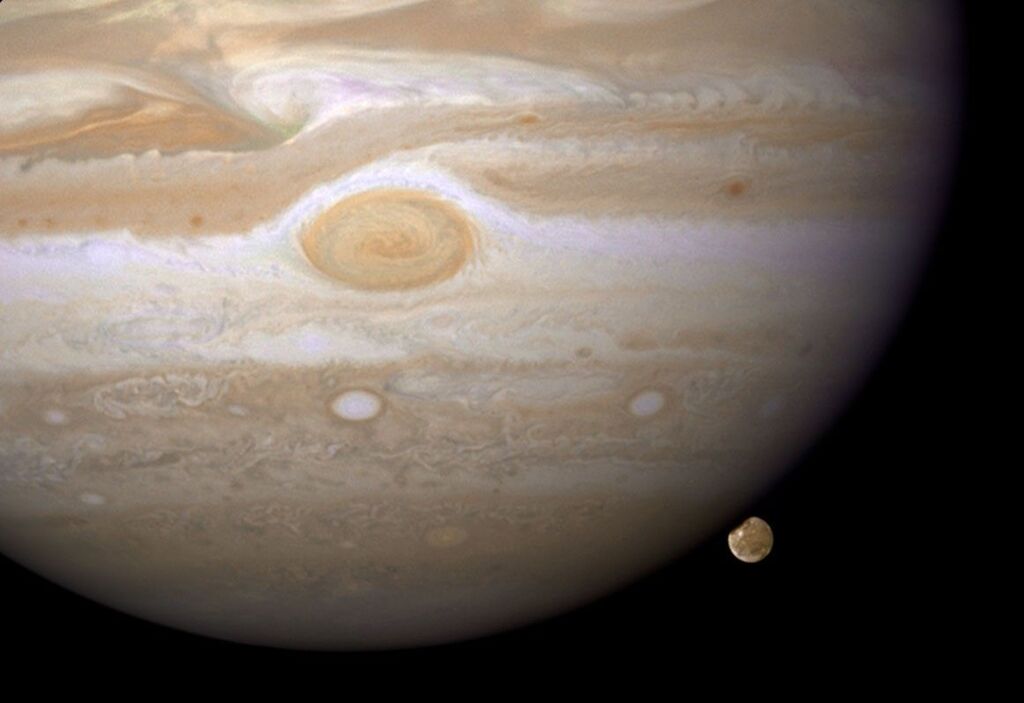
Ganymede Plays Peek-a-Boo

NASA's Hubble Space Telescope caught Jupiter's moon Ganymede playing a game of "peek-a-boo." In this crisp Hubble image, Ganymede is shown just before it ducks behind the giant planet.

Ganymede completes an orbit around Jupiter every seven days. Because Ganymede's orbit is tilted nearly edge-on to Earth, it routinely can be seen passing in front of and disappearing behind its giant host, only to reemerge later.

Composed of rock and ice, Ganymede is the largest moon in our solar system. It is even larger than the planet Mercury. But Ganymede appears as a dirty snowball compared to Jupiter, the largest planet in our solar system. Jupiter is so big that only part of its Southern Hemisphere can be seen in this image.

Hubble's view is so sharp that astronomers can see features on Ganymede's surface, most notably the white impact crater, Tros, and its system of rays, bright streaks of material blasted from the crater. Tros and its ray system are roughly the width of Arizona.

The image also shows Jupiter's Great Red Spot, the prominent, eye-shaped feature located at the upper left. A storm the size of two Earths, the Great Red Spot has been raging for more than 300 years. Hubble's sharp view of the gas giant planet also reveals the texture of the clouds in the Jovian atmosphere as well as various other storms and vortices.

Astronomers use these images to study Jupiter's upper atmosphere. As Ganymede passes behind the giant planet, it reflects sunlight, which then passes through Jupiter's atmosphere. Imprinted on that light is information about the gas giant's atmosphere, which yields clues about the properties of Jupiter's high-altitude haze above the cloud tops.

This color image was made from three images taken on April 9, 2007, with the Wide Field Planetary Camera 2 in red, green, and blue filters. The image shows Jupiter and Ganymede in close to natural colors.

Credit: NASA/JPL-Caltech/University of Arizona

Tuesday, 23 September 2025

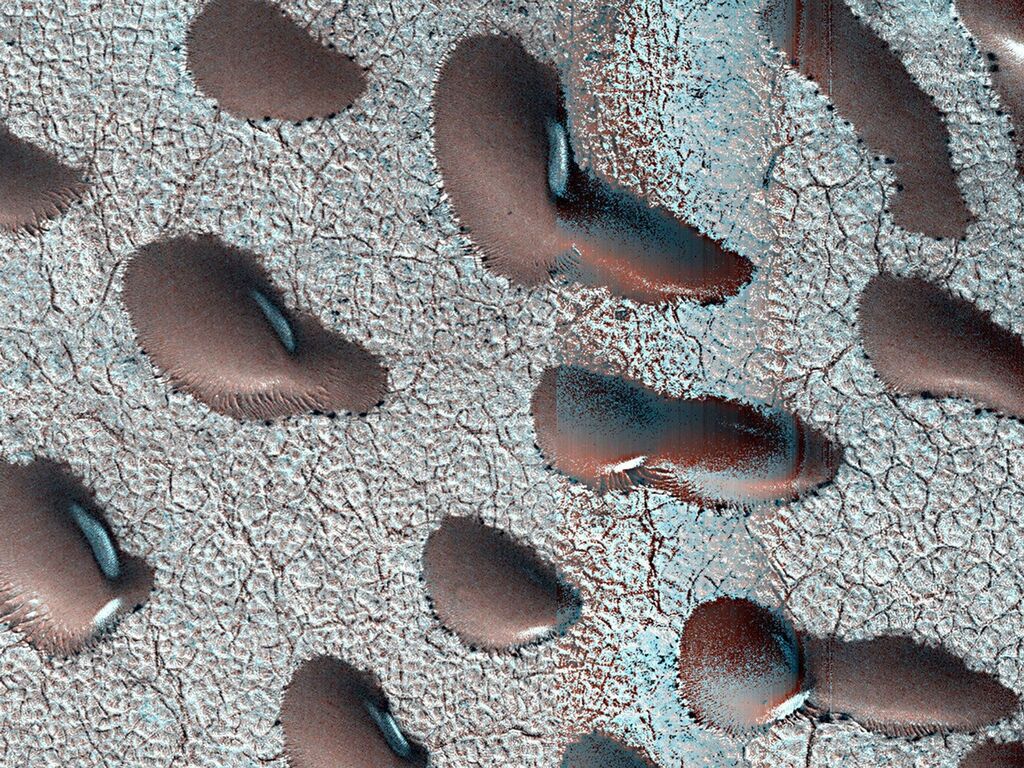
Frosty Martian Dunes

These Martian dunes in Mars' northern hemisphere were captured from above by NASA's Mars Reconnaissance Orbiter using its High-Resolution Imaging Science Experiment (HiRISE) camera on Sept. 8, 2022. Scientists use such images to track the amount of frost that settles on the landforms and then disappears as the weather warms in spring.

Martian dunes migrate just like dunes on Earth, with wind blowing away sand on one side of the dune and building up on another. Recent research has shown that winter frost stops the movement of sand grains, locking the dunes in place until the spring thaw.

Credit: NASA's GSFC, SDO AIA Team via APOD

Wednesday, 24 September 2025

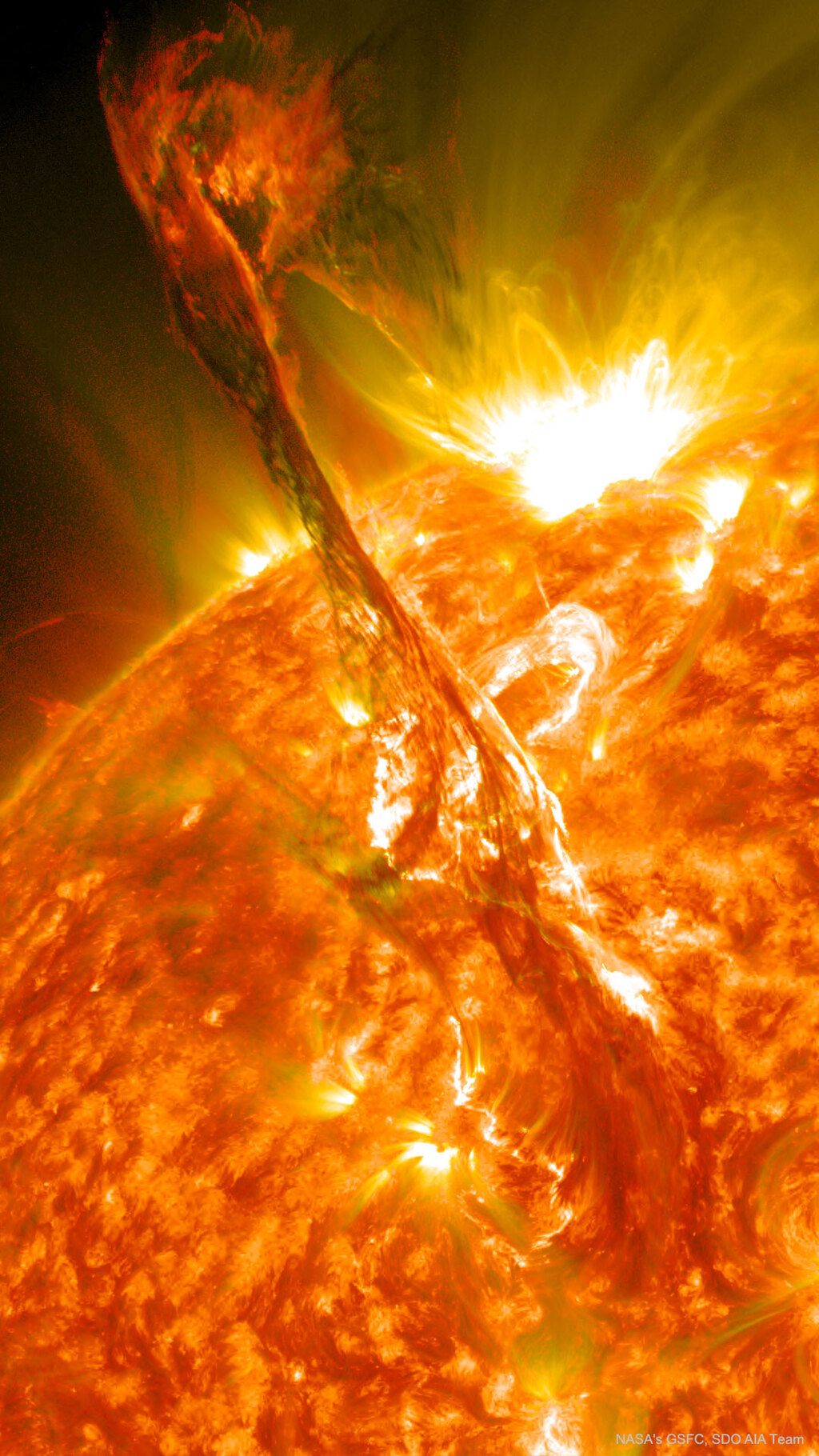
A Solar Filament Erupts

Toward the middle of 2012, a long-standing solar filament suddenly erupted into space, producing an energetic coronal mass ejection (CME). The filament had been held up for days by the Sun's ever-changing magnetic field, and the timing of the eruption was unexpected. Watched closely by the Sun-orbiting Solar Dynamics Observatory (SDO), the resulting explosion shot electrons and ions into the Solar System, some of which arrived at Earth three days later and impacted Earth's magnetosphere, causing visible auroras. Loops of plasma surrounding the active region are visible above the erupting filament in the featured ultraviolet image.

Credit: ESA/Hubble, NASA, L. Lamy, L. Sromovsky

Thursday, 25 September 2025

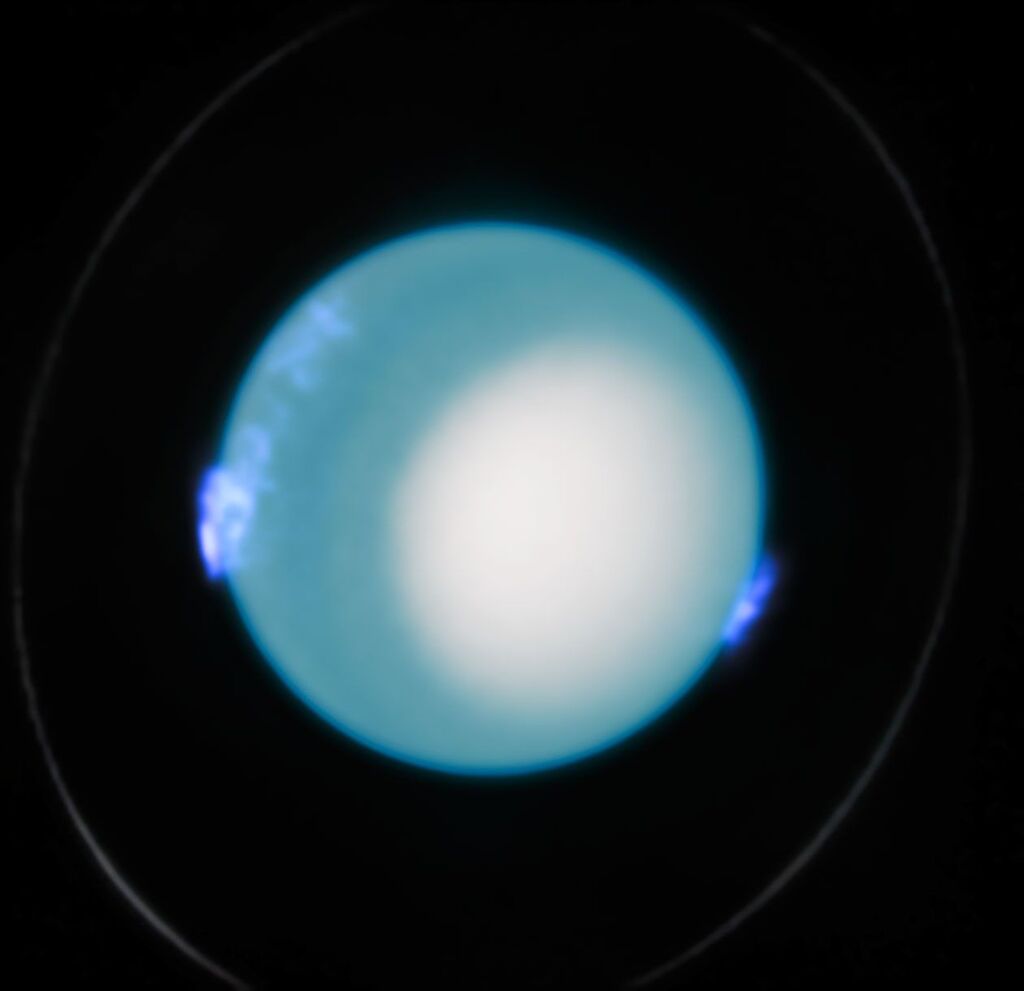
Uranian Aurorae

This image of Uranus’ aurorae was taken by the NASA/ESA Hubble Space Telescope on 10 October 2022. These observations were made by the Space Telescope Imaging Spectrograph (STIS) and include both visible and ultraviolet data.

An international team of astronomers used Hubble to make new measurements of Uranus' interior rotation rate by analyzing more than a decade of the telescope’s observations of Uranus’ aurorae. This refinement of the planet’s rotation period achieved a level of accuracy 1000 times greater than previous estimates and serves as a crucial new reference point for future planetary research.

Credit: ESO/M. L. Aru et al.

Friday, 26 September 2025

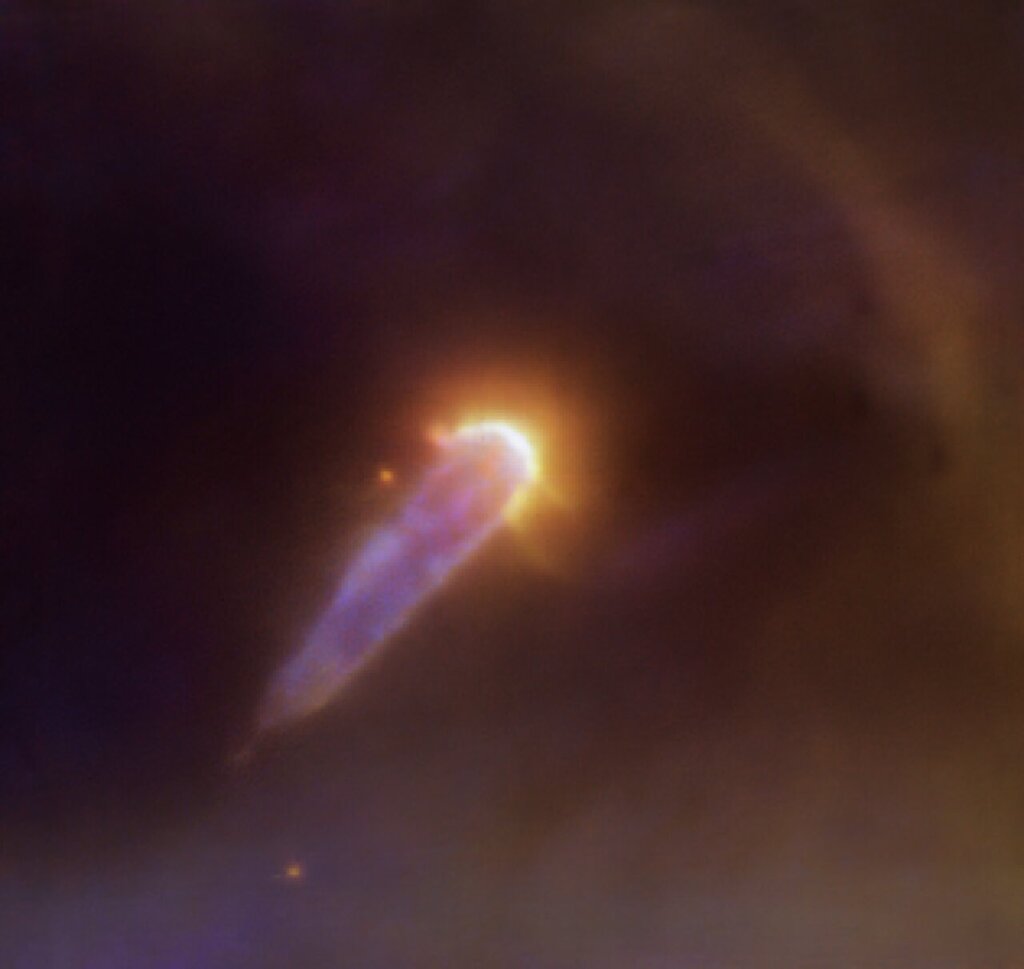
Teardrops in the Sky

Young stars are surrounded by a disc of gas and dust: the building materials for planets. When other very bright and massive stars are present nearby, their light heats the young star’s disc, stripping away part of its material. The teardrop-shaped object in this image, 177-341 W, is in the Orion Nebula. The stars eroding away the disc of 177-341 W are out of the frame, past the upper-right corner.

When their radiation clashes with the material around the young star, it creates the bright, bow-like structure seen here in yellow. The tail extending from the star towards the lower-left corner represents material being dragged away from 177-341 W by the stars, which are out of the field of view. This type of object — ionised protoplanetary discs — is known as “proplyds”.

News

Related News

Featured Image
Sep 2, 2026
Planetary Picture of the Day - Week of August 24, 2026
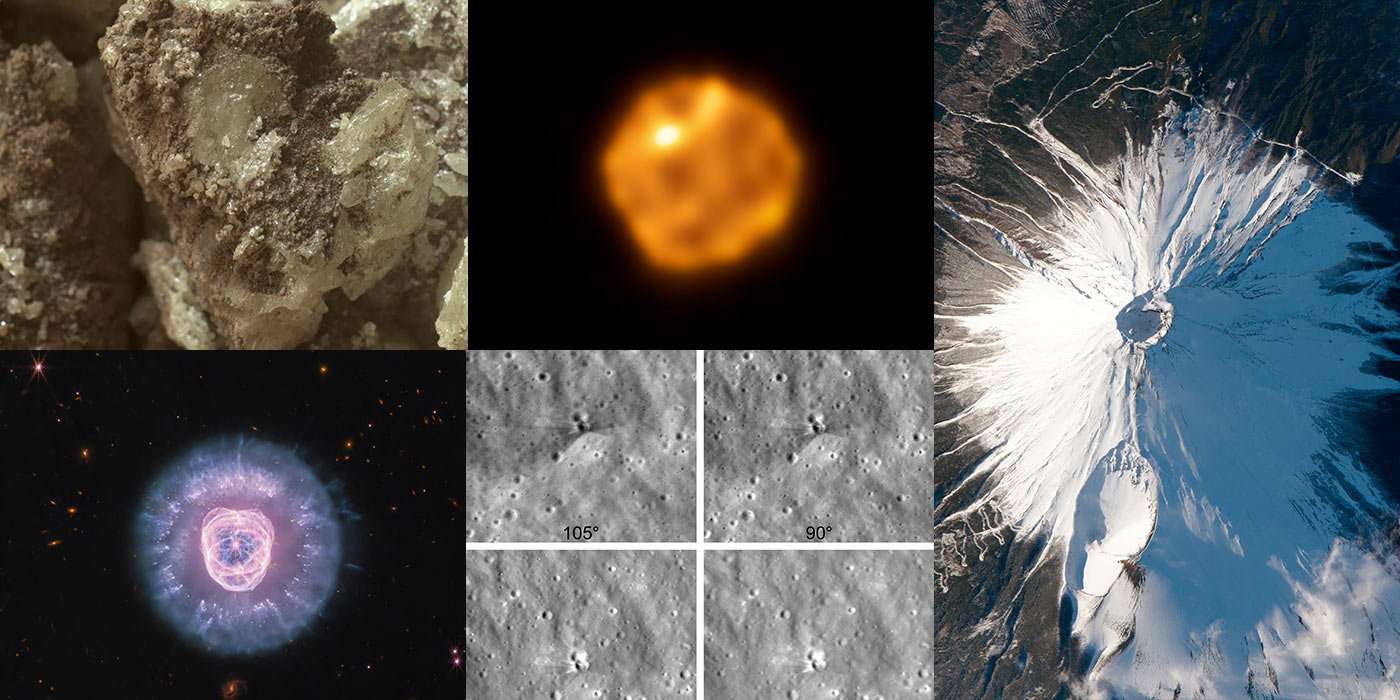
We journey from Mount Fuji as seen from orbit to the bubbling surface of Betelgeuse, exploring the forces that shape planets, moons, and stars across the cosmos. Along the way, JWST reveals the remains of a dying star, Curiosity uncovers clues to Mars’ volcanic past, and a fresh rocket impact on the Moon gives scientists a new opportunity to study how collisions reshape its surface. #PPOD
Featured Image
Aug 26, 2026
Planetary Picture of the Day - Week of August 17, 2026
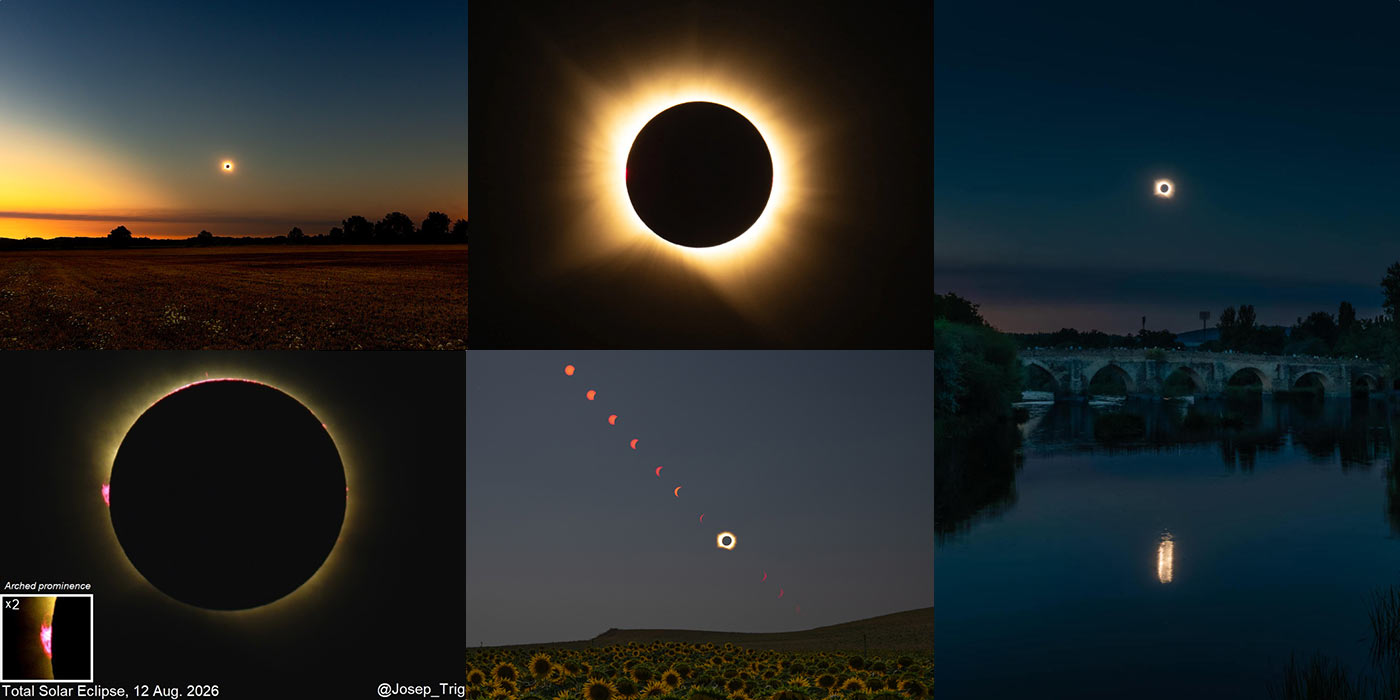
Let's celebrate the August 12 total solar eclipse through the eyes of photographers who experienced the Moon’s shadow sweeping across Spain. From Baily’s Beads and a glowing solar prominence to totality reflected in a river and framed by fields of sunflowers, these images capture both the science and extraordinary beauty of one of nature’s most spectacular celestial events. #PPOD #Eclipse
Featured Image
Aug 19, 2026
Planetary Picture of the Day - Week of August 10, 2026
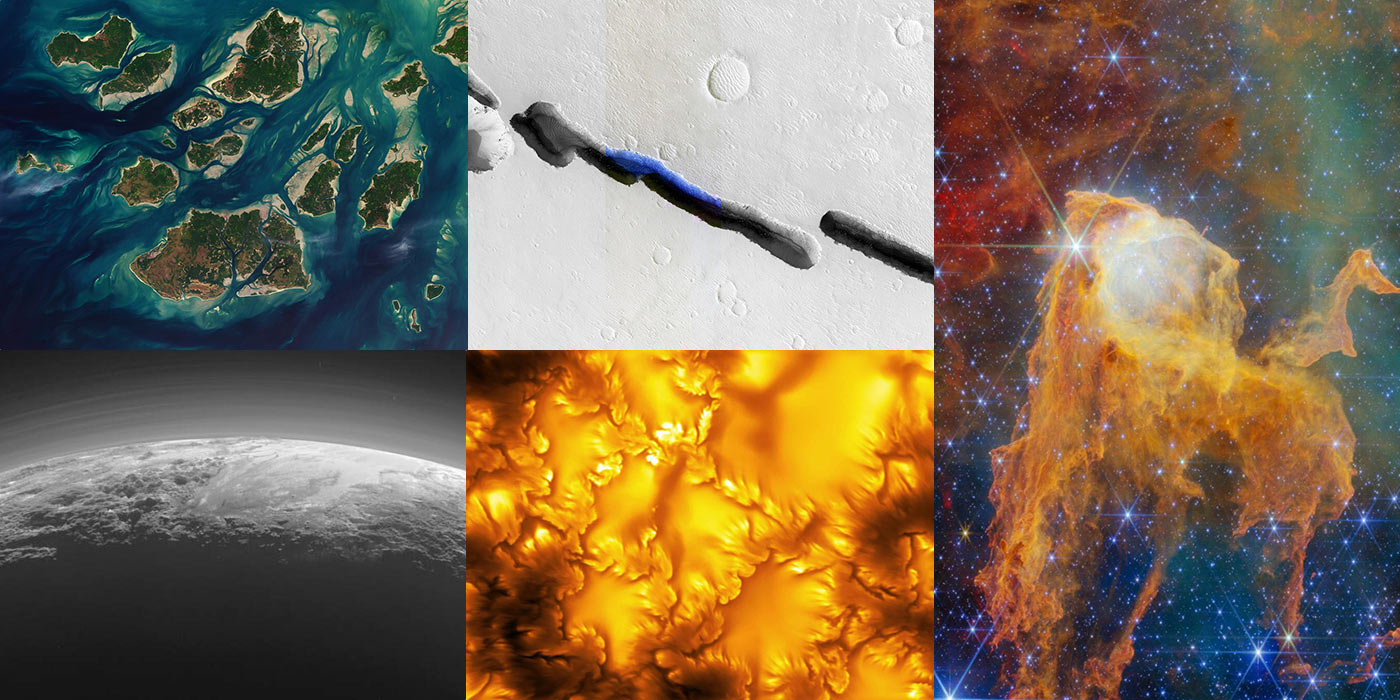
The universe is shaped by forces both immense and intricate, from fractured terrain on Mars and shifting tidal landscapes on Earth to tiny vortices dancing across the surface of the Sun. Farther afield, dramatic views of Pluto’s icy mountains and hazy atmosphere and a treasure chest of newborn stars in the Carina Nebula showcase the remarkable detail revealed by spacecraft and telescopes exploring the cosmos. #PPOD
Featured Image
Aug 12, 2026
Planetary Picture of the Day - August 3, 2026
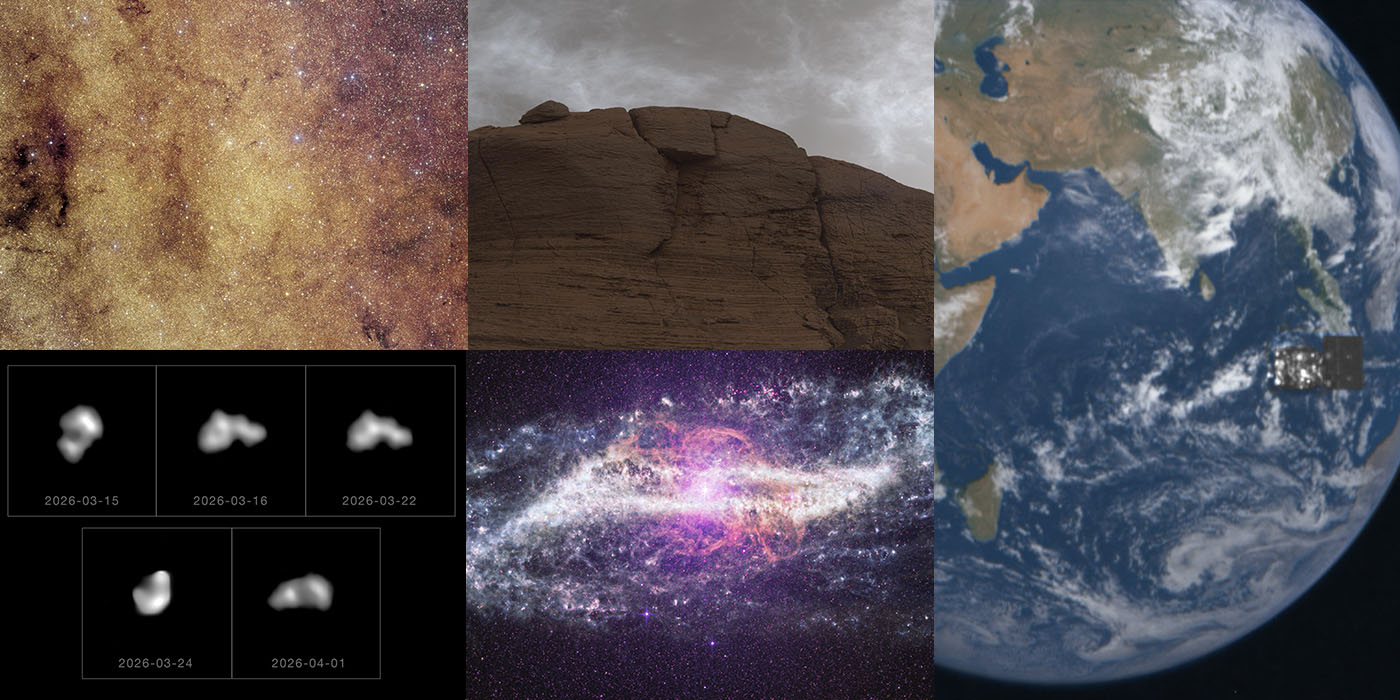
This week, we reveal hidden wonders across the cosmos, from delicate Martian clouds and a dust-shrouded galaxy to an asteroid with a never-before-seen shape and the crowded heart of the Milky Way. Together, these images showcase how new missions and advanced observatories continue to uncover surprising details about our solar system, our galaxy, and the universe beyond. #PPOD
Featured Image
Aug 5, 2026
Planetary Picture of the Day - Week of July 27, 2026
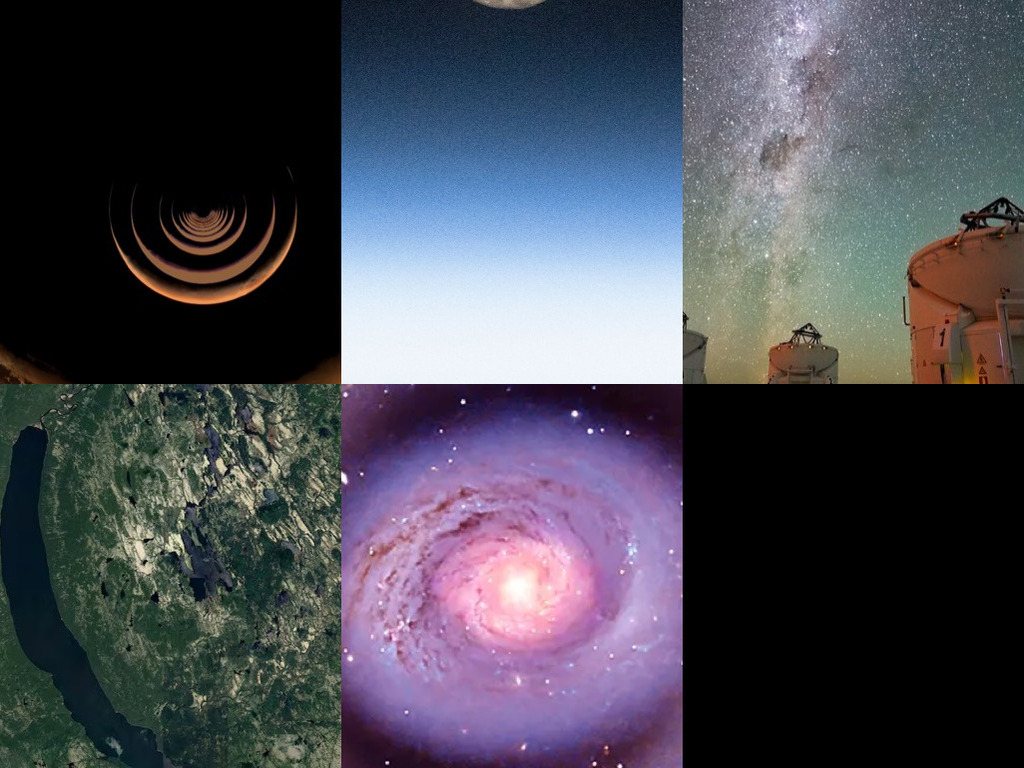
These images span the journey from our own backyard to distant galaxies, featuring Mars, the Moon, breathtaking night skies, and a fresh view of the star-forming galaxy Messier 94. Along the way, we celebrate exploration and discovery—from NASA’s Psyche mission preparing for its asteroid encounter to the revelation of a previously unknown impact crater on Earth —reminding us that there are still new wonders to uncover both on our own planet and across the cosmos. #PPOD
Featured Image
Jul 29, 2026
Planetary Picture of the Day - Week of July 20, 2026
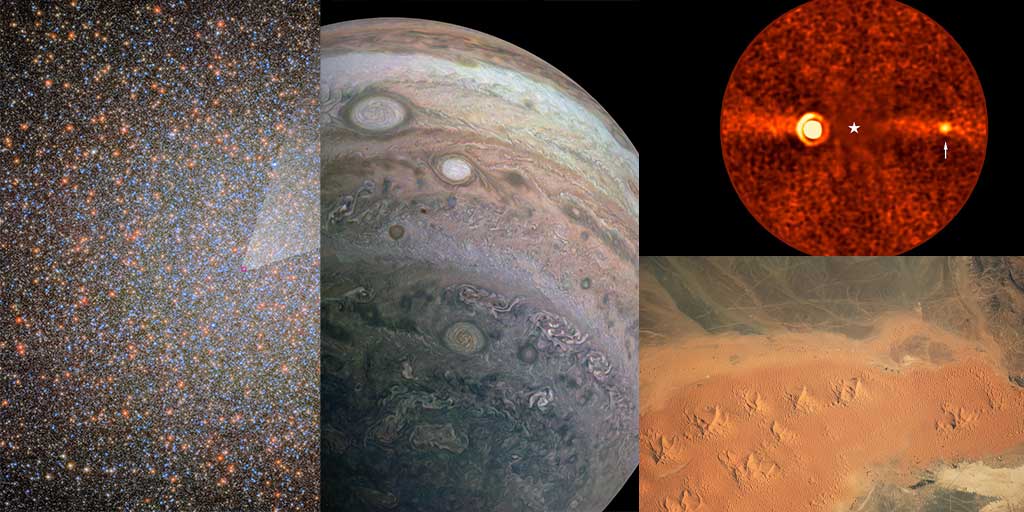
This week, we celebrate fifty years since Viking 1 became the first spacecraft to successfully land on and photograph the surface of Mars, alongside stunning new views of worlds, stars, and galaxies that continue to expand our understanding of the universe. From sculpted Sahara sand dunes and Jupiter’s colorful cloud bands to a newly discovered exoplanet and the first stellar-mass black hole identified in Omega Centauri, these images showcase the remarkable diversity of cosmic exploration. #PPOD
Research

Related Projects

Featured Image
SkyMapper • SETI • Citizen Science • Astronomy
SkyMapper: Expanding Access to Real-time Astronomy Through a Global Astronomical Network
SkyMapper and the SETI Institute are connecting educators, students and the public to live astronomical observations through a distributed astronomical network. #SkyMapper #SETI #Citizen Science #Astronomy
Featured Image
VPL
Virtual Planetary Laboratory
How can we best assess whether an exoplanet supports life? #VPL
Featured Image
Discovery and Futures Lab
What happens if life beyond Earth is discovered? The Discovery and Futures Lab at the SETI Institute fosters novel and anticipatory research at the intersection of science, society, our planet, and the search for life beyond Earth.  #Discovery and Futures Lab
Support Us

Support the
SETI Institute

Scientists are getting closer in their search for life beyond earth. But with limited federal funding for the search for extraterrestrial intelligence, supporters are the reason cutting-edge scientists can keep their eyes on the sky.