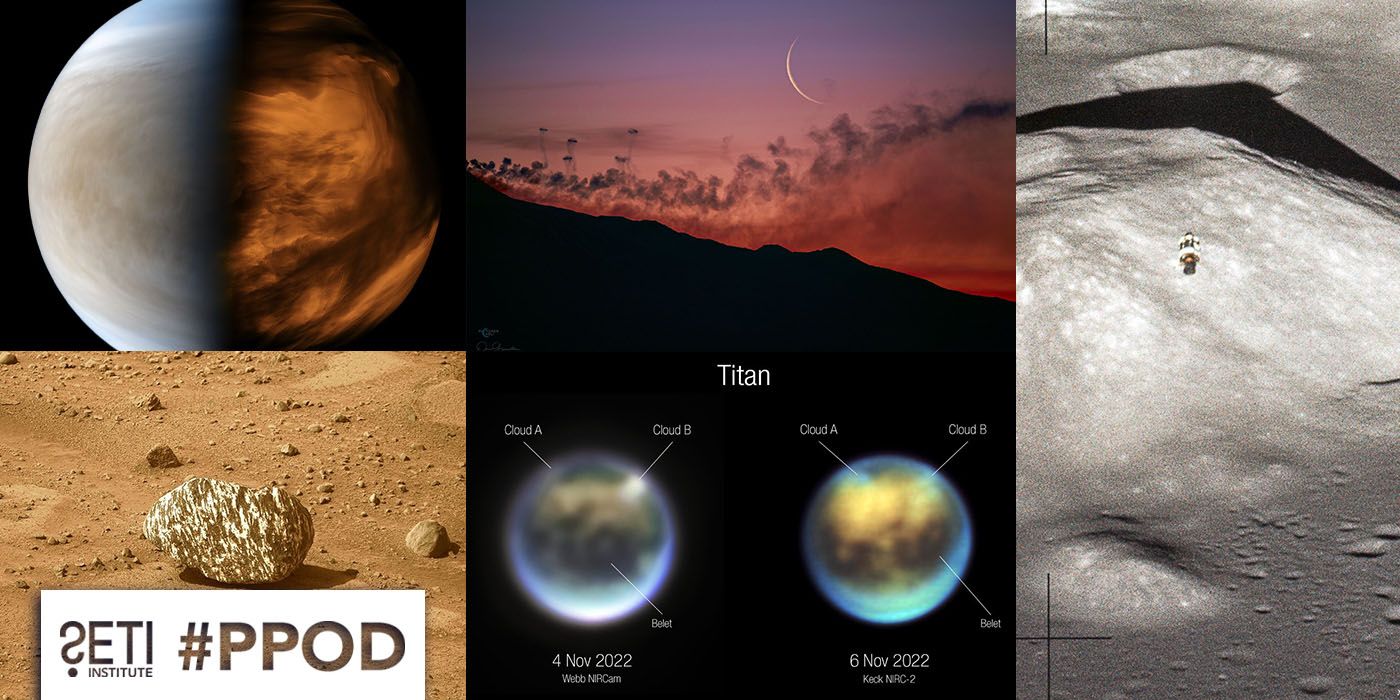
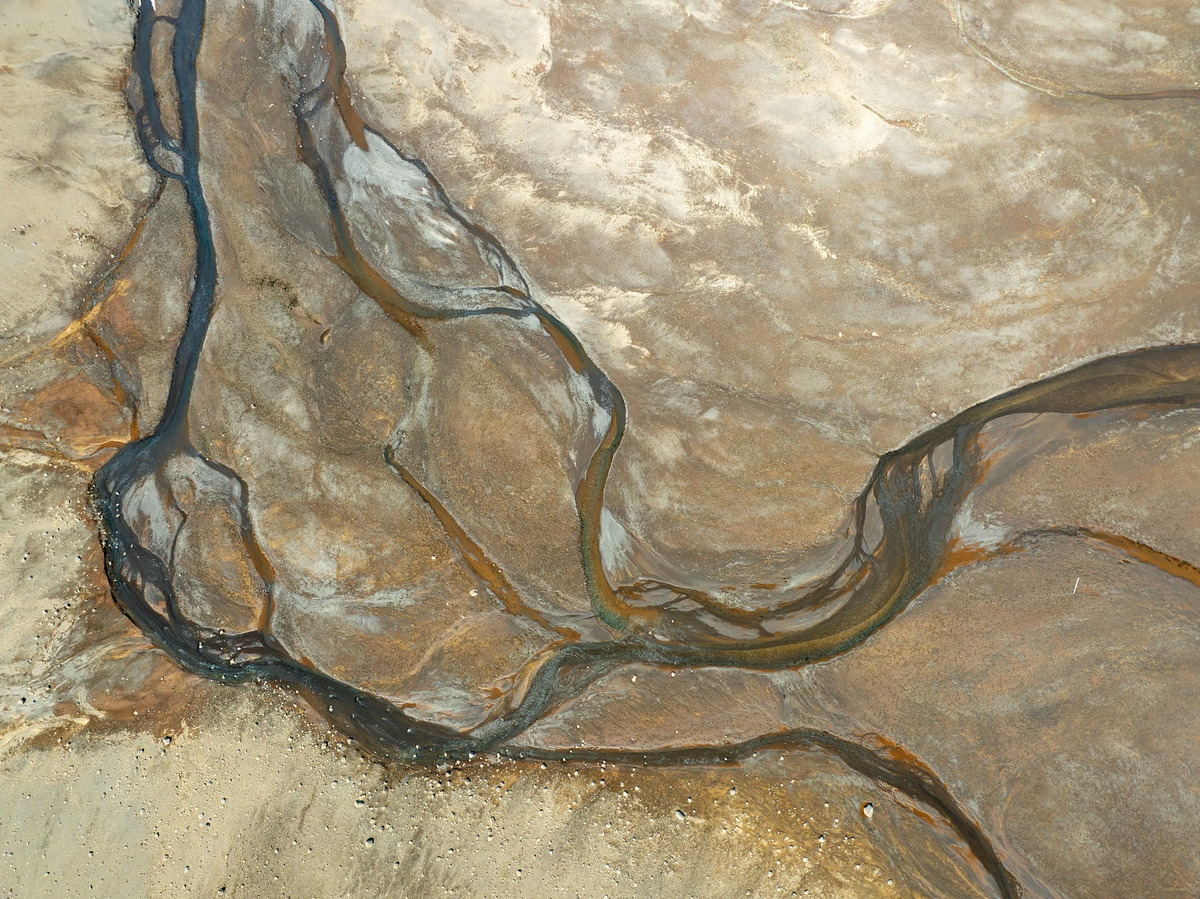
Clouds and rocks: from here on Earth to the Moon to Mars to Venus and Titan, we look at some sights that make these worlds interesting.
Monday, 16 September 2024
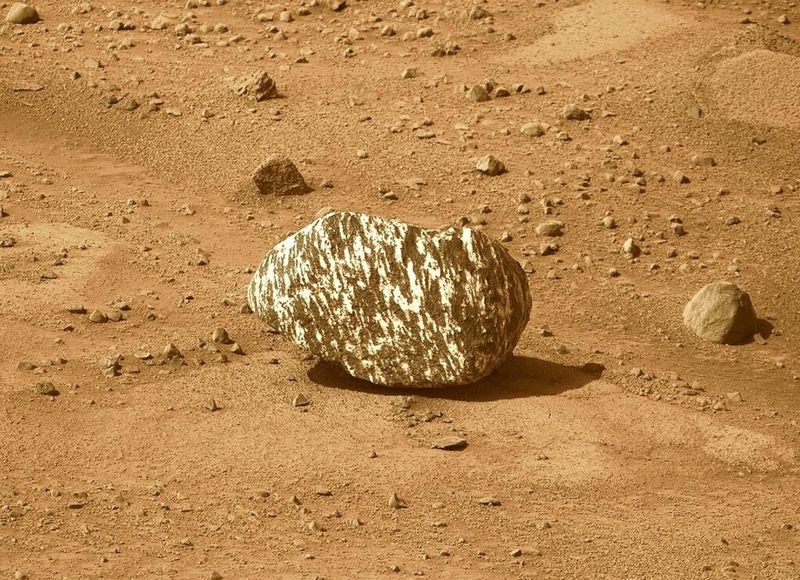
Credit: NASA/JPL-Caltech/MSSS
Surprise Martian Rock
Here is a little surprise rock from Mars (another one!). NASA's Perseverance rover made this latest discovery in the Jezero crater, and we cannot wait to hear the analysis results. This rock does not look like anything we have ever encountered on Mars.
Tuesday, 17 September 2024
Apollo 17
In 1972, Apollo 17 entered lunar orbit. Astronaut Gene Cernan: “It is absolutely spectacular looking at that Command Module, America...we’re just tracking him at about a 30-degree dive angle. I can even see Poppie [crater], right where we’re going to set this baby down!"
And they did!
Wednesday, 18 September 2024
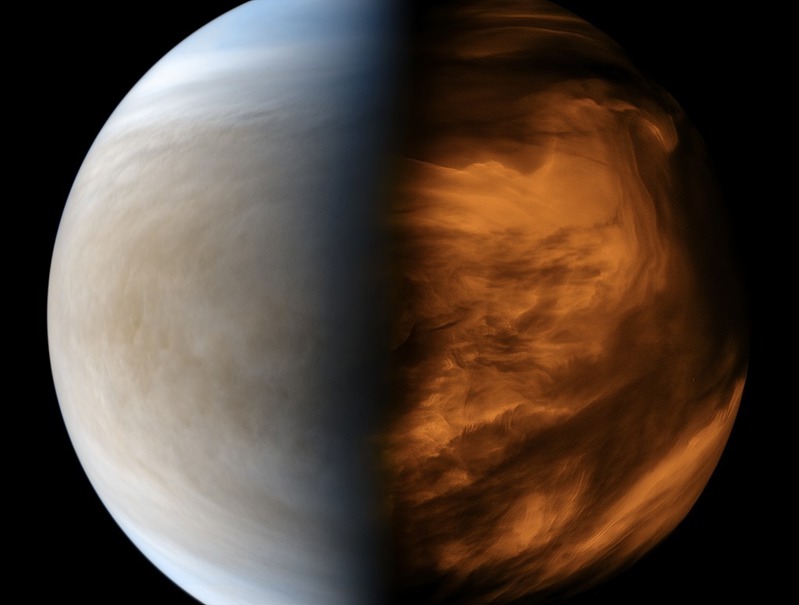
Credit: JAXA/ISAS/DARTS/Kevin M. Gill
Two "Sides" to Venus
This image is an unusual and clever mosaic of#Venus in ultraviolet and infrared that reflects two different realities of this astonishing planet. Taken by the Japanese Akatsuki orbiter from two separate observations on August 24 and September 4, 2016.
Thursday, 19 September 2024
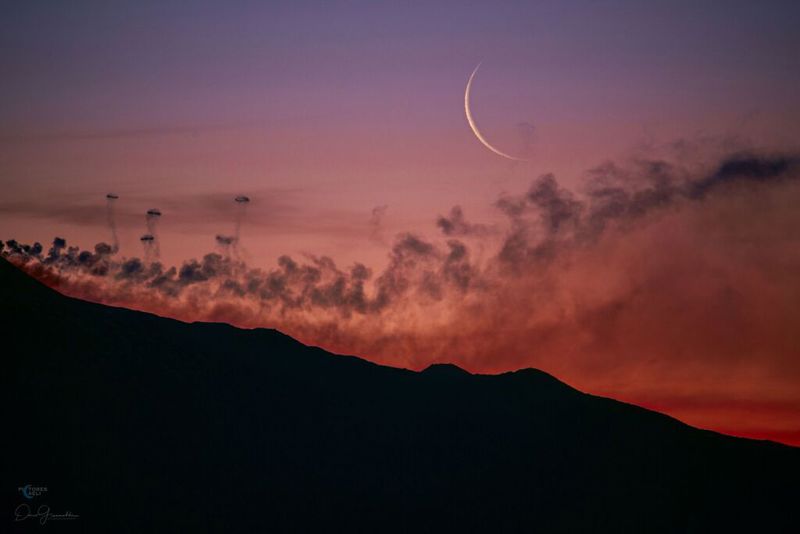
Credit: DarioGiannobile.com - Astrophotography - Dreamscapes of Sicily via APOD
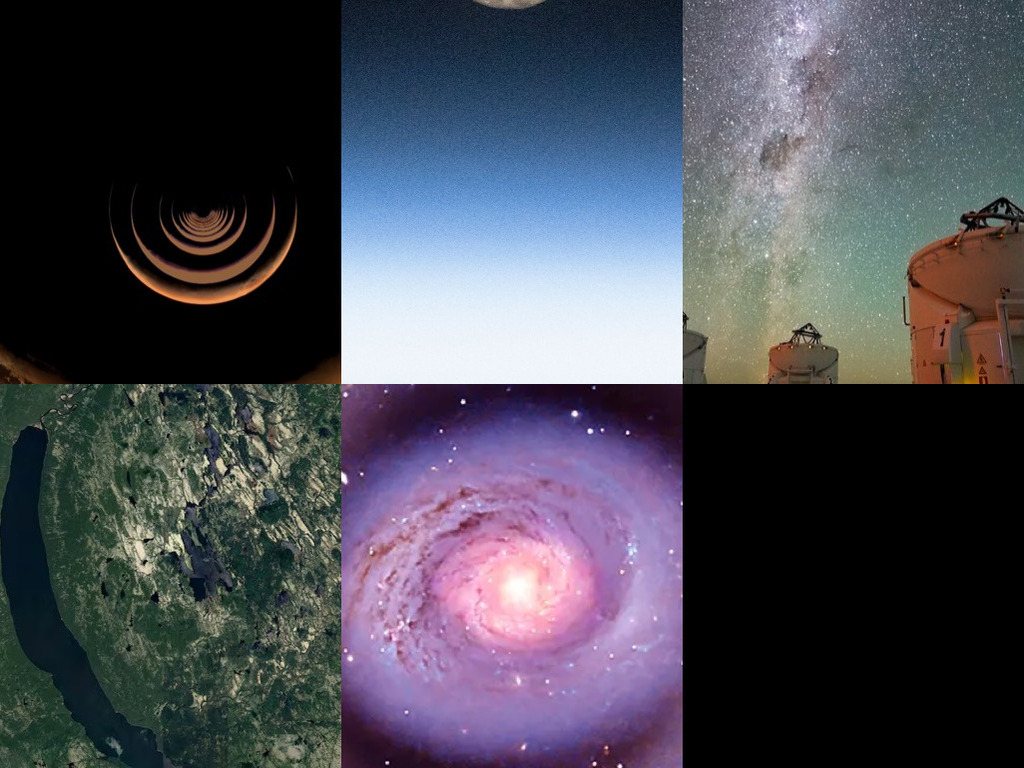
Moon and Smoke Rings from Mt. Etna
Yes, but can your volcano do this? To the surprise of some, Mt. Etna emits, on occasion, smoke rings, technically known as vortex rings. The volcano's walls slightly slow the outside of emitted smoke puffs, causing the inside gas to move faster. A circle of low pressure develops so that the emitted puff of volcanic gas and ash loops around in a ring. This familiar geometric structure can be surprisingly stable as it rises. Smoke rings are quite rare and need a coincidence of the right geometry of the vent, the right speed of ejected smoke, and the relative calmness of the outside atmosphere. Multiple volcanic smoke rings are visible in this featured image taken from Gangi, Sicily, Italy. The scene is shaded by the red light of a dawn Sun, while a crescent Moon is visible in the background.
Friday, 20 September 2024
Credit: NASA, ESA, CSA, Webb Titan GTO Team Image Processing: Alyssa Pagan (STScI)
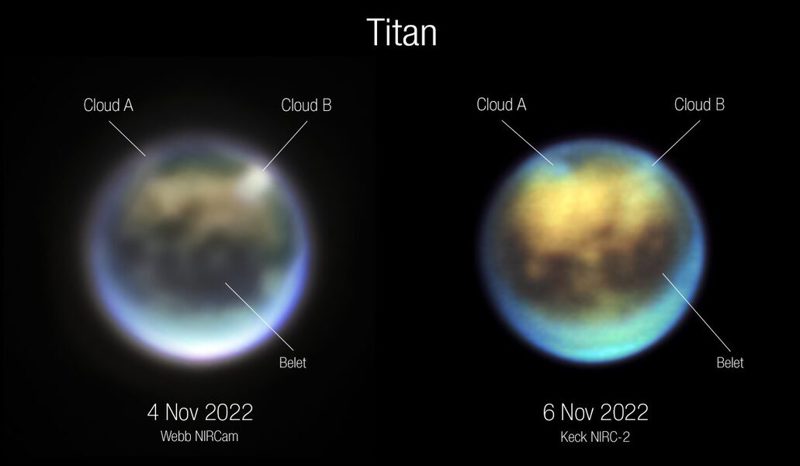
Clouds on Titan
Shown here is the evolution of clouds on Titan over 30 hours between November 4 and November 6, 2022, as seen by Webb NIRCam (left) and Keck NIRC-2 (right). Titan’s trailing hemisphere seen here is rotating from left (dawn) to right (evening) as seen from Earth and the Sun. Cloud A appears to be rotating into view while Cloud B appears to be either dissipating or moving behind Titan’s limb (around toward the hemisphere facing away from us). Clouds are not long-lasting on Titan or Earth, so those seen on Nov. 4 may not be the same as those seen on Nov. 6.
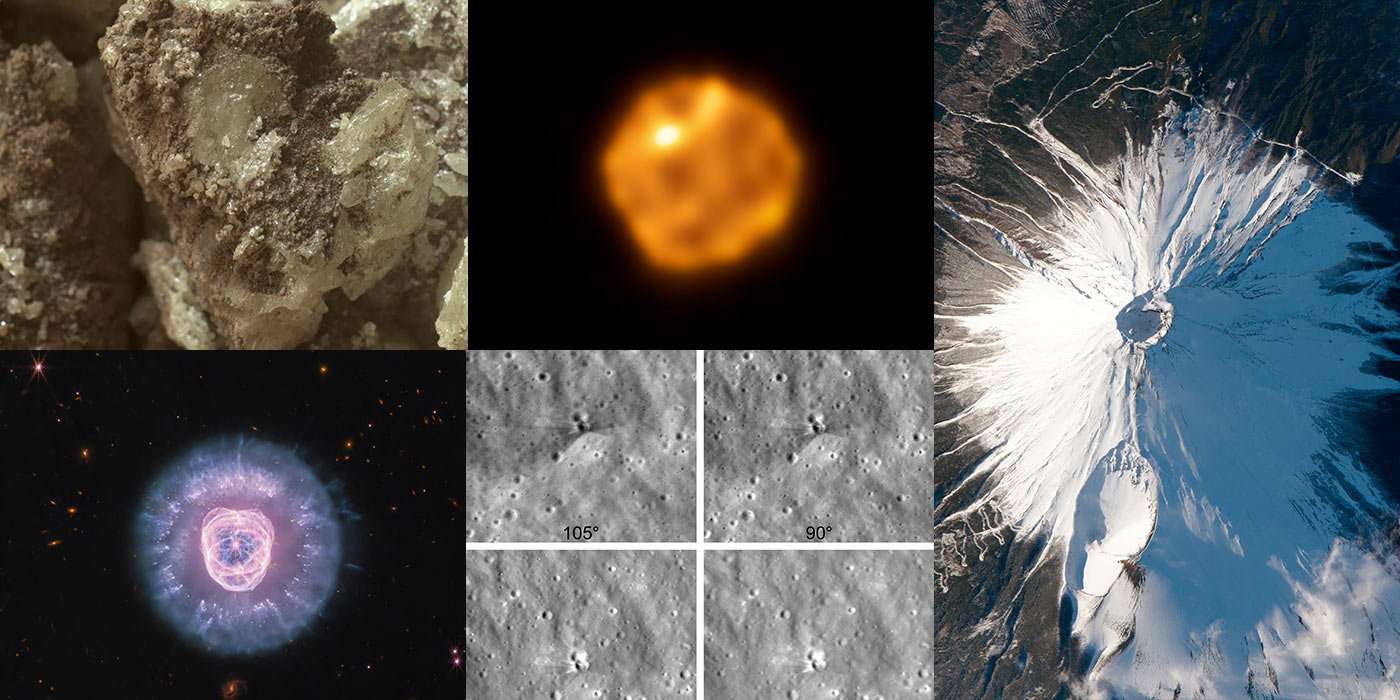
We journey from Mount Fuji as seen from orbit to the bubbling surface of Betelgeuse, exploring the forces that shape planets, moons, and stars across the cosmos. Along the way, JWST reveals the remains of a dying star, Curiosity uncovers clues to Mars’ volcanic past, and a fresh rocket impact on the Moon gives scientists a new opportunity to study how collisions reshape its surface.
#PPOD
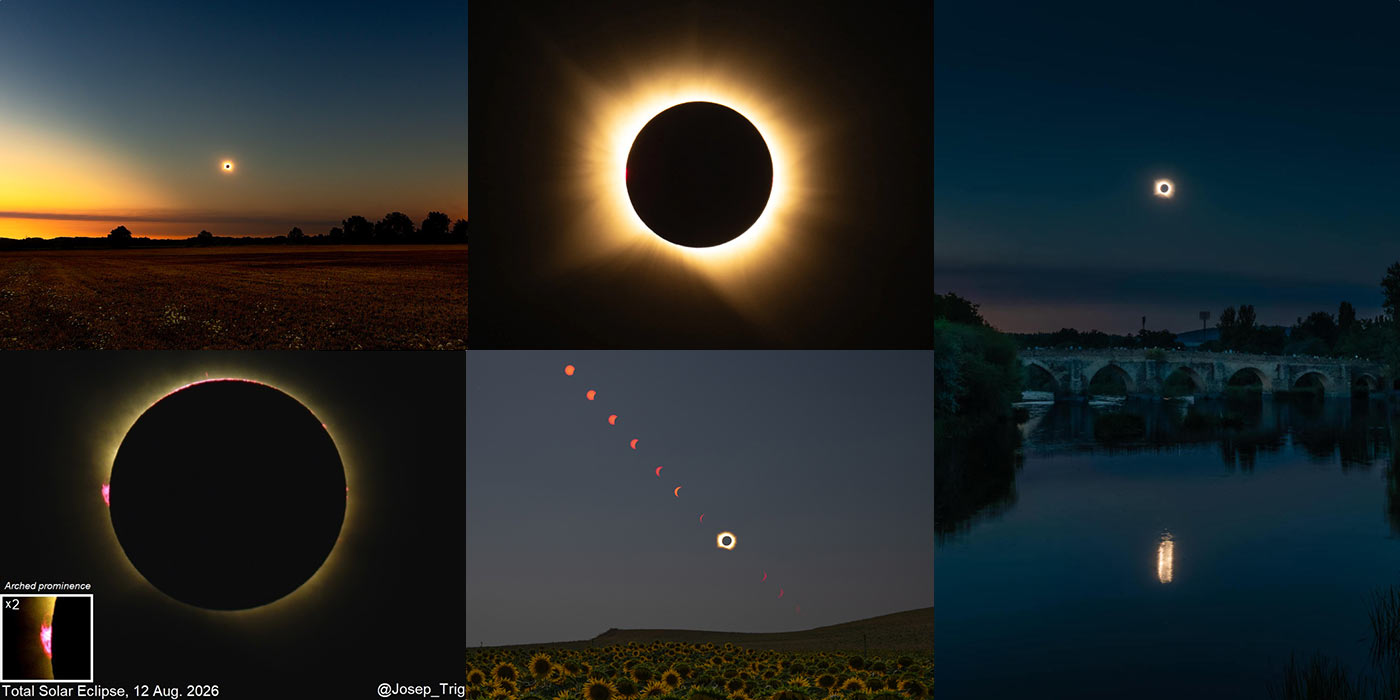
Let's celebrate the August 12 total solar eclipse through the eyes of photographers who experienced the Moon’s shadow sweeping across Spain. From Baily’s Beads and a glowing solar prominence to totality reflected in a river and framed by fields of sunflowers, these images capture both the science and extraordinary beauty of one of nature’s most spectacular celestial events.
#PPOD
#Eclipse
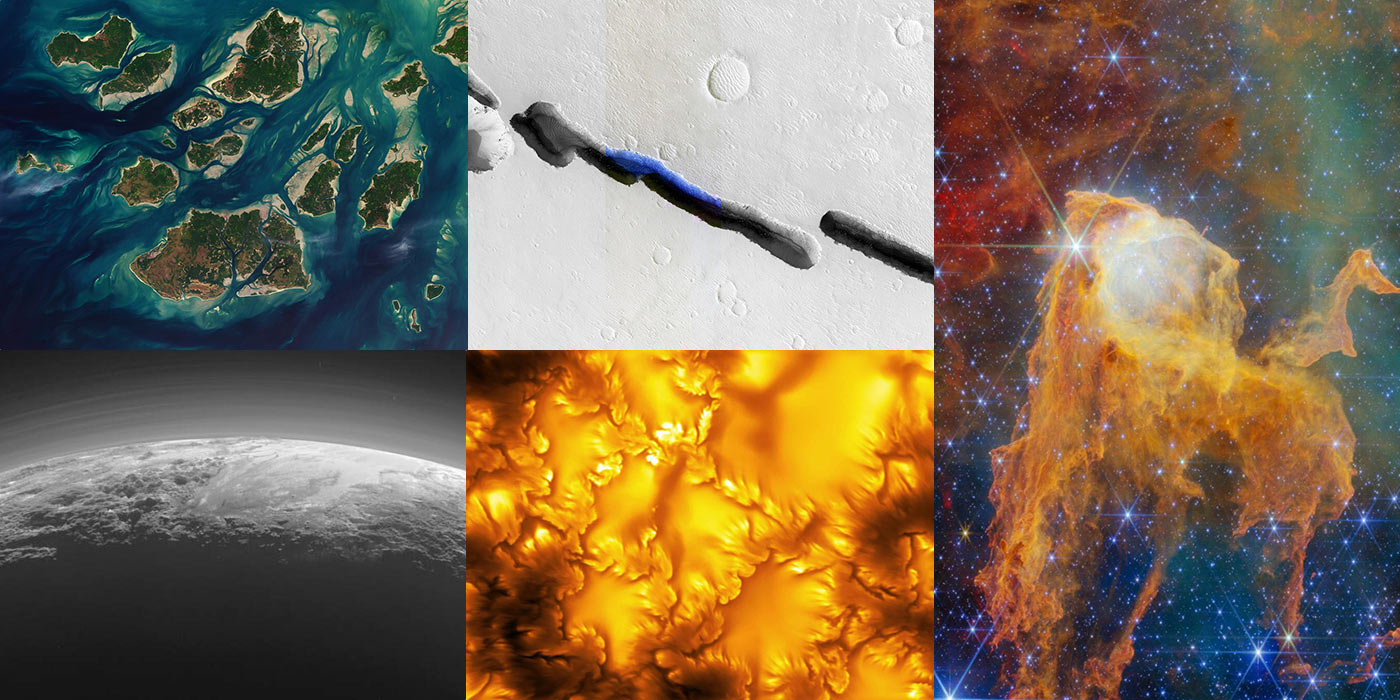
The universe is shaped by forces both immense and intricate, from fractured terrain on Mars and shifting tidal landscapes on Earth to tiny vortices dancing across the surface of the Sun. Farther afield, dramatic views of Pluto’s icy mountains and hazy atmosphere and a treasure chest of newborn stars in the Carina Nebula showcase the remarkable detail revealed by spacecraft and telescopes exploring the cosmos.
#PPOD
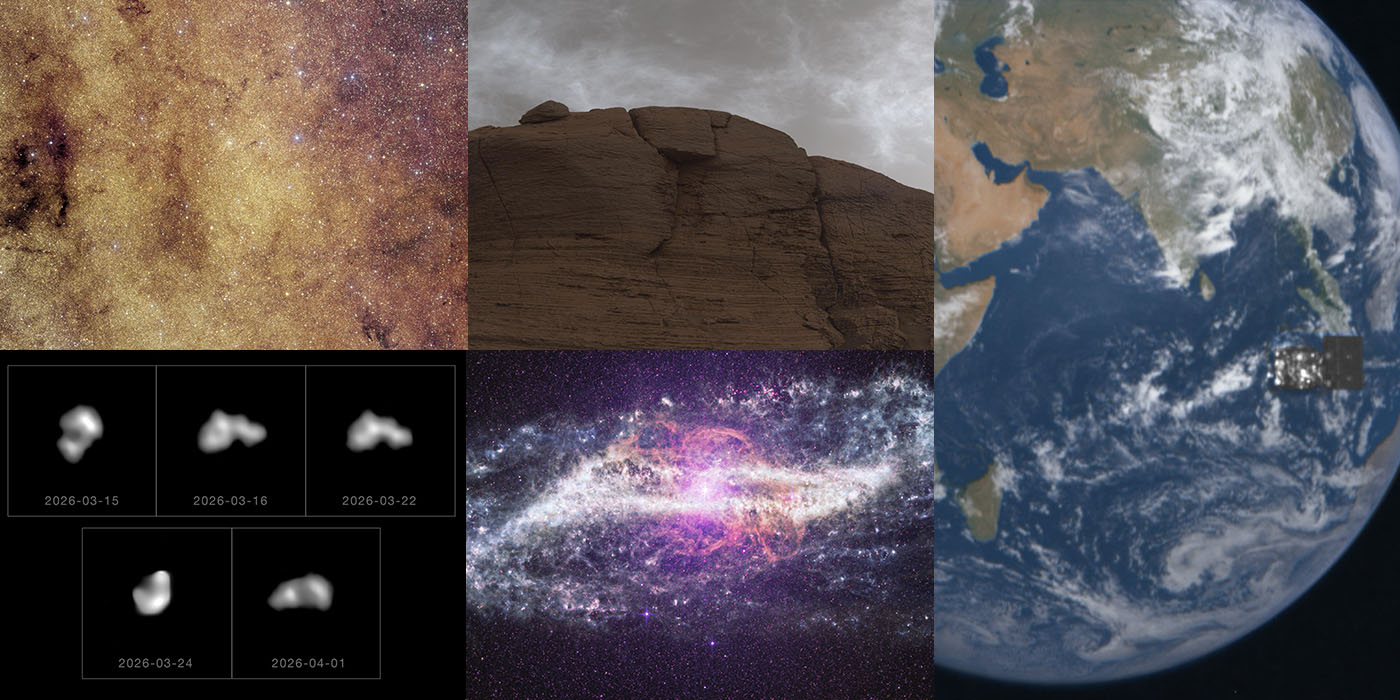
This week, we reveal hidden wonders across the cosmos, from delicate Martian clouds and a dust-shrouded galaxy to an asteroid with a never-before-seen shape and the crowded heart of the Milky Way. Together, these images showcase how new missions and advanced observatories continue to uncover surprising details about our solar system, our galaxy, and the universe beyond.
#PPOD
These images span the journey from our own backyard to distant galaxies, featuring Mars, the Moon, breathtaking night skies, and a fresh view of the star-forming galaxy Messier 94. Along the way, we celebrate exploration and discovery—from NASA’s Psyche mission preparing for its asteroid encounter to the revelation of a previously unknown impact crater on Earth —reminding us that there are still new wonders to uncover both on our own planet and across the cosmos.
#PPOD
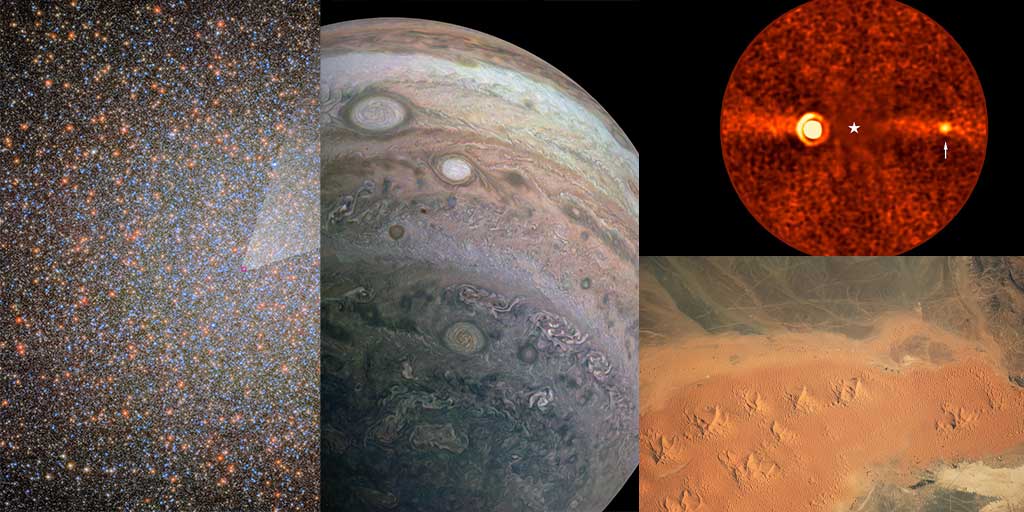
This week, we celebrate fifty years since Viking 1 became the first spacecraft to successfully land on and photograph the surface of Mars, alongside stunning new views of worlds, stars, and galaxies that continue to expand our understanding of the universe. From sculpted Sahara sand dunes and Jupiter’s colorful cloud bands to a newly discovered exoplanet and the first stellar-mass black hole identified in Omega Centauri, these images showcase the remarkable diversity of cosmic exploration.
#PPOD
We journey from Mount Fuji as seen from orbit to the bubbling surface of Betelgeuse, exploring the forces that shape planets, moons, and stars across the cosmos. Along the way, JWST reveals the remains of a dying star, Curiosity uncovers clues to Mars’ volcanic past, and a fresh rocket impact on the Moon gives scientists a new opportunity to study how collisions reshape its surface.
Let's celebrate the August 12 total solar eclipse through the eyes of photographers who experienced the Moon’s shadow sweeping across Spain. From Baily’s Beads and a glowing solar prominence to totality reflected in a river and framed by fields of sunflowers, these images capture both the science and extraordinary beauty of one of nature’s most spectacular celestial events.
The universe is shaped by forces both immense and intricate, from fractured terrain on Mars and shifting tidal landscapes on Earth to tiny vortices dancing across the surface of the Sun. Farther afield, dramatic views of Pluto’s icy mountains and hazy atmosphere and a treasure chest of newborn stars in the Carina Nebula showcase the remarkable detail revealed by spacecraft and telescopes exploring the cosmos.
This week, we reveal hidden wonders across the cosmos, from delicate Martian clouds and a dust-shrouded galaxy to an asteroid with a never-before-seen shape and the crowded heart of the Milky Way. Together, these images showcase how new missions and advanced observatories continue to uncover surprising details about our solar system, our galaxy, and the universe beyond.
These images span the journey from our own backyard to distant galaxies, featuring Mars, the Moon, breathtaking night skies, and a fresh view of the star-forming galaxy Messier 94. Along the way, we celebrate exploration and discovery—from NASA’s Psyche mission preparing for its asteroid encounter to the revelation of a previously unknown impact crater on Earth —reminding us that there are still new wonders to uncover both on our own planet and across the cosmos.
This week, we celebrate fifty years since Viking 1 became the first spacecraft to successfully land on and photograph the surface of Mars, alongside stunning new views of worlds, stars, and galaxies that continue to expand our understanding of the universe. From sculpted Sahara sand dunes and Jupiter’s colorful cloud bands to a newly discovered exoplanet and the first stellar-mass black hole identified in Omega Centauri, these images showcase the remarkable diversity of cosmic exploration.
SkyMapper and the SETI Institute are connecting educators, students and the public to live astronomical observations through a distributed astronomical network.
#SkyMapper
#SETI
#Citizen Science
#Astronomy
What happens if life beyond Earth is discovered? The Discovery and Futures Lab at the SETI Institute fosters novel and anticipatory research at the intersection of science, society, our planet, and the search for life beyond Earth.
#Discovery and Futures Lab
SkyMapper and the SETI Institute are connecting educators, students and the public to live astronomical observations through a distributed astronomical network.
What happens if life beyond Earth is discovered? The Discovery and Futures Lab at the SETI Institute fosters novel and anticipatory research at the intersection of science, society, our planet, and the search for life beyond Earth.
Scientists are getting closer in their search for life beyond earth. But with limited federal funding for the search for extraterrestrial intelligence, supporters are the reason cutting-edge scientists can keep their eyes on the sky.
)