Planetary Picture of the Day Week of October 8, 2024
This week's trip around the solar system includes our own Pale Blue Dot, the far side of the Moon, Neptune's moon Triton, and a view of a super star cluster from JWST - complete with diffraction spikes!
Monday, 8 October 2024
Credit: ESA/Webb, NASA & CSA, M. Zamani (ESA/Webb), M. G. Guarcello (INAF-OAPA) and the EWOCS team
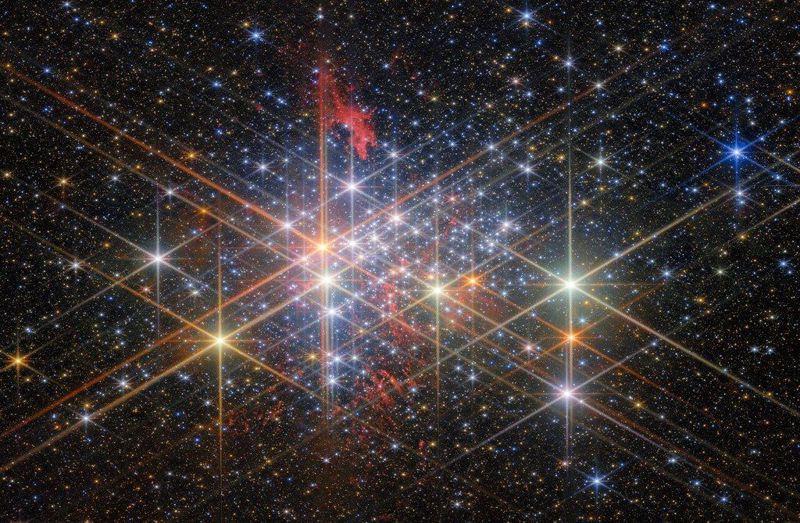
The Exotic Stellar Population of Westerlund 1 Here is JWST's look at Westerlund 1, one of the closest clusters of its kind. Super star clusters are young and contain more than 10,000 times the mass of the Sun packed into a small volume. Westerlund 1 is the most massive yet identified in our galaxy, with 50,000 to 100,000 times the mass of the Sun contained within a region less than six light-years across. Still considered an open cluster now, someday it will evolve into a globular cluster - a roughly spherical, tightly packed collection of old stars bound together by gravity.
Tuesday, 9 October 2024
Credit: Russian Space Agency
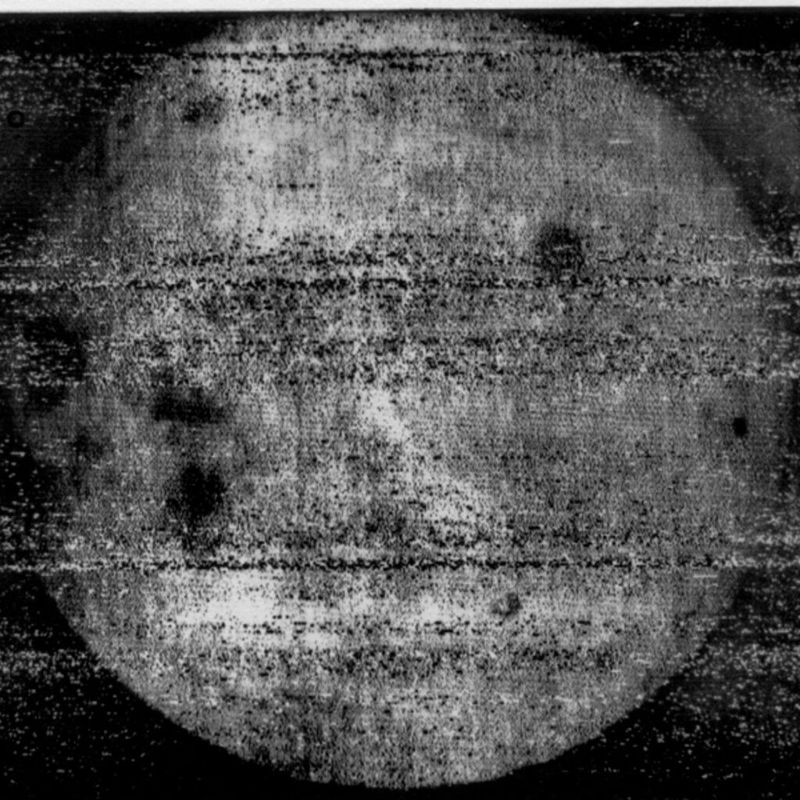
Far Side of the Moon The Luna 3 spacecraft returned the first views of the Moon's far side. The images were taken on 7 October 1959 and were very noisy and low resolution, but many features could be recognized. This is the second image returned by Luna 3; taken with the wide-angle lens, it showed the far side of the Moon was very different from the near side, most noticeably in its lack of lunar maria (the dark areas). The dark spot at the upper right is Mare Moscoviense and the dark area at the lower left is Mare Smythii. The small dark circle at the lower right with the white dot in the center is the crater Tsiolkovskiy and its central peak.
Wednesday, 10 October 2024
Credit: NASA/JPL-Caltech Color edit: Jason Major
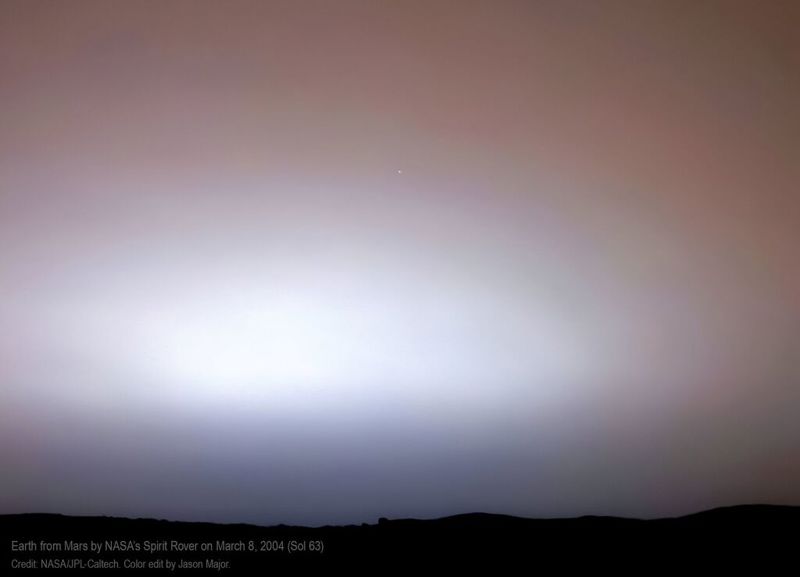
Pale Blue Dot from Mars In the top third of the image, near the center, "that little dot there, that's home, that's us." The Pale Blue Dot rises just before sunrise on the horizon of another planet (Mars). Imaged by NASA's Spirit rover on March 8, 2004, 63 sols into its mission, about an hour before sunrise at its location on Mars. This image isn't a single shot but a composite of Navcam and pan cam images of the sky. Color was added from other RGB composites of Mars captured at sunset from Spirit.
Thursday,11 October 2024
Credit: NASA/JPL/Universities Space Research Association/Lunar & Planetary Institute
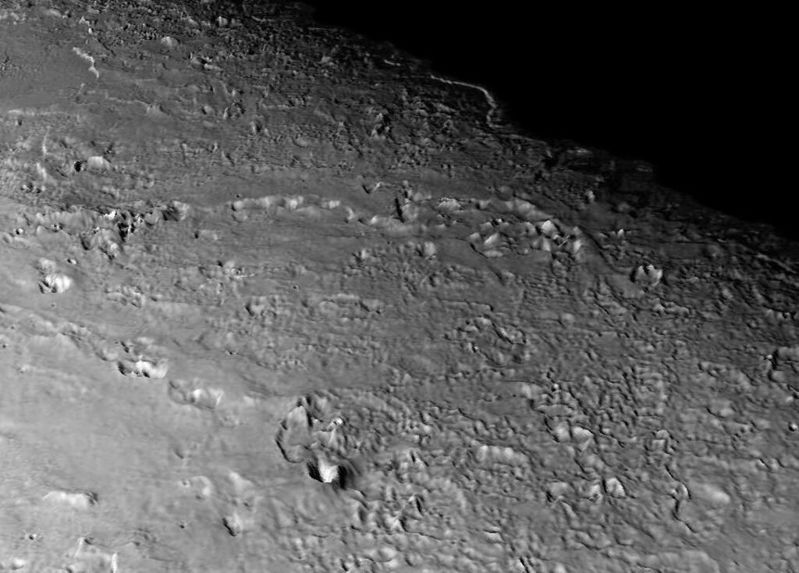
Triton's Volcanic Plains This view of the volcanic plains of Neptune's moon Triton was produced using topographic maps derived from images acquired by NASA's Voyager spacecraft during its August 1989 flyby. This regional view shows a variety of terrains on Triton, including the smooth volcanic plains in the foreground, formed by icy lavas. Parts of this surface have been eroded, forming mounds and depressions with relief of tens to a few hundred meters.
The round pits and mounds across the center of the scene are probably volcanic explosions or collapse craters, the largest of which (at bottom center) is 250 meters deep and 15 kilometers across. Many of these pits are aligned in chains similar to those seen in basaltic volcanic areas on Earth, such as Craters of the Moon National Monument in Idaho, except the lavas on Triton are water and other ices that erupted onto the surface
Friday, 12 October 2024
Credit: Matthew Dominick/NASA
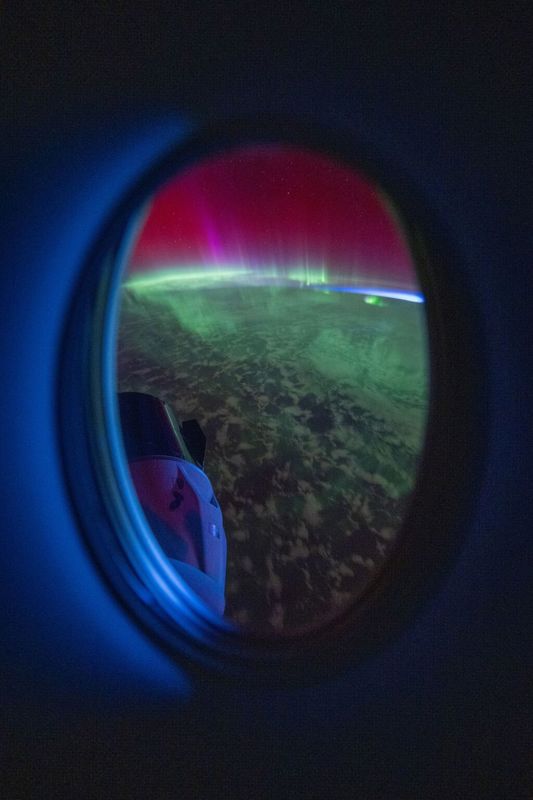
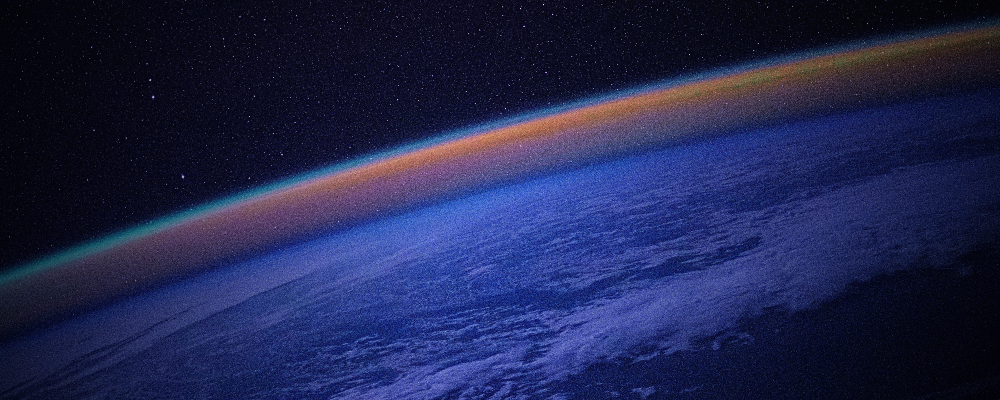
Aurora from Dragon Endeavor This photograph, taken by astronaut Matthew Dominick while peering out a Dragon Endeavor window, shows red and green aurorae streaming by Dragon Freedom which was docked to the front of the International Space Station🛰️. The Sun is still at solar maximum, with numerous flares and coronal mass ejections causing gorgeous aurorae even at lower latitudes. The different colors indicate different altitudes above the Earth's surface.
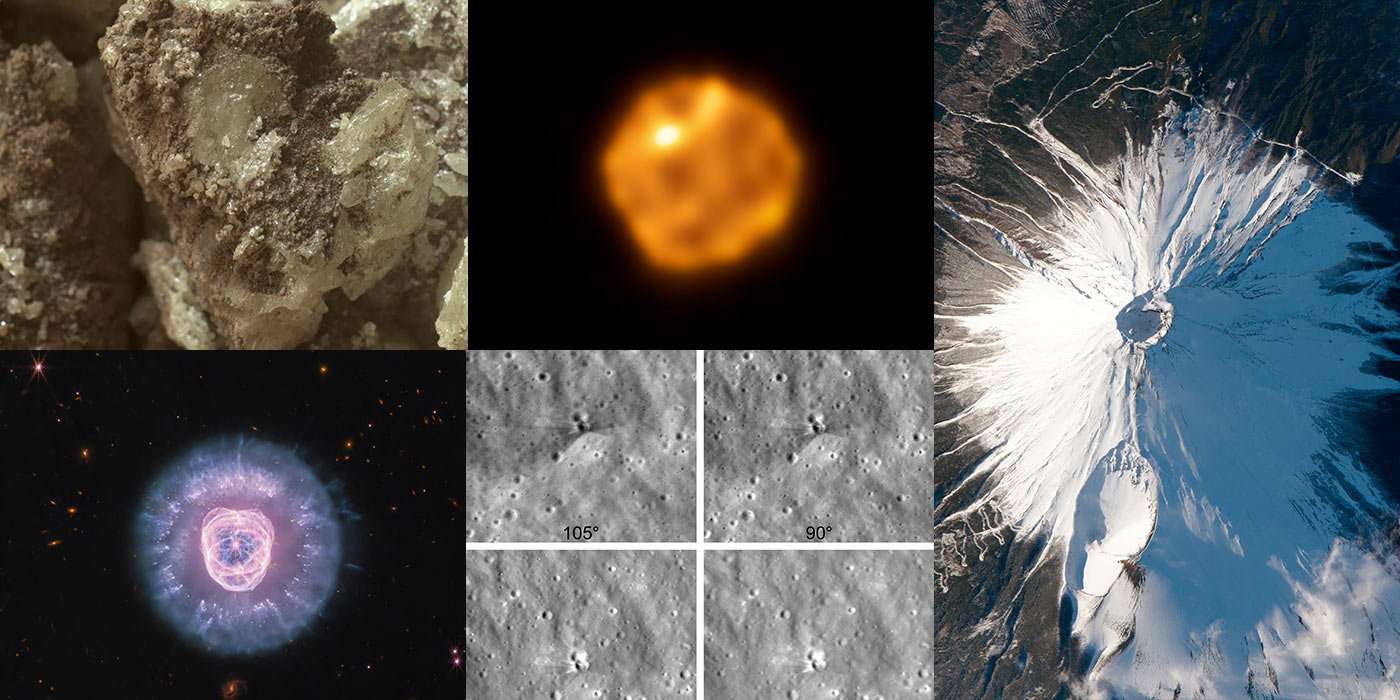
We journey from Mount Fuji as seen from orbit to the bubbling surface of Betelgeuse, exploring the forces that shape planets, moons, and stars across the cosmos. Along the way, JWST reveals the remains of a dying star, Curiosity uncovers clues to Mars’ volcanic past, and a fresh rocket impact on the Moon gives scientists a new opportunity to study how collisions reshape its surface.
#PPOD
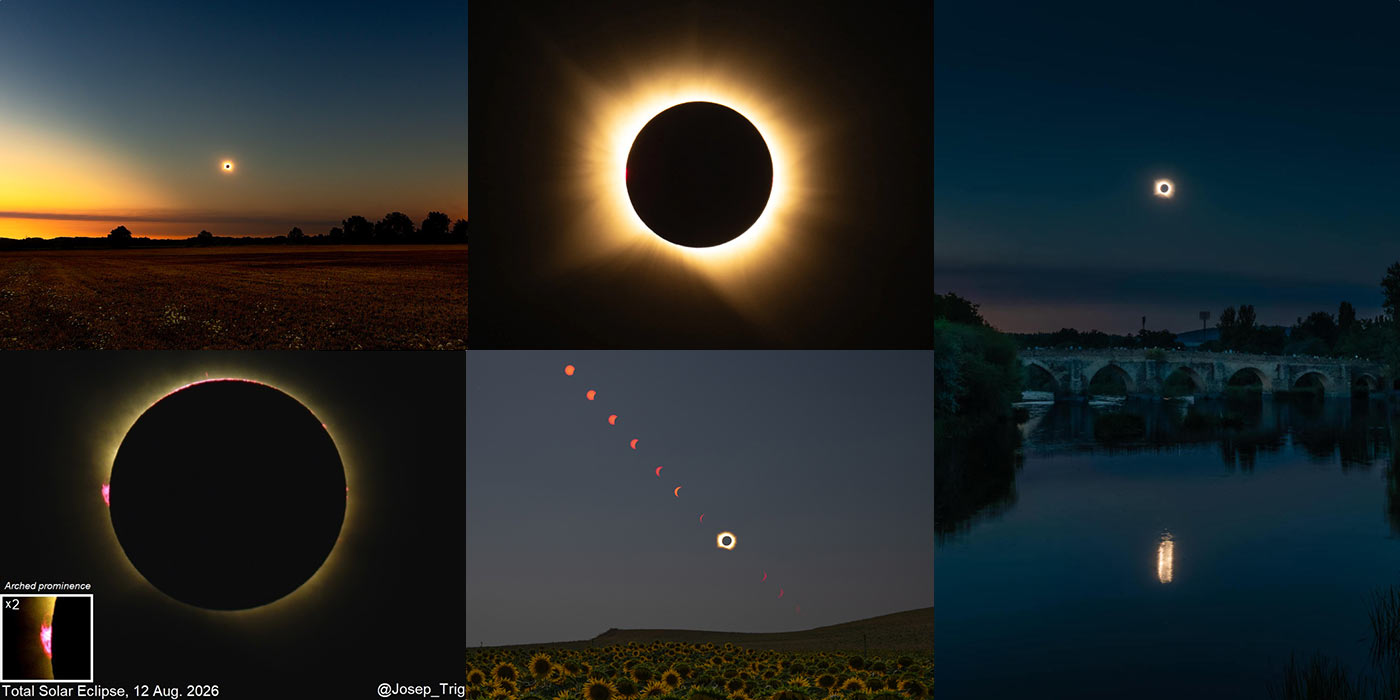
Let's celebrate the August 12 total solar eclipse through the eyes of photographers who experienced the Moon’s shadow sweeping across Spain. From Baily’s Beads and a glowing solar prominence to totality reflected in a river and framed by fields of sunflowers, these images capture both the science and extraordinary beauty of one of nature’s most spectacular celestial events.
#PPOD
#Eclipse
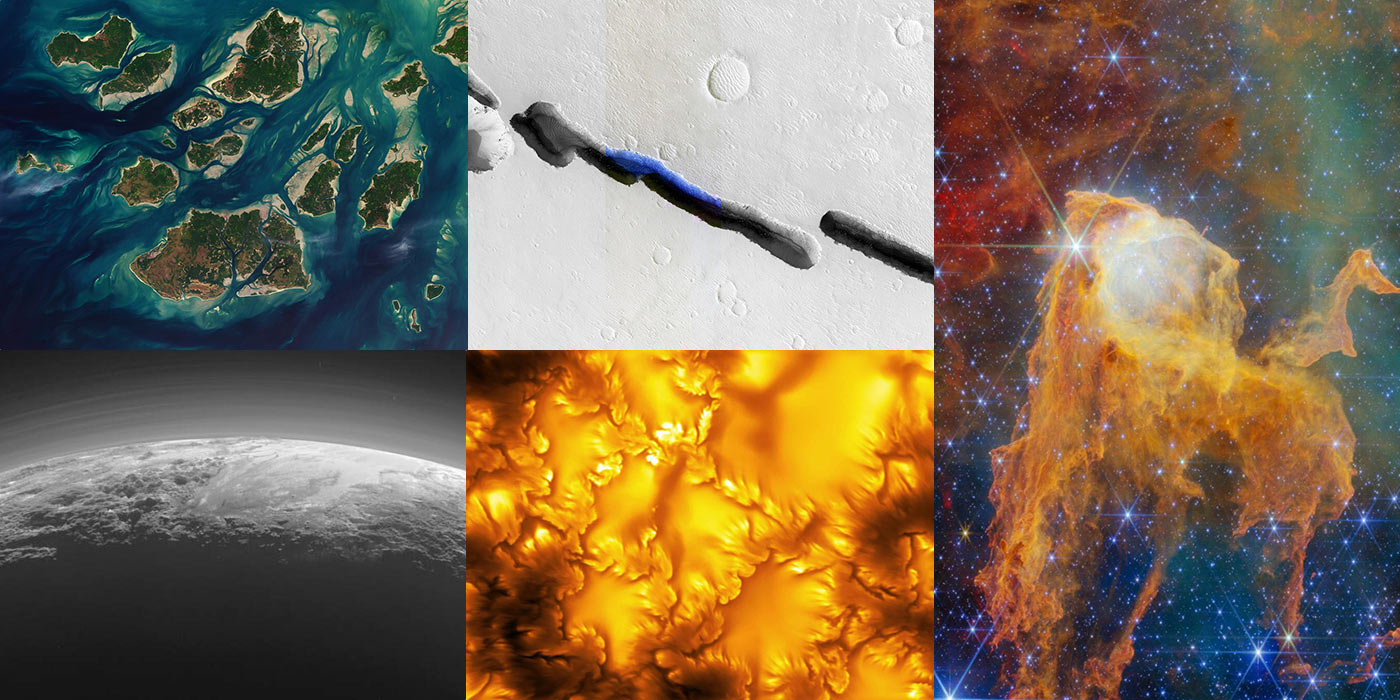
The universe is shaped by forces both immense and intricate, from fractured terrain on Mars and shifting tidal landscapes on Earth to tiny vortices dancing across the surface of the Sun. Farther afield, dramatic views of Pluto’s icy mountains and hazy atmosphere and a treasure chest of newborn stars in the Carina Nebula showcase the remarkable detail revealed by spacecraft and telescopes exploring the cosmos.
#PPOD
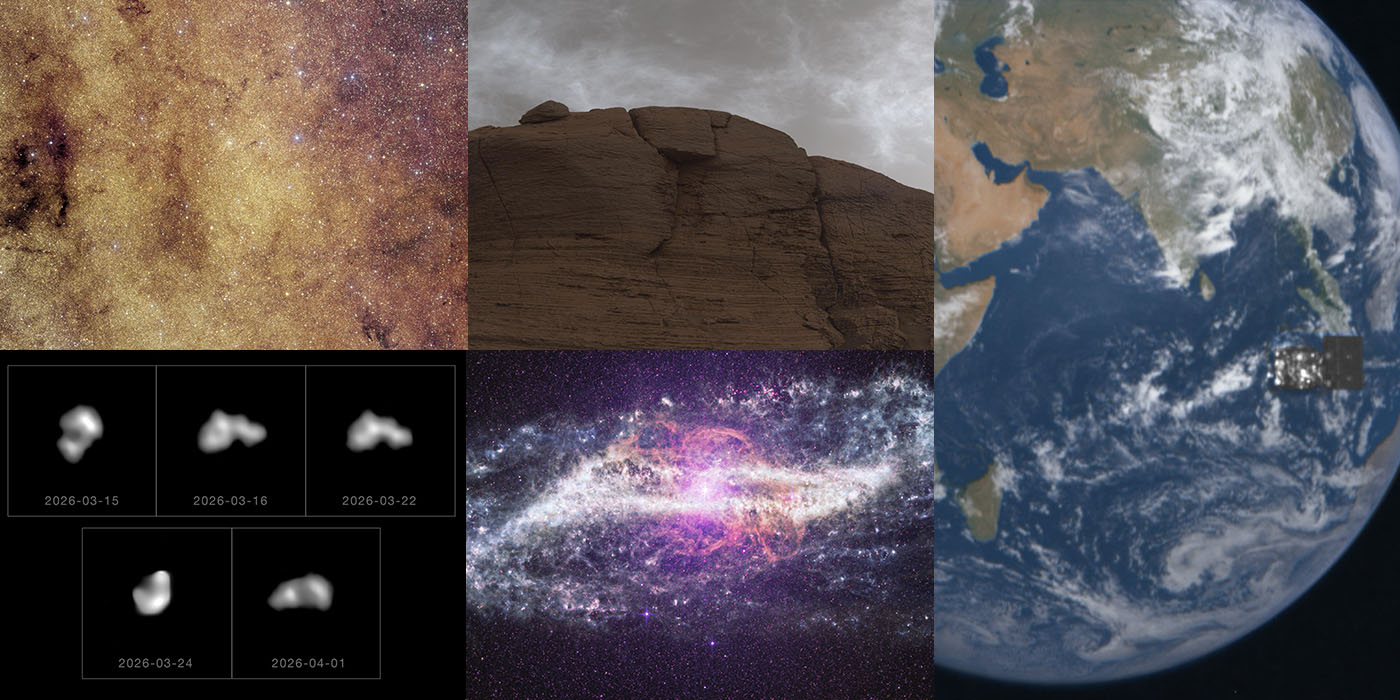
This week, we reveal hidden wonders across the cosmos, from delicate Martian clouds and a dust-shrouded galaxy to an asteroid with a never-before-seen shape and the crowded heart of the Milky Way. Together, these images showcase how new missions and advanced observatories continue to uncover surprising details about our solar system, our galaxy, and the universe beyond.
#PPOD
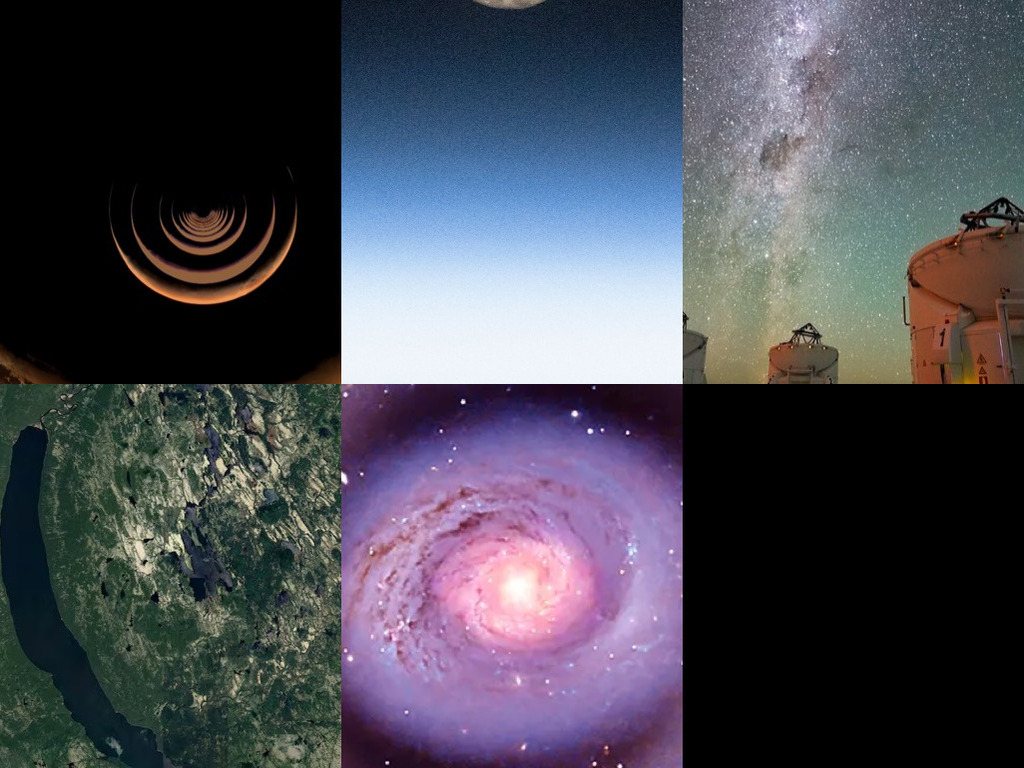
These images span the journey from our own backyard to distant galaxies, featuring Mars, the Moon, breathtaking night skies, and a fresh view of the star-forming galaxy Messier 94. Along the way, we celebrate exploration and discovery—from NASA’s Psyche mission preparing for its asteroid encounter to the revelation of a previously unknown impact crater on Earth —reminding us that there are still new wonders to uncover both on our own planet and across the cosmos.
#PPOD
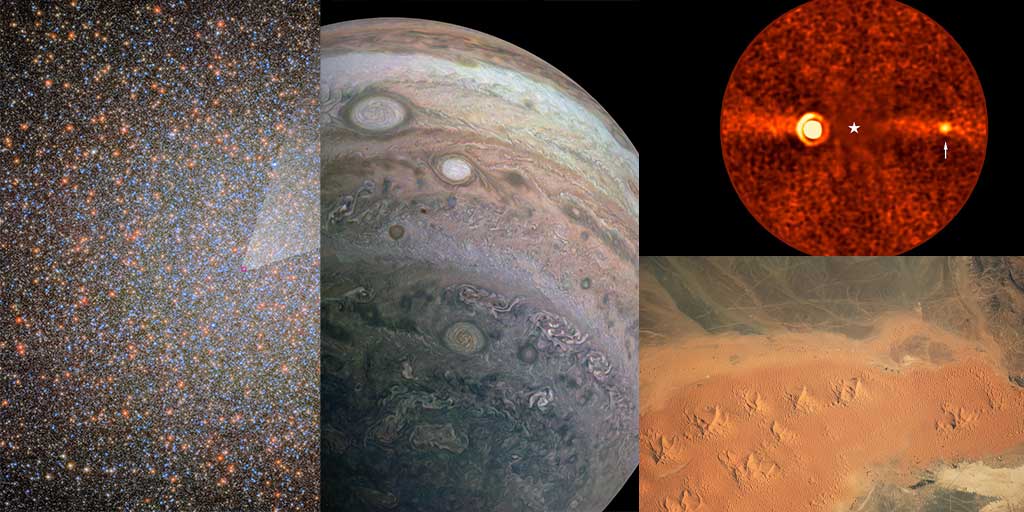
This week, we celebrate fifty years since Viking 1 became the first spacecraft to successfully land on and photograph the surface of Mars, alongside stunning new views of worlds, stars, and galaxies that continue to expand our understanding of the universe. From sculpted Sahara sand dunes and Jupiter’s colorful cloud bands to a newly discovered exoplanet and the first stellar-mass black hole identified in Omega Centauri, these images showcase the remarkable diversity of cosmic exploration.
#PPOD
We journey from Mount Fuji as seen from orbit to the bubbling surface of Betelgeuse, exploring the forces that shape planets, moons, and stars across the cosmos. Along the way, JWST reveals the remains of a dying star, Curiosity uncovers clues to Mars’ volcanic past, and a fresh rocket impact on the Moon gives scientists a new opportunity to study how collisions reshape its surface.
Let's celebrate the August 12 total solar eclipse through the eyes of photographers who experienced the Moon’s shadow sweeping across Spain. From Baily’s Beads and a glowing solar prominence to totality reflected in a river and framed by fields of sunflowers, these images capture both the science and extraordinary beauty of one of nature’s most spectacular celestial events.
The universe is shaped by forces both immense and intricate, from fractured terrain on Mars and shifting tidal landscapes on Earth to tiny vortices dancing across the surface of the Sun. Farther afield, dramatic views of Pluto’s icy mountains and hazy atmosphere and a treasure chest of newborn stars in the Carina Nebula showcase the remarkable detail revealed by spacecraft and telescopes exploring the cosmos.
This week, we reveal hidden wonders across the cosmos, from delicate Martian clouds and a dust-shrouded galaxy to an asteroid with a never-before-seen shape and the crowded heart of the Milky Way. Together, these images showcase how new missions and advanced observatories continue to uncover surprising details about our solar system, our galaxy, and the universe beyond.
These images span the journey from our own backyard to distant galaxies, featuring Mars, the Moon, breathtaking night skies, and a fresh view of the star-forming galaxy Messier 94. Along the way, we celebrate exploration and discovery—from NASA’s Psyche mission preparing for its asteroid encounter to the revelation of a previously unknown impact crater on Earth —reminding us that there are still new wonders to uncover both on our own planet and across the cosmos.
This week, we celebrate fifty years since Viking 1 became the first spacecraft to successfully land on and photograph the surface of Mars, alongside stunning new views of worlds, stars, and galaxies that continue to expand our understanding of the universe. From sculpted Sahara sand dunes and Jupiter’s colorful cloud bands to a newly discovered exoplanet and the first stellar-mass black hole identified in Omega Centauri, these images showcase the remarkable diversity of cosmic exploration.
SkyMapper and the SETI Institute are connecting educators, students and the public to live astronomical observations through a distributed astronomical network.
#SkyMapper
#SETI
#Citizen Science
#Astronomy
What happens if life beyond Earth is discovered? The Discovery and Futures Lab at the SETI Institute fosters novel and anticipatory research at the intersection of science, society, our planet, and the search for life beyond Earth.
#Discovery and Futures Lab
SkyMapper and the SETI Institute are connecting educators, students and the public to live astronomical observations through a distributed astronomical network.
What happens if life beyond Earth is discovered? The Discovery and Futures Lab at the SETI Institute fosters novel and anticipatory research at the intersection of science, society, our planet, and the search for life beyond Earth.
Scientists are getting closer in their search for life beyond earth. But with limited federal funding for the search for extraterrestrial intelligence, supporters are the reason cutting-edge scientists can keep their eyes on the sky.
)