Planetary Picture of the Day Week of October 28, 2024
Tracing lines in space, from a boulder rolling downhill on the Moon to gravity waves in Saturn's rings and a sharp-looking spiral galaxy. Plus, the discovery of Chiron and a spoooooky Halloween image.
Monday, 28 October 2024
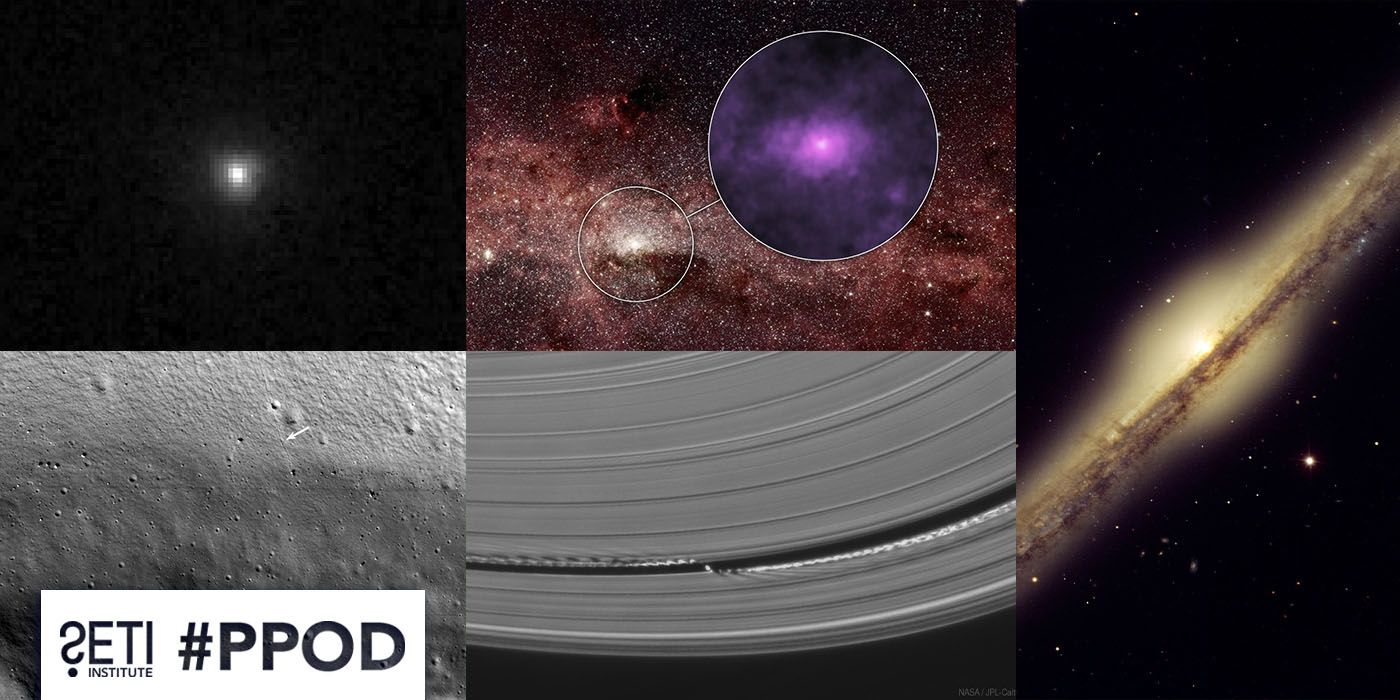
Credit: NASA, ShadowCam, Korea Aerospace Research Institute, Arizona State University
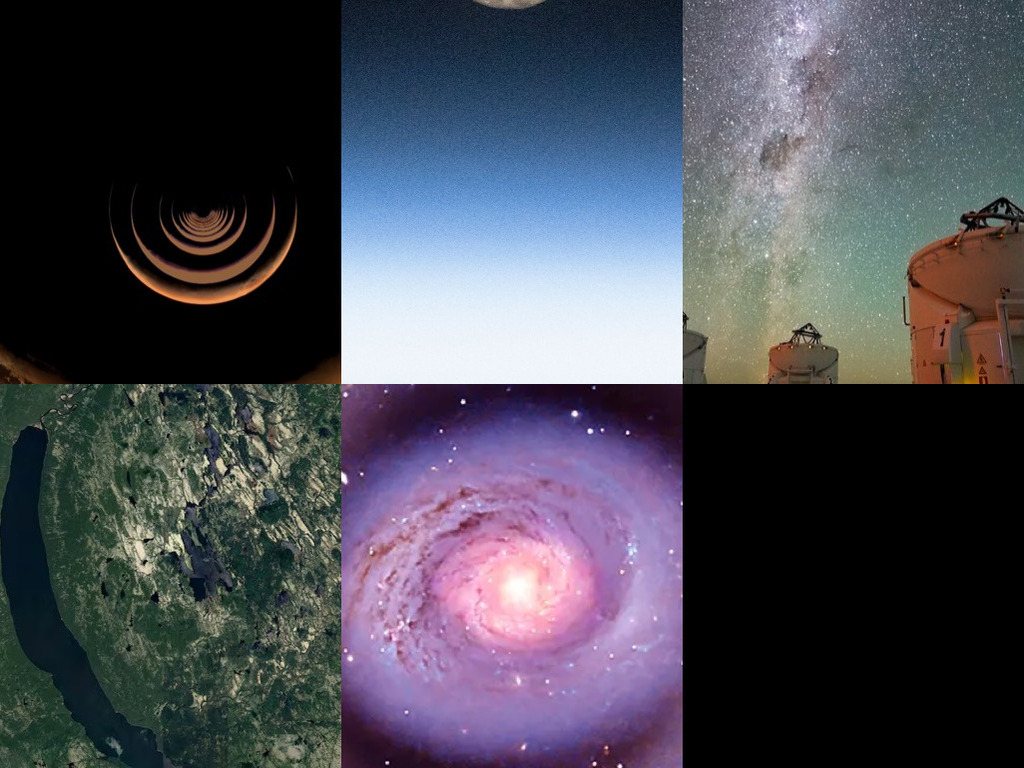
Like a Rolling Stone This stunningly detailed ShadowCam image from the Korea Pathfinder Lunar Orbiter (KPLO) shows the track made by a single boulder rolling down the slope of the Shackleton crater on the moon!
Tuesday, 29 October 2024
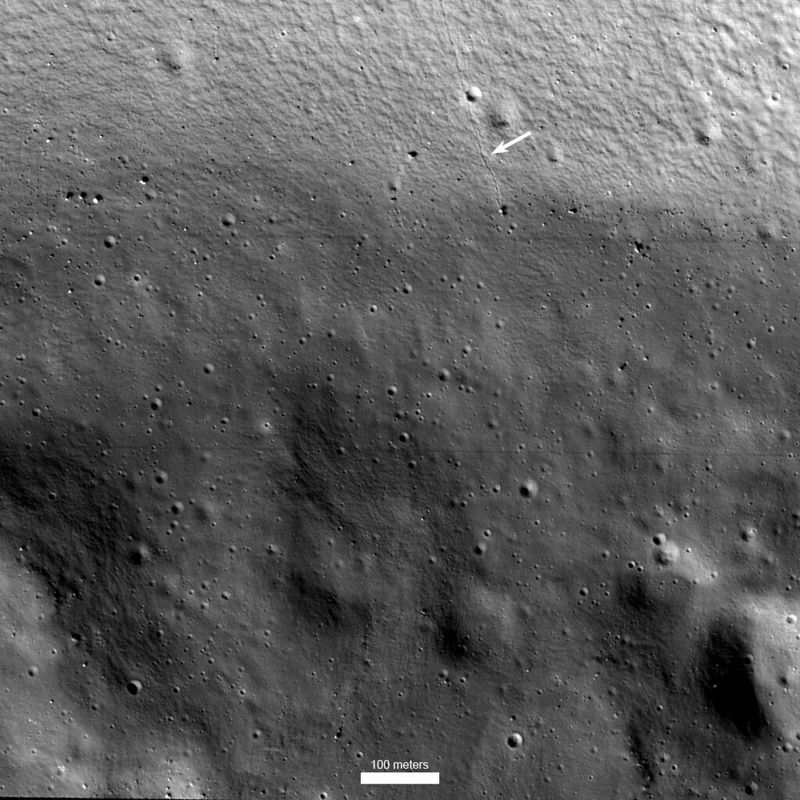
Credit: NASA/JPL-Caltech/SSI/CICLOPS
Making Waves Little moon Daphnis making waves inside the Keeler Gap of Saturn's rings; a view captured by NASA's Cassini spacecraft on June 3, 2010. Daphnis' dimensions are: 9.8 × 8.4 × 5.6 km.
Wednesday, 30 October 2024
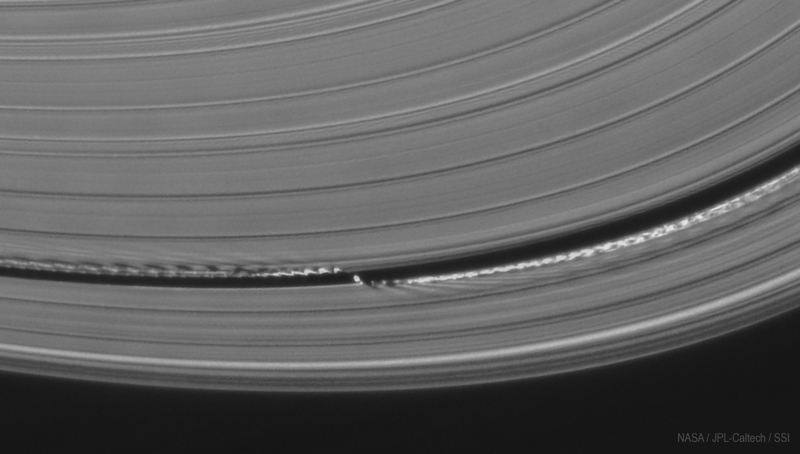
Credit: ESO
The Needle Galaxy The first galaxy pictured here is NGC 4565, which, for obvious reasons, is also called the Needle Galaxy. First spotted in 1785 by Uranus' discoverer, Sir William Herschel (1738-1822), this is one of the most famous examples of an edge-on spiral galaxy. It is located some 30 million light-years away in the constellation Coma Berenices (Berenice's Hair). It displays a bright yellowish central bulge that juts out above the most impressive dust lanes.
Because it is relatively close (it is only 12 times farther away than Messier 31, the Andromeda galaxy, which is the major galaxy closest to us) and relatively large (roughly one-third larger than the Milky Way), it does not fit entirely into the field of view of the FORS instrument (about 7 x 7 arcmin2).
This FORS image also shows many background galaxies, giving full meaning to their nickname of "island universes."
Thursday,31 October 2024
Credits: NASA/JPL-Caltech
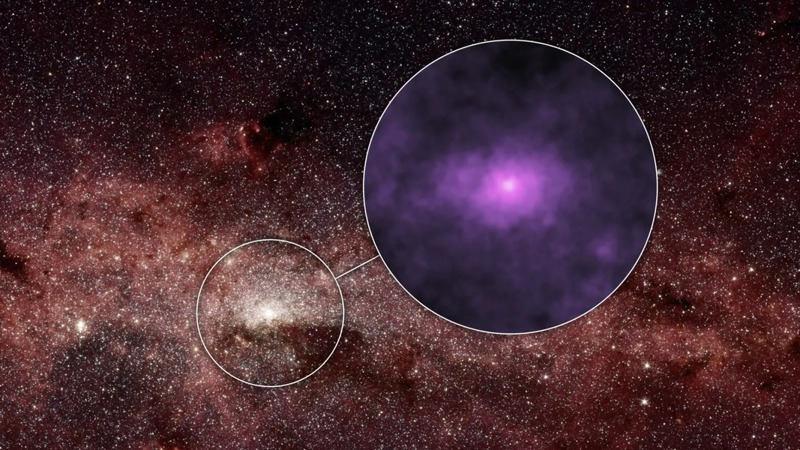
Zombie. Stars. Peering into the heart of the Milky Way galaxy, NASA’s Nuclear Spectroscopic Telescope Array (NuSTAR) has spotted a mysterious glow of high-energy X-rays that, according to scientists, could be the “howls” of dead stars as they feed on stellar companions. Astronomers have four potential theories to explain the baffling X-ray glow, three of which involve different classes of stellar corpses. When stars die, they don’t always go quietly into the night. Unlike stars like our sun, collapsed dead stars that belong to stellar pairs, or binaries, can siphon matter from their companions. This zombie-like “feeding” process differs depending on the nature of the normal star, but the result may be an eruption of X-rays. According to one theory, a type of stellar zombie called a pulsar could be at work. Pulsars are the collapsed remains of stars that exploded in supernova blasts. They can spin extremely fast and send out intense beams of radiation. As the pulsars spin, the beams sweep across the sky, sometimes intercepting the Earth, like lighthouse beacons.
Friday, 25 October 2024
Credit: NASA/ESA/Hubble Space Telescope/Karen Meech
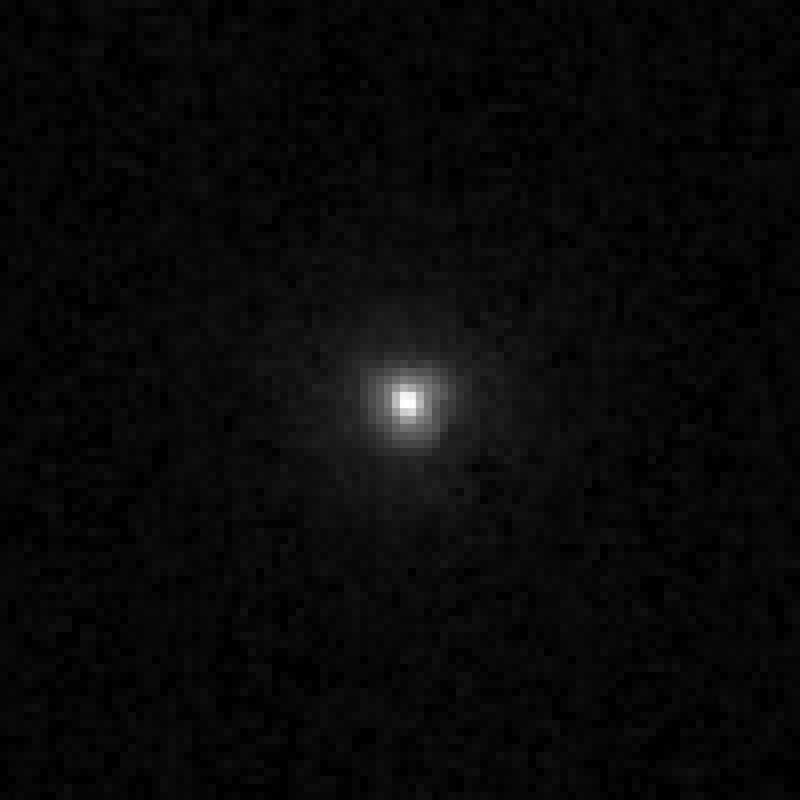
OTD Chiron Discovered On 1 November 1977, astronomer Charles Kowal discovered what would be the first of a new classification of objects - centaurs. The new minor planet, 2060 Chiron, was found in images taken at Palomar Observatory. Centaurs are small objects that orbit somewhere between the asteroid belt and the Kuiper Belt, often having the characteristics of both asteroids and comets. This image from the Hubble Space Telescope shows the faint coma that surrounds Chiron, which was first seen in 1989. Further observations in more recent years have shown that the changing brightness of the small body is a result of Chiron having rings!
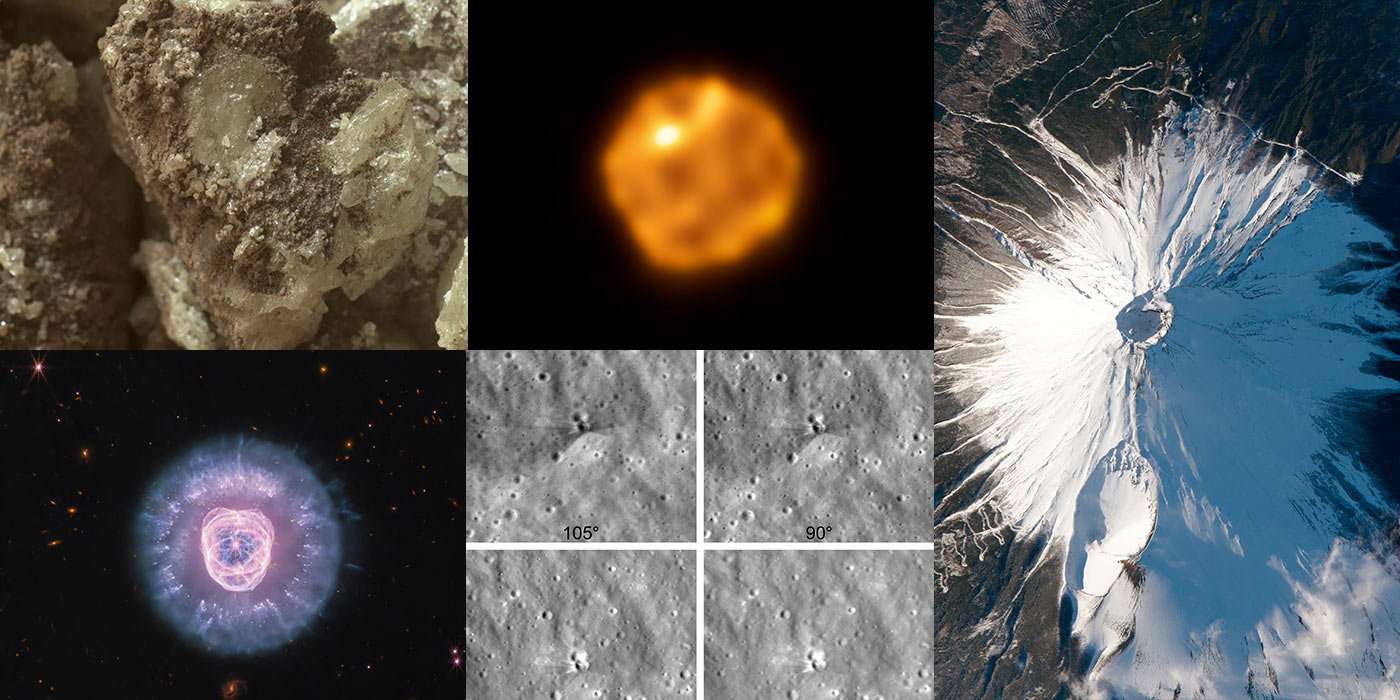
We journey from Mount Fuji as seen from orbit to the bubbling surface of Betelgeuse, exploring the forces that shape planets, moons, and stars across the cosmos. Along the way, JWST reveals the remains of a dying star, Curiosity uncovers clues to Mars’ volcanic past, and a fresh rocket impact on the Moon gives scientists a new opportunity to study how collisions reshape its surface.
#PPOD
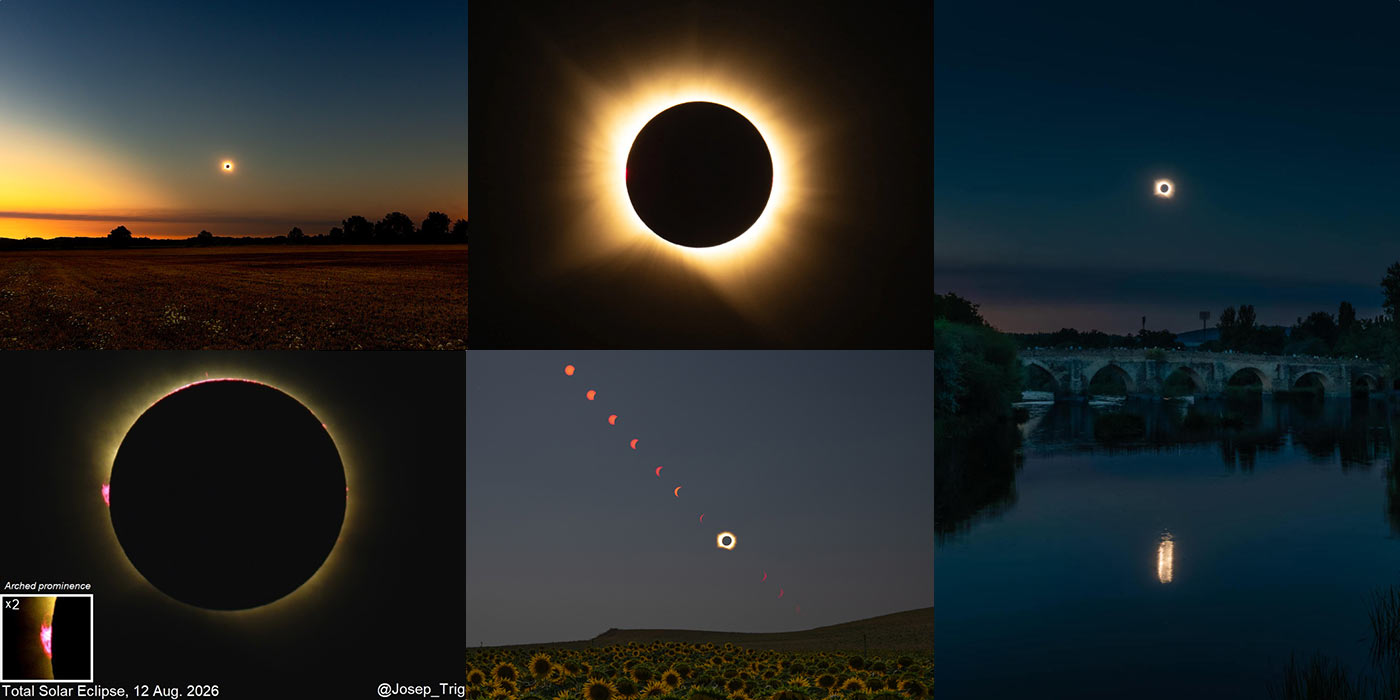
Let's celebrate the August 12 total solar eclipse through the eyes of photographers who experienced the Moon’s shadow sweeping across Spain. From Baily’s Beads and a glowing solar prominence to totality reflected in a river and framed by fields of sunflowers, these images capture both the science and extraordinary beauty of one of nature’s most spectacular celestial events.
#PPOD
#Eclipse
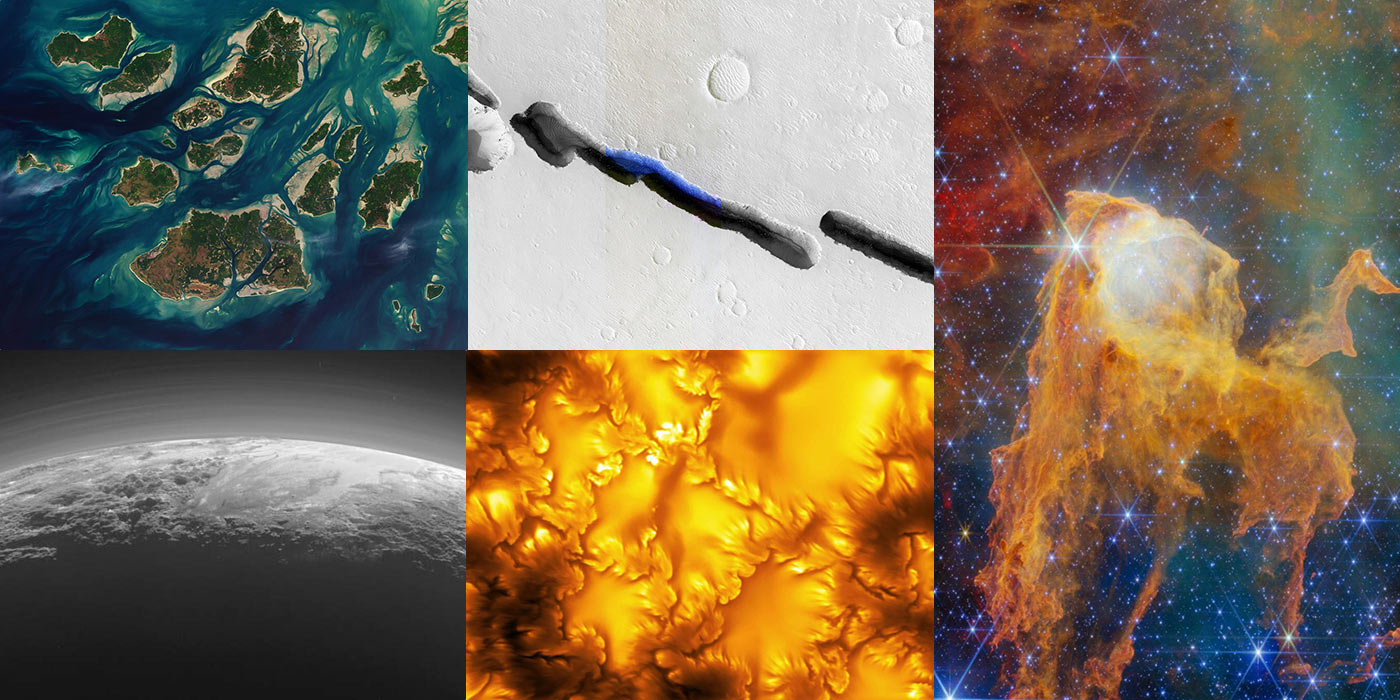
The universe is shaped by forces both immense and intricate, from fractured terrain on Mars and shifting tidal landscapes on Earth to tiny vortices dancing across the surface of the Sun. Farther afield, dramatic views of Pluto’s icy mountains and hazy atmosphere and a treasure chest of newborn stars in the Carina Nebula showcase the remarkable detail revealed by spacecraft and telescopes exploring the cosmos.
#PPOD
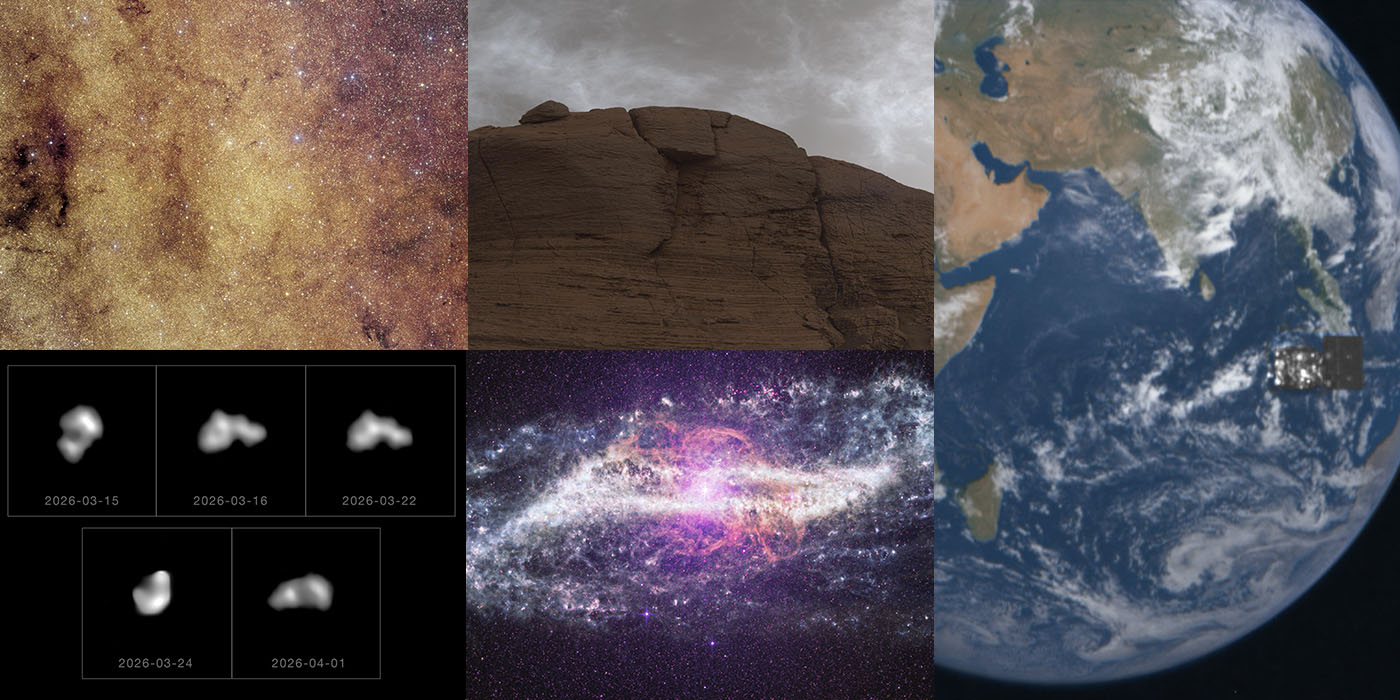
This week, we reveal hidden wonders across the cosmos, from delicate Martian clouds and a dust-shrouded galaxy to an asteroid with a never-before-seen shape and the crowded heart of the Milky Way. Together, these images showcase how new missions and advanced observatories continue to uncover surprising details about our solar system, our galaxy, and the universe beyond.
#PPOD
These images span the journey from our own backyard to distant galaxies, featuring Mars, the Moon, breathtaking night skies, and a fresh view of the star-forming galaxy Messier 94. Along the way, we celebrate exploration and discovery—from NASA’s Psyche mission preparing for its asteroid encounter to the revelation of a previously unknown impact crater on Earth —reminding us that there are still new wonders to uncover both on our own planet and across the cosmos.
#PPOD
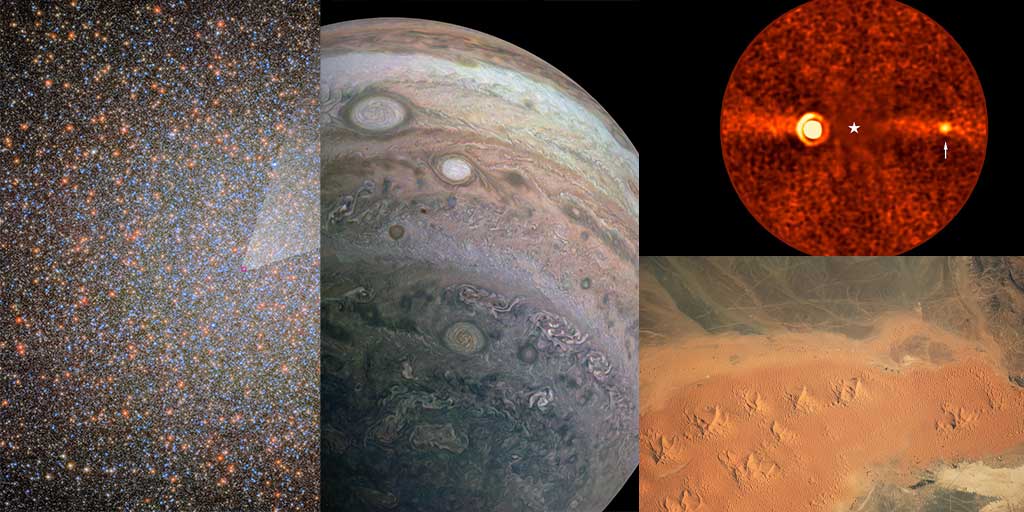
This week, we celebrate fifty years since Viking 1 became the first spacecraft to successfully land on and photograph the surface of Mars, alongside stunning new views of worlds, stars, and galaxies that continue to expand our understanding of the universe. From sculpted Sahara sand dunes and Jupiter’s colorful cloud bands to a newly discovered exoplanet and the first stellar-mass black hole identified in Omega Centauri, these images showcase the remarkable diversity of cosmic exploration.
#PPOD
We journey from Mount Fuji as seen from orbit to the bubbling surface of Betelgeuse, exploring the forces that shape planets, moons, and stars across the cosmos. Along the way, JWST reveals the remains of a dying star, Curiosity uncovers clues to Mars’ volcanic past, and a fresh rocket impact on the Moon gives scientists a new opportunity to study how collisions reshape its surface.
Let's celebrate the August 12 total solar eclipse through the eyes of photographers who experienced the Moon’s shadow sweeping across Spain. From Baily’s Beads and a glowing solar prominence to totality reflected in a river and framed by fields of sunflowers, these images capture both the science and extraordinary beauty of one of nature’s most spectacular celestial events.
The universe is shaped by forces both immense and intricate, from fractured terrain on Mars and shifting tidal landscapes on Earth to tiny vortices dancing across the surface of the Sun. Farther afield, dramatic views of Pluto’s icy mountains and hazy atmosphere and a treasure chest of newborn stars in the Carina Nebula showcase the remarkable detail revealed by spacecraft and telescopes exploring the cosmos.
This week, we reveal hidden wonders across the cosmos, from delicate Martian clouds and a dust-shrouded galaxy to an asteroid with a never-before-seen shape and the crowded heart of the Milky Way. Together, these images showcase how new missions and advanced observatories continue to uncover surprising details about our solar system, our galaxy, and the universe beyond.
These images span the journey from our own backyard to distant galaxies, featuring Mars, the Moon, breathtaking night skies, and a fresh view of the star-forming galaxy Messier 94. Along the way, we celebrate exploration and discovery—from NASA’s Psyche mission preparing for its asteroid encounter to the revelation of a previously unknown impact crater on Earth —reminding us that there are still new wonders to uncover both on our own planet and across the cosmos.
This week, we celebrate fifty years since Viking 1 became the first spacecraft to successfully land on and photograph the surface of Mars, alongside stunning new views of worlds, stars, and galaxies that continue to expand our understanding of the universe. From sculpted Sahara sand dunes and Jupiter’s colorful cloud bands to a newly discovered exoplanet and the first stellar-mass black hole identified in Omega Centauri, these images showcase the remarkable diversity of cosmic exploration.
SkyMapper and the SETI Institute are connecting educators, students and the public to live astronomical observations through a distributed astronomical network.
#SkyMapper
#SETI
#Citizen Science
#Astronomy
What happens if life beyond Earth is discovered? The Discovery and Futures Lab at the SETI Institute fosters novel and anticipatory research at the intersection of science, society, our planet, and the search for life beyond Earth.
#Discovery and Futures Lab
SkyMapper and the SETI Institute are connecting educators, students and the public to live astronomical observations through a distributed astronomical network.
What happens if life beyond Earth is discovered? The Discovery and Futures Lab at the SETI Institute fosters novel and anticipatory research at the intersection of science, society, our planet, and the search for life beyond Earth.
Scientists are getting closer in their search for life beyond earth. But with limited federal funding for the search for extraterrestrial intelligence, supporters are the reason cutting-edge scientists can keep their eyes on the sky.
)