Wednesday, Oct 29, 2025

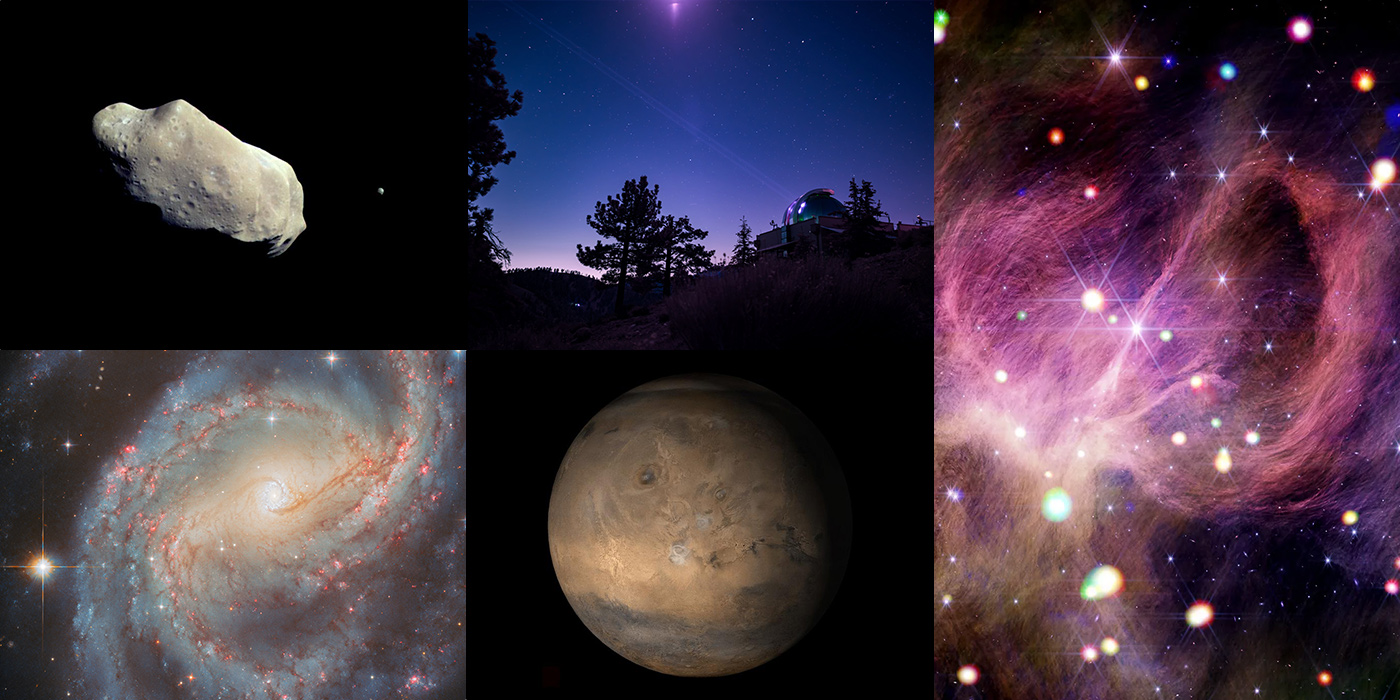
Before we share images from recent and ongoing missions, we look back at past missions—Mars Global Surveyor and Galileo. Then, we share an infrared view of the night sky showcasing new laser communication technology, a new image of galaxy NGC 6951 from Hubble, and a sparkling picture of a star-forming region taken with Chandra and JWST.

Credit: NASA/JPL/Malin Space Science Systems

Monday, 20 October 2025

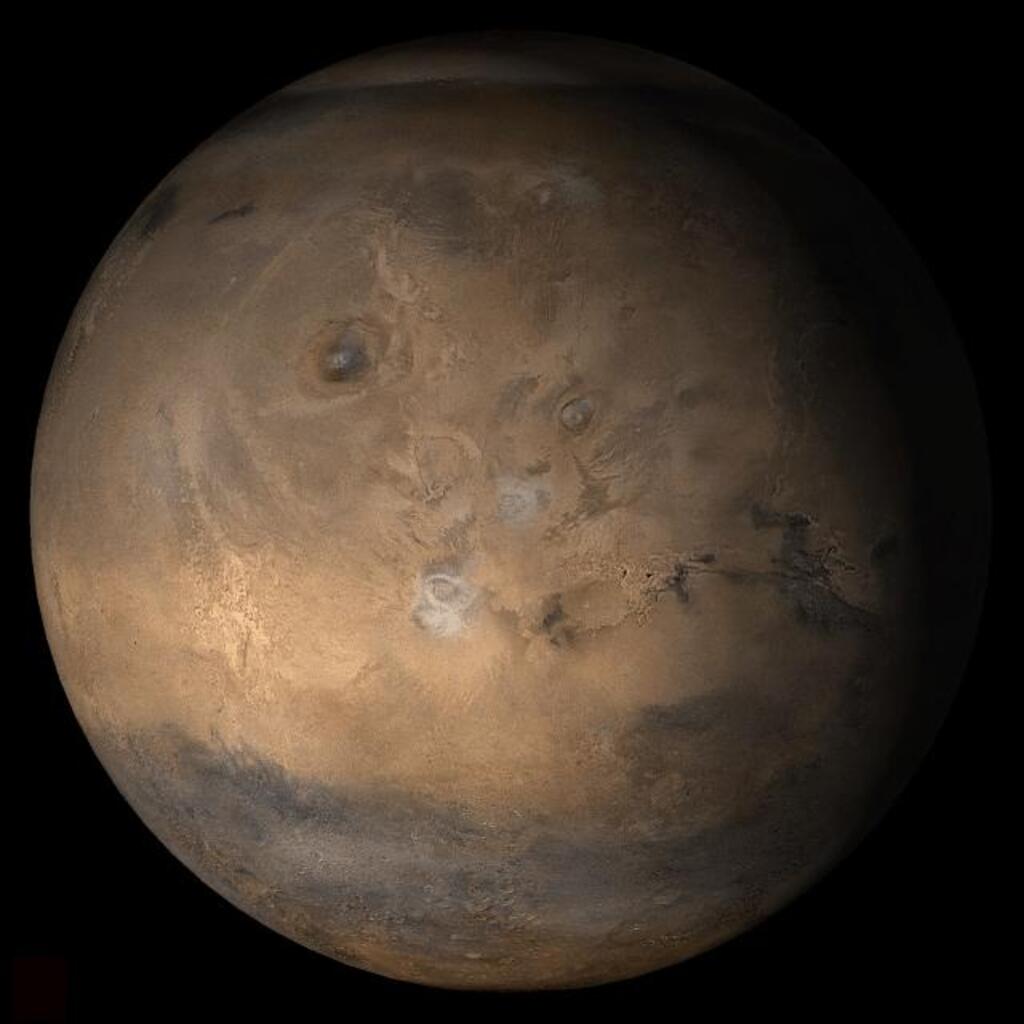
Mars Global Surveyor

Remember Mars Global Surveyor (MGS)? Over its nine years in orbit, it examined the entire planet in detail, overhauled our knowledge of Mars, and helped Mars rover and lander missions by identifying landing sites and relaying surface telemetry. Here is a mosaic of Mars from its images.

Credit: NASA/JPL

Tuesday, 21 October 2025

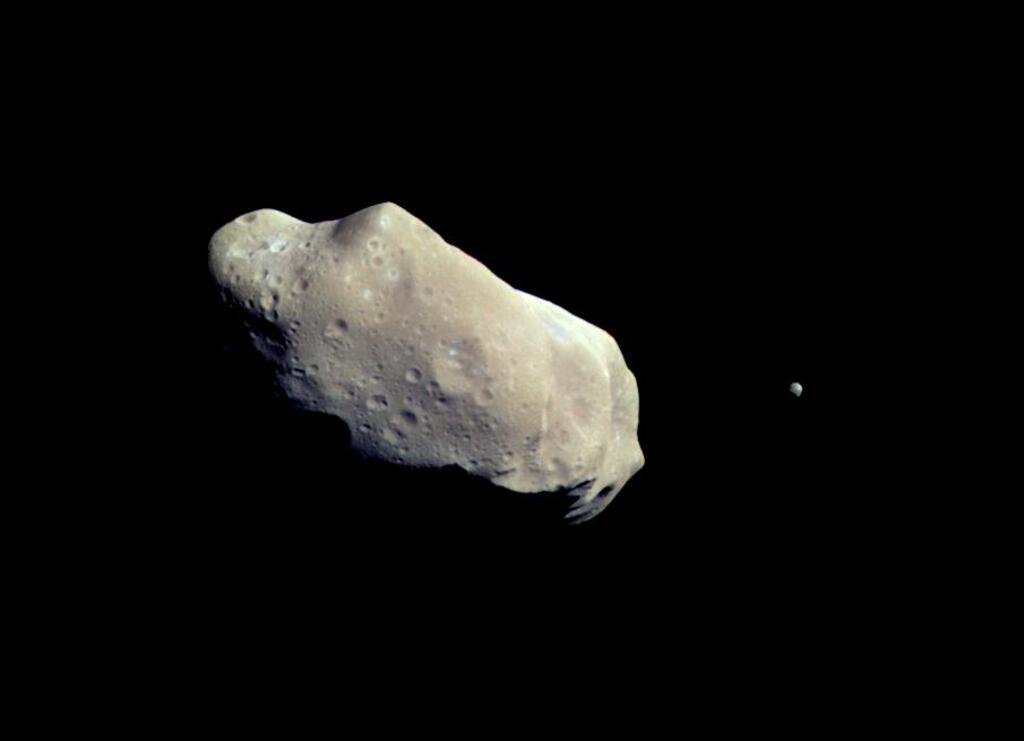
Ida and Dactyl

This color picture was created from images taken by the imaging system on NASA's Galileo spacecraft approximately 14 minutes before its closest approach to asteroid 243 Ida on August 28, 1993. The range from the spacecraft was about 10,500 kilometers. The images used are from the sequence in which Ida's moon, Dactyl, was originally discovered; the moon is visible to the right of the asteroid. Dactyl was the first moon of an asteroid ever discovered.

Credit: NASA/JPL-Caltech; Text: Ian J. O’Neill

Wednesday, 22 October 2025

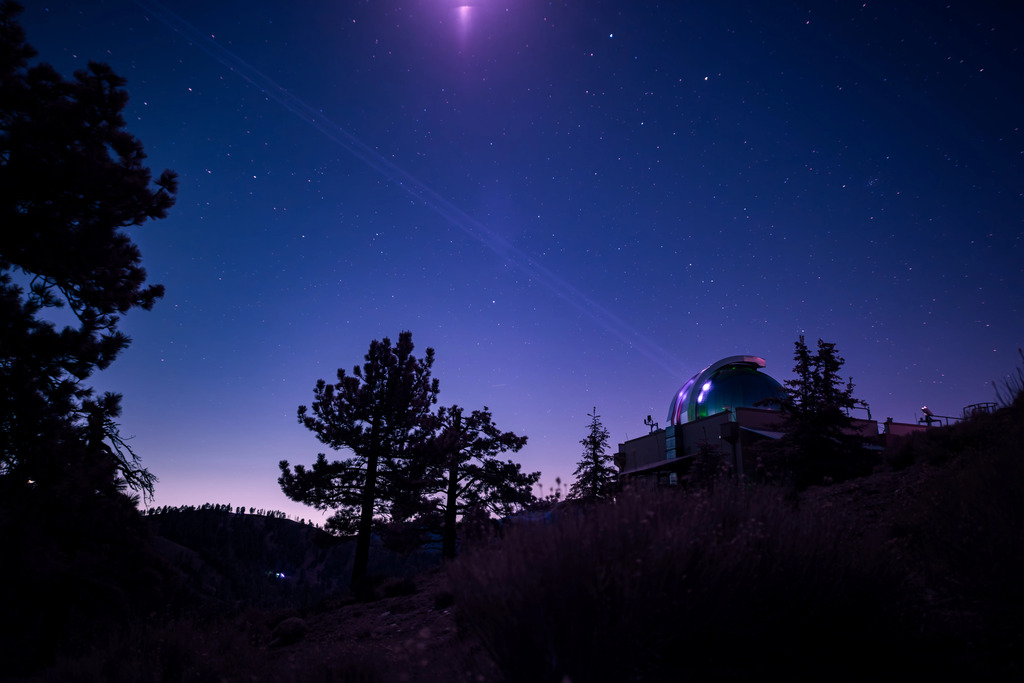
A Beacon to Space

In this infrared photograph taken on June 2, 2025, the Optical Communications Telescope Laboratory at NASA’s Jet Propulsion Laboratory’s Table Mountain Facility near Wrightwood, California, beams its eight-laser beacon to the Deep Space Optical Communications (DSOC) flight laser transceiver aboard NASA’s Psyche spacecraft. At the time, Psyche was about 230 million kilometers from Earth.

Managed by JPL, DSOC successfully demonstrated that data encoded in laser photons could be reliably transmitted, received, and then decoded after traveling millions of miles from Earth out to Mars distances. Nearly two years after launching aboard the agency’s Psyche mission in 2023, the demonstration completed its 65th and final “pass” on Sept. 2, 2025, sending a laser signal to Psyche and receiving the return signal from 350 million kilometers away.

Credit: ESA/Hubble & NASA, L. C. Ho, G. Brammer, A. Filippenko, C. Kilpatrick

Thursday, 23 October 2025

Starbursting Center

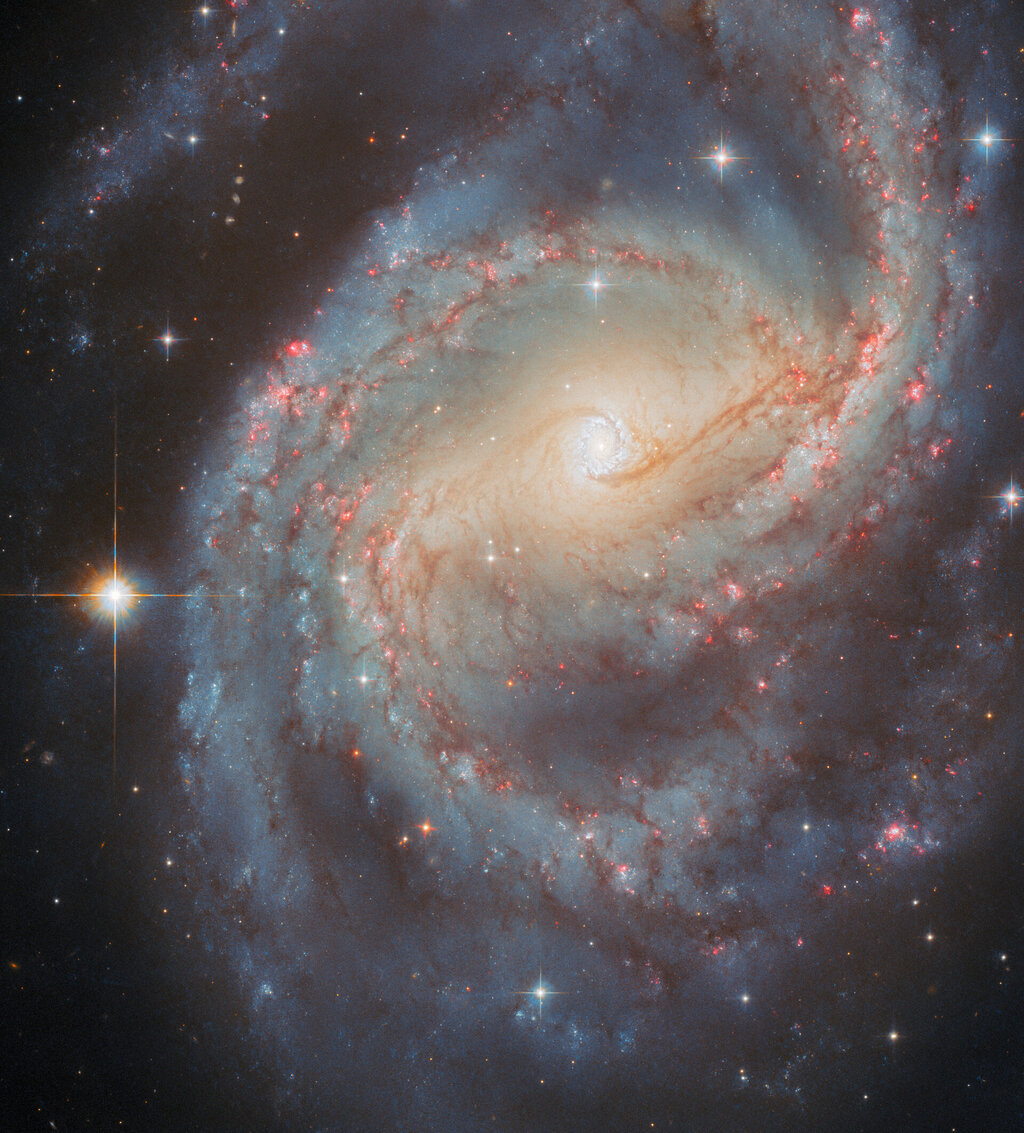
The glittering galaxy in this NASA/ESA Hubble Space Telescope image is NGC 6951, located approximately 70 million light-years away in the constellation Cepheus.

As this Hubble image shows, NGC 6951 is a spiral galaxy with plenty of intriguing structures. Most eye-catching are its spiral arms, which are dotted with brilliant red nebulae, bright blue stars, and filamentary dust clouds. The spiral arms loop around the galactic centre, which has a golden glow that comes from a population of older stars. The centre of the galaxy is also distinctly elongated, revealing the presence of a slowly rotating bar of stars.

NGC 6951’s bar may be responsible for another remarkable feature: a white-blue ring that encircles the very heart of the galaxy. This is called a circumnuclear starburst ring — essentially, a circle of enhanced star formation around the nucleus of a galaxy. The bar funnels gas toward the centre of the galaxy, where it collects in a ring about 3800 light-years across. Two dark dust lanes that run parallel to the bar mark the points where gas from the bar enters the ring.

The dense gas of a circumnuclear starburst ring is the perfect environment to churn out an impressive number of stars. Using data from Hubble, astronomers have identified more than 80 potential star clusters within NGC 6951’s ring. Many of the stars formed less than 100 million years ago, but the ring itself is longer-lived, potentially having existed for 1 to 1.5 billion years.

Astronomers have imaged NGC 6951 with Hubble for a wide variety of reasons, including mapping the dust in nearby galaxies, studying the centers of disc galaxies, and monitoring recent supernovae (of which NGC 6951 has hosted five or six).

Credit: X-ray: NASA/CXC/SAO; Infrared: NASA/ESA/CSA/STScI; Image Processing: NASA/CXC/SAO/J. Major; Text: Megan Watzke.

Friday, 24 October 2025

IC Stars

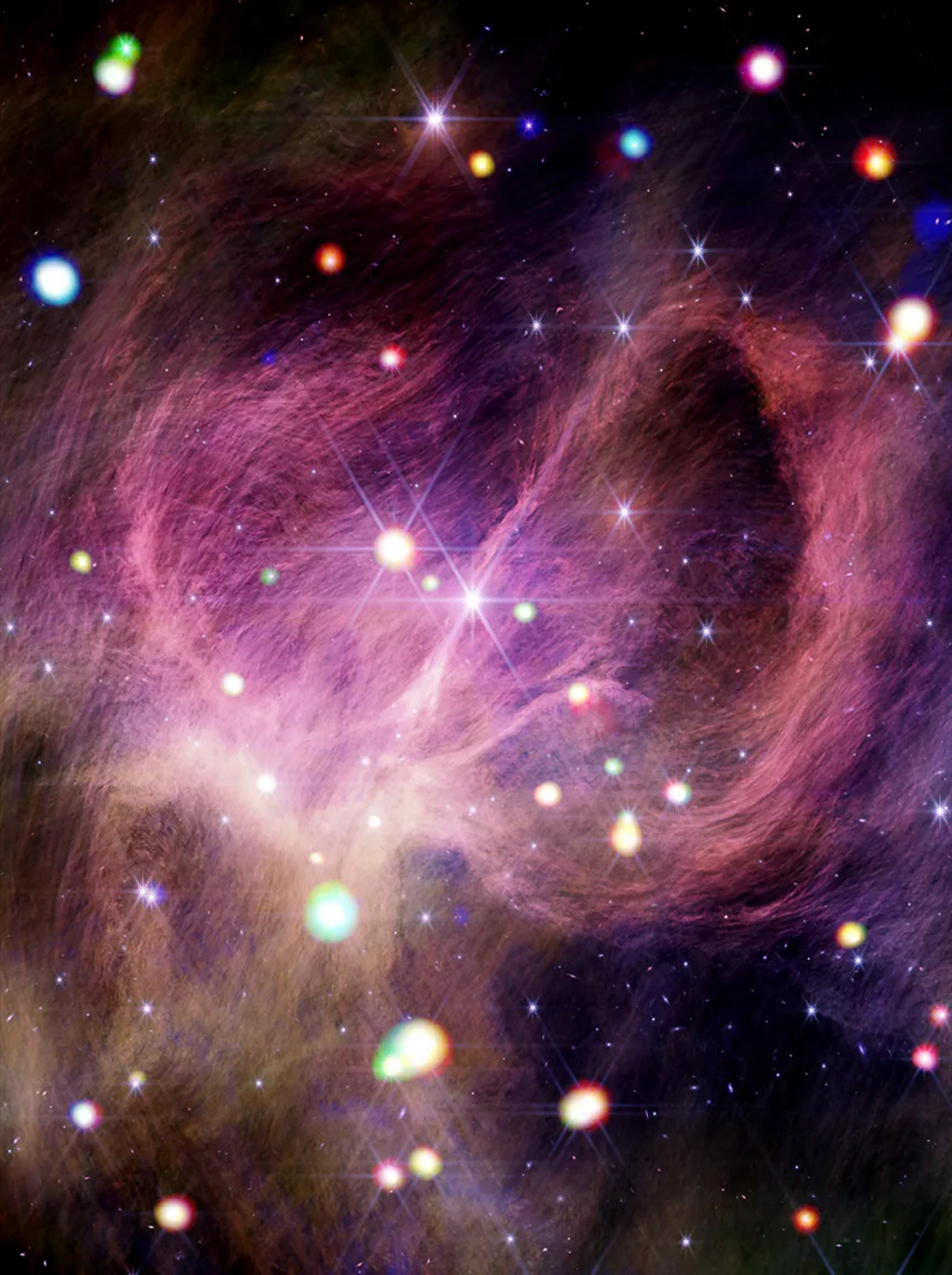
Data from NASA’s Chandra X-ray Observatory and NASA’s James Webb Space Telescope combine to reveal an otherworldly view of the star-forming region IC 348. In this image released on July 23, 2025, X-rays from Chandra are red, green, and blue, while infrared data from Webb are pink, orange, and purple.

The wispy structures that dominate the image are interstellar material that reflects the light from the cluster’s stars; this is known as a reflection nebula. The point-like sources in Chandra’s X-ray data are young stars in the cluster developing there.

News

Related News

Featured Image
Sep 2, 2026
Planetary Picture of the Day - Week of August 24, 2026
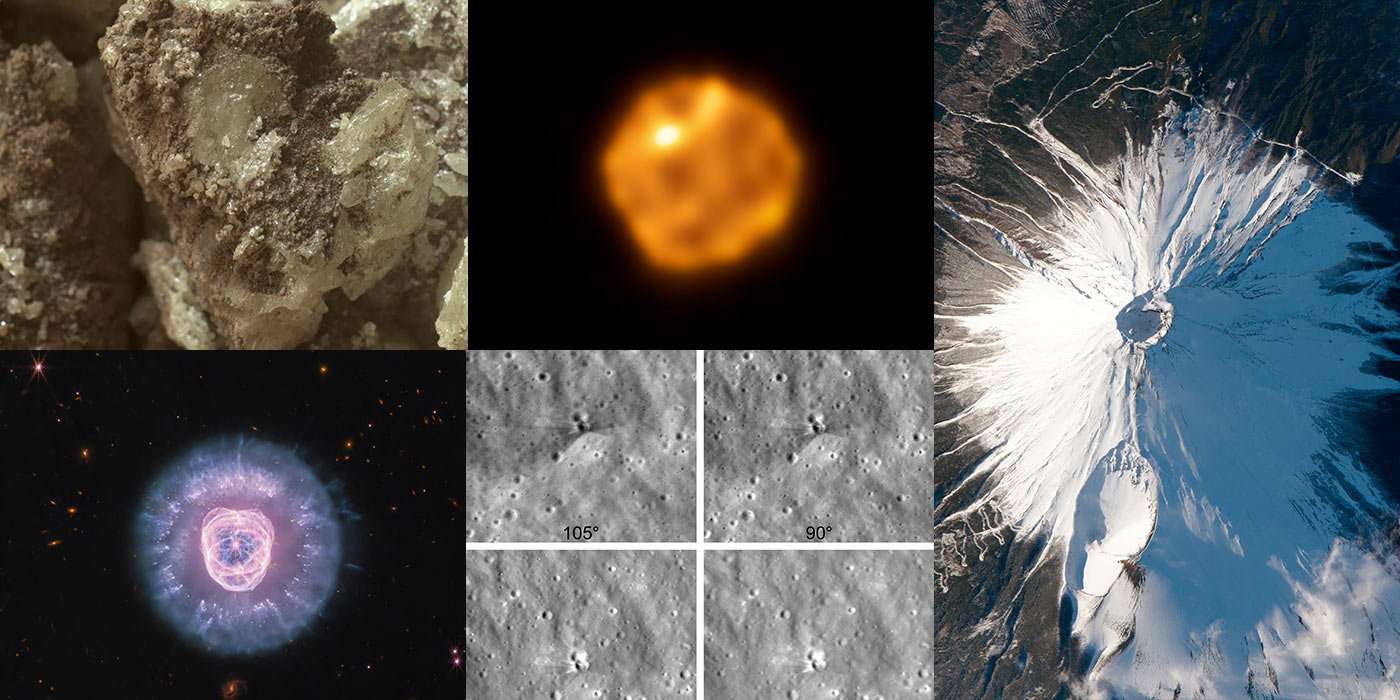
We journey from Mount Fuji as seen from orbit to the bubbling surface of Betelgeuse, exploring the forces that shape planets, moons, and stars across the cosmos. Along the way, JWST reveals the remains of a dying star, Curiosity uncovers clues to Mars’ volcanic past, and a fresh rocket impact on the Moon gives scientists a new opportunity to study how collisions reshape its surface. #PPOD
Featured Image
Aug 26, 2026
Planetary Picture of the Day - Week of August 17, 2026
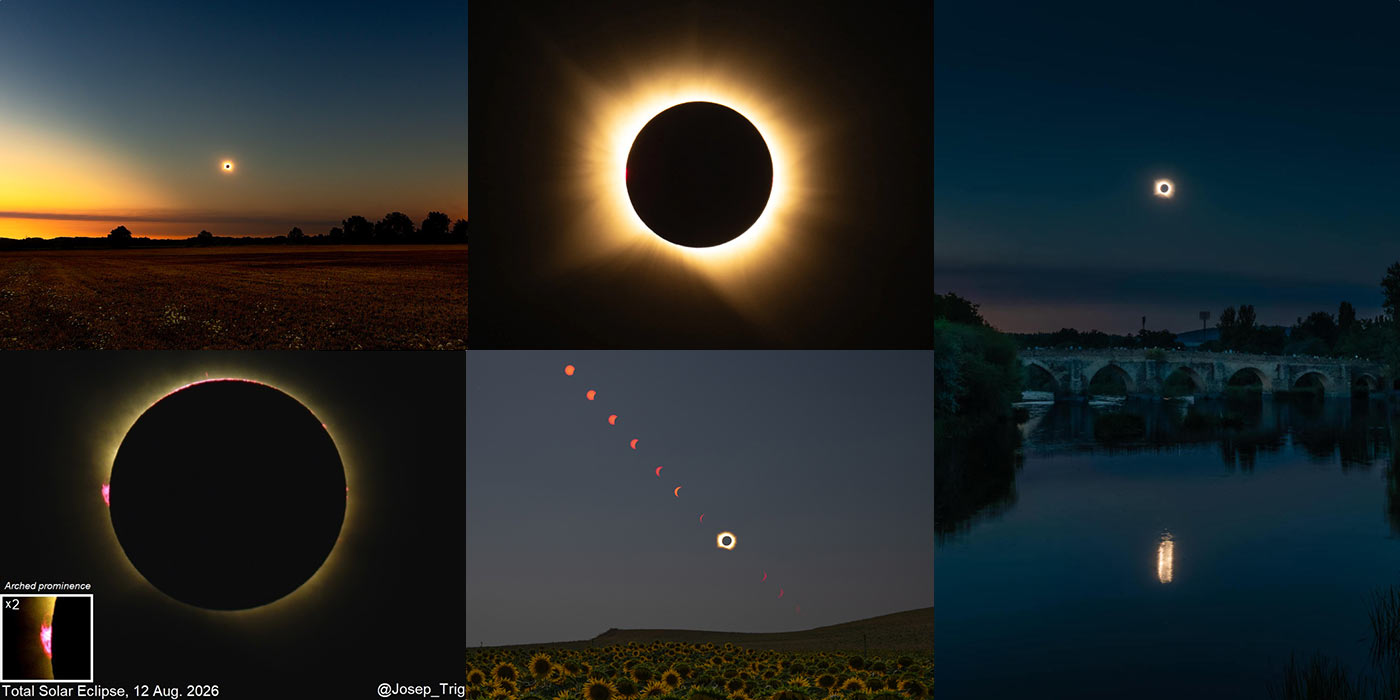
Let's celebrate the August 12 total solar eclipse through the eyes of photographers who experienced the Moon’s shadow sweeping across Spain. From Baily’s Beads and a glowing solar prominence to totality reflected in a river and framed by fields of sunflowers, these images capture both the science and extraordinary beauty of one of nature’s most spectacular celestial events. #PPOD #Eclipse
Featured Image
Aug 19, 2026
Planetary Picture of the Day - Week of August 10, 2026
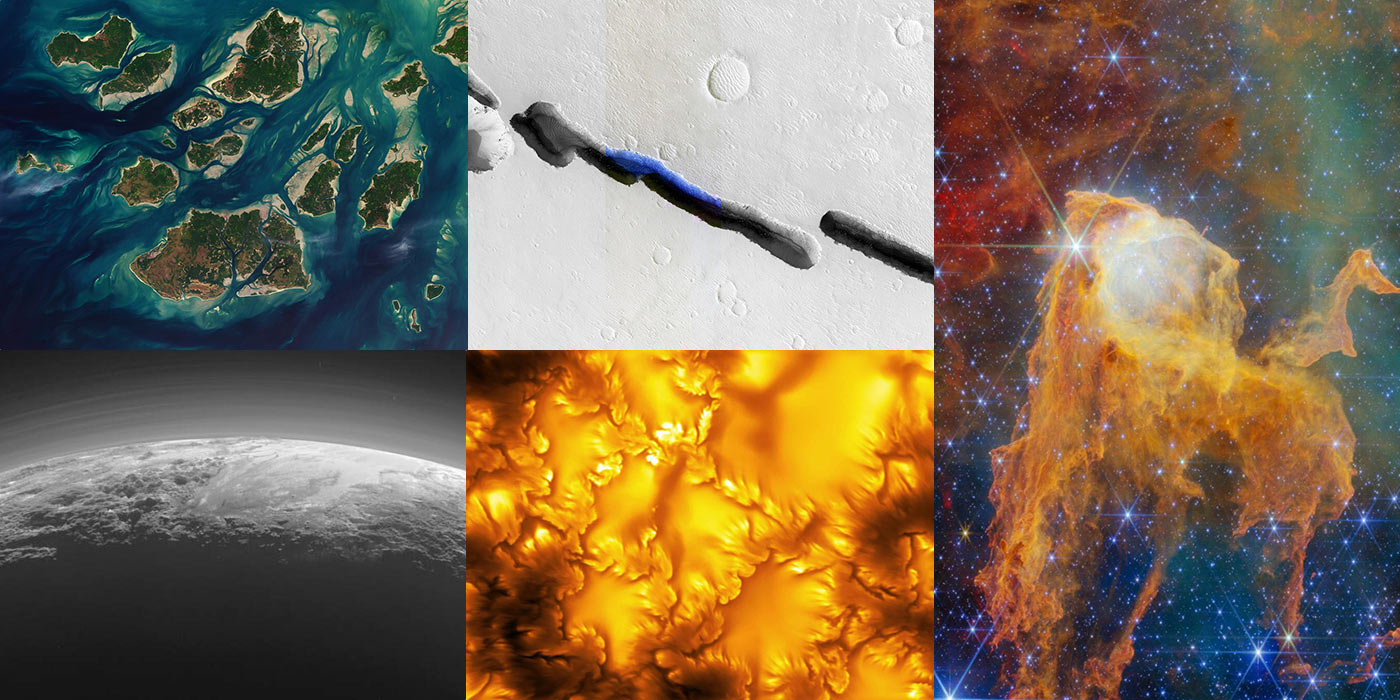
The universe is shaped by forces both immense and intricate, from fractured terrain on Mars and shifting tidal landscapes on Earth to tiny vortices dancing across the surface of the Sun. Farther afield, dramatic views of Pluto’s icy mountains and hazy atmosphere and a treasure chest of newborn stars in the Carina Nebula showcase the remarkable detail revealed by spacecraft and telescopes exploring the cosmos. #PPOD
Featured Image
Aug 12, 2026
Planetary Picture of the Day - August 3, 2026
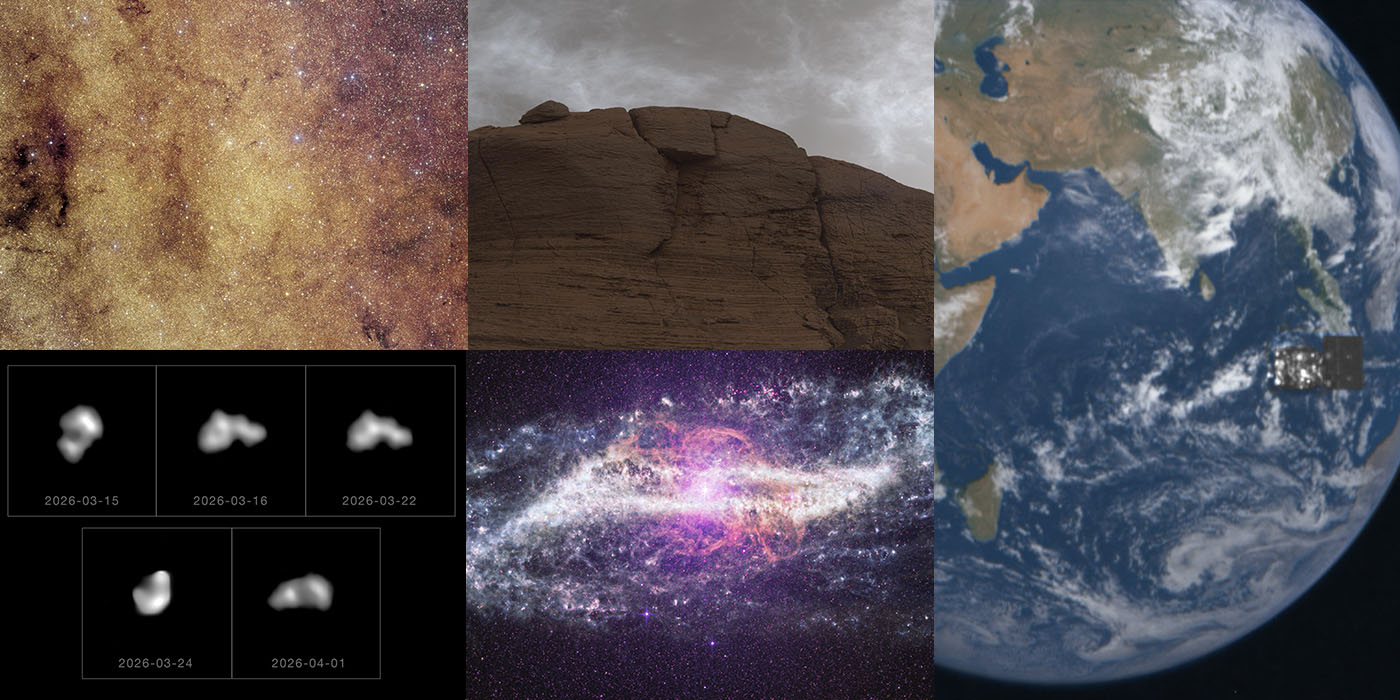
This week, we reveal hidden wonders across the cosmos, from delicate Martian clouds and a dust-shrouded galaxy to an asteroid with a never-before-seen shape and the crowded heart of the Milky Way. Together, these images showcase how new missions and advanced observatories continue to uncover surprising details about our solar system, our galaxy, and the universe beyond. #PPOD
Featured Image
Aug 5, 2026
Planetary Picture of the Day - Week of July 27, 2026
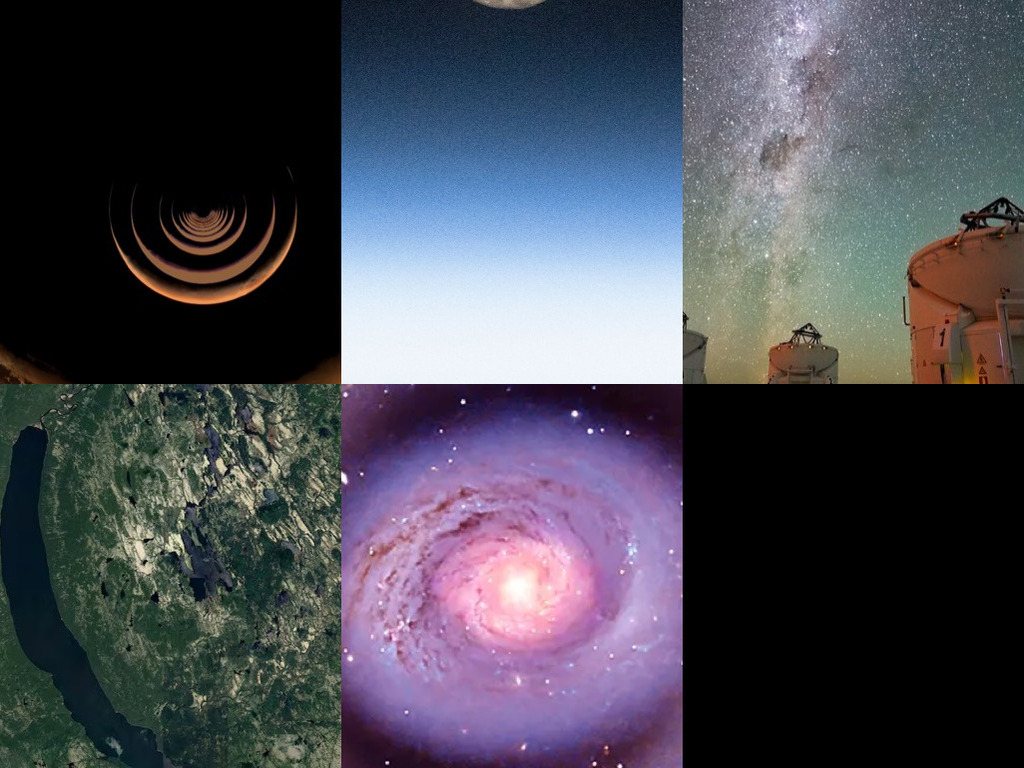
These images span the journey from our own backyard to distant galaxies, featuring Mars, the Moon, breathtaking night skies, and a fresh view of the star-forming galaxy Messier 94. Along the way, we celebrate exploration and discovery—from NASA’s Psyche mission preparing for its asteroid encounter to the revelation of a previously unknown impact crater on Earth —reminding us that there are still new wonders to uncover both on our own planet and across the cosmos. #PPOD
Featured Image
Jul 29, 2026
Planetary Picture of the Day - Week of July 20, 2026
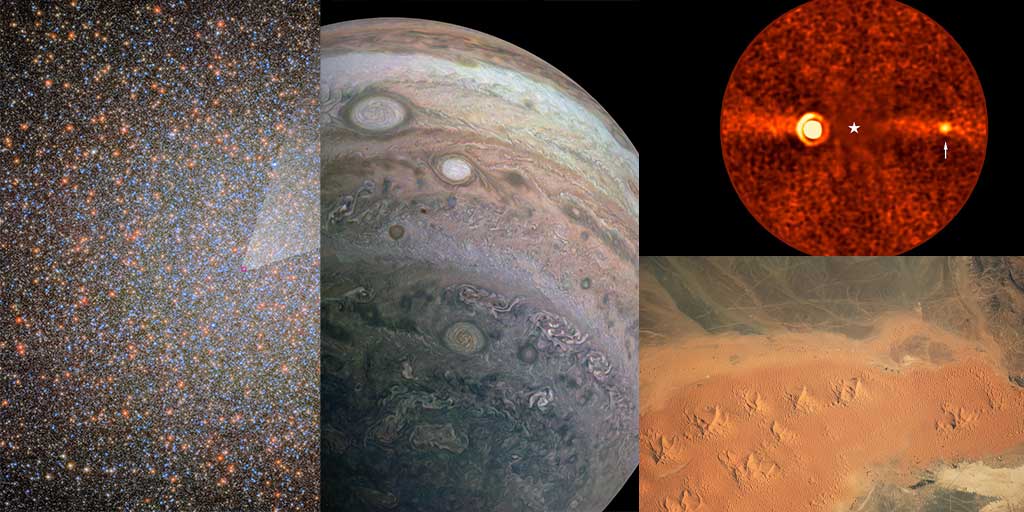
This week, we celebrate fifty years since Viking 1 became the first spacecraft to successfully land on and photograph the surface of Mars, alongside stunning new views of worlds, stars, and galaxies that continue to expand our understanding of the universe. From sculpted Sahara sand dunes and Jupiter’s colorful cloud bands to a newly discovered exoplanet and the first stellar-mass black hole identified in Omega Centauri, these images showcase the remarkable diversity of cosmic exploration. #PPOD
Research

Related Projects

Featured Image
SkyMapper • SETI • Citizen Science • Astronomy
SkyMapper: Expanding Access to Real-time Astronomy Through a Global Astronomical Network
SkyMapper and the SETI Institute are connecting educators, students and the public to live astronomical observations through a distributed astronomical network. #SkyMapper #SETI #Citizen Science #Astronomy
Featured Image
VPL
Virtual Planetary Laboratory
How can we best assess whether an exoplanet supports life? #VPL
Featured Image
Discovery and Futures Lab
What happens if life beyond Earth is discovered? The Discovery and Futures Lab at the SETI Institute fosters novel and anticipatory research at the intersection of science, society, our planet, and the search for life beyond Earth.  #Discovery and Futures Lab
Support Us

Support the
SETI Institute

Scientists are getting closer in their search for life beyond earth. But with limited federal funding for the search for extraterrestrial intelligence, supporters are the reason cutting-edge scientists can keep their eyes on the sky.