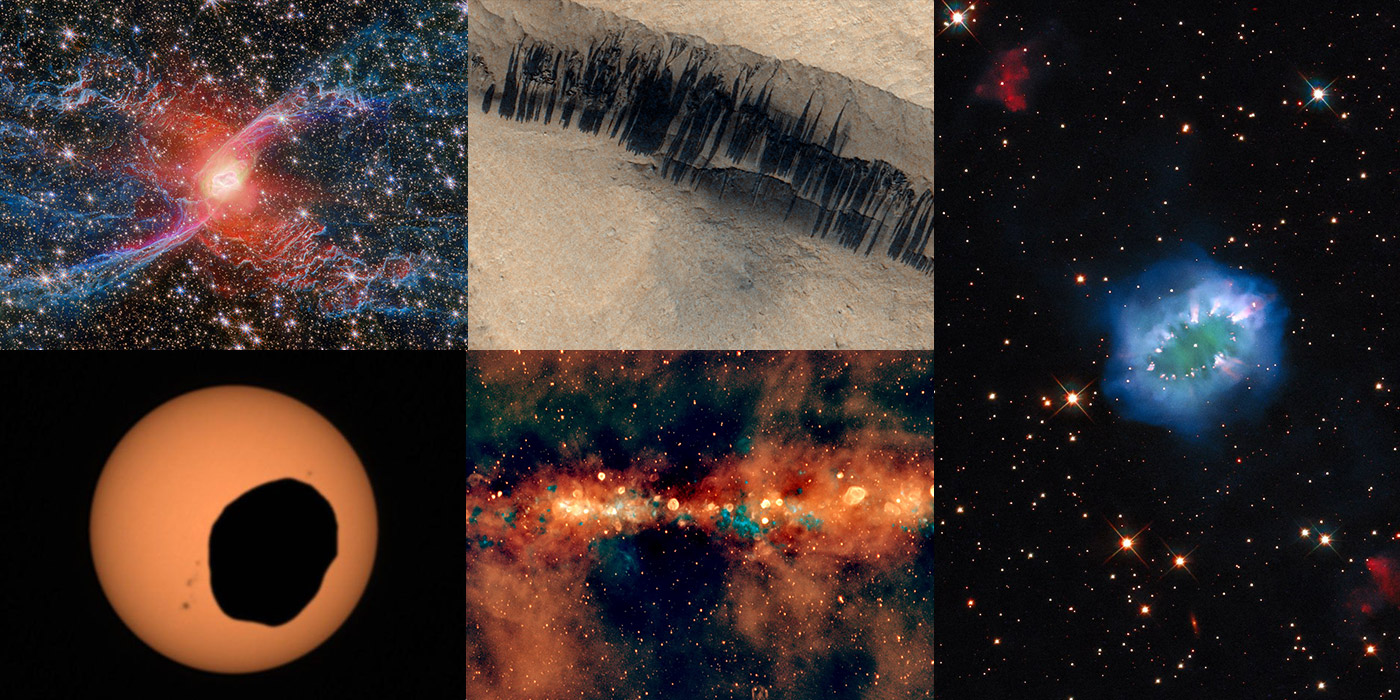








Credit: S. Mantovanini & the GLEAM-X team. Click here to zoom in.
Monday, 10 November 2025
Milky Way in Radio
Astronomers from the International Centre of Radio Astronomy Research (ICRAR) have created the largest low-frequency radio colour image of the Milky Way ever assembled.
This spectacular new image captures the Southern Hemisphere view of our Milky Way galaxy, revealing it across a wide range of radio wavelengths, or ‘colours’ of radio light.
It provides astronomers with new ways to explore the birth, evolution, and death of stars in our Galaxy.
Tuesday, 11 November 2025
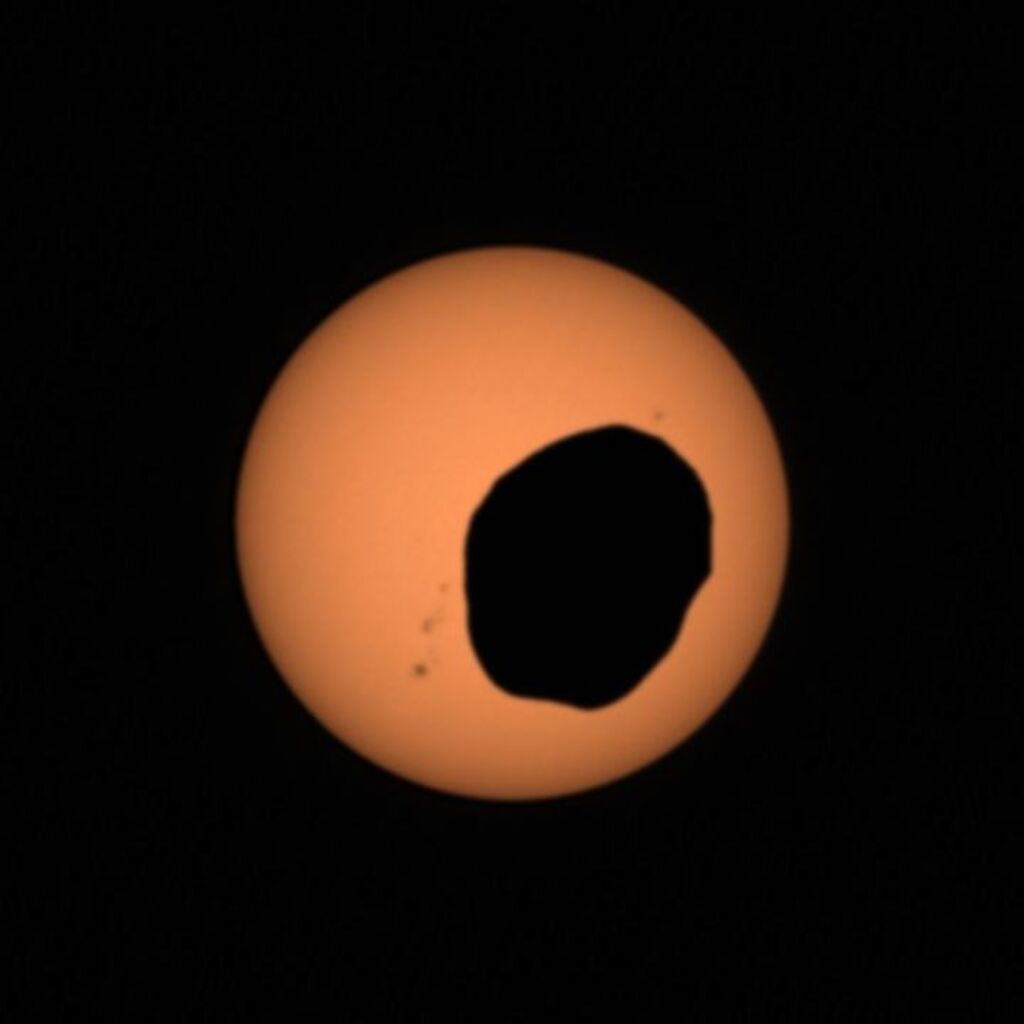
Martian Solar Eclipse
NASA’s Perseverance Mars rover used its Mastcam-Z camera system to shoot video of Phobos, one of Mars’ two moons, eclipsing the Sun. It’s the most zoomed-in, highest-frame-rate observation of a Phobos solar eclipse ever taken from the Martian surface. This image is a still taken from that video, which was shot in April 2022.
Wednesday, 12 November 2025
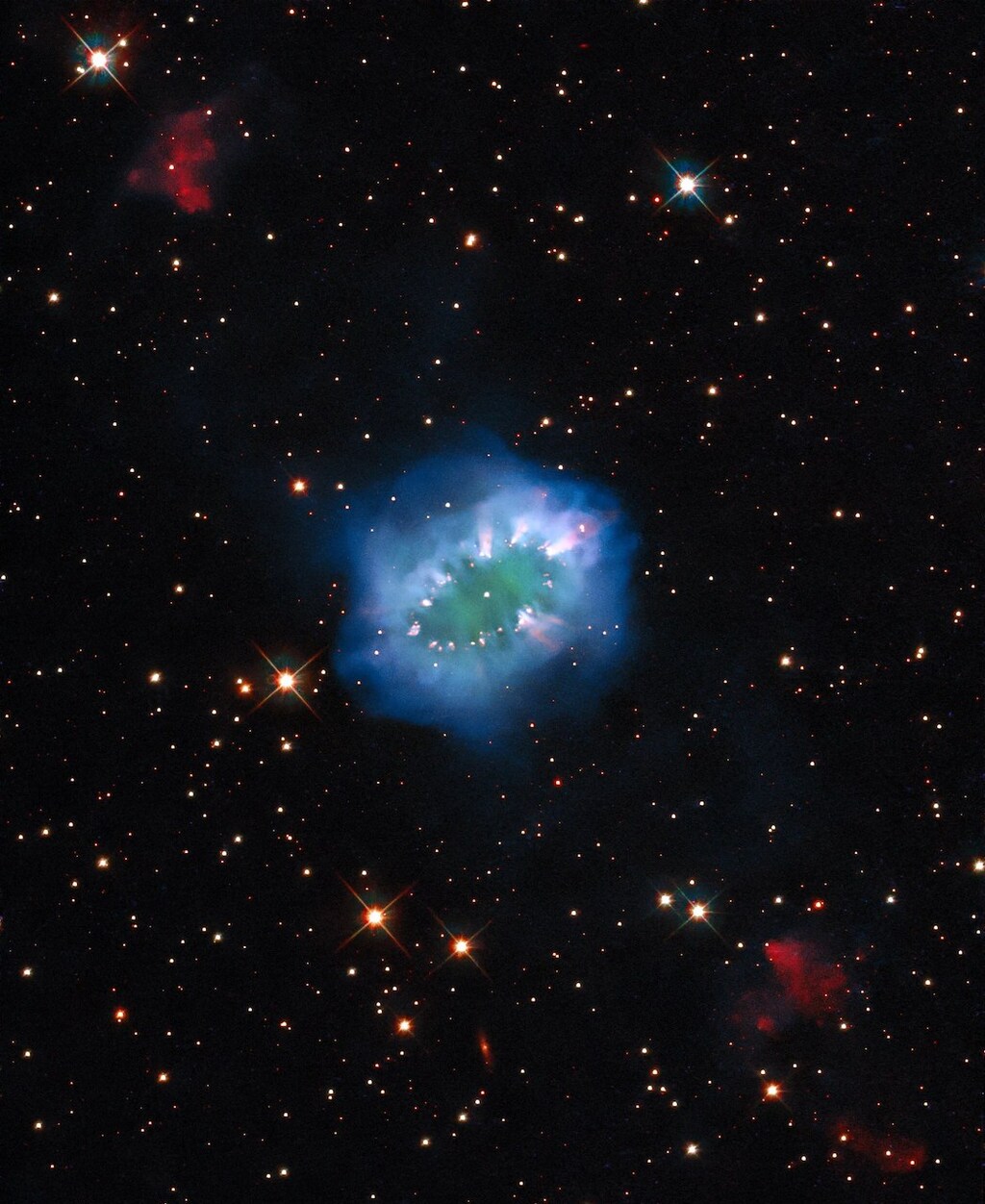
A Dazzling Cosmic Necklace
The interaction of two doomed stars has created this spectacular ring adorned with bright clumps of gas – a diamond necklace of cosmic proportions. Fittingly known as the “Necklace Nebula,” this planetary nebula is located 15,000 light-years away from Earth in the small, dim constellation of Sagitta (the Arrow).
Thursday, 13 November 2025
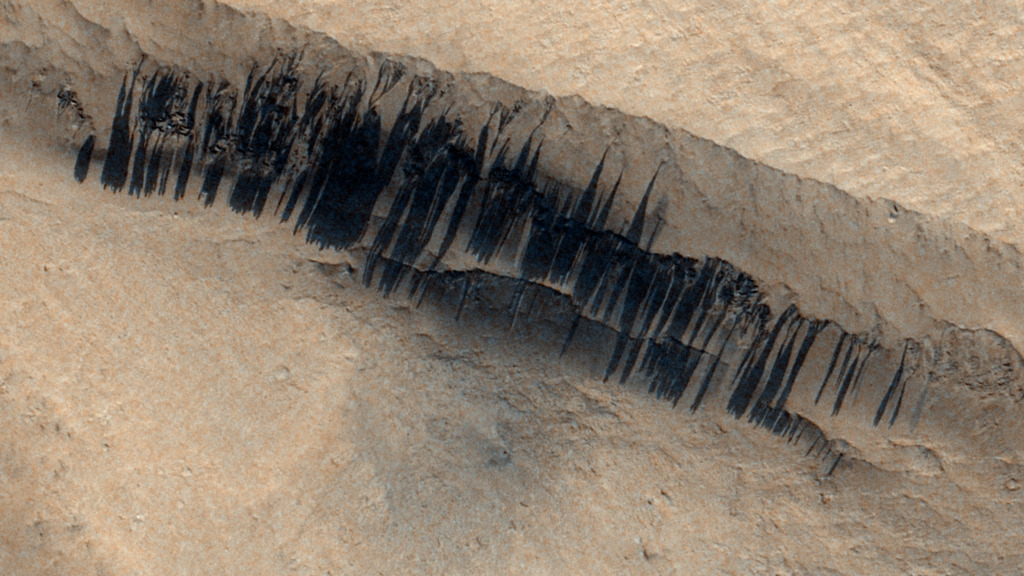
Swoosh!
When a meteoroid shook the edge of Apollinaris Mons on Mars, it triggered streaks that carved a hundred new scratches on the surface. The European Space Agency’s ExoMars Trace Gas Orbiter captured these dust avalanches on the slopes the night before Christmas in 2023.
This image from the Colour and Stereo Surface Imaging System (CaSSIS) onboard the European orbiter also shows the faint cluster of impact craters in the discoloured region at the base of the slopes. Additional imagery helped scientists determine that the impact and streak formation occurred between 2013 and 2017.
Scientists believe these streaks on Mars form when layers of fine dust suddenly slide off steep terrain. With no evidence of water, they concluded that these features mainly result from dry processes driven by wind and dust activity.
The image covers an area of approximately six square kilometers.
Friday, 14 November 2025
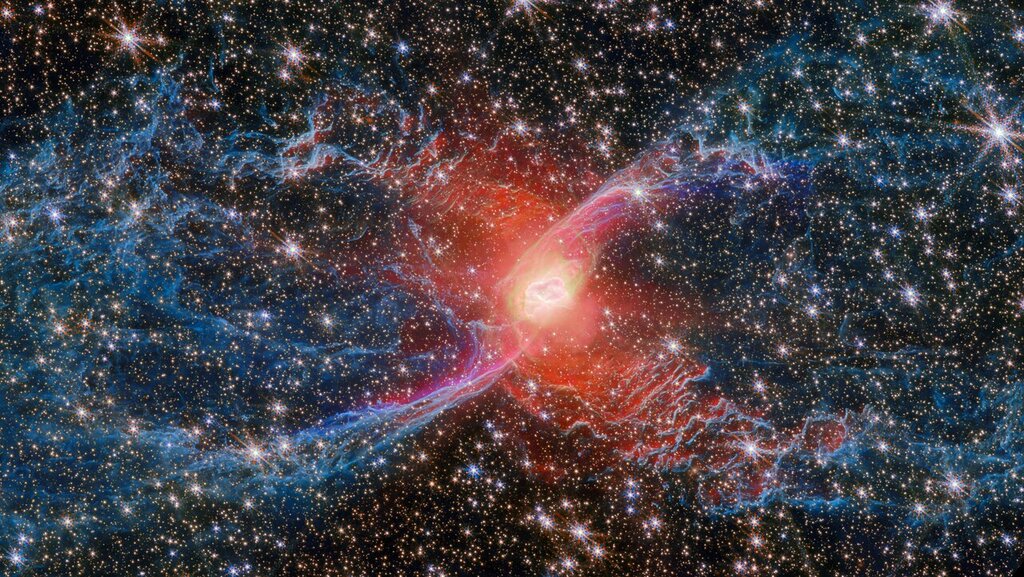
Red Spider Nebula
This new JWST picture features a cosmic creepy-crawly called NGC 6537 — the Red Spider Nebula. Using its Near-InfraRed Camera (NIRCam), JWST has revealed never-before-seen details in this picturesque planetary nebula with a rich backdrop of thousands of stars.
Planetary nebulae like the Red Spider Nebula form when ordinary stars like the Sun reach the end of their lives. After ballooning into cool red giants, these stars shed their outer layers, casting them into space and exposing their white-hot cores. Ultraviolet light from the central star ionises the cast-off material, causing it to glow. The planetary nebula phase of a star’s life is as fleeting as it is beautiful, lasting only a few tens of thousands of years.
This image zooms in on the centre of the nebula, where the searing hot core of a dying star strips electrons from the dusty gas that surrounds it. Though only one star is faintly visible at the heart of the nebula, researchers suspect that many of the nebula’s characteristics are caused by the presence of a second star.
News
Related News
Planetary Picture of the Day - Week of August 24, 2026
We journey from Mount Fuji as seen from orbit to the bubbling surface of Betelgeuse, exploring the forces that shape planets, moons, and stars across the cosmos. Along the way, JWST reveals the remains of a dying star, Curiosity uncovers clues to Mars’ volcanic past, and a fresh rocket impact on the Moon gives scientists a new opportunity to study how collisions reshape its surface. #PPOD
Planetary Picture of the Day - Week of August 17, 2026
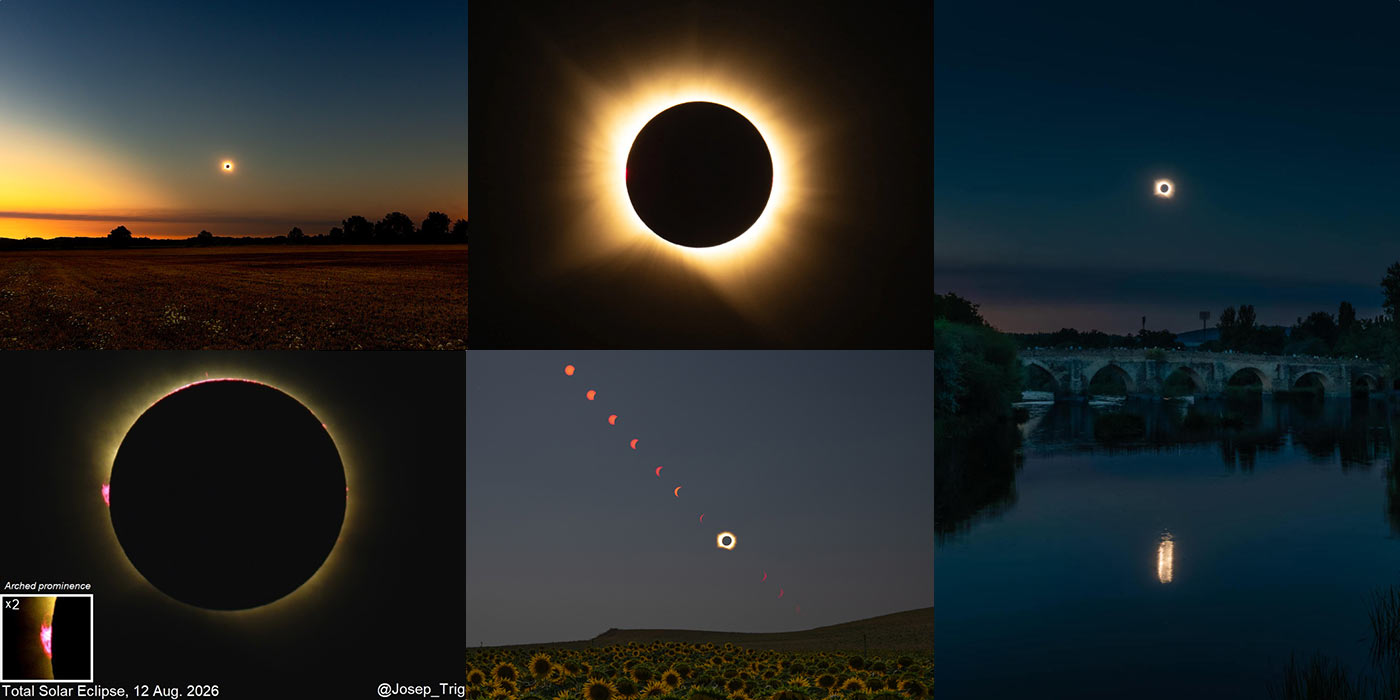
Let's celebrate the August 12 total solar eclipse through the eyes of photographers who experienced the Moon’s shadow sweeping across Spain. From Baily’s Beads and a glowing solar prominence to totality reflected in a river and framed by fields of sunflowers, these images capture both the science and extraordinary beauty of one of nature’s most spectacular celestial events. #PPOD #Eclipse
Planetary Picture of the Day - Week of August 10, 2026
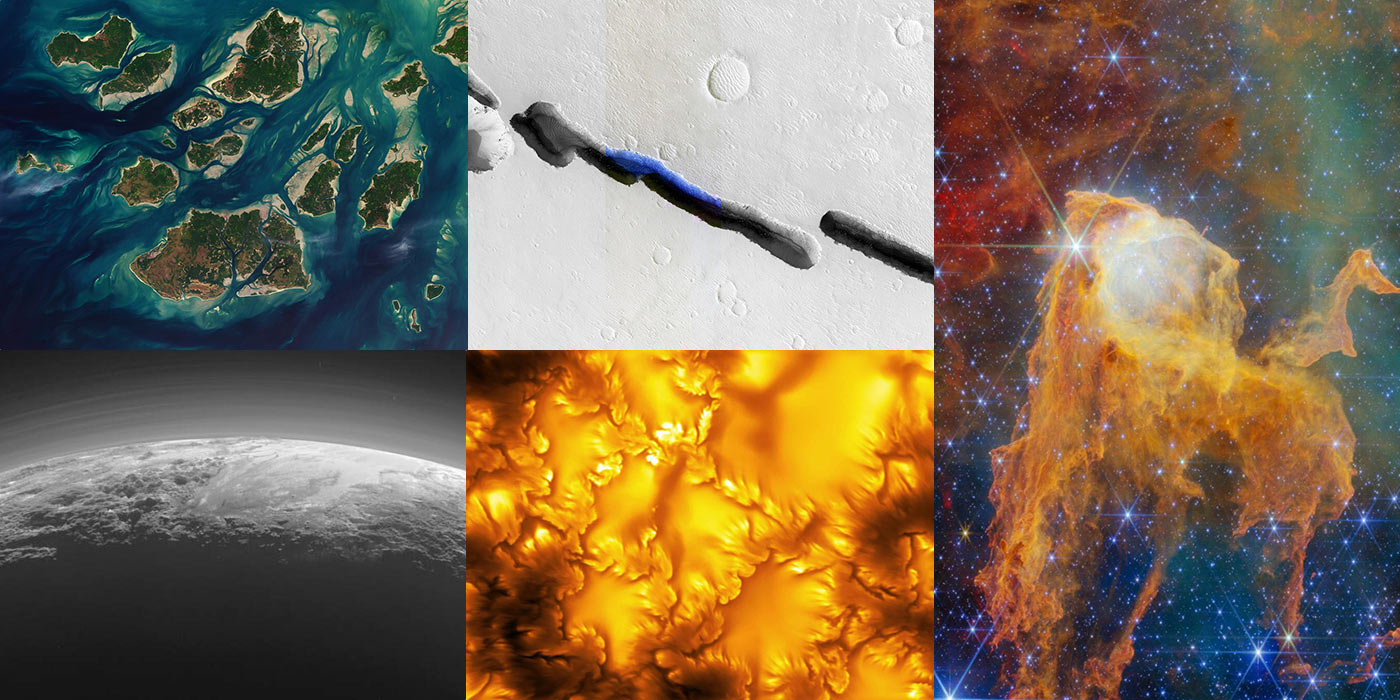
The universe is shaped by forces both immense and intricate, from fractured terrain on Mars and shifting tidal landscapes on Earth to tiny vortices dancing across the surface of the Sun. Farther afield, dramatic views of Pluto’s icy mountains and hazy atmosphere and a treasure chest of newborn stars in the Carina Nebula showcase the remarkable detail revealed by spacecraft and telescopes exploring the cosmos. #PPOD
Planetary Picture of the Day - August 3, 2026
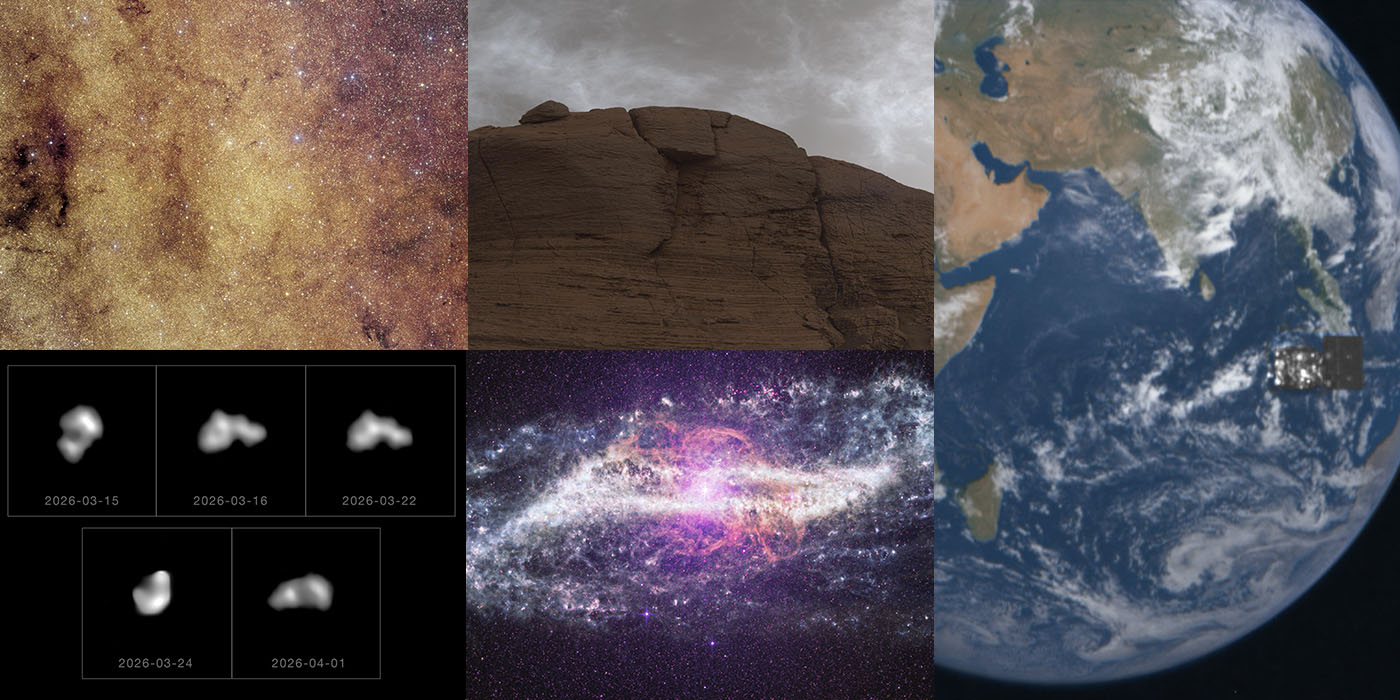
This week, we reveal hidden wonders across the cosmos, from delicate Martian clouds and a dust-shrouded galaxy to an asteroid with a never-before-seen shape and the crowded heart of the Milky Way. Together, these images showcase how new missions and advanced observatories continue to uncover surprising details about our solar system, our galaxy, and the universe beyond. #PPOD
Planetary Picture of the Day - Week of July 27, 2026
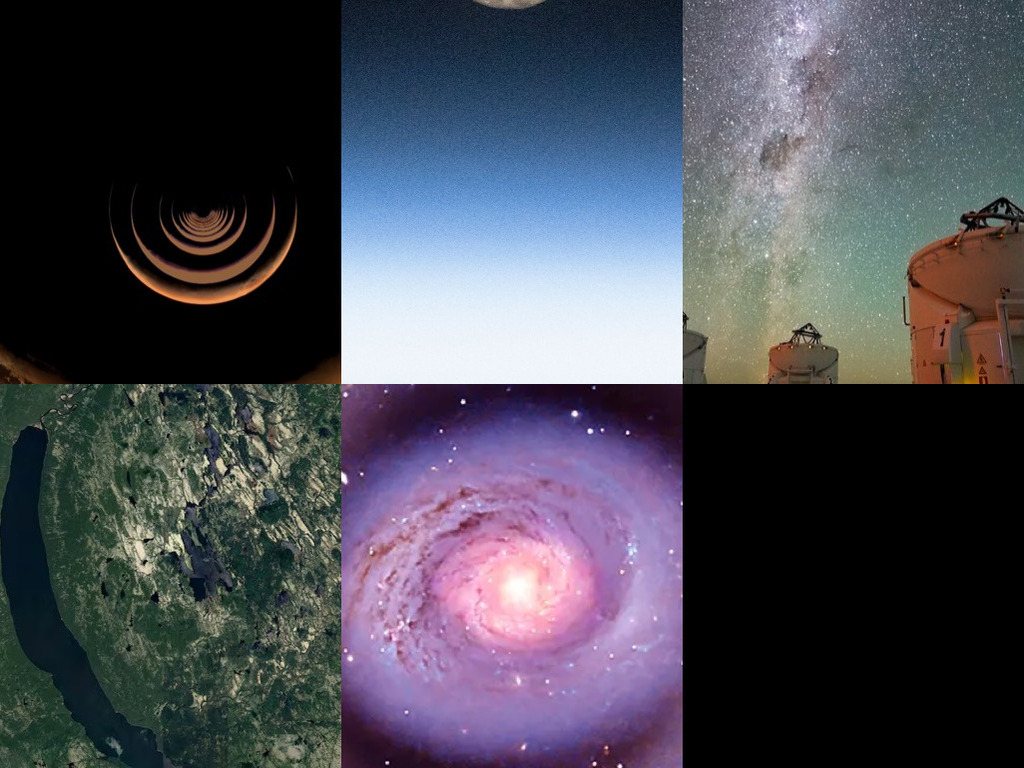
These images span the journey from our own backyard to distant galaxies, featuring Mars, the Moon, breathtaking night skies, and a fresh view of the star-forming galaxy Messier 94. Along the way, we celebrate exploration and discovery—from NASA’s Psyche mission preparing for its asteroid encounter to the revelation of a previously unknown impact crater on Earth —reminding us that there are still new wonders to uncover both on our own planet and across the cosmos. #PPOD
Planetary Picture of the Day - Week of July 20, 2026
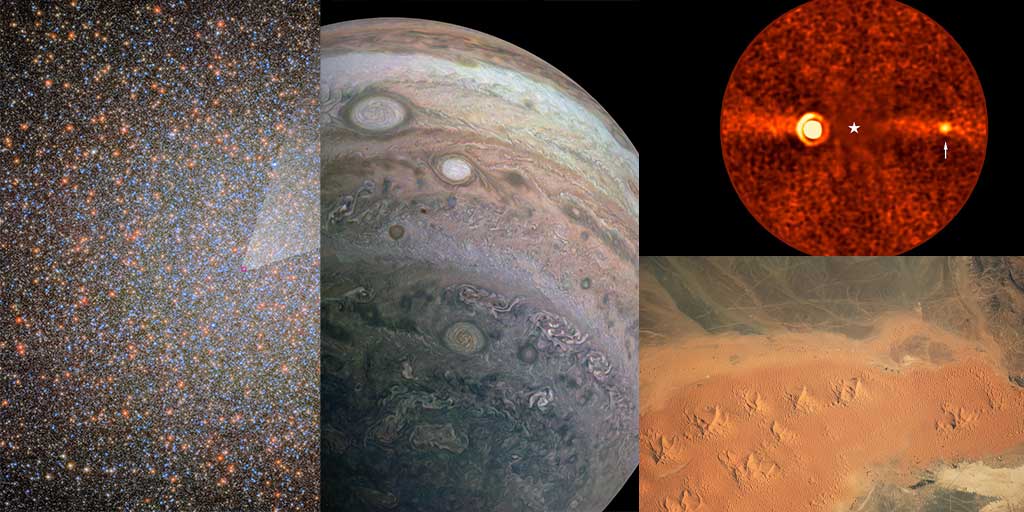
This week, we celebrate fifty years since Viking 1 became the first spacecraft to successfully land on and photograph the surface of Mars, alongside stunning new views of worlds, stars, and galaxies that continue to expand our understanding of the universe. From sculpted Sahara sand dunes and Jupiter’s colorful cloud bands to a newly discovered exoplanet and the first stellar-mass black hole identified in Omega Centauri, these images showcase the remarkable diversity of cosmic exploration. #PPODResearch
Related Projects
SkyMapper: Expanding Access to Real-time Astronomy Through a Global Astronomical Network
SkyMapper and the SETI Institute are connecting educators, students and the public to live astronomical observations through a distributed astronomical network. #SkyMapper #SETI #Citizen Science #Astronomy
Virtual Planetary Laboratory
How can we best assess whether an exoplanet supports life? #VPL
Discovery and Futures Lab
What happens if life beyond Earth is discovered? The Discovery and Futures Lab at the SETI Institute fosters novel and anticipatory research at the intersection of science, society, our planet, and the search for life beyond Earth. #Discovery and Futures LabSupport the
SETI Institute
Scientists are getting closer in their search for life beyond earth. But with limited federal funding for the search for extraterrestrial intelligence, supporters are the reason cutting-edge scientists can keep their eyes on the sky.