






Monday, 25 May 2026
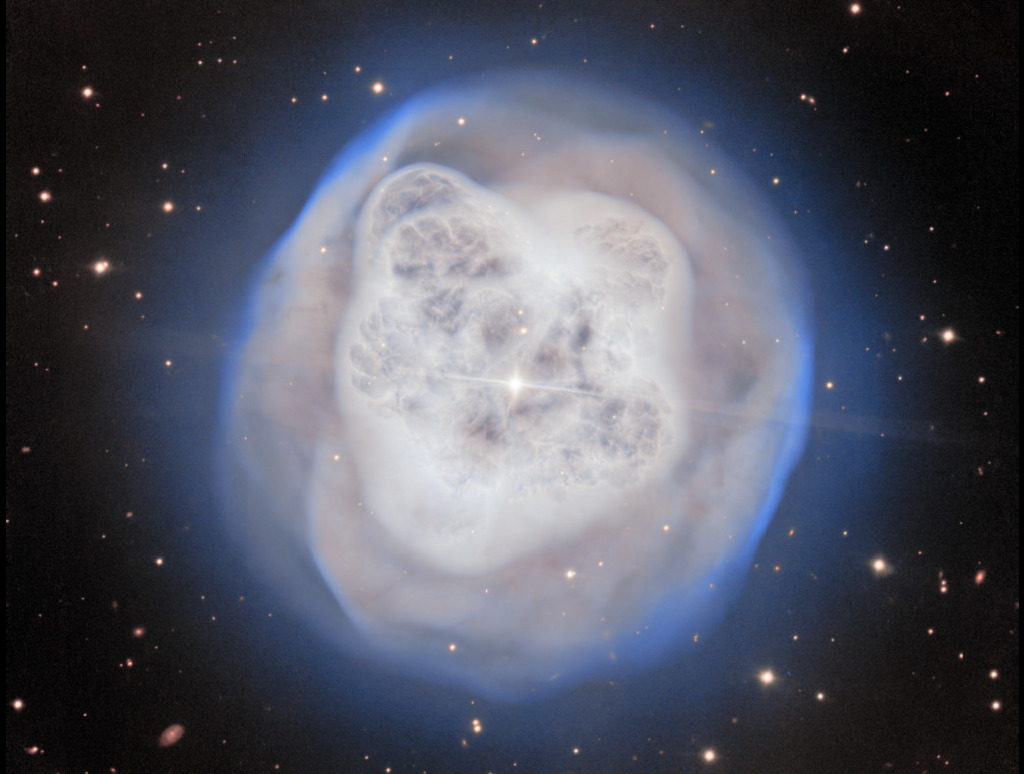
Crystal Ball Nebula
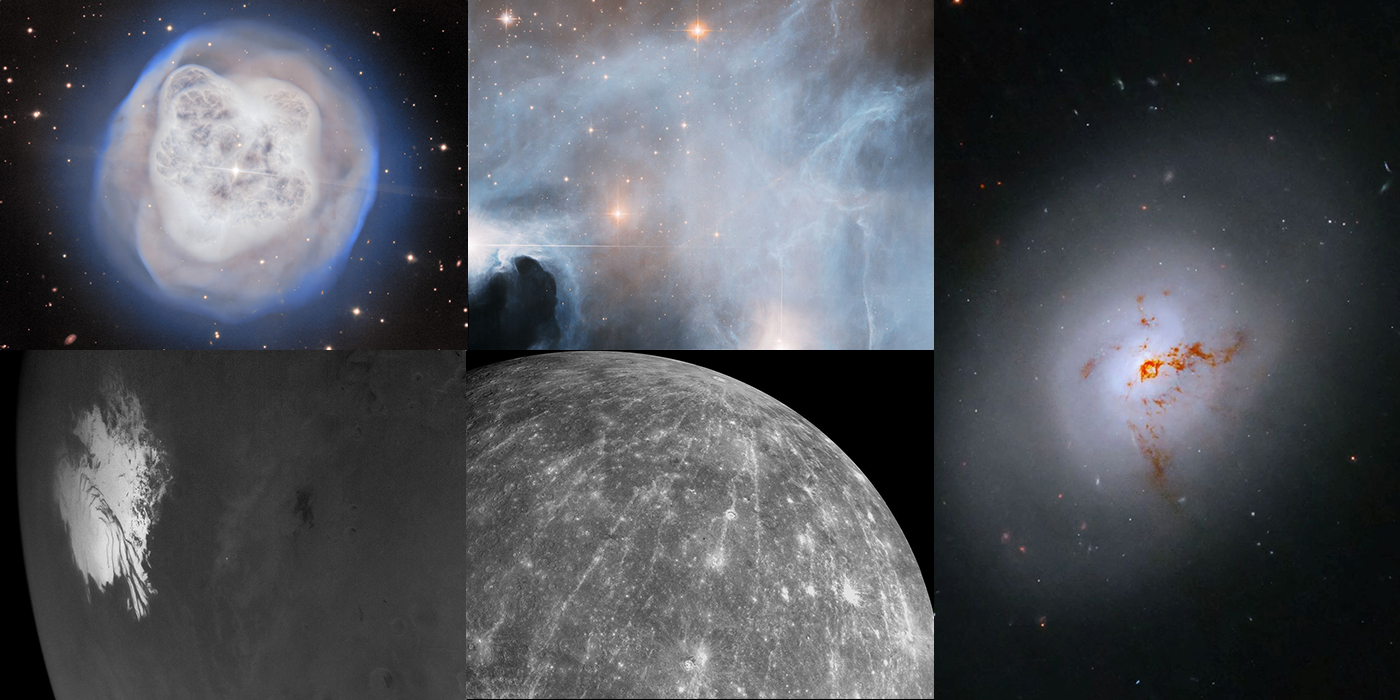
NGC 1514, nicknamed the Crystal Ball Nebula, is showcased in this enchanting image captured by Gemini Multi-Object Spectrograph (GMOS) on the Gemini North telescope, located on Maunakea in Hawai‘i. Gemini North is one half of the International Gemini Observatory, partly funded by the U.S. National Science Foundation (NSF) and operated by NSF NOIRLab.
German–British astronomer William Herschel discovered the Crystal Ball Nebula in 1790. It’s located in the constellation Taurus, near the border of Perseus. While, culturally, crystal balls are known for divining the future, the Crystal Ball Nebula provides us with a snapshot of the final stages of a star’s life from long ago. It sits around 1500 light-years from Earth. This means the light captured in this image left its source around 1500 years ago, traveling across the Universe before finally reaching Gemini North.
Tuesday, 26 May 2026
Martian South Pole
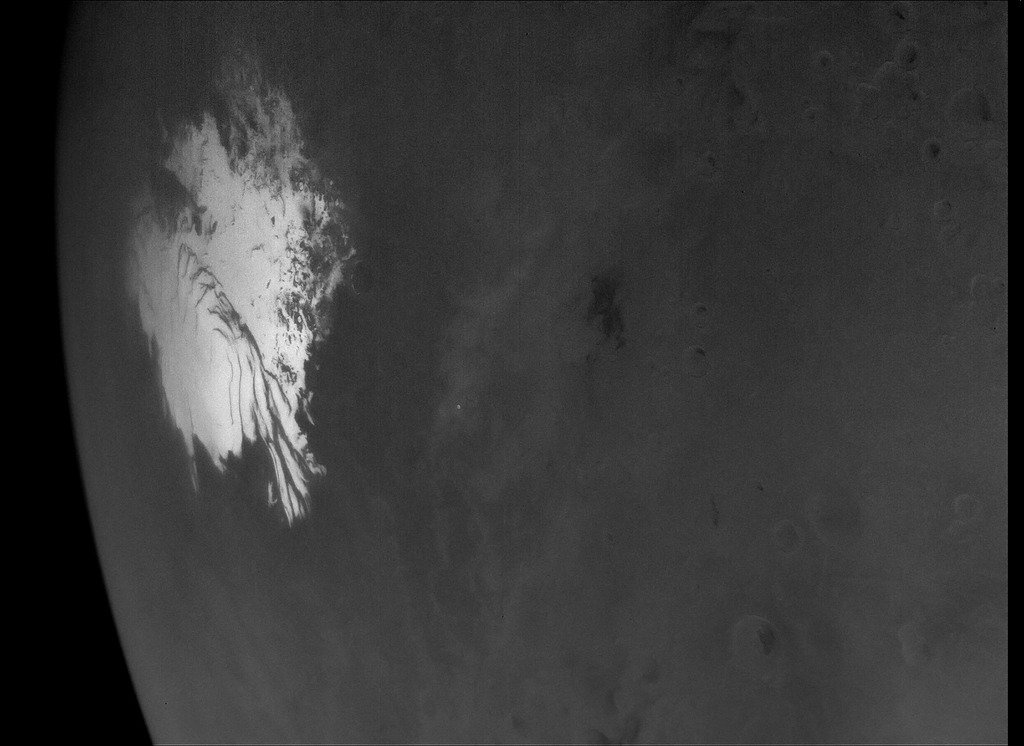
This is the highest-resolution view of the water ice-rich south polar cap of Mars captured by NASA’s Psyche mission after it made its close approach with the planet for a gravity assist. The image scale is around 1.14 kilometers per pixel. The cap itself extends across more than 700 kilometers. The image was acquired with Imager A on May 15, 2026, at about 1:53 p.m. PDT.
With Mars in the rearview mirror, the spacecraft will soon resume use of its solar-electric propulsion system to make a beeline to the main asteroid belt, between the orbits of Mars and Jupiter. When it arrives in August 2029, it will insert itself into orbit around the asteroid Psyche, which is thought to be the partial core of a planetesimal, a building block of an early planet.
Wednesday, 27 May 2026
Ghostly Cloud Alive with Star Formation
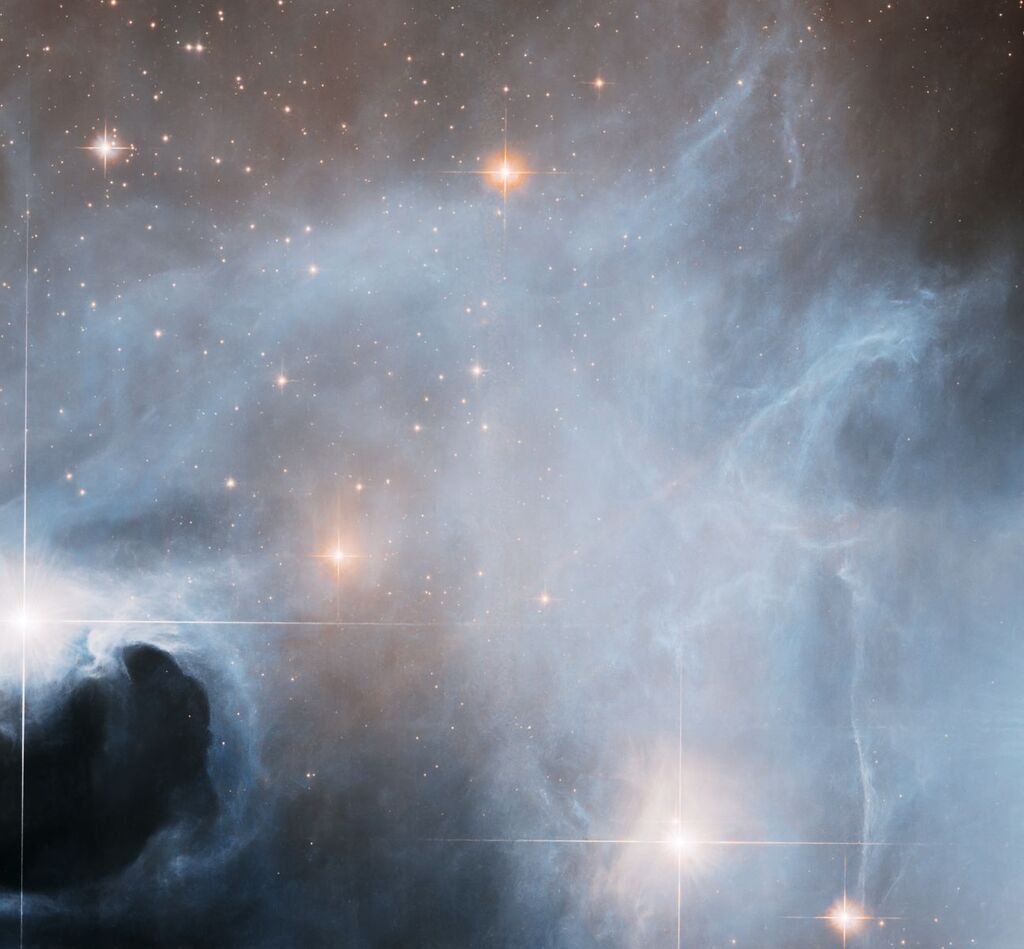
While this eerie NASA Hubble Space Telescope image may look ghostly, it’s actually full of new life! Lupus 3 is a star-forming cloud about 500 light-years away in the constellation Scorpius. Bright T Tauri stars shine at the left, bottom right, and upper center, while other young stellar objects dot the image.
Protostars are considered T Tauri stars when their enveloping cloud of gas and dust dissipates from radiation and stellar winds; they’re usually less than 10 million years old and vary in brightness, both randomly and periodically, due to the environment and nature of a forming star.
Thursday, 28 May 2026
The Impressive Rays of Mercury's Hokusai Crater
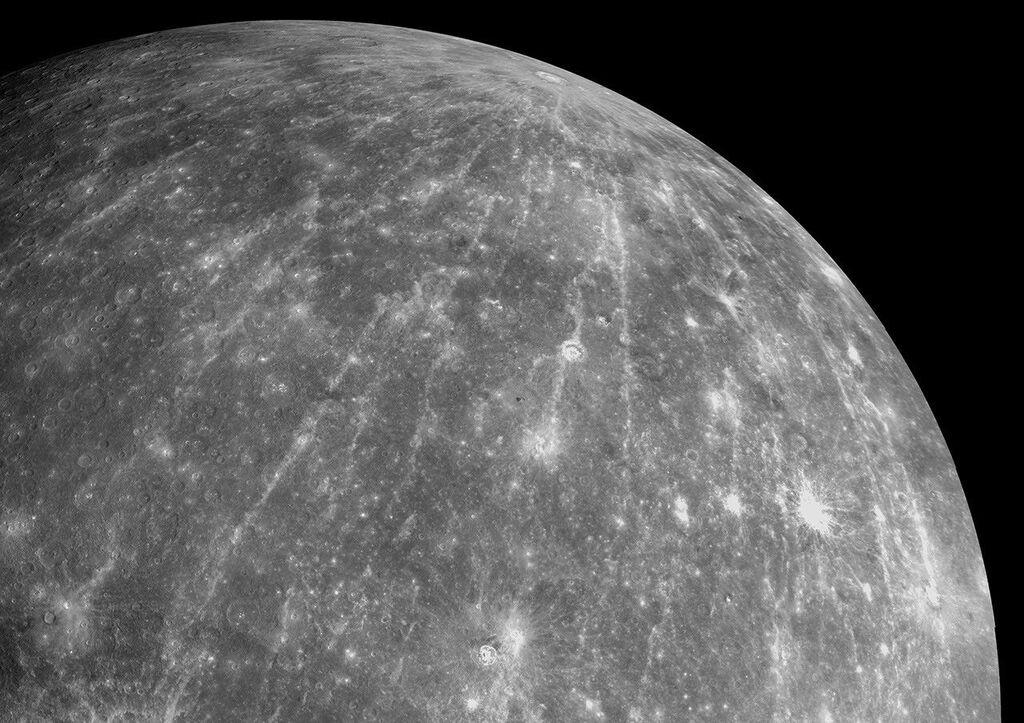
This mosaic of images taken on Oct. 6, 2008, by NASA's MESSENGER spacecraft shows an impact crater on Mercury named Hokusai. The crater has an impressive system of rays that extends more than about 1,000 kilometers across the planet. Rays form when something impacts the surface of a celestial body. Material is kicked up from beneath the surface and thrown outward from the crater.
Mercury and other airless planetary bodies are constantly bombarded by micrometeoroids and energetic ions, producing a process known as space weathering. Craters with bright rays are thought to be relatively young because the rays are still visible, indicating they have had less exposure to weathering than craters without rays. Hokusai crater is named for Japanese artist Katsushika Hokusai (1760–1849).
Friday, 29 May 2026
Galaxy in Transition
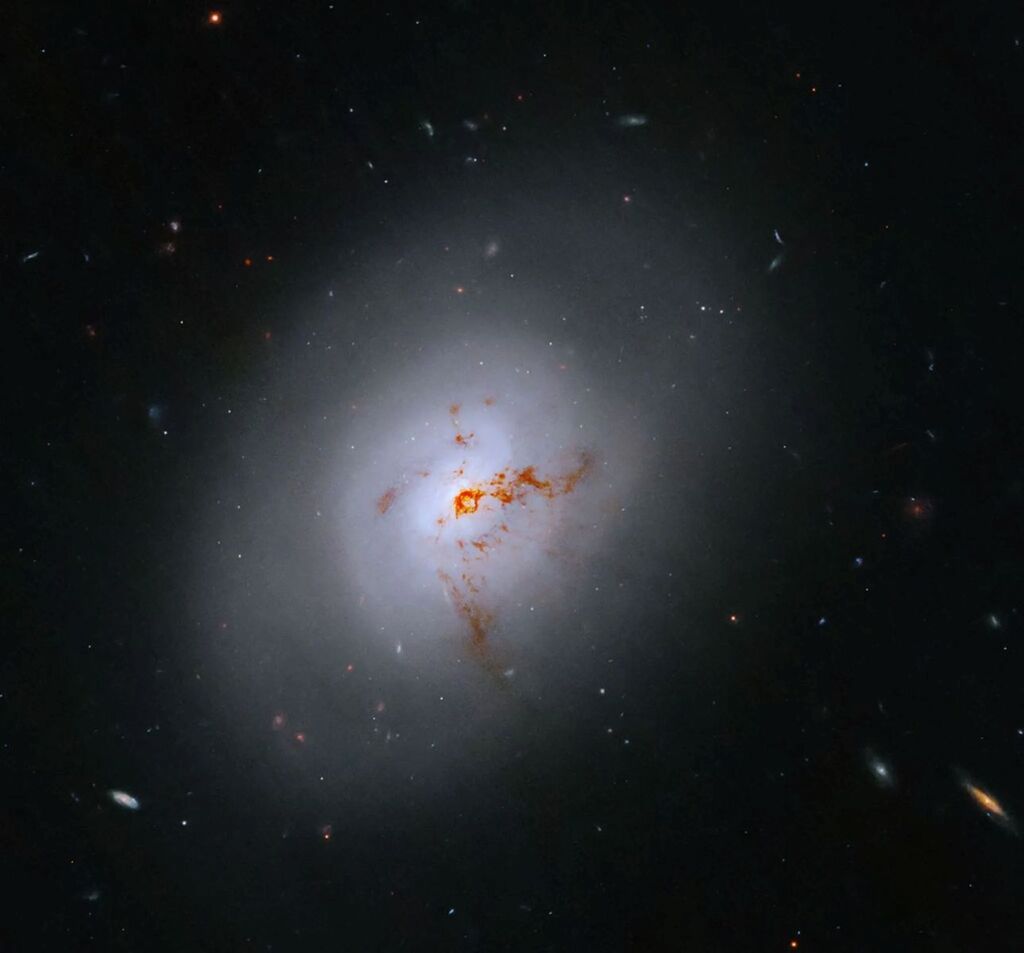
This NASA Hubble Space Telescope image reveals an enigmatic galaxy with a bright center and a face that hints at spiral structure, yet it holds no obvious spiral arms. Reddish-brown clumps and filaments of dust partially obscure the galaxy’s full face, while red, blue, and orange light from distant galaxies shines through its diffuse outer regions, dotting the inky-black background.
NGC 1266 is a lenticular galaxy located some 100 million light-years away in the constellation Eridanus (the Celestial River). Astronomers classify lenticulars as transitional galaxies that represent an evolutionary bridge between spirals and ellipticals. Lenticulars are “lens-shaped” and have a bright central bulge and flattened disk-like spirals, but they have no spiral arms and little to no star formation like ellipticals.
News
Related News
Planetary Picture of the Day - Week of August 24, 2026
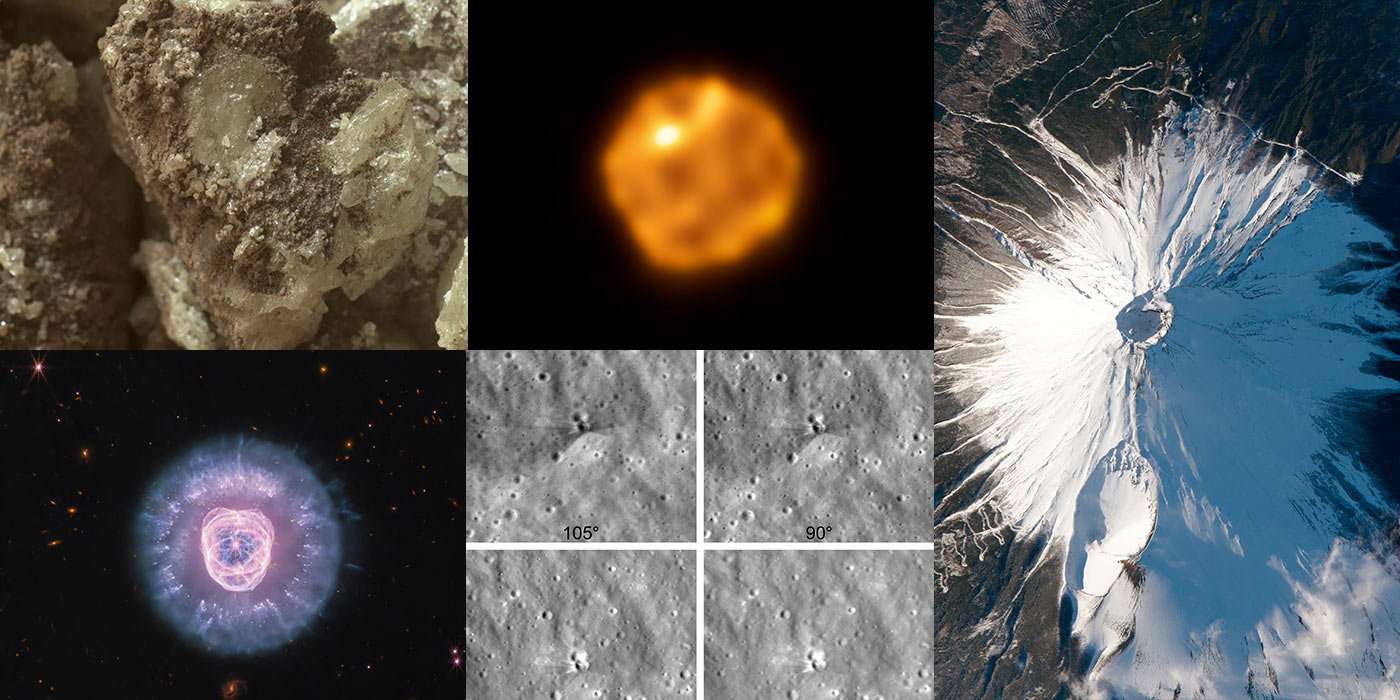
We journey from Mount Fuji as seen from orbit to the bubbling surface of Betelgeuse, exploring the forces that shape planets, moons, and stars across the cosmos. Along the way, JWST reveals the remains of a dying star, Curiosity uncovers clues to Mars’ volcanic past, and a fresh rocket impact on the Moon gives scientists a new opportunity to study how collisions reshape its surface. #PPOD

Planetary Picture of the Day - Week of August 17, 2026
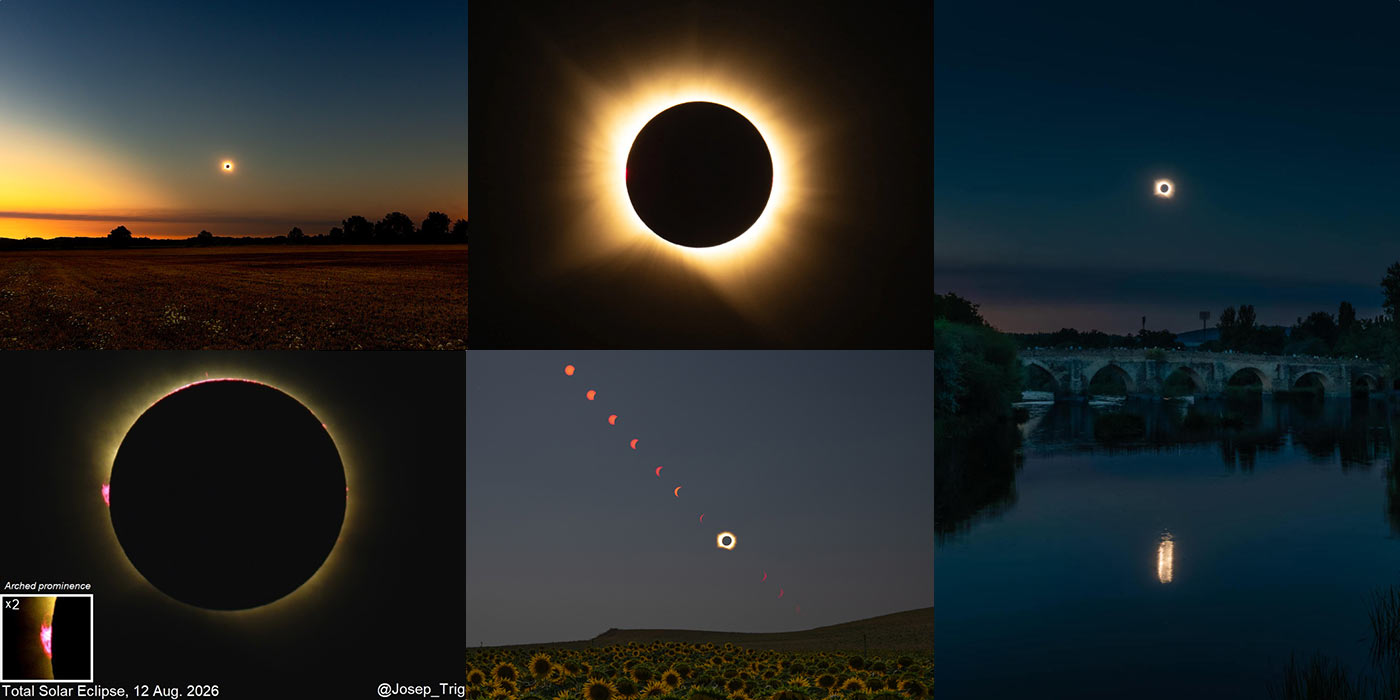
Let's celebrate the August 12 total solar eclipse through the eyes of photographers who experienced the Moon’s shadow sweeping across Spain. From Baily’s Beads and a glowing solar prominence to totality reflected in a river and framed by fields of sunflowers, these images capture both the science and extraordinary beauty of one of nature’s most spectacular celestial events. #PPOD #Eclipse
Planetary Picture of the Day - Week of August 10, 2026
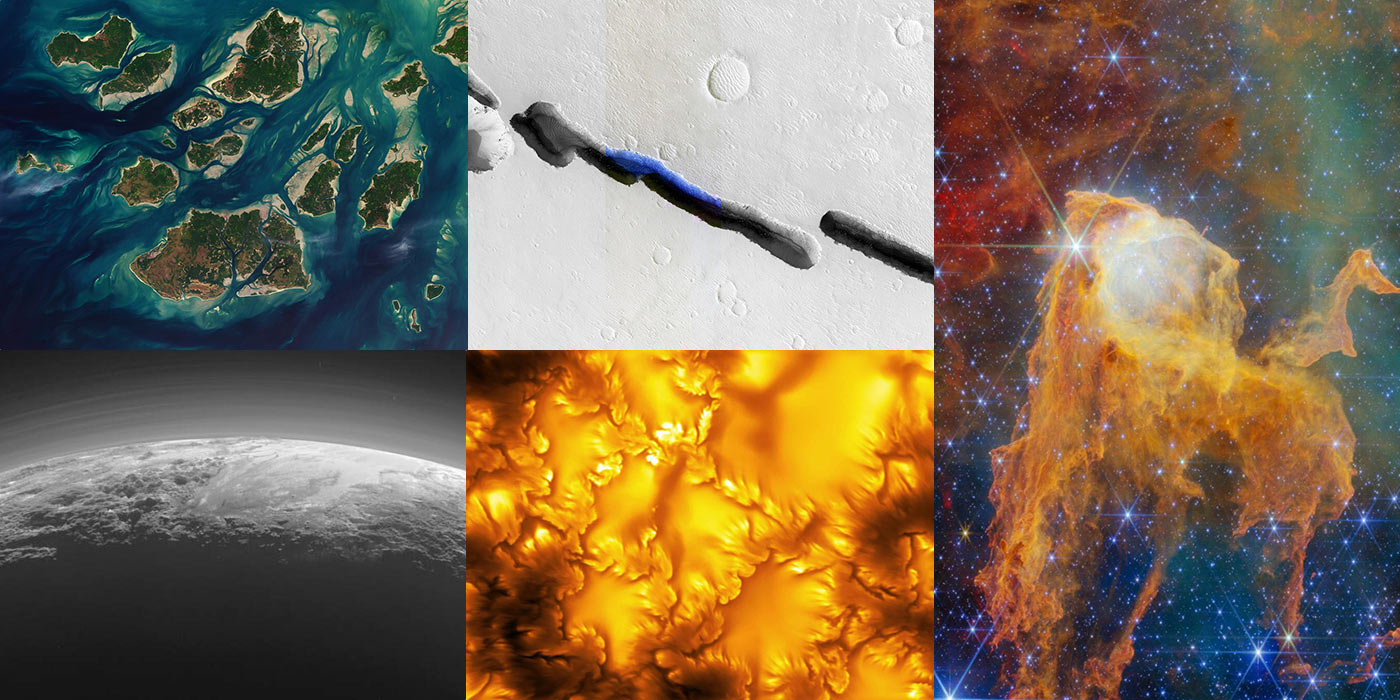
The universe is shaped by forces both immense and intricate, from fractured terrain on Mars and shifting tidal landscapes on Earth to tiny vortices dancing across the surface of the Sun. Farther afield, dramatic views of Pluto’s icy mountains and hazy atmosphere and a treasure chest of newborn stars in the Carina Nebula showcase the remarkable detail revealed by spacecraft and telescopes exploring the cosmos. #PPOD
Planetary Picture of the Day - August 3, 2026
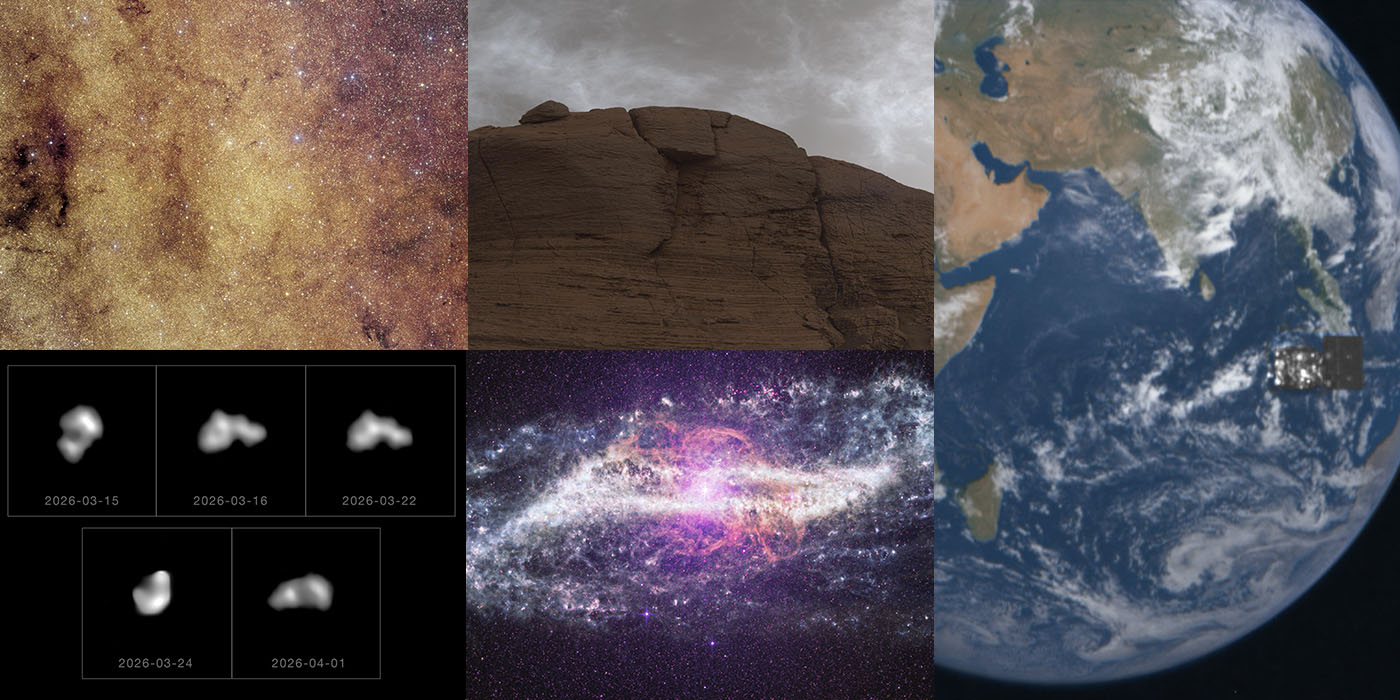
This week, we reveal hidden wonders across the cosmos, from delicate Martian clouds and a dust-shrouded galaxy to an asteroid with a never-before-seen shape and the crowded heart of the Milky Way. Together, these images showcase how new missions and advanced observatories continue to uncover surprising details about our solar system, our galaxy, and the universe beyond. #PPOD
Planetary Picture of the Day - Week of July 27, 2026
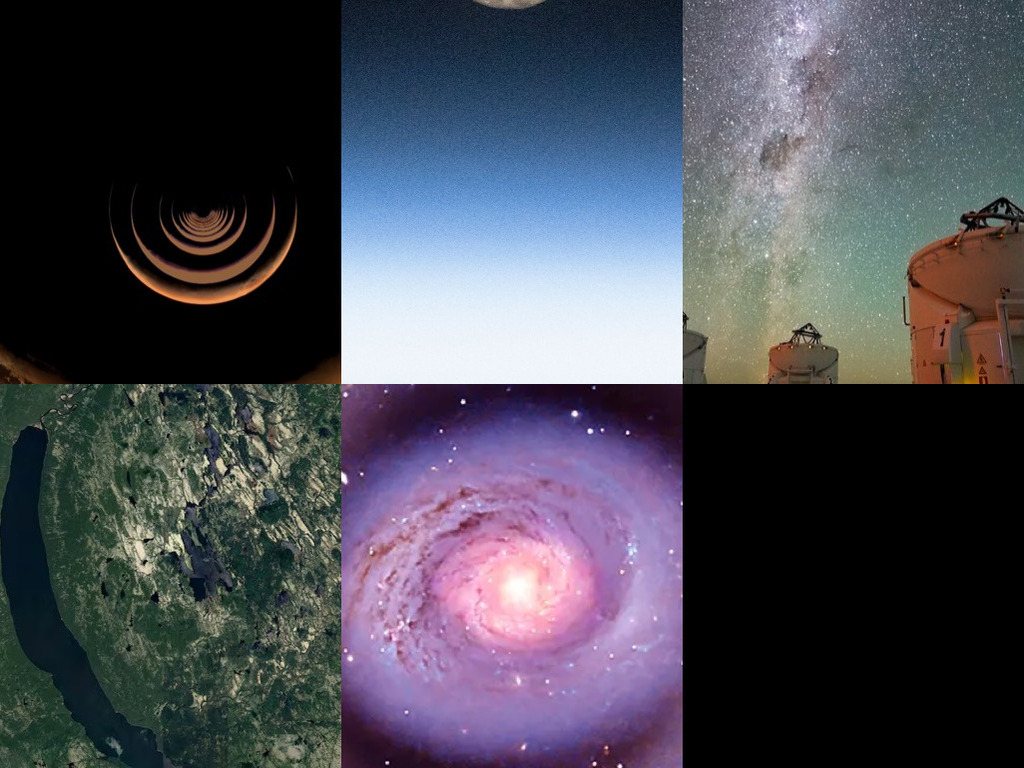
These images span the journey from our own backyard to distant galaxies, featuring Mars, the Moon, breathtaking night skies, and a fresh view of the star-forming galaxy Messier 94. Along the way, we celebrate exploration and discovery—from NASA’s Psyche mission preparing for its asteroid encounter to the revelation of a previously unknown impact crater on Earth —reminding us that there are still new wonders to uncover both on our own planet and across the cosmos. #PPOD
Planetary Picture of the Day - Week of July 20, 2026
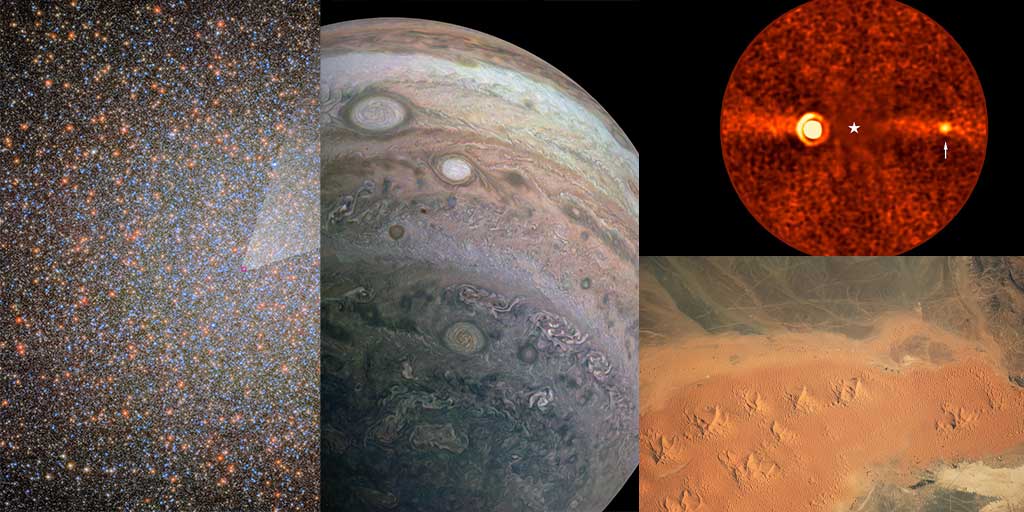
This week, we celebrate fifty years since Viking 1 became the first spacecraft to successfully land on and photograph the surface of Mars, alongside stunning new views of worlds, stars, and galaxies that continue to expand our understanding of the universe. From sculpted Sahara sand dunes and Jupiter’s colorful cloud bands to a newly discovered exoplanet and the first stellar-mass black hole identified in Omega Centauri, these images showcase the remarkable diversity of cosmic exploration. #PPODResearch
Related Projects
SkyMapper: Expanding Access to Real-time Astronomy Through a Global Astronomical Network
SkyMapper and the SETI Institute are connecting educators, students and the public to live astronomical observations through a distributed astronomical network. #SkyMapper #SETI #Citizen Science #Astronomy
Virtual Planetary Laboratory
How can we best assess whether an exoplanet supports life? #VPL
Discovery and Futures Lab
What happens if life beyond Earth is discovered? The Discovery and Futures Lab at the SETI Institute fosters novel and anticipatory research at the intersection of science, society, our planet, and the search for life beyond Earth. #Discovery and Futures LabSupport the
SETI Institute
Scientists are getting closer in their search for life beyond earth. But with limited federal funding for the search for extraterrestrial intelligence, supporters are the reason cutting-edge scientists can keep their eyes on the sky.