Planetary Picture of the Day
Week of May 20, 2024
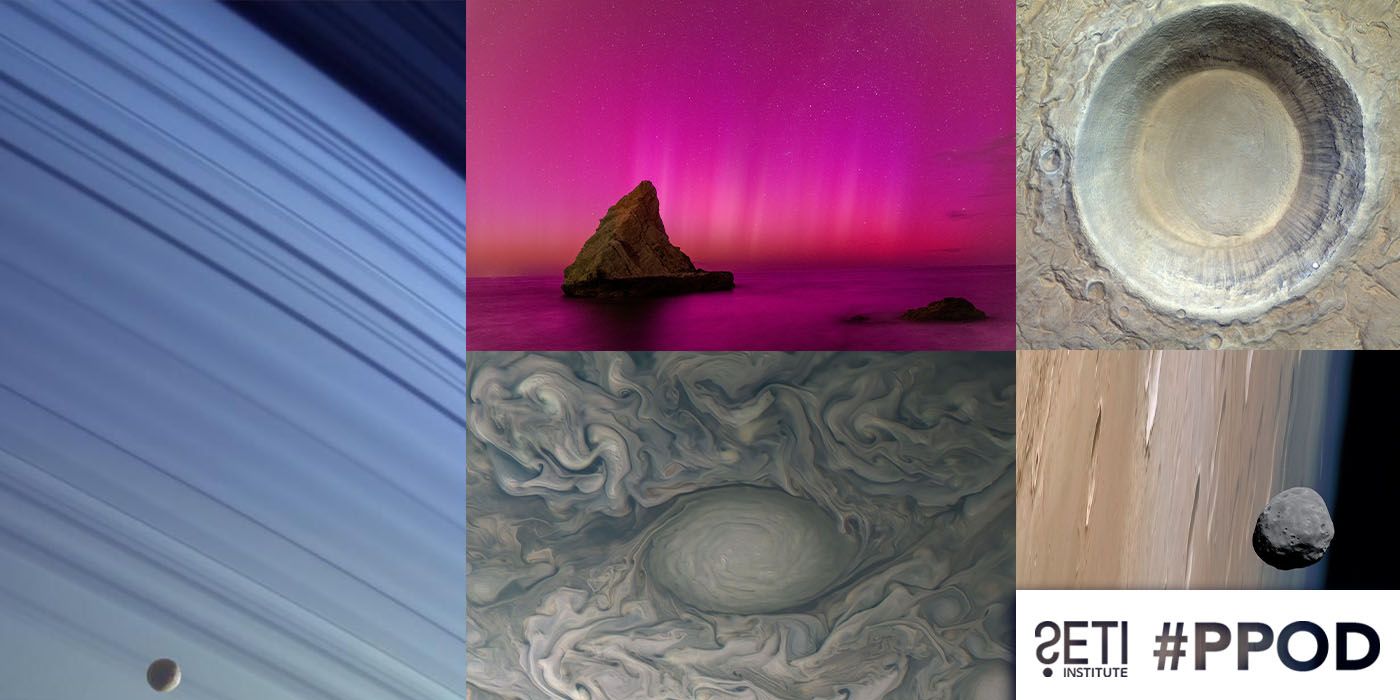
Mars, Mimas, a massive Jovian storm... and the aurora as seen from Italy.
Monday, 20 May 2024
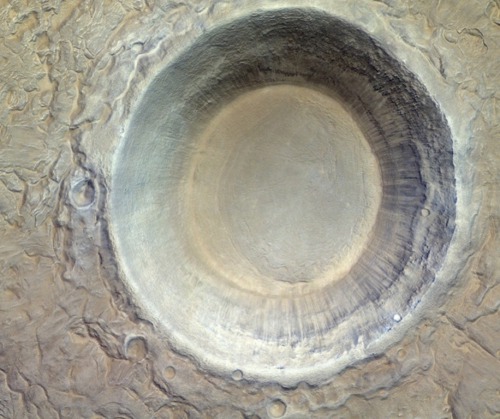
Credit: ESA/TGO/CaSSIS
Massive, Icy Martian Crater
ESA's ExoMars orbiter caught a close-up view of a huge crater on Mars. This remnant of an ancient impact is just one of the many scars asteroids have inflicted upon the Red Planet. Water, volcanoes, and impacts from asteroids shaped the Martian surface in the ancient past, but the preservation of this impact is remarkable. The crater is located in Utopia Planitia and is about 8 km in diameter.
Tuesday, 21 May 2024
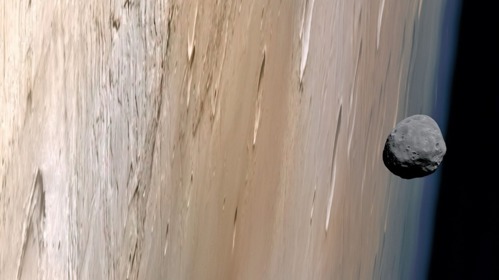
Credit: ESA/DLR/FUBerlin/AndreaLuck CC BY (Flickr: https://buff.ly/3ym0v1a)
Phobos over Mars
This stunning photo was taken by the High Resolution Stereo Camera (HRSC) onboard the ESA's Mars Express spacecraft. Phobos is the larger and closer of Mars's two moons, the other being Deimos. One hypothesis of their origin involves the possible capture of primitive asteroids. Unfortunately, Phobos is being pulled apart and closer by Mars's tidal forces and gravity.
Wednesday, 22 May 2024
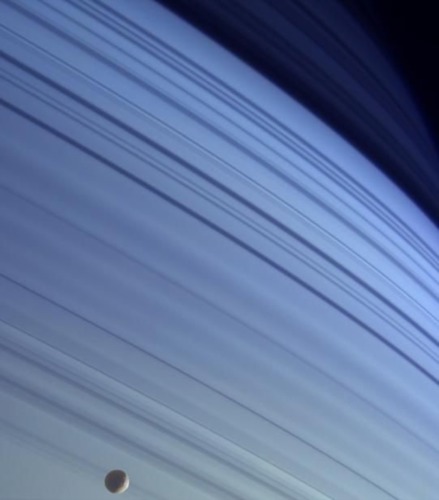
Credit: NASA/JPL/Space Science Institute/CICLOPS
Mimas Blues
Mimas drifts along in its orbit against the azure backdrop of Saturn's northern latitudes in this true-color view. The long, dark lines on the atmosphere are shadows cast by the planet's rings.
At the time, Saturn's northern hemisphere was relatively cloud-free, and rays of sunlight took a long path through the atmosphere. This resulted in sunlight being scattered at shorter (bluer) wavelengths, thus giving the northernmost latitudes their bluish appearance at visible wavelengths.
At the bottom, craters on icy Mimas (398 kilometers) give the moon a dimpled appearance.
Thursday, 23 May 2024

Credit: Michele Elisei
Italian Aurora
Enjoy this aesthetically stunning picture and consider the latitude at which it was captured. This is Portonovo (45N), a small town near Mount Conero in the province of Ancona in Italy. (We had it pretty good in San Francisco - 37N with purple and green). This low latitude tells you the strength of that solar storm that just hit. In fact, aurorae were observed in the Caribbean! Before May 12, only the Carrington Event reached those latitudes...
Friday, 24 May 2024
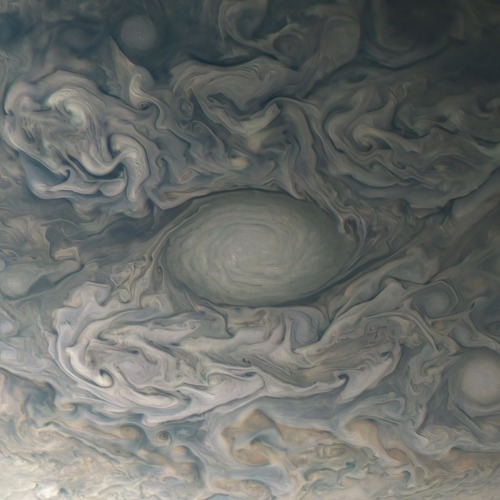
Credit: NASA/JPL-Caltech/SwRI/MSSS/Kevin M. Gill
Massive Jovian Storm
A massive storm, large enough to encompass most of North America, was spotted in Jupiter’s northern latitudes by NASA's Juno spacecraft on May 12. Juno is currently in its first extended mission and recently wrapped up close flybys of the Galilean moons Ganymede, Europa, and Io.
News
Related News
Planetary Picture of the Day - Week of August 24, 2026
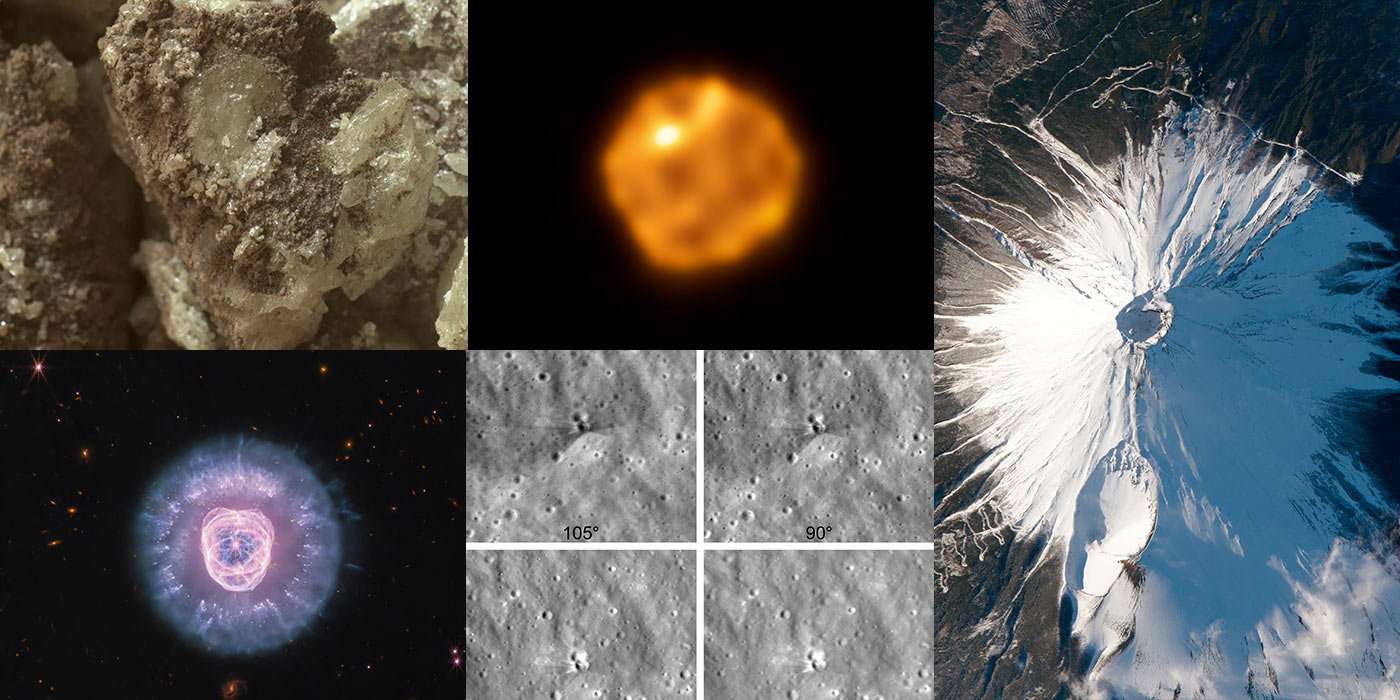
We journey from Mount Fuji as seen from orbit to the bubbling surface of Betelgeuse, exploring the forces that shape planets, moons, and stars across the cosmos. Along the way, JWST reveals the remains of a dying star, Curiosity uncovers clues to Mars’ volcanic past, and a fresh rocket impact on the Moon gives scientists a new opportunity to study how collisions reshape its surface. #PPOD
Planetary Picture of the Day - Week of August 17, 2026
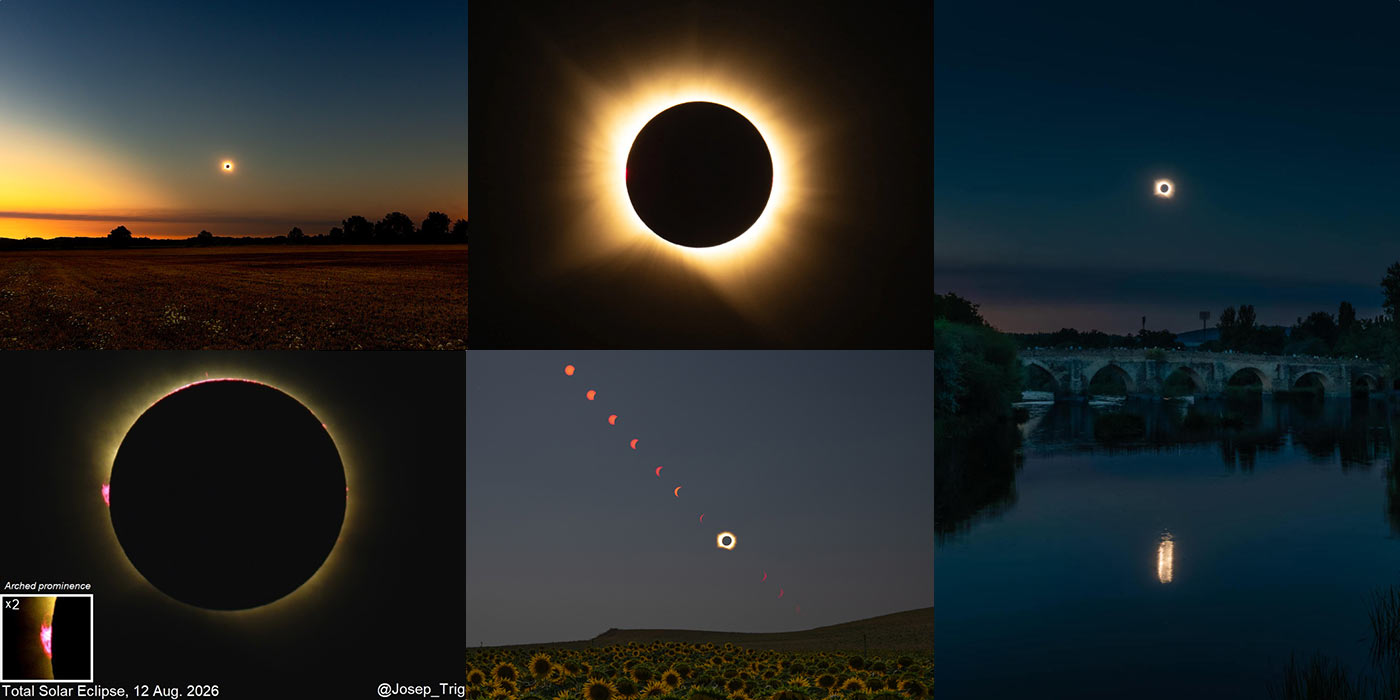
Let's celebrate the August 12 total solar eclipse through the eyes of photographers who experienced the Moon’s shadow sweeping across Spain. From Baily’s Beads and a glowing solar prominence to totality reflected in a river and framed by fields of sunflowers, these images capture both the science and extraordinary beauty of one of nature’s most spectacular celestial events. #PPOD #Eclipse
Planetary Picture of the Day - Week of August 10, 2026
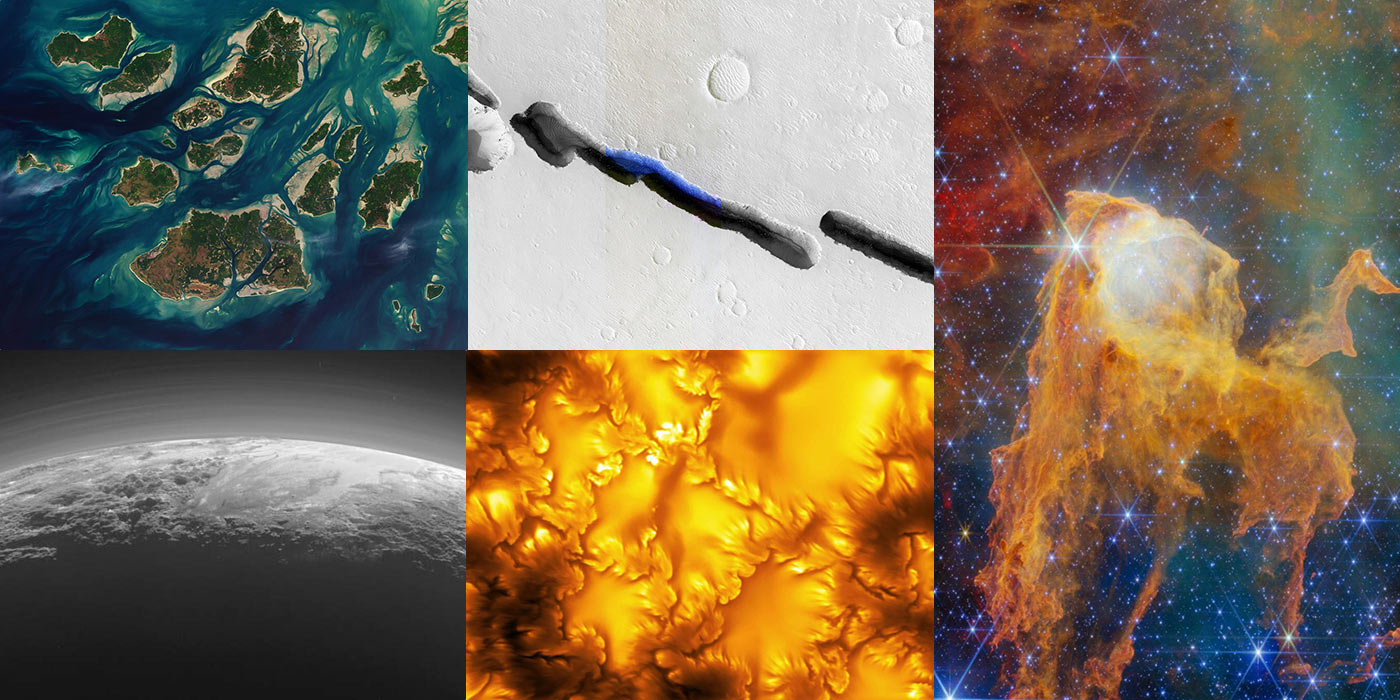
The universe is shaped by forces both immense and intricate, from fractured terrain on Mars and shifting tidal landscapes on Earth to tiny vortices dancing across the surface of the Sun. Farther afield, dramatic views of Pluto’s icy mountains and hazy atmosphere and a treasure chest of newborn stars in the Carina Nebula showcase the remarkable detail revealed by spacecraft and telescopes exploring the cosmos. #PPOD
Planetary Picture of the Day - August 3, 2026
This week, we reveal hidden wonders across the cosmos, from delicate Martian clouds and a dust-shrouded galaxy to an asteroid with a never-before-seen shape and the crowded heart of the Milky Way. Together, these images showcase how new missions and advanced observatories continue to uncover surprising details about our solar system, our galaxy, and the universe beyond. #PPOD
Planetary Picture of the Day - Week of July 27, 2026
These images span the journey from our own backyard to distant galaxies, featuring Mars, the Moon, breathtaking night skies, and a fresh view of the star-forming galaxy Messier 94. Along the way, we celebrate exploration and discovery—from NASA’s Psyche mission preparing for its asteroid encounter to the revelation of a previously unknown impact crater on Earth —reminding us that there are still new wonders to uncover both on our own planet and across the cosmos. #PPOD
Planetary Picture of the Day - Week of July 20, 2026
This week, we celebrate fifty years since Viking 1 became the first spacecraft to successfully land on and photograph the surface of Mars, alongside stunning new views of worlds, stars, and galaxies that continue to expand our understanding of the universe. From sculpted Sahara sand dunes and Jupiter’s colorful cloud bands to a newly discovered exoplanet and the first stellar-mass black hole identified in Omega Centauri, these images showcase the remarkable diversity of cosmic exploration. #PPODResearch
Related Projects
SkyMapper: Expanding Access to Real-time Astronomy Through a Global Astronomical Network
SkyMapper and the SETI Institute are connecting educators, students and the public to live astronomical observations through a distributed astronomical network. #SkyMapper #SETI #Citizen Science #Astronomy
Virtual Planetary Laboratory
How can we best assess whether an exoplanet supports life? #VPL
Discovery and Futures Lab
What happens if life beyond Earth is discovered? The Discovery and Futures Lab at the SETI Institute fosters novel and anticipatory research at the intersection of science, society, our planet, and the search for life beyond Earth. #Discovery and Futures LabSupport the
SETI Institute
Scientists are getting closer in their search for life beyond earth. But with limited federal funding for the search for extraterrestrial intelligence, supporters are the reason cutting-edge scientists can keep their eyes on the sky.