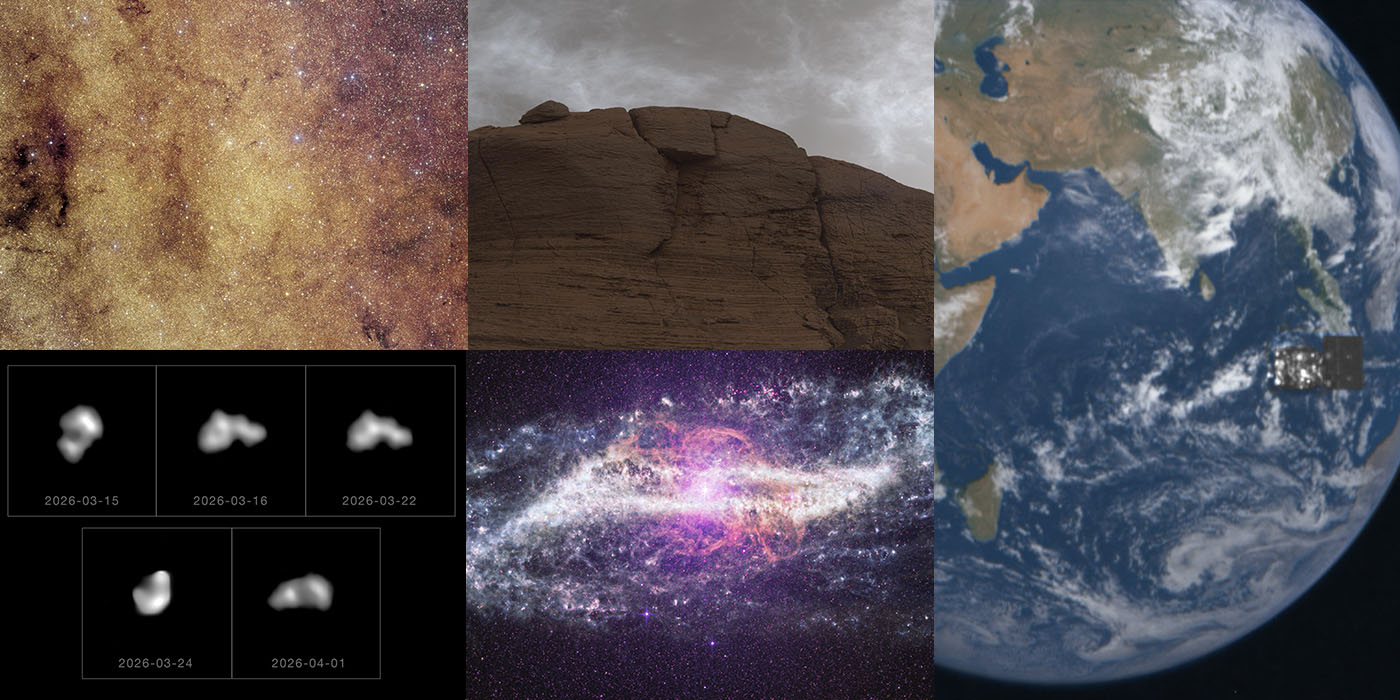
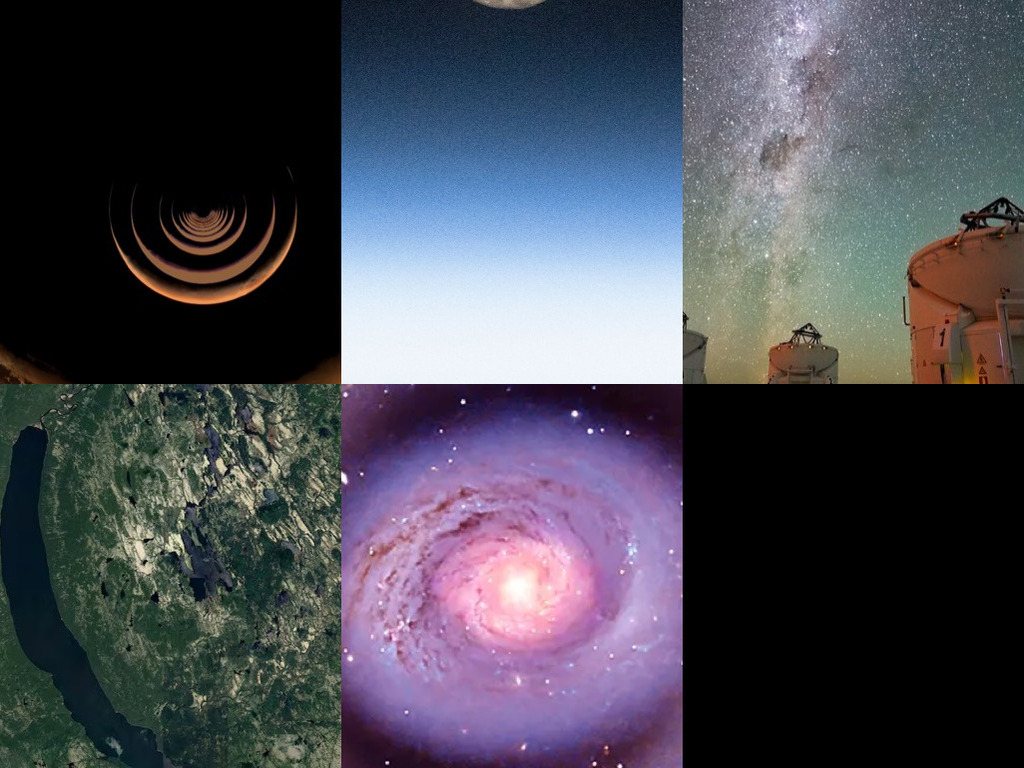
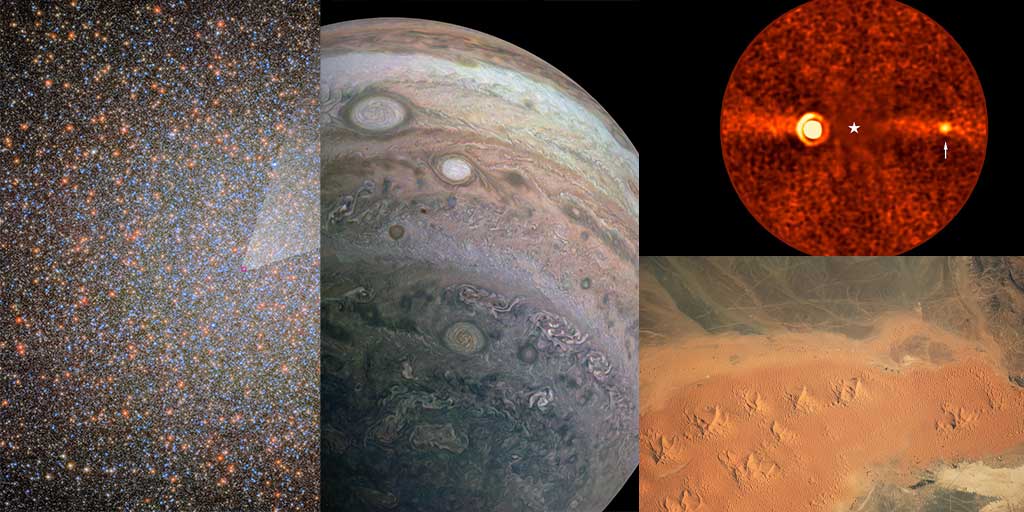
Welcome to our weekly recap of our Planetary Picture of the Day (PPOD)! Earthly lightning strikes, Cat’s Eye Nebula patterns, Curiosity . . . the diversity of the universe never ceases to astonish us.
Monday, March 7, 2022
Credit Image and Caption: NASA, ESA, HEIC, and The Hubble Heritage Team (STScI/AURA)
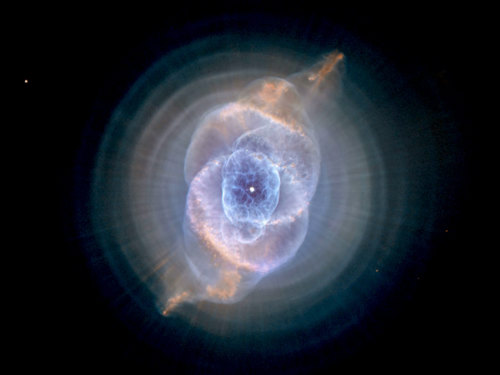
The Cat’s Eye Nebula The full beauty of the Cat's Eye Nebula (NGC 6543) is revealed in this new, detailed view from NASA's Hubble Space Telescope. The image from Hubble's Advanced Camera for Surveys (ACS) shows a bull's eye pattern of eleven or even more concentric rings, or shells, around the Cat's Eye. Each 'ring' is actually the edge of a spherical bubble seen projected onto the sky - that's why it appears bright along its outer edge.
Observations suggest the star ejected its mass in a series of pulses at 1,500-year intervals. These convulsions created dust shells, each of which contain as much mass as all of the planets in our solar system combined (still only one percent of the Sun's mass). These concentric shells make a layered, onion-skin structure around the dying star. The view from Hubble is like seeing an onion cut in half, where each skin layer is discernible.
The bull's-eye patterns seen around planetary nebulae come as a surprise to astronomers because they had no expectation that episodes of mass loss at the end of stellar lives would repeat every 1,500 years. Several explanations have been proposed, including cycles of magnetic activity somewhat similar to our own Sun's sunspot cycle, the action of companion stars orbiting around the dying star, and stellar pulsations. Another school of thought is that the material is ejected smoothly from the star, and the rings are created later on due to formation of waves in the outflowing material.
Tuesday, March 8, 2022
Credit: NASA/Johns Hopkins University Applied Physics Laboratory/Southwest Research Institute/Goddard Space Flight Center
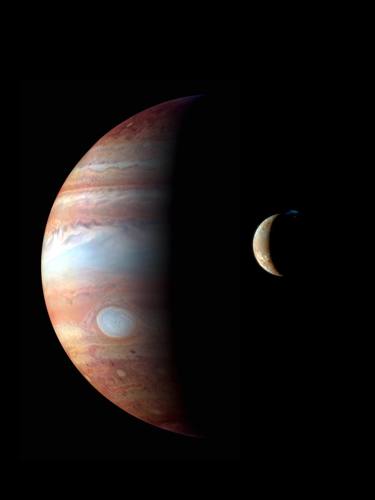
Jupiter and Io Erupting This montage of images of Jupiter and its volcanic moon Io was taken by the New Horizons spacecraft's flyby in early 2007. The Jupiter image is an infrared color composite taken by the spacecraft's near-infrared imaging spectrometer on Feb. 28, 2007. The infrared wavelengths used highlight variations in the altitude of the Jovian cloud tops, with blue denoting high-altitude clouds and hazes and red indicating deeper clouds. The prominent bluish-white oval is the Great Red Spot.
The Io image, taken on March 1, 2007, is a nearly true-color composite. The image shows a major eruption in progress on Io's night side, at the northern volcano Tvashtar. Incandescent lava glows red beneath a high volcanic plume, whose uppermost portions are illuminated by sunlight. The plume appears blue due to the scattering of light by small particles in the plume.
Wednesday, March 9, 2022
Source images credit: NASA / JPL-Caltech / MSSS Stitching and retouching: Andrew Bodrov / 360pano.eu (http://bit.ly/sol3388)
NASA's Mars Curiosity Rover Martian Solar Day 3388: Pediment Passage The images for panorama obtained by the rover's 34-millimeter Mast Camera. The mosaic, which stretches about 30,000 pixels width, includes 127 images taken on Sol 3388 (February 15, 2022). [Courtesy of Mars360 / Link: https://buff.ly/3pP3WXa] Curiosity is advancing westward through a largely boulder-strewn channel that is leading us toward the Greenheugh Pediment. The Pediment is where our rover will spend the next many months, as we turn back uphill to the south and continue our ascent up Mt. Sharp. Despite it being quite craggy in our current location, we did have to drive over a large sand patch to get to our current parking location!
Today’s objective was to study one of the last remaining bedrock patches available to us before we ascend onto the Pediment in the days ahead. We quickly identified “Loch Coruisk” as our preferred bedrock slab for contact science with MAHLI and APXS. ChemCam will then zap it with LIBS in addition to two other bedrock pieces nearby. Both ChemCam and Mastcam will also be imaging the edge of the Pediment to our southwest and northwest so we can study the geologic contact that the edge represents. That imaging includes a Mastcam 360° mosaic, which will surely be spectacular! As we’re quickly approaching the dust storm season on Mars, we also added several dust devil movies with Navcam and observations to monitor the dust amounts in the atmosphere above us and within Gale Crater itself.
Written by Scott Guzewich Atmospheric Scientist at NASA's Goddard Space Flight Center NASA's Mars Exploration Program
Thursday, March 10, 2022
Credit: NASA/JPL-Caltech/Space Science Institute Processing: Kevin M. Gill
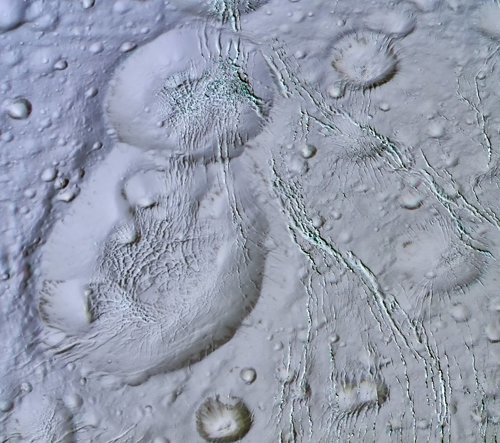
Close-up of Enceladus NASA's Cassini spacecraft spied this tight trio of craters as it approached Saturn's icy moon Enceladus for a close flyby on Oct. 14, 2015. The craters, located at high northern latitudes, are sliced through by thin fractures -- part of a network of similar cracks that wrap around the snow-white moon.
Friday, March 11, 2022
Credit: National Park Service
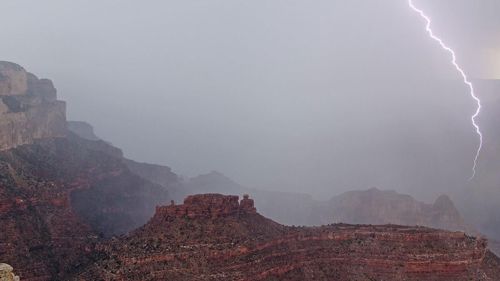
Lightning Strikes in Grand Canyon The beautiful sedimentary layers of the Grand Canyon disappear in the mist of an incoming storm while lightning flashes. In Grand Canyon National Park, lightning strikes an average of 25,000 times per year, so visitors are warned to be aware of how quickly thunder sounds after a lightning flash.
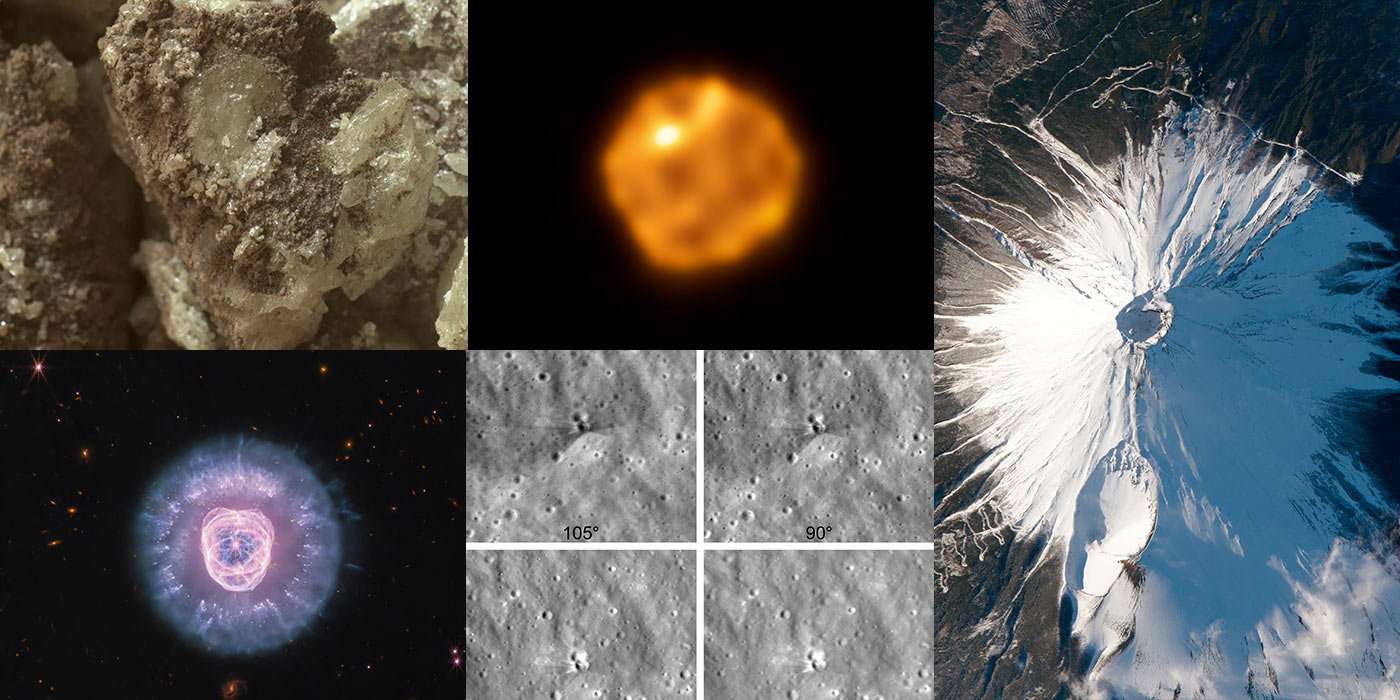
We journey from Mount Fuji as seen from orbit to the bubbling surface of Betelgeuse, exploring the forces that shape planets, moons, and stars across the cosmos. Along the way, JWST reveals the remains of a dying star, Curiosity uncovers clues to Mars’ volcanic past, and a fresh rocket impact on the Moon gives scientists a new opportunity to study how collisions reshape its surface.
#PPOD
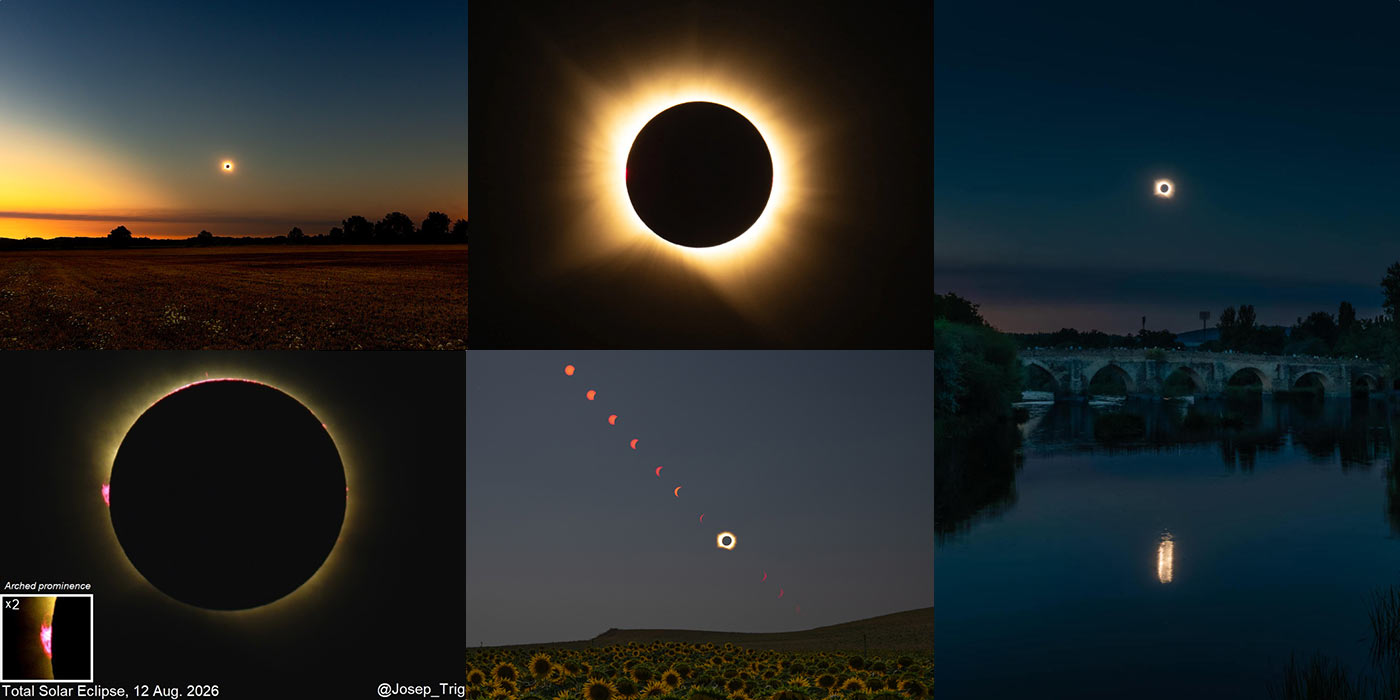
Let's celebrate the August 12 total solar eclipse through the eyes of photographers who experienced the Moon’s shadow sweeping across Spain. From Baily’s Beads and a glowing solar prominence to totality reflected in a river and framed by fields of sunflowers, these images capture both the science and extraordinary beauty of one of nature’s most spectacular celestial events.
#PPOD
#Eclipse
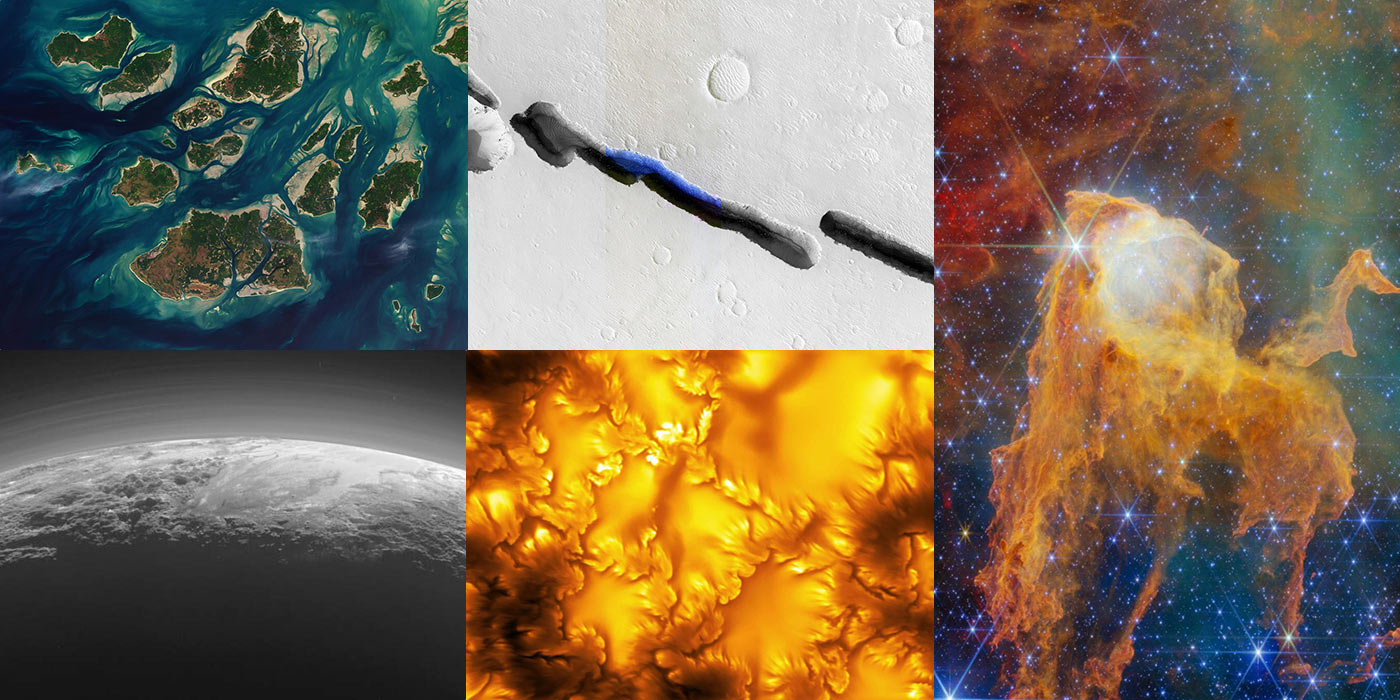
The universe is shaped by forces both immense and intricate, from fractured terrain on Mars and shifting tidal landscapes on Earth to tiny vortices dancing across the surface of the Sun. Farther afield, dramatic views of Pluto’s icy mountains and hazy atmosphere and a treasure chest of newborn stars in the Carina Nebula showcase the remarkable detail revealed by spacecraft and telescopes exploring the cosmos.
#PPOD
This week, we reveal hidden wonders across the cosmos, from delicate Martian clouds and a dust-shrouded galaxy to an asteroid with a never-before-seen shape and the crowded heart of the Milky Way. Together, these images showcase how new missions and advanced observatories continue to uncover surprising details about our solar system, our galaxy, and the universe beyond.
#PPOD
These images span the journey from our own backyard to distant galaxies, featuring Mars, the Moon, breathtaking night skies, and a fresh view of the star-forming galaxy Messier 94. Along the way, we celebrate exploration and discovery—from NASA’s Psyche mission preparing for its asteroid encounter to the revelation of a previously unknown impact crater on Earth —reminding us that there are still new wonders to uncover both on our own planet and across the cosmos.
#PPOD
This week, we celebrate fifty years since Viking 1 became the first spacecraft to successfully land on and photograph the surface of Mars, alongside stunning new views of worlds, stars, and galaxies that continue to expand our understanding of the universe. From sculpted Sahara sand dunes and Jupiter’s colorful cloud bands to a newly discovered exoplanet and the first stellar-mass black hole identified in Omega Centauri, these images showcase the remarkable diversity of cosmic exploration.
#PPOD
We journey from Mount Fuji as seen from orbit to the bubbling surface of Betelgeuse, exploring the forces that shape planets, moons, and stars across the cosmos. Along the way, JWST reveals the remains of a dying star, Curiosity uncovers clues to Mars’ volcanic past, and a fresh rocket impact on the Moon gives scientists a new opportunity to study how collisions reshape its surface.
Let's celebrate the August 12 total solar eclipse through the eyes of photographers who experienced the Moon’s shadow sweeping across Spain. From Baily’s Beads and a glowing solar prominence to totality reflected in a river and framed by fields of sunflowers, these images capture both the science and extraordinary beauty of one of nature’s most spectacular celestial events.
The universe is shaped by forces both immense and intricate, from fractured terrain on Mars and shifting tidal landscapes on Earth to tiny vortices dancing across the surface of the Sun. Farther afield, dramatic views of Pluto’s icy mountains and hazy atmosphere and a treasure chest of newborn stars in the Carina Nebula showcase the remarkable detail revealed by spacecraft and telescopes exploring the cosmos.
This week, we reveal hidden wonders across the cosmos, from delicate Martian clouds and a dust-shrouded galaxy to an asteroid with a never-before-seen shape and the crowded heart of the Milky Way. Together, these images showcase how new missions and advanced observatories continue to uncover surprising details about our solar system, our galaxy, and the universe beyond.
These images span the journey from our own backyard to distant galaxies, featuring Mars, the Moon, breathtaking night skies, and a fresh view of the star-forming galaxy Messier 94. Along the way, we celebrate exploration and discovery—from NASA’s Psyche mission preparing for its asteroid encounter to the revelation of a previously unknown impact crater on Earth —reminding us that there are still new wonders to uncover both on our own planet and across the cosmos.
This week, we celebrate fifty years since Viking 1 became the first spacecraft to successfully land on and photograph the surface of Mars, alongside stunning new views of worlds, stars, and galaxies that continue to expand our understanding of the universe. From sculpted Sahara sand dunes and Jupiter’s colorful cloud bands to a newly discovered exoplanet and the first stellar-mass black hole identified in Omega Centauri, these images showcase the remarkable diversity of cosmic exploration.
SkyMapper and the SETI Institute are connecting educators, students and the public to live astronomical observations through a distributed astronomical network.
#SkyMapper
#SETI
#Citizen Science
#Astronomy
What happens if life beyond Earth is discovered? The Discovery and Futures Lab at the SETI Institute fosters novel and anticipatory research at the intersection of science, society, our planet, and the search for life beyond Earth.
#Discovery and Futures Lab
SkyMapper and the SETI Institute are connecting educators, students and the public to live astronomical observations through a distributed astronomical network.
What happens if life beyond Earth is discovered? The Discovery and Futures Lab at the SETI Institute fosters novel and anticipatory research at the intersection of science, society, our planet, and the search for life beyond Earth.
Scientists are getting closer in their search for life beyond earth. But with limited federal funding for the search for extraterrestrial intelligence, supporters are the reason cutting-edge scientists can keep their eyes on the sky.
)