






Monday, 2 March 2026
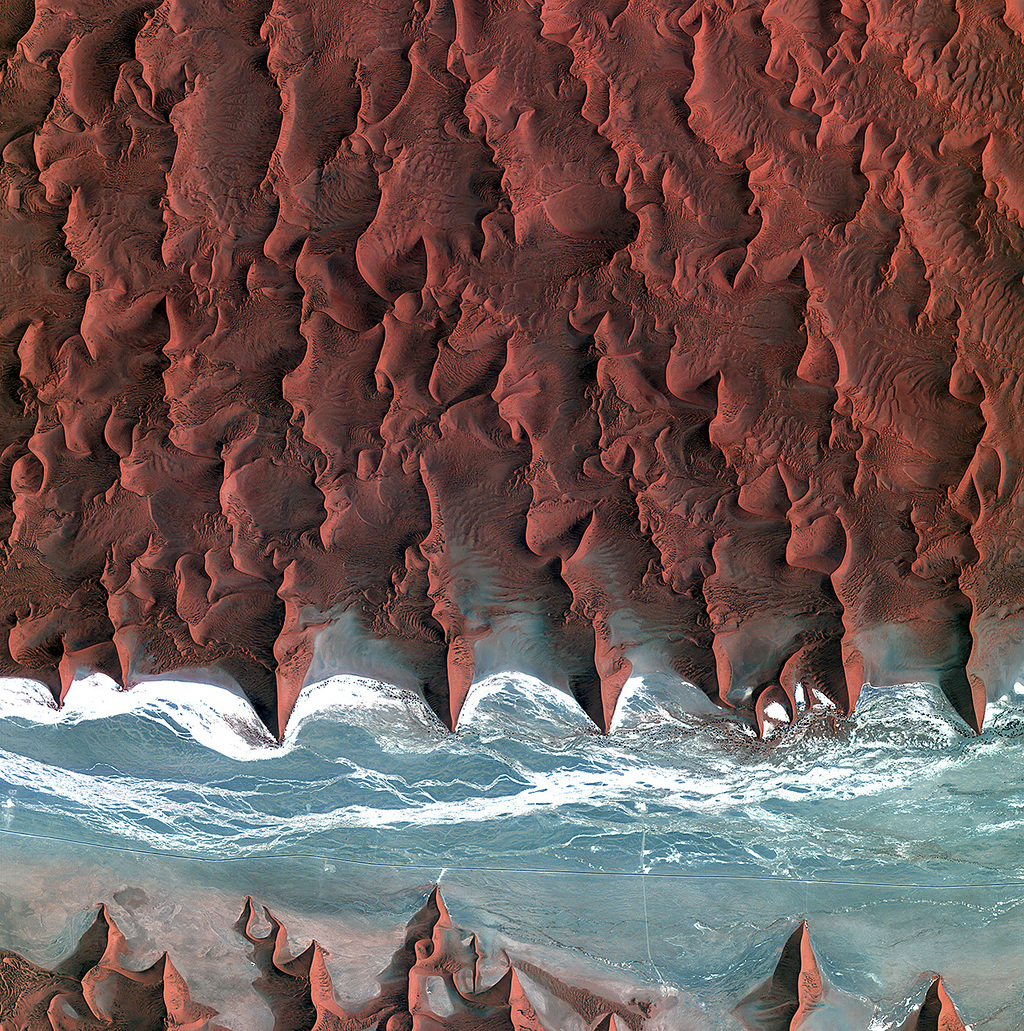
Namib Desert
Korea’s Kompsat-2 satellite captured this image over the sand seas of the Namib Desert on 7 January 2012. The blue-and-white area is the dry riverbed of the Tsauchab. Black dots of vegetation are concentrated close to the river’s main route, while salt deposits appear bright white. Running through the river valley, a road connects Sossusvlei to the Sesriem settlement. At the road’s 45th kilometre, seen at the lower-central part of the image, a white path shoots off and ends at a circular parking area at the base of a dune. This is Dune 45, a popular tourist stop on the way to and from Sossusvlei. In this image, there appears to be some shadow on the western side. From this, we can deduce that the image was acquired during the late morning.
Tuesday, 3 March 2026
Cranium Nebula
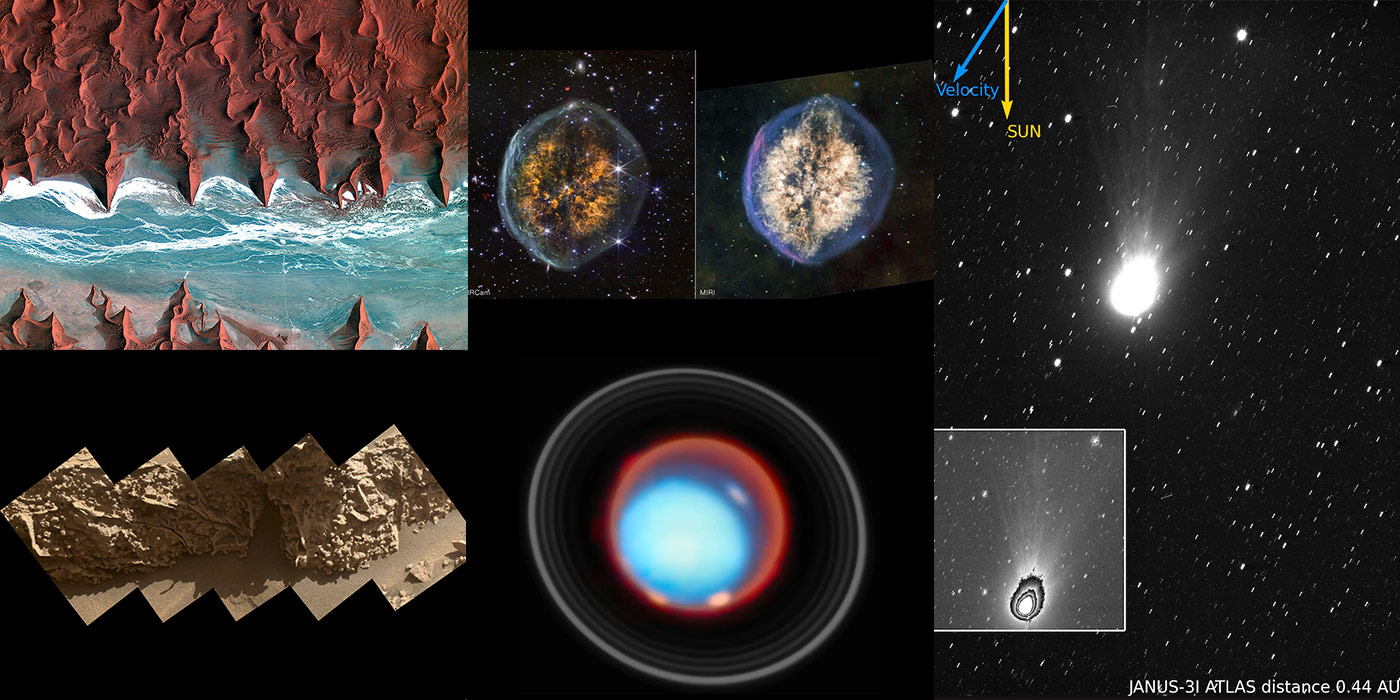
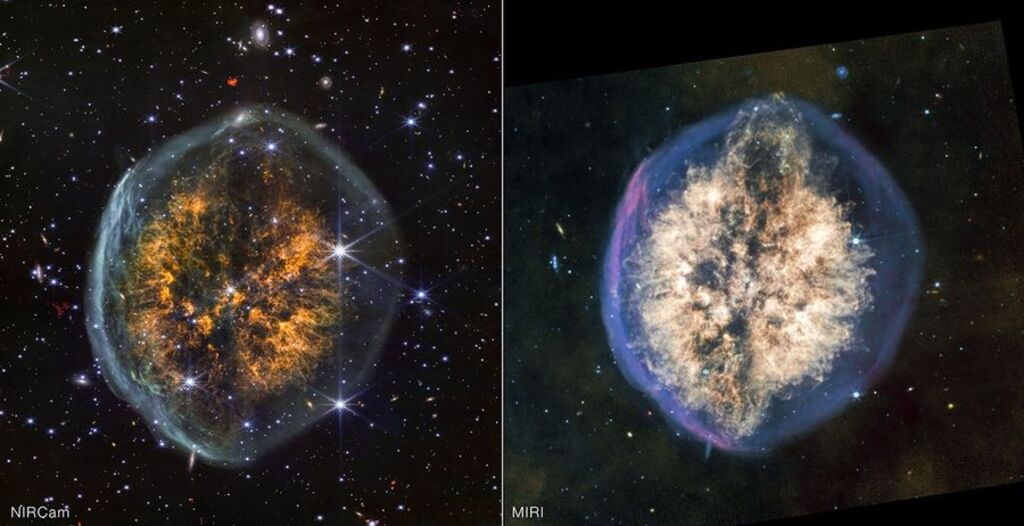
Two heads are better than one in the latest images from NASA’s JWST, which reveal new details in a mysterious, little-studied nebula surrounding a dying star.
Nebula PMR 1 is a cloud of gas and dust that bears an uncanny resemblance to a brain in a transparent skull, inspiring its nickname, the “Exposed Cranium” nebula.
The nebula appears to have distinct regions that capture different phases of its evolution — an outer shell of gas that was blown off first and is mostly hydrogen, and an inner cloud with more structure that contains a mix of gases.
Wednesday, 4 March 2026
Uranus' Upper Atmosphere
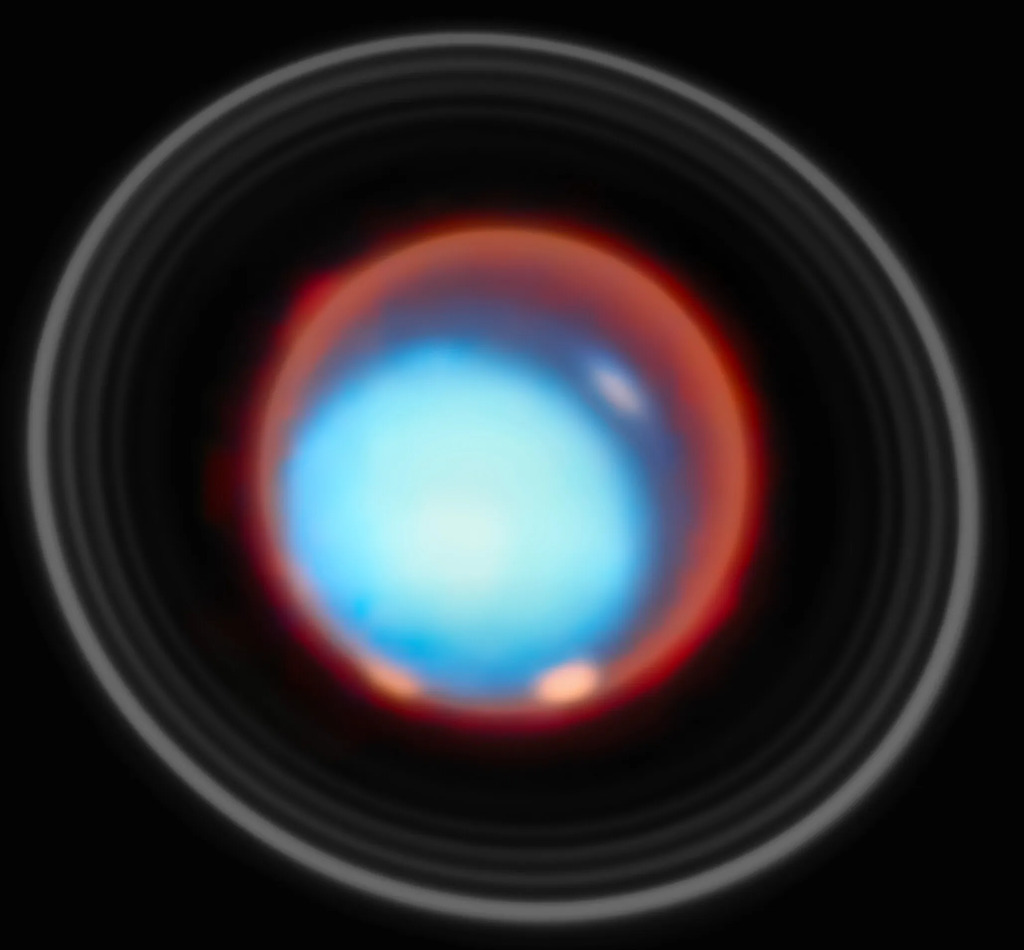
NASA’s JWST provided the first vertical view of Uranus’s ionosphere in this image released on Feb. 19, 2026, revealing auroras shaped by its tilted magnetic field.
Getting a look at the structure of the region where the atmosphere interacts strongly with the planet’s magnetic field is giving us the most detailed portrait yet of where its auroras form, how the magnetic field influences them, and also data on how Uranus’s atmosphere has continued to cool since the 1990s.
Uranus has the strangest magnetosphere in the Solar System. It is tilted and offset from the planet’s rotation axis (and this planet already rolls around the Sun nearly on its side), which means auroras move across the surface in complex ways. A better understanding of Uranus will provide insight into ice-giant planets and help us better characterize giant planets beyond our Solar System.
Thursday, 5 March 2026
Comet 3I/ATLAS from ESA's Juice
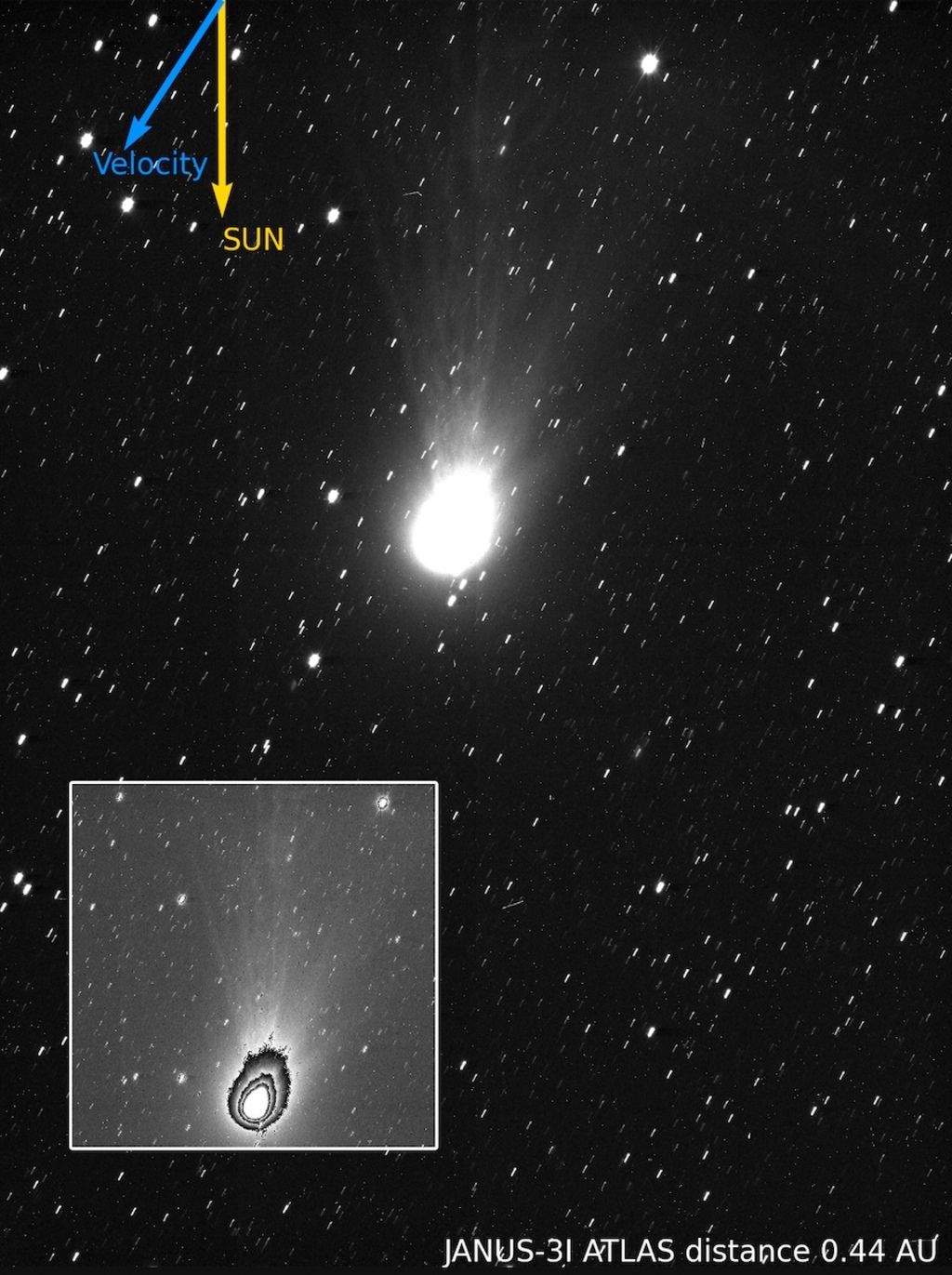
This striking image from the science camera on ESA’s Jupiter Icy Moons Explorer (Juice) shows interstellar comet 3I/ATLAS spewing dust and gas. The tiny nucleus of the comet (not visible) is surrounded by a bright halo of gas known as the coma. A long tail stretches away from the comet, and we see hints of rays, jets, streams and filaments.
The inset in the image shows the same data, but processed to highlight the coma structure. The arrows in the top left indicate the direction in which the comet was moving (blue) and the relative direction of the Sun (yellow). While 3I/ATLAS is a visitor from interstellar space, travelling from outside the Solar System, its behaviour is completely in line with that expected from a ‘normal’ comet.
The camera, named JANUS, took this image on 6 November 2025, just seven days after the comet made its closest approach to the Sun. At the time, Juice was about 66 million km away from the comet.
Friday, 6 March 2026
Martian 'Spiderwebs' Up Close
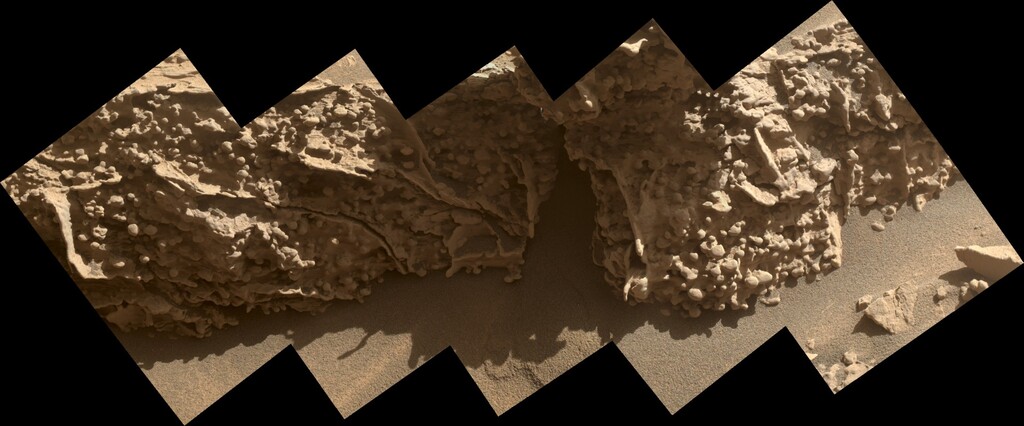
From orbit, parts of Mars look like sprawling spiderwebs etched across the hillsides. These patterns may record a time when groundwater flowed through large fractures in the rock, leaving minerals behind. Over time, those minerals hardened into ridges while the surrounding rock—lacking that reinforcement—was slowly worn away by wind.
Up close, those mineral deposits appear as tiny bumps embedded in the rock. These pea-sized nodules likely formed billions of years ago as groundwater evaporated, leaving minerals behind. NASA’s Curiosity rover photographed these features on Aug. 21, 2025, while exploring geologic formations known as boxwork.
News
Related News
Planetary Picture of the Day - Week of August 24, 2026
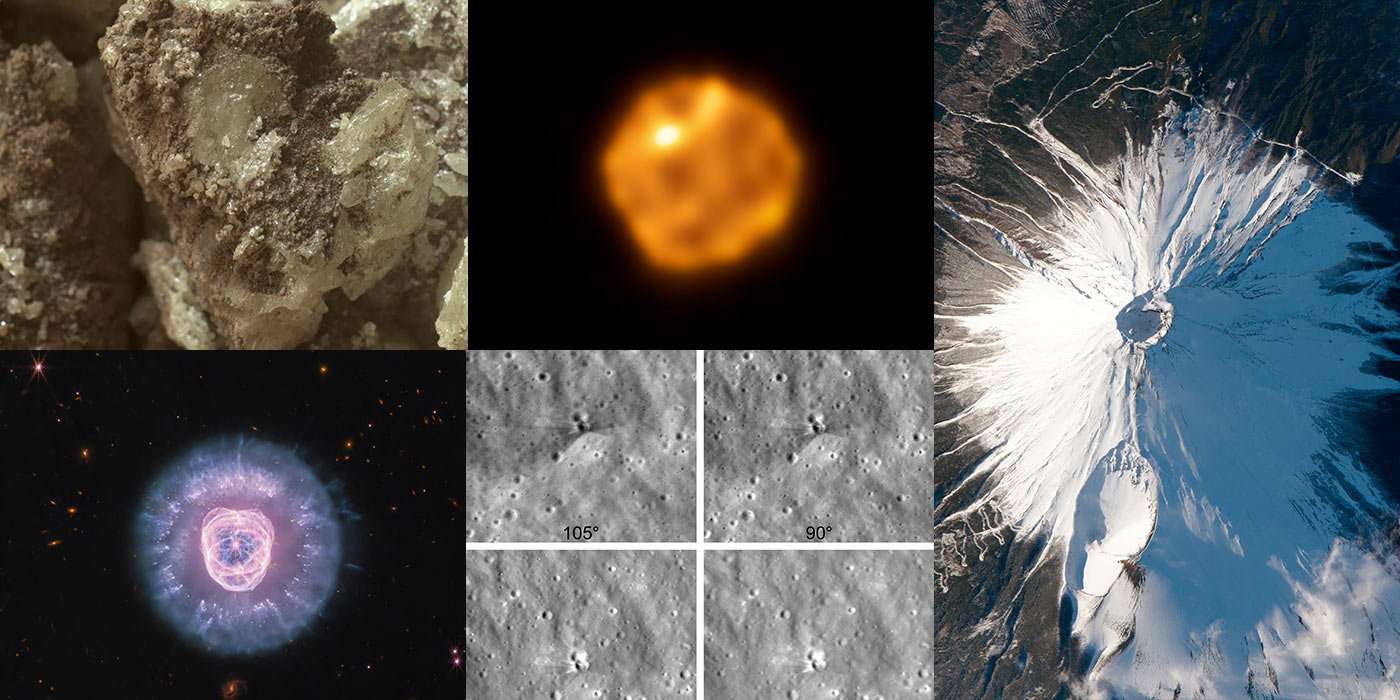
We journey from Mount Fuji as seen from orbit to the bubbling surface of Betelgeuse, exploring the forces that shape planets, moons, and stars across the cosmos. Along the way, JWST reveals the remains of a dying star, Curiosity uncovers clues to Mars’ volcanic past, and a fresh rocket impact on the Moon gives scientists a new opportunity to study how collisions reshape its surface. #PPOD

Planetary Picture of the Day - Week of August 17, 2026
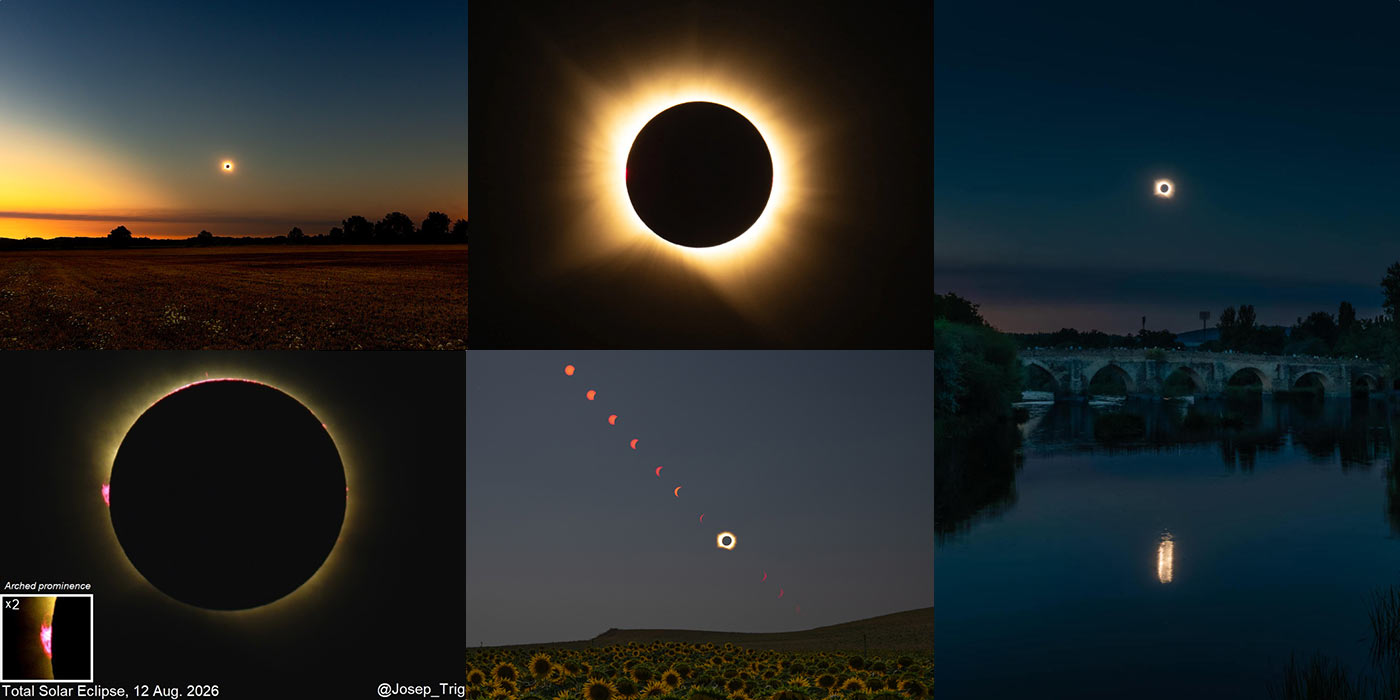
Let's celebrate the August 12 total solar eclipse through the eyes of photographers who experienced the Moon’s shadow sweeping across Spain. From Baily’s Beads and a glowing solar prominence to totality reflected in a river and framed by fields of sunflowers, these images capture both the science and extraordinary beauty of one of nature’s most spectacular celestial events. #PPOD #Eclipse
Planetary Picture of the Day - Week of August 10, 2026
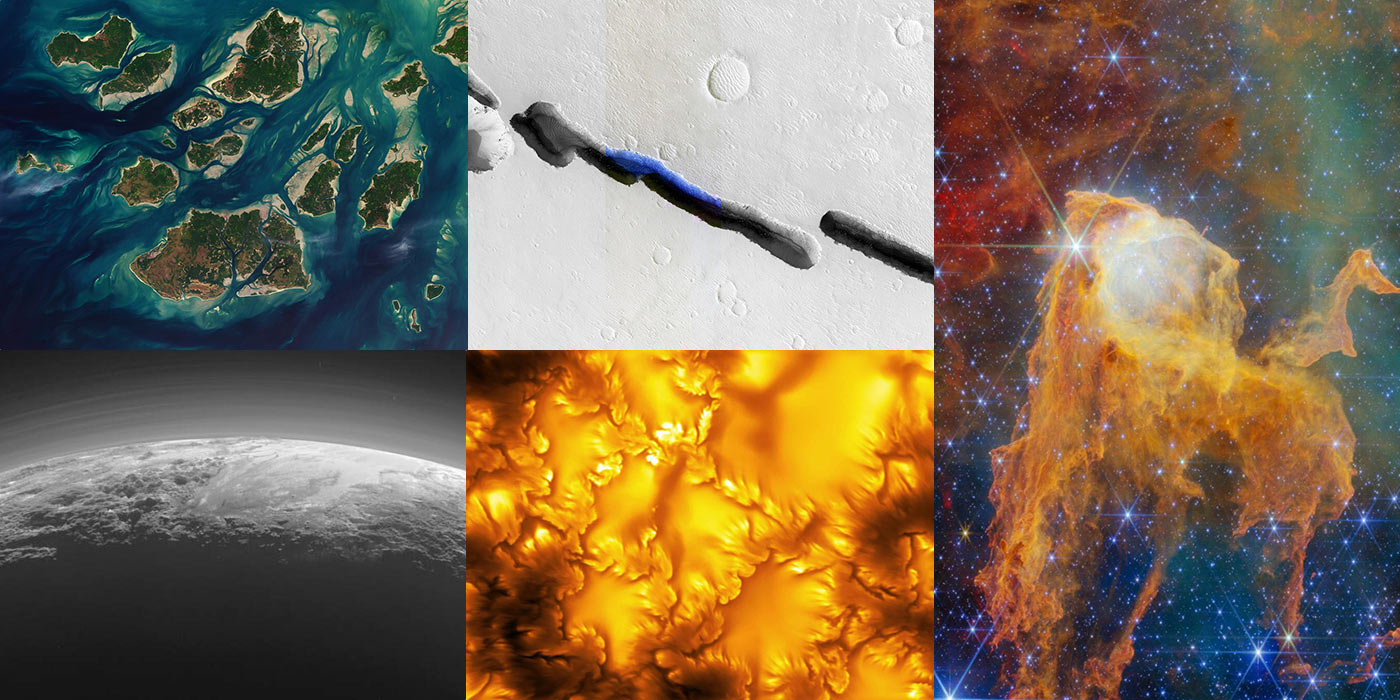
The universe is shaped by forces both immense and intricate, from fractured terrain on Mars and shifting tidal landscapes on Earth to tiny vortices dancing across the surface of the Sun. Farther afield, dramatic views of Pluto’s icy mountains and hazy atmosphere and a treasure chest of newborn stars in the Carina Nebula showcase the remarkable detail revealed by spacecraft and telescopes exploring the cosmos. #PPOD
Planetary Picture of the Day - August 3, 2026
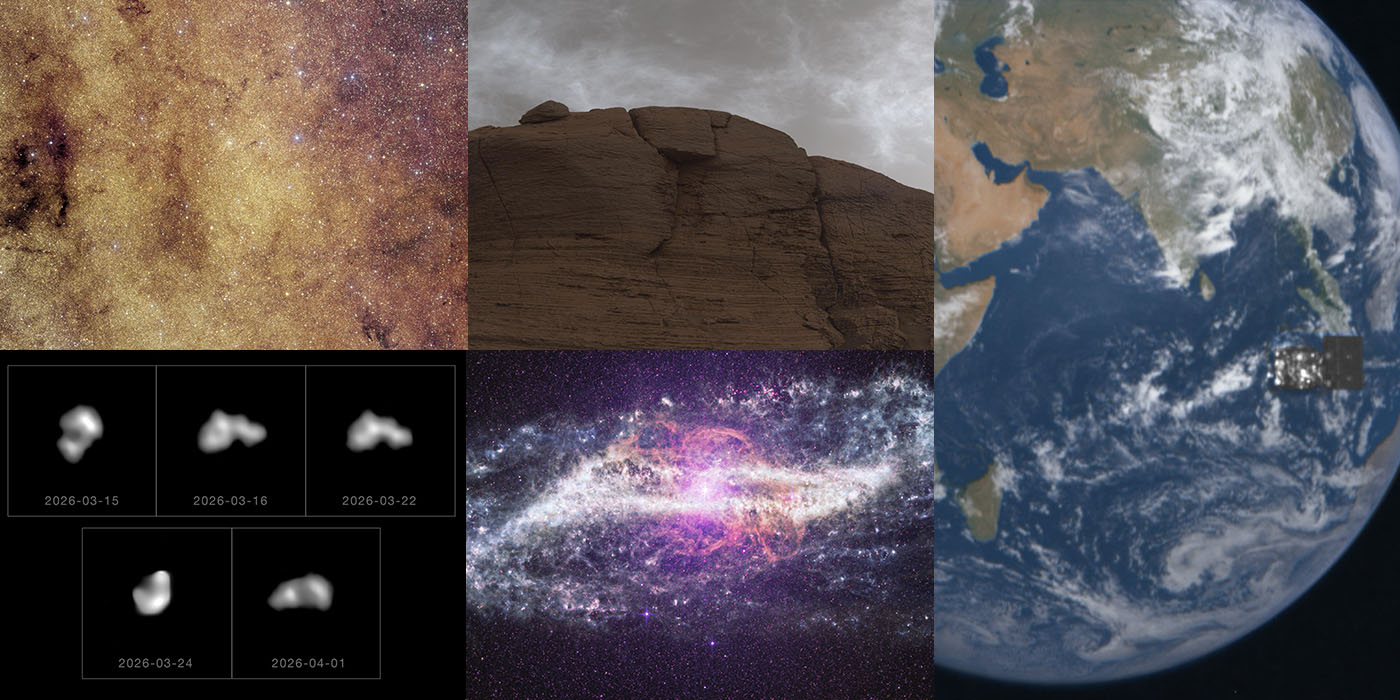
This week, we reveal hidden wonders across the cosmos, from delicate Martian clouds and a dust-shrouded galaxy to an asteroid with a never-before-seen shape and the crowded heart of the Milky Way. Together, these images showcase how new missions and advanced observatories continue to uncover surprising details about our solar system, our galaxy, and the universe beyond. #PPOD
Planetary Picture of the Day - Week of July 27, 2026
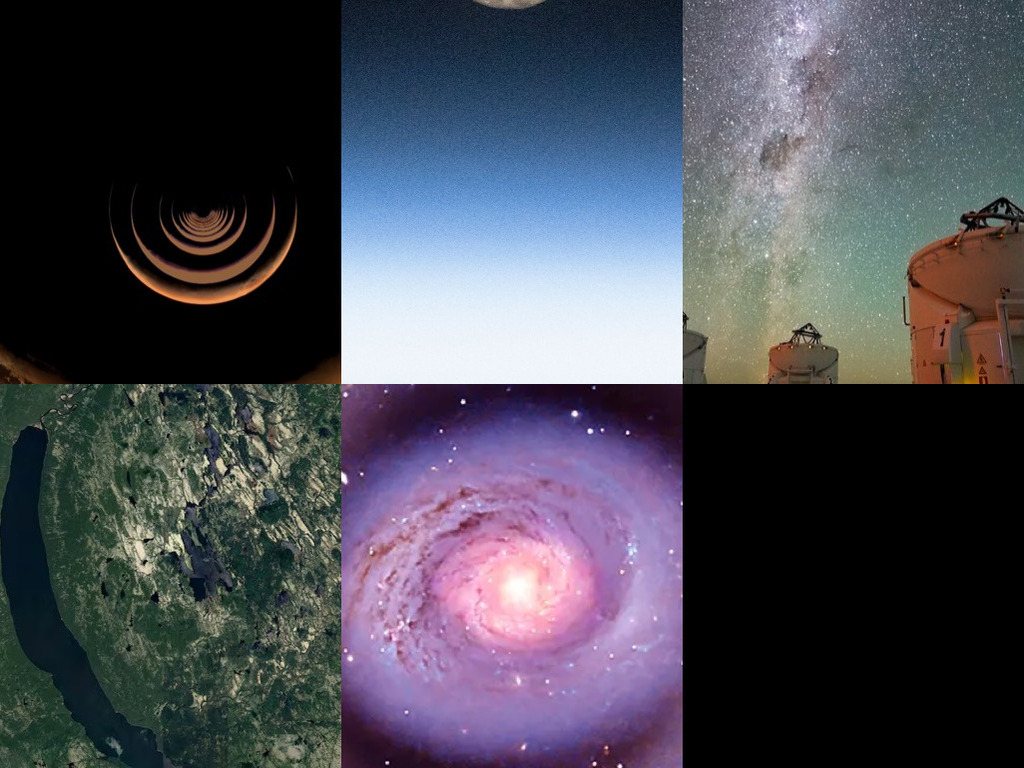
These images span the journey from our own backyard to distant galaxies, featuring Mars, the Moon, breathtaking night skies, and a fresh view of the star-forming galaxy Messier 94. Along the way, we celebrate exploration and discovery—from NASA’s Psyche mission preparing for its asteroid encounter to the revelation of a previously unknown impact crater on Earth —reminding us that there are still new wonders to uncover both on our own planet and across the cosmos. #PPOD
Planetary Picture of the Day - Week of July 20, 2026
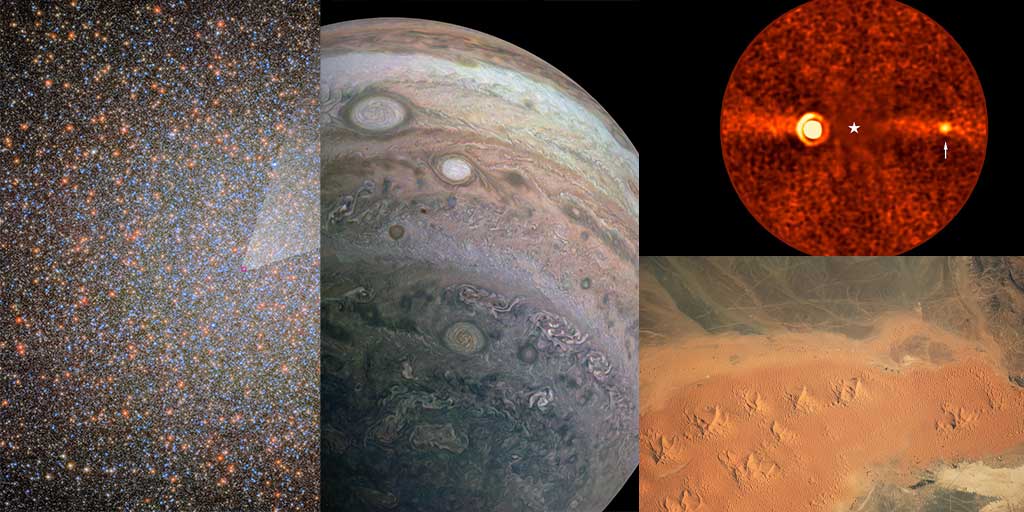
This week, we celebrate fifty years since Viking 1 became the first spacecraft to successfully land on and photograph the surface of Mars, alongside stunning new views of worlds, stars, and galaxies that continue to expand our understanding of the universe. From sculpted Sahara sand dunes and Jupiter’s colorful cloud bands to a newly discovered exoplanet and the first stellar-mass black hole identified in Omega Centauri, these images showcase the remarkable diversity of cosmic exploration. #PPODResearch
Related Projects
SkyMapper: Expanding Access to Real-time Astronomy Through a Global Astronomical Network
SkyMapper and the SETI Institute are connecting educators, students and the public to live astronomical observations through a distributed astronomical network. #SkyMapper #SETI #Citizen Science #Astronomy
Virtual Planetary Laboratory
How can we best assess whether an exoplanet supports life? #VPL
Discovery and Futures Lab
What happens if life beyond Earth is discovered? The Discovery and Futures Lab at the SETI Institute fosters novel and anticipatory research at the intersection of science, society, our planet, and the search for life beyond Earth. #Discovery and Futures LabSupport the
SETI Institute
Scientists are getting closer in their search for life beyond earth. But with limited federal funding for the search for extraterrestrial intelligence, supporters are the reason cutting-edge scientists can keep their eyes on the sky.