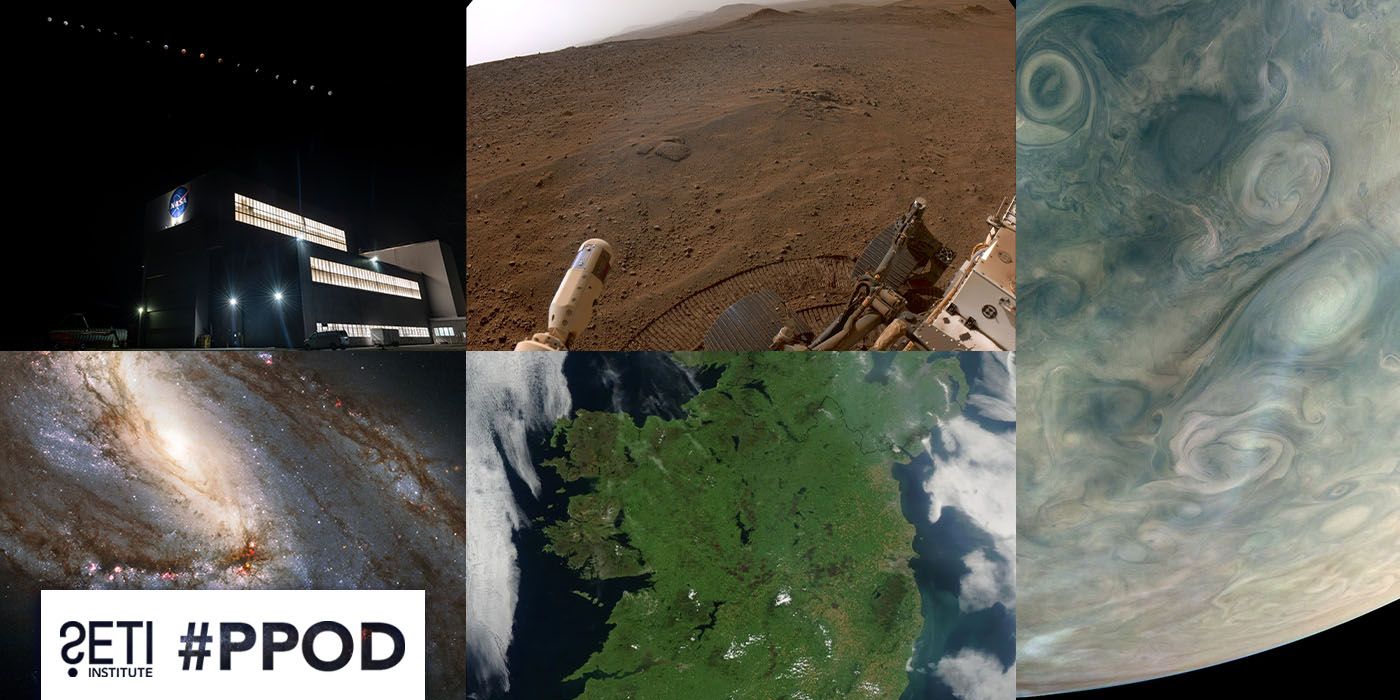
From Earth to Mars to Jupiter and even to a distant galaxy, we present more wonders of the universe. Plus, a time-lapse of this month's total lunar eclipse.
Monday, 17 March 2025
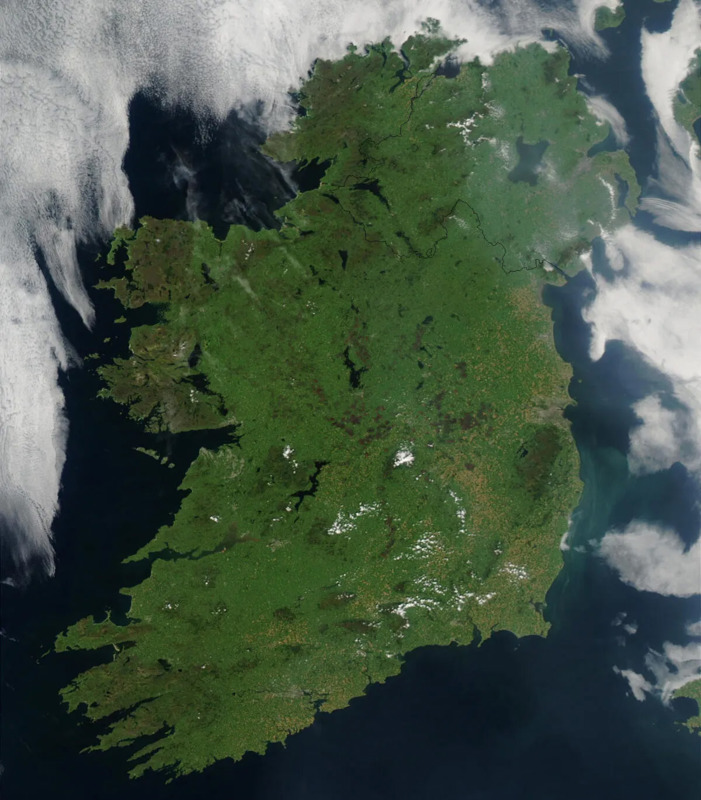
Credit: Jeff Schmaltz, MODIS Rapid Response Team, NASA/GSFC
Emerald Isle
Happy St. Patrick's Day! On August 7, 2003, the Aqua MODIS instrument acquired this image of Ireland on the first day this summer that most of the island wasn't completely obscured by cloud cover. Ireland is called the Emerald Isle for a good reason. It is draped in vibrant shades of green amidst the blue Atlantic Ocean and the Celtic (south) and Irish (east) Seas. Faint ribbons of blue-green phytoplankton drift in the waters of the Celtic Sea, just south of Dublin.
Dublin appears as a large grayish-brown spot on the Republic of Ireland's northeastern coast. This large capital city (population 1.12 million) sits on the River Liffey, effectively splitting the city in half. Northern Ireland´s capital city, Belfast, also sits on a river: the River Lagan. This city, though its population is only a fifth of the size of Dublin's, is also clearly visible in the image as a grayish-brown spot on the coast of the Irish Sea.
Tuesday, 18 March 2025
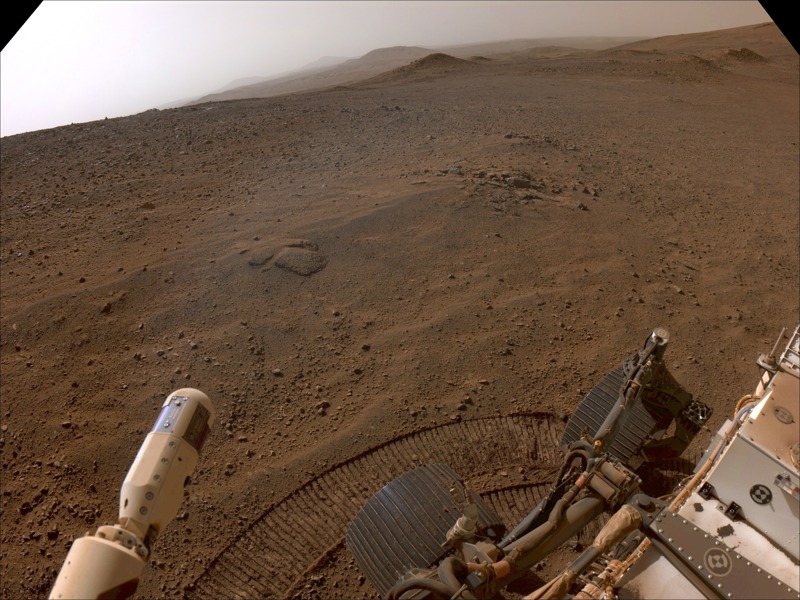
Credit: NASA/JPL-Caltech
On Top of Jezero
NASA’s Perseverance Mars rover has crested the top of Jezero Crater’s rim at a location the science team calls “Lookout Hill” and is rolling toward its first science stop after the months-long climb. The rover made the ascent to explore a region of Mars unlike anywhere it has investigated before. This image was taken with the right-front navigation camera on 10 December 2024, facing west.
Wednesday, 19 March 2025
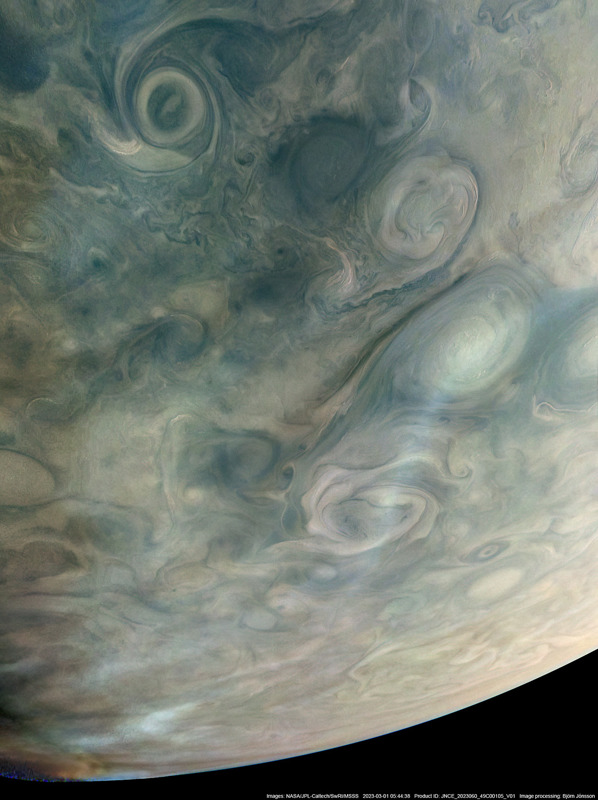
Credit: NASA / JPL-Caltech / SwRI / MSSS / Image processing by Björn Jónsson
Jupiter's Jet N7
As NASA's Juno spacecraft flew low over Jupiter’s cloud tops in March 2023, its JunoCam instrument captured this view of bands of high-altitude haze forming above cyclones in an area known as Jet N7.
Thursday, 20 March 2025
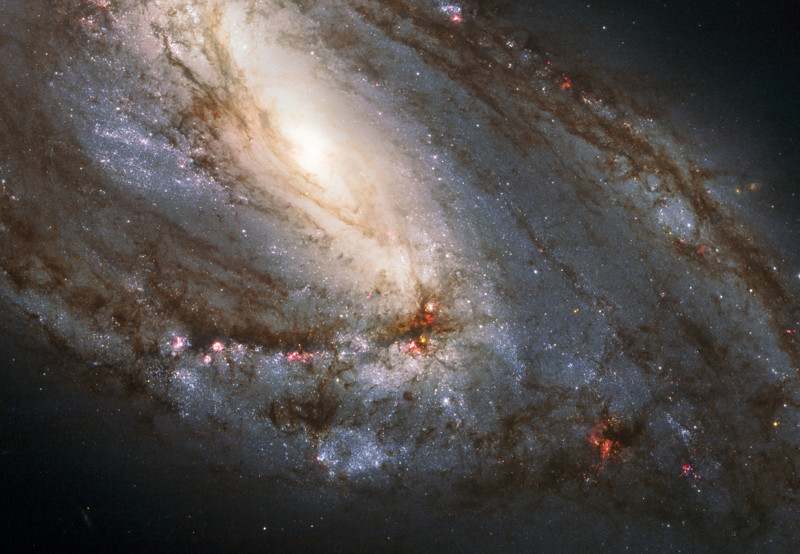
Credit: NASA, ESA and the Hubble Heritage (STScI/AURA)-ESA/Hubble Collaboration Acknowledgment: Davide De Martin and Robert Gendler
M66
Hubble has snapped a spectacular view of M66, the largest "player" of the Leo Triplet, and a galaxy with an unusual anatomy: it displays asymmetric spiral arms and an apparently displaced core. The peculiar anatomy is most likely caused by the gravitational pull of the other two members of the trio.
The unusual spiral galaxy Messier 66 is located at a distance of about 35 million light-years in the constellation of Leo. Together with Messier 65 and NGC 3628, Messier 66 is a member of the Leo Triplet, a trio of interacting spiral galaxies, part of the larger Messier 66 group. Messier 66 wins in size over its fellow triplets — about 100,000 light-years across.
This is a composite of images obtained through the following filters: 814W (near infrared), 555W (green), and H-alpha (showing the glowing of the hydrogen gas). They have been combined so to represent the real colors of the galaxy.
Friday, 21 March 2025
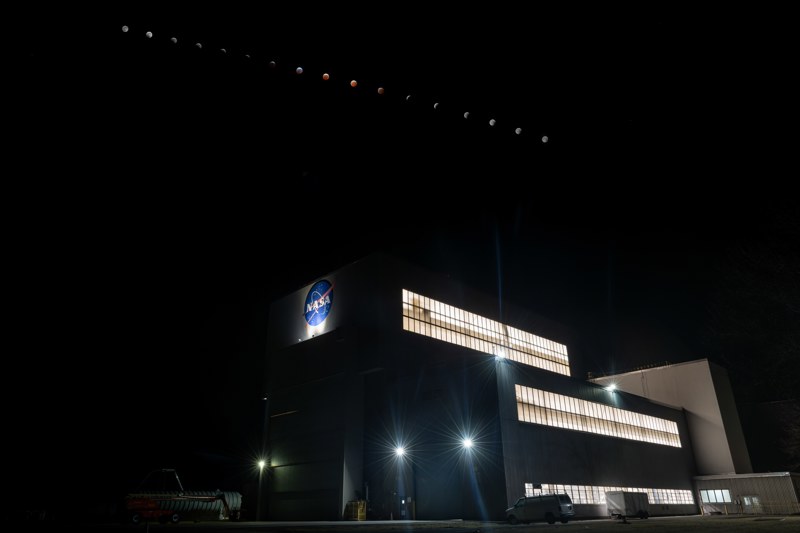
Credit: NASA/Sara Lowthian-Hanna
Blood Moon Lunar Eclipse
The phases of the lunar eclipse are visible in this time-lapse image of the Moon above the Space Environments Complex at NASA’s Glenn Research Center at NASA’s Neil Armstrong Test Facility in Sandusky, OH, on March 14, 2025.
Toward the middle of the Moon’s track through the sky, it appears red – this is the Blood Moon. One meaning of a “Blood Moon” is based on its red glow. This blood moon occurs during a total lunar eclipse. During a total lunar eclipse, the Earth lines up between the Moon and the Sun, hiding the Moon from sunlight. When this happens, the only light that reaches the Moon’s surface is from the edges of the Earth’s atmosphere. The air molecules from Earth’s atmosphere scatter out most of the blue light. The remaining light reflects onto the Moon’s surface with a red glow, making the Moon appear red in the night sky.
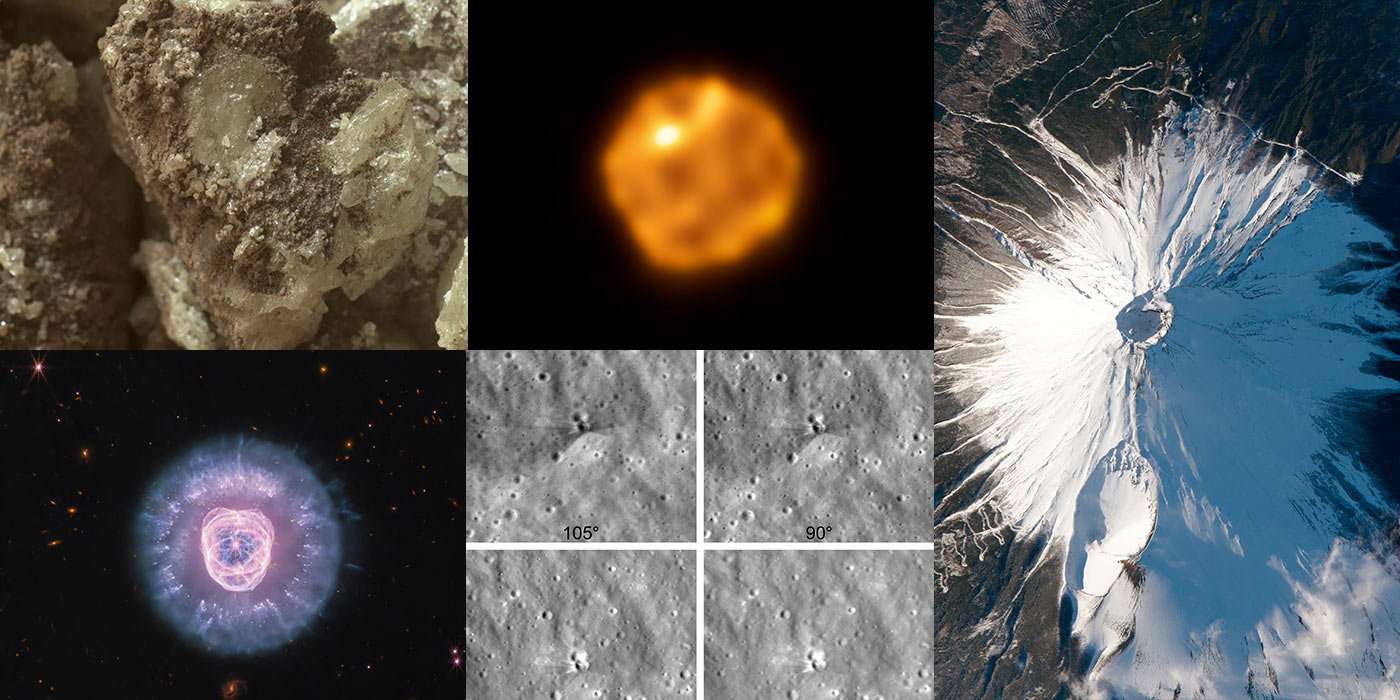
We journey from Mount Fuji as seen from orbit to the bubbling surface of Betelgeuse, exploring the forces that shape planets, moons, and stars across the cosmos. Along the way, JWST reveals the remains of a dying star, Curiosity uncovers clues to Mars’ volcanic past, and a fresh rocket impact on the Moon gives scientists a new opportunity to study how collisions reshape its surface.
#PPOD
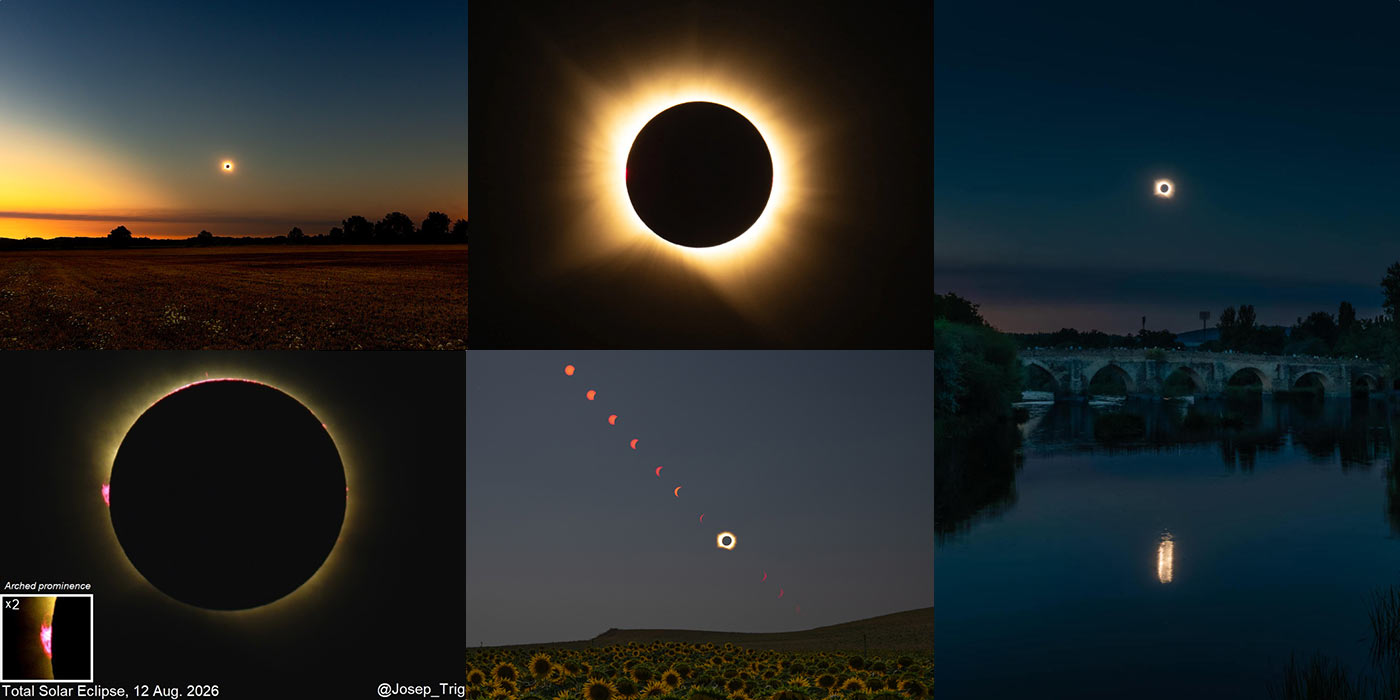
Let's celebrate the August 12 total solar eclipse through the eyes of photographers who experienced the Moon’s shadow sweeping across Spain. From Baily’s Beads and a glowing solar prominence to totality reflected in a river and framed by fields of sunflowers, these images capture both the science and extraordinary beauty of one of nature’s most spectacular celestial events.
#PPOD
#Eclipse
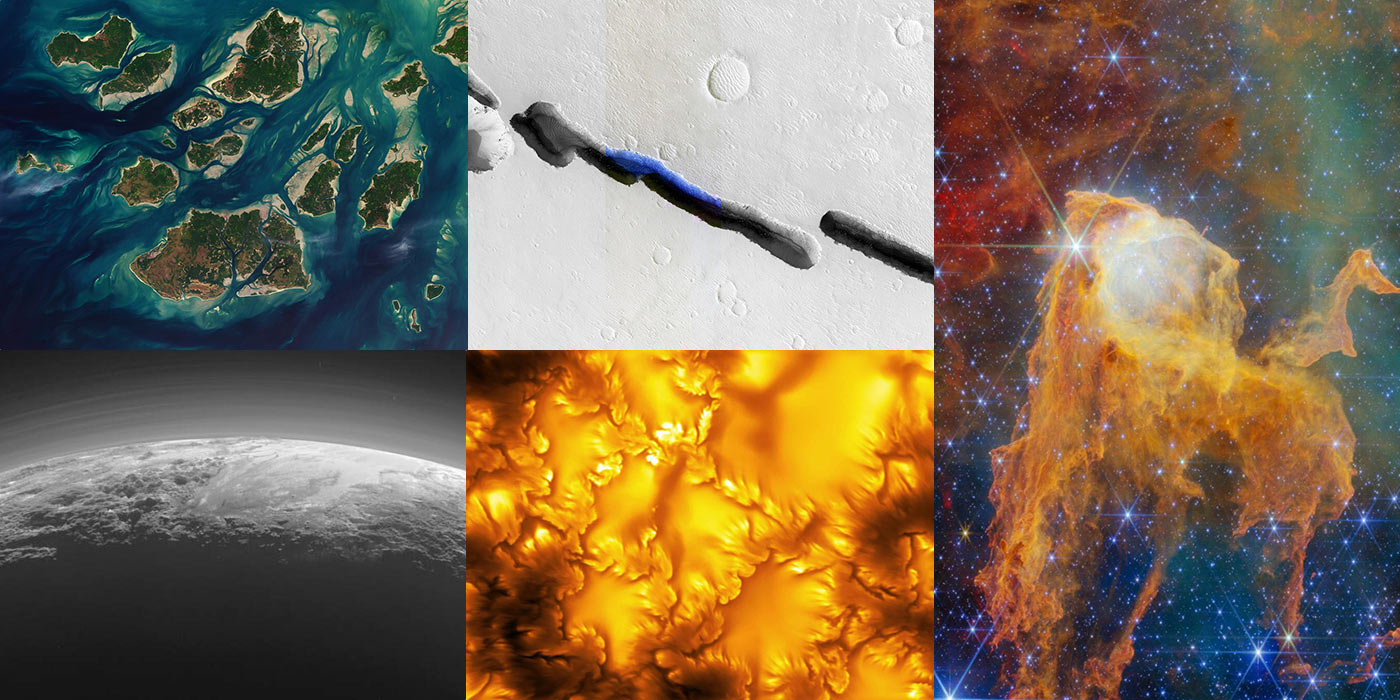
The universe is shaped by forces both immense and intricate, from fractured terrain on Mars and shifting tidal landscapes on Earth to tiny vortices dancing across the surface of the Sun. Farther afield, dramatic views of Pluto’s icy mountains and hazy atmosphere and a treasure chest of newborn stars in the Carina Nebula showcase the remarkable detail revealed by spacecraft and telescopes exploring the cosmos.
#PPOD
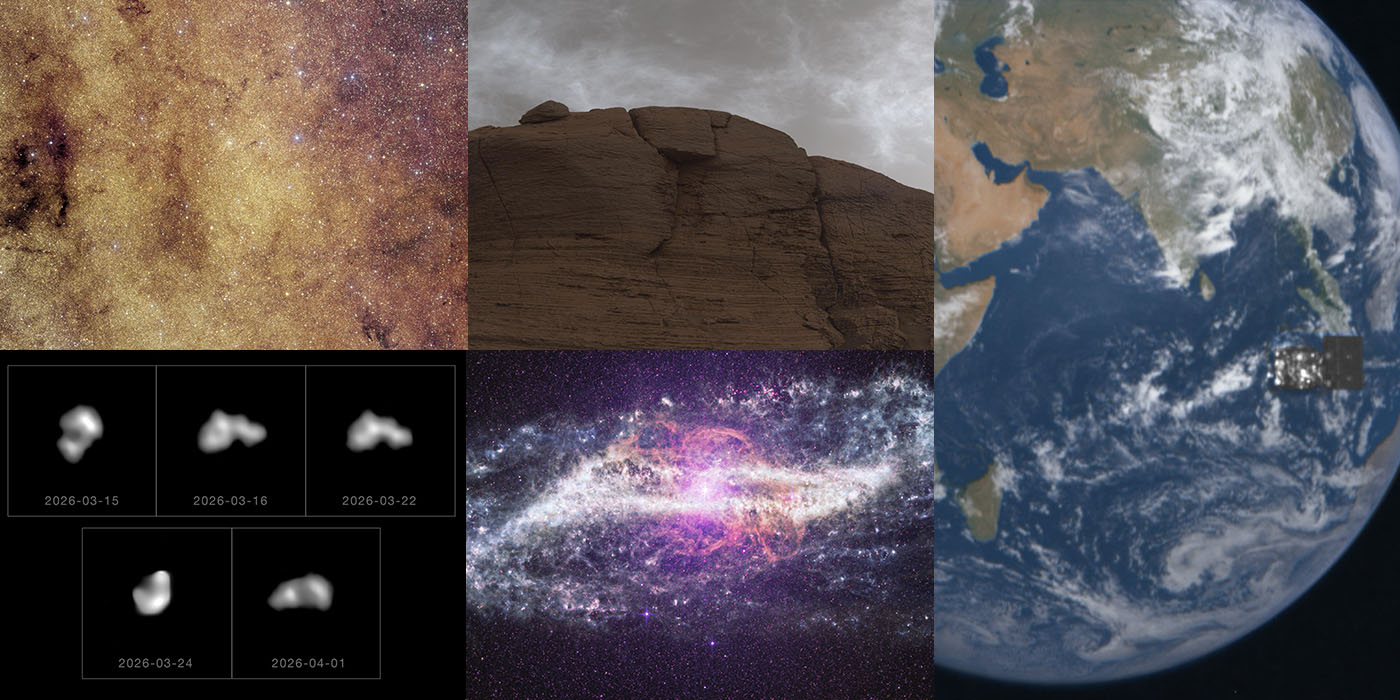
This week, we reveal hidden wonders across the cosmos, from delicate Martian clouds and a dust-shrouded galaxy to an asteroid with a never-before-seen shape and the crowded heart of the Milky Way. Together, these images showcase how new missions and advanced observatories continue to uncover surprising details about our solar system, our galaxy, and the universe beyond.
#PPOD
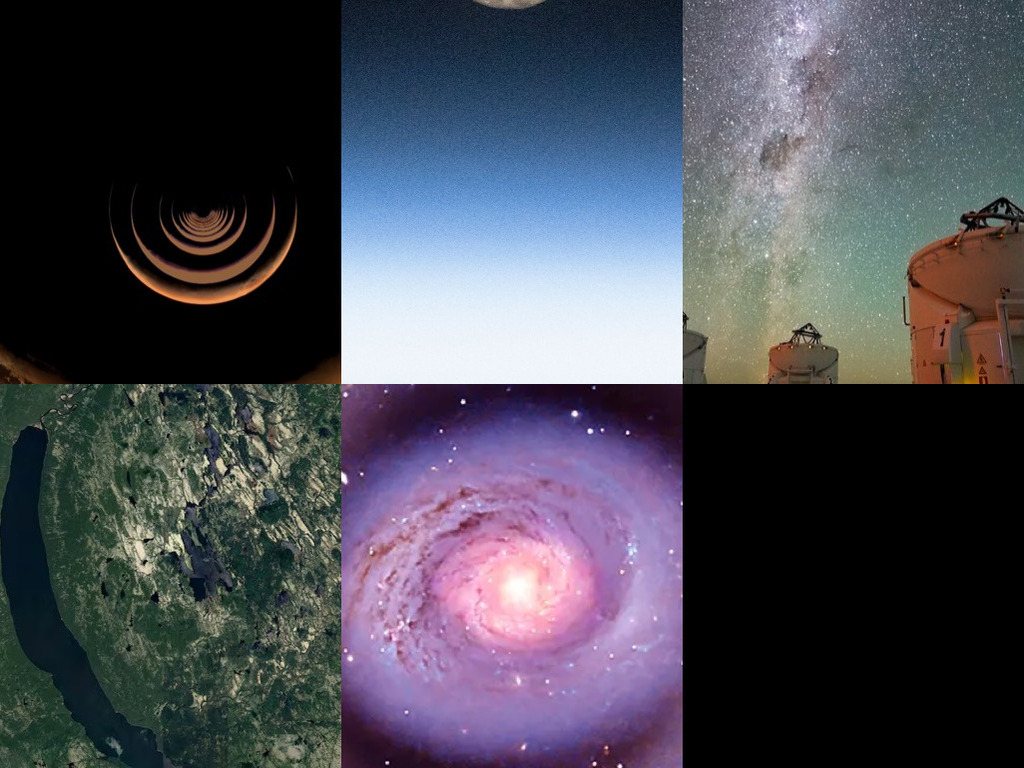
These images span the journey from our own backyard to distant galaxies, featuring Mars, the Moon, breathtaking night skies, and a fresh view of the star-forming galaxy Messier 94. Along the way, we celebrate exploration and discovery—from NASA’s Psyche mission preparing for its asteroid encounter to the revelation of a previously unknown impact crater on Earth —reminding us that there are still new wonders to uncover both on our own planet and across the cosmos.
#PPOD
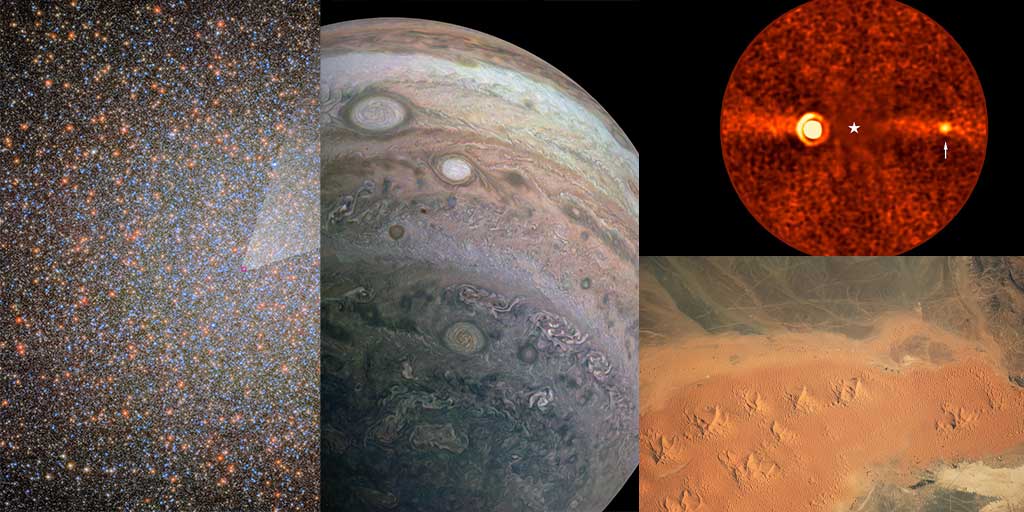
This week, we celebrate fifty years since Viking 1 became the first spacecraft to successfully land on and photograph the surface of Mars, alongside stunning new views of worlds, stars, and galaxies that continue to expand our understanding of the universe. From sculpted Sahara sand dunes and Jupiter’s colorful cloud bands to a newly discovered exoplanet and the first stellar-mass black hole identified in Omega Centauri, these images showcase the remarkable diversity of cosmic exploration.
#PPOD
We journey from Mount Fuji as seen from orbit to the bubbling surface of Betelgeuse, exploring the forces that shape planets, moons, and stars across the cosmos. Along the way, JWST reveals the remains of a dying star, Curiosity uncovers clues to Mars’ volcanic past, and a fresh rocket impact on the Moon gives scientists a new opportunity to study how collisions reshape its surface.
Let's celebrate the August 12 total solar eclipse through the eyes of photographers who experienced the Moon’s shadow sweeping across Spain. From Baily’s Beads and a glowing solar prominence to totality reflected in a river and framed by fields of sunflowers, these images capture both the science and extraordinary beauty of one of nature’s most spectacular celestial events.
The universe is shaped by forces both immense and intricate, from fractured terrain on Mars and shifting tidal landscapes on Earth to tiny vortices dancing across the surface of the Sun. Farther afield, dramatic views of Pluto’s icy mountains and hazy atmosphere and a treasure chest of newborn stars in the Carina Nebula showcase the remarkable detail revealed by spacecraft and telescopes exploring the cosmos.
This week, we reveal hidden wonders across the cosmos, from delicate Martian clouds and a dust-shrouded galaxy to an asteroid with a never-before-seen shape and the crowded heart of the Milky Way. Together, these images showcase how new missions and advanced observatories continue to uncover surprising details about our solar system, our galaxy, and the universe beyond.
These images span the journey from our own backyard to distant galaxies, featuring Mars, the Moon, breathtaking night skies, and a fresh view of the star-forming galaxy Messier 94. Along the way, we celebrate exploration and discovery—from NASA’s Psyche mission preparing for its asteroid encounter to the revelation of a previously unknown impact crater on Earth —reminding us that there are still new wonders to uncover both on our own planet and across the cosmos.
This week, we celebrate fifty years since Viking 1 became the first spacecraft to successfully land on and photograph the surface of Mars, alongside stunning new views of worlds, stars, and galaxies that continue to expand our understanding of the universe. From sculpted Sahara sand dunes and Jupiter’s colorful cloud bands to a newly discovered exoplanet and the first stellar-mass black hole identified in Omega Centauri, these images showcase the remarkable diversity of cosmic exploration.
SkyMapper and the SETI Institute are connecting educators, students and the public to live astronomical observations through a distributed astronomical network.
#SkyMapper
#SETI
#Citizen Science
#Astronomy
What happens if life beyond Earth is discovered? The Discovery and Futures Lab at the SETI Institute fosters novel and anticipatory research at the intersection of science, society, our planet, and the search for life beyond Earth.
#Discovery and Futures Lab
SkyMapper and the SETI Institute are connecting educators, students and the public to live astronomical observations through a distributed astronomical network.
What happens if life beyond Earth is discovered? The Discovery and Futures Lab at the SETI Institute fosters novel and anticipatory research at the intersection of science, society, our planet, and the search for life beyond Earth.
Scientists are getting closer in their search for life beyond earth. But with limited federal funding for the search for extraterrestrial intelligence, supporters are the reason cutting-edge scientists can keep their eyes on the sky.
)