Tuesday, Jun 16, 2026

Credit: NASA/JPL-Caltech

Monday, 8 June 2026

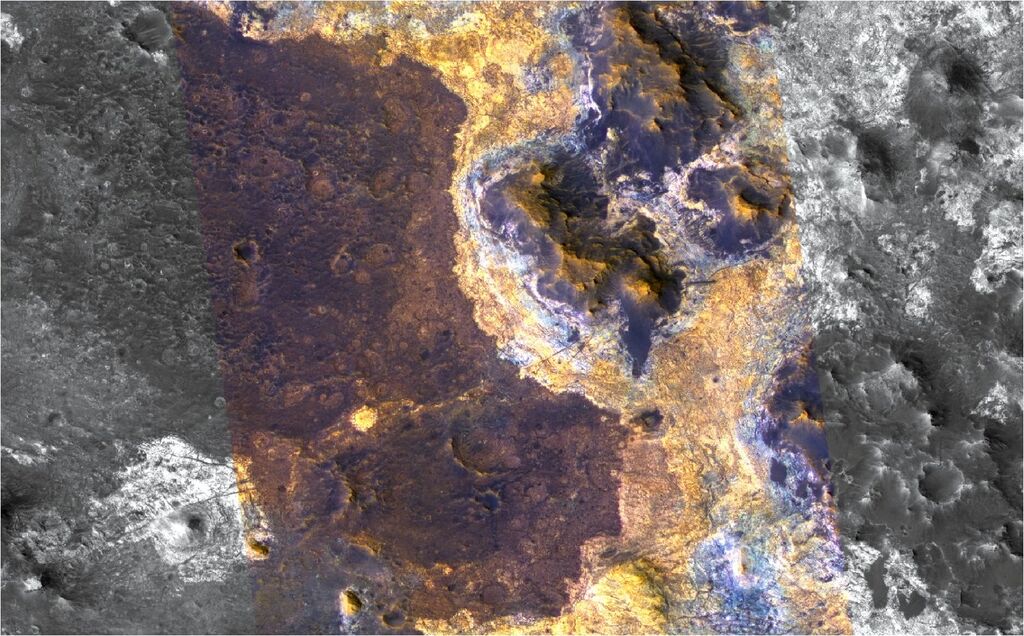
A Vast Clay Region on Mars

Taken by the HiRISE camera on NASA’s Mars Reconnaissance Orbiter, this view shows the transition between clay units in the Oxia Planum and Mawrth Vallis regions on Mars. A new study found that the clay deposits at Oxia Planum, the landing site of the ExoMars Rosalind Franklin rover, reached as far as Mawrth Vallis. Stretching roughly 600 km across and rising over a kilometer in altitude, the deposits are vast in scale.

At the boundary between the two main clay-bearing units, scientists have identified a paleosurface: a remnant of an ancient, exposed surface that was heavily cratered and later covered by younger deposits. This paleosurface marks a pause in sedimentation, followed by a shift in water chemistry and mineralogy across both sites. If an ocean did form these clay units, its shorelines would rank among the highest ever theorized for Mars.

Credit: NASA

Tuesday, 9 June 2026

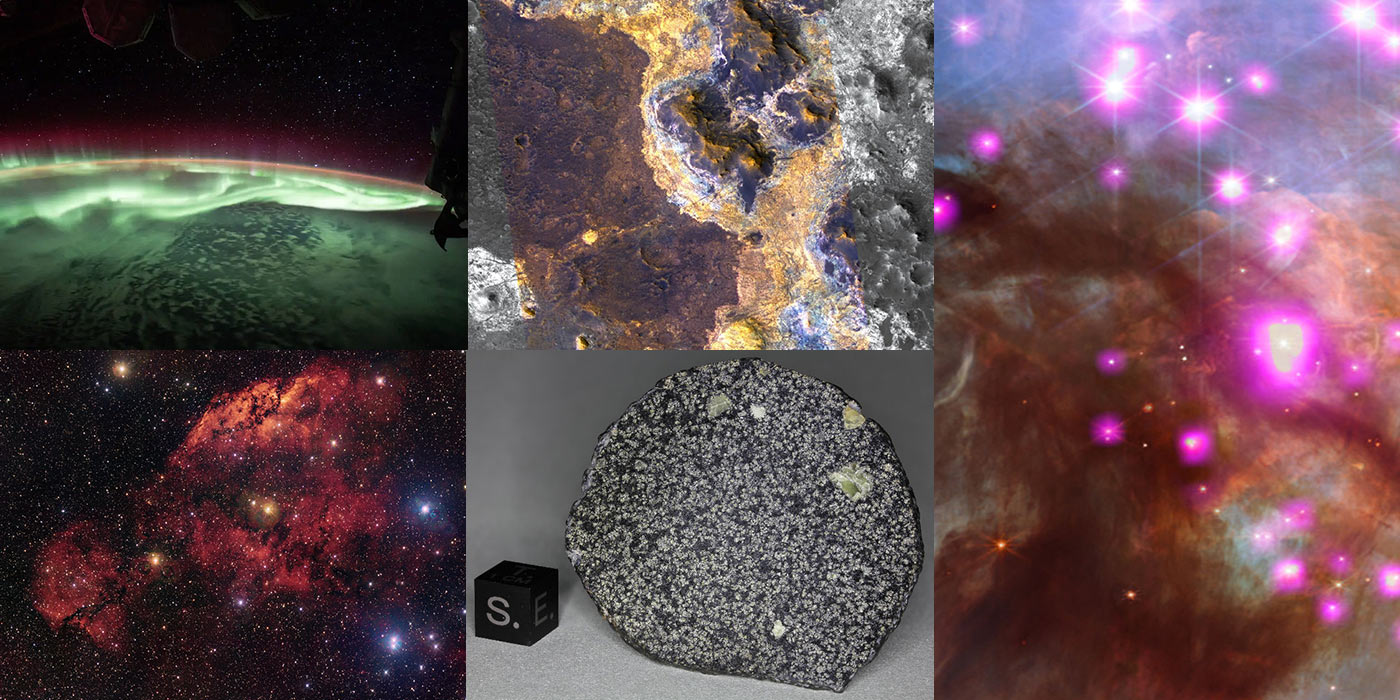
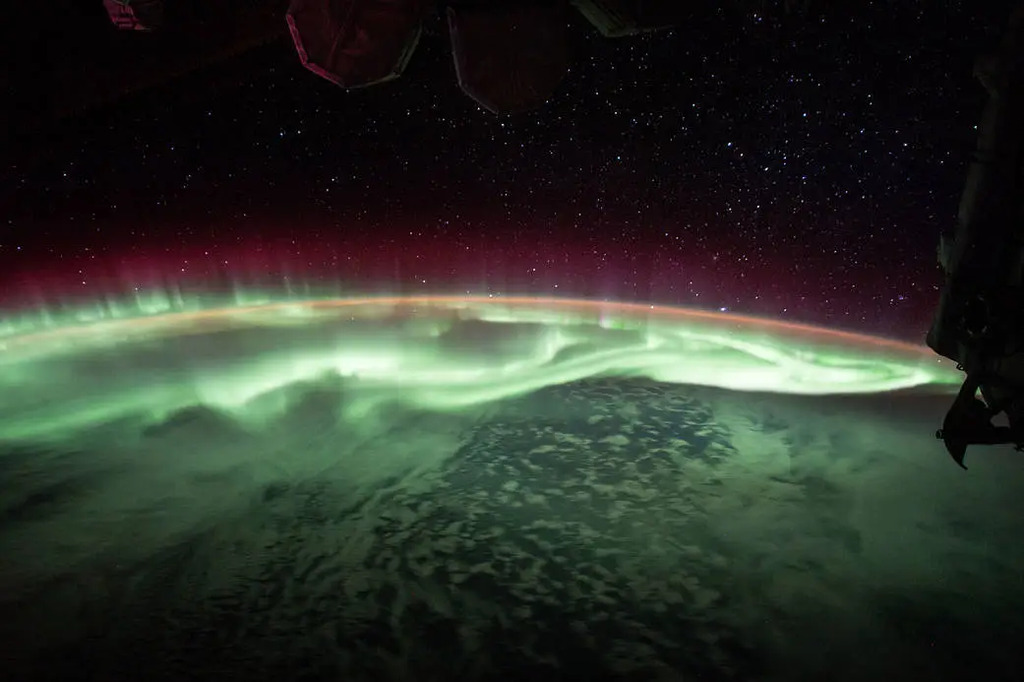
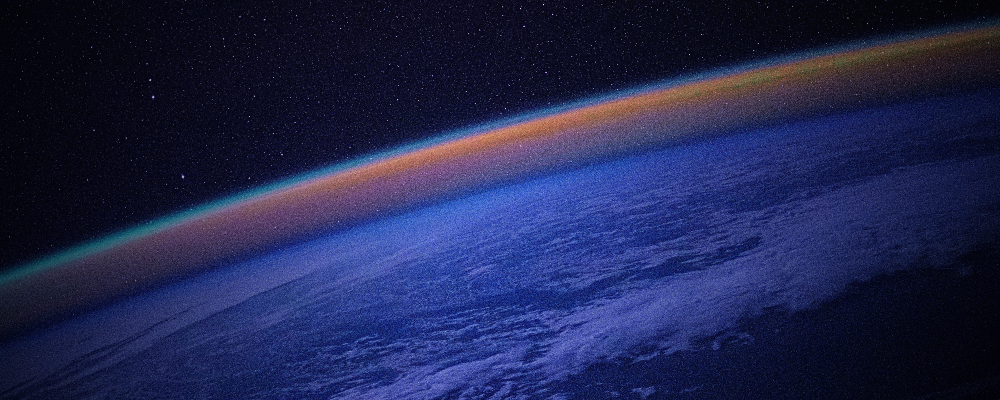
Watching the Aurora From Orbit

Expedition 52 Flight Engineer Jack Fischer of NASA shared photos and a time-lapse video of a glowing green aurora seen from his vantage point 250 miles up, aboard the International Space Station. This aurora photo was taken on June 26, 2017.

Due to a coronal mass ejection (CME) on June 6th, auroras are possible on June 8th when the particles are expected to hit Earth's magnetic field. If Earth experiences a direct hit, the potentially strong storm could produce mid-latitude auroras in Europe and the USA.

Credit: X-ray: NASA/CXC/PSU/K. Getman, E. Feigelson, M. Kuhn & the MYStIX team; JWST Image: NASA, ESA, CSA, STScI, M. Meyer (University of Michigan), M. De Furio (UT Austin), M. Robberto (STScI), A. Pagan (STScI); Image Processing: NASA/CXC/SAO/L. Frattare

Wednesday, 10 June 2026

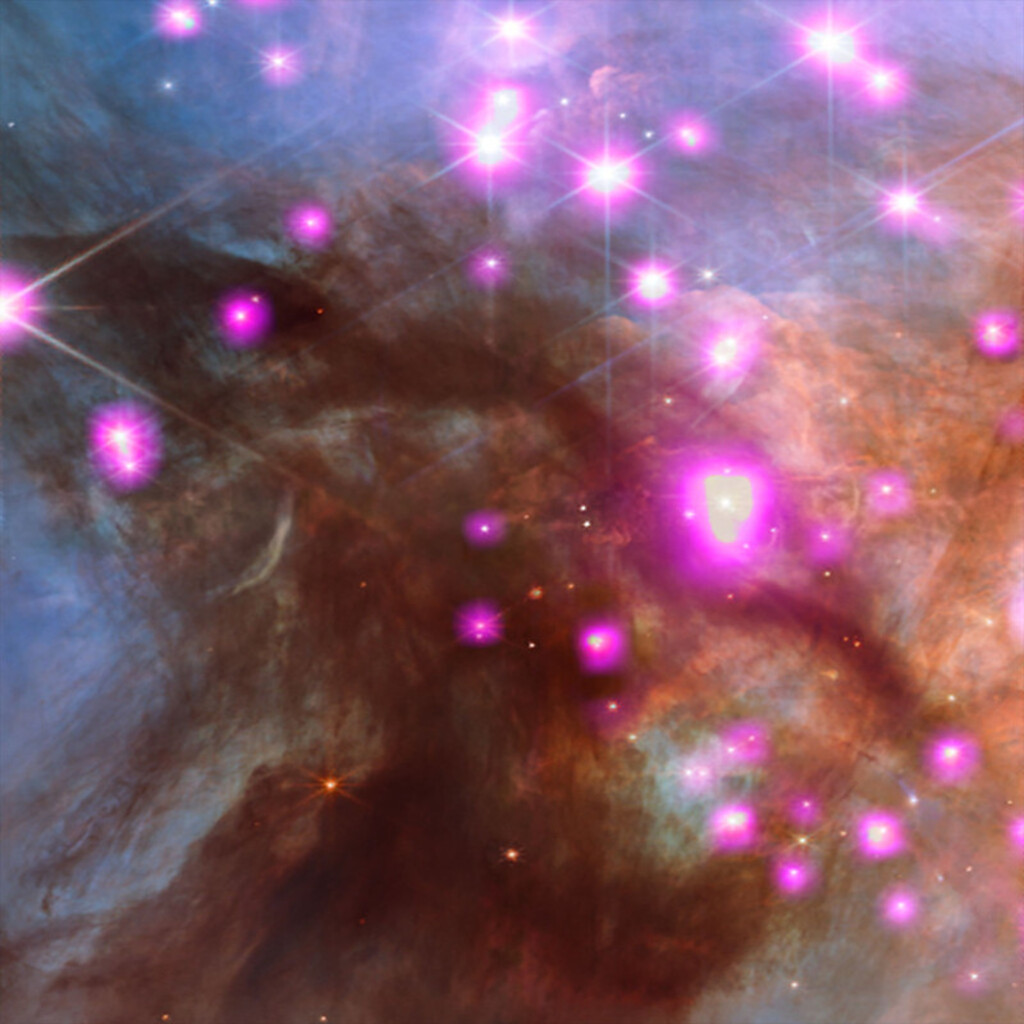
Flame Nebula (NGC 2024)

The Flame Nebula image features Chandra’s X-rays (purple) embedded within a dusty-grey landscape seen in infrared by JWST. Several dozen young stars illuminate the gas cloud, appearing as white cores surrounded by thick, neon purple-pink X-ray halos. This image captures the "stellar soil" of a region where stars are currently forming and beginning their life cycles.

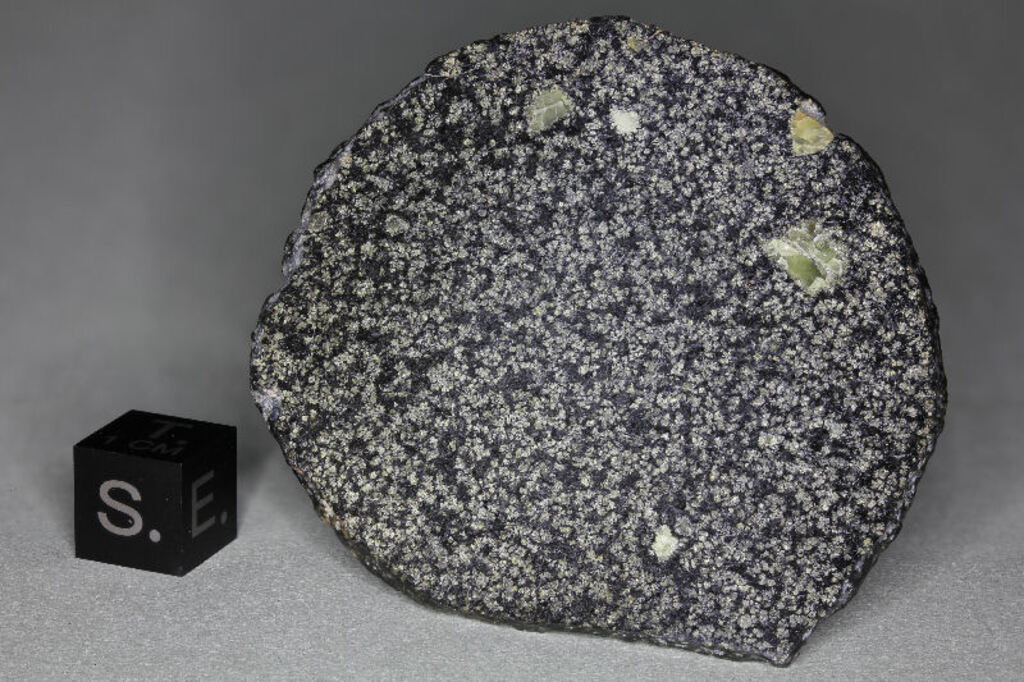
Credit: Beat Booz via Encyclopedia of Meteorites

Thursday, 11 June 2026

Rare Meteorite

This meteorite was found in 2019 in northwest Africa and is officially named NWA 12774. Classified as an angrite, this relatively rare type of meteorite is made from material that formed just a few million years after the solar system began. Usually, angrites come from asteroids; however, analysis of certain crystals in NWA 12774 reveals a high aluminum concentration, indicating formation under intense pressure deep within a larger body. Alongside other results, these characteristics indicate that the parent body was a protoplanet about 1800 kilometers in diameter.

The green inclusions are olivine crystals, which are magnesium-rich.

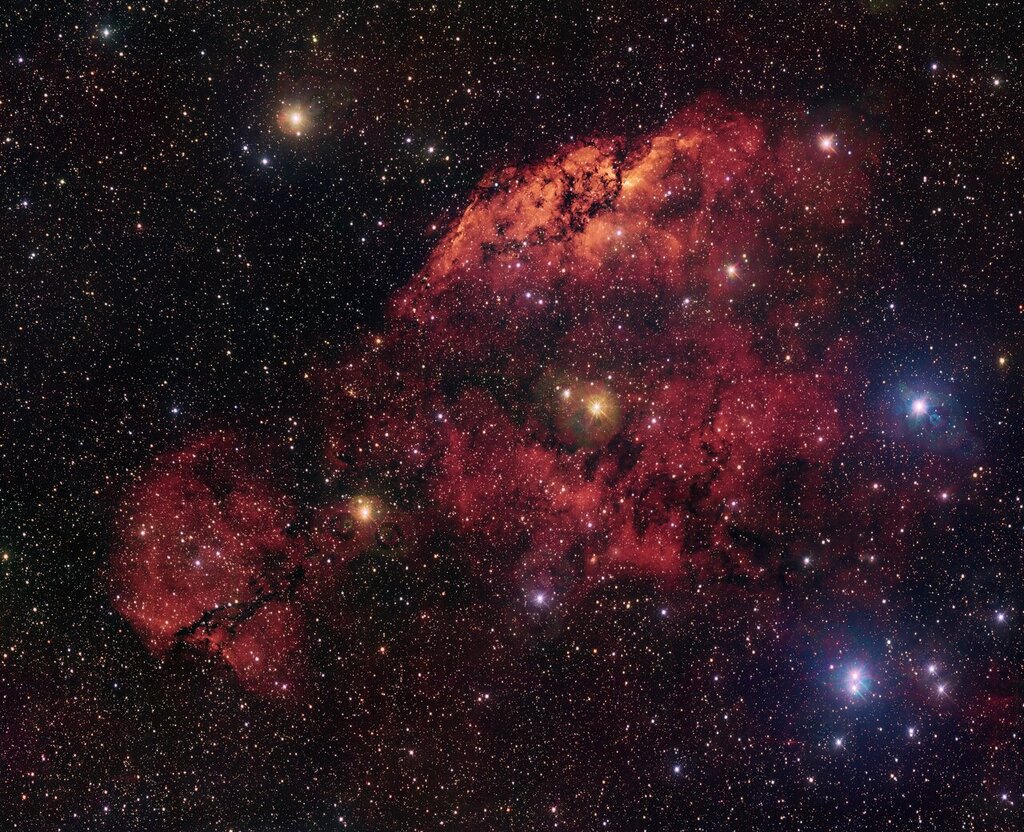
Credit: ESO/VPHAS+ team

Friday, 12 June 2026

Celebrating the Birth of New Stars... and the VST!

These pareidolia-inducing clouds are a pair of nebulae — collections of dust and gas in interstellar space — called Gum 10 and Gum 11. Visible mostly from the southern hemisphere, they are part of a larger complex, in which stars are born. Gum 10 is the brightest cloud that occupies most of the image, whereas Gum 11 is the fainter, detached cloud to the bottom-left. Their bright glow comes from a special interaction between hydrogen and the hot massive stars in each nebula.

These stars emit ultraviolet light, which has enough energy to remove electrons from atoms, forming ions. These electrons eventually recombine with hydrogen ions, which causes the emission of the specific shade of red light seen in this image. The black lines in the nebula come from dust that blocks the light behind it.

This image was taken with the VLT Survey Telescope (VST), which celebrates the 15th anniversary of its first light this week.

News

Related News

Featured Image
Sep 2, 2026
Planetary Picture of the Day - Week of August 24, 2026
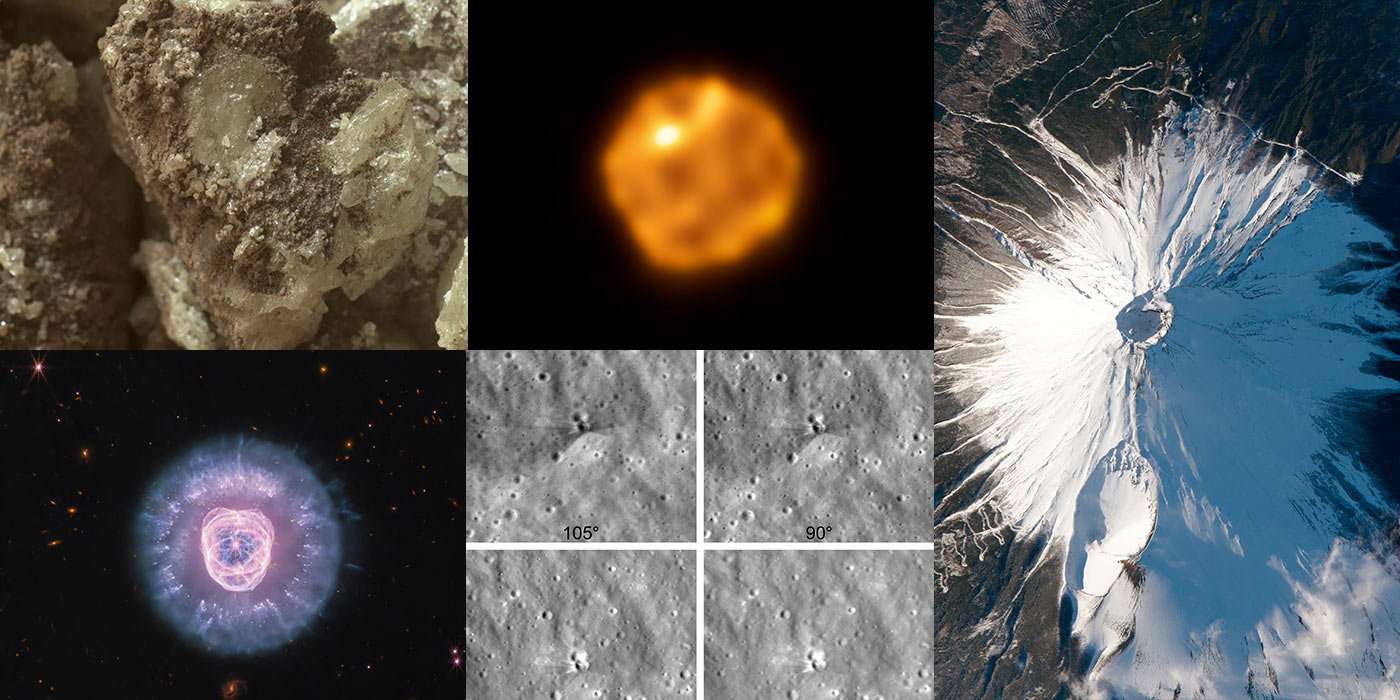
We journey from Mount Fuji as seen from orbit to the bubbling surface of Betelgeuse, exploring the forces that shape planets, moons, and stars across the cosmos. Along the way, JWST reveals the remains of a dying star, Curiosity uncovers clues to Mars’ volcanic past, and a fresh rocket impact on the Moon gives scientists a new opportunity to study how collisions reshape its surface. #PPOD
Featured Image
Aug 26, 2026
Planetary Picture of the Day - Week of August 17, 2026
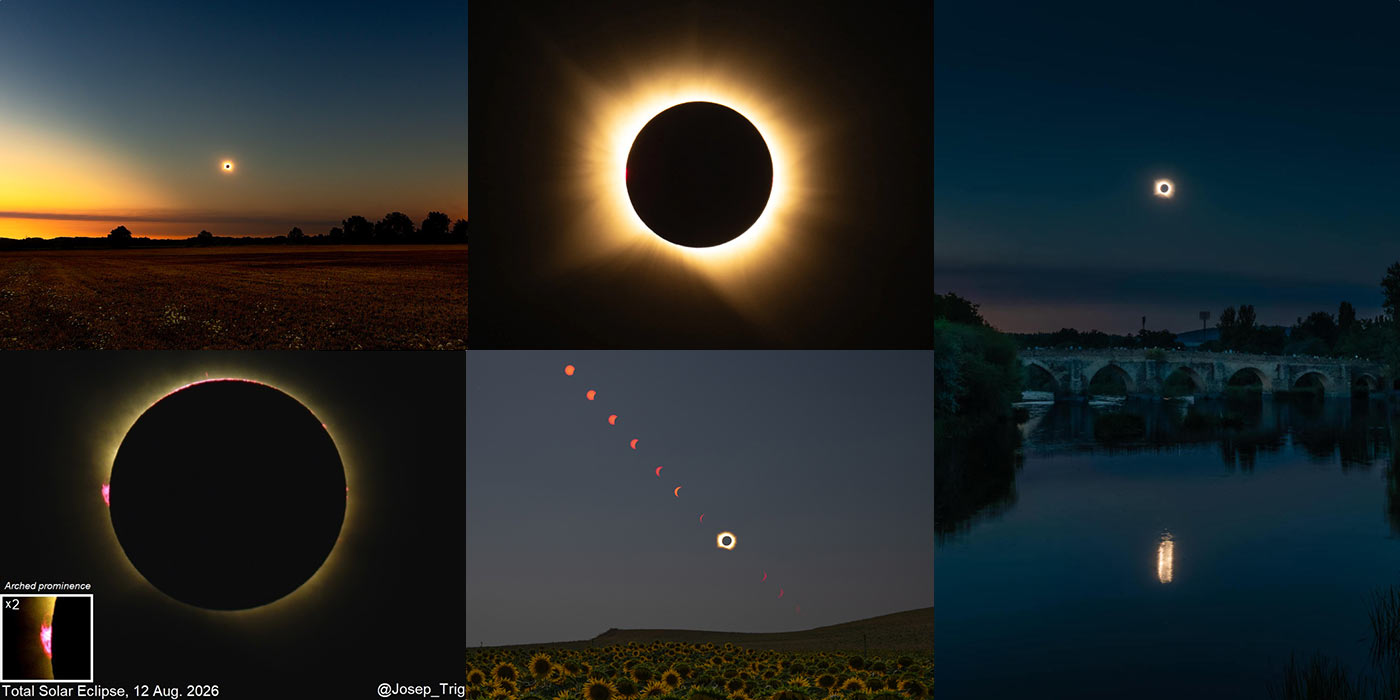
Let's celebrate the August 12 total solar eclipse through the eyes of photographers who experienced the Moon’s shadow sweeping across Spain. From Baily’s Beads and a glowing solar prominence to totality reflected in a river and framed by fields of sunflowers, these images capture both the science and extraordinary beauty of one of nature’s most spectacular celestial events. #PPOD #Eclipse
Featured Image
Aug 19, 2026
Planetary Picture of the Day - Week of August 10, 2026
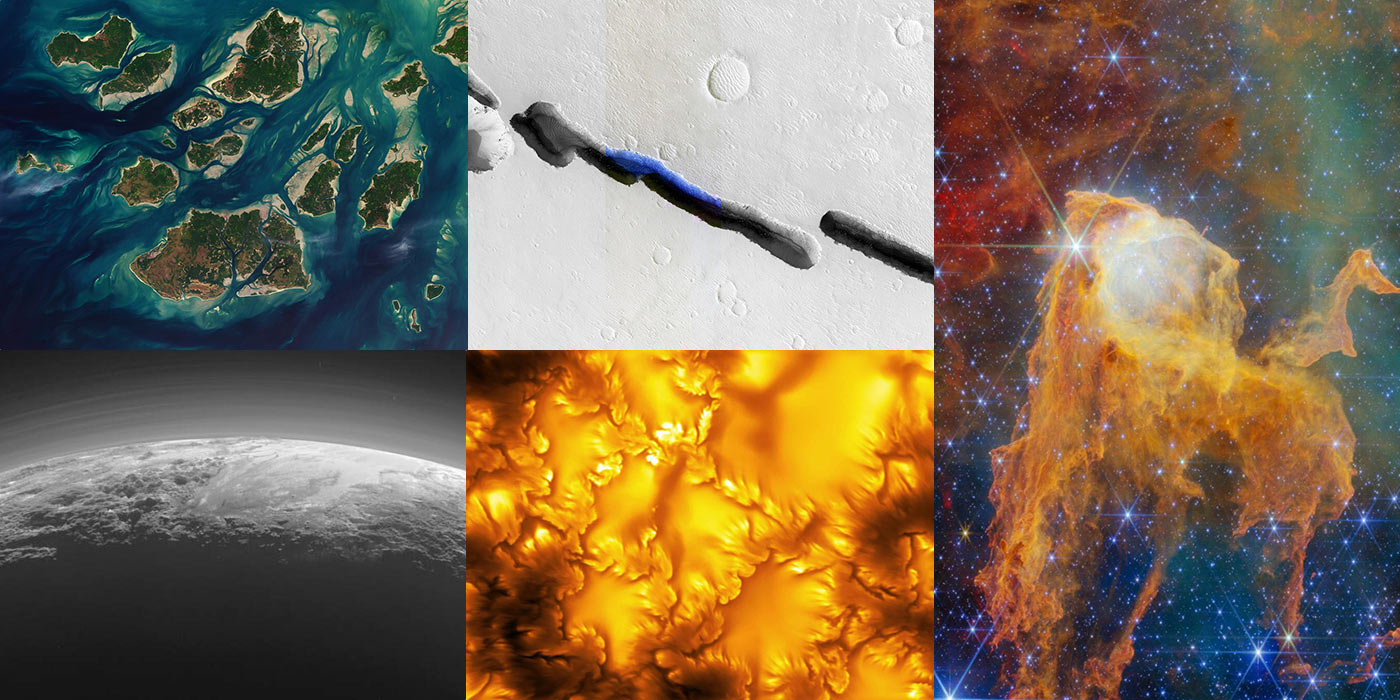
The universe is shaped by forces both immense and intricate, from fractured terrain on Mars and shifting tidal landscapes on Earth to tiny vortices dancing across the surface of the Sun. Farther afield, dramatic views of Pluto’s icy mountains and hazy atmosphere and a treasure chest of newborn stars in the Carina Nebula showcase the remarkable detail revealed by spacecraft and telescopes exploring the cosmos. #PPOD
Featured Image
Aug 12, 2026
Planetary Picture of the Day - August 3, 2026
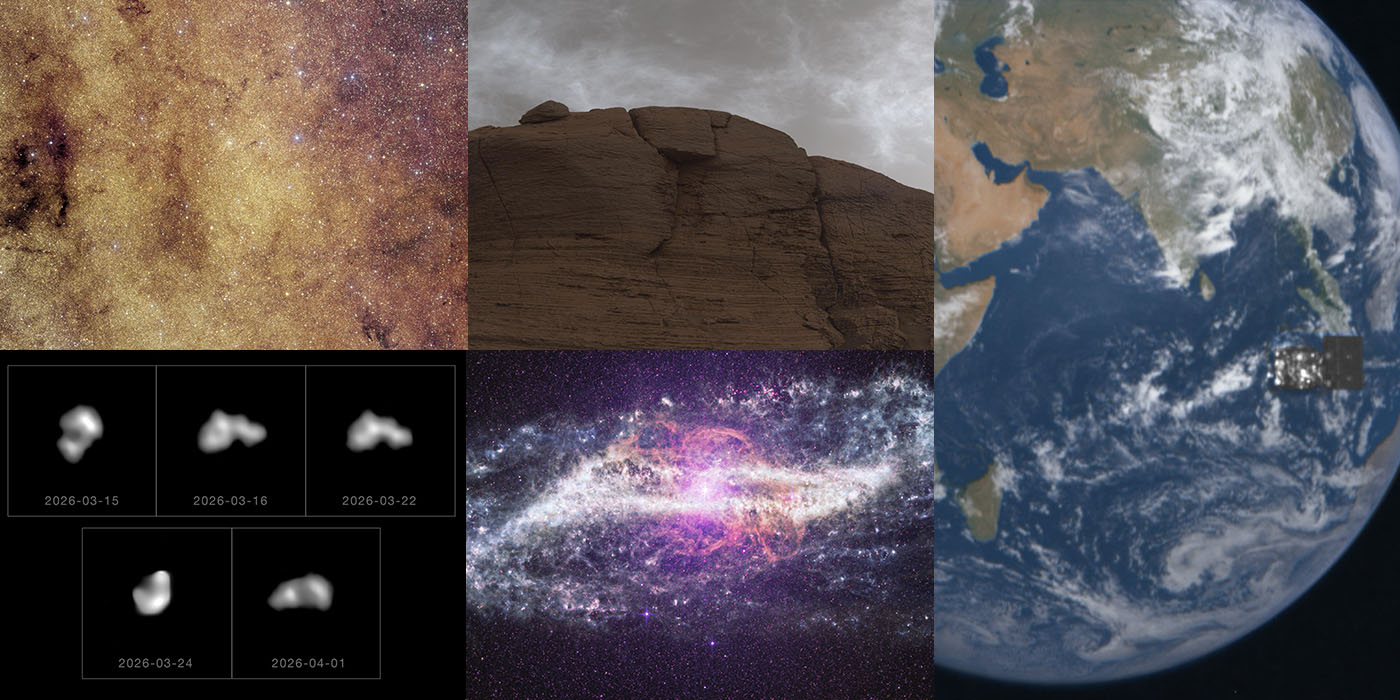
This week, we reveal hidden wonders across the cosmos, from delicate Martian clouds and a dust-shrouded galaxy to an asteroid with a never-before-seen shape and the crowded heart of the Milky Way. Together, these images showcase how new missions and advanced observatories continue to uncover surprising details about our solar system, our galaxy, and the universe beyond. #PPOD
Featured Image
Aug 5, 2026
Planetary Picture of the Day - Week of July 27, 2026
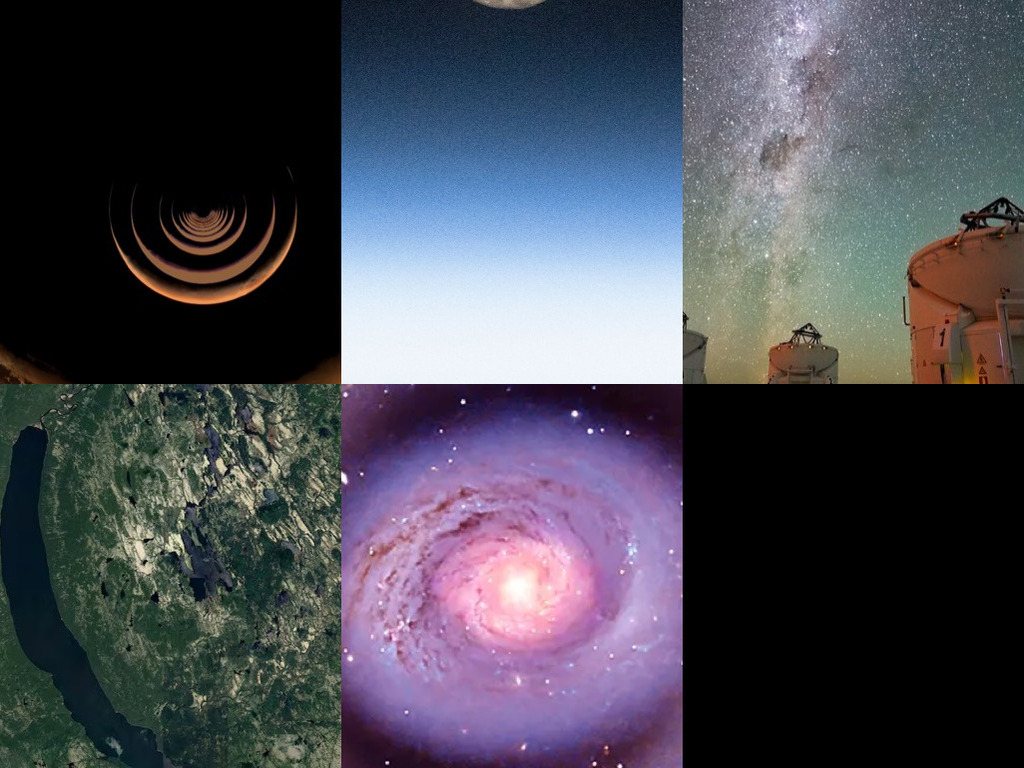
These images span the journey from our own backyard to distant galaxies, featuring Mars, the Moon, breathtaking night skies, and a fresh view of the star-forming galaxy Messier 94. Along the way, we celebrate exploration and discovery—from NASA’s Psyche mission preparing for its asteroid encounter to the revelation of a previously unknown impact crater on Earth —reminding us that there are still new wonders to uncover both on our own planet and across the cosmos. #PPOD
Featured Image
Jul 29, 2026
Planetary Picture of the Day - Week of July 20, 2026
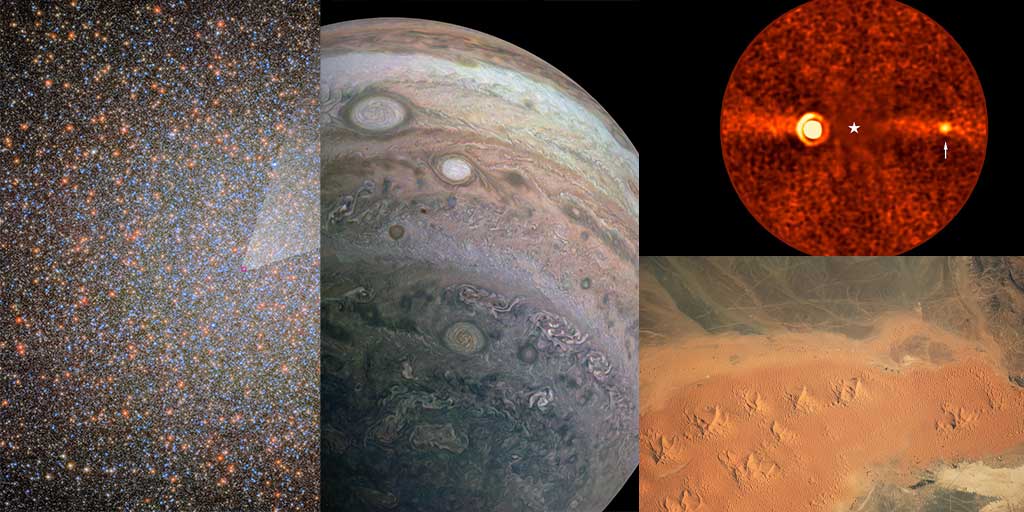
This week, we celebrate fifty years since Viking 1 became the first spacecraft to successfully land on and photograph the surface of Mars, alongside stunning new views of worlds, stars, and galaxies that continue to expand our understanding of the universe. From sculpted Sahara sand dunes and Jupiter’s colorful cloud bands to a newly discovered exoplanet and the first stellar-mass black hole identified in Omega Centauri, these images showcase the remarkable diversity of cosmic exploration. #PPOD
Research

Related Projects

Featured Image
SkyMapper • SETI • Citizen Science • Astronomy
SkyMapper: Expanding Access to Real-time Astronomy Through a Global Astronomical Network
SkyMapper and the SETI Institute are connecting educators, students and the public to live astronomical observations through a distributed astronomical network. #SkyMapper #SETI #Citizen Science #Astronomy
Featured Image
VPL
Virtual Planetary Laboratory
How can we best assess whether an exoplanet supports life? #VPL
Featured Image
Discovery and Futures Lab
What happens if life beyond Earth is discovered? The Discovery and Futures Lab at the SETI Institute fosters novel and anticipatory research at the intersection of science, society, our planet, and the search for life beyond Earth.  #Discovery and Futures Lab
Support Us

Support the
SETI Institute

Scientists are getting closer in their search for life beyond earth. But with limited federal funding for the search for extraterrestrial intelligence, supporters are the reason cutting-edge scientists can keep their eyes on the sky.