






Wednesday, Jul 02, 2025

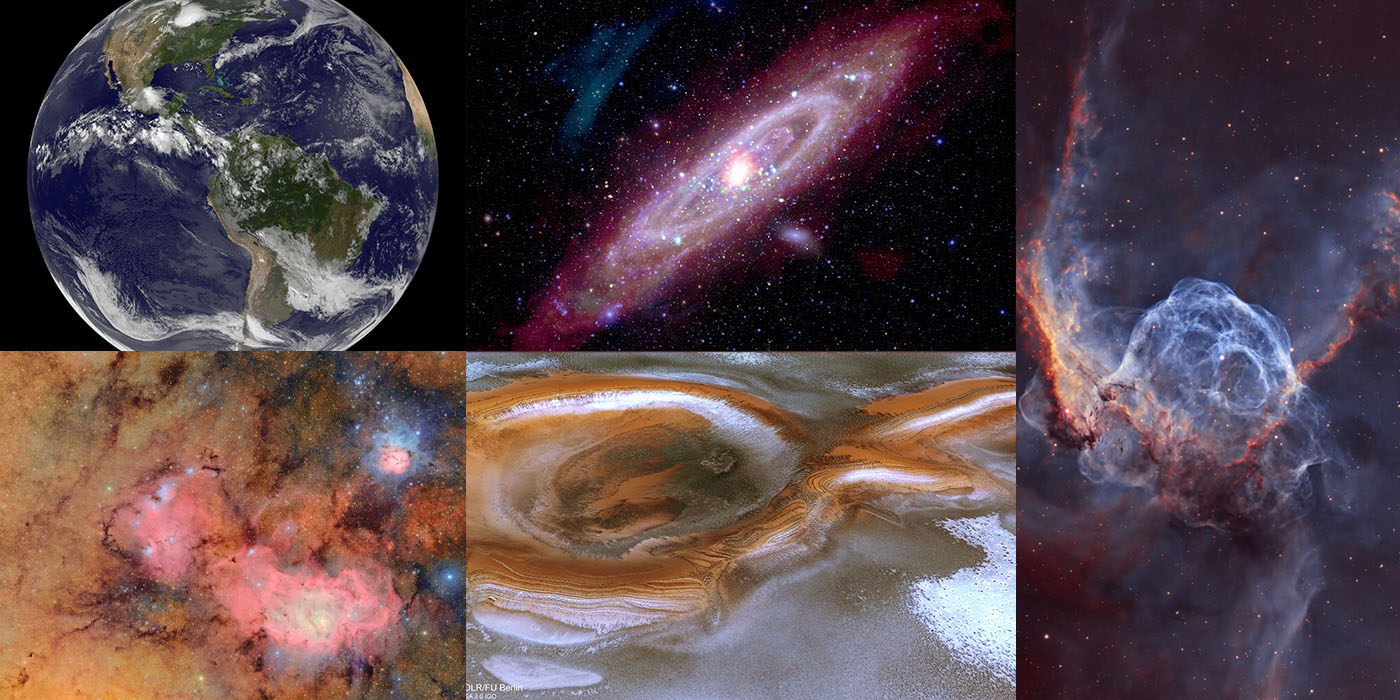
June brought us not only the solstice but also the first look at just what the NSF-DOE Rubin Observatory will be able to image over the next ten years. Martian orbiters continue to send home incredible images. Plus, astrophotographers are still out there working with their own smaller telescopes, and by combining the work of many different instruments both on the ground and in space, NASA released a gorgeous composite photo of M31, the Andromeda Galaxy.

Credit: NSF-DOE Vera C. Rubin Observatory

Monday, 23 June 2025

Vera Rubin Sneak Peek

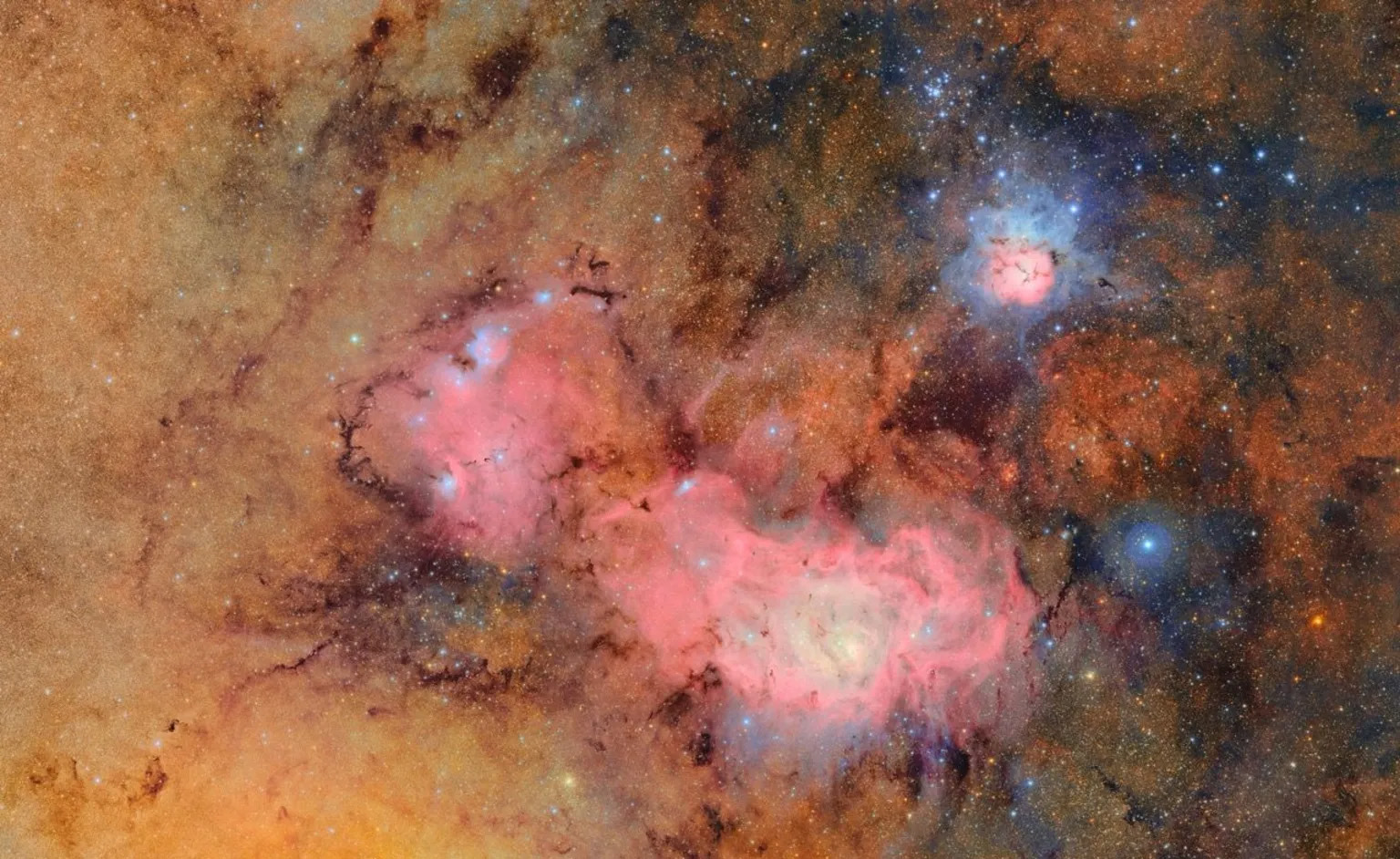
In a gorgeous sneak peek of what will come, the Vera Rubin Observatory shared several pictures ahead of their live reveal today at 8 am Pacific (1500 UTC). The first image revealed the Trifid and Lagoon nebulae in stunning detail, a cosmic tapestry of glowing tan and pink gas clouds with dark dust lanes.

Credit: Paul Naquet

Tuesday, 24 June 2025

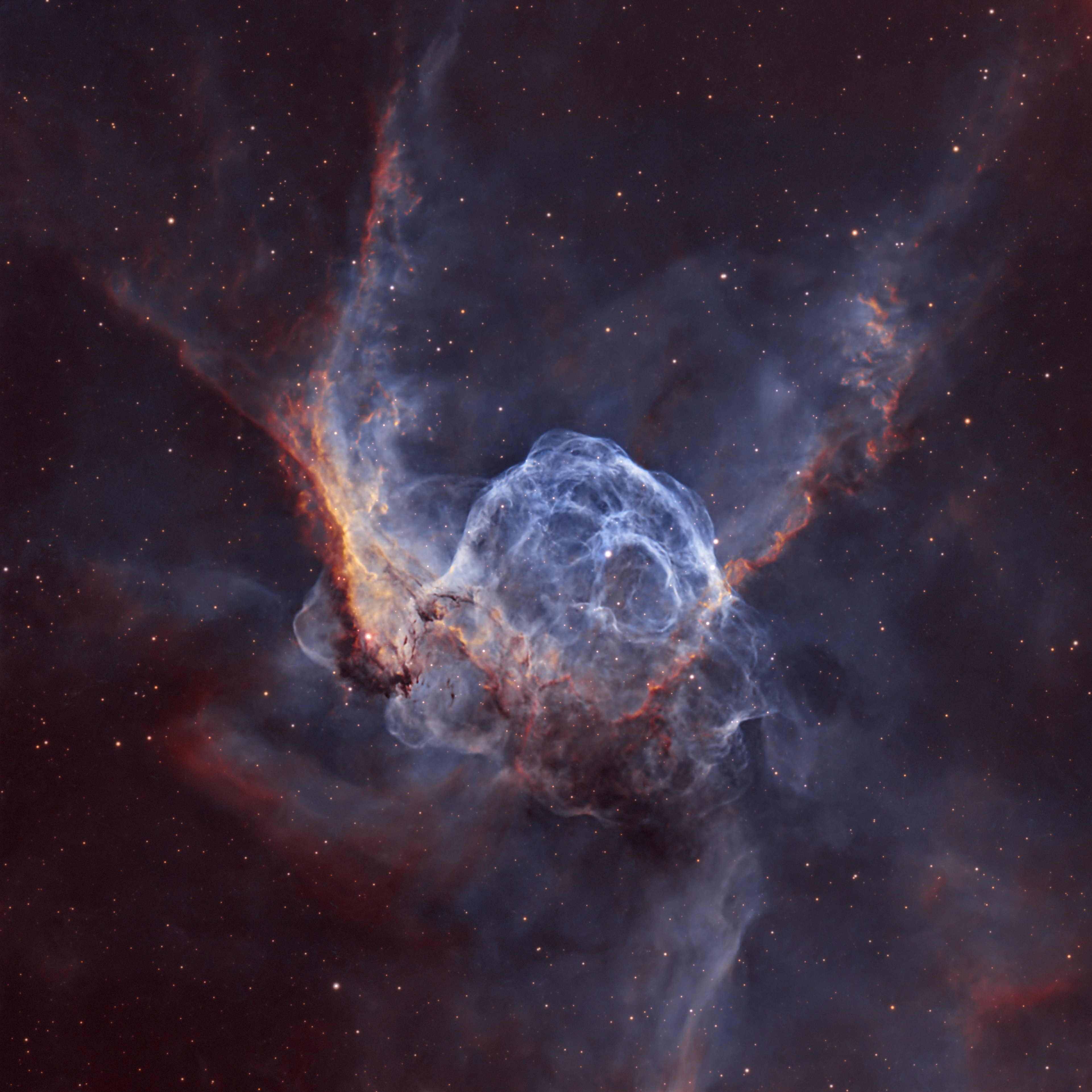
NGC 2359

In the vastness of space, 15,000 light-years away, a cosmic warrior’s crown, the Thor’s Helmet Nebula (NGC 2359), floats. This glowing cloud of gas and dust, shaped like the Norse god’s battle helmet, is a bubble blown by powerful winds from a giant star nearing the end of its life. Bright blues and glowing edges give it a fierce, mystical look, a celestial storm frozen in time. A reminder that even stars wear armor in the universe’s eternal dance.

(The telescope used is an ASA 1000, and the camera is an FLI PL 16803 with Astrodon SHO 3mm filters. The images were taken under Bortle 1 skies, and processing was done in the HSO palette using Pixinsight.)

Credit: NASA

Wednesday, 25 June 2025

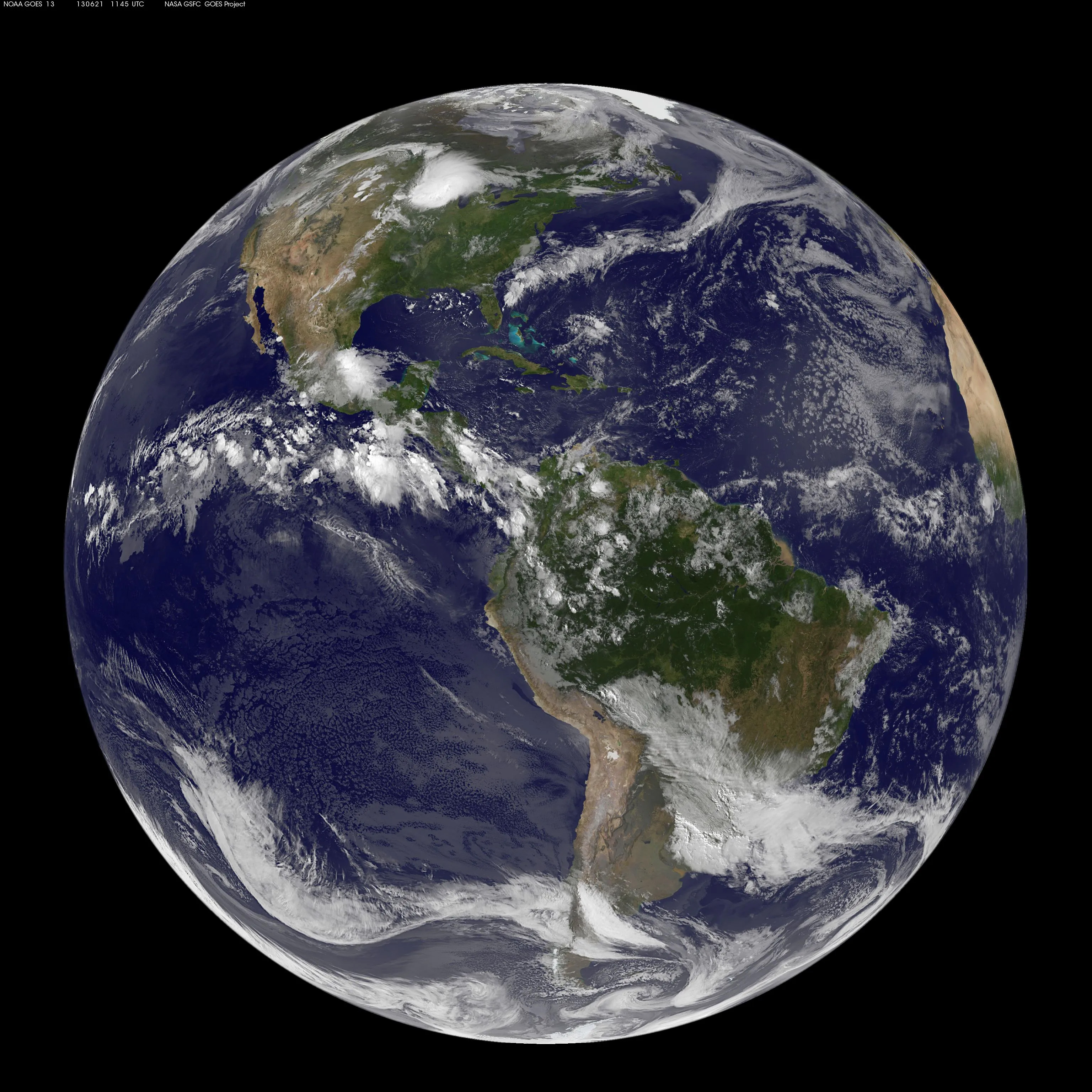
Summer Begins in the Northern Hemisphere

This full-disk image from NOAA’s GOES-13 satellite was captured at 7:45 a.m. EDT (11:45 UTC) and shows the Americas on June 21, 2012, the start of astronomical summer – in the Northern Hemisphere – that year.

June 20 was the first day of summer in 2025 and the longest day of the year. In the Southern Hemisphere, it was the shortest day of the year and the beginning of winter.

Earth orbits at an angle, so the Northern Hemisphere is tilted toward the Sun for half of the year — this is summer in the Northern Hemisphere and winter in the Southern Hemisphere. The other half of the year, the Northern Hemisphere is tilted away from the Sun, creating winter in the north and summer in the south. Solstices happen twice yearly, at the points in Earth’s orbit where this tilt is most pronounced.

Credit: ESA/DLR/FU Berlin

Thursday, 26 June 2025

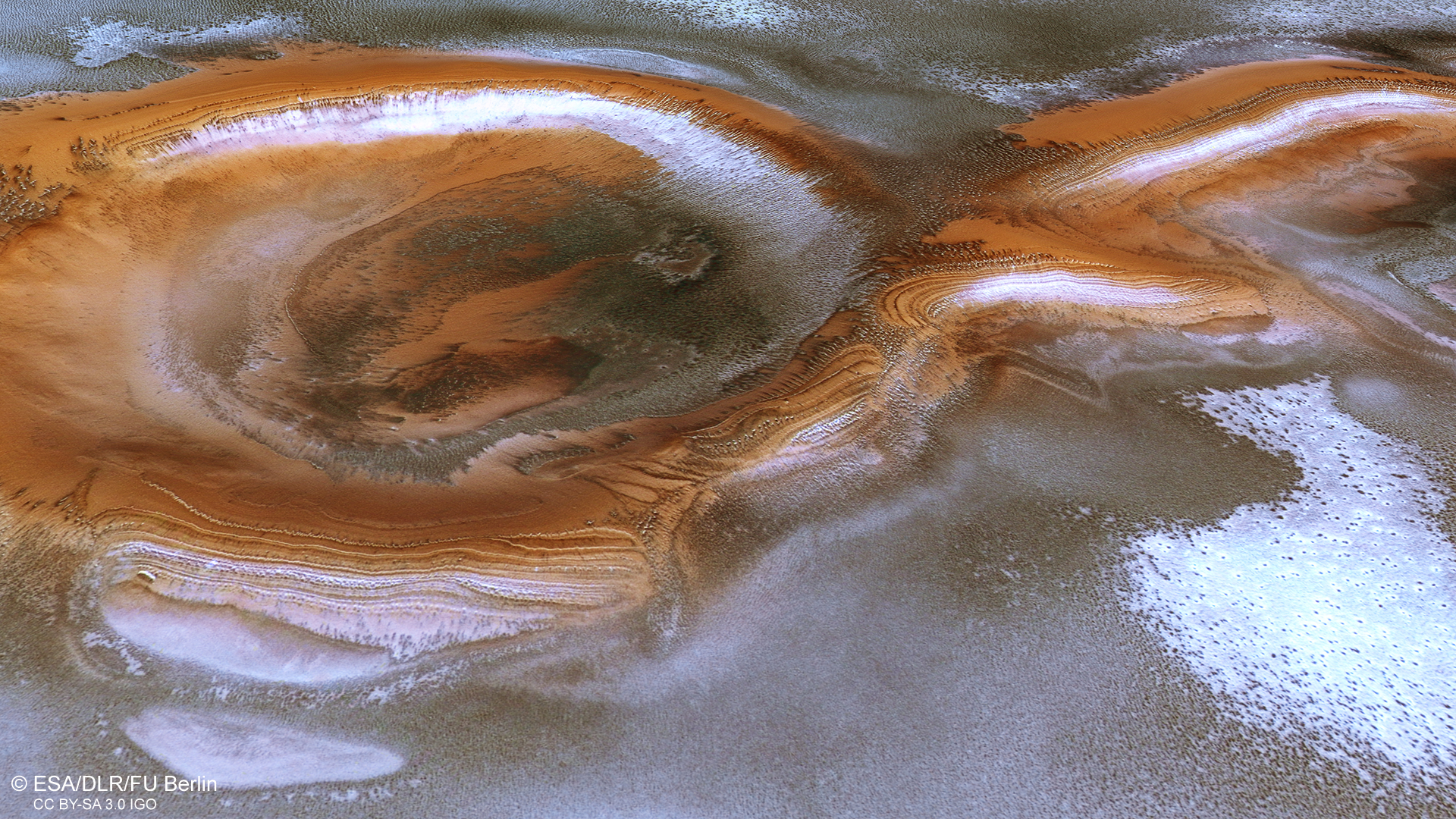
Perspective View Into an Icy Layered Crater

This spectacular view into a crater near Mars's south pole illustrates the layered terrain that typifies this region. The crater's walls are striped with alternating layers of water ice and fine sediments. These ‘polar layered deposits’ are also exposed in exquisite detail in the rusty red ridge that passes through the scene.

The High-Resolution Stereo Imaging camera onboard ESA’s Mars Express captured this frosty scene in the Ultimi Scopuli region near the south pole of Mars on 19 May 2022. At this time, it was spring in the southern hemisphere, and ice was starting to retreat. Dark dunes began to peak through the frost, and elevated terrain appeared ice-free.

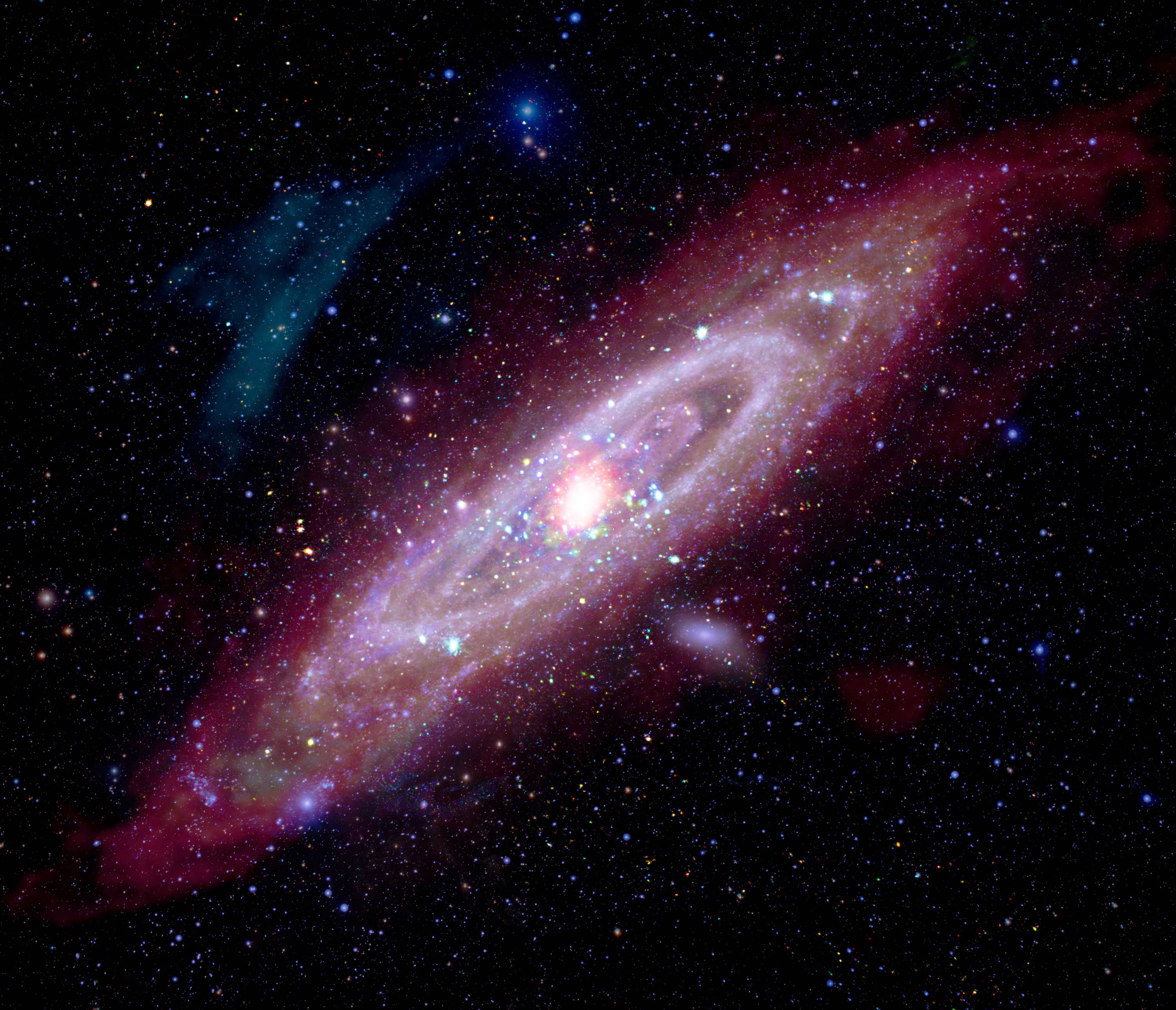
Credit: X-ray: NASA/CXO/UMass/Z. Li & Q.D. Wang, ESA/XMM-Newton; Infrared: NASA/JPL-Caltech/WISE, Spitzer, NASA/JPL-Caltech/K. Gordon (U. Az), ESA/Herschel, ESA/Planck, NASA/IRAS, NASA/COBE; Radio: NSF/GBT/WSRT/IRAM/C. Clark (STScI); Ultraviolet: NASA/JPL-Caltech/GALEX; Optical: Andromeda, Unexpected © Marcel Drechsler, Xavier Strottner, Yann Sainty & J. Sahner, T. Kottary. Composite image processing: L. Frattare, K. Arcand, J.Major

Friday, 27 June 2025

Sparkling Andromeda

The Andromeda galaxy, also known as Messier 31 (M31), is a glittering beacon in this image released on June 25, 2025, in tribute to the groundbreaking legacy of astronomer Dr. Vera Rubin, whose observations transformed our understanding of the universe. In the 1960s, Rubin and her colleagues studied M31 and determined that some unseen matter in the galaxy was affecting how the galaxy and its spiral arms rotated. This unknown material was named “dark matter.”

M31 is the closest spiral galaxy to the Milky Way at a distance of about 2.5 million light-years. Astronomers use Andromeda to understand the structure and evolution of our own spiral, which is much harder to do since Earth is embedded inside the Milky Way.

News

Related News

Featured Image
Sep 2, 2026
Planetary Picture of the Day - Week of August 24, 2026
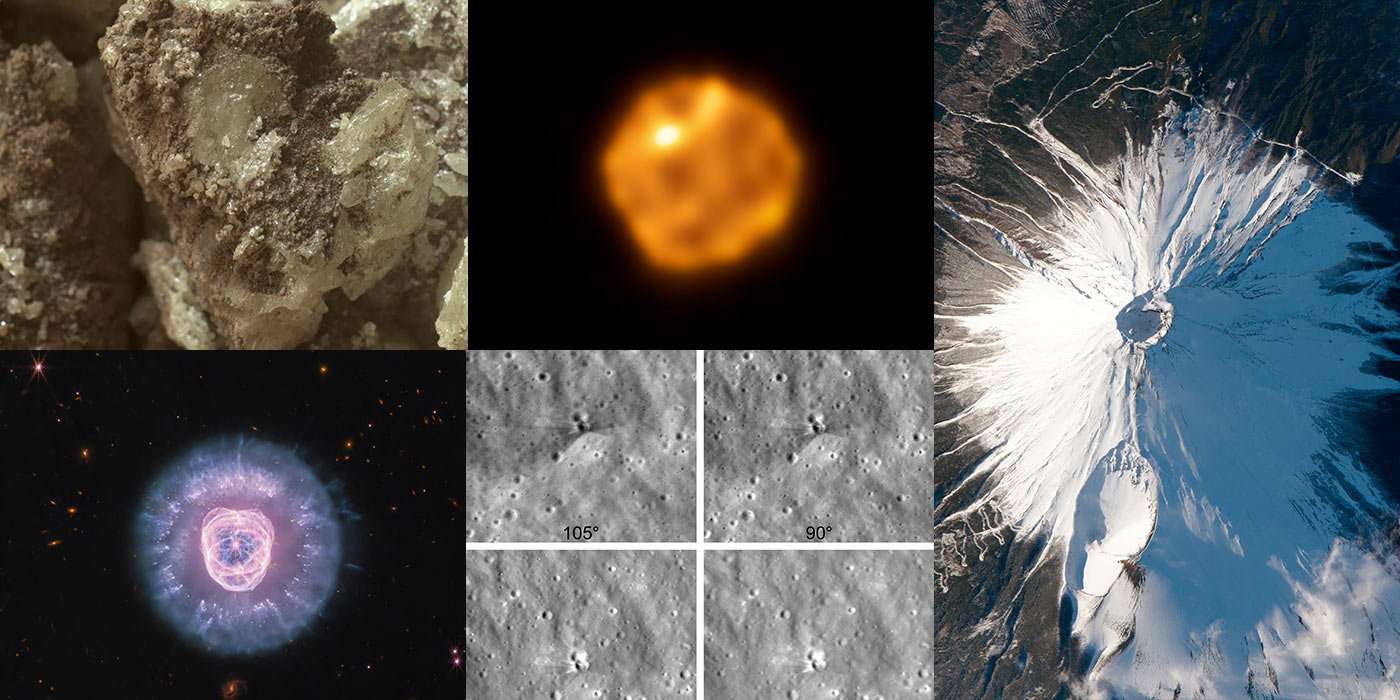
We journey from Mount Fuji as seen from orbit to the bubbling surface of Betelgeuse, exploring the forces that shape planets, moons, and stars across the cosmos. Along the way, JWST reveals the remains of a dying star, Curiosity uncovers clues to Mars’ volcanic past, and a fresh rocket impact on the Moon gives scientists a new opportunity to study how collisions reshape its surface. #PPOD

Featured Image
Aug 26, 2026
Planetary Picture of the Day - Week of August 17, 2026
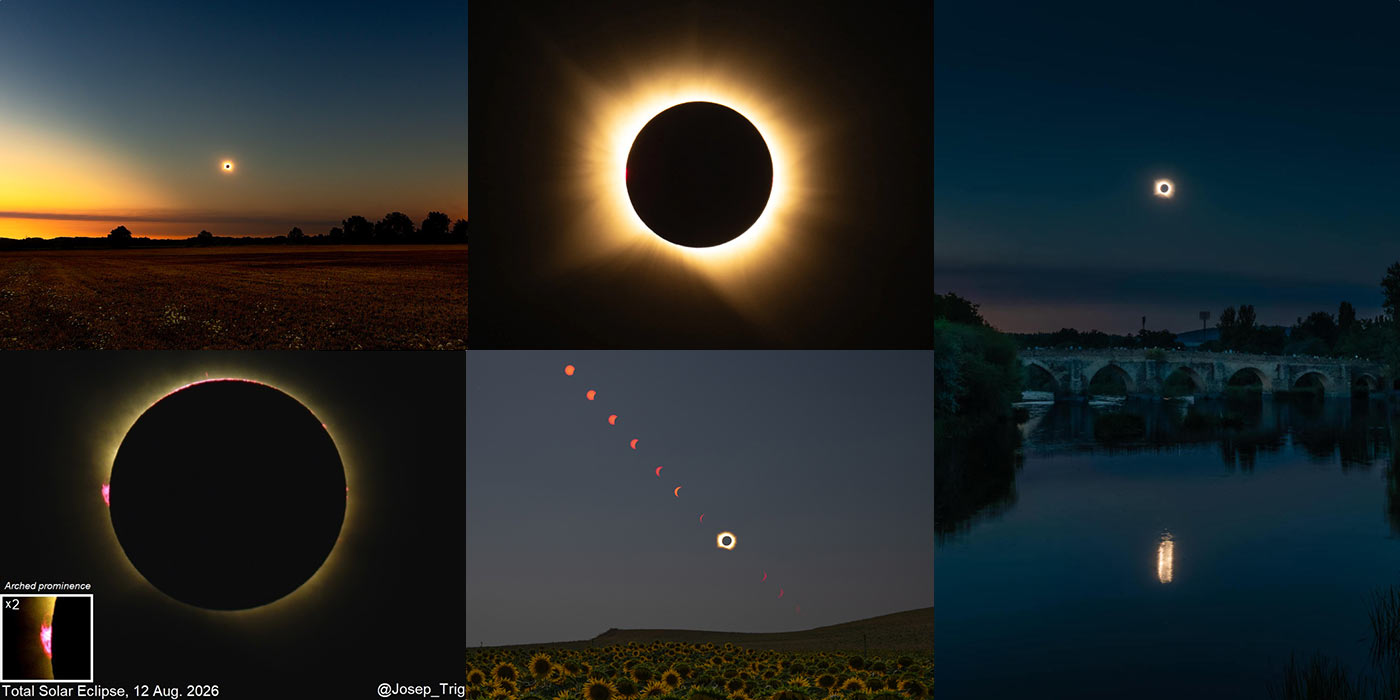
Let's celebrate the August 12 total solar eclipse through the eyes of photographers who experienced the Moon’s shadow sweeping across Spain. From Baily’s Beads and a glowing solar prominence to totality reflected in a river and framed by fields of sunflowers, these images capture both the science and extraordinary beauty of one of nature’s most spectacular celestial events. #PPOD #Eclipse
Featured Image
Aug 19, 2026
Planetary Picture of the Day - Week of August 10, 2026
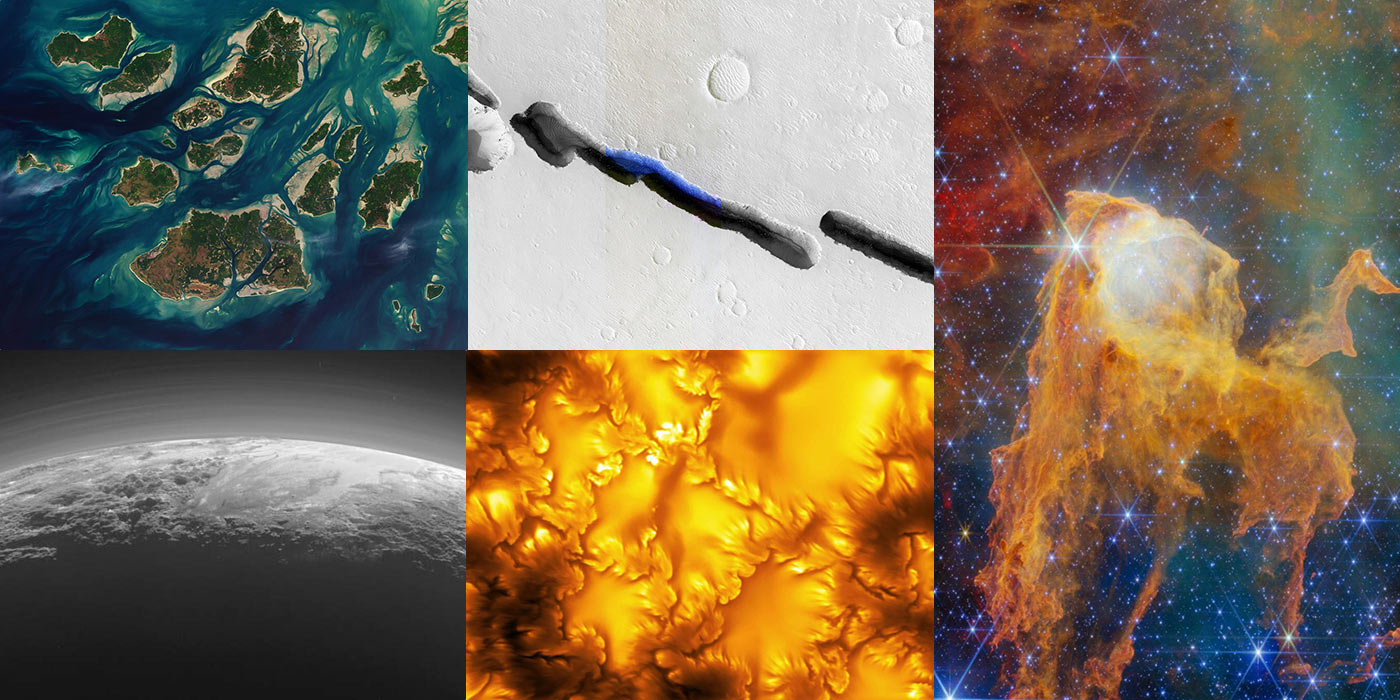
The universe is shaped by forces both immense and intricate, from fractured terrain on Mars and shifting tidal landscapes on Earth to tiny vortices dancing across the surface of the Sun. Farther afield, dramatic views of Pluto’s icy mountains and hazy atmosphere and a treasure chest of newborn stars in the Carina Nebula showcase the remarkable detail revealed by spacecraft and telescopes exploring the cosmos. #PPOD
Featured Image
Aug 12, 2026
Planetary Picture of the Day - August 3, 2026
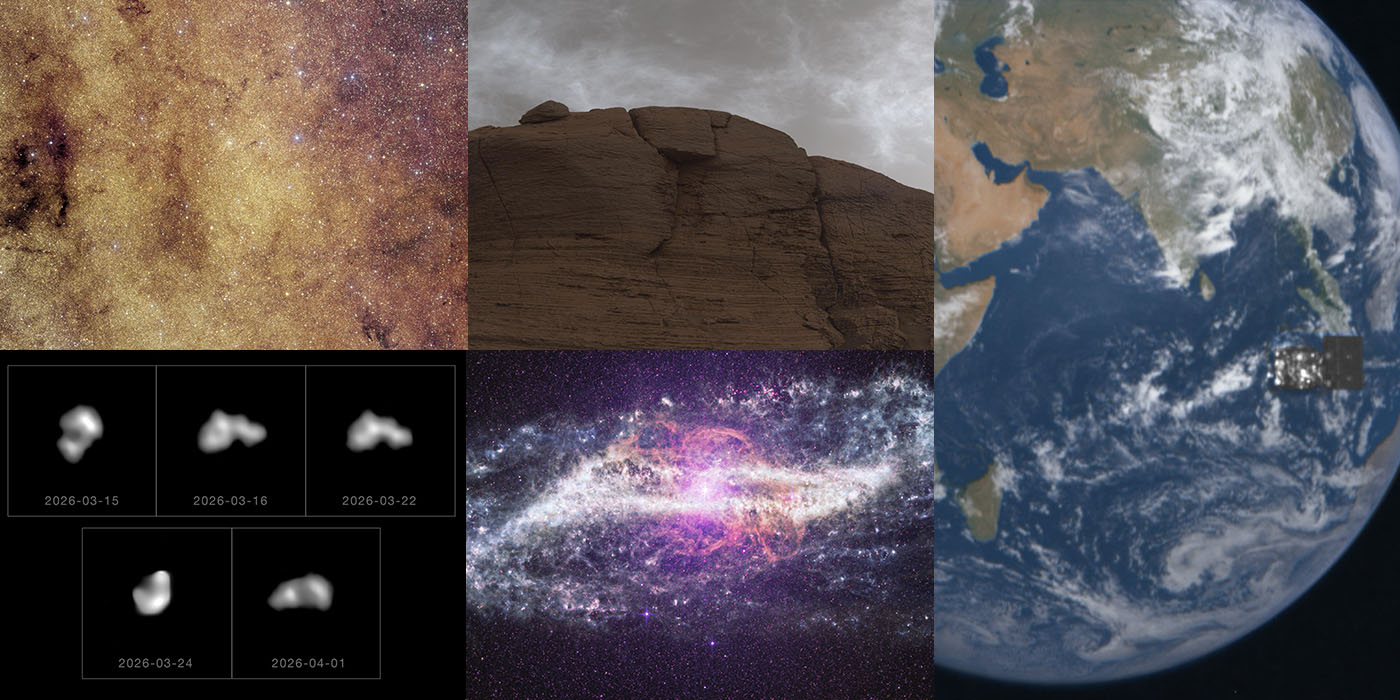
This week, we reveal hidden wonders across the cosmos, from delicate Martian clouds and a dust-shrouded galaxy to an asteroid with a never-before-seen shape and the crowded heart of the Milky Way. Together, these images showcase how new missions and advanced observatories continue to uncover surprising details about our solar system, our galaxy, and the universe beyond. #PPOD
Featured Image
Aug 5, 2026
Planetary Picture of the Day - Week of July 27, 2026
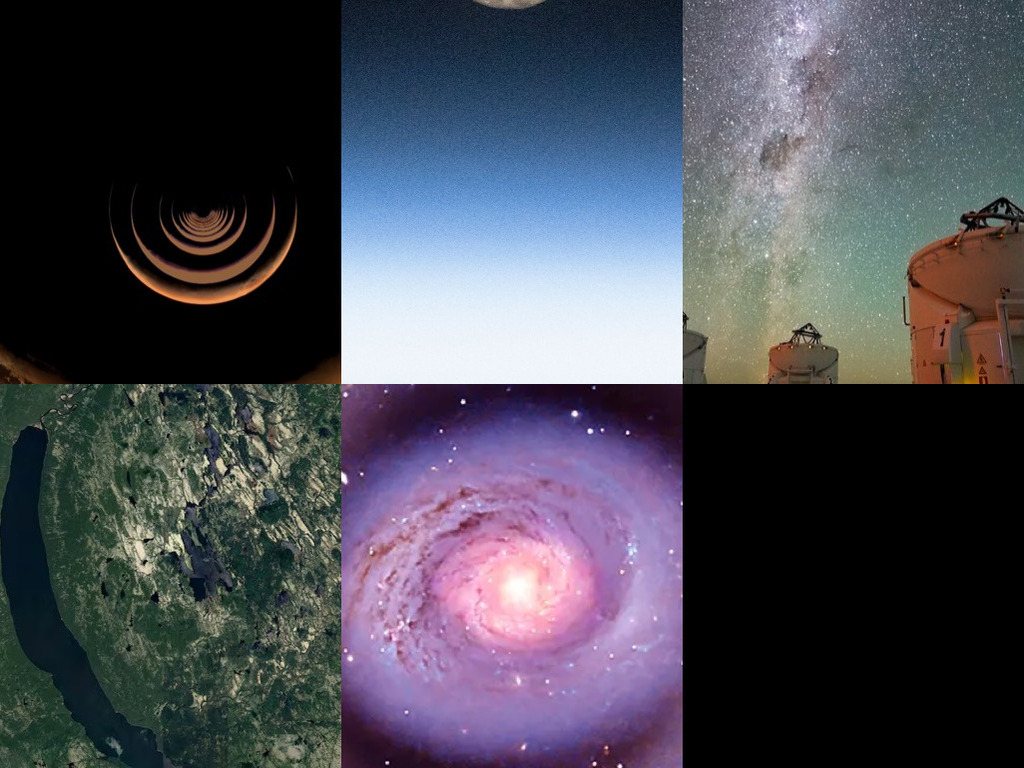
These images span the journey from our own backyard to distant galaxies, featuring Mars, the Moon, breathtaking night skies, and a fresh view of the star-forming galaxy Messier 94. Along the way, we celebrate exploration and discovery—from NASA’s Psyche mission preparing for its asteroid encounter to the revelation of a previously unknown impact crater on Earth —reminding us that there are still new wonders to uncover both on our own planet and across the cosmos. #PPOD
Featured Image
Jul 29, 2026
Planetary Picture of the Day - Week of July 20, 2026
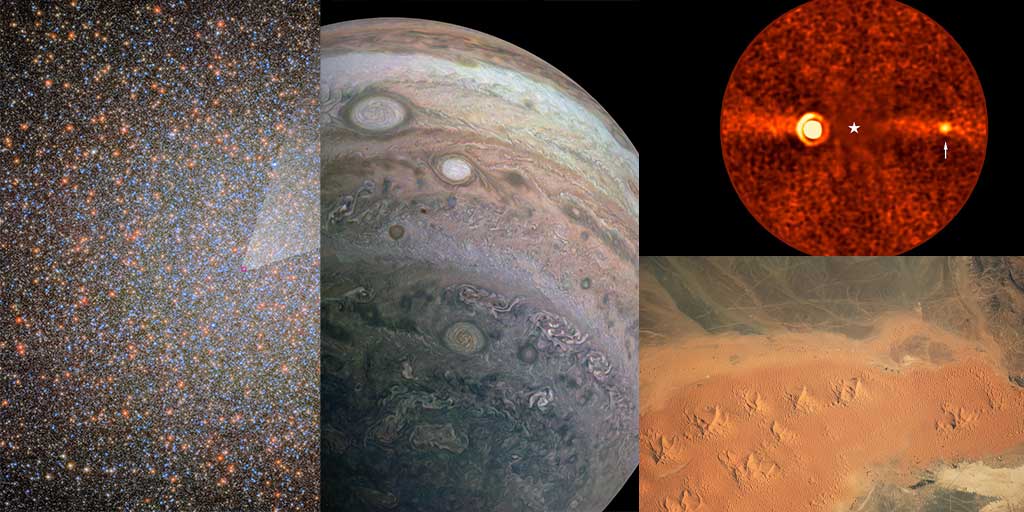
This week, we celebrate fifty years since Viking 1 became the first spacecraft to successfully land on and photograph the surface of Mars, alongside stunning new views of worlds, stars, and galaxies that continue to expand our understanding of the universe. From sculpted Sahara sand dunes and Jupiter’s colorful cloud bands to a newly discovered exoplanet and the first stellar-mass black hole identified in Omega Centauri, these images showcase the remarkable diversity of cosmic exploration. #PPOD
Research

Related Projects

Featured Image
SkyMapper • SETI • Citizen Science • Astronomy
SkyMapper: Expanding Access to Real-time Astronomy Through a Global Astronomical Network
SkyMapper and the SETI Institute are connecting educators, students and the public to live astronomical observations through a distributed astronomical network. #SkyMapper #SETI #Citizen Science #Astronomy
Featured Image
VPL
Virtual Planetary Laboratory
How can we best assess whether an exoplanet supports life? #VPL
Featured Image
Discovery and Futures Lab
What happens if life beyond Earth is discovered? The Discovery and Futures Lab at the SETI Institute fosters novel and anticipatory research at the intersection of science, society, our planet, and the search for life beyond Earth.  #Discovery and Futures Lab
Support Us

Support the
SETI Institute

Scientists are getting closer in their search for life beyond earth. But with limited federal funding for the search for extraterrestrial intelligence, supporters are the reason cutting-edge scientists can keep their eyes on the sky.