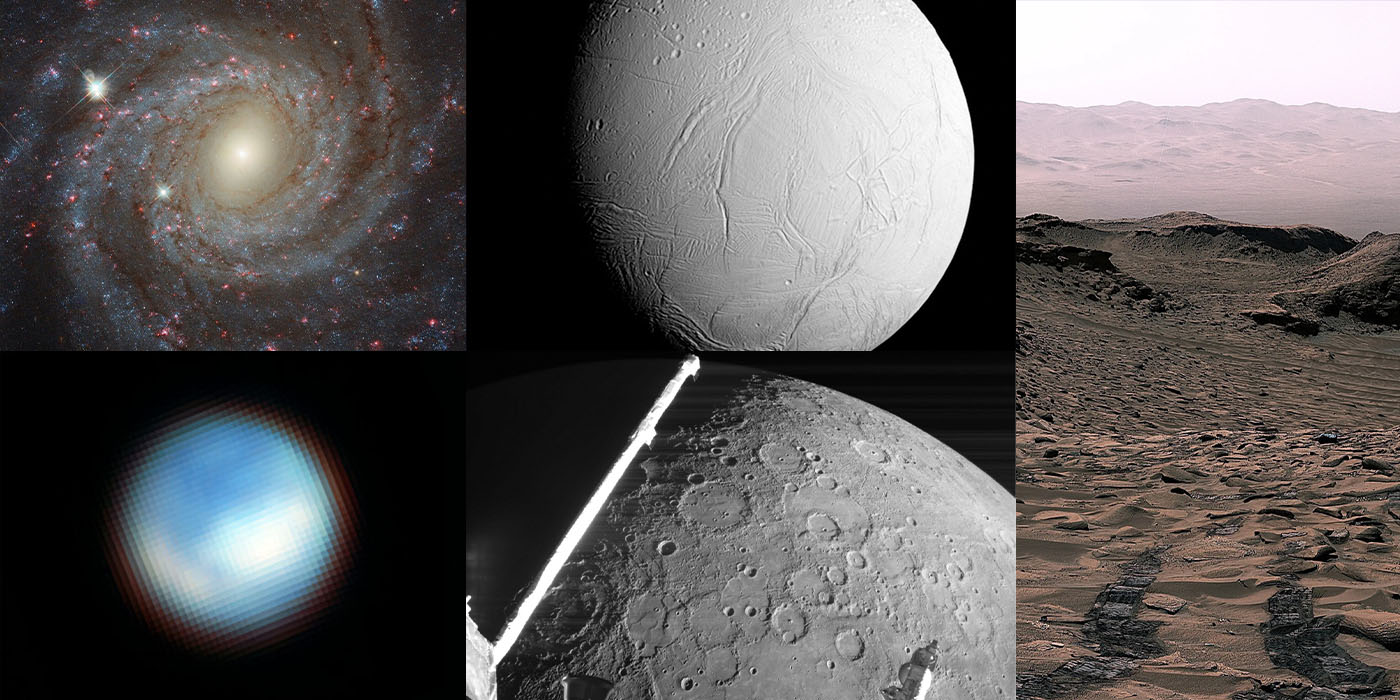
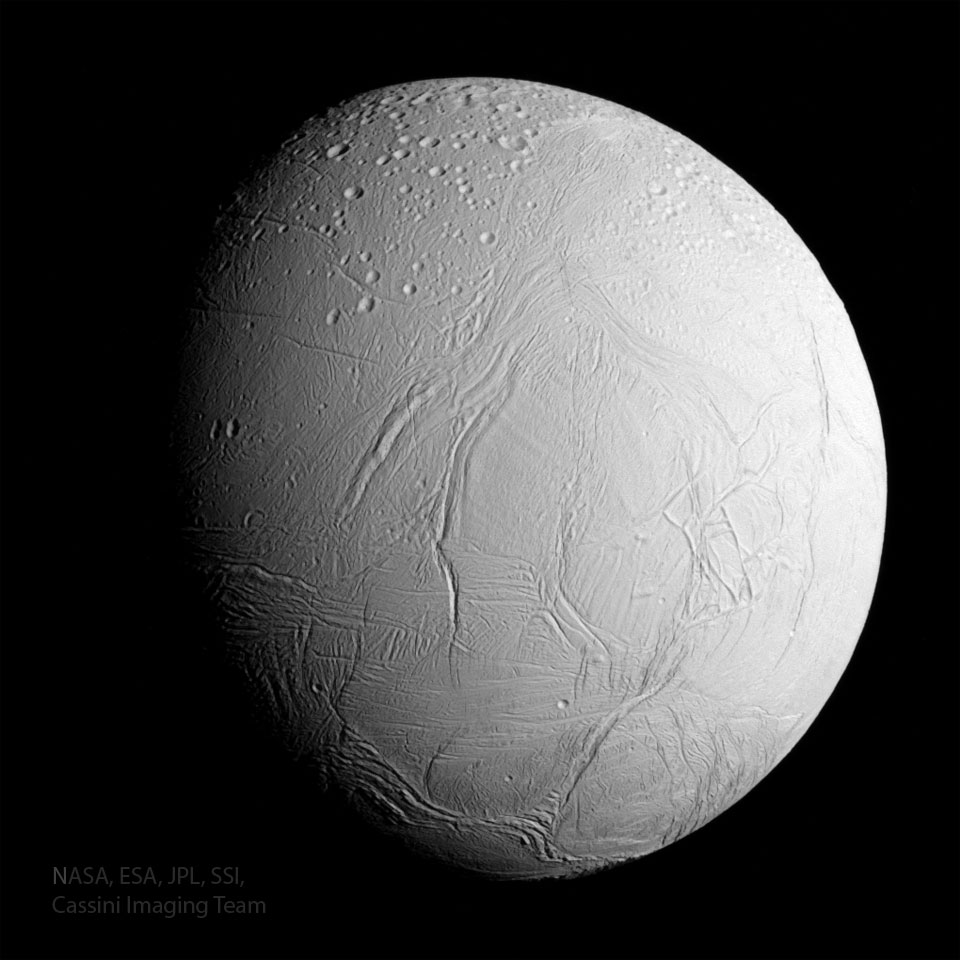
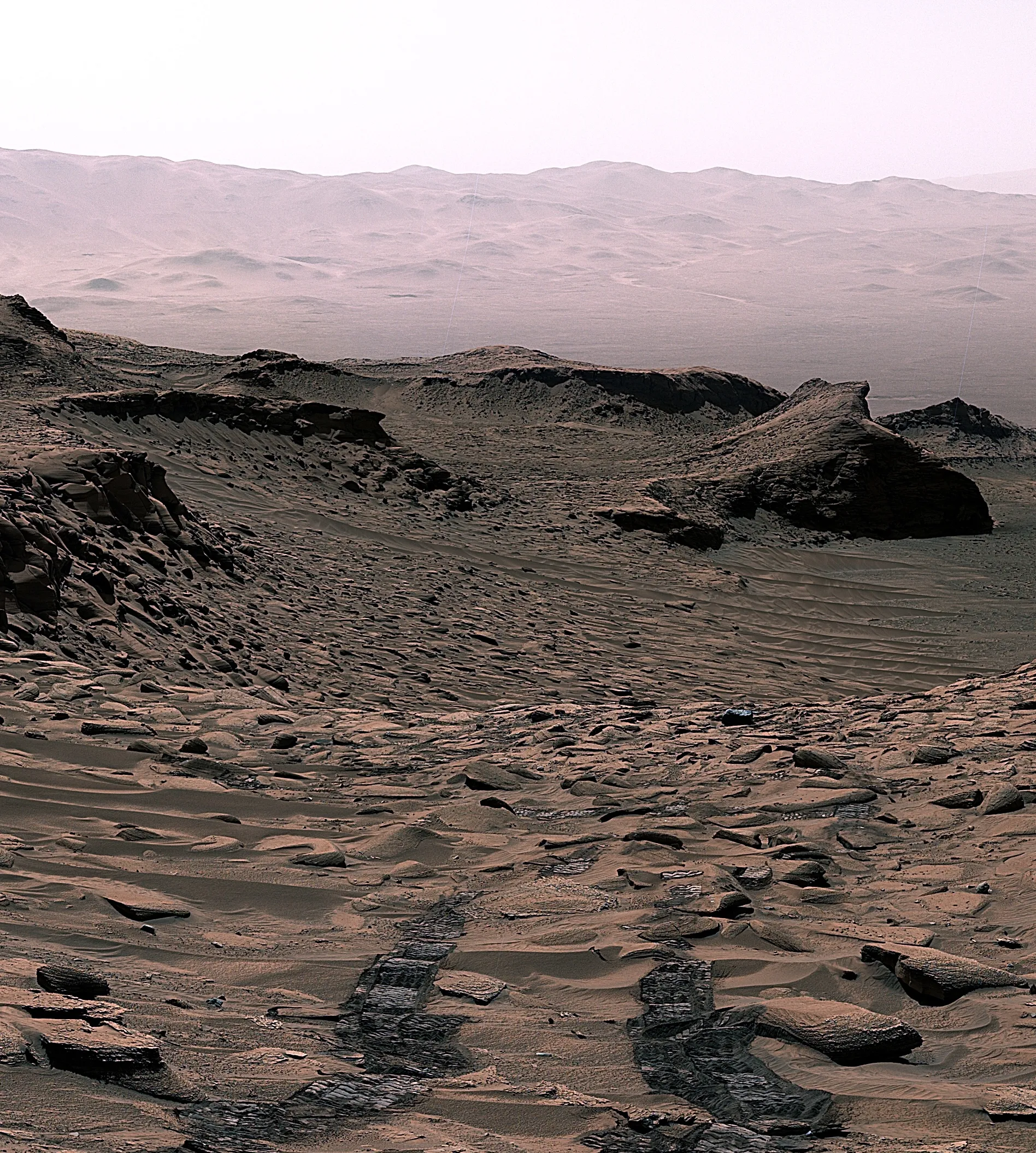
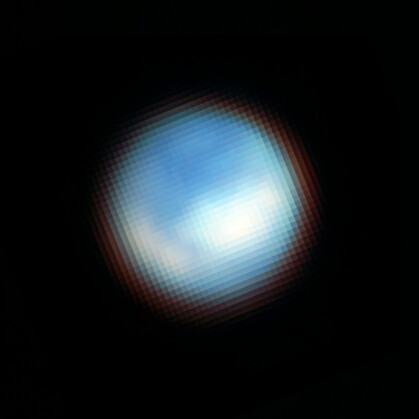
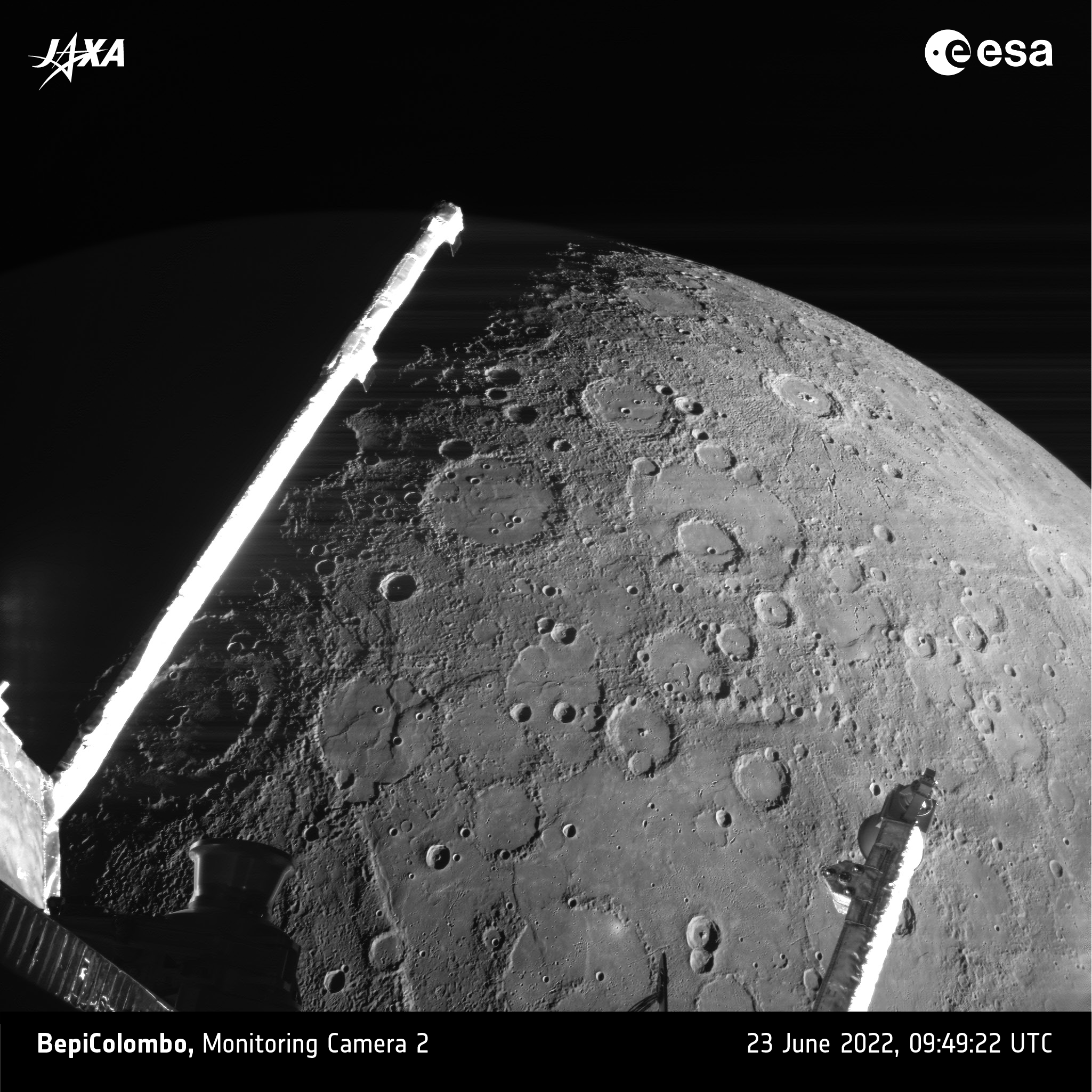







Where might we find life in our solar system? Icy worlds Europa and Enceladus are two possibilities, shown here in images from Cassini and JWST. Mars holds the possibility of past life, especially in light of the discovery of siderite-filled rocks hinting at a thick atmosphere when there was still liquid water on the surface. Life is unlikely to be found on Mercury, but that hasn't stopped us from sending spacecraft to understand the close, hot, tiny world. Plus, a distant spiral galaxy allows us to learn about our own galaxy!
Monday, 16 June 2025
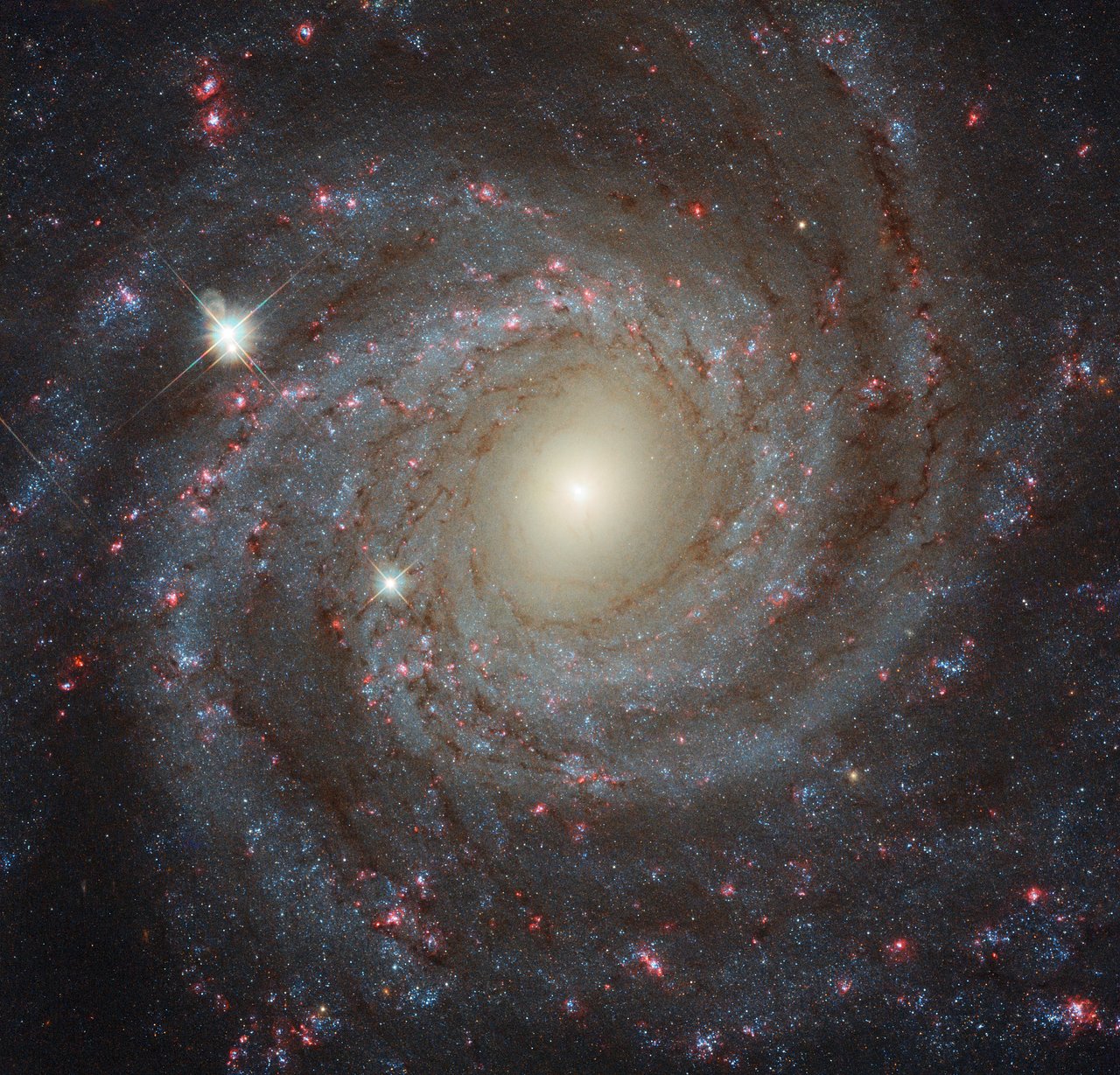
Multi-Filter Image of NGC 3344
This image of the spiral galaxy NGC 3344, located about 20 million light-years from Earth, is a composite of images taken through seven different filters. They cover wavelengths from the ultraviolet to the optical and the near-infrared. Together, they create a detailed picture of the galaxy and allow astronomers to study many different aspects of it.
Tuesday, 17 June 2025
Enceladus in True Color
Is Enceladus a potential home for life? Scientists are studying this icy moon and its plumes for clues. The discovery of phosphorus, an essential element for life, on Enceladus fuels the exciting possibility of microbial life in its hidden ocean. This small world (505 km in diameter) in the depths of the outer solar system could be one of the first places where we find evidence that life emerged, too.
Wednesday, 18 June 2025
Tracking Mars' Lost Carbon Dioxide
NASA’s Curiosity Mars rover sees its tracks receding into the distance at a site nicknamed “Ubajara.” At this site, Curiosity discovered siderite, a mineral that may help explain the fate of the planet’s thicker ancient atmosphere.
Siderite is an iron carbonate mineral. Its discovery in rocks beneath the surface suggests that carbonate may be masked by other minerals in near-infrared satellite analysis. If other sulfate-rich layers across Mars also contain carbonates, the amount of stored carbon dioxide would be a fraction of that needed in the ancient atmosphere to create conditions warm enough to support liquid water. The rest could be hidden in other deposits or lost to space over time.
Thursday, 19 June 2025
Europa
JWST's NIRCam (Near Infrared Camera) captured this picture of the surface of Jupiter’s moon Europa. JWST identified carbon dioxide on the icy surface of Europa that likely originated in the moon’s subsurface ocean. This discovery has important implications for the potential habitability of Europa’s ocean. The moon appears mostly blue because it is brighter at shorter infrared wavelengths. The white features correspond with the chaos terrain Powys Regio (left) and Tara Regio (centre and right), showing enhanced surface carbon dioxide ice.
Friday, 20 June 2025
BepiColombo Surveys Mercury
The ESA/JAXA BepiColombo mission captured this beautiful view of Mercury’s rich geological landscape on 23 June 2022 as the spacecraft flew past the planet for a gravity assist manoeuvre.
Parts of the Mercury Planetary Orbiter can also be seen, notably the magnetometer boom running from bottom left to top right, and a small part of the medium-gain antenna at bottom right. The magnetometer boom roughly follows the ‘terminator’– the boundary between the night and day side of the planet.
This image's lighting conditions differ from those recorded by NASA’s MESSENGER mission to Mercury for this region, enhancing the differences between smooth terrains and older rough terrains. Large impact craters, including a 200 km wide multi-ringed basin partly hidden by the magnetometer boom, can also clearly be made out, along with other geological features.
News
Related News
Planetary Picture of the Day - Week of August 24, 2026
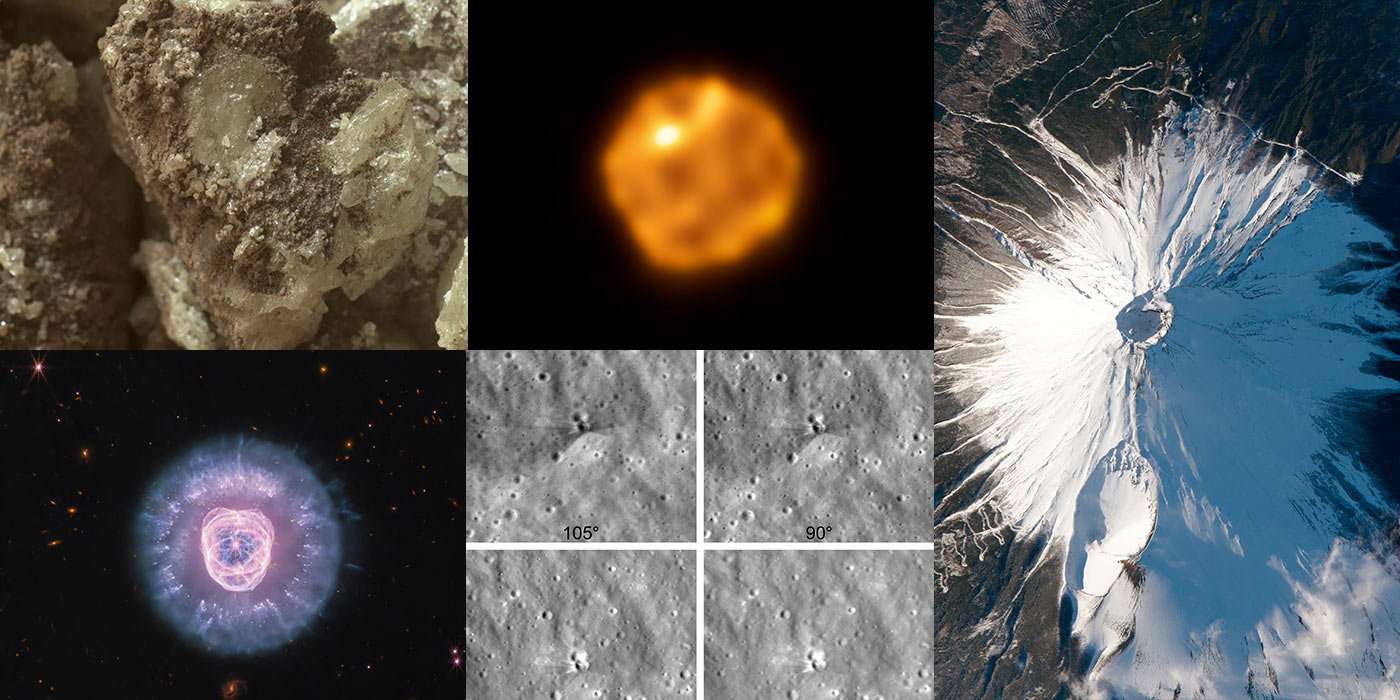
We journey from Mount Fuji as seen from orbit to the bubbling surface of Betelgeuse, exploring the forces that shape planets, moons, and stars across the cosmos. Along the way, JWST reveals the remains of a dying star, Curiosity uncovers clues to Mars’ volcanic past, and a fresh rocket impact on the Moon gives scientists a new opportunity to study how collisions reshape its surface. #PPOD

Planetary Picture of the Day - Week of August 17, 2026
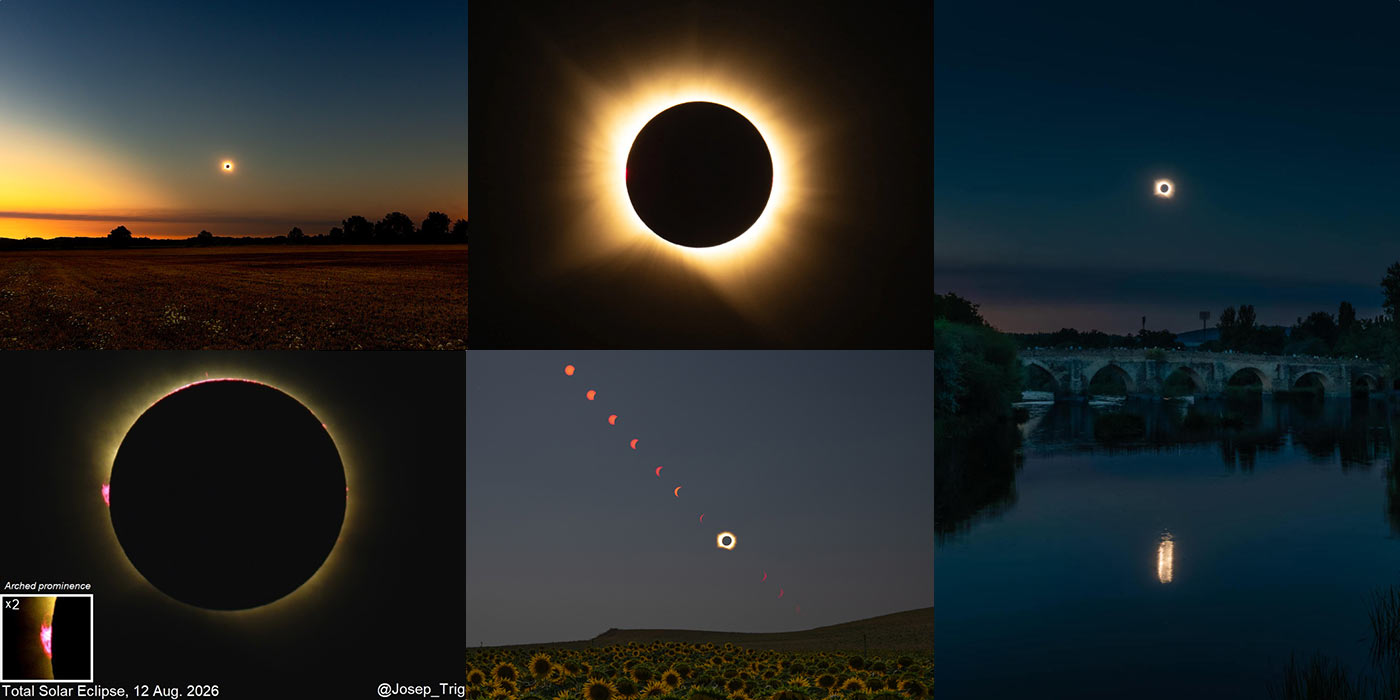
Let's celebrate the August 12 total solar eclipse through the eyes of photographers who experienced the Moon’s shadow sweeping across Spain. From Baily’s Beads and a glowing solar prominence to totality reflected in a river and framed by fields of sunflowers, these images capture both the science and extraordinary beauty of one of nature’s most spectacular celestial events. #PPOD #Eclipse
Planetary Picture of the Day - Week of August 10, 2026
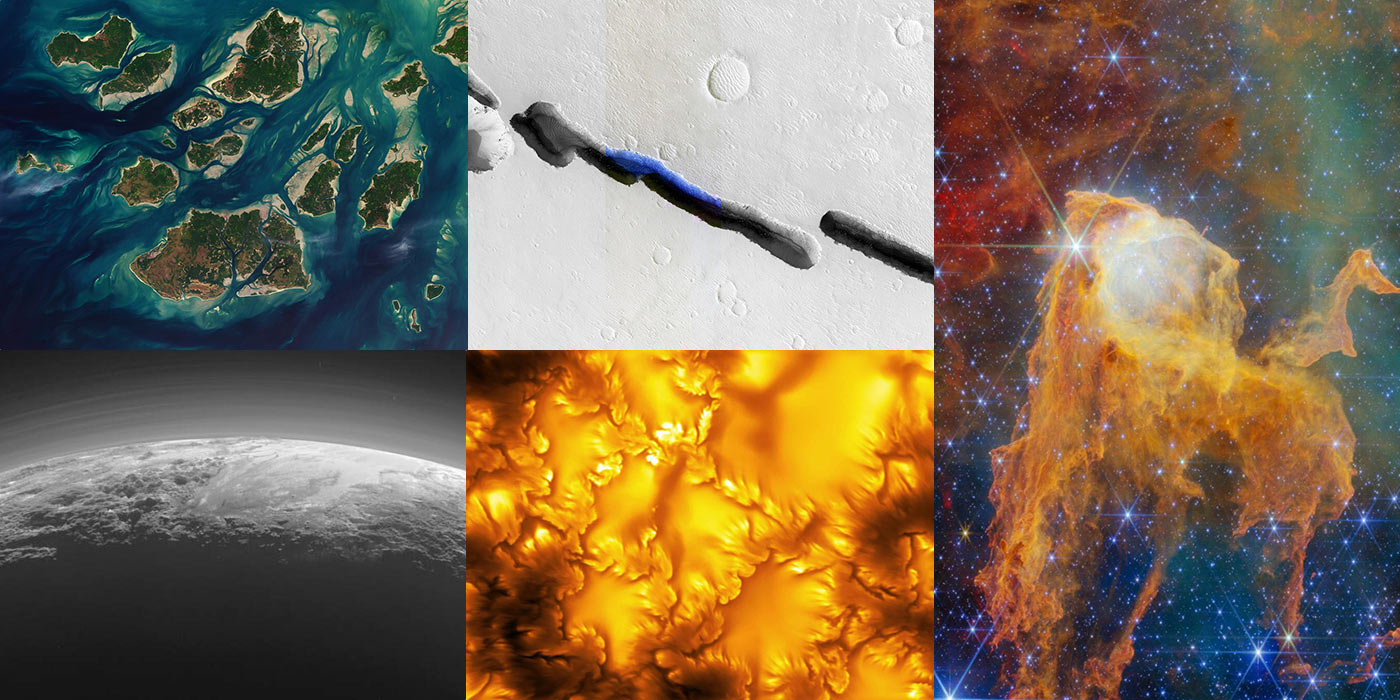
The universe is shaped by forces both immense and intricate, from fractured terrain on Mars and shifting tidal landscapes on Earth to tiny vortices dancing across the surface of the Sun. Farther afield, dramatic views of Pluto’s icy mountains and hazy atmosphere and a treasure chest of newborn stars in the Carina Nebula showcase the remarkable detail revealed by spacecraft and telescopes exploring the cosmos. #PPOD
Planetary Picture of the Day - August 3, 2026
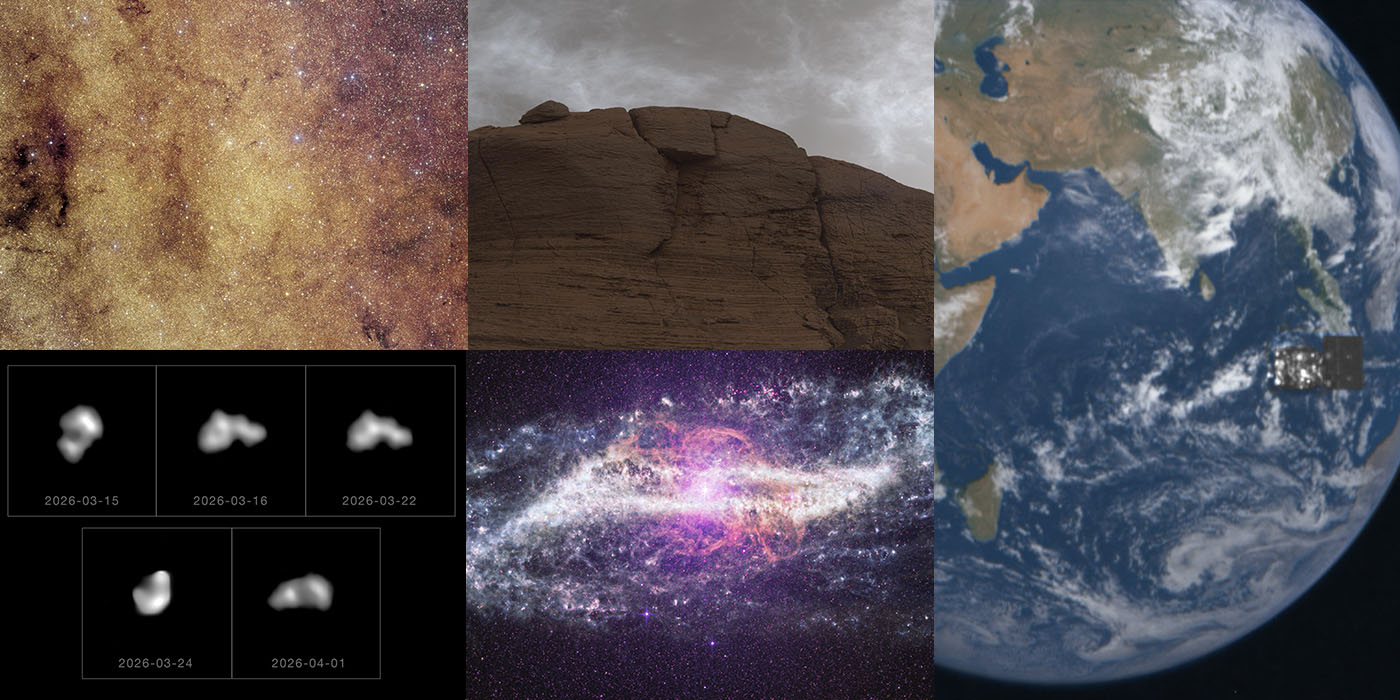
This week, we reveal hidden wonders across the cosmos, from delicate Martian clouds and a dust-shrouded galaxy to an asteroid with a never-before-seen shape and the crowded heart of the Milky Way. Together, these images showcase how new missions and advanced observatories continue to uncover surprising details about our solar system, our galaxy, and the universe beyond. #PPOD
Planetary Picture of the Day - Week of July 27, 2026
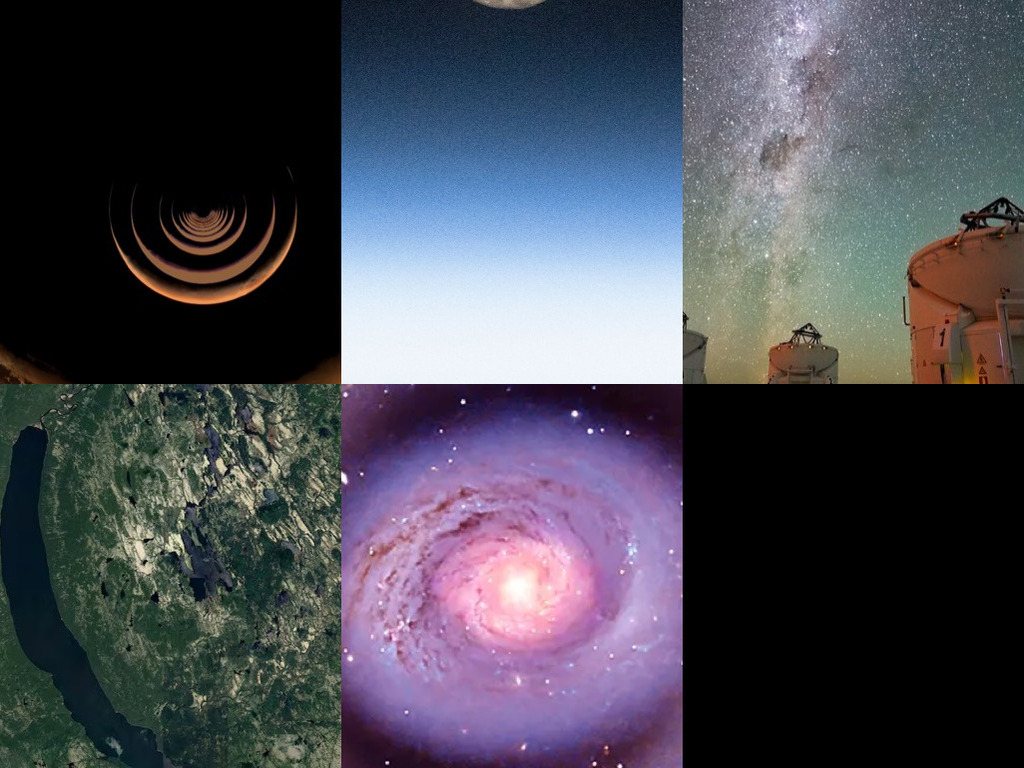
These images span the journey from our own backyard to distant galaxies, featuring Mars, the Moon, breathtaking night skies, and a fresh view of the star-forming galaxy Messier 94. Along the way, we celebrate exploration and discovery—from NASA’s Psyche mission preparing for its asteroid encounter to the revelation of a previously unknown impact crater on Earth —reminding us that there are still new wonders to uncover both on our own planet and across the cosmos. #PPOD
Planetary Picture of the Day - Week of July 20, 2026
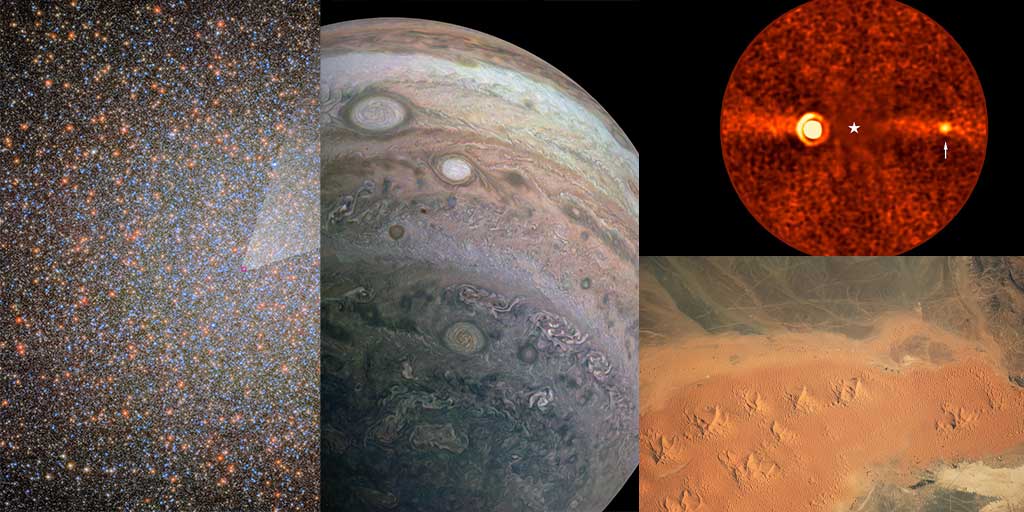
This week, we celebrate fifty years since Viking 1 became the first spacecraft to successfully land on and photograph the surface of Mars, alongside stunning new views of worlds, stars, and galaxies that continue to expand our understanding of the universe. From sculpted Sahara sand dunes and Jupiter’s colorful cloud bands to a newly discovered exoplanet and the first stellar-mass black hole identified in Omega Centauri, these images showcase the remarkable diversity of cosmic exploration. #PPODResearch
Related Projects
SkyMapper: Expanding Access to Real-time Astronomy Through a Global Astronomical Network
SkyMapper and the SETI Institute are connecting educators, students and the public to live astronomical observations through a distributed astronomical network. #SkyMapper #SETI #Citizen Science #Astronomy
Virtual Planetary Laboratory
How can we best assess whether an exoplanet supports life? #VPL
Discovery and Futures Lab
What happens if life beyond Earth is discovered? The Discovery and Futures Lab at the SETI Institute fosters novel and anticipatory research at the intersection of science, society, our planet, and the search for life beyond Earth. #Discovery and Futures LabSupport the
SETI Institute
Scientists are getting closer in their search for life beyond earth. But with limited federal funding for the search for extraterrestrial intelligence, supporters are the reason cutting-edge scientists can keep their eyes on the sky.