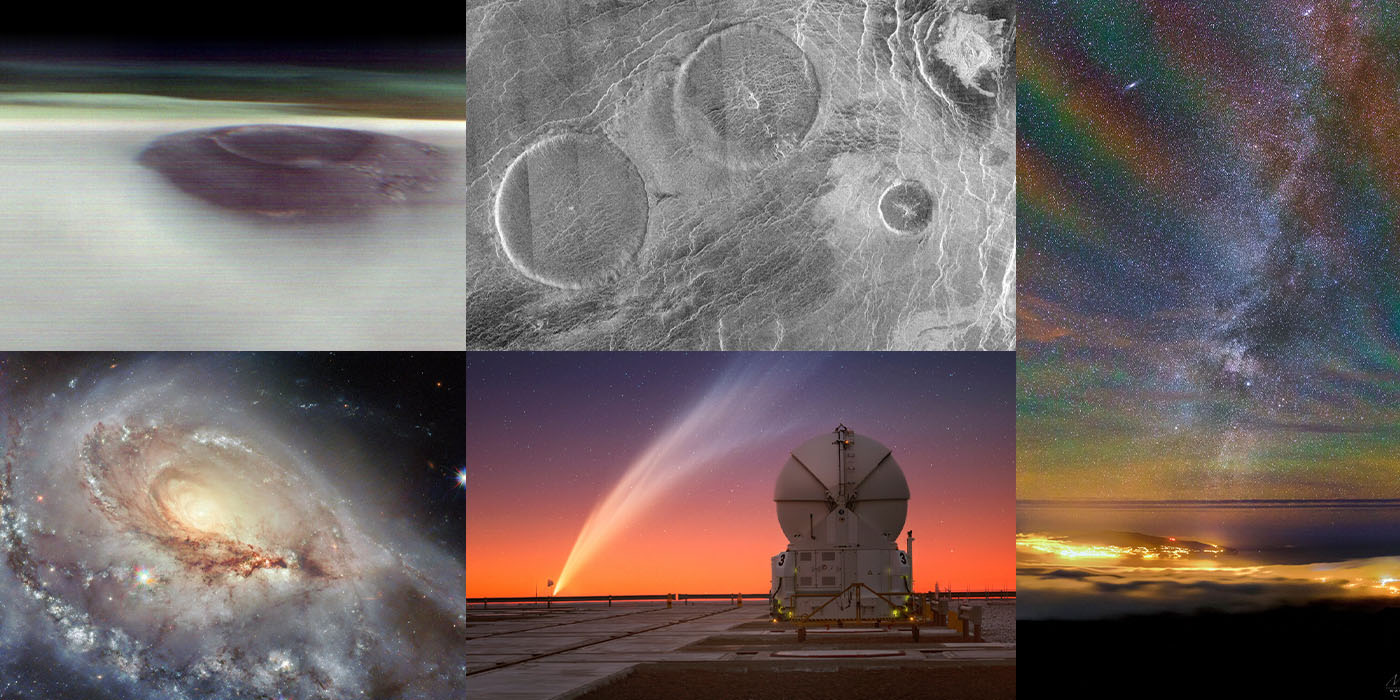







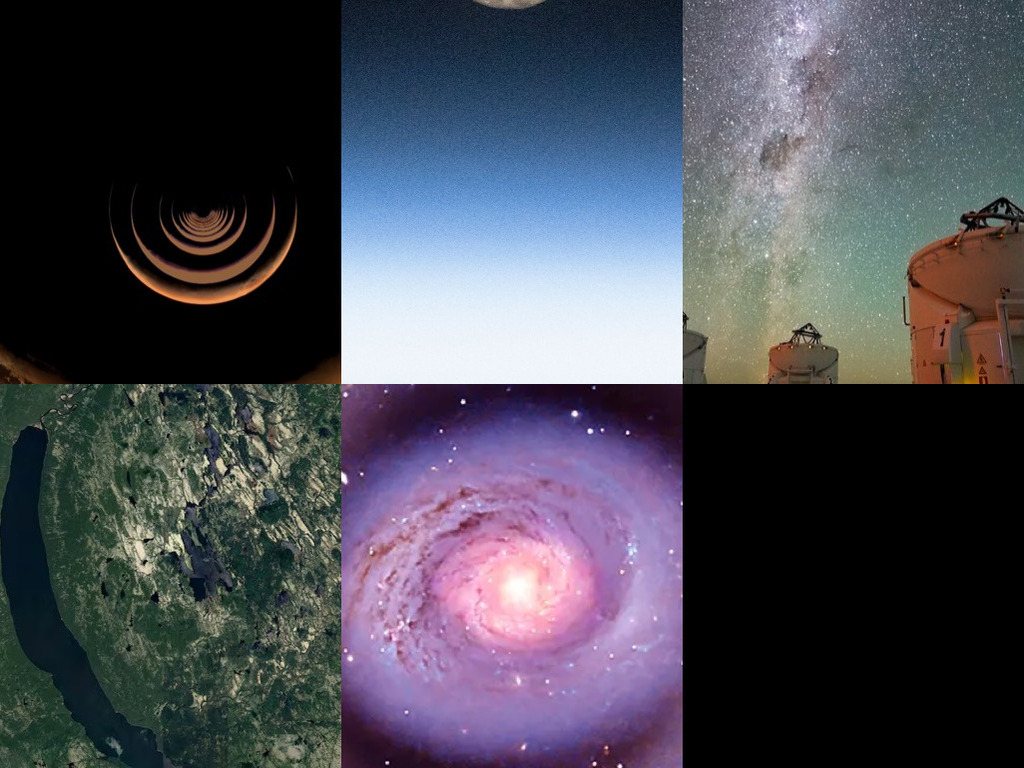
Peering through cloud cover can be quite a challenge, although spacecraft help, as shown by a stunning Hubble image, one from NASA's Mars Odyssey orbiter, and one from Magellan showing volcanoes on the surface of Venus. Not that photography on Earth can't provide beautiful space pictures, too! Check out a comet from earlier this year and a fascinating phenomenon called gravity waves seen in our own clouds.
Monday, 9 June 2025
Snapshot of a Peculiar Spiral
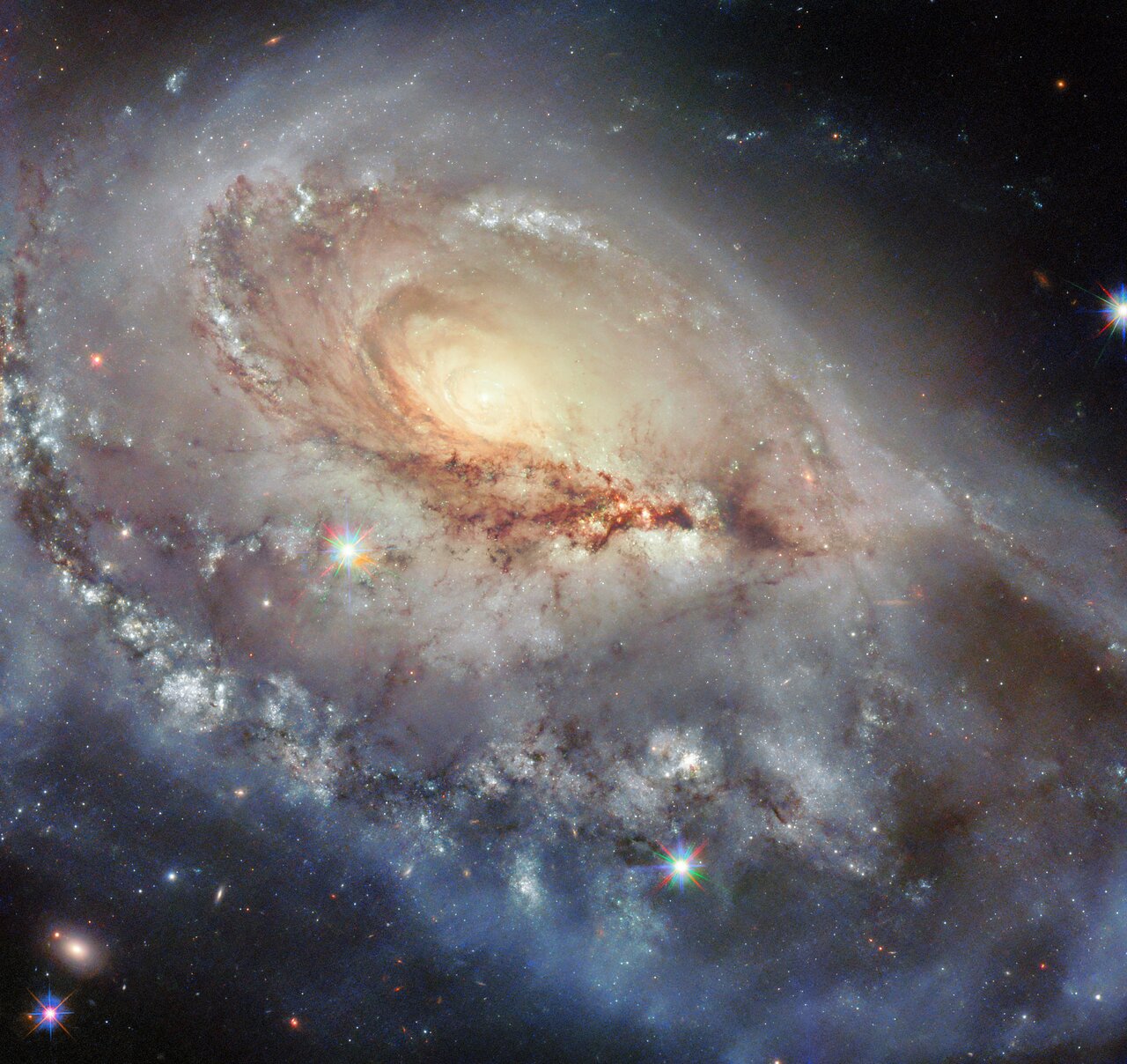
This NASA/ESA Hubble Space Telescope picture shows a beautiful but skewed spiral galaxy, Arp 184 or NGC 1961, about 190 million light-years from Earth in the constellation Camelopardalis (The Giraffe).
The name Arp 184 comes from the Atlas of Peculiar Galaxies, which was compiled by astronomer Halton Arp in 1966. The 338 galaxies in the atlas are oddly shaped, tending to be neither entirely elliptical nor spiral-shaped. Many galaxies are in the process of interacting with other galaxies, while others are dwarf galaxies without well-defined structures. Arp 184 earned its spot in the catalogue thanks to its single broad, star-speckled spiral arm that appears to stretch toward us. The galaxy’s far side sports a few wisps of gas and stars but lacks a similarly impressive spiral arm.
Tuesday, 10 June 2025
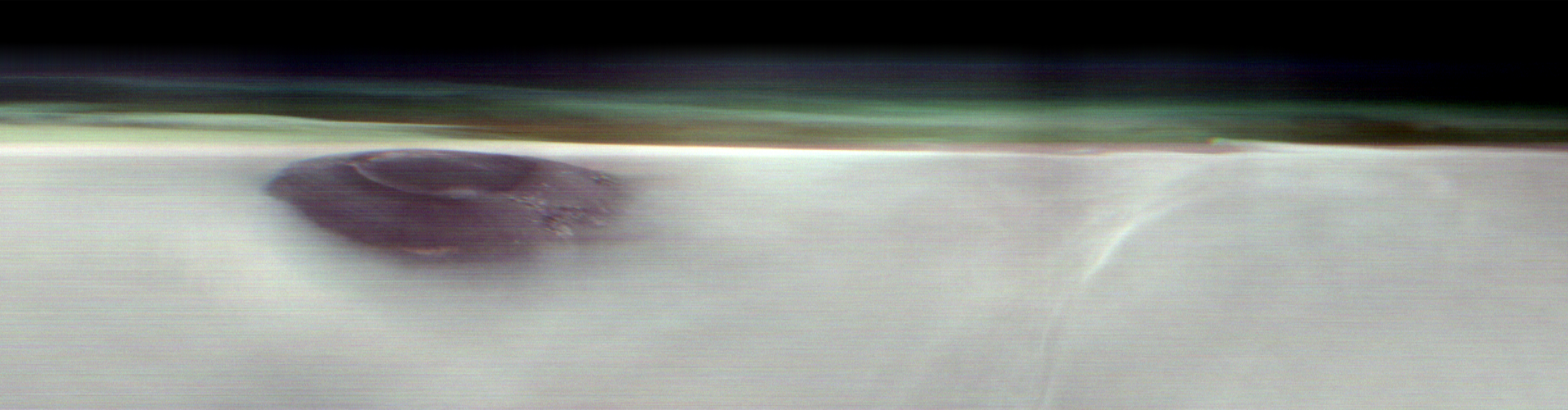
Martian Volcano Peeks Above Clouds
A new panorama from NASA’s 2001 Mars Odyssey orbiter shows one of the Red Planet’s biggest volcanoes, Arsia Mons, poking through a canopy of clouds just before dawn. Arsia Mons and two other volcanoes form what is known as the Tharsis Montes, or Tharsis Mountains, which are often surrounded by water ice clouds (as opposed to Mars’ equally common carbon dioxide clouds), especially in the early morning. This panorama marks the first time one of the volcanoes has been imaged on the planet’s horizon, offering the same perspective of Mars that astronauts have of the Earth when they peer down from the International Space Station.
Wednesday, 11 June 2025
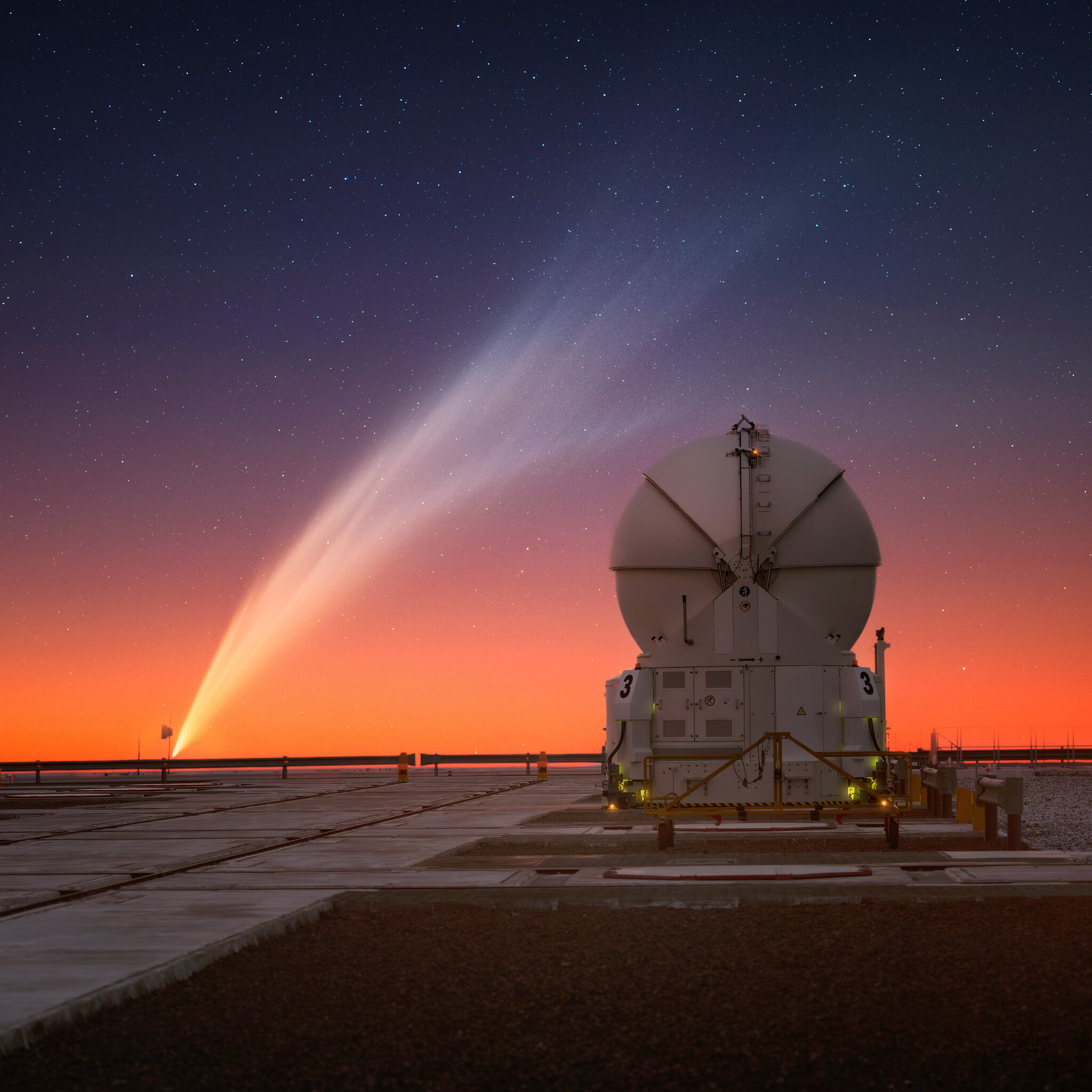
Colorful Comet C/2024 G3 (ATLAS)
This stunning photograph of comet C/2024 G3 (ATLAS), taken by Yuri Beletsky on 19 January from ESO's Paranal Observatory in Chile, looks almost like a watercolour painting. The comet is next to one of the Auxiliary Telescopes of ESO's Very Large Telescope Interferometer.
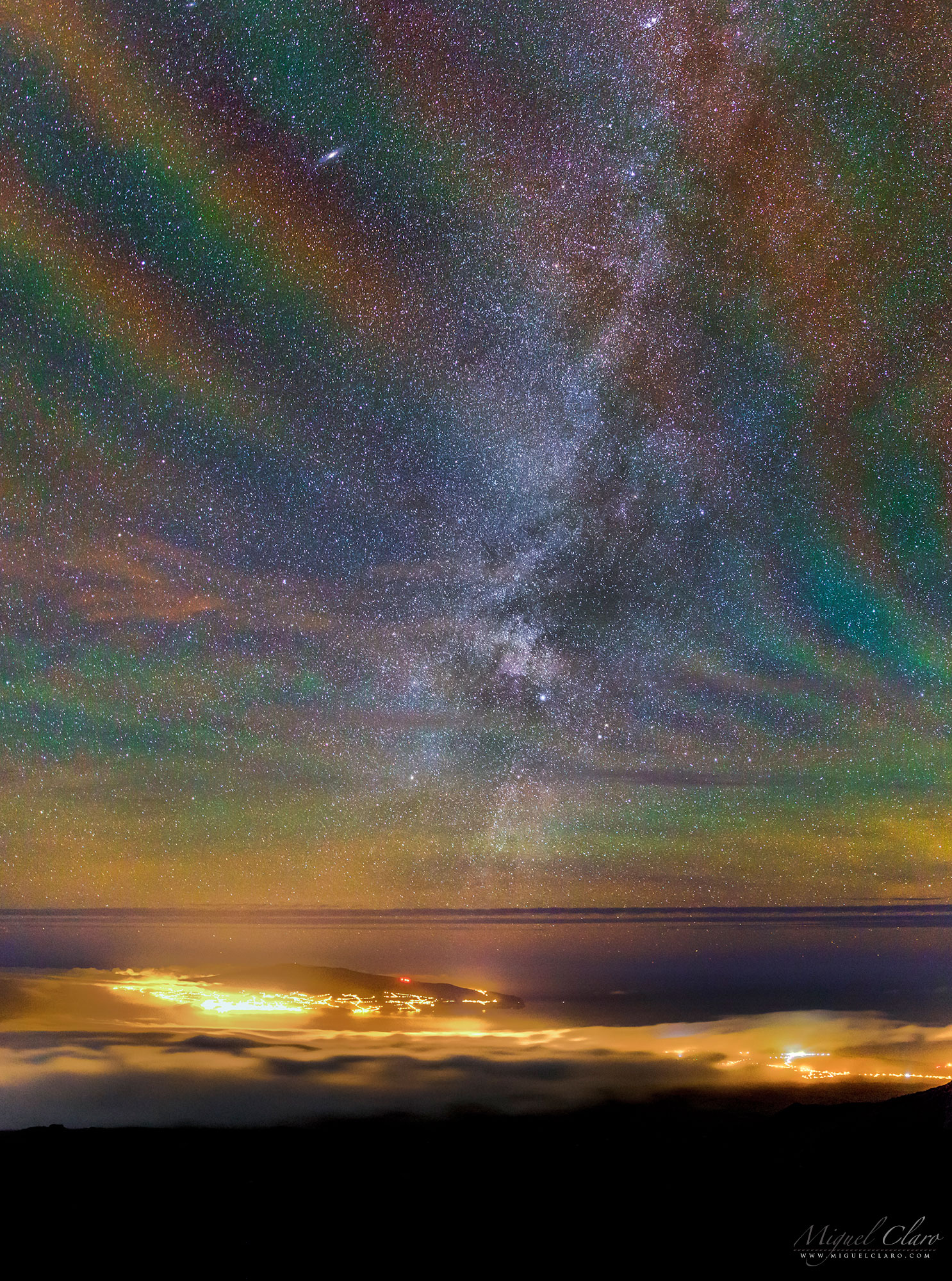
Credit: Miguel Claro Astrophotography | Dark Sky® Alqueva
Thursday, 12 June 2025
Rainbow Airglow over the Azores
Due to airglow, which is usually hard to see, the sky can glow like a giant rainbow. Disturbances like storms cause gravity waves, making airglow visible. The colors likely originate from various molecules: deep red from OH molecules at 87 km high, and orange and green from sodium and oxygen atoms higher up. This image was captured on Mount Pico in the Azores, Portugal, with Faial Island's lights in view. The Milky Way and the Andromeda Galaxy (M31) are also visible through the airglow.
Friday, 13 June 2025
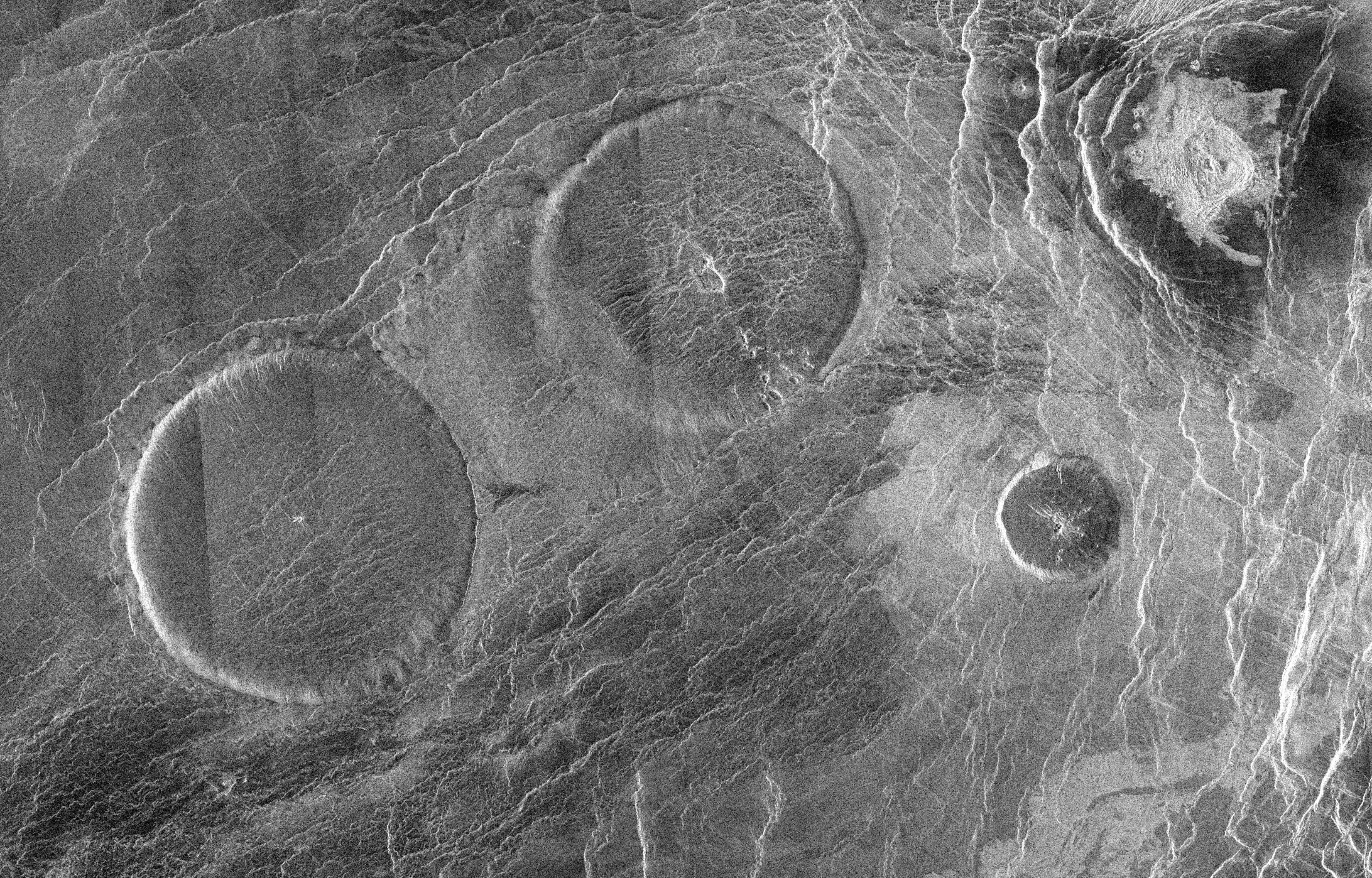
Pancake Domes
This Magellan full-resolution mosaic shows an area 160 kilometers by 250 kilometers in the Eistla region of Venus. The prominent circular features are volcanic domes, 65 kilometers in diameter, with broad, flat tops less than one kilometer in height. Sometimes called 'pancake' domes, they represent a unique category of volcanic extrusions on Venus formed from viscous (sticky) lava. The cracks and pits commonly found in these features result from cooling and the withdrawal of lava. A less viscous flow was emitted from the northeastern dome toward the other large dome in the southwest corner of the image.
News
Related News
Planetary Picture of the Day - Week of August 24, 2026
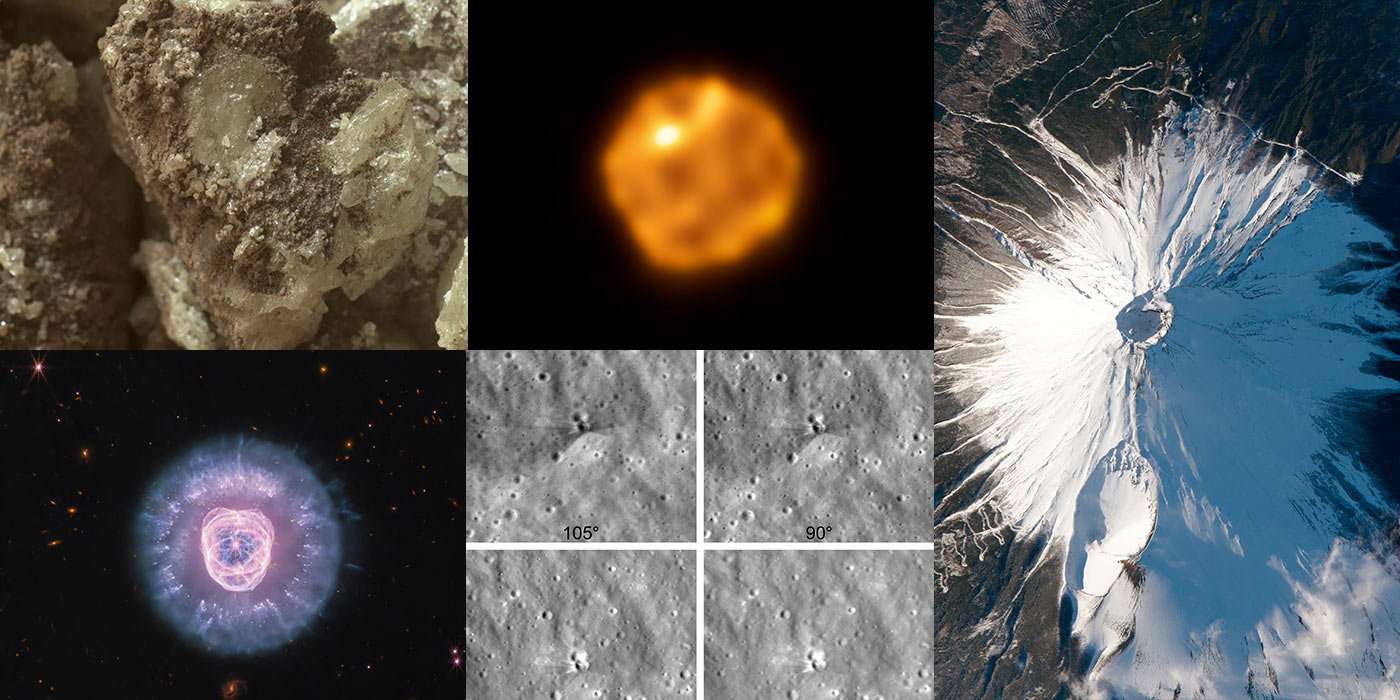
We journey from Mount Fuji as seen from orbit to the bubbling surface of Betelgeuse, exploring the forces that shape planets, moons, and stars across the cosmos. Along the way, JWST reveals the remains of a dying star, Curiosity uncovers clues to Mars’ volcanic past, and a fresh rocket impact on the Moon gives scientists a new opportunity to study how collisions reshape its surface. #PPOD

Planetary Picture of the Day - Week of August 17, 2026
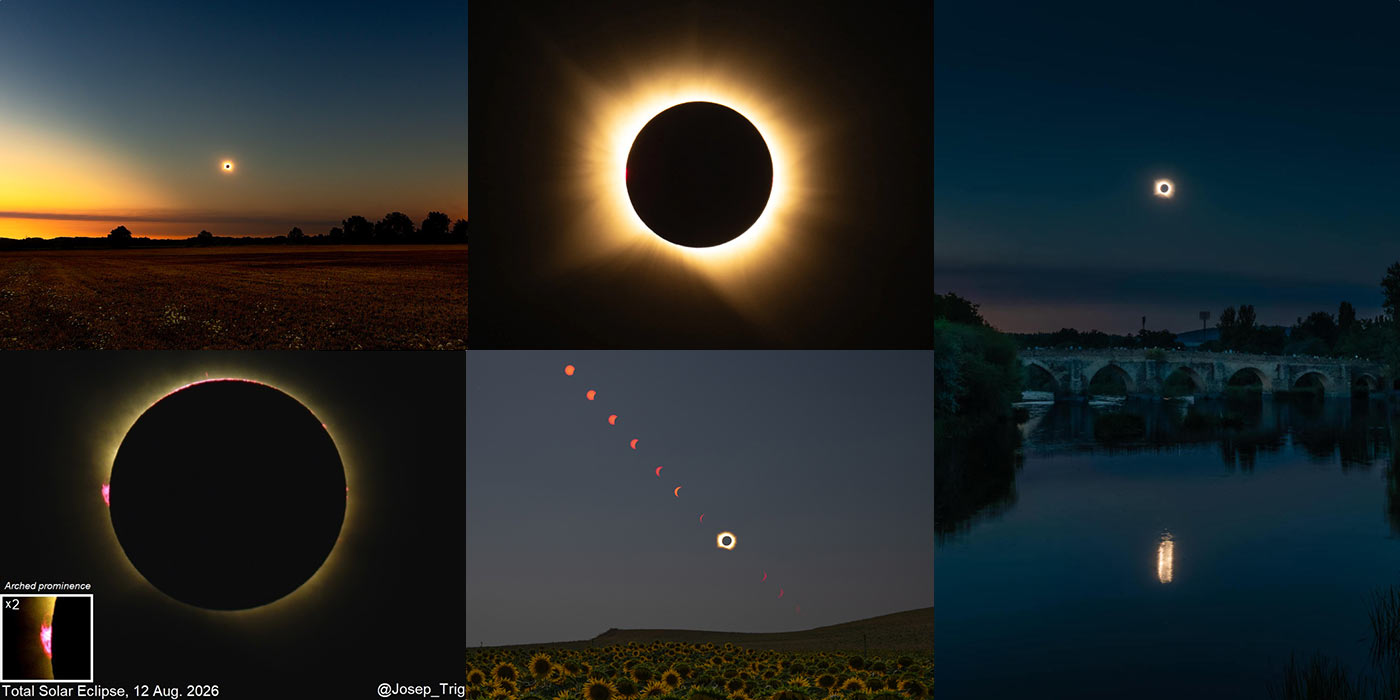
Let's celebrate the August 12 total solar eclipse through the eyes of photographers who experienced the Moon’s shadow sweeping across Spain. From Baily’s Beads and a glowing solar prominence to totality reflected in a river and framed by fields of sunflowers, these images capture both the science and extraordinary beauty of one of nature’s most spectacular celestial events. #PPOD #Eclipse
Planetary Picture of the Day - Week of August 10, 2026
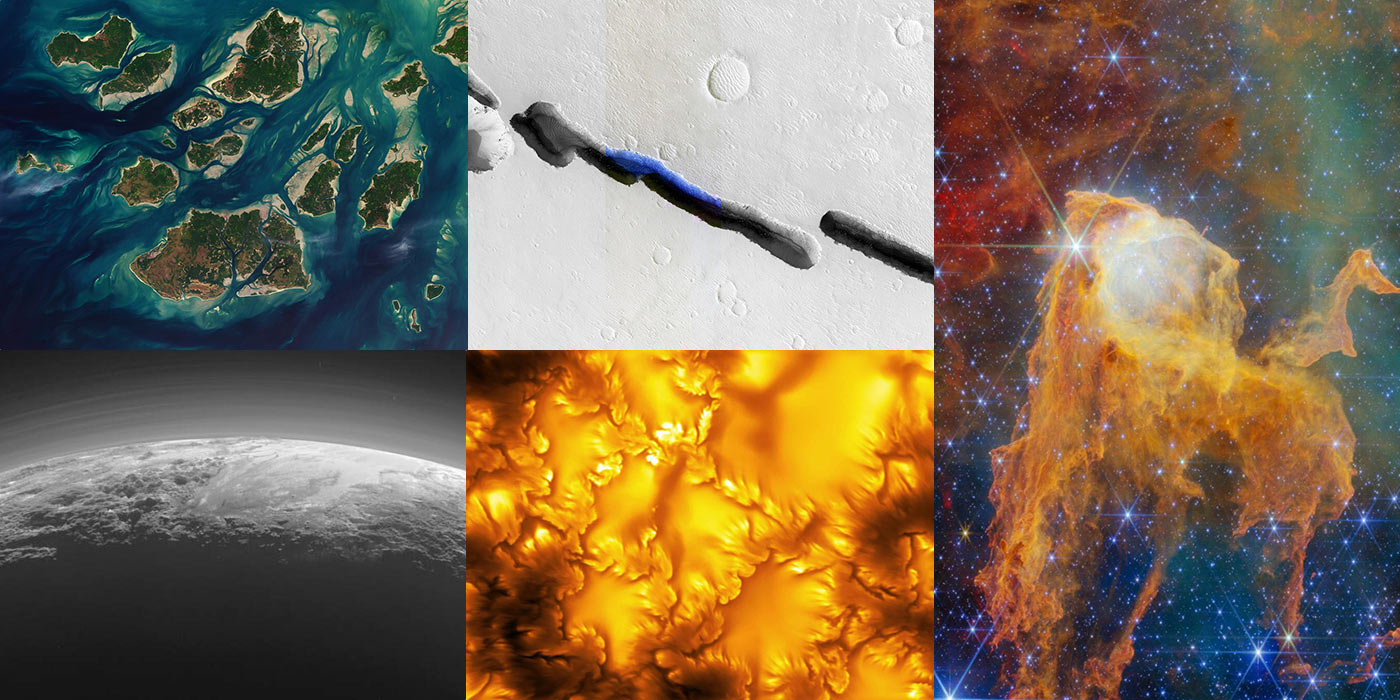
The universe is shaped by forces both immense and intricate, from fractured terrain on Mars and shifting tidal landscapes on Earth to tiny vortices dancing across the surface of the Sun. Farther afield, dramatic views of Pluto’s icy mountains and hazy atmosphere and a treasure chest of newborn stars in the Carina Nebula showcase the remarkable detail revealed by spacecraft and telescopes exploring the cosmos. #PPOD
Planetary Picture of the Day - August 3, 2026
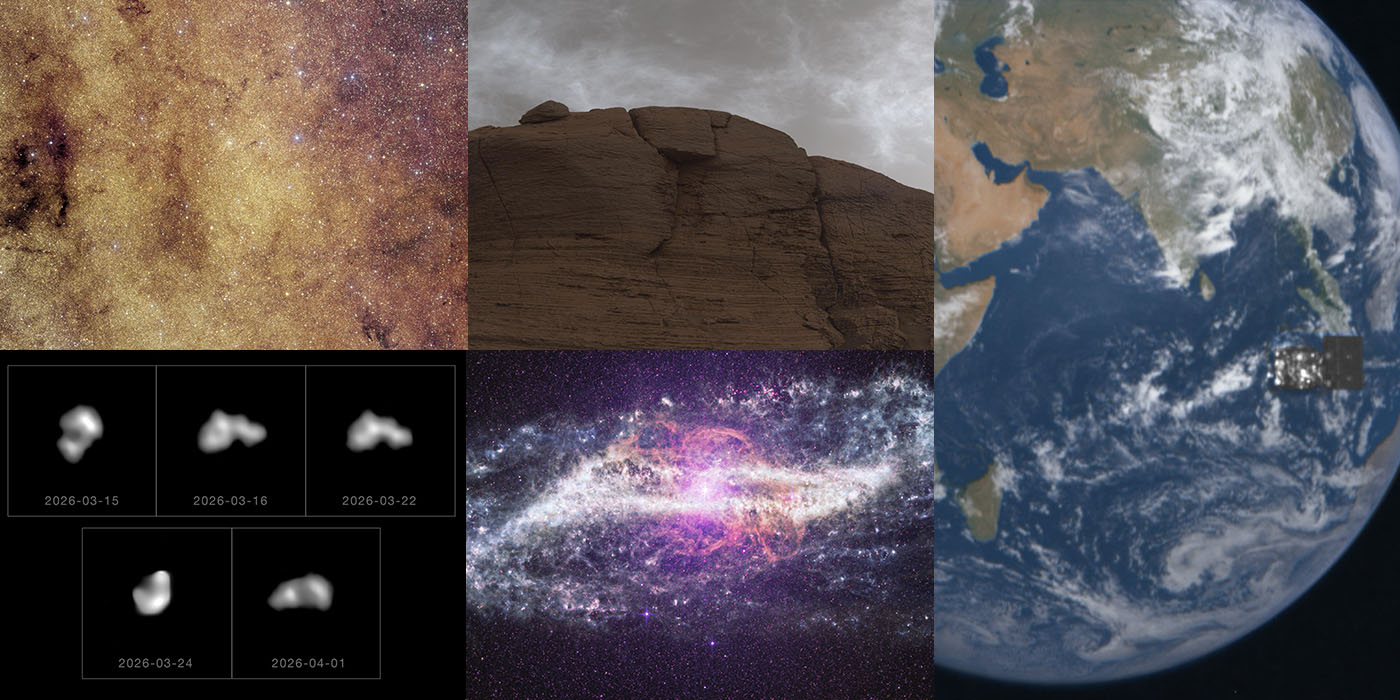
This week, we reveal hidden wonders across the cosmos, from delicate Martian clouds and a dust-shrouded galaxy to an asteroid with a never-before-seen shape and the crowded heart of the Milky Way. Together, these images showcase how new missions and advanced observatories continue to uncover surprising details about our solar system, our galaxy, and the universe beyond. #PPOD
Planetary Picture of the Day - Week of July 27, 2026
These images span the journey from our own backyard to distant galaxies, featuring Mars, the Moon, breathtaking night skies, and a fresh view of the star-forming galaxy Messier 94. Along the way, we celebrate exploration and discovery—from NASA’s Psyche mission preparing for its asteroid encounter to the revelation of a previously unknown impact crater on Earth —reminding us that there are still new wonders to uncover both on our own planet and across the cosmos. #PPOD
Planetary Picture of the Day - Week of July 20, 2026
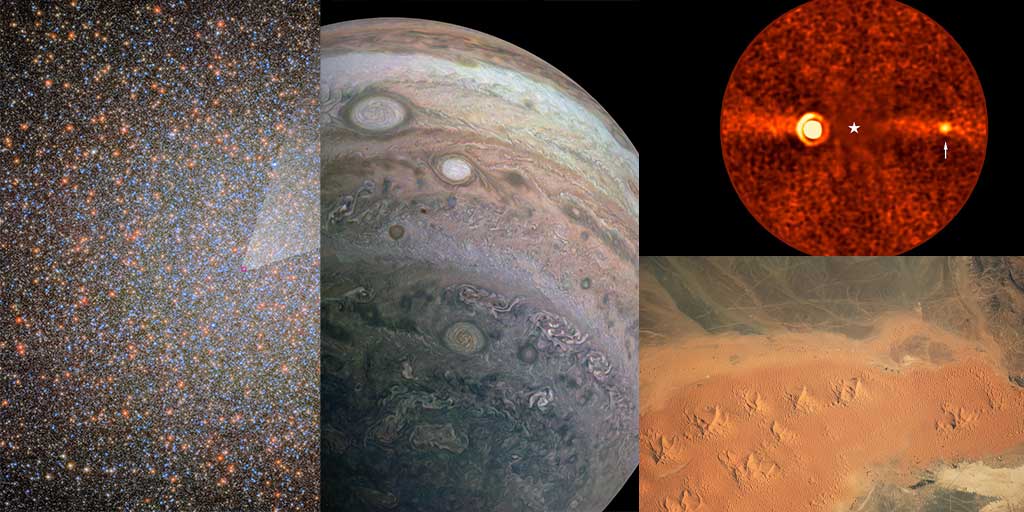
This week, we celebrate fifty years since Viking 1 became the first spacecraft to successfully land on and photograph the surface of Mars, alongside stunning new views of worlds, stars, and galaxies that continue to expand our understanding of the universe. From sculpted Sahara sand dunes and Jupiter’s colorful cloud bands to a newly discovered exoplanet and the first stellar-mass black hole identified in Omega Centauri, these images showcase the remarkable diversity of cosmic exploration. #PPODResearch
Related Projects
SkyMapper: Expanding Access to Real-time Astronomy Through a Global Astronomical Network
SkyMapper and the SETI Institute are connecting educators, students and the public to live astronomical observations through a distributed astronomical network. #SkyMapper #SETI #Citizen Science #Astronomy
Virtual Planetary Laboratory
How can we best assess whether an exoplanet supports life? #VPL
Discovery and Futures Lab
What happens if life beyond Earth is discovered? The Discovery and Futures Lab at the SETI Institute fosters novel and anticipatory research at the intersection of science, society, our planet, and the search for life beyond Earth. #Discovery and Futures LabSupport the
SETI Institute
Scientists are getting closer in their search for life beyond earth. But with limited federal funding for the search for extraterrestrial intelligence, supporters are the reason cutting-edge scientists can keep their eyes on the sky.