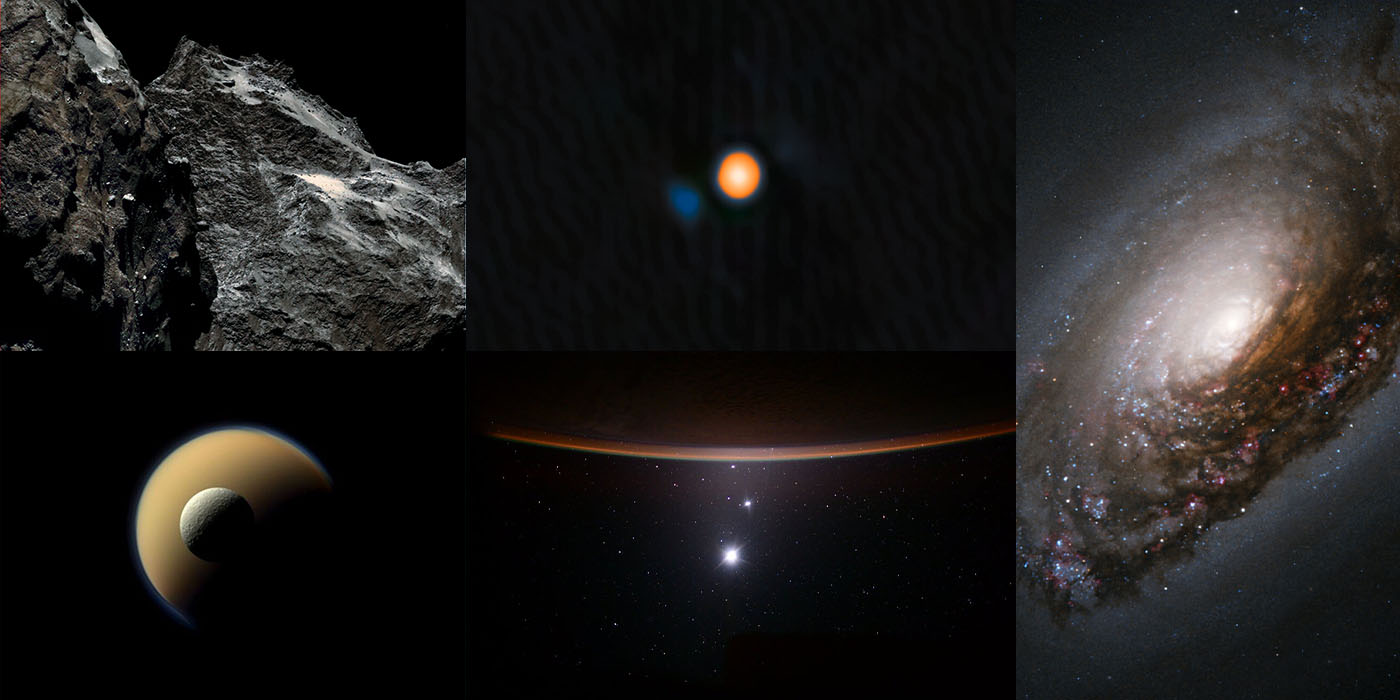
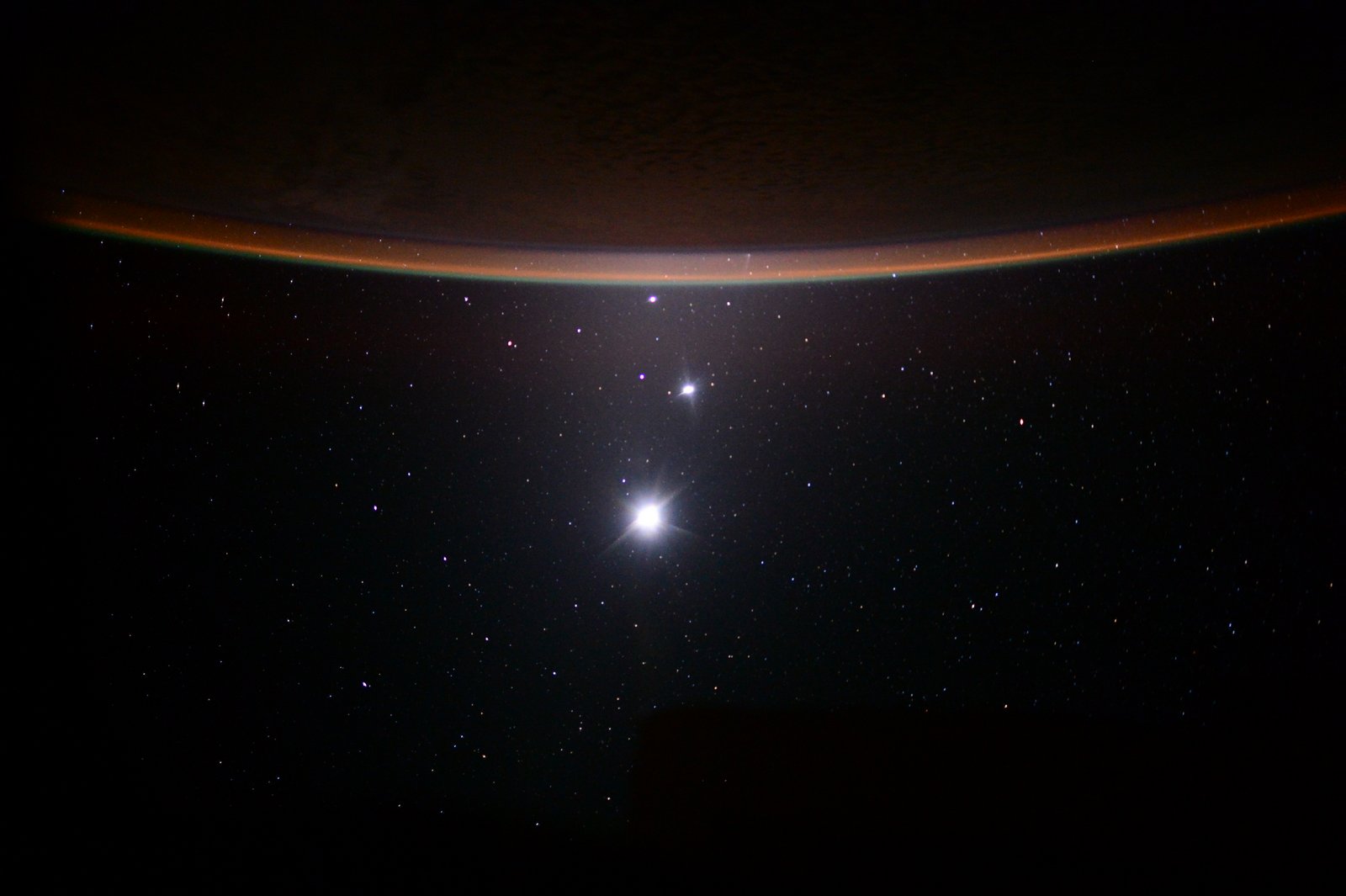
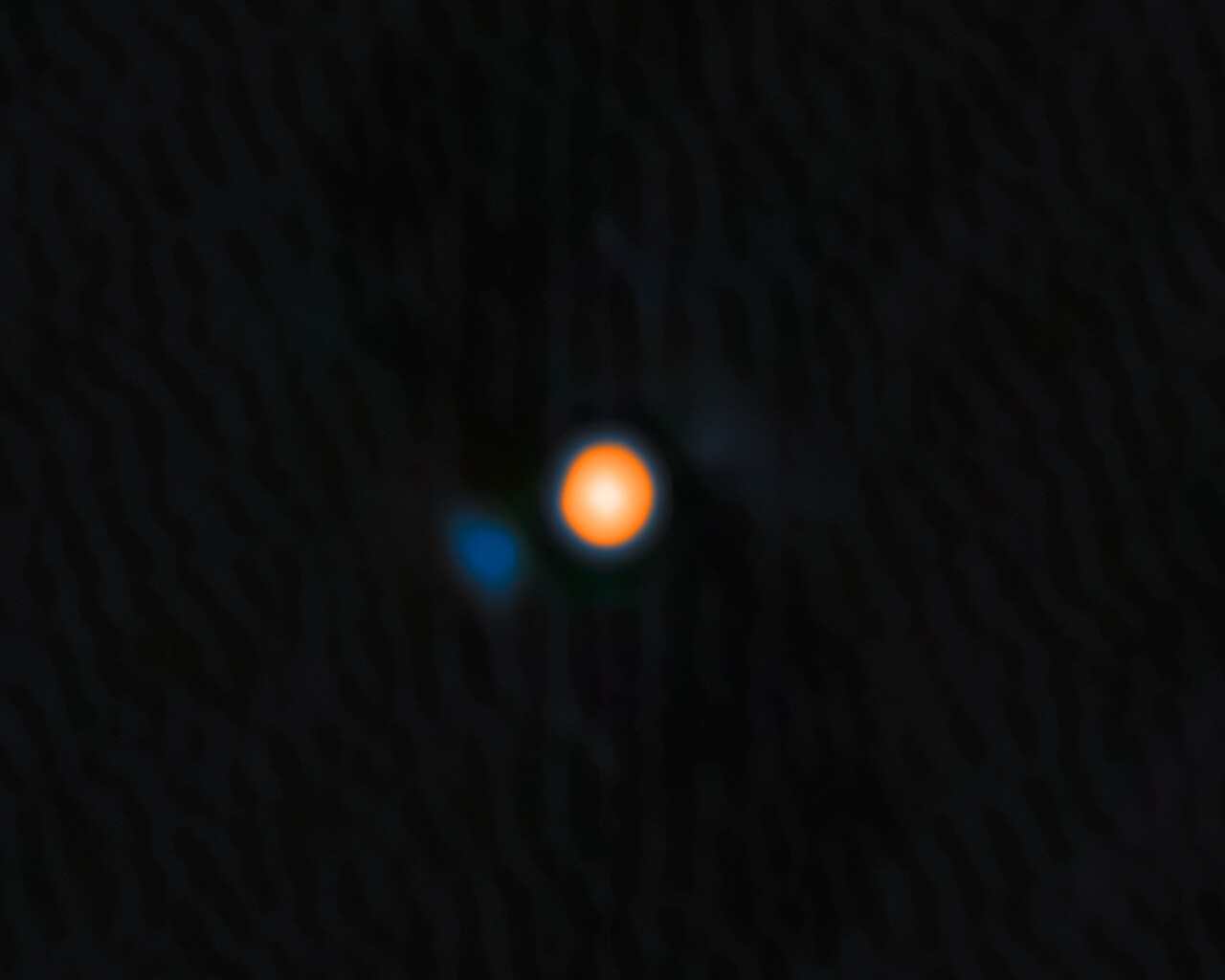
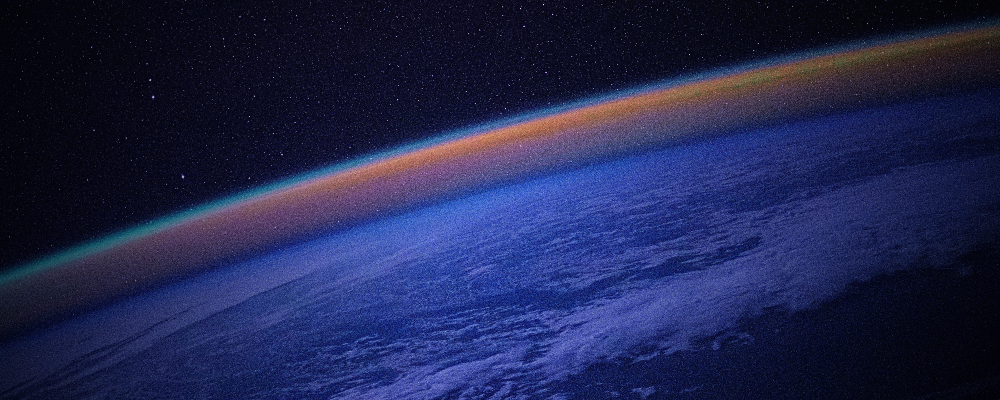
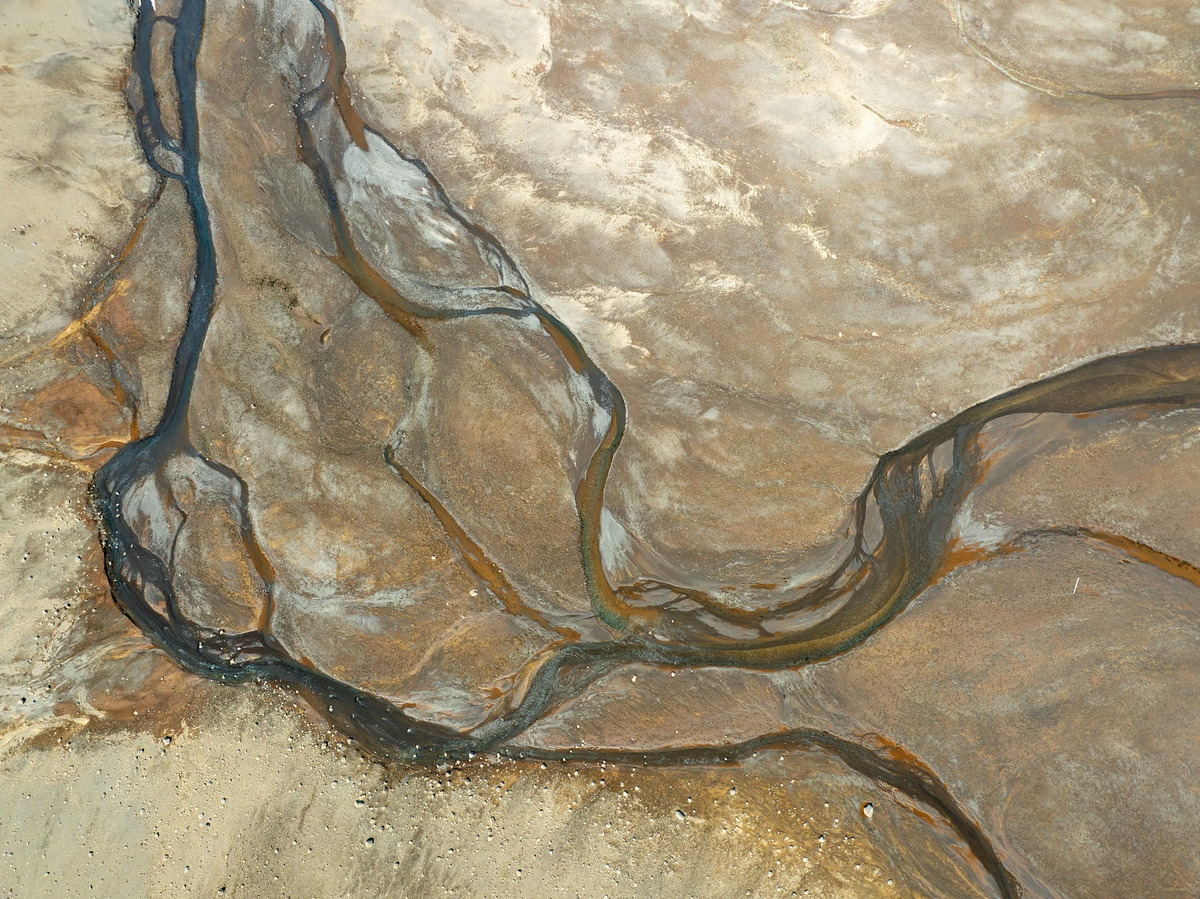
From a photograph of Earth taken by an astronaut orbiting in space to a lonely comet to Saturn's largest moons to a distant galaxy affected by a collision a billion years ago, enjoy the wonders of our universe. Plus, scientists have confirmed the existence of and imaged a companion star to Betelgeuse.
Monday, 28 July 2025
Fire and Ice
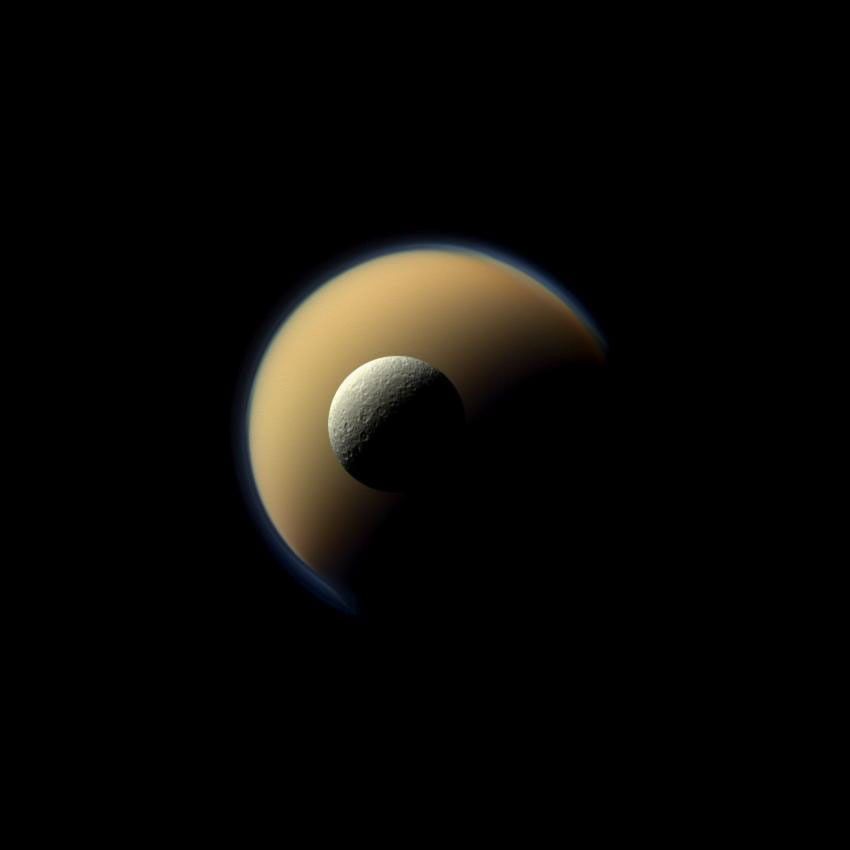
Saturn's largest and second-largest moons, Titan and Rhea, appear to be stacked on top of each other in this true-color scene from NASA's Cassini spacecraft.
The north polar hood can be seen on Titan (5,150 kilometers across), appearing as a detached layer at the top of the moon, located on the top right. This view looks toward the Saturn-facing side of Rhea (1528 kilometers across). North on Rhea is up and rotated 35 degrees to the right.
Images taken using red, green and blue spectral filters were combined to create this natural-color view. The images were acquired with the Cassini spacecraft's narrow-angle camera on June 16, 2011.
Tuesday, 29 July 2025
Lonely Mountain
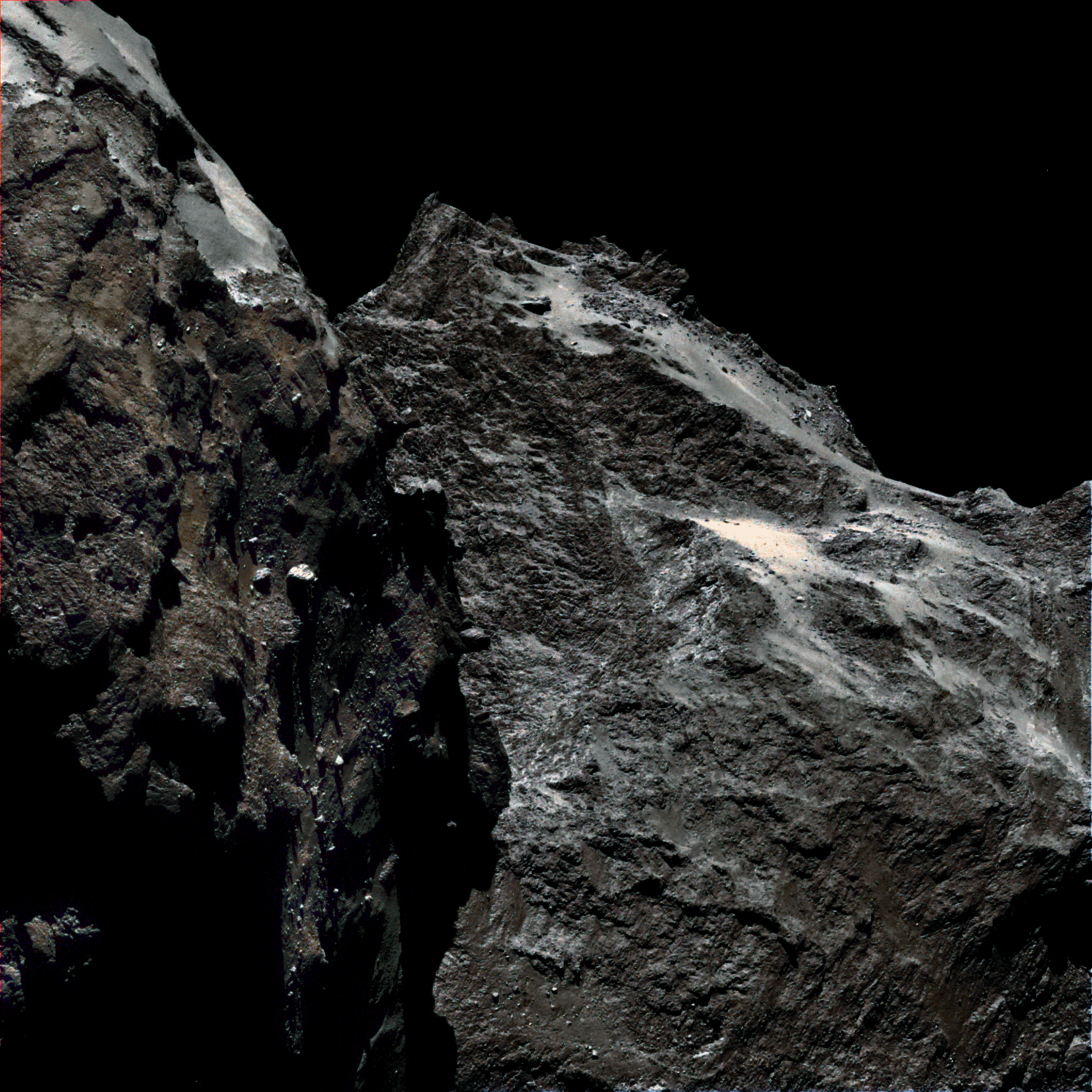
It may look like a lonely mountain, but this landscape is out of this world, literally. It’s one of the closest color images ever taken of the surface of a comet. The European Space Agency's Rosetta spacecraft took this close-up of the tortured and jagged surface of Comet 67P/Churyumov-Gerasimenko from a distance of just 29 kilometers.
Comet 67P is a four-kilometer-wide frozen mountain of rock and ice, hurtling through space on a long six-and-a-half-year orbit around the Sun.
Wednesday, 30 July 2025
Black Eye Galaxy
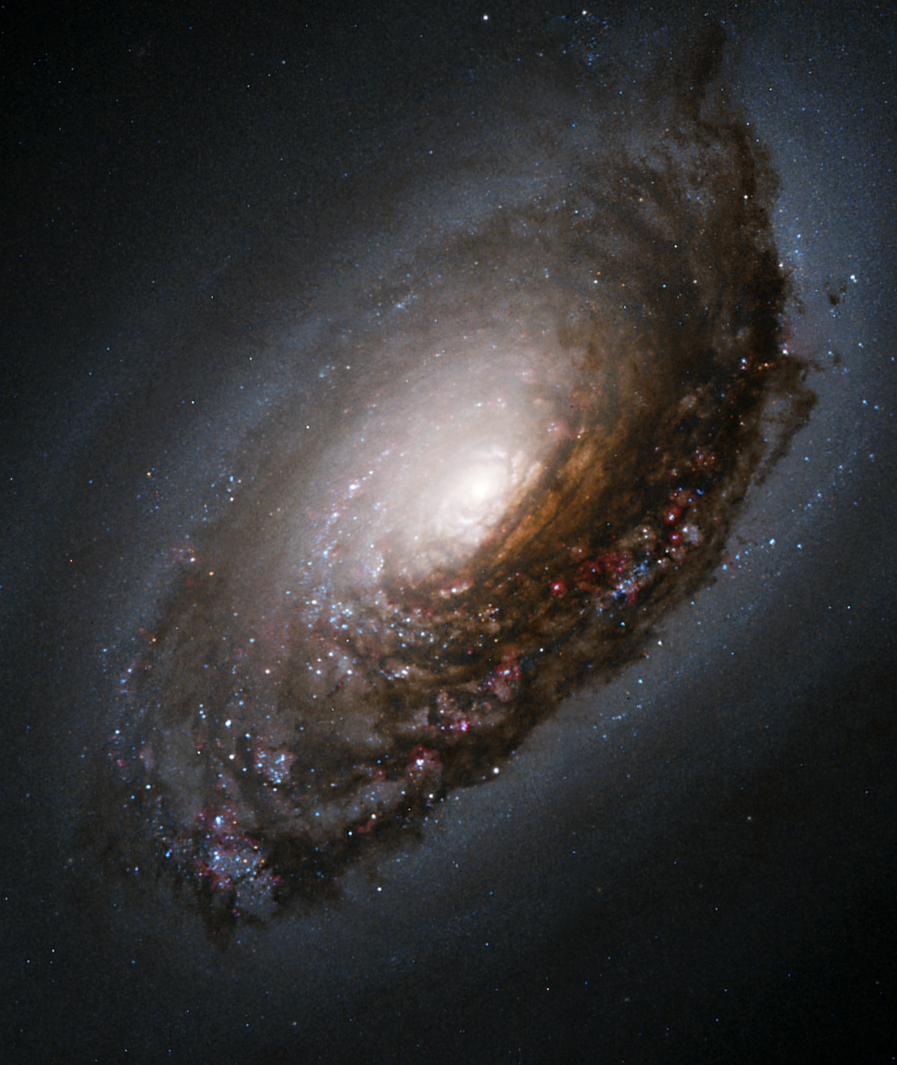
A collision between two galaxies has resulted in a merged star system with an unusual appearance and bizarre internal motions. Messier 64 (M64) features a spectacular dark band of absorbing dust in front of the galaxy's bright nucleus, giving rise to its nicknames, the "Black Eye" or "Evil Eye" galaxy.
Fine details of the dark band are revealed in this image of the central portion of M64 obtained with the Hubble Space Telescope. M64 is well known among amateur astronomers because of its appearance in small telescopes. It was first cataloged in the 18th century by the French astronomer Messier. Located in the northern constellation Coma Berenices, M64 resides roughly 17 million light-years from Earth.
At first glance, M64 appears to be a fairly regular pinwheel-shaped spiral galaxy. As in the majority of galaxies, all of the stars in M64 are rotating in the same direction, clockwise as seen in the Hubble image. However, detailed studies in the 1990s led to the remarkable discovery that the interstellar gas in the outer regions of M64 rotates in the opposite direction from the gas and stars in the inner regions.
Active star formation is occurring in the shear region where oppositely rotating gases collide, are compressed, and contract. Particularly noticeable in the image are hot, blue young stars that have just formed, along with pink clouds of glowing hydrogen gas that fluoresce when exposed to ultraviolet light from newly formed stars.
Astronomers believe that the oppositely rotating gas arose when M64 absorbed a satellite galaxy that collided with it, perhaps more than one billion years ago. This small galaxy has now been almost completely destroyed, but signs of the collision persist in the backward motion of gas at the outer edge of M64.
This image of M64 was taken with Hubble's Wide Field Planetary Camera 2 (WFPC2). The color image is a composite prepared by the Hubble Heritage Team from pictures taken through four different color filters. These filters isolate blue and near-infrared light, along with red light emitted by hydrogen atoms and green light from Strömgren y.
Friday, 1 August 2025
Companion to Betelgeuse
Using the NASA-NSF-funded ‘Alopeke instrument on the Gemini North telescope, one half of the International Gemini Observatory, partly funded by the U.S. National Science Foundation (NSF) and operated by NSF NOIRLab, astronomers have discovered a companion star in an incredibly tight orbit around Betelgeuse. This discovery answers the millennia-old question of why this famous star experiences a roughly six-year-long periodic change in its brightness, and provides insight into the physical mechanisms behind other variable red supergiants. The companion star appears blue here because, based on the team’s analysis, it is likely an A- or B-type star, both of which are blue-white due to their high temperatures.
‘Alopeke is funded by the NASA-NSF Exoplanet Observational Research Program (NN-EXPLORE).
News
Related News
Planetary Picture of the Day - Week of August 24, 2026
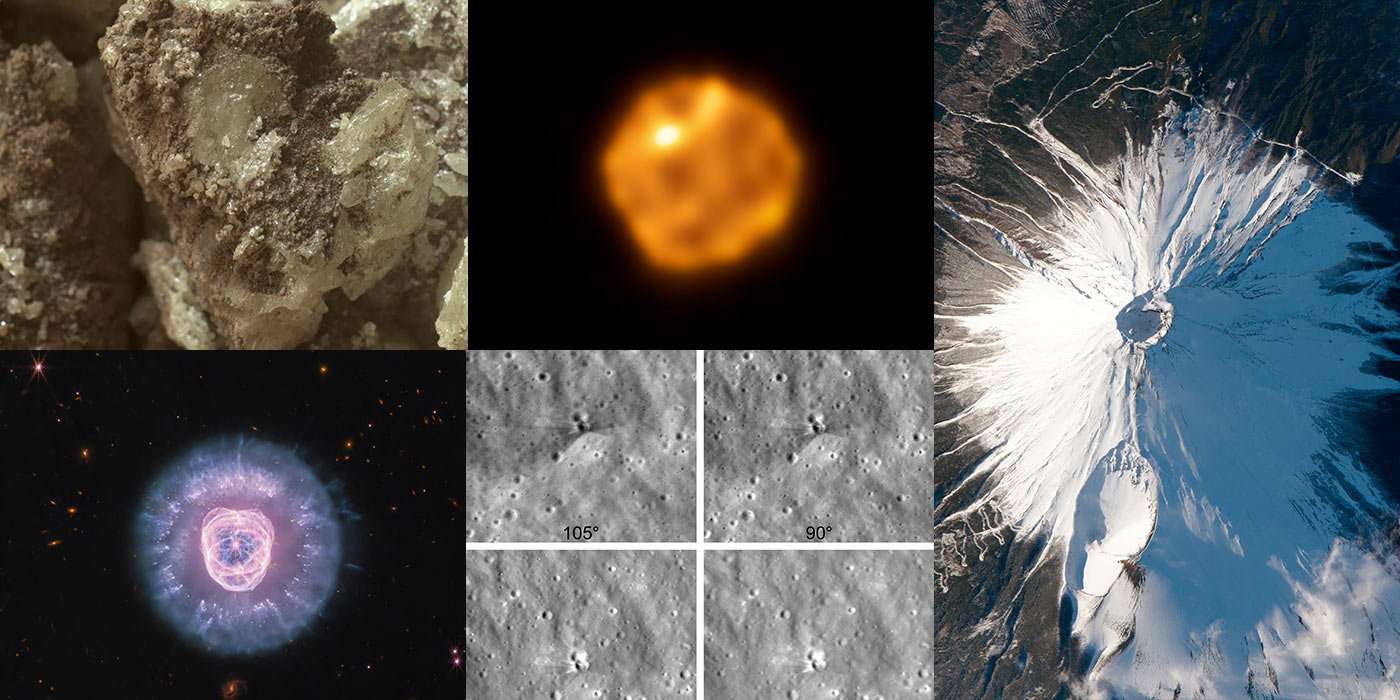
We journey from Mount Fuji as seen from orbit to the bubbling surface of Betelgeuse, exploring the forces that shape planets, moons, and stars across the cosmos. Along the way, JWST reveals the remains of a dying star, Curiosity uncovers clues to Mars’ volcanic past, and a fresh rocket impact on the Moon gives scientists a new opportunity to study how collisions reshape its surface. #PPOD
Planetary Picture of the Day - Week of August 17, 2026
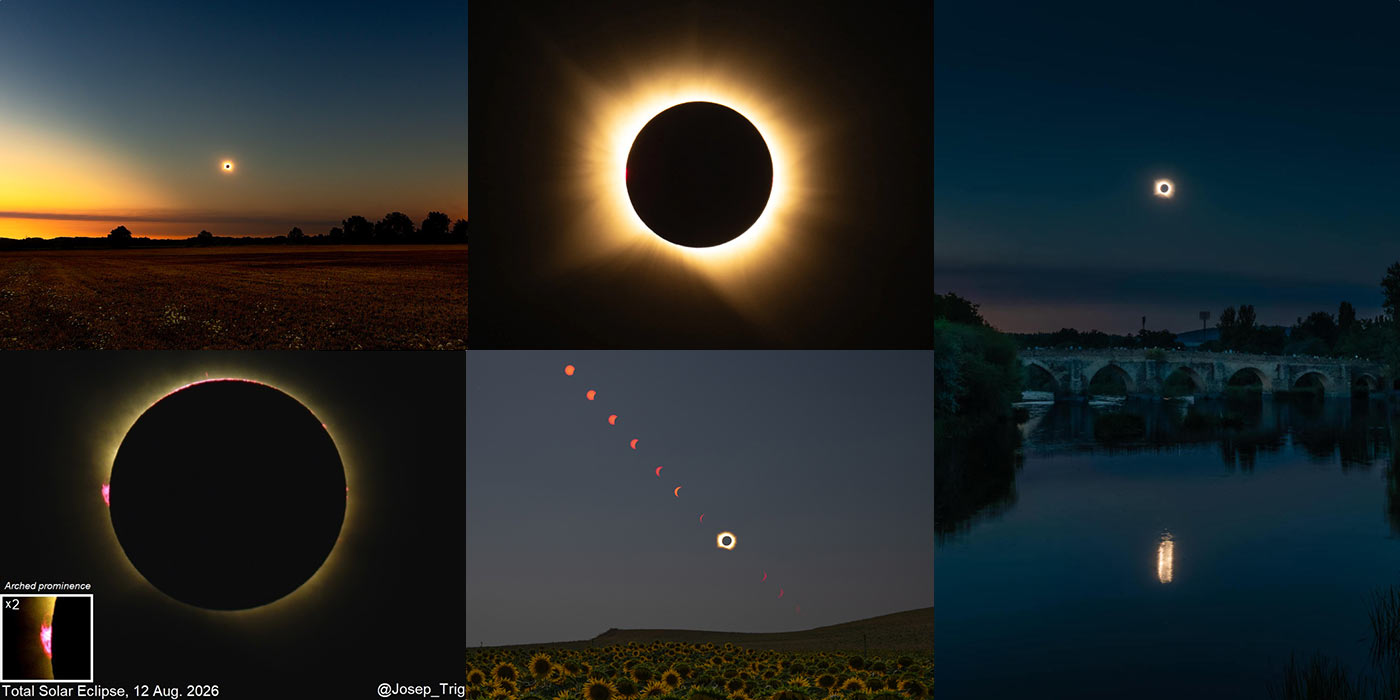
Let's celebrate the August 12 total solar eclipse through the eyes of photographers who experienced the Moon’s shadow sweeping across Spain. From Baily’s Beads and a glowing solar prominence to totality reflected in a river and framed by fields of sunflowers, these images capture both the science and extraordinary beauty of one of nature’s most spectacular celestial events. #PPOD #Eclipse
Planetary Picture of the Day - Week of August 10, 2026
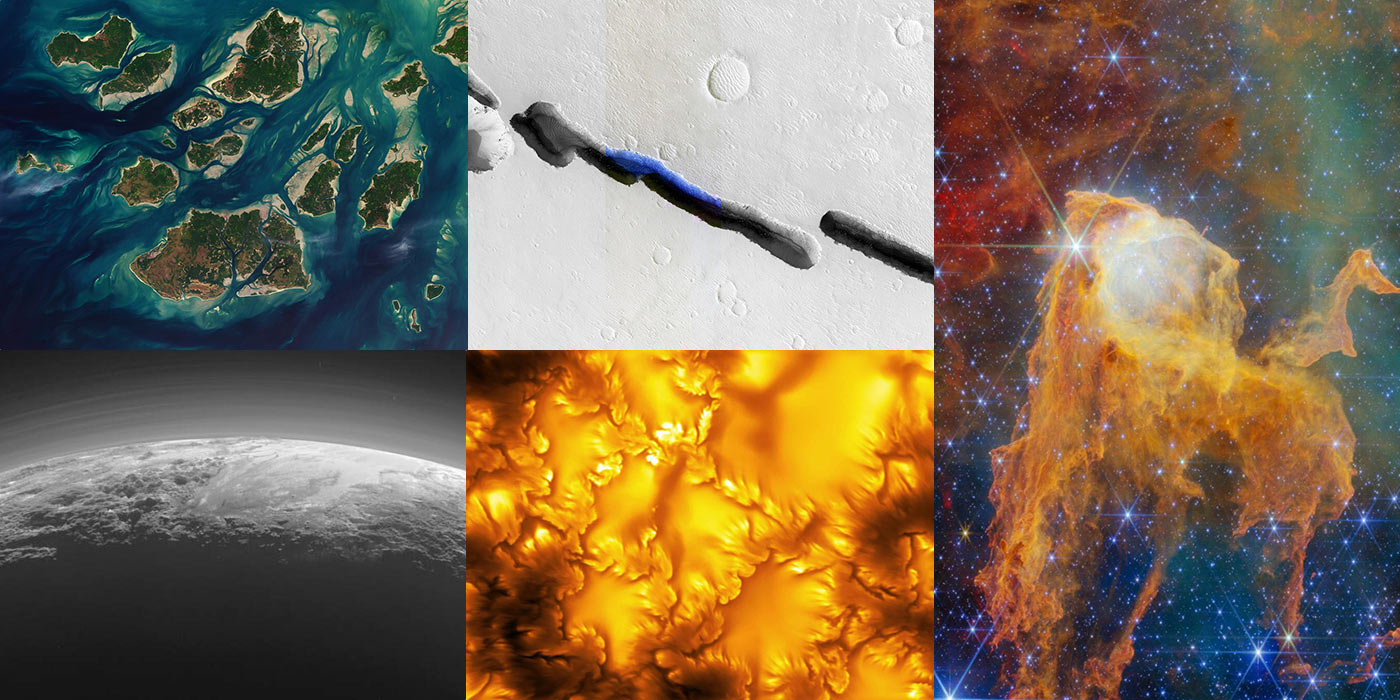
The universe is shaped by forces both immense and intricate, from fractured terrain on Mars and shifting tidal landscapes on Earth to tiny vortices dancing across the surface of the Sun. Farther afield, dramatic views of Pluto’s icy mountains and hazy atmosphere and a treasure chest of newborn stars in the Carina Nebula showcase the remarkable detail revealed by spacecraft and telescopes exploring the cosmos. #PPOD
Planetary Picture of the Day - August 3, 2026
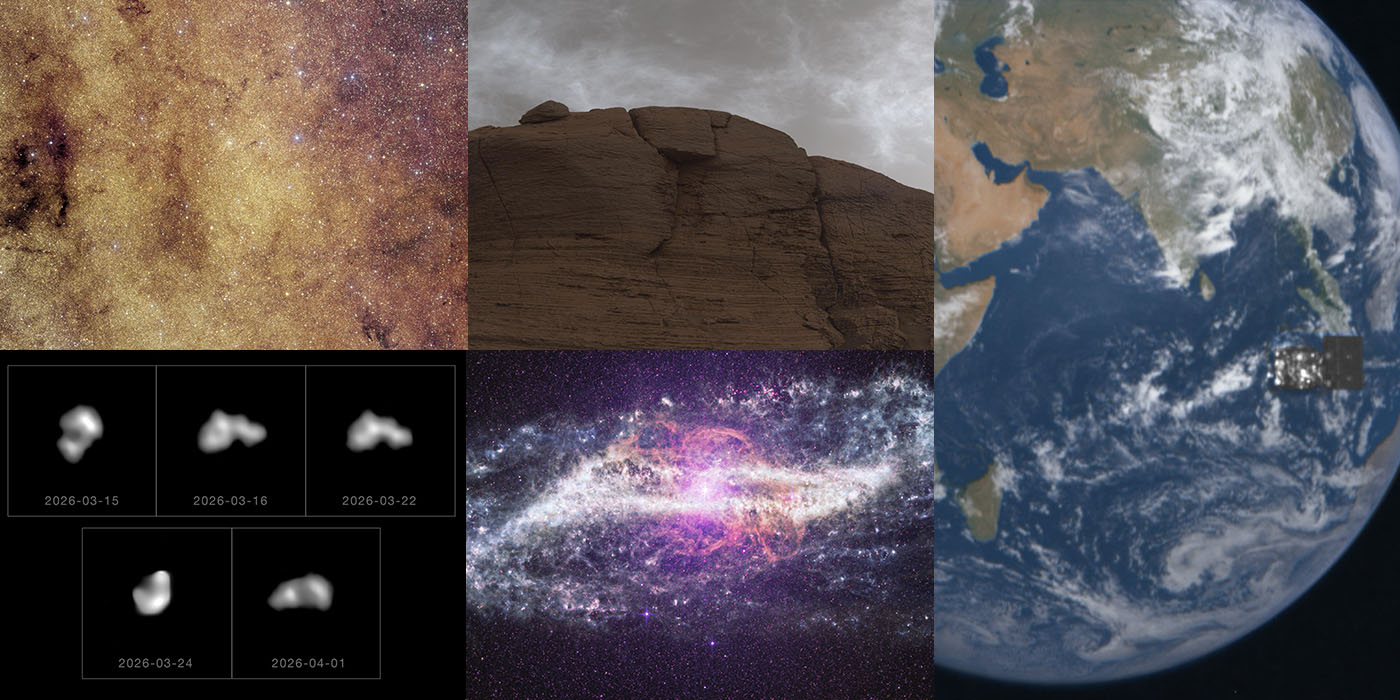
This week, we reveal hidden wonders across the cosmos, from delicate Martian clouds and a dust-shrouded galaxy to an asteroid with a never-before-seen shape and the crowded heart of the Milky Way. Together, these images showcase how new missions and advanced observatories continue to uncover surprising details about our solar system, our galaxy, and the universe beyond. #PPOD
Planetary Picture of the Day - Week of July 27, 2026
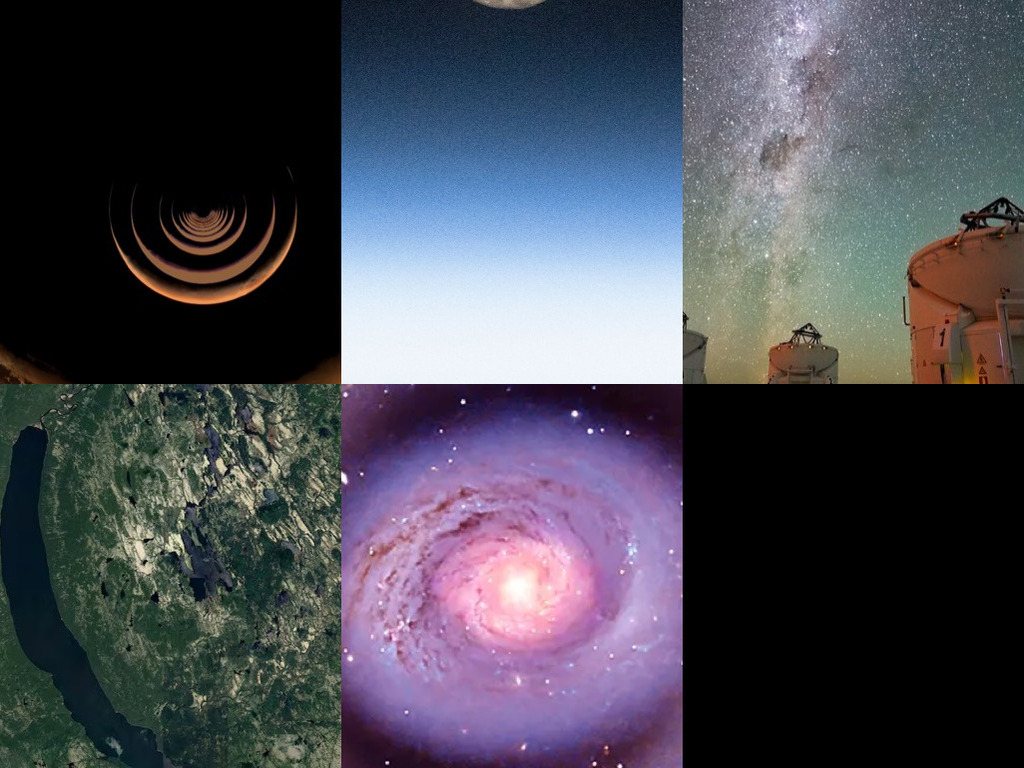
These images span the journey from our own backyard to distant galaxies, featuring Mars, the Moon, breathtaking night skies, and a fresh view of the star-forming galaxy Messier 94. Along the way, we celebrate exploration and discovery—from NASA’s Psyche mission preparing for its asteroid encounter to the revelation of a previously unknown impact crater on Earth —reminding us that there are still new wonders to uncover both on our own planet and across the cosmos. #PPOD
Planetary Picture of the Day - Week of July 20, 2026
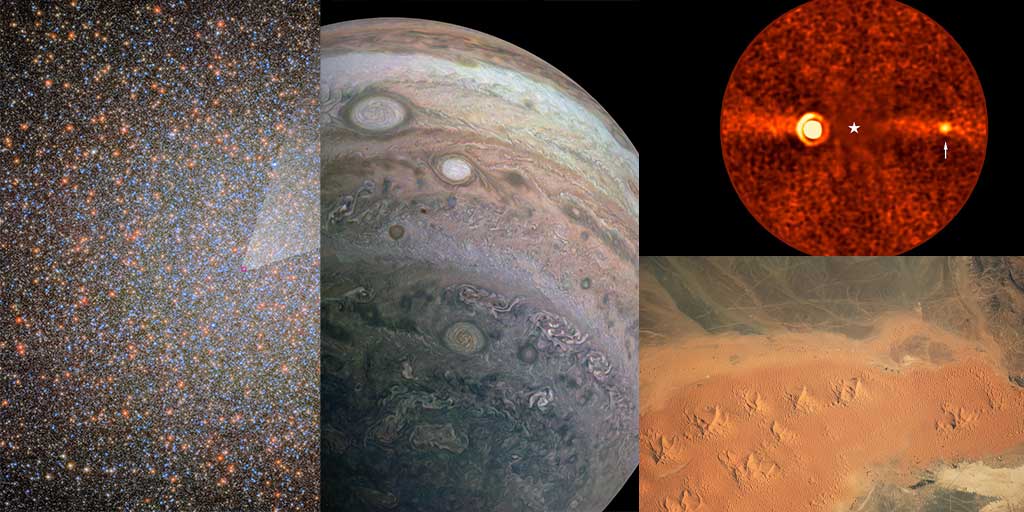
This week, we celebrate fifty years since Viking 1 became the first spacecraft to successfully land on and photograph the surface of Mars, alongside stunning new views of worlds, stars, and galaxies that continue to expand our understanding of the universe. From sculpted Sahara sand dunes and Jupiter’s colorful cloud bands to a newly discovered exoplanet and the first stellar-mass black hole identified in Omega Centauri, these images showcase the remarkable diversity of cosmic exploration. #PPODResearch
Related Projects
SkyMapper: Expanding Access to Real-time Astronomy Through a Global Astronomical Network
SkyMapper and the SETI Institute are connecting educators, students and the public to live astronomical observations through a distributed astronomical network. #SkyMapper #SETI #Citizen Science #Astronomy
Virtual Planetary Laboratory
How can we best assess whether an exoplanet supports life? #VPL
Discovery and Futures Lab
What happens if life beyond Earth is discovered? The Discovery and Futures Lab at the SETI Institute fosters novel and anticipatory research at the intersection of science, society, our planet, and the search for life beyond Earth. #Discovery and Futures LabSupport the
SETI Institute
Scientists are getting closer in their search for life beyond earth. But with limited federal funding for the search for extraterrestrial intelligence, supporters are the reason cutting-edge scientists can keep their eyes on the sky.