






Wednesday, Jan 14, 2026

Credit: NASA/JPL-Caltech.

Monday, 5 January 2026

Curiosity Sends Holiday Postcard from Mars

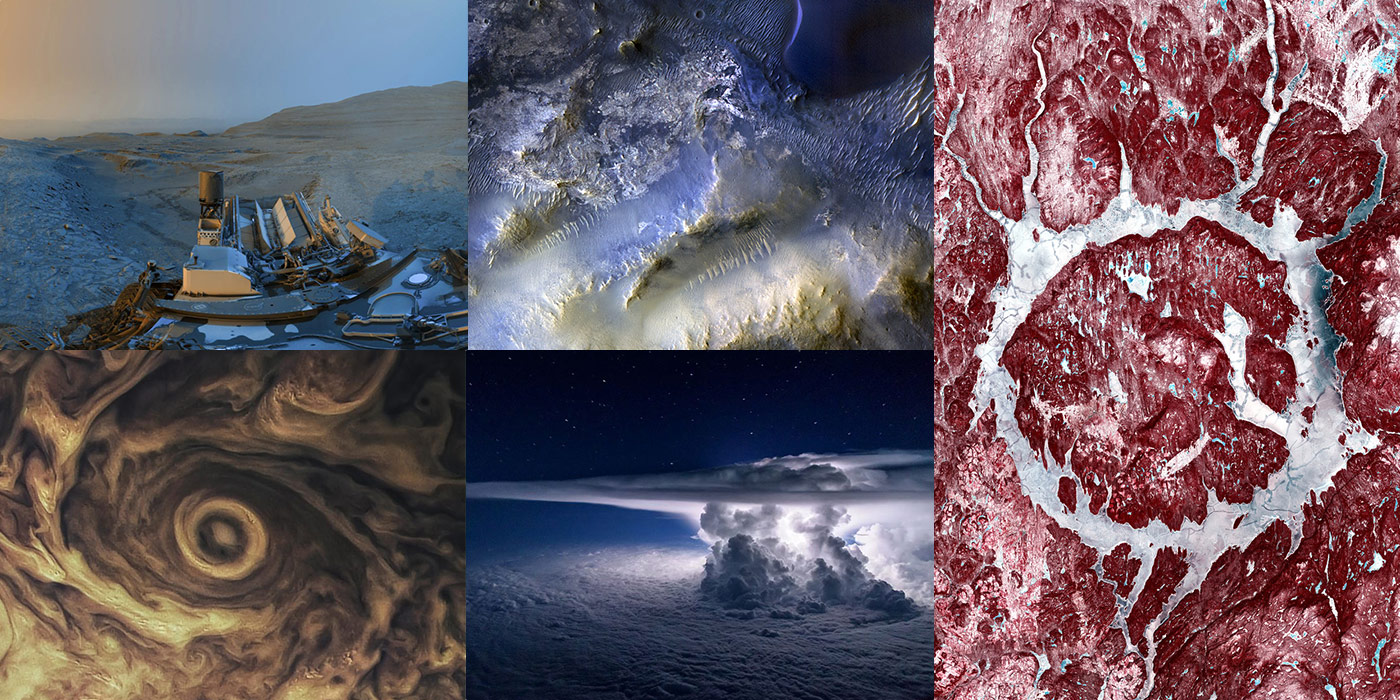
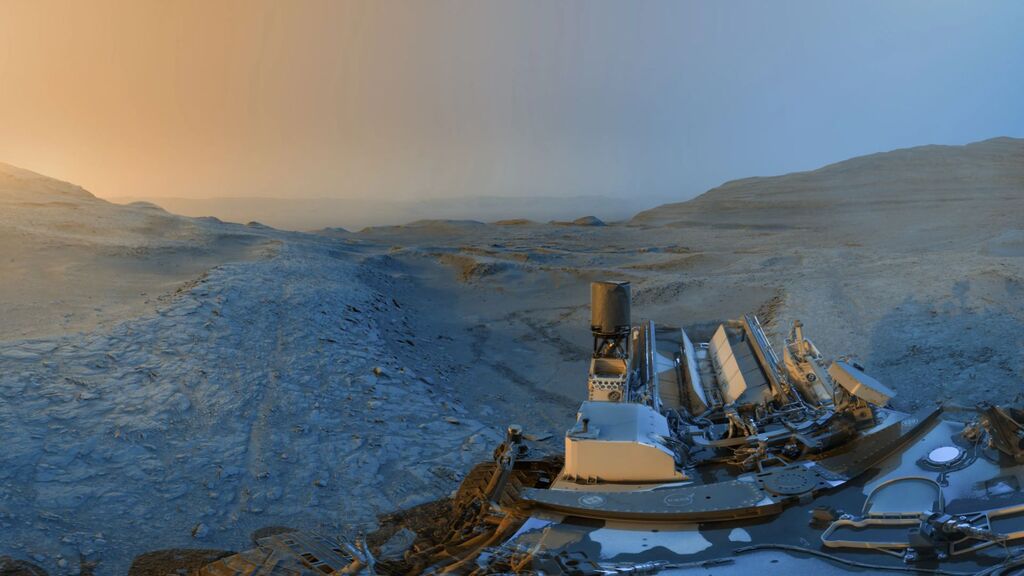
Team members working with NASA’s Curiosity Mars rover created this “postcard” by commanding the rover to take images at two times of day on Nov. 18, 2025, spanning the 4,722nd and 4,723rd Martian days, or sols, of the mission.

The panoramas were captured at 4:15 p.m. on Sol 4,722 and 8:20 a.m. on Sol 4,723 (both at local Mars time), then merged together. Color was later added for an artistic interpretation of the scene, with blue representing the morning panorama and yellow representing the afternoon one. The resulting “postcard” is similar to ones the rover took in June 2023 and November 2021. Adding color to these kinds of merged images helps different details stand out in the landscape.

Credit: NASA/JPL-Caltech/University of Arizona.

Tuesday, 6 January 2026

HiRISE's 100,000th Image

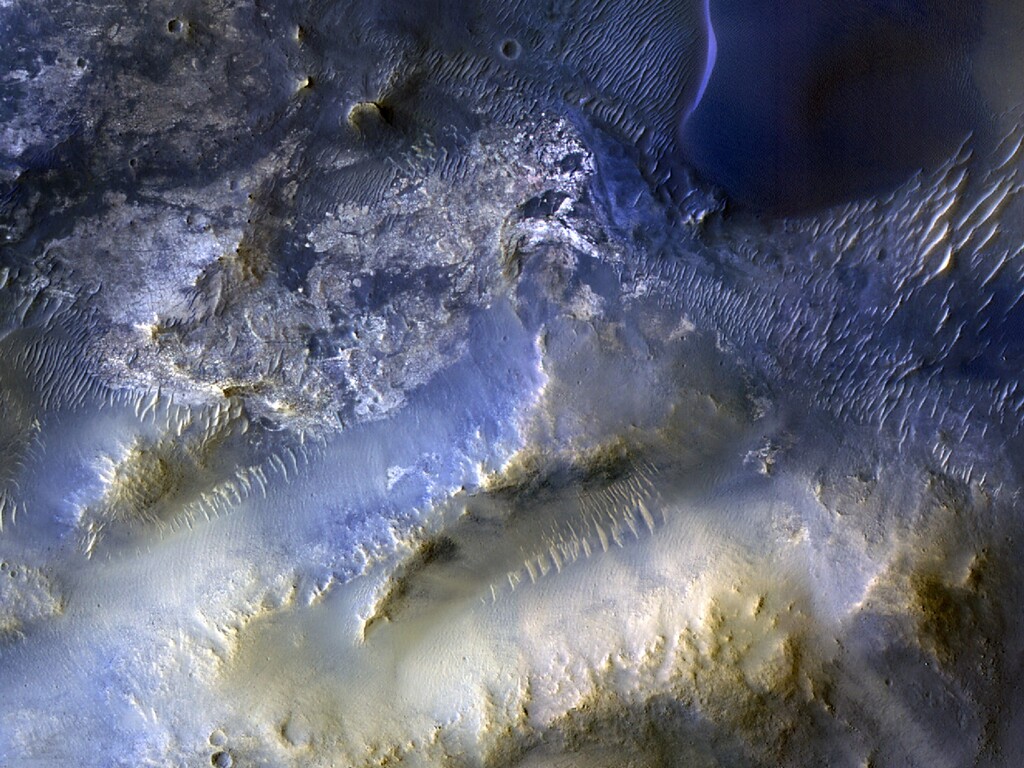
This view of a region called Syrtis Major is from the 100,000th image captured by NASA’s Mars Reconnaissance Orbiter using its HiRISE camera. Over nearly 20 years, HiRISE has helped scientists understand how the Red Planet’s surface is constantly changing.

Shown here are plains and sand dunes within Syrtis Major, a region about 50 miles (80 kilometers) southeast of Jezero Crater, which the agency’s Perseverance rover is currently exploring. Studying this landscape is helping scientists understand how sand is produced and trapped here, eventually forming dunes. The subject of the 100,000th image was chosen by a high school student through the HiWish site, where any member of the public can suggest parts of the planet to study with HiRISE.

Credit: Modified Copernicus Sentinel data (2022), processed by ESA.

Wednesday, 7 January 2026

Manicouagan Crater, Quebec

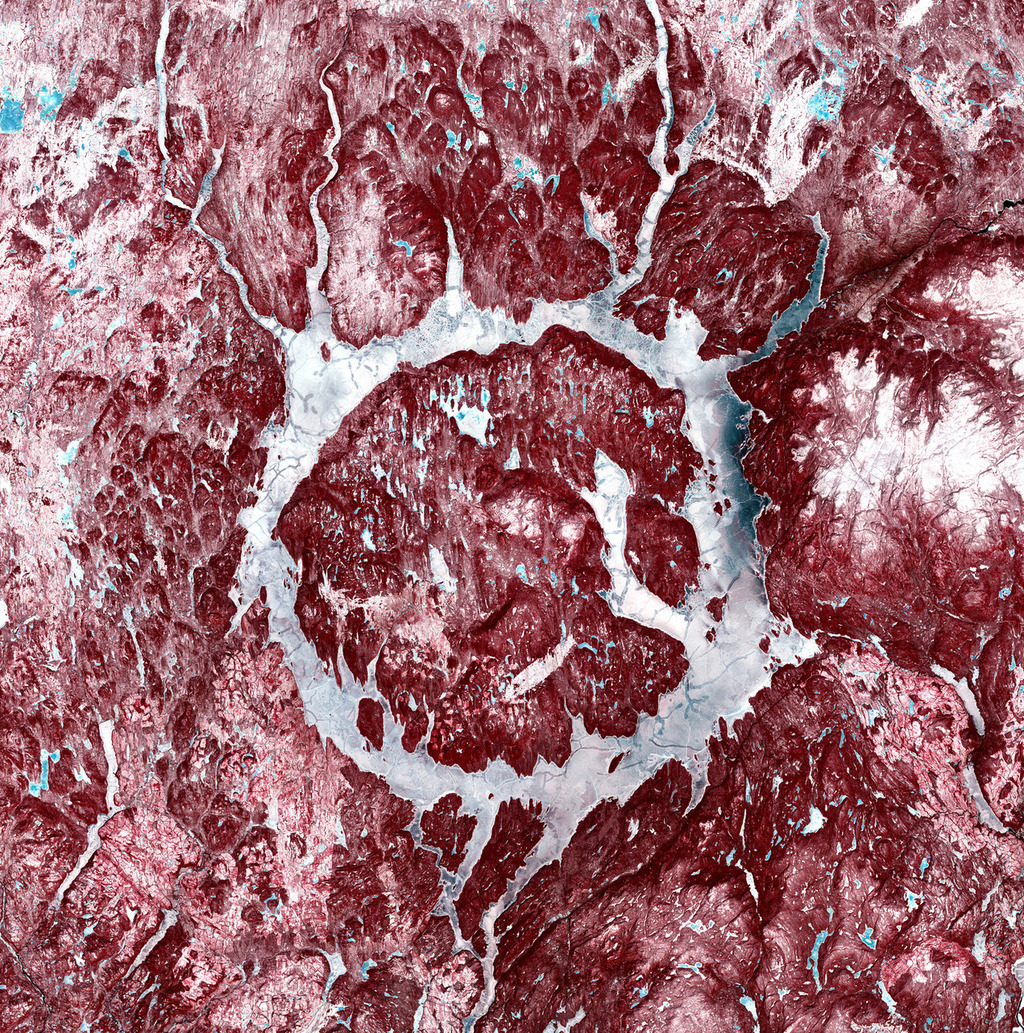
What a wintery image: a red and white sphere that, if seen from a distance, resembles a festive decoration.

The ‘bauble’ in question is actually the Manicouagan crater in the Canadian province of Quebec. Visible from space, this round structure was formed by a giant asteroid impact some 214 million years ago.

The anular reservoir, with René-Levasseur Island at its centre, is some 700 km north-east of Quebec City. Sometimes referred to as the ‘eye of Quebec’, it spans 72 km from east to west, while the asteroid that caused the impact is thought to have been 5 km in diameter.

This false-colour image was captured by Copernicus Sentinel-2.

In this image, the white is actually snow. Frozen lake water is shown in blue. The area’s thick vegetation, shown in red, includes boreal forest and tundra that are part of a UNESCO-designated biosphere reserve.

Credit: NASA / Juno / SwRI, MSSS, Jason Major.

Thursday, 8 January 2026

The Eye of Jove

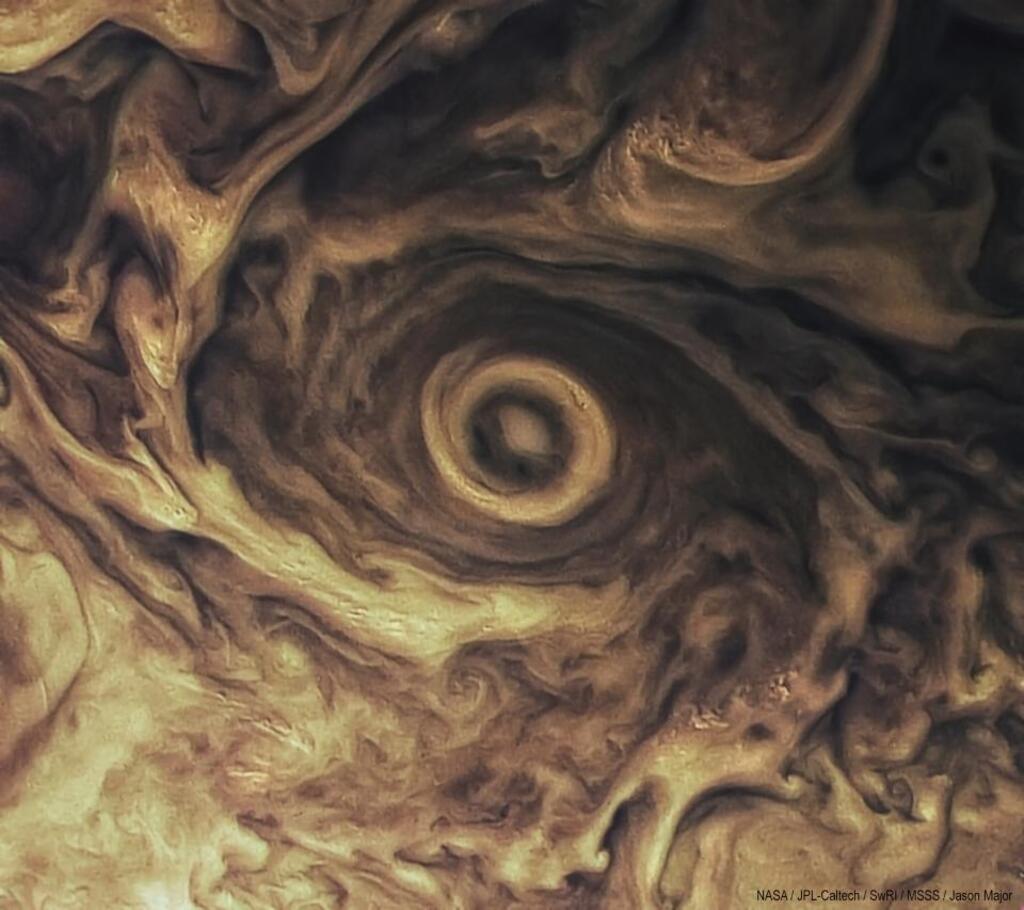
The JunoCam onboard NASA's Juno spacecraft captured a view of this Earth-sized storm on Jupiter's northern hemisphere during its P13 pass on May 24, 2018. The storm is approximately 12,700 kilometers across, which is about the diameter of the Earth, give or take a few tens of kilometers.

Friday, 9 January 2026

Pacific Storm

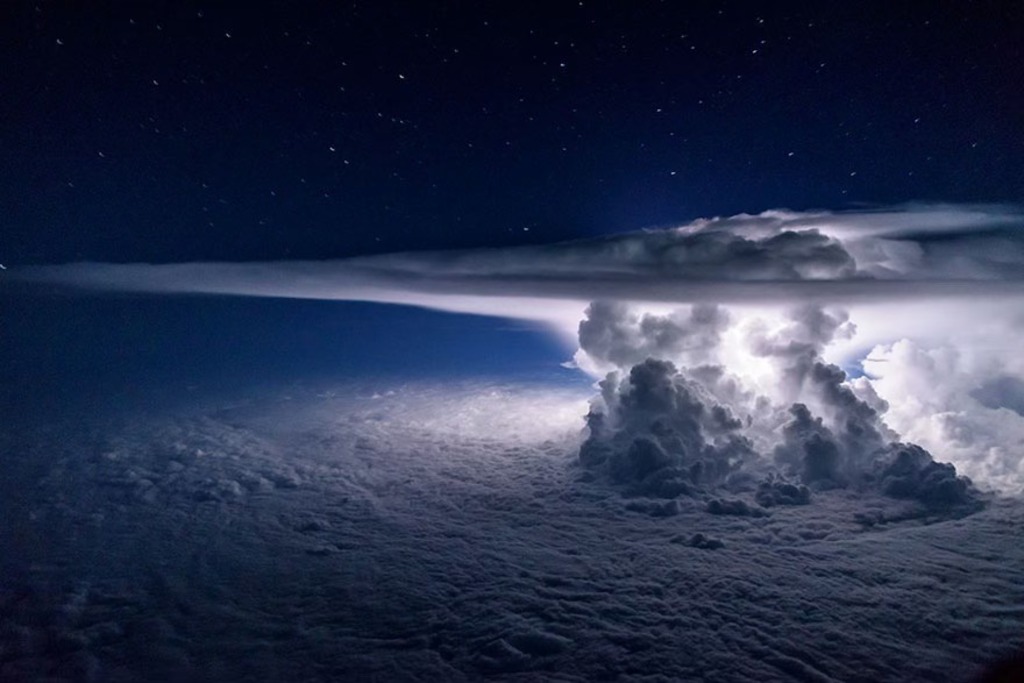
Santiago Borja Lopez is a Quito, Ecuador-based pilot with Ecuador Airlines. Whenever he is off duty, he pulls out his camera to capture the magnificent sights he witnesses in the air. From incredible storms to lightning bolts, the photos he captures are truly magnificent. Here is a colossal cumulonimbus flashing over the Pacific Ocean, captured at 37,000 Feet en route to South America.

News

Related News

Featured Image
Sep 2, 2026
Planetary Picture of the Day - Week of August 24, 2026
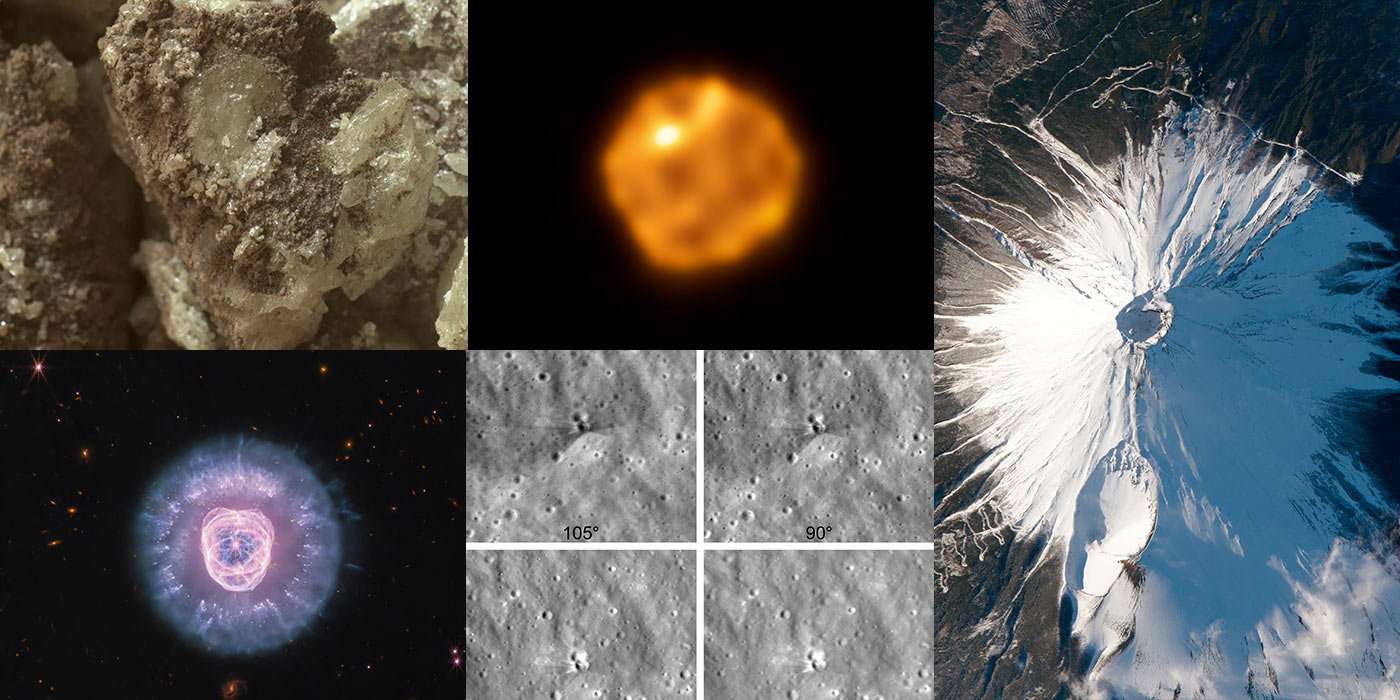
We journey from Mount Fuji as seen from orbit to the bubbling surface of Betelgeuse, exploring the forces that shape planets, moons, and stars across the cosmos. Along the way, JWST reveals the remains of a dying star, Curiosity uncovers clues to Mars’ volcanic past, and a fresh rocket impact on the Moon gives scientists a new opportunity to study how collisions reshape its surface. #PPOD

Featured Image
Aug 26, 2026
Planetary Picture of the Day - Week of August 17, 2026
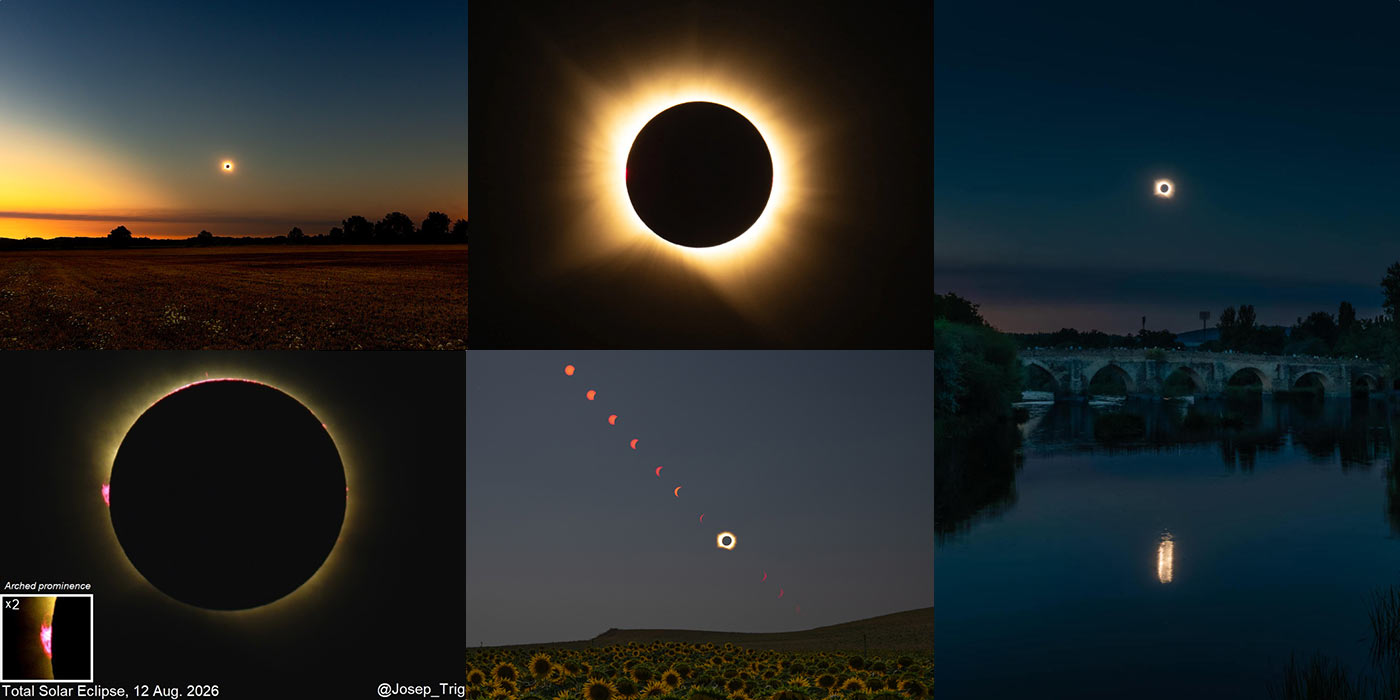
Let's celebrate the August 12 total solar eclipse through the eyes of photographers who experienced the Moon’s shadow sweeping across Spain. From Baily’s Beads and a glowing solar prominence to totality reflected in a river and framed by fields of sunflowers, these images capture both the science and extraordinary beauty of one of nature’s most spectacular celestial events. #PPOD #Eclipse
Featured Image
Aug 19, 2026
Planetary Picture of the Day - Week of August 10, 2026
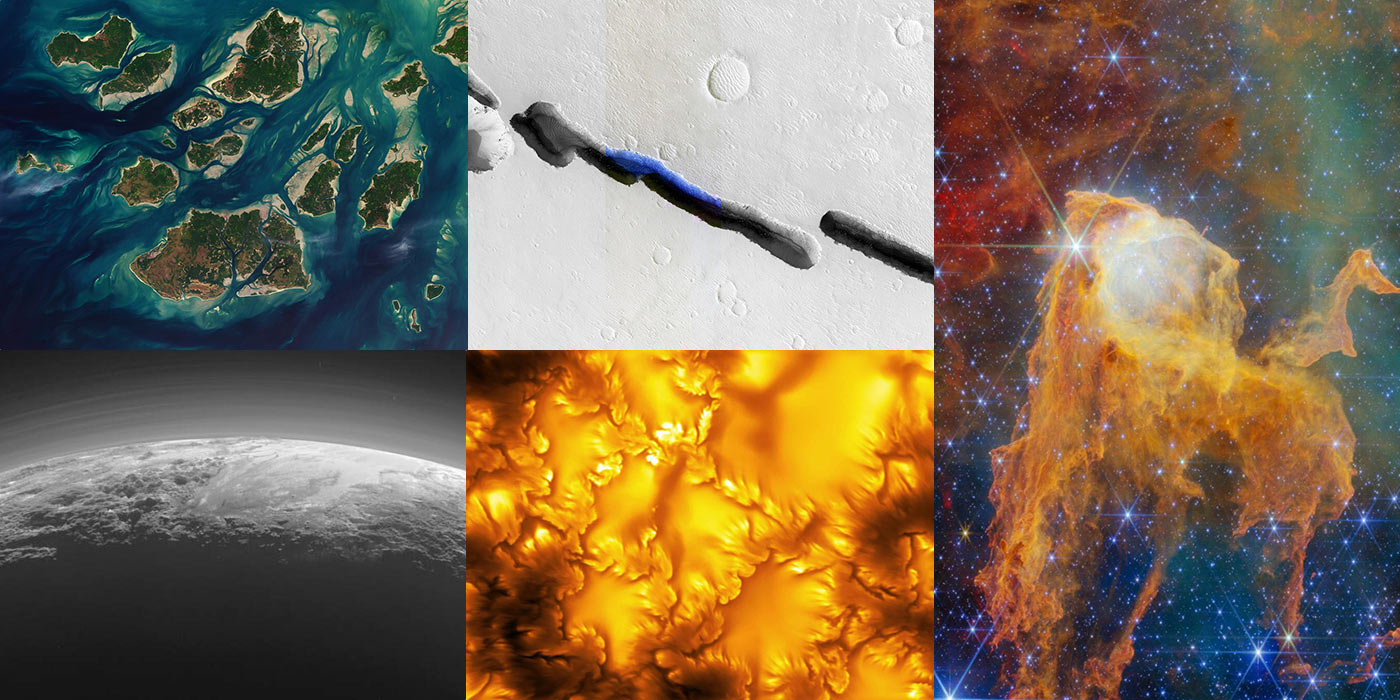
The universe is shaped by forces both immense and intricate, from fractured terrain on Mars and shifting tidal landscapes on Earth to tiny vortices dancing across the surface of the Sun. Farther afield, dramatic views of Pluto’s icy mountains and hazy atmosphere and a treasure chest of newborn stars in the Carina Nebula showcase the remarkable detail revealed by spacecraft and telescopes exploring the cosmos. #PPOD
Featured Image
Aug 12, 2026
Planetary Picture of the Day - August 3, 2026
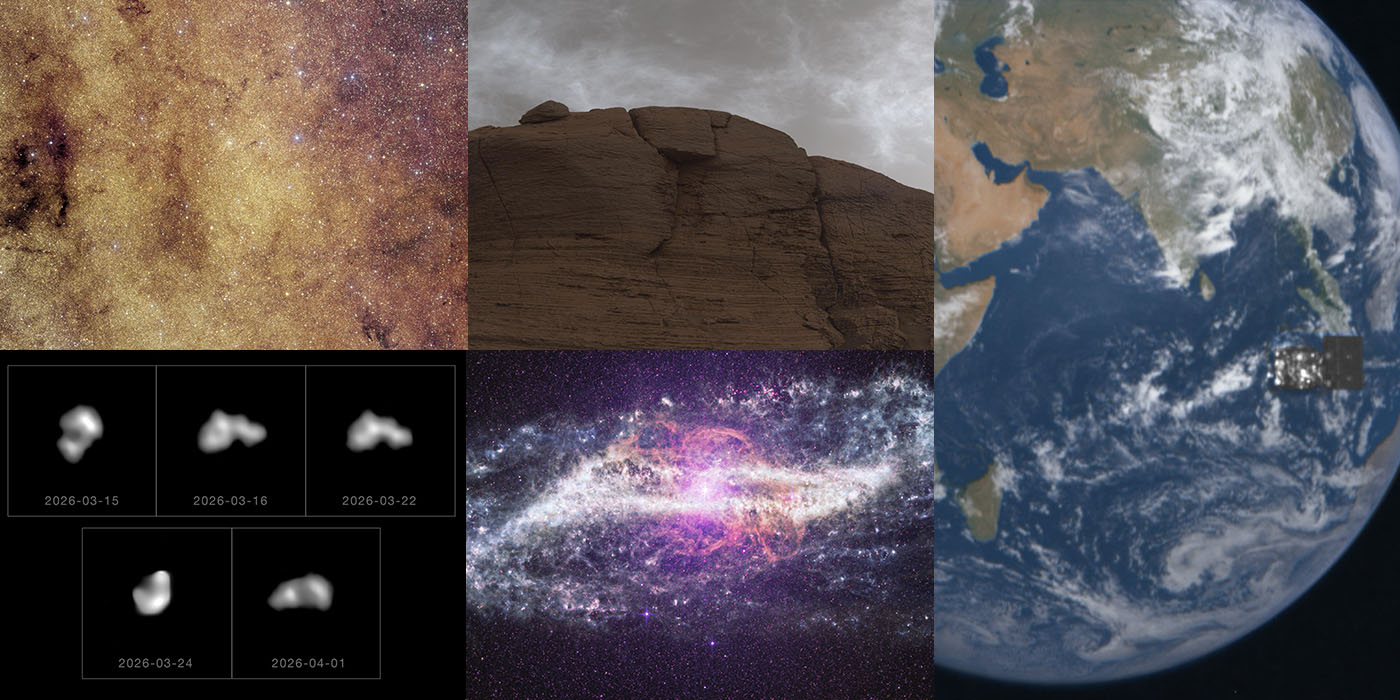
This week, we reveal hidden wonders across the cosmos, from delicate Martian clouds and a dust-shrouded galaxy to an asteroid with a never-before-seen shape and the crowded heart of the Milky Way. Together, these images showcase how new missions and advanced observatories continue to uncover surprising details about our solar system, our galaxy, and the universe beyond. #PPOD
Featured Image
Aug 5, 2026
Planetary Picture of the Day - Week of July 27, 2026
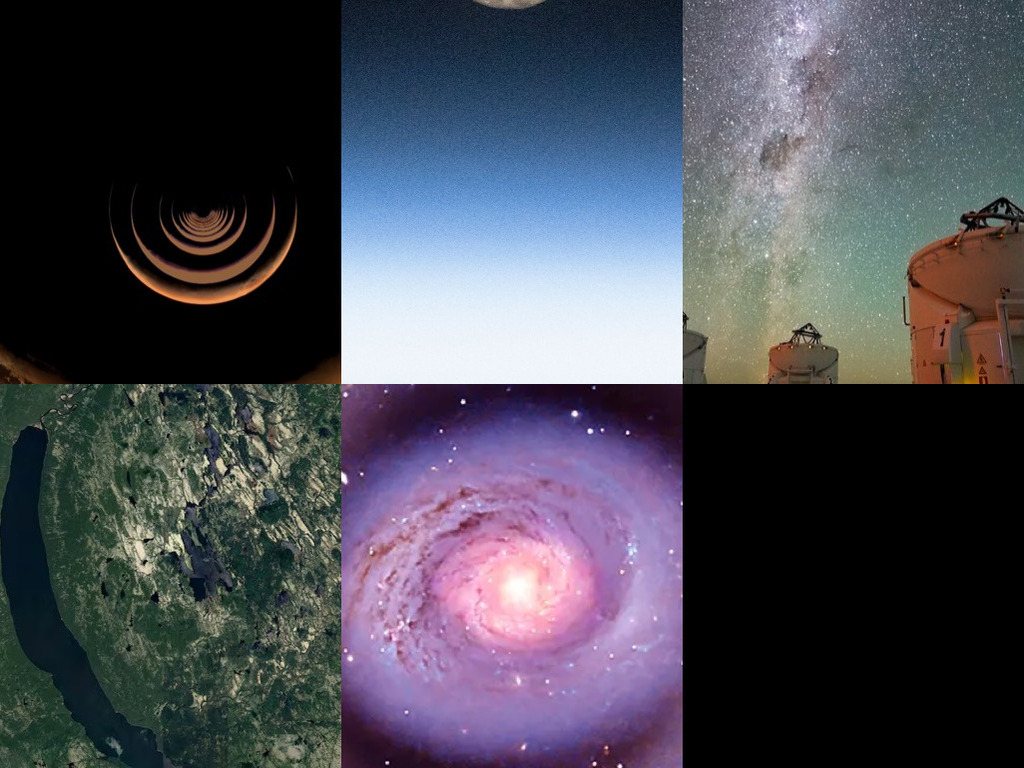
These images span the journey from our own backyard to distant galaxies, featuring Mars, the Moon, breathtaking night skies, and a fresh view of the star-forming galaxy Messier 94. Along the way, we celebrate exploration and discovery—from NASA’s Psyche mission preparing for its asteroid encounter to the revelation of a previously unknown impact crater on Earth —reminding us that there are still new wonders to uncover both on our own planet and across the cosmos. #PPOD
Featured Image
Jul 29, 2026
Planetary Picture of the Day - Week of July 20, 2026
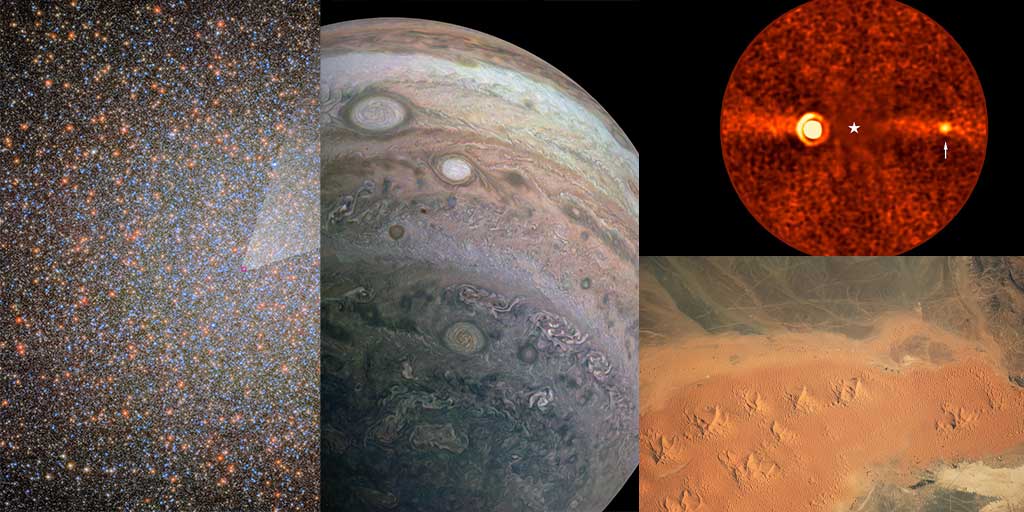
This week, we celebrate fifty years since Viking 1 became the first spacecraft to successfully land on and photograph the surface of Mars, alongside stunning new views of worlds, stars, and galaxies that continue to expand our understanding of the universe. From sculpted Sahara sand dunes and Jupiter’s colorful cloud bands to a newly discovered exoplanet and the first stellar-mass black hole identified in Omega Centauri, these images showcase the remarkable diversity of cosmic exploration. #PPOD
Research

Related Projects

Featured Image
SkyMapper • SETI • Citizen Science • Astronomy
SkyMapper: Expanding Access to Real-time Astronomy Through a Global Astronomical Network
SkyMapper and the SETI Institute are connecting educators, students and the public to live astronomical observations through a distributed astronomical network. #SkyMapper #SETI #Citizen Science #Astronomy
Featured Image
VPL
Virtual Planetary Laboratory
How can we best assess whether an exoplanet supports life? #VPL
Featured Image
Discovery and Futures Lab
What happens if life beyond Earth is discovered? The Discovery and Futures Lab at the SETI Institute fosters novel and anticipatory research at the intersection of science, society, our planet, and the search for life beyond Earth.  #Discovery and Futures Lab
Support Us

Support the
SETI Institute

Scientists are getting closer in their search for life beyond earth. But with limited federal funding for the search for extraterrestrial intelligence, supporters are the reason cutting-edge scientists can keep their eyes on the sky.