Welcome to our weekly recap of our Planetary Picture of the Day (PPOD)! That pesky groundhog predicts six more weeks for winter (at least for those of us in the northern hemisphere), but we can at least admire these sights from around the solar system!
Monday, January 31, 2022
Dave Johnson/Harvard University/Smithsonian
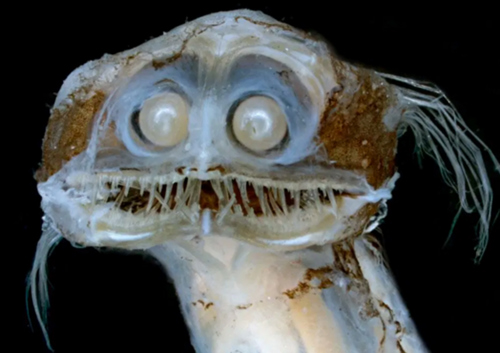
Earthling of the Deep A preserved specimen of a deep-sea telescopefish (Gigantura indica), from the Smithsonian Museum. These predators are about 20 centimeters long but have stretchy jaws and stomachs allowing them to gulp prey bigger than themselves. They live in tropical and subtropical waters, about 500-2000 meters deep.
Tuesday, February 1, 2022
Credit: A. James McCarthy, @cosmic_background
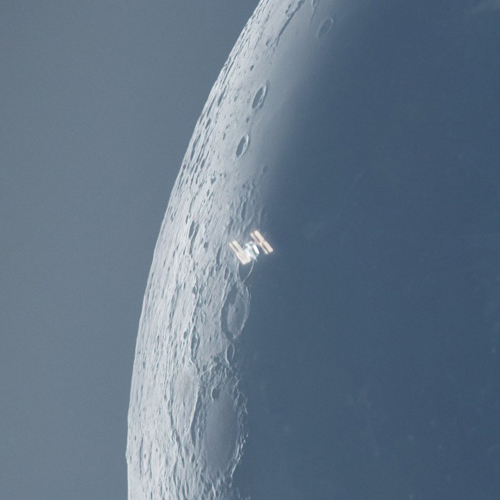
Space Station Transit The International Space Station captured while transiting the 4% illuminated Moon during the daytime.
Wednesday, February 2, 2022
Credit: R. Svoboda and K. Gordan (LSU)
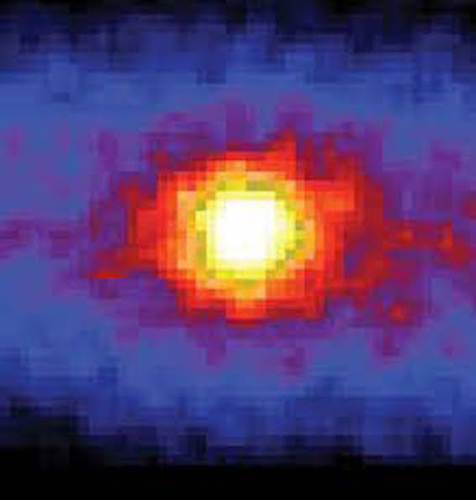
Solar Neutrinos This photo of the Sun might not look too impressive until you realize it was taken at night, not looking up but looking down, through the entire Earth, using neutrinos rather than light. Data collected by the Super-Kamiokande neutrino detector.
Thursday, February 3, 2022
Credit Image: NASA/JPL-Caltech/Voyager Imaging Team/Jason Major
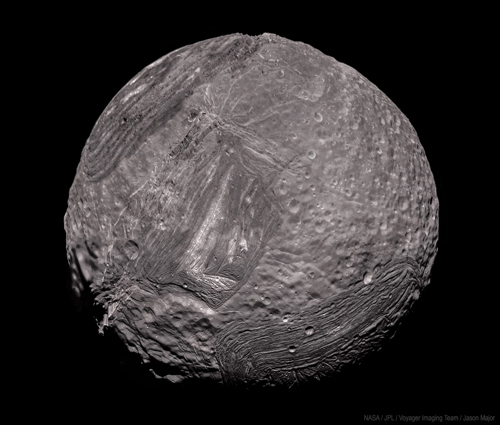
Miranda Miranda is one of Uranus' moons and probably the worst paint job in the entire solar system! About 470 km in diameter, it is made of rock and ice. It is probably the smallest object in the solar system in hydrostatic equilibrium (spherical under its own gravity), and it is likely differentiated. Its landscapes and geology are also extremely varied, including a 20-km high scarp, and chevron-like tectonic features. It almost looks like a patchwork of different terrains put together in haste.
That's actually one of the hypotheses to explain it: Miranda could have been destroyed by an large impact, and its debris reassembled randomly. The current (and favored) hypothesis is different, though, and involves extensional processes and/or upwelling of warm ice from the interior.
Global view made from 8 images captured by Voyager 2 on January 24, 1986, from a distance of about 32,000 km.
Friday, February 4, 2022
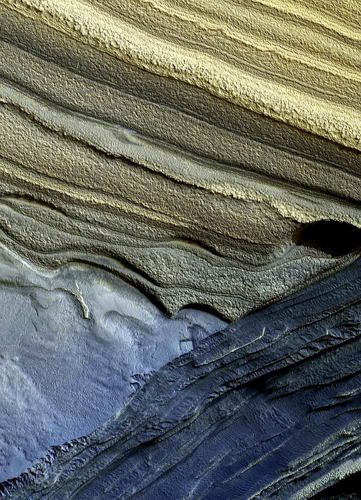
Source: https://buff.ly/3vlbYad Credit: NASA / JPL / University of Arizona / HiRISE Written by: Shane Byrne
Mars, Northern Polar Layers The layered deposits at the North Pole of Mars are a 3-kilometer-thick pile of powdery, water ice sheets that are about 1000 kilometers in diameter. The layers record information about the climate dating back a few million years in Martian history.
In many places, erosion has created scarps and channels that expose these layers. The tan colored layers are the dusty water ice of the layered polar deposits; however, a section of bluish layers is visible below them. These bluish layers contain fragments of rock the size of sand that probably formed a large field of polar dunes before the dusty ice that covered it was deposited.
The lack of a polar ice cap in this bygone era attests to the variability of the Martian climate, which undergoes greater changes over time than Earth's.
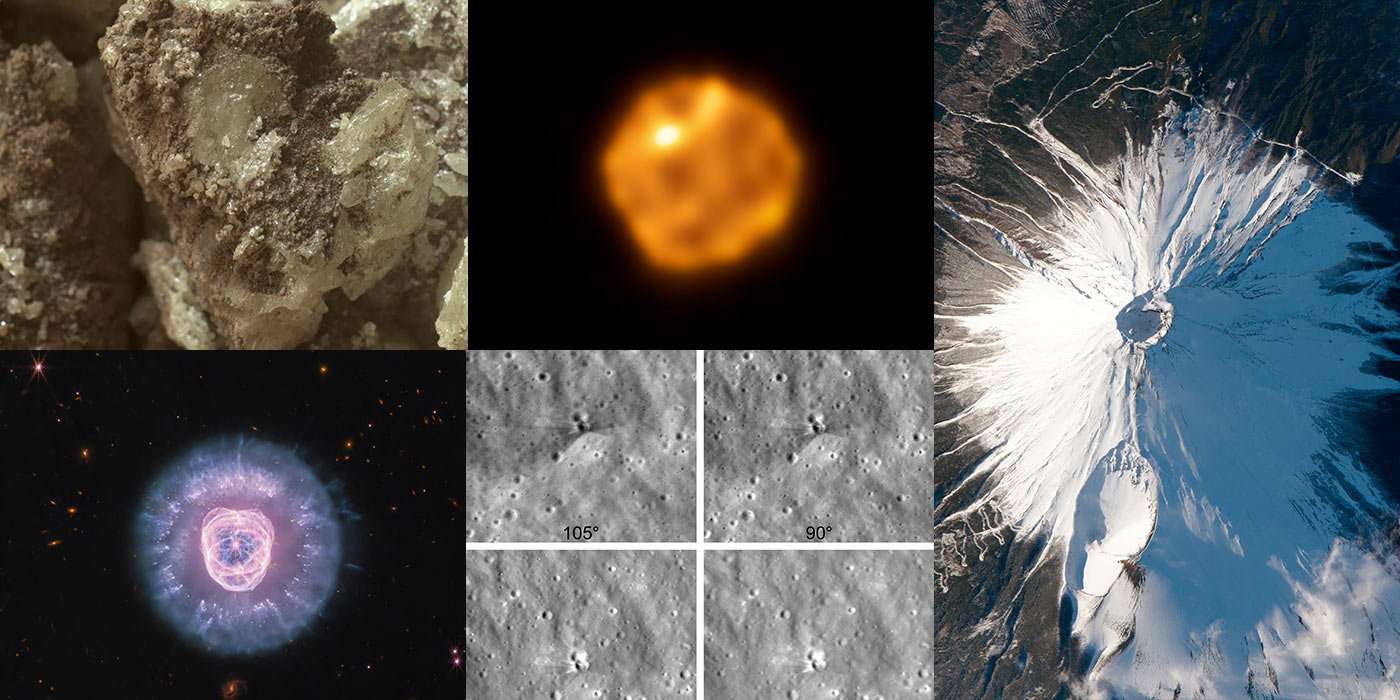
We journey from Mount Fuji as seen from orbit to the bubbling surface of Betelgeuse, exploring the forces that shape planets, moons, and stars across the cosmos. Along the way, JWST reveals the remains of a dying star, Curiosity uncovers clues to Mars’ volcanic past, and a fresh rocket impact on the Moon gives scientists a new opportunity to study how collisions reshape its surface.
#PPOD
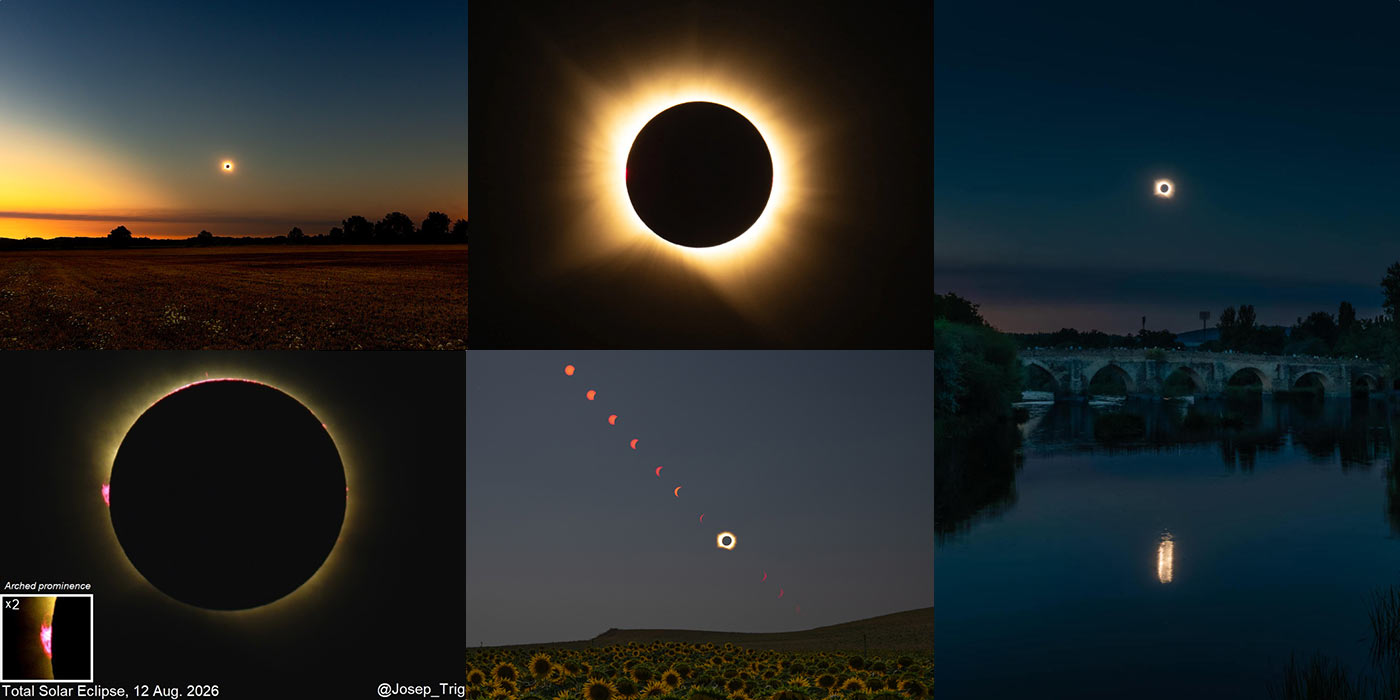
Let's celebrate the August 12 total solar eclipse through the eyes of photographers who experienced the Moon’s shadow sweeping across Spain. From Baily’s Beads and a glowing solar prominence to totality reflected in a river and framed by fields of sunflowers, these images capture both the science and extraordinary beauty of one of nature’s most spectacular celestial events.
#PPOD
#Eclipse
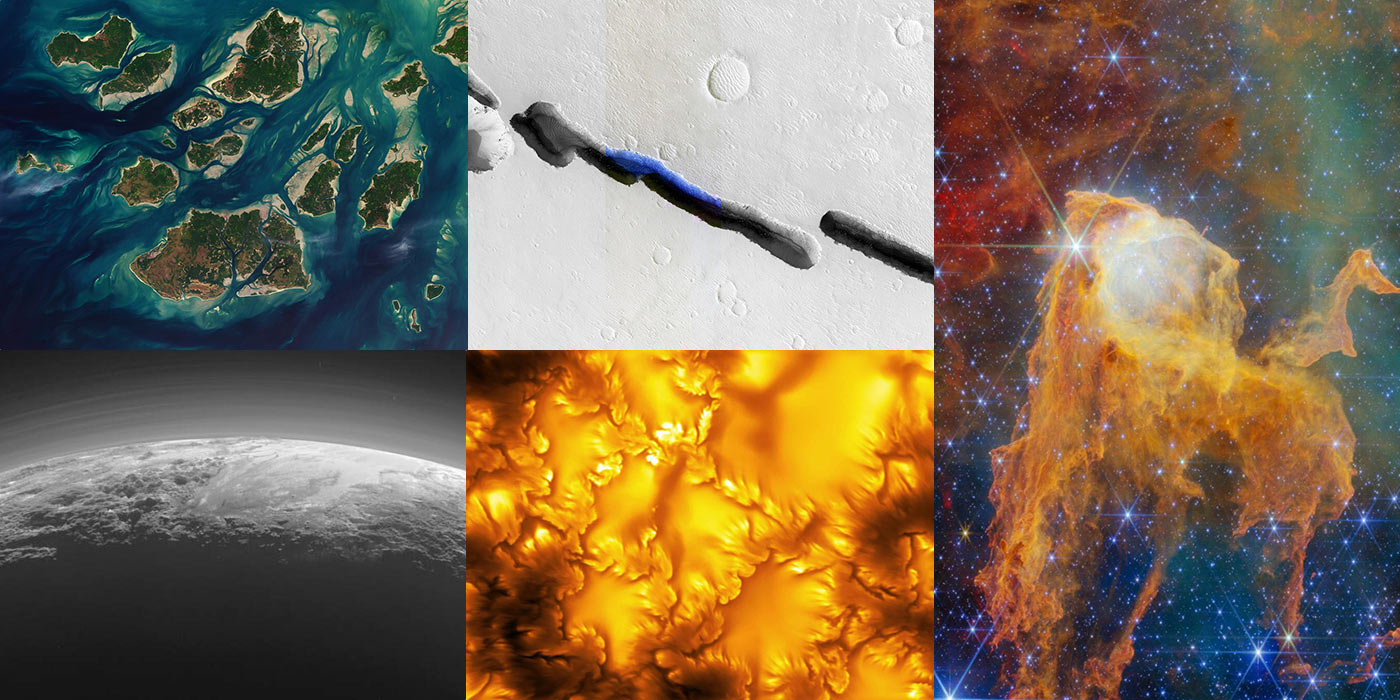
The universe is shaped by forces both immense and intricate, from fractured terrain on Mars and shifting tidal landscapes on Earth to tiny vortices dancing across the surface of the Sun. Farther afield, dramatic views of Pluto’s icy mountains and hazy atmosphere and a treasure chest of newborn stars in the Carina Nebula showcase the remarkable detail revealed by spacecraft and telescopes exploring the cosmos.
#PPOD
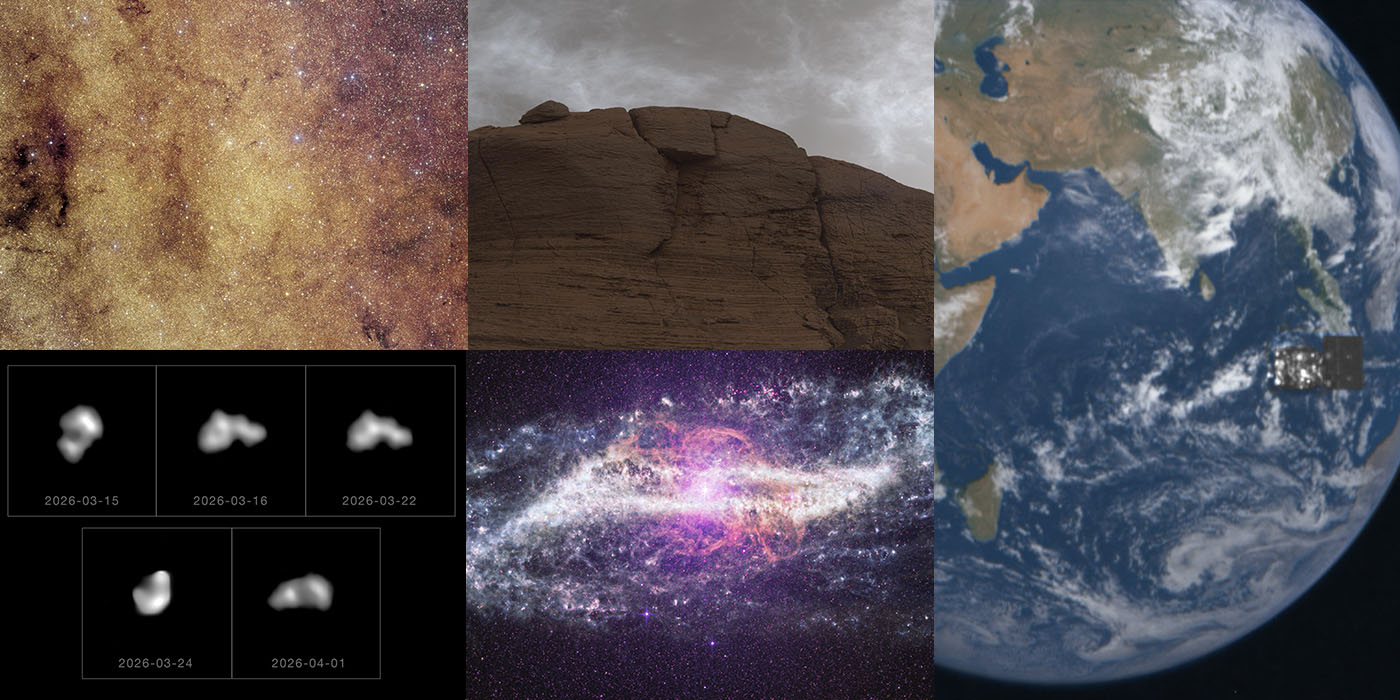
This week, we reveal hidden wonders across the cosmos, from delicate Martian clouds and a dust-shrouded galaxy to an asteroid with a never-before-seen shape and the crowded heart of the Milky Way. Together, these images showcase how new missions and advanced observatories continue to uncover surprising details about our solar system, our galaxy, and the universe beyond.
#PPOD
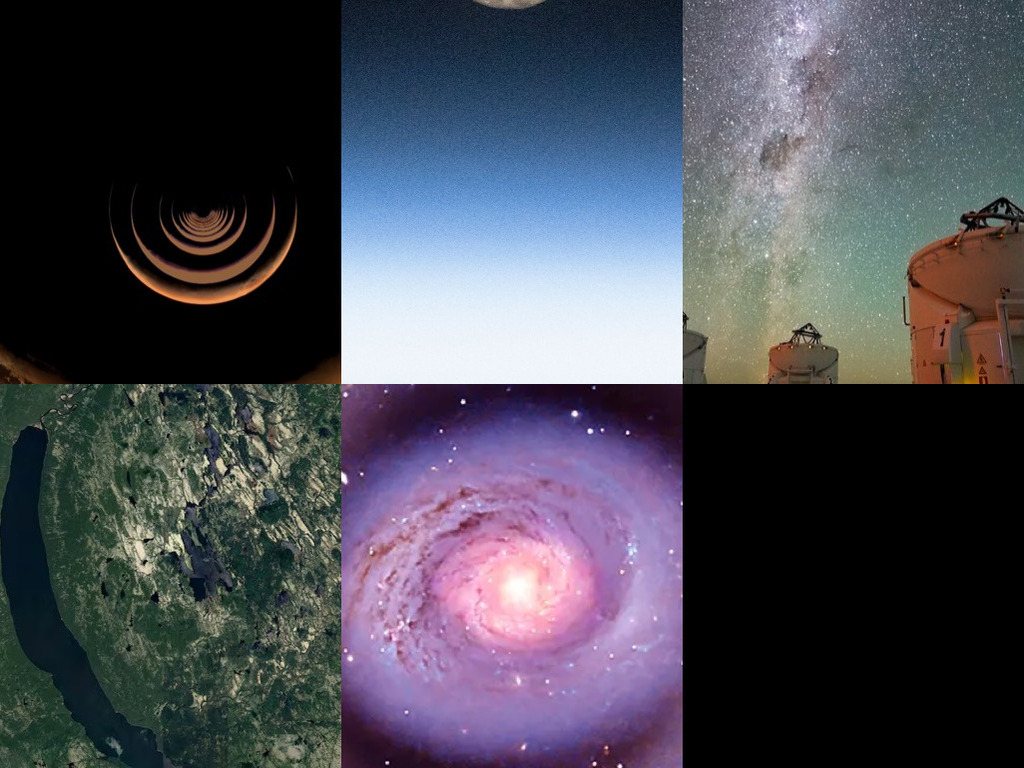
These images span the journey from our own backyard to distant galaxies, featuring Mars, the Moon, breathtaking night skies, and a fresh view of the star-forming galaxy Messier 94. Along the way, we celebrate exploration and discovery—from NASA’s Psyche mission preparing for its asteroid encounter to the revelation of a previously unknown impact crater on Earth —reminding us that there are still new wonders to uncover both on our own planet and across the cosmos.
#PPOD
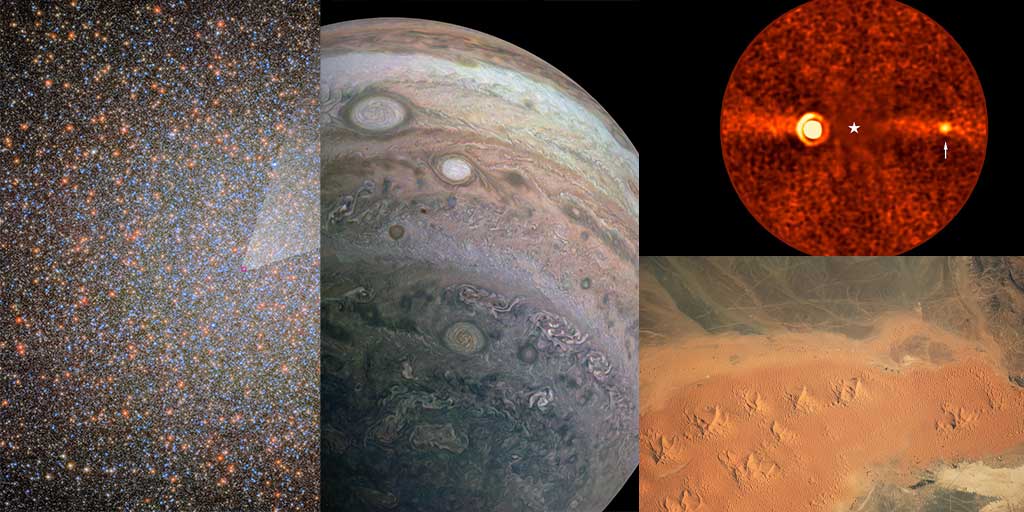
This week, we celebrate fifty years since Viking 1 became the first spacecraft to successfully land on and photograph the surface of Mars, alongside stunning new views of worlds, stars, and galaxies that continue to expand our understanding of the universe. From sculpted Sahara sand dunes and Jupiter’s colorful cloud bands to a newly discovered exoplanet and the first stellar-mass black hole identified in Omega Centauri, these images showcase the remarkable diversity of cosmic exploration.
#PPOD
We journey from Mount Fuji as seen from orbit to the bubbling surface of Betelgeuse, exploring the forces that shape planets, moons, and stars across the cosmos. Along the way, JWST reveals the remains of a dying star, Curiosity uncovers clues to Mars’ volcanic past, and a fresh rocket impact on the Moon gives scientists a new opportunity to study how collisions reshape its surface.
Let's celebrate the August 12 total solar eclipse through the eyes of photographers who experienced the Moon’s shadow sweeping across Spain. From Baily’s Beads and a glowing solar prominence to totality reflected in a river and framed by fields of sunflowers, these images capture both the science and extraordinary beauty of one of nature’s most spectacular celestial events.
The universe is shaped by forces both immense and intricate, from fractured terrain on Mars and shifting tidal landscapes on Earth to tiny vortices dancing across the surface of the Sun. Farther afield, dramatic views of Pluto’s icy mountains and hazy atmosphere and a treasure chest of newborn stars in the Carina Nebula showcase the remarkable detail revealed by spacecraft and telescopes exploring the cosmos.
This week, we reveal hidden wonders across the cosmos, from delicate Martian clouds and a dust-shrouded galaxy to an asteroid with a never-before-seen shape and the crowded heart of the Milky Way. Together, these images showcase how new missions and advanced observatories continue to uncover surprising details about our solar system, our galaxy, and the universe beyond.
These images span the journey from our own backyard to distant galaxies, featuring Mars, the Moon, breathtaking night skies, and a fresh view of the star-forming galaxy Messier 94. Along the way, we celebrate exploration and discovery—from NASA’s Psyche mission preparing for its asteroid encounter to the revelation of a previously unknown impact crater on Earth —reminding us that there are still new wonders to uncover both on our own planet and across the cosmos.
This week, we celebrate fifty years since Viking 1 became the first spacecraft to successfully land on and photograph the surface of Mars, alongside stunning new views of worlds, stars, and galaxies that continue to expand our understanding of the universe. From sculpted Sahara sand dunes and Jupiter’s colorful cloud bands to a newly discovered exoplanet and the first stellar-mass black hole identified in Omega Centauri, these images showcase the remarkable diversity of cosmic exploration.
SkyMapper and the SETI Institute are connecting educators, students and the public to live astronomical observations through a distributed astronomical network.
#SkyMapper
#SETI
#Citizen Science
#Astronomy
What happens if life beyond Earth is discovered? The Discovery and Futures Lab at the SETI Institute fosters novel and anticipatory research at the intersection of science, society, our planet, and the search for life beyond Earth.
#Discovery and Futures Lab
SkyMapper and the SETI Institute are connecting educators, students and the public to live astronomical observations through a distributed astronomical network.
What happens if life beyond Earth is discovered? The Discovery and Futures Lab at the SETI Institute fosters novel and anticipatory research at the intersection of science, society, our planet, and the search for life beyond Earth.
Scientists are getting closer in their search for life beyond earth. But with limited federal funding for the search for extraterrestrial intelligence, supporters are the reason cutting-edge scientists can keep their eyes on the sky.
)