Monday, 26 January 2026
Jovian Aurorae
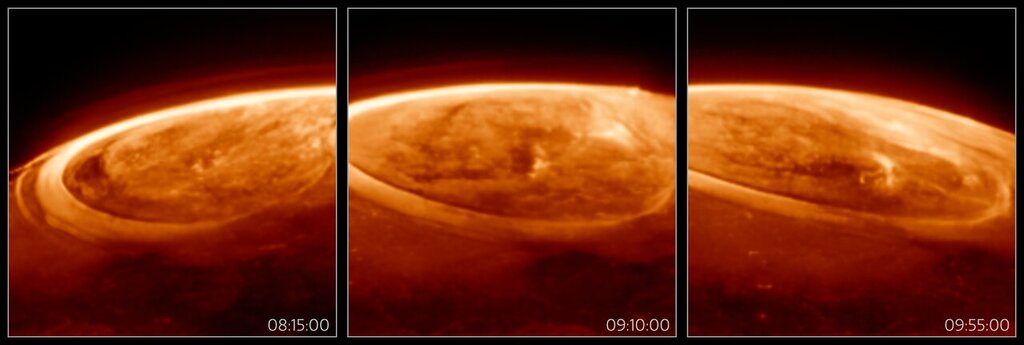
JWST captured new details of the auroras on our Solar System’s largest planet. The dancing lights observed on Jupiter are hundreds of times brighter than those seen on Earth.
These observations of Jupiter’s auroras were captured with JWST's Near-InfraRed Camera (NIRCam) on 25 December 2023 (F335M filter). Scientists found that the emission from the trihydrogen cation, H3+, is far more variable than previously believed. H3+ is created by the impact of high-energy electrons on molecular hydrogen. Because this emission shines brightly in the infrared, JWST's instruments are well equipped to observe it.
The timestamps indicated in the lower right corner of each image indicate the time (UTC) when these observations were taken on 25 December 2023.
Tuesday, 27 January 2026
Helix Nebula in Detail
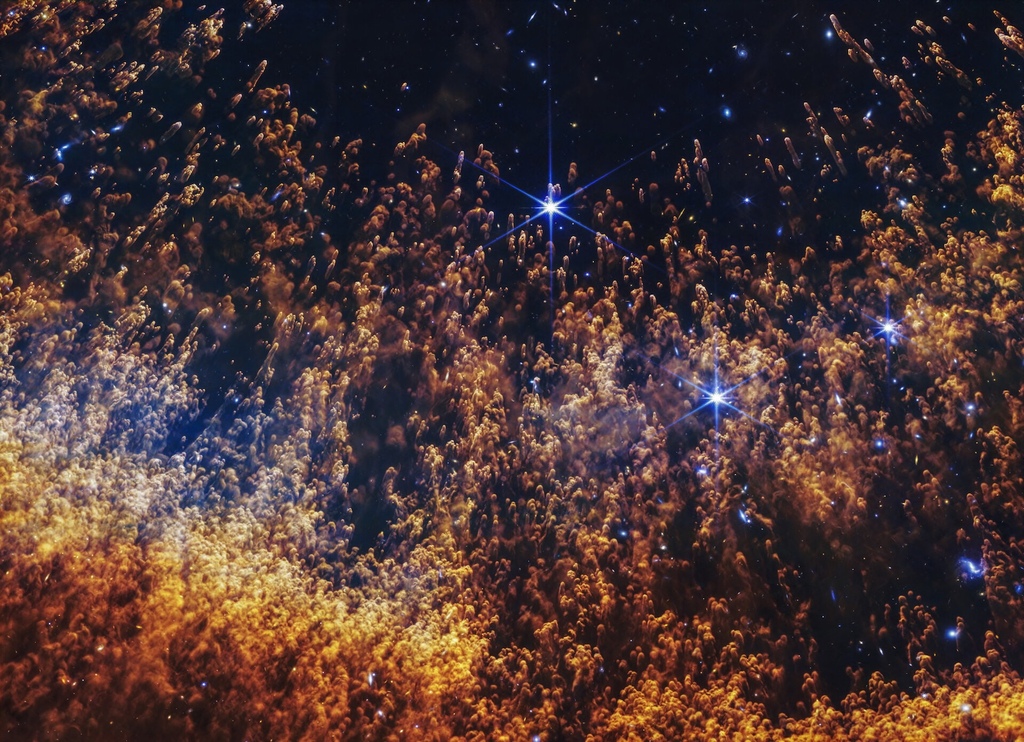
One of the closest planetary nebulae to Earth, the Helix Nebula has become a favorite among astronomers using ground- and space-based telescopes to study the final moments of a dying star in detail. JWST has now zoomed in on this familiar object, offering the clearest infrared look yet.
This gives us an up-close view of the possible eventual fate of our own Sun and planetary system. In JWST's high-resolution look, the structure of the gas being shed off by a dying star comes into full focus. The image is more than just striking; it reveals how stars recycle their material back into the cosmos, seeding future generations of stars and planets.
The Helix Nebula is located 650 light-years away from Earth in the constellation Aquarius. It remains a favorite among stargazers and professional astronomers alike due to its relative proximity to Earth and striking appearance.
Wednesday, 28 January 2026
Red, Green Light Show
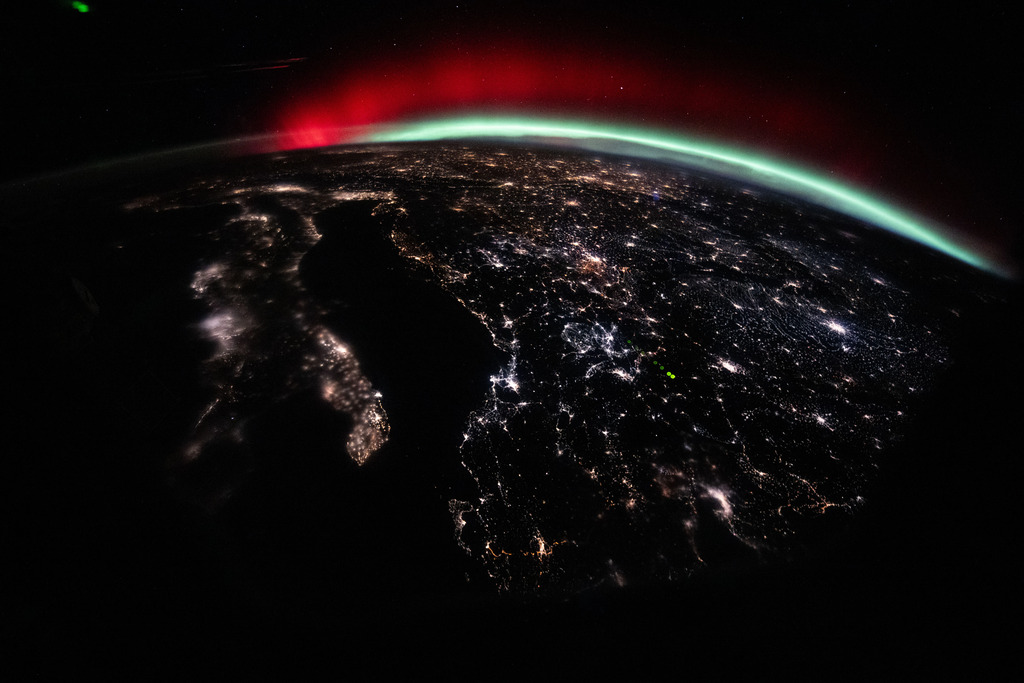
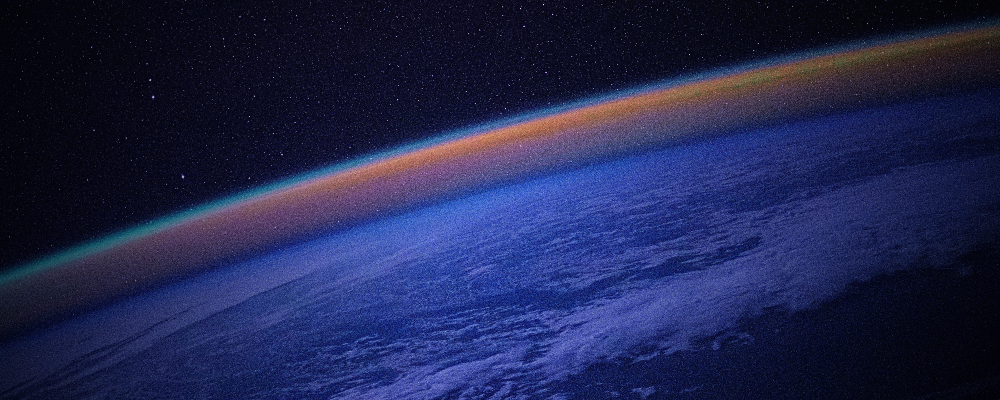
A green and red aurora streams across Earth’s horizon above the city lights of Europe in this Jan. 19, 2026, photograph, which looks north across Italy toward Germany. The International Space Station was orbiting 262 miles above the Mediterranean Sea at approximately 10:02 p.m. local time when the image was captured.
Also known as the northern lights (aurora borealis) or southern lights (aurora australis), auroras are colorful, dynamic, and often visually delicate displays of an intricate dance of particles and magnetic fields between the Sun and Earth, called space weather. When energetic particles from space collide with atoms and molecules in the atmosphere, they can cause the colorful glow that we call auroras.
Thursday, 29 January 2026
Unleashing a Solar Flare
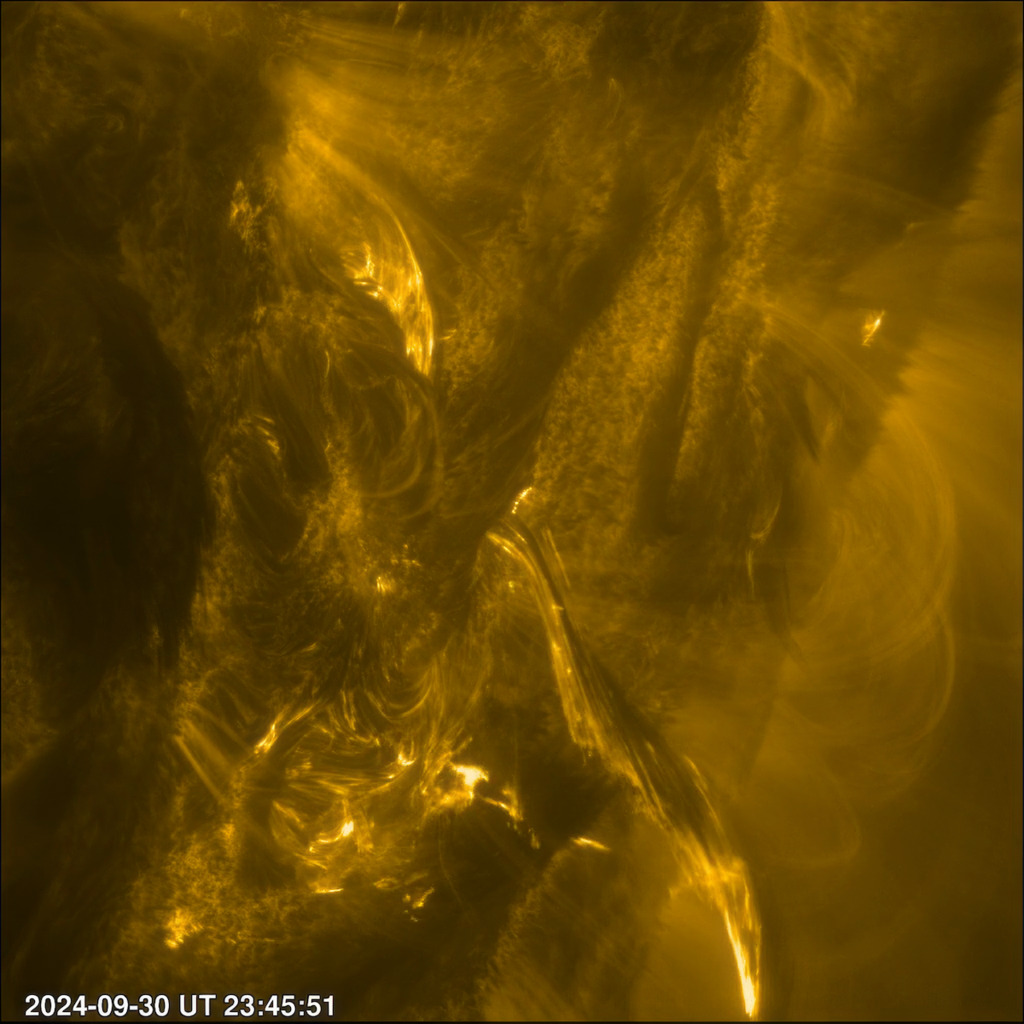
A snapshot taken a second before a powerful M-class solar flare was unleashed from the Sun on 30 September 2024 – as seen in unprecedented detail by the ESA-led Solar Orbiter mission.
The image is an excerpt from a video created from Extreme Ultraviolet Imager (EUI) images taken every two seconds, leading up to the solar flare.
This frame captures the moment a dark filament of twisted magnetic field lines dripping with plasma rises from the surface. It captures the unravelling of the rope-like filament as one end (toward the bottom of the frame) detaches and launches into space. The unwinding closest to the connected end is recorded at 250 km/s, increasing to 400 km/s at the site of disconnection.
Bright sparks are seen all along the filament in stunning high resolution, representing sites of reconnection – where twisted magnetic field lines break apart and reconnect, creating a surge of energy.
The complete sequence of high-resolution imagery revealed that just as avalanches on snowy mountains start with the movement of a small quantity of snow, a solar flare is triggered by initially weak disturbances that quickly become more violent. This rapidly evolving process creates a ‘sky’ of raining plasma blobs that continue to fall even after the flare subsides.
Friday, 30 January 2026
Young or Old? There's Both!
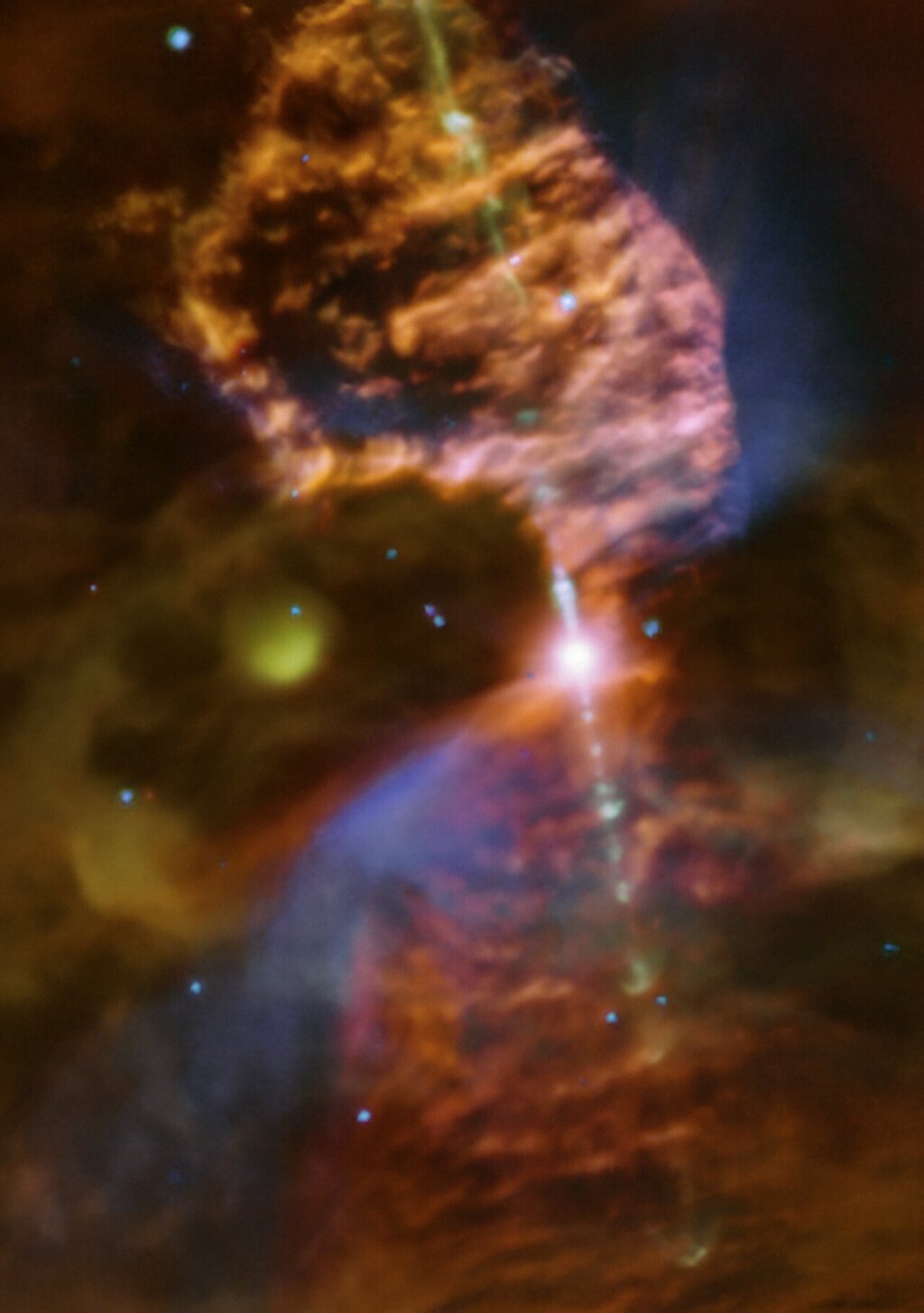
This ESO image represents an unexpected full-circle moment. The depicted object, known as Ve 7–27, was long believed to be a planetary nebula — the end phase of a sun-like star’s life. But ESO’s Very Large Telescope (VLT) has shown that it’s actually a still-forming baby star.
For years, the true nature of this nebula had been debated, but the VLT’s MUSE instrument has now captured the first detailed image of this object. It shows that Ve 7-27 is shooting energetic jets with knots, or ‘bullets’, along them, a typical feature of newborn stars.
But there’s an actual dead star lurking just nearby. The compact yellowish-green smudge to the centre-left of this image hosts a neutron star produced when a massive star exploded as a supernova. This nebula is part of a larger cloud ejected by the explosion, the Vela Junior supernova remnant. The MUSE observations revealed that the baby star Ve 7-27 is embedded in the material expelled by this supernova. The distance to Vela Junior had never been precisely constrained before, but now we know this object is close to Ve 7-27. Since Ve 7-27 is known to be about 4500 light-years away, so is Vela Junior. Pinpointing the distance to Vela Junior finally means we now know its size, how fast it is expanding, how energetic it is, and how long ago the supernova exploded, resolving decades of inconsistencies.
News
Related News
Planetary Picture of the Day - Week of August 24, 2026
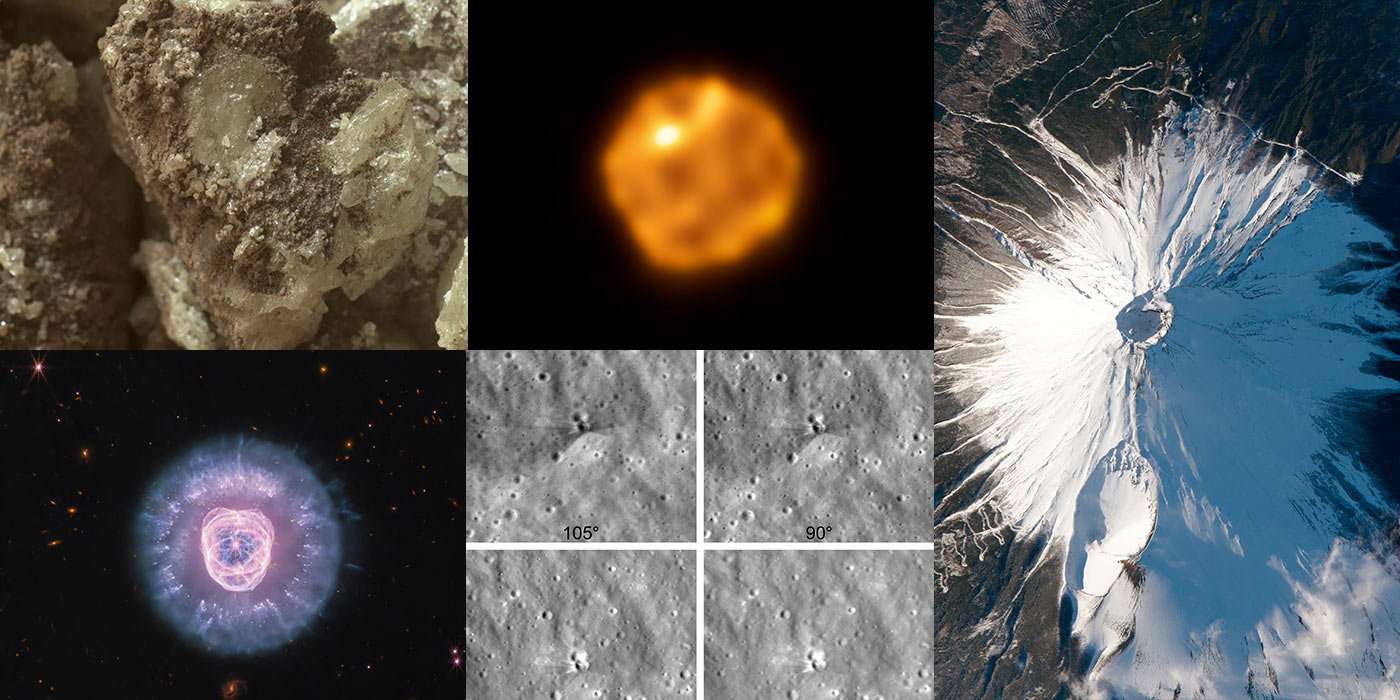
We journey from Mount Fuji as seen from orbit to the bubbling surface of Betelgeuse, exploring the forces that shape planets, moons, and stars across the cosmos. Along the way, JWST reveals the remains of a dying star, Curiosity uncovers clues to Mars’ volcanic past, and a fresh rocket impact on the Moon gives scientists a new opportunity to study how collisions reshape its surface. #PPOD
Planetary Picture of the Day - Week of August 17, 2026
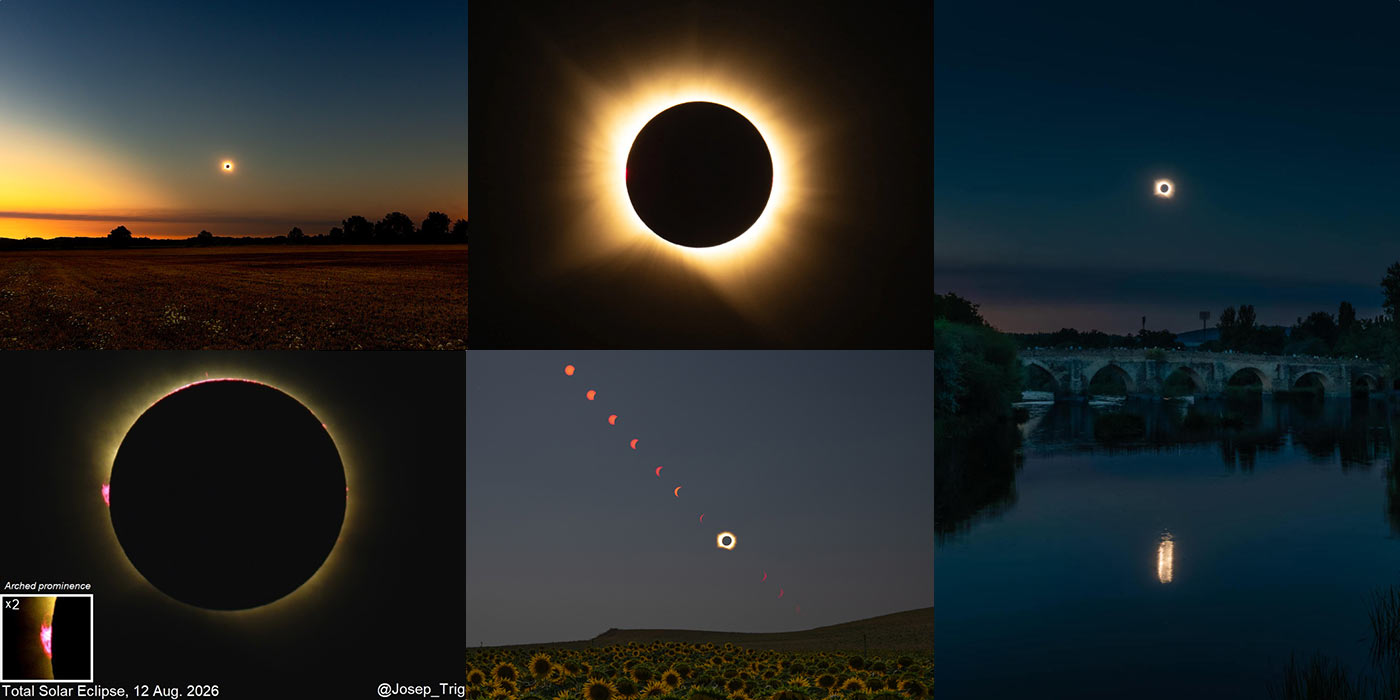
Let's celebrate the August 12 total solar eclipse through the eyes of photographers who experienced the Moon’s shadow sweeping across Spain. From Baily’s Beads and a glowing solar prominence to totality reflected in a river and framed by fields of sunflowers, these images capture both the science and extraordinary beauty of one of nature’s most spectacular celestial events. #PPOD #Eclipse
Planetary Picture of the Day - Week of August 10, 2026
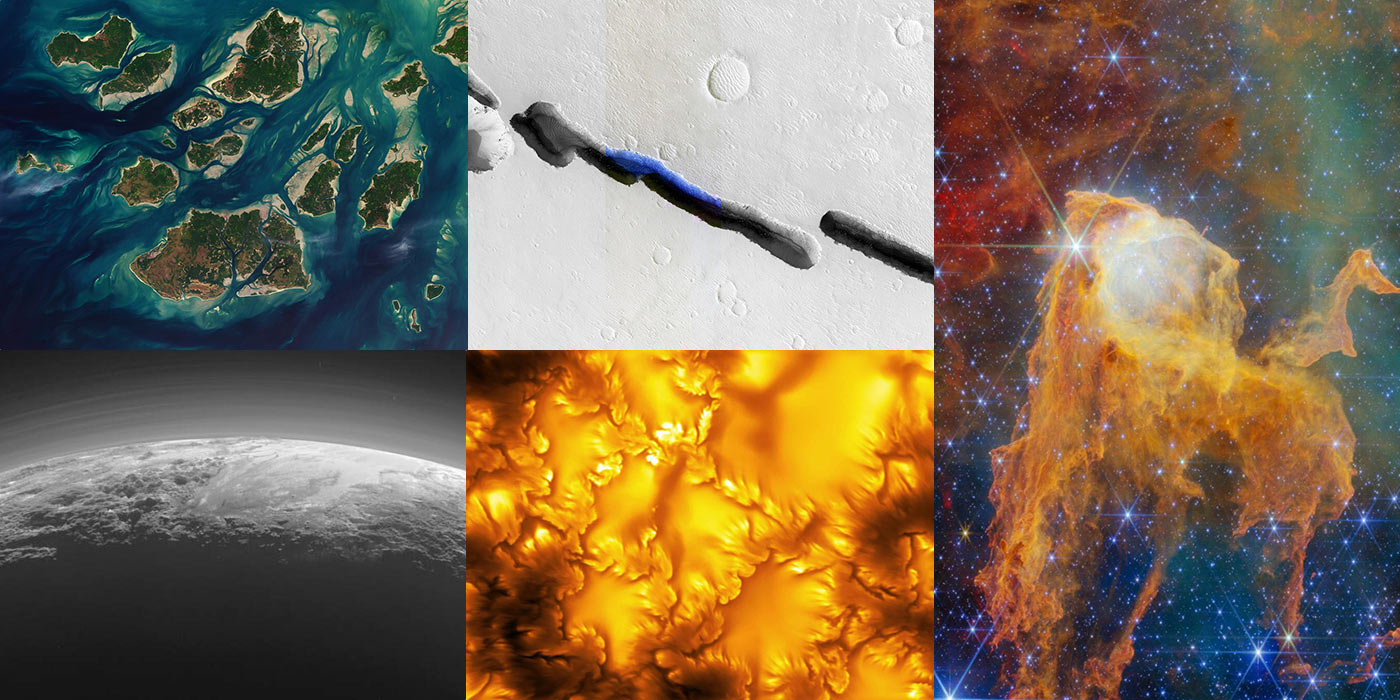
The universe is shaped by forces both immense and intricate, from fractured terrain on Mars and shifting tidal landscapes on Earth to tiny vortices dancing across the surface of the Sun. Farther afield, dramatic views of Pluto’s icy mountains and hazy atmosphere and a treasure chest of newborn stars in the Carina Nebula showcase the remarkable detail revealed by spacecraft and telescopes exploring the cosmos. #PPOD
Planetary Picture of the Day - August 3, 2026
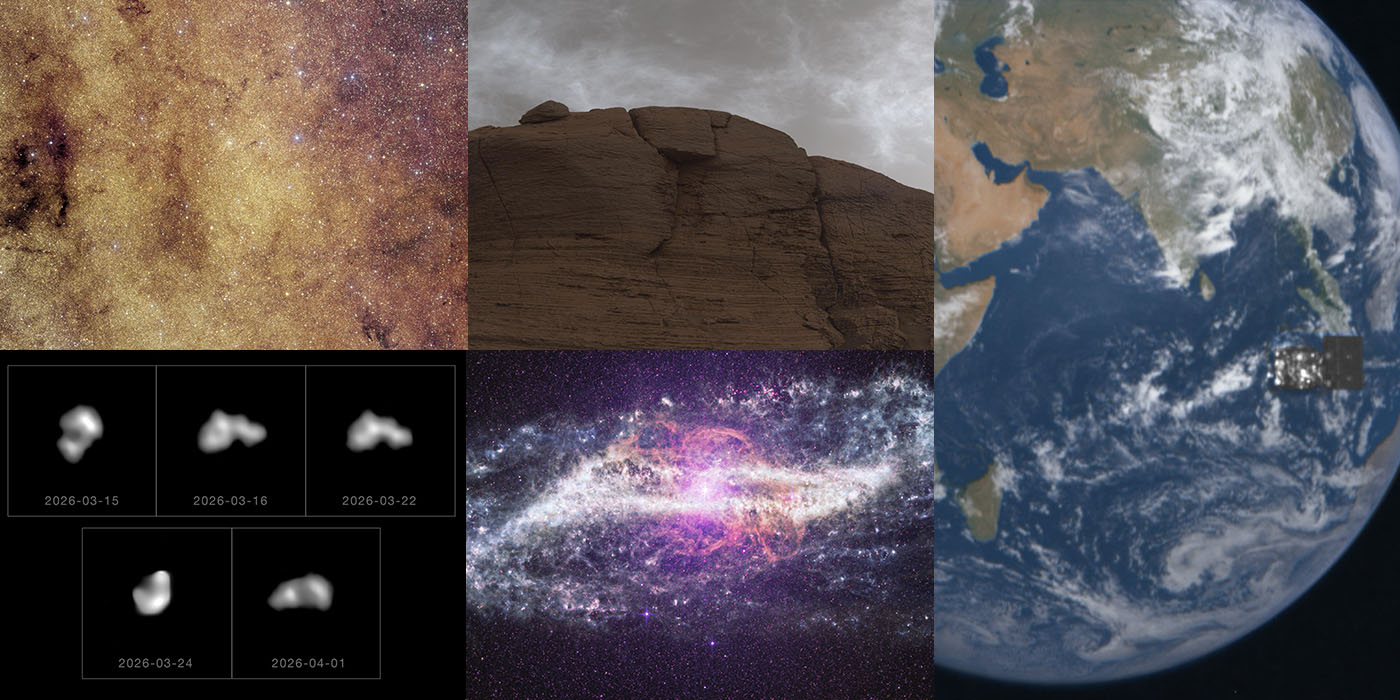
This week, we reveal hidden wonders across the cosmos, from delicate Martian clouds and a dust-shrouded galaxy to an asteroid with a never-before-seen shape and the crowded heart of the Milky Way. Together, these images showcase how new missions and advanced observatories continue to uncover surprising details about our solar system, our galaxy, and the universe beyond. #PPOD
Planetary Picture of the Day - Week of July 27, 2026
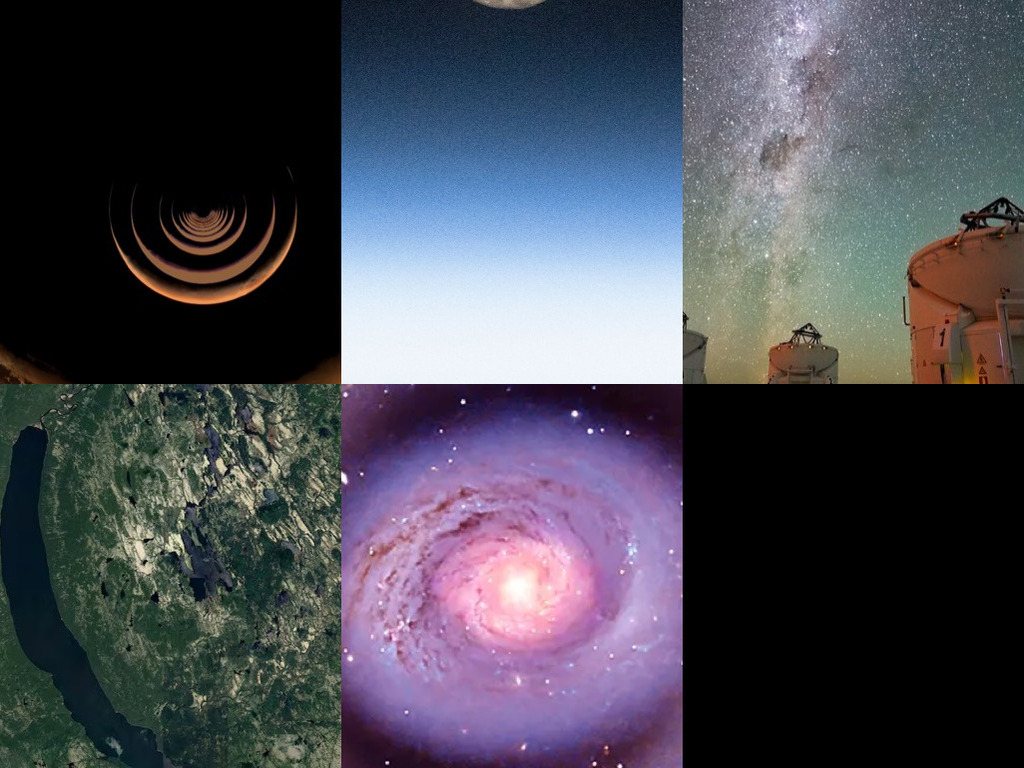
These images span the journey from our own backyard to distant galaxies, featuring Mars, the Moon, breathtaking night skies, and a fresh view of the star-forming galaxy Messier 94. Along the way, we celebrate exploration and discovery—from NASA’s Psyche mission preparing for its asteroid encounter to the revelation of a previously unknown impact crater on Earth —reminding us that there are still new wonders to uncover both on our own planet and across the cosmos. #PPOD
Planetary Picture of the Day - Week of July 20, 2026
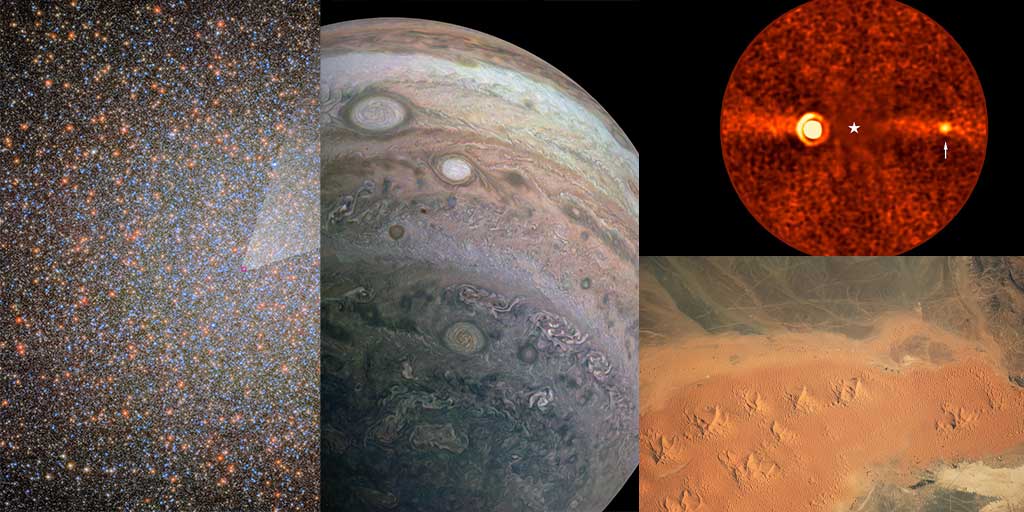
This week, we celebrate fifty years since Viking 1 became the first spacecraft to successfully land on and photograph the surface of Mars, alongside stunning new views of worlds, stars, and galaxies that continue to expand our understanding of the universe. From sculpted Sahara sand dunes and Jupiter’s colorful cloud bands to a newly discovered exoplanet and the first stellar-mass black hole identified in Omega Centauri, these images showcase the remarkable diversity of cosmic exploration. #PPODResearch
Related Projects
SkyMapper: Expanding Access to Real-time Astronomy Through a Global Astronomical Network
SkyMapper and the SETI Institute are connecting educators, students and the public to live astronomical observations through a distributed astronomical network. #SkyMapper #SETI #Citizen Science #Astronomy
Virtual Planetary Laboratory
How can we best assess whether an exoplanet supports life? #VPL
Discovery and Futures Lab
What happens if life beyond Earth is discovered? The Discovery and Futures Lab at the SETI Institute fosters novel and anticipatory research at the intersection of science, society, our planet, and the search for life beyond Earth. #Discovery and Futures LabSupport the
SETI Institute
Scientists are getting closer in their search for life beyond earth. But with limited federal funding for the search for extraterrestrial intelligence, supporters are the reason cutting-edge scientists can keep their eyes on the sky.