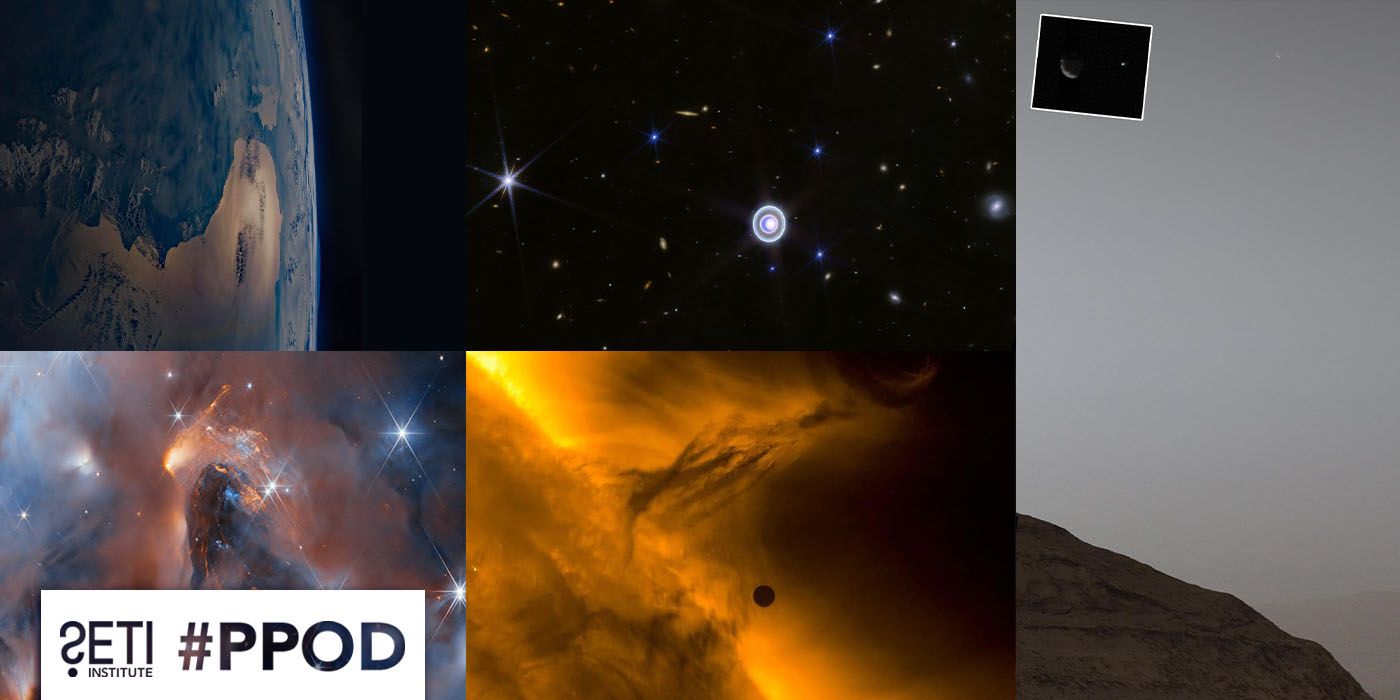
The wonders of the universe always inspire. This week, we have young stars, Earth and Phobos in the sky above Mars, a wide-field view of Uranus, Mercury transiting the active solar surface, and Earth from space.
Monday, 24 February 2025
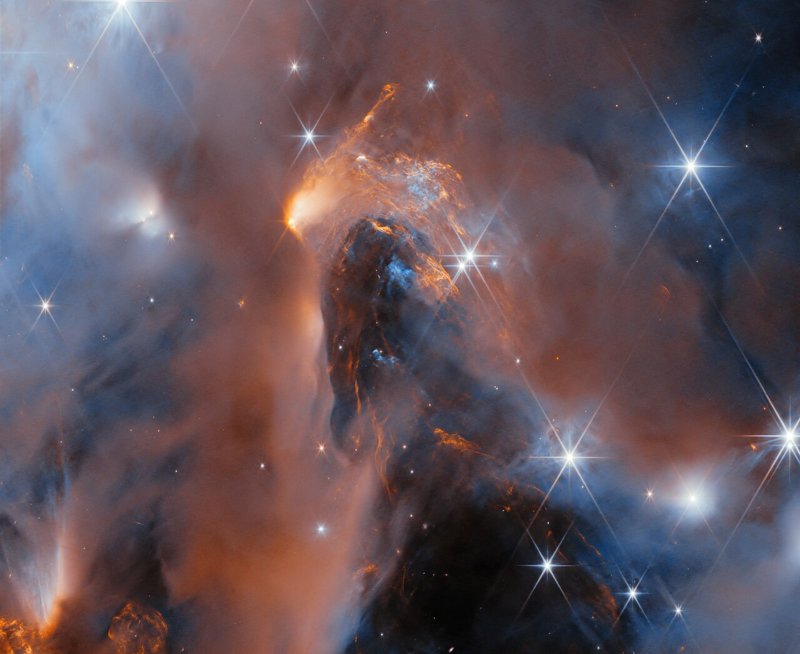
Credit: ESA/Webb, NASA & CSA, A. Scholz, K. Muzic, A. Langeveld, R. Jayawardhana
Peeking into Perseus
This stunning new mosaic of images from the NASA/ESA/CSA James Webb Space Telescope showcases the nearby star-forming cluster, NGC 1333. The nebula is in the Perseus molecular cloud and located approximately 960 light-years away.
The center of the image presents a deep peek into the heart of the NGC 1333 cloud. Across the image, we see large patches of orange, which represent gas glowing in the infrared. These so-called Herbig-Haro objects form when ionized material ejected from young stars collides with the surrounding cloud. They are hallmarks of a very active site of star formation.
Many of the young stars in this image are surrounded by discs of gas and dust, which may eventually produce planetary systems. On the right-hand side of the image, we can glimpse the shadow of one of these discs oriented edge-on — two dark cones emanating from opposite sides, seen against a bright background.
Similarly to the young stars in this mosaic, our Sun and planets formed inside a dusty molecular cloud 4.6 billion years ago. Our Sun didn’t form in isolation but as part of a cluster, which was perhaps even more massive than NGC 1333. The cluster in the mosaic, only 1–3 million years old, presents us with an opportunity to study stars like our Sun, brown dwarfs, and free-floating planets in their nascent stages.
Tuesday, 25 February 2025
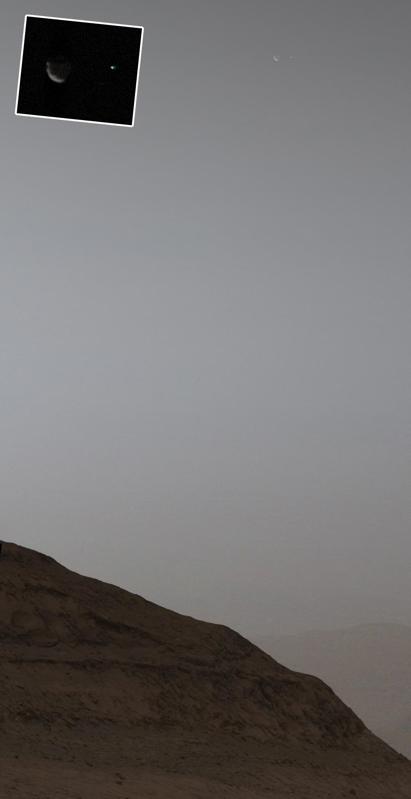
Credit: NASA/JPL-Caltech/MSSS
Curiosity Views Earth Setting, Phobos Rising
NASA's Curiosity Mars rover used its Mast Camera, or Mastcam, to capture this view of the Earth setting while Phobos, one of Mars's two moons, is rising. This is the first time an image of the two celestial bodies has been captured together from the surface of Mars. An inset in the image shows Phobos on the left and Earth on the right. From the rover's perspective, the inset area would be about half the width of a thumb held at arm's length.
The image shows the sky over Texoli, a butte on lower Mount Sharp, a 5-kilometer-tall mountain that Curiosity has been ascending since 2014.
Wednesday, 26 February 2025
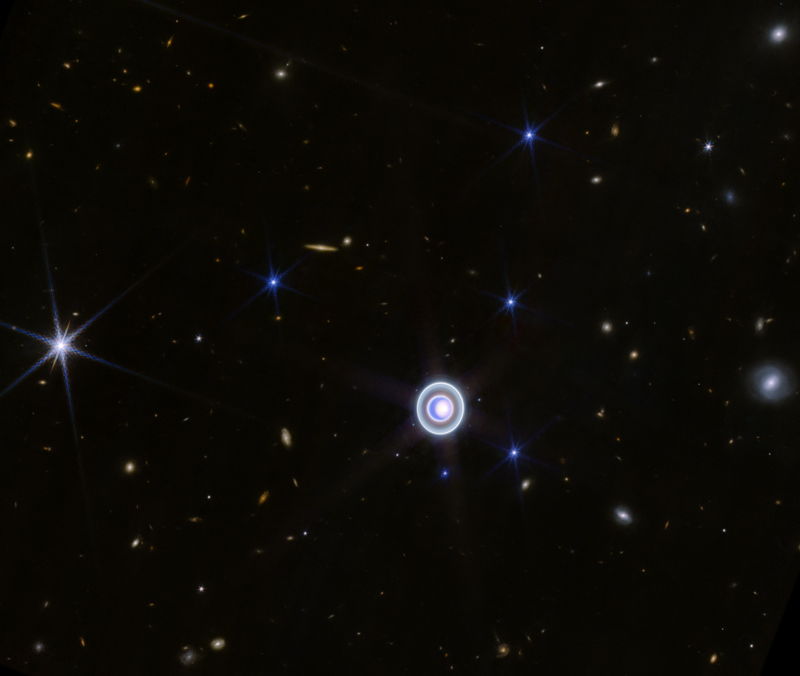
Credit: NASA, ESA, CSA, STScI
Uranus Wide-Field
In the center of this wide-field image from JWST is Uranus, one of the ringed planets of our solar system. That's an amazing capture, and it would be extraordinary on its own. But also captured are 14 of the planet’s 27 moons: Oberon, Titania, Umbriel, Juliet, Perdita, Rosalind, Puck, Belinda, Desdemona, Cressida, Ariel, Miranda, Bianca, and Portia. Except for the few stars with diffraction spikes, everything else is a galaxy!
Thursday, 27 February 2025
Credits: ESA & NASA / Solar Orbiter
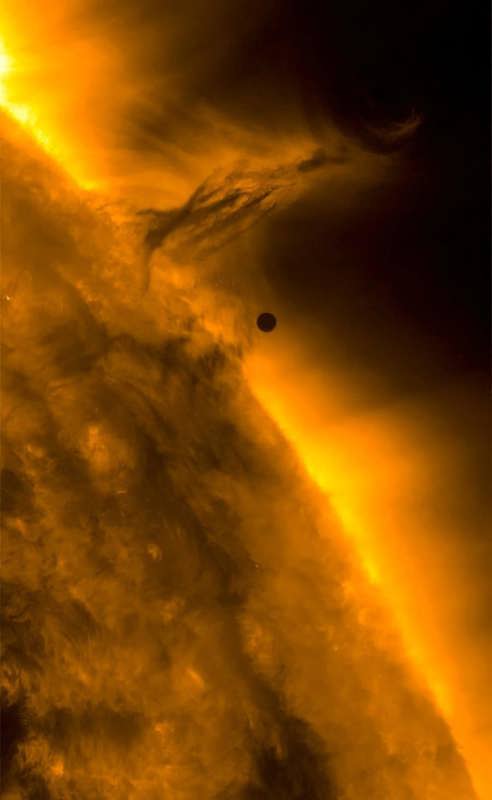
Mercury Transit
On 3 January 2023, Mercury crossed the Solar Orbiter spacecraft’s field of view, resulting in a solar transit in which Mercury appeared as a perfectly black circle moving across the face of a very active Sun. The Sun loses mass equivalent to billions of kilograms every second due to nuclear fusion, yet it has enough fuel to continue shining for another 5 billion years.
Friday, 21 February 2025
Credit: Astronaut Karen Nyberg
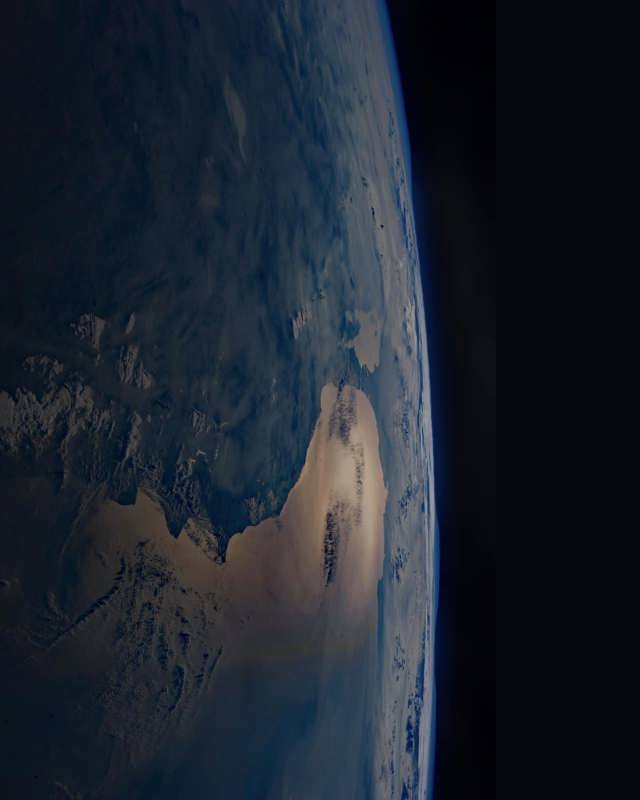
Home
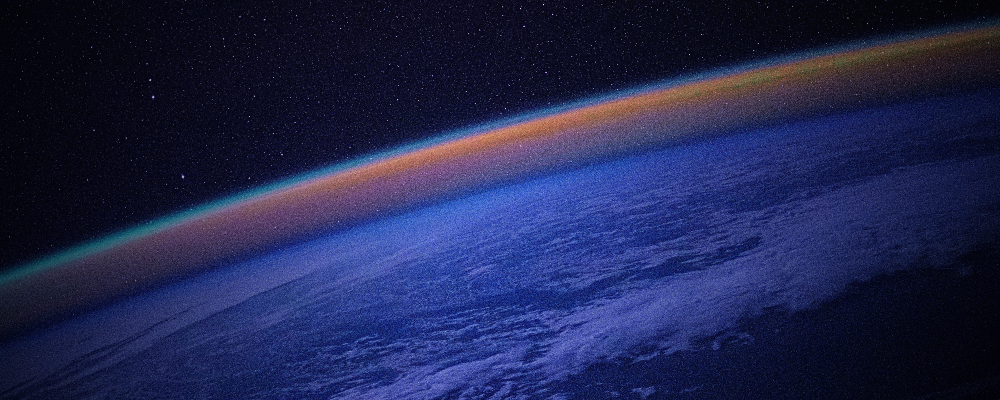
In case you forgot, that's our vessel in space. That's us. That's home. Taken from the cupola of the International Space Station, Aug 10, 2013.
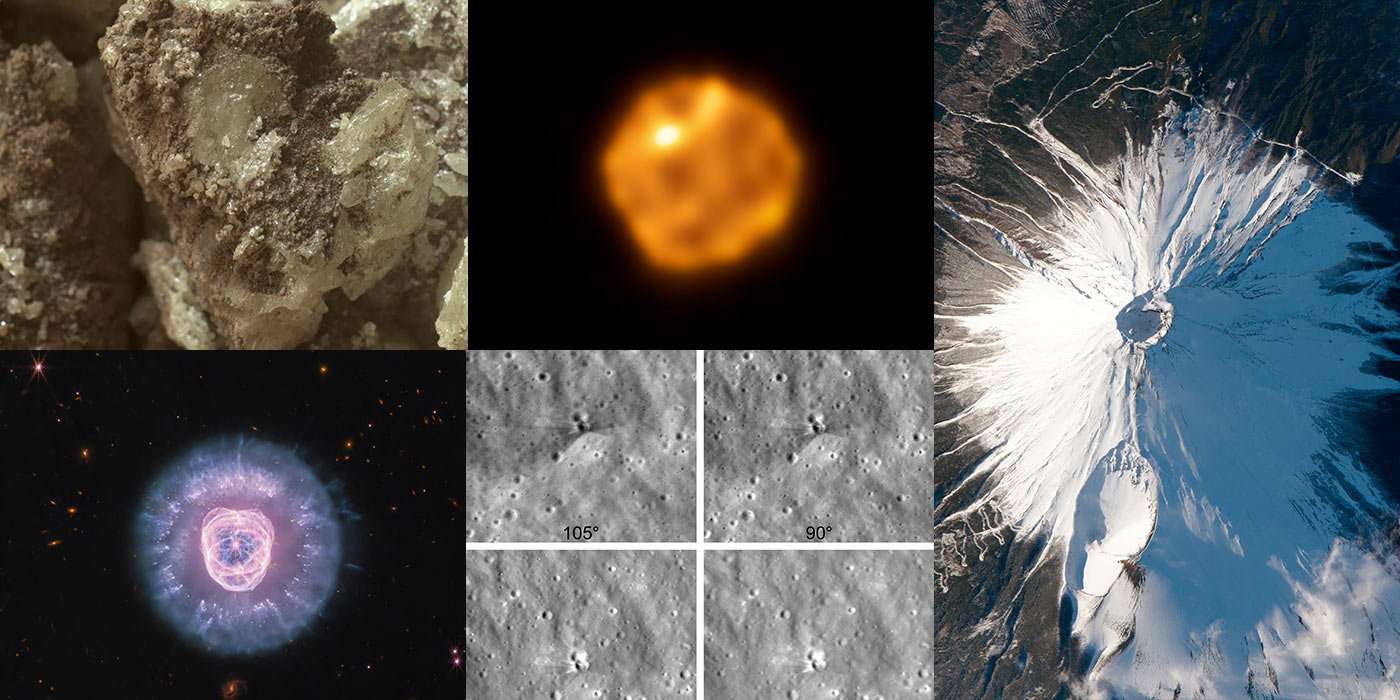
We journey from Mount Fuji as seen from orbit to the bubbling surface of Betelgeuse, exploring the forces that shape planets, moons, and stars across the cosmos. Along the way, JWST reveals the remains of a dying star, Curiosity uncovers clues to Mars’ volcanic past, and a fresh rocket impact on the Moon gives scientists a new opportunity to study how collisions reshape its surface.
#PPOD
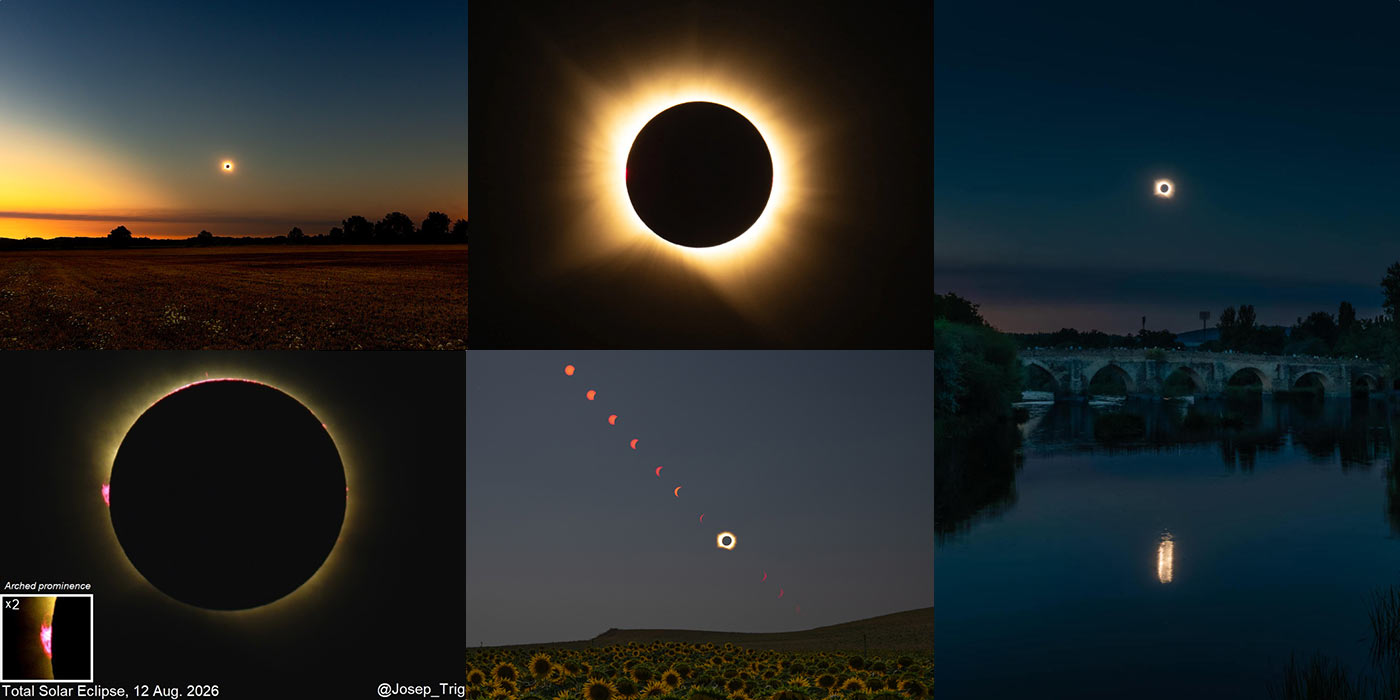
Let's celebrate the August 12 total solar eclipse through the eyes of photographers who experienced the Moon’s shadow sweeping across Spain. From Baily’s Beads and a glowing solar prominence to totality reflected in a river and framed by fields of sunflowers, these images capture both the science and extraordinary beauty of one of nature’s most spectacular celestial events.
#PPOD
#Eclipse
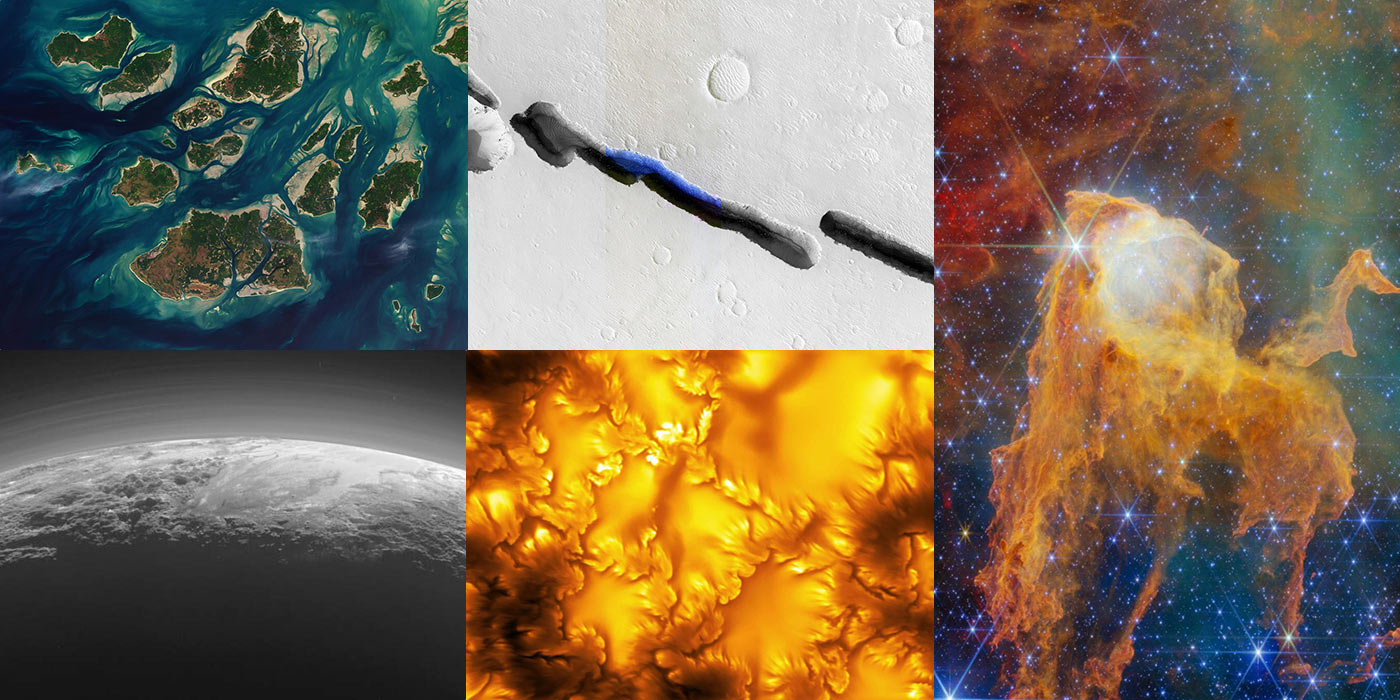
The universe is shaped by forces both immense and intricate, from fractured terrain on Mars and shifting tidal landscapes on Earth to tiny vortices dancing across the surface of the Sun. Farther afield, dramatic views of Pluto’s icy mountains and hazy atmosphere and a treasure chest of newborn stars in the Carina Nebula showcase the remarkable detail revealed by spacecraft and telescopes exploring the cosmos.
#PPOD
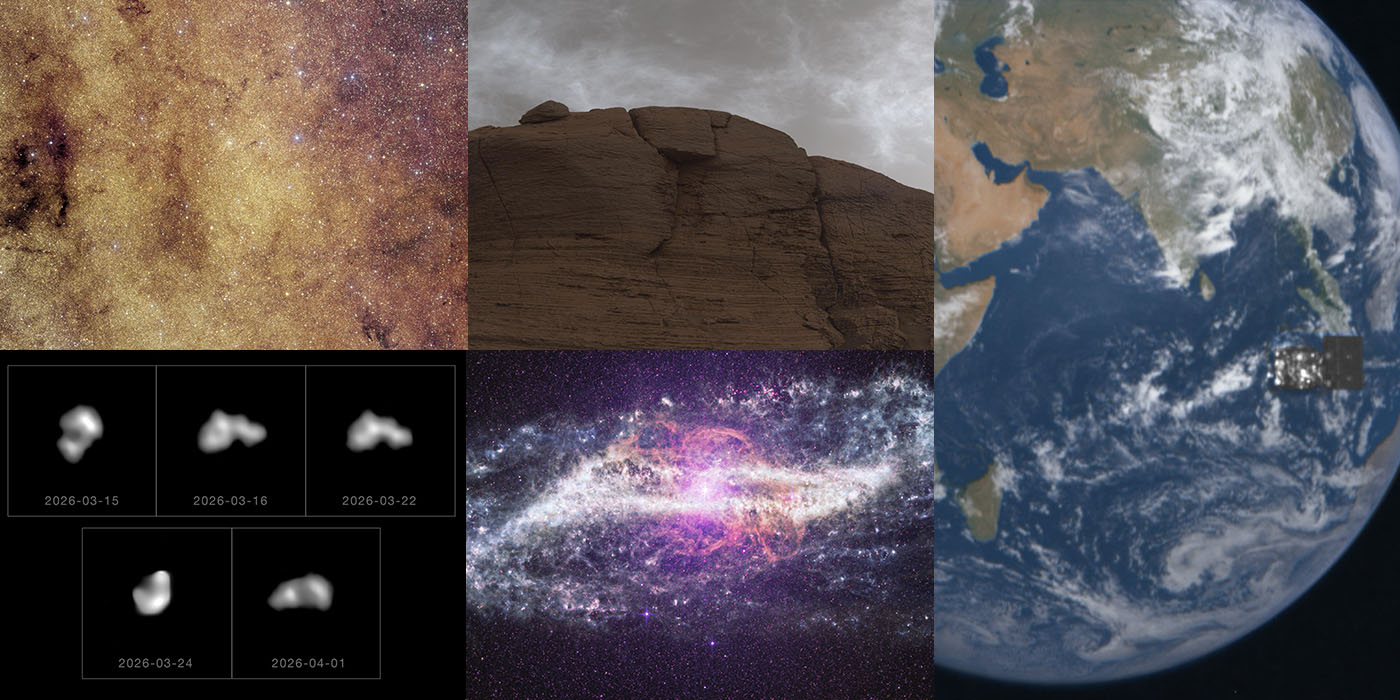
This week, we reveal hidden wonders across the cosmos, from delicate Martian clouds and a dust-shrouded galaxy to an asteroid with a never-before-seen shape and the crowded heart of the Milky Way. Together, these images showcase how new missions and advanced observatories continue to uncover surprising details about our solar system, our galaxy, and the universe beyond.
#PPOD
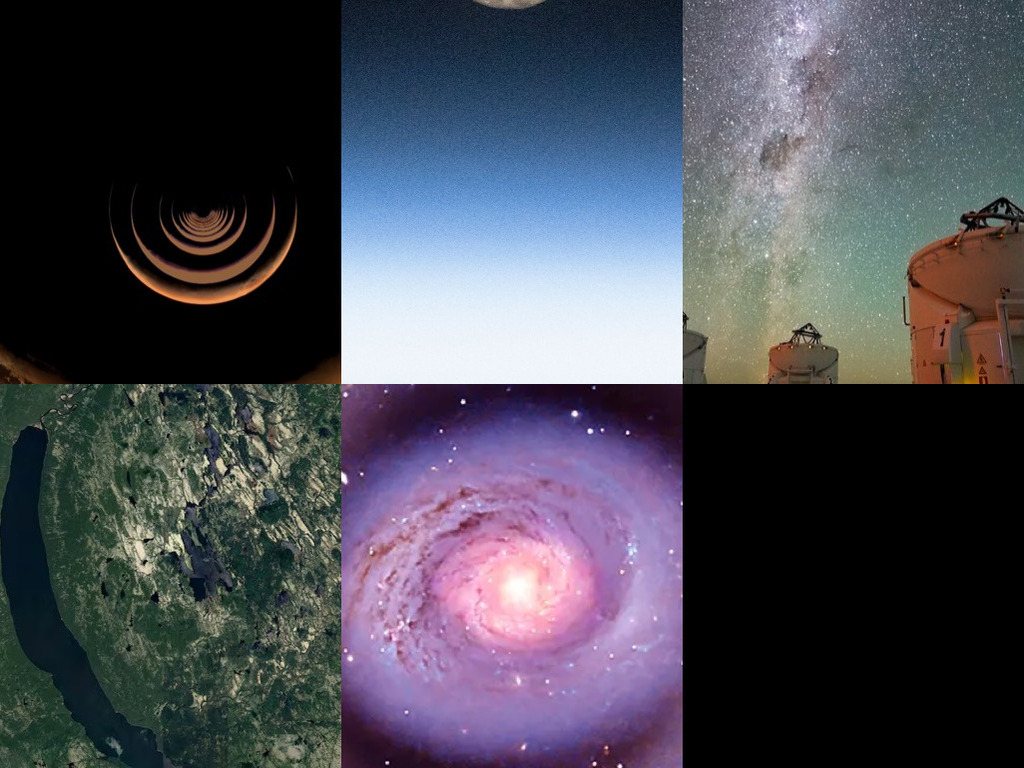
These images span the journey from our own backyard to distant galaxies, featuring Mars, the Moon, breathtaking night skies, and a fresh view of the star-forming galaxy Messier 94. Along the way, we celebrate exploration and discovery—from NASA’s Psyche mission preparing for its asteroid encounter to the revelation of a previously unknown impact crater on Earth —reminding us that there are still new wonders to uncover both on our own planet and across the cosmos.
#PPOD
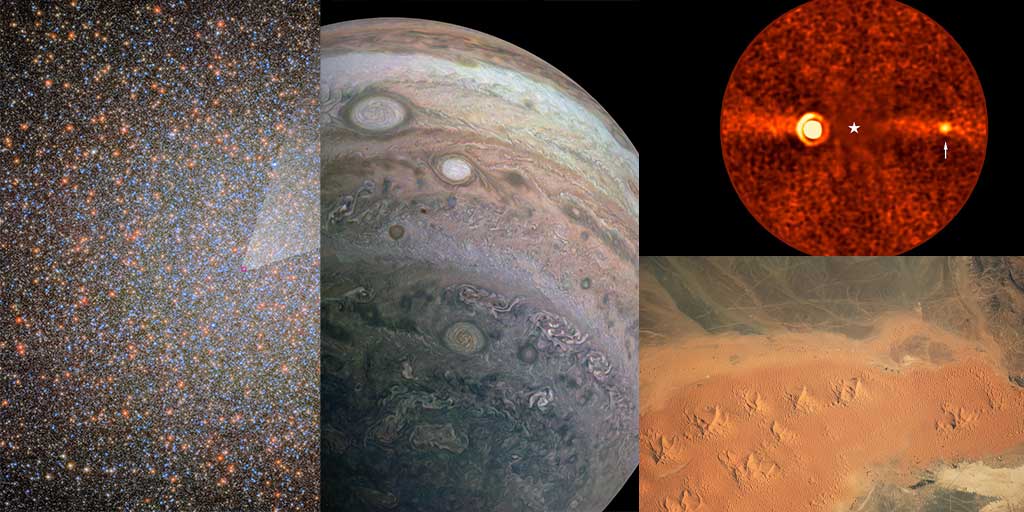
This week, we celebrate fifty years since Viking 1 became the first spacecraft to successfully land on and photograph the surface of Mars, alongside stunning new views of worlds, stars, and galaxies that continue to expand our understanding of the universe. From sculpted Sahara sand dunes and Jupiter’s colorful cloud bands to a newly discovered exoplanet and the first stellar-mass black hole identified in Omega Centauri, these images showcase the remarkable diversity of cosmic exploration.
#PPOD
We journey from Mount Fuji as seen from orbit to the bubbling surface of Betelgeuse, exploring the forces that shape planets, moons, and stars across the cosmos. Along the way, JWST reveals the remains of a dying star, Curiosity uncovers clues to Mars’ volcanic past, and a fresh rocket impact on the Moon gives scientists a new opportunity to study how collisions reshape its surface.
Let's celebrate the August 12 total solar eclipse through the eyes of photographers who experienced the Moon’s shadow sweeping across Spain. From Baily’s Beads and a glowing solar prominence to totality reflected in a river and framed by fields of sunflowers, these images capture both the science and extraordinary beauty of one of nature’s most spectacular celestial events.
The universe is shaped by forces both immense and intricate, from fractured terrain on Mars and shifting tidal landscapes on Earth to tiny vortices dancing across the surface of the Sun. Farther afield, dramatic views of Pluto’s icy mountains and hazy atmosphere and a treasure chest of newborn stars in the Carina Nebula showcase the remarkable detail revealed by spacecraft and telescopes exploring the cosmos.
This week, we reveal hidden wonders across the cosmos, from delicate Martian clouds and a dust-shrouded galaxy to an asteroid with a never-before-seen shape and the crowded heart of the Milky Way. Together, these images showcase how new missions and advanced observatories continue to uncover surprising details about our solar system, our galaxy, and the universe beyond.
These images span the journey from our own backyard to distant galaxies, featuring Mars, the Moon, breathtaking night skies, and a fresh view of the star-forming galaxy Messier 94. Along the way, we celebrate exploration and discovery—from NASA’s Psyche mission preparing for its asteroid encounter to the revelation of a previously unknown impact crater on Earth —reminding us that there are still new wonders to uncover both on our own planet and across the cosmos.
This week, we celebrate fifty years since Viking 1 became the first spacecraft to successfully land on and photograph the surface of Mars, alongside stunning new views of worlds, stars, and galaxies that continue to expand our understanding of the universe. From sculpted Sahara sand dunes and Jupiter’s colorful cloud bands to a newly discovered exoplanet and the first stellar-mass black hole identified in Omega Centauri, these images showcase the remarkable diversity of cosmic exploration.
SkyMapper and the SETI Institute are connecting educators, students and the public to live astronomical observations through a distributed astronomical network.
#SkyMapper
#SETI
#Citizen Science
#Astronomy
What happens if life beyond Earth is discovered? The Discovery and Futures Lab at the SETI Institute fosters novel and anticipatory research at the intersection of science, society, our planet, and the search for life beyond Earth.
#Discovery and Futures Lab
SkyMapper and the SETI Institute are connecting educators, students and the public to live astronomical observations through a distributed astronomical network.
What happens if life beyond Earth is discovered? The Discovery and Futures Lab at the SETI Institute fosters novel and anticipatory research at the intersection of science, society, our planet, and the search for life beyond Earth.
Scientists are getting closer in their search for life beyond earth. But with limited federal funding for the search for extraterrestrial intelligence, supporters are the reason cutting-edge scientists can keep their eyes on the sky.
)