






Monday, 23 February 2026
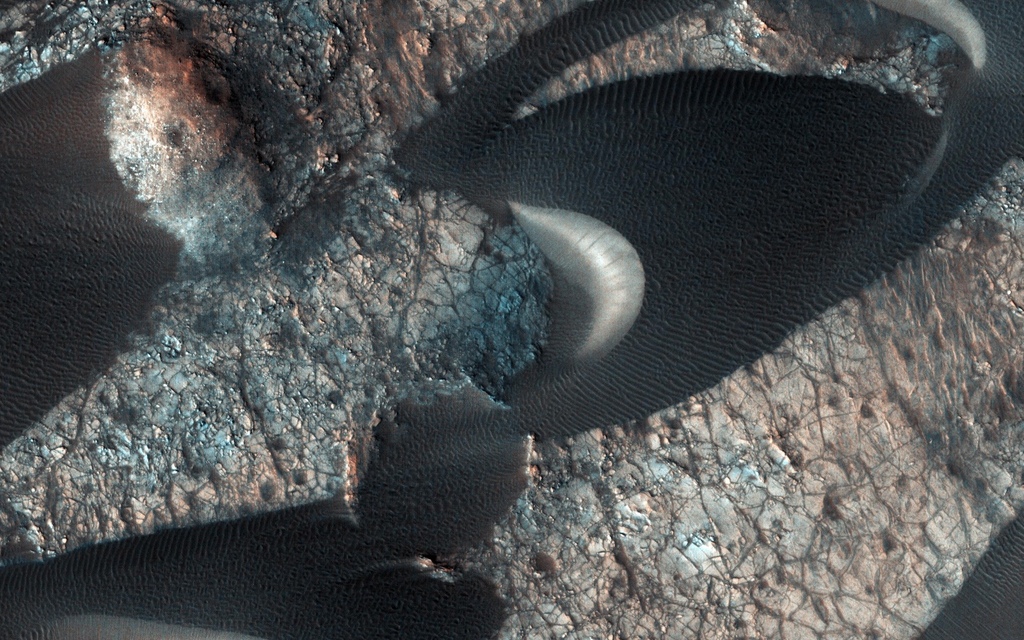
A Dune Field Near Nili Patera
In this HiRISE image of Mars, many sand dunes are visible. They have an elongated crescent form and are called "barchan dunes." They are formed by the continuous action of the wind, blowing in the same direction, giving this particular shape.
The orientation of these dunes tells us that the prevailing wind blows from the right to the left (east to west). The wind continuously moves sand grains up the longer dune slope towards the top. The small ripples on the slope are caused by this movement. When the sand grains arrive at the top, they fall down the steeper and shorter slope, which, as a consequence, has no ripples. It is this gradual sand movement that causes the dunes to slowly move over time.
Tuesday, 24 February 2026
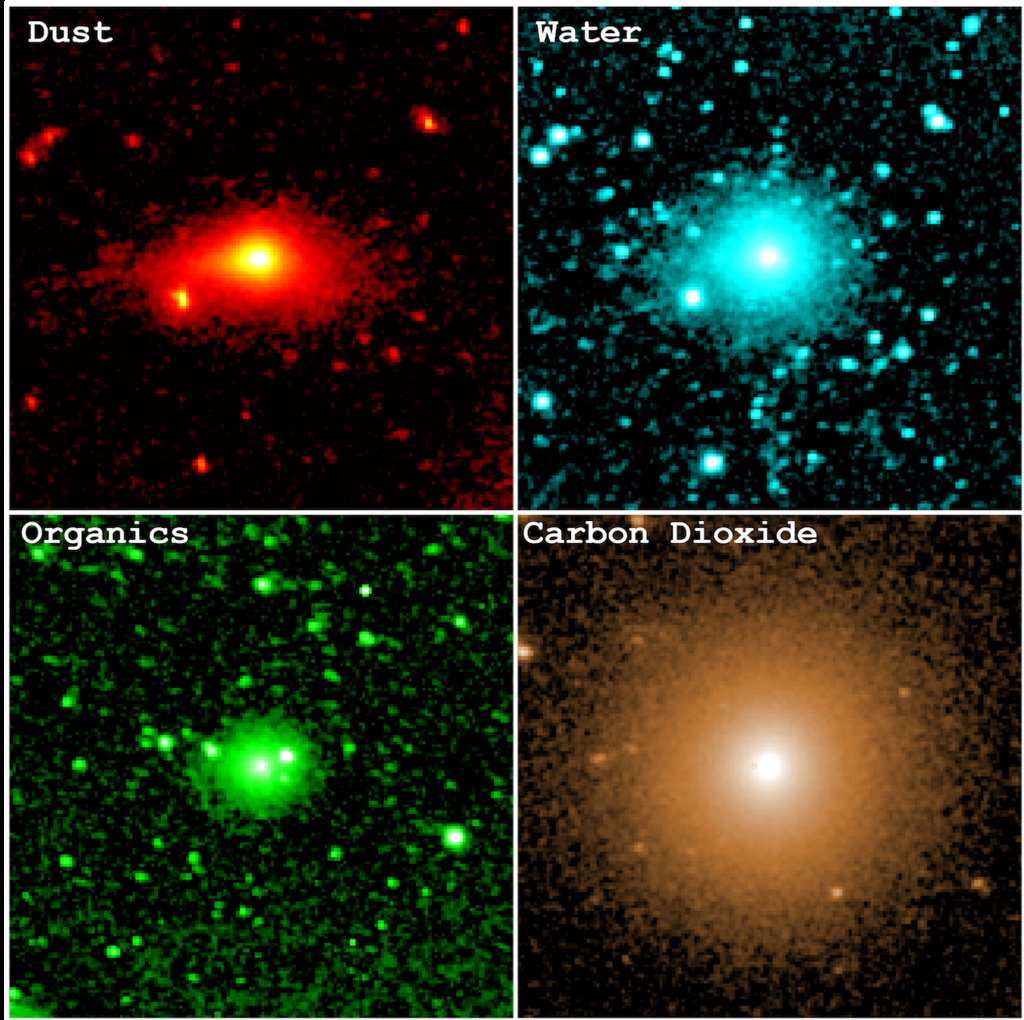
Comet 3I/ATLAS's Coma
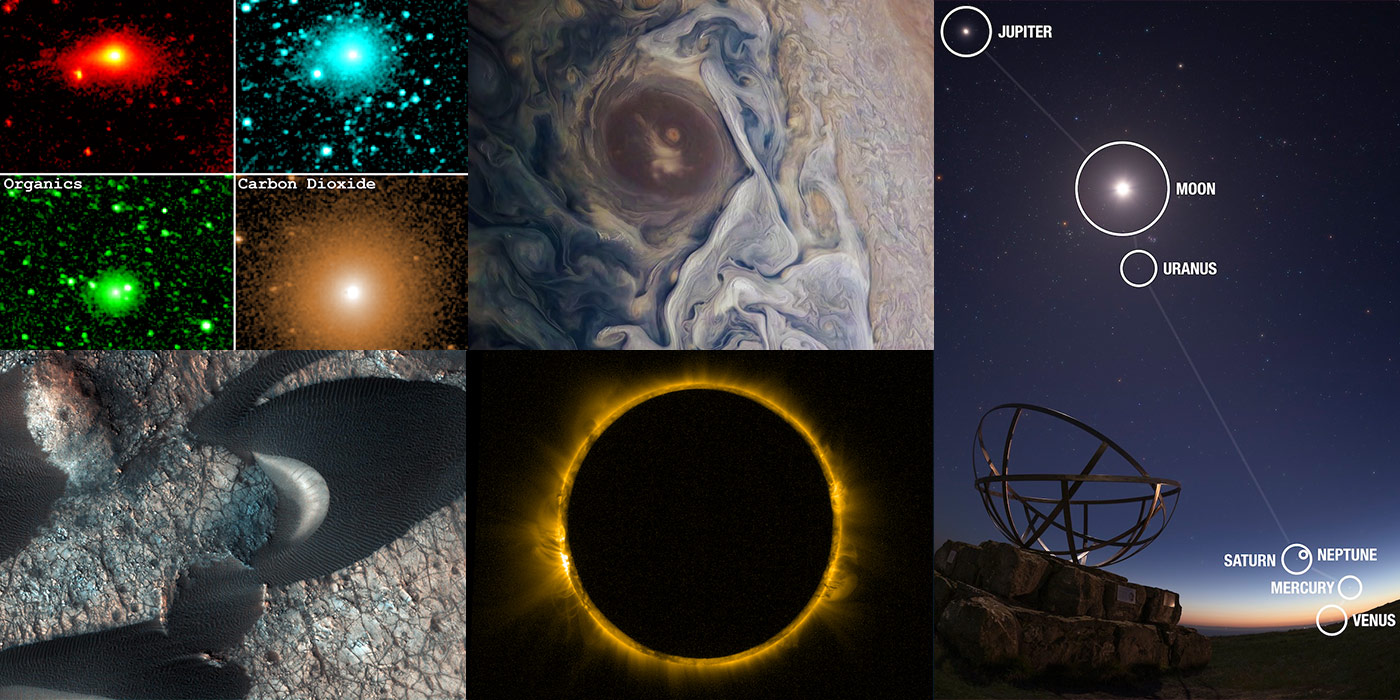
These observations by NASA’s SPHEREx (Spectro-Photometer for the History of the Universe, Epoch of Reionization and Ices Explorer) show the infrared light emitted by the dust, water, organic molecules, and carbon dioxide contained within comet 3I/ATLAS’s coma. The comet brightened significantly during the December 2025 period when SPHEREx made the observations, about two months after the icy body had passed its closest distance to the Sun in late October.
Wednesday, 25 February 2026
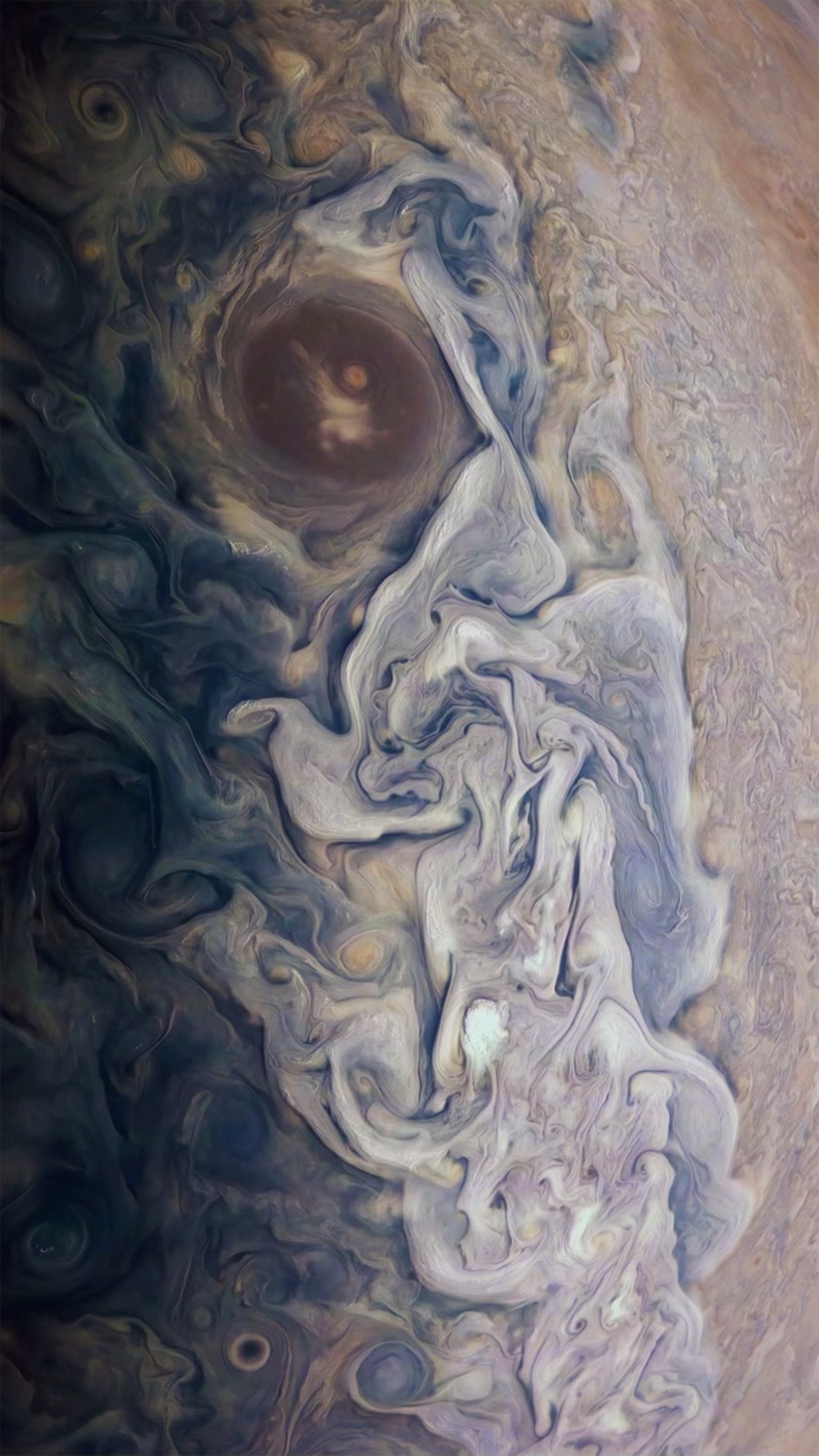
Swirling Storms
This beautiful image shows a swirling region of bright clouds in the wake of a cyclonic storm in Jupiter's atmosphere. On the left, you can see the turbulent, blue-tinted pole, while on the right, the polar clouds give way to the pinker belts and zones of Jupiter’s mid-latitudes. Taken by JunoCam on board NASA's Juno spacecraft.
Thursday, 26 February 2026
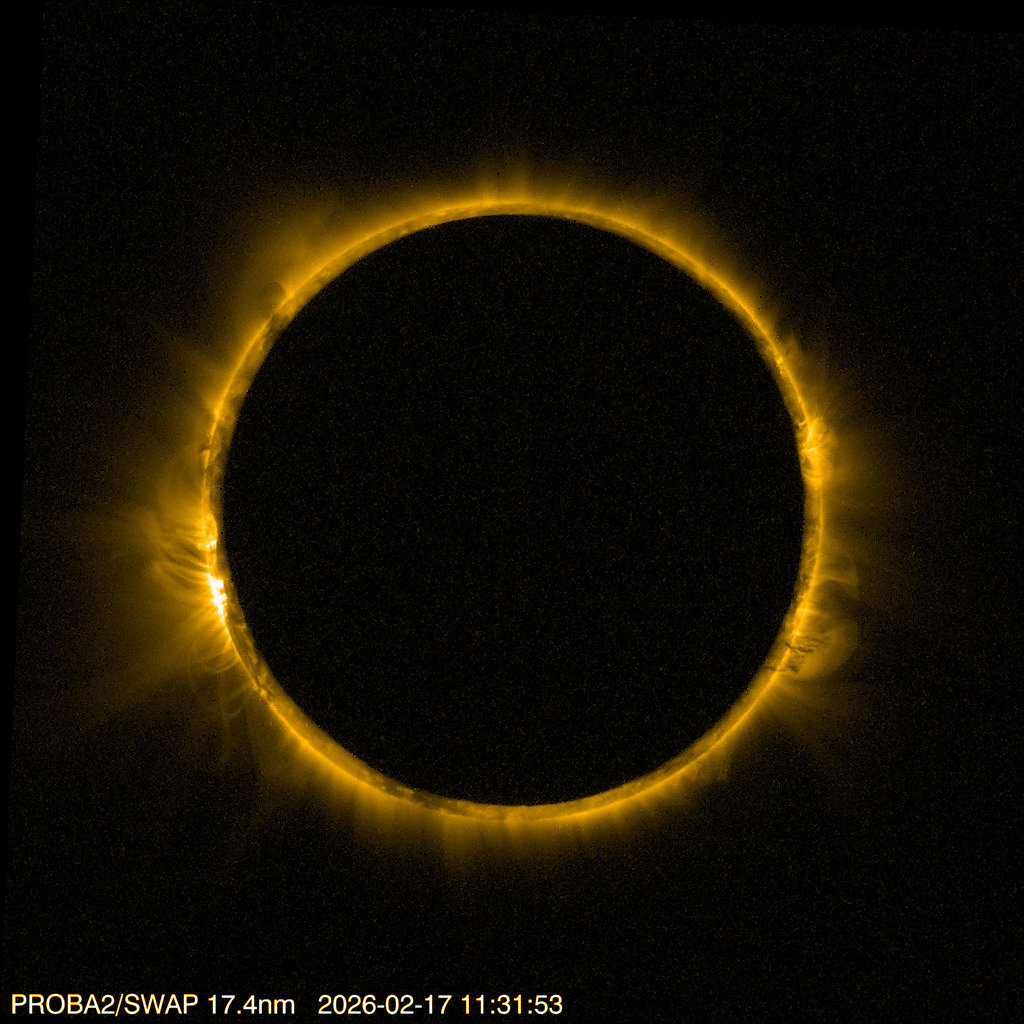
Annular Eclipse From Space
The Moon passed directly between the Sun and Earth on 17 February 2026, creating an annular solar eclipse. Because the Moon was at a more distant point along its elliptical orbit around Earth, it didn't entirely cover the Sun and left a ‘ring of fire’.
The European Space Agency's (ESA) Proba-2 satellite captured this ring from its viewpoint in space. Flying around Earth, the spacecraft witnessed the same solar eclipse no less than four times, including this perfect ring of fire at 11:31 Universal Time. The images were taken by the spacecraft's SWAP extreme ultraviolet imager, at a wavelength of 17.4 nanometres.
On Earth, this rare treat was only visible from Antarctica. A partial solar eclipse could be seen from the southern tip of Chile and Argentina, as well as southern Africa.
Friday, 27 February 2026
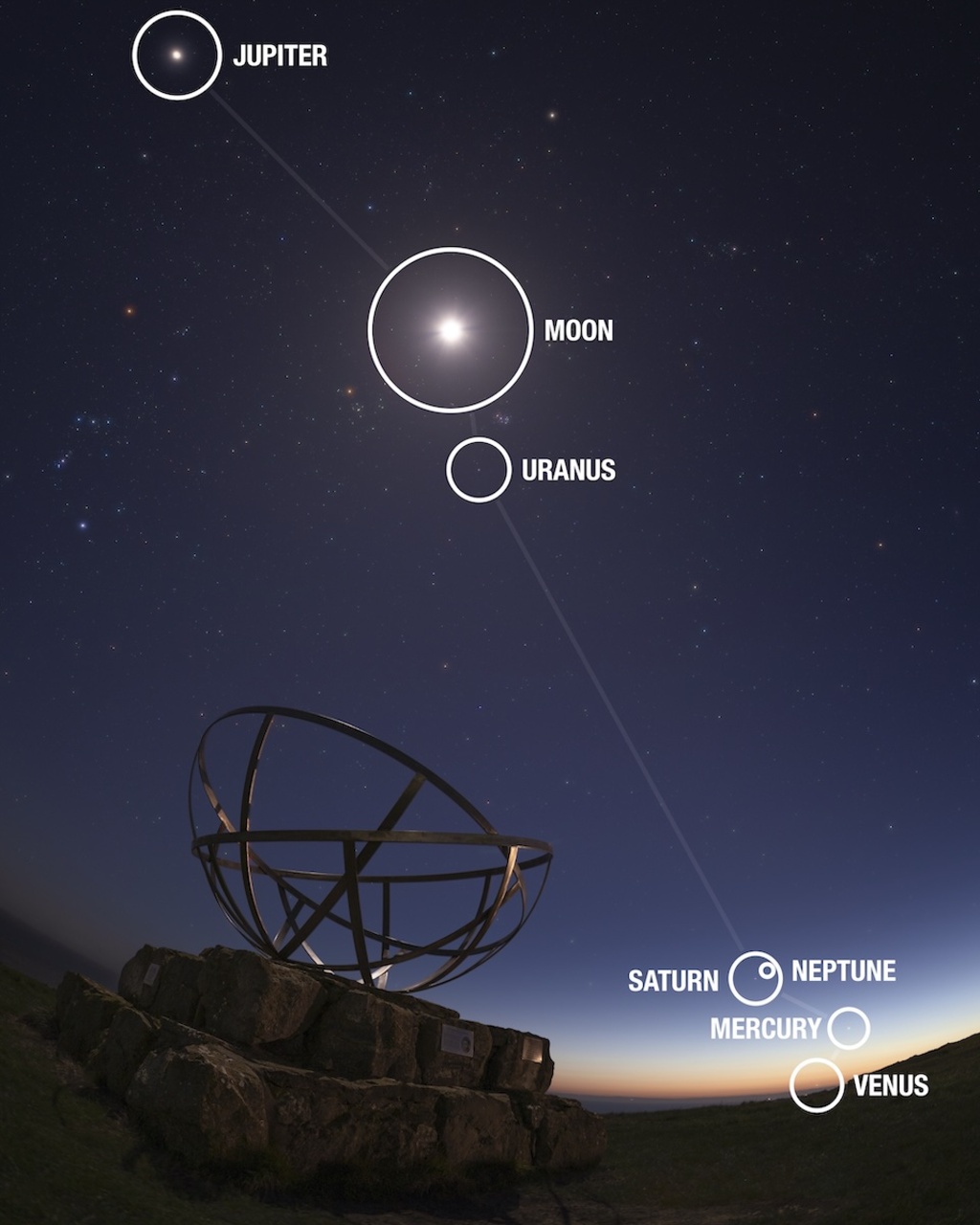
Planetary Parade 2026
Planetary alignments such as this one are fantastic events. Not only are they considered somewhat rare events, but seeing a great gathering of planets in the night sky evokes that sense of being in our place amongst the solar system.
Under somewhat rare optimal conditions, astrophotographer Josh Dury was given an excellent opportunity to document seven celestial objects across the sky: Venus, Mercury, Saturn, Neptune, Uranus, the Moon, and Jupiter.
Captured from the radar research memorial at St Aldhelm's Head on the Isle of Purbeck, Dorset, this image evokes the story of life amongst the solar system, the signal of life amongst the stars, and the great voyage into the unknown.
News
Related News
Planetary Picture of the Day - Week of August 24, 2026
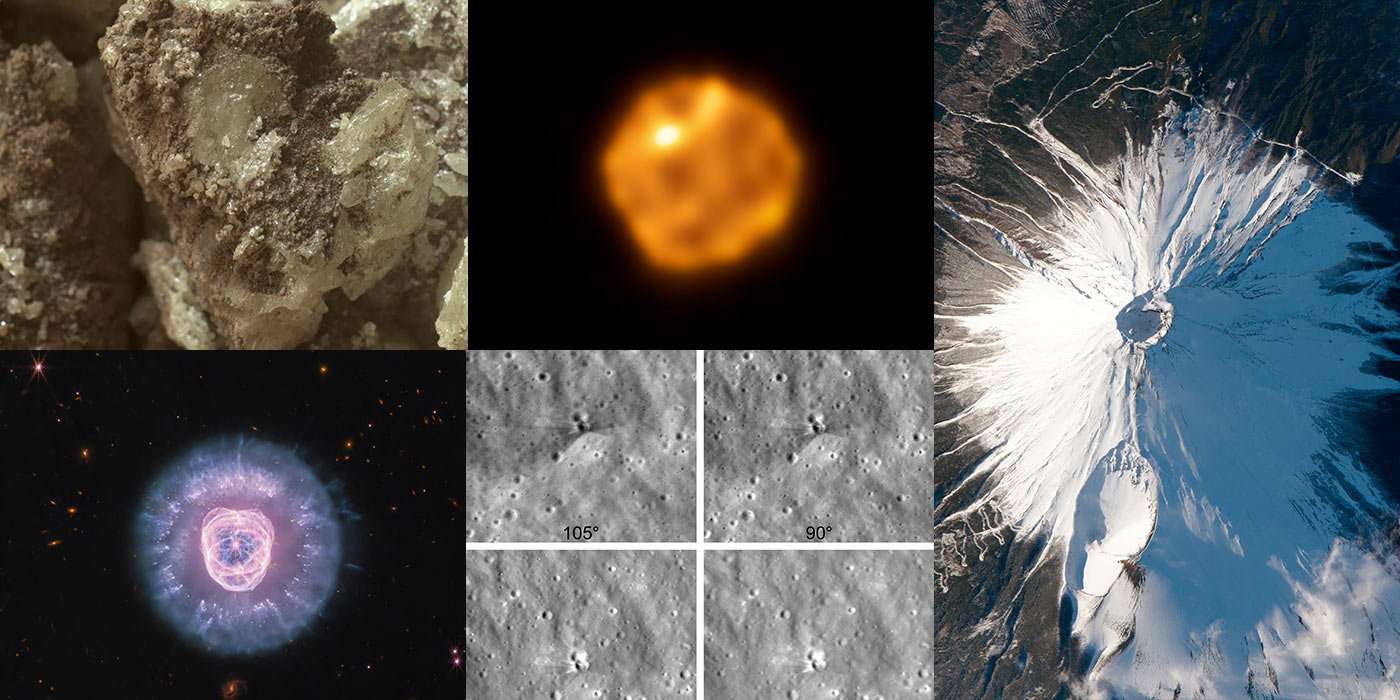
We journey from Mount Fuji as seen from orbit to the bubbling surface of Betelgeuse, exploring the forces that shape planets, moons, and stars across the cosmos. Along the way, JWST reveals the remains of a dying star, Curiosity uncovers clues to Mars’ volcanic past, and a fresh rocket impact on the Moon gives scientists a new opportunity to study how collisions reshape its surface. #PPOD

Planetary Picture of the Day - Week of August 17, 2026
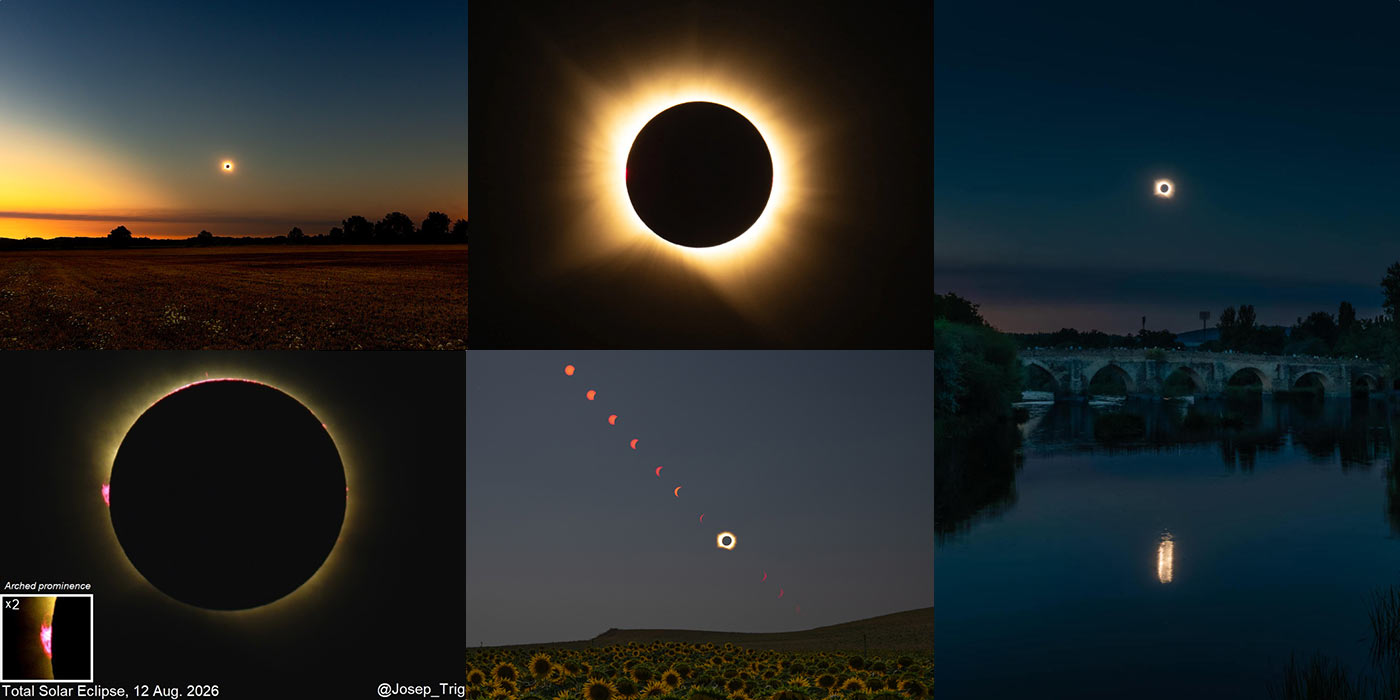
Let's celebrate the August 12 total solar eclipse through the eyes of photographers who experienced the Moon’s shadow sweeping across Spain. From Baily’s Beads and a glowing solar prominence to totality reflected in a river and framed by fields of sunflowers, these images capture both the science and extraordinary beauty of one of nature’s most spectacular celestial events. #PPOD #Eclipse
Planetary Picture of the Day - Week of August 10, 2026
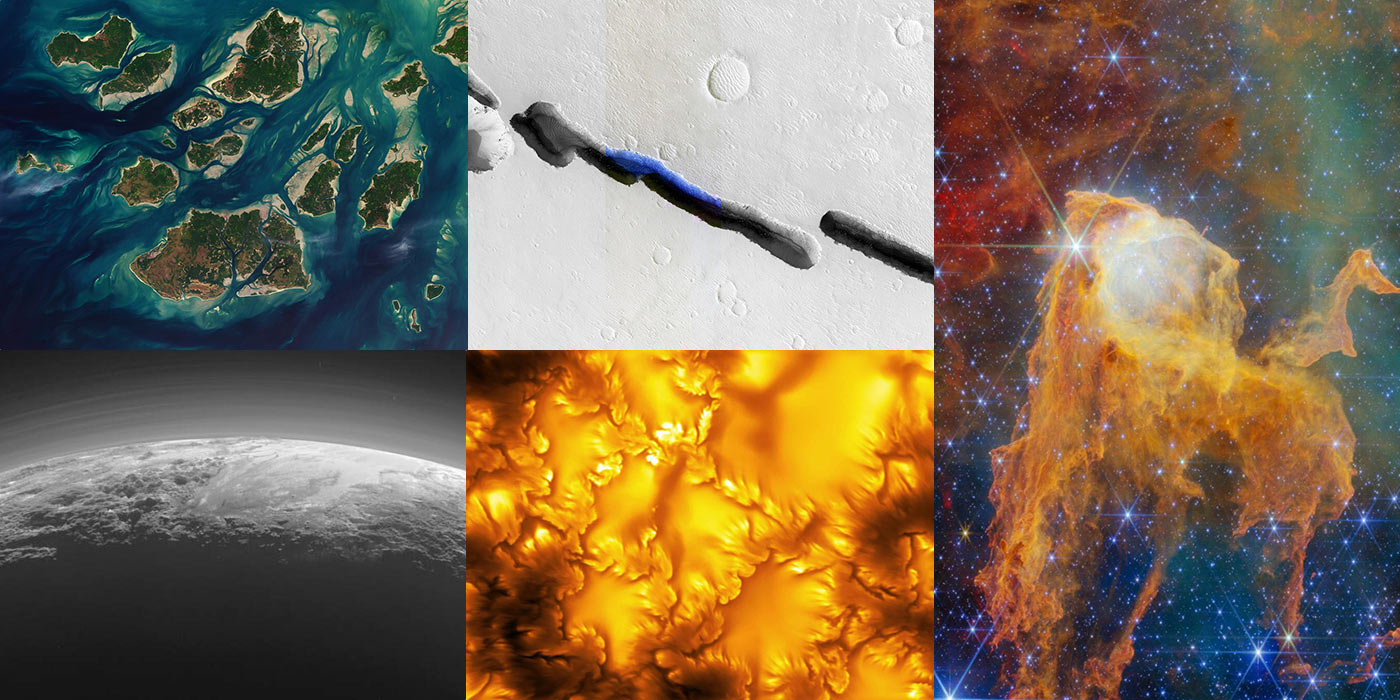
The universe is shaped by forces both immense and intricate, from fractured terrain on Mars and shifting tidal landscapes on Earth to tiny vortices dancing across the surface of the Sun. Farther afield, dramatic views of Pluto’s icy mountains and hazy atmosphere and a treasure chest of newborn stars in the Carina Nebula showcase the remarkable detail revealed by spacecraft and telescopes exploring the cosmos. #PPOD
Planetary Picture of the Day - August 3, 2026
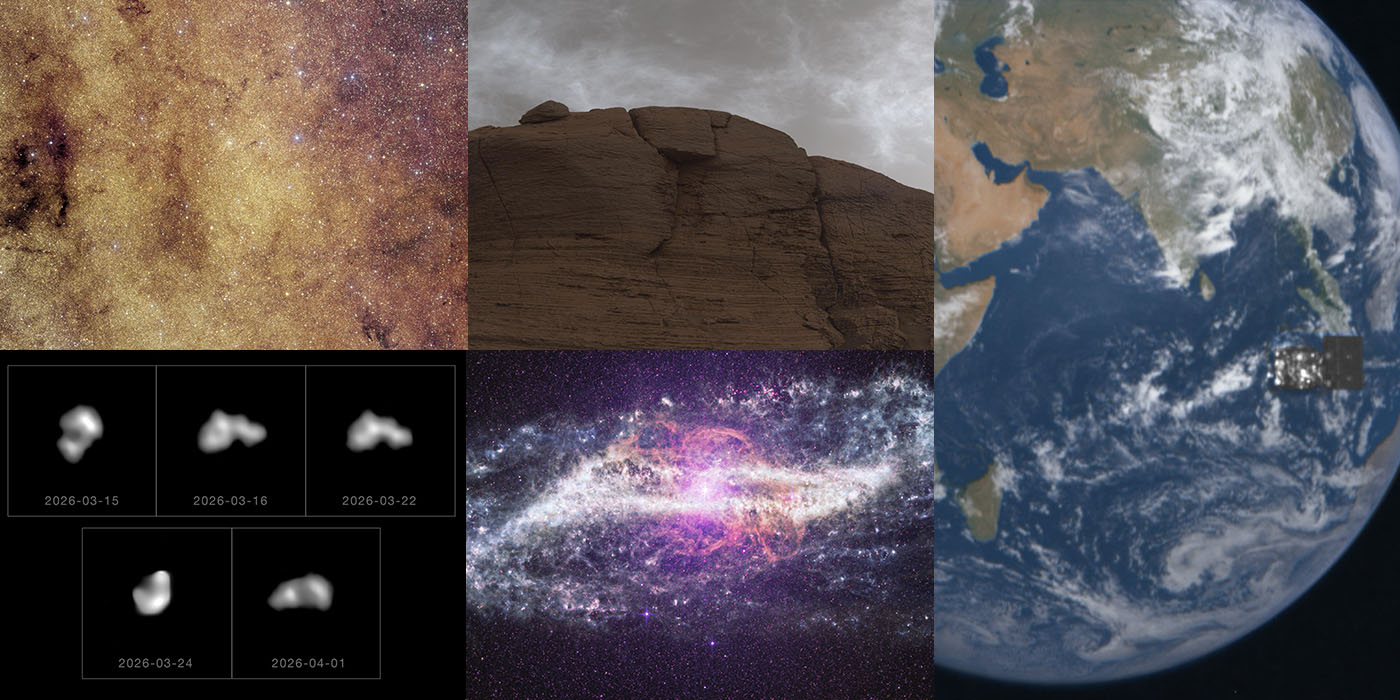
This week, we reveal hidden wonders across the cosmos, from delicate Martian clouds and a dust-shrouded galaxy to an asteroid with a never-before-seen shape and the crowded heart of the Milky Way. Together, these images showcase how new missions and advanced observatories continue to uncover surprising details about our solar system, our galaxy, and the universe beyond. #PPOD
Planetary Picture of the Day - Week of July 27, 2026
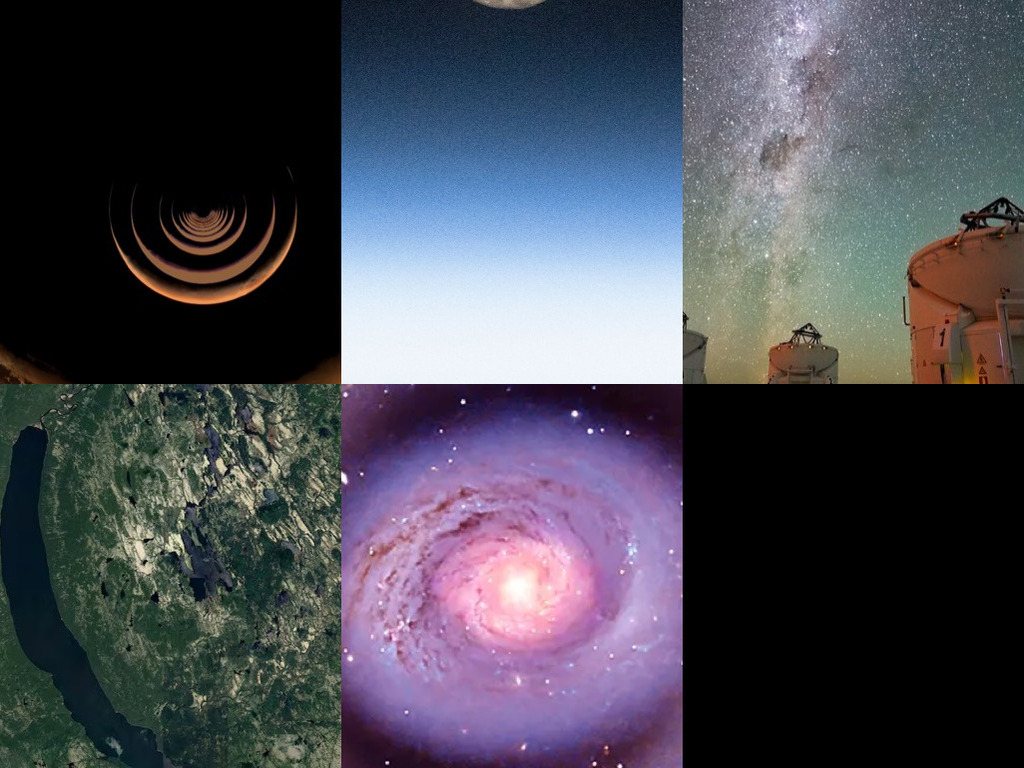
These images span the journey from our own backyard to distant galaxies, featuring Mars, the Moon, breathtaking night skies, and a fresh view of the star-forming galaxy Messier 94. Along the way, we celebrate exploration and discovery—from NASA’s Psyche mission preparing for its asteroid encounter to the revelation of a previously unknown impact crater on Earth —reminding us that there are still new wonders to uncover both on our own planet and across the cosmos. #PPOD
Planetary Picture of the Day - Week of July 20, 2026
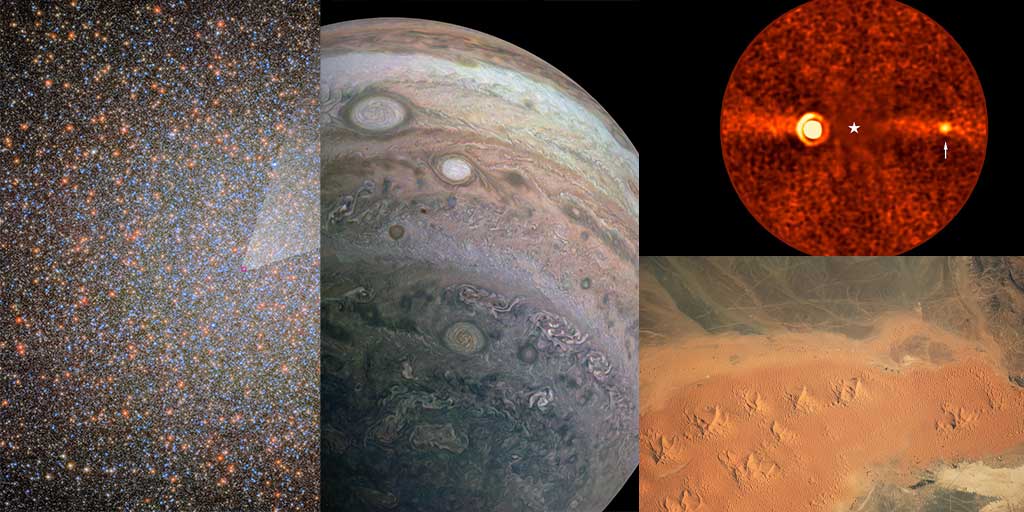
This week, we celebrate fifty years since Viking 1 became the first spacecraft to successfully land on and photograph the surface of Mars, alongside stunning new views of worlds, stars, and galaxies that continue to expand our understanding of the universe. From sculpted Sahara sand dunes and Jupiter’s colorful cloud bands to a newly discovered exoplanet and the first stellar-mass black hole identified in Omega Centauri, these images showcase the remarkable diversity of cosmic exploration. #PPODResearch
Related Projects
SkyMapper: Expanding Access to Real-time Astronomy Through a Global Astronomical Network
SkyMapper and the SETI Institute are connecting educators, students and the public to live astronomical observations through a distributed astronomical network. #SkyMapper #SETI #Citizen Science #Astronomy
Virtual Planetary Laboratory
How can we best assess whether an exoplanet supports life? #VPL
Discovery and Futures Lab
What happens if life beyond Earth is discovered? The Discovery and Futures Lab at the SETI Institute fosters novel and anticipatory research at the intersection of science, society, our planet, and the search for life beyond Earth. #Discovery and Futures LabSupport the
SETI Institute
Scientists are getting closer in their search for life beyond earth. But with limited federal funding for the search for extraterrestrial intelligence, supporters are the reason cutting-edge scientists can keep their eyes on the sky.