Thursday, Feb 12, 2026

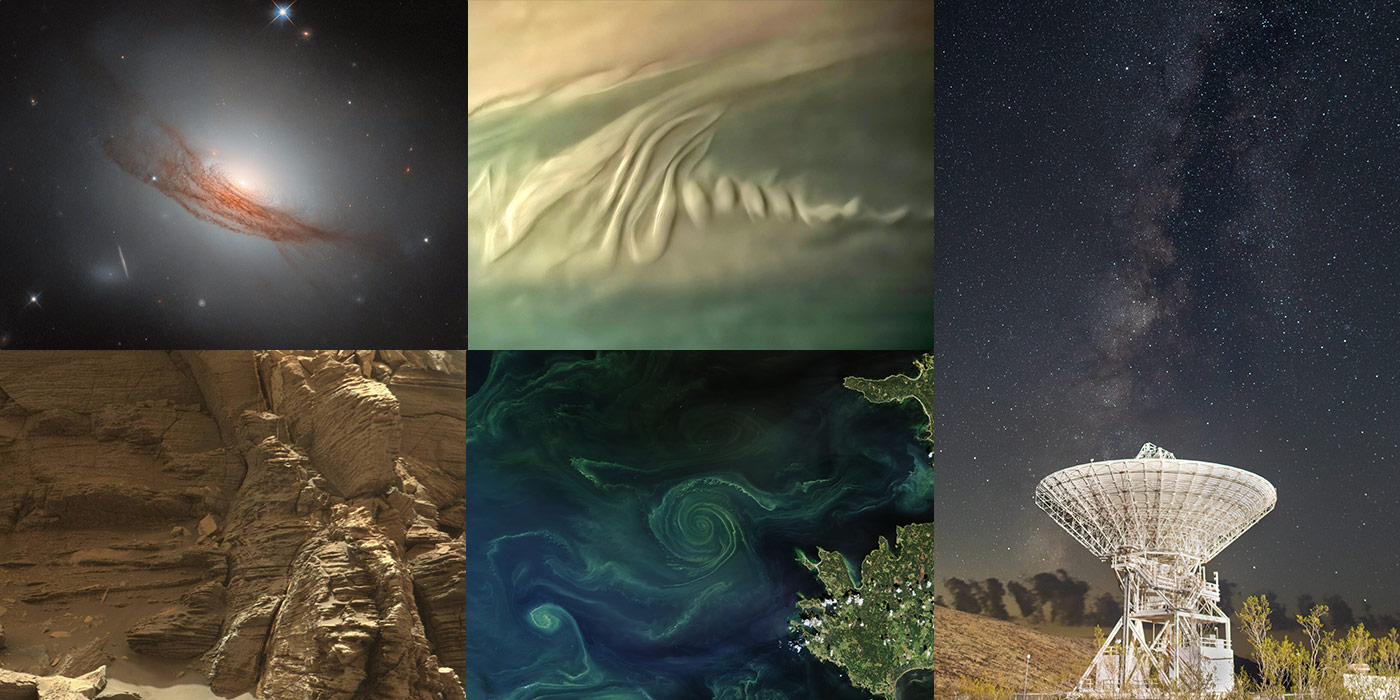
Credit: NASA/JPL-Caltech/MSSS

Monday, 2 February 2026

Murray Buttes

This view from the Mast Camera (Mastcam) on NASA's Curiosity Mars rover shows an outcrop with finely layered rocks within the "Murray Buttes" region on lower Mount Sharp.

The buttes and mesas rising above the surface in this area are eroded remnants of ancient sandstone that originated when winds deposited sand after lower Mount Sharp had formed. Curiosity closely examined that layer -- called the "Stimson formation" -- during the first half of 2016, while crossing a feature called "Naukluft Plateau" between two exposures of the Murray formation. The layering within the sandstone is called "cross-bedding" and indicates that the sandstone was deposited by wind-blown sand dunes.

The image was taken on Sept. 8, 2016, during the 1454th Martian day, or sol, of Curiosity's work on Mars.

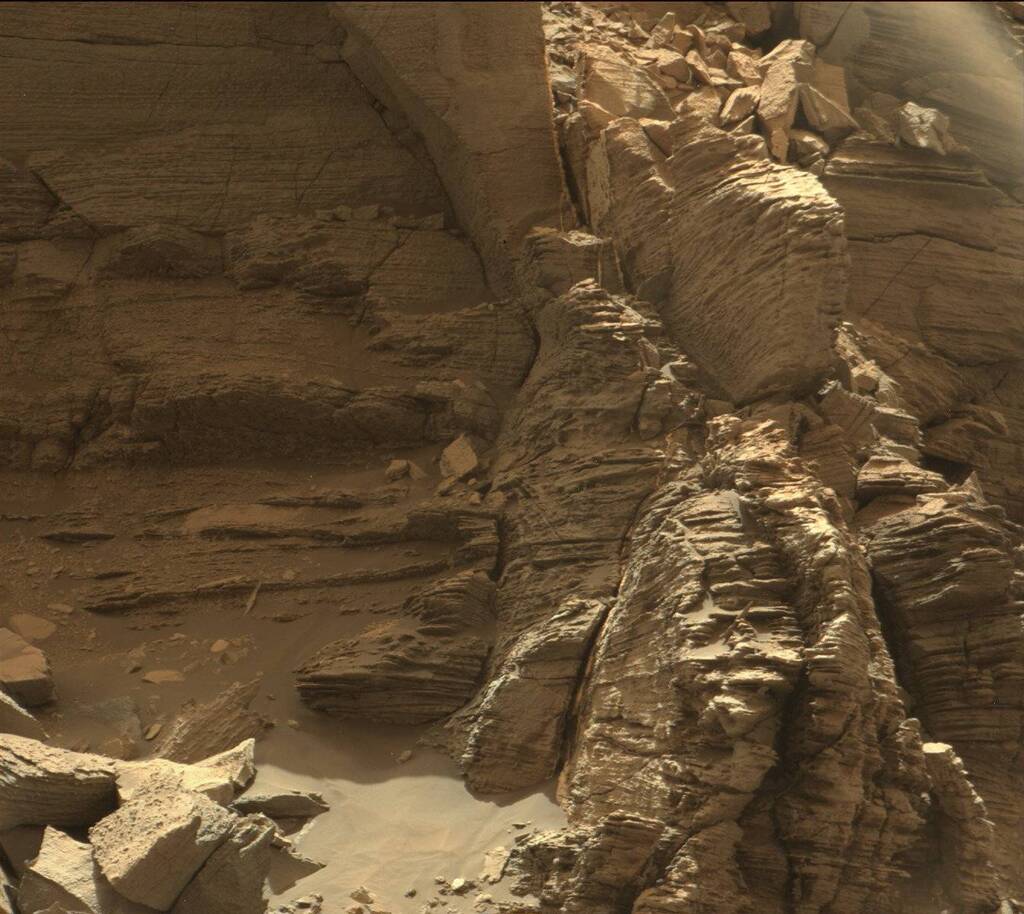
Credit: NASA Earth Observatory images by Joshua Stevens and Lauren Dauphin, using Landsat data from the U.S. Geological Survey and MODIS data from LANCE/EOSDIS Rapid Response.

Tuesday, 3 February 2026

Summer Blooms in the Baltic (2018)

Overview of a swirling green phytoplankton bloom in the Baltic Sea captured by the Operational Land Imager (OLI) on Landsat 8 in July 2018.

Every summer, phytoplankton spread across the northern basins of the North Atlantic and Arctic Oceans, with blooms spanning hundreds and sometimes thousands of kilometers. Nutrient-rich, cooler waters tend to promote more growth among marine plants and phytoplankton than is found in tropical waters.

Three decades of satellite observations suggest that these green blooms are likely to be cyanobacteria (blue-green algae), an ancient type of marine bacteria that capture and store solar energy through photosynthesis (like plants). Some of the greens could also come from diatoms, which are rich in chlorophyll.

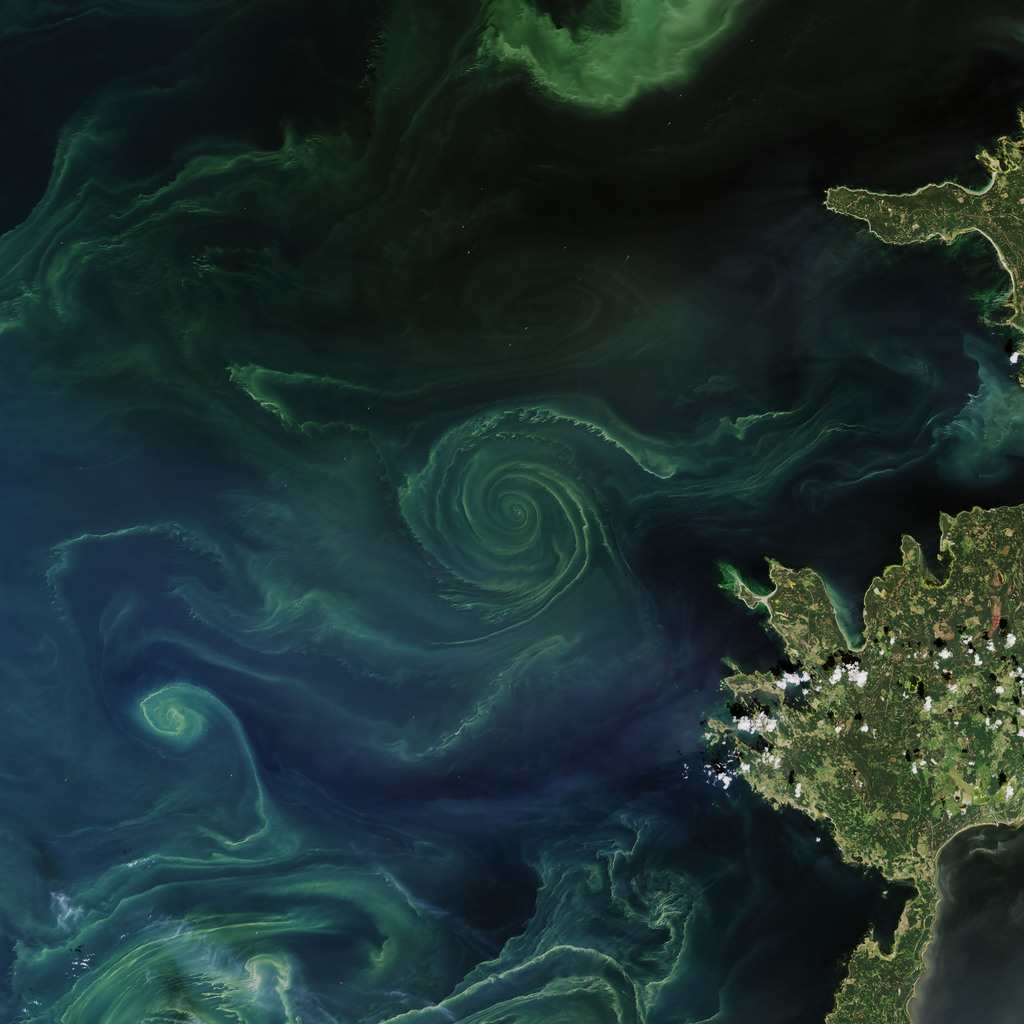
Credit: NASA/JPL-Caltech

Wednesday, 4 February 2026

Deep Space Network

Deep Space Station 15, one of the 112-foot antennas at the Goldstone Deep Space Communications Complex near Barstow, California, looks skyward, with the stars of the Milky Way overhead, in September 2025. Goldstone is part of NASA’s Deep Space Network (DSN), which operates three complexes around the globe that support communications with dozens of deep space missions.

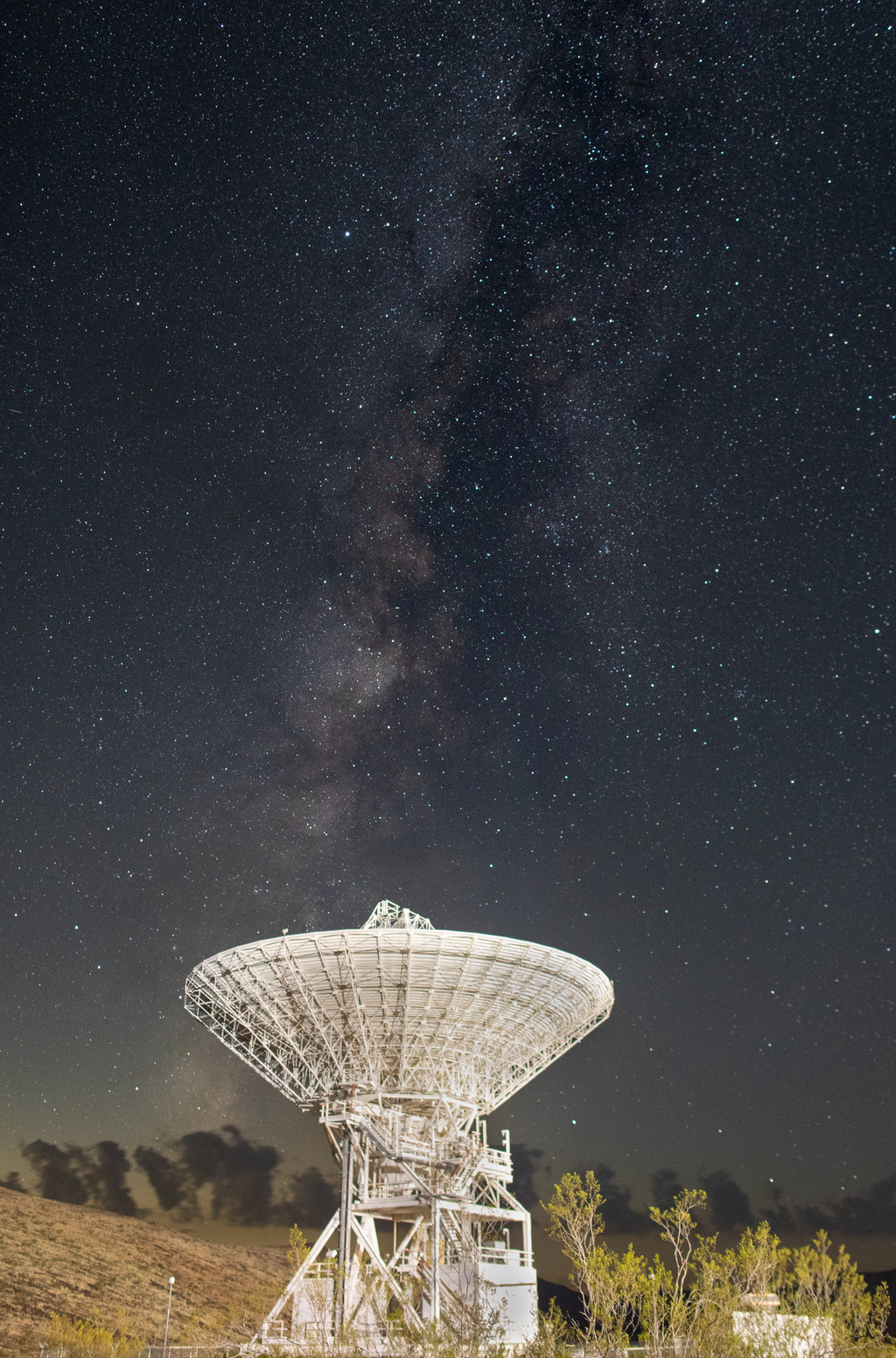
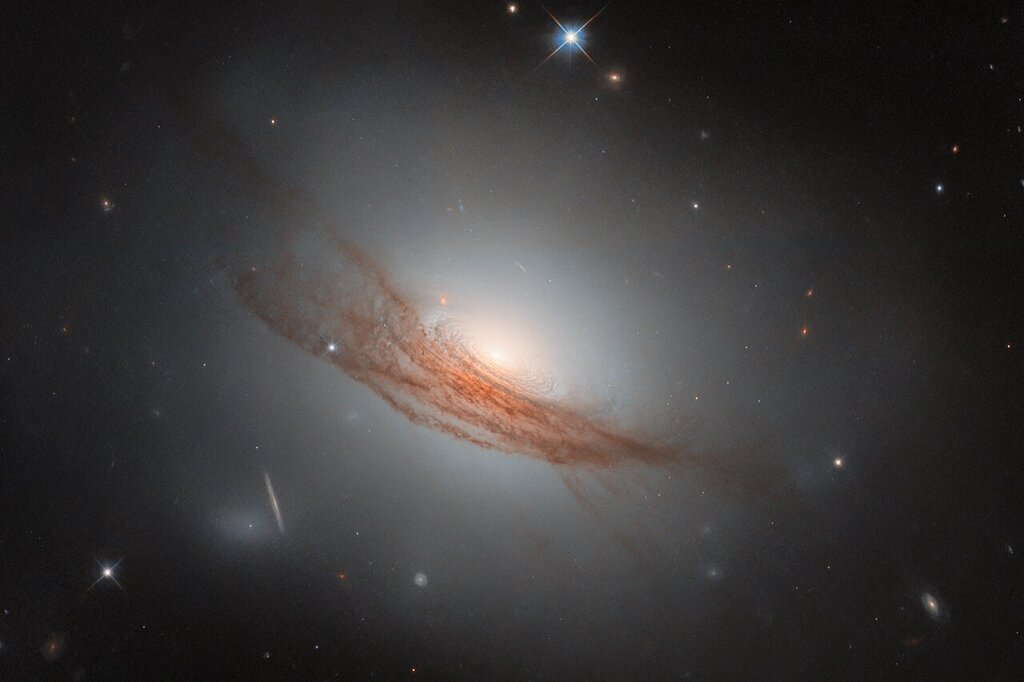
Credit: ESA/Hubble & NASA, R. J. Foley (UC Santa Cruz), Dark Energy Survey/DOE/FNAL/DECam/CTIO/NOIRLab/NSF/AURA; Acknowledgement: Mehmet Yüksek

Thursday, 5 February 2026

Dark Rings and New Light

This is NGC 7722, a lenticular galaxy located about 187 million light-years away in the constellation Pegasus. A “lenticular”, meaning “lens-shaped”, galaxy is a type that sits in between the more familiar spiral galaxies and elliptical galaxies.

This new Hubble image, the sharpest yet taken of NGC 7722, brings the impressive dust lanes into sharp focus. Bands of dust like this are not uncommon in lenticular galaxies, and they stand out against the broad, smooth halo of light that typically surrounds lenticular galaxies. The distinctive dust lanes of NGC 7722 are thought to result from a past merger with another galaxy, as seen in other lenticular galaxies.

While it doesn’t host as many new, young stars as a spiral galaxy, there’s still activity in NGC 7722: in 2020, it was host to the explosion of a star that could be detected from Earth. SN 2020SSF was a Type Ia supernova, an event which occurs when a white dwarf star in a binary system siphons enough mass away from its companion star that it grows unstable and explodes.

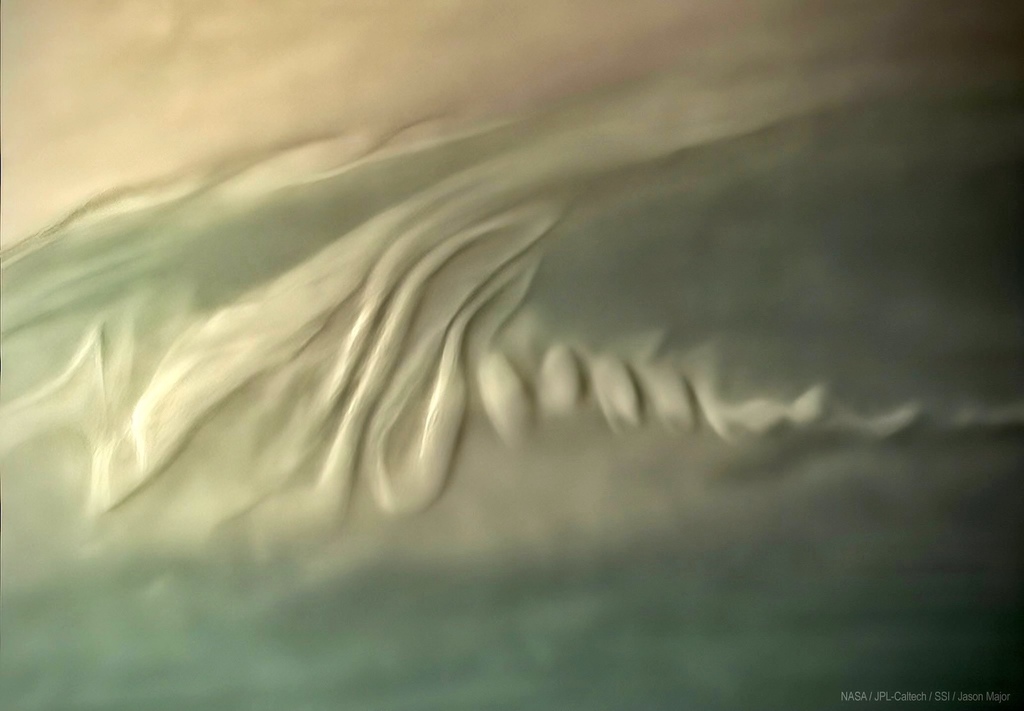
Credit: NASA/JPL-Caltech/SSI/CICLOPS/Jason Major

Friday, 6 February 2026

Saturnian Squiggle

This very impressive, and little-known, image of a meandering squiggle of high-altitude clouds on Saturn was captured by the Cassini spacecraft on July 18, 2010. It almost looks like one of these fancy latte art designs!

News

Related News

Featured Image
Sep 2, 2026
Planetary Picture of the Day - Week of August 24, 2026
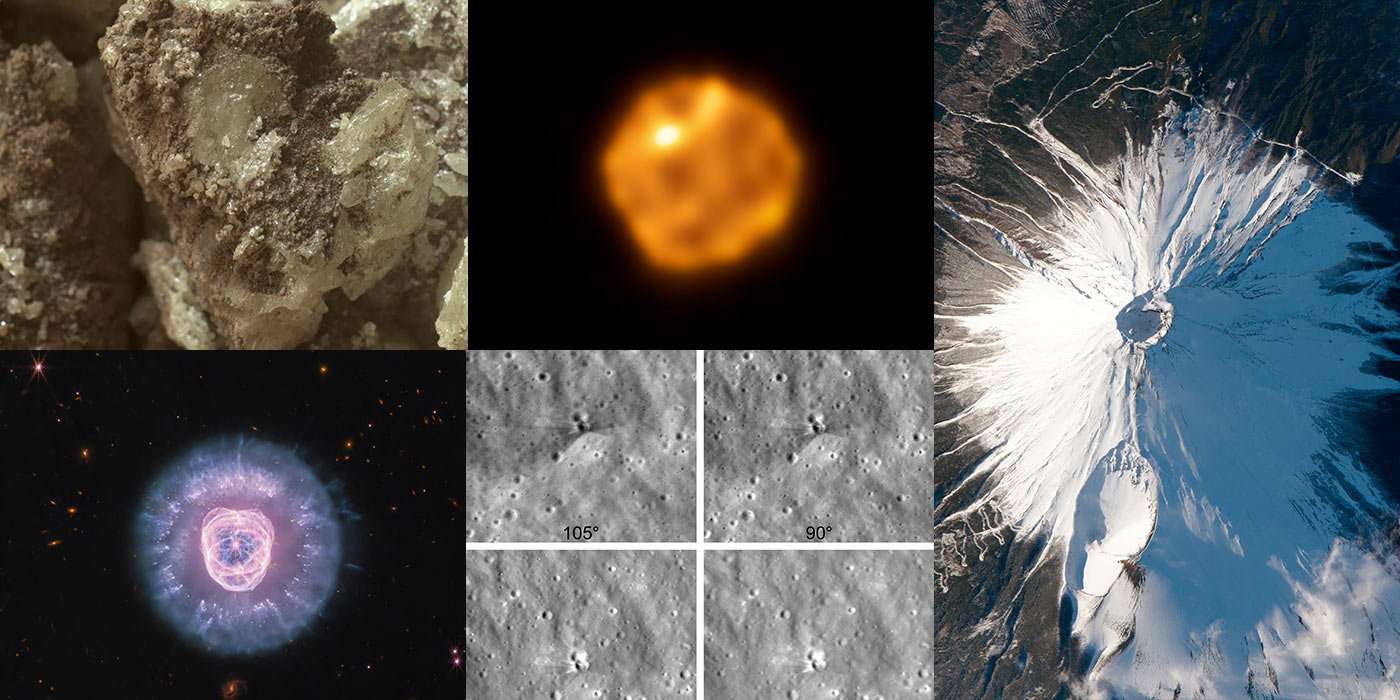
We journey from Mount Fuji as seen from orbit to the bubbling surface of Betelgeuse, exploring the forces that shape planets, moons, and stars across the cosmos. Along the way, JWST reveals the remains of a dying star, Curiosity uncovers clues to Mars’ volcanic past, and a fresh rocket impact on the Moon gives scientists a new opportunity to study how collisions reshape its surface. #PPOD
Featured Image
Aug 26, 2026
Planetary Picture of the Day - Week of August 17, 2026
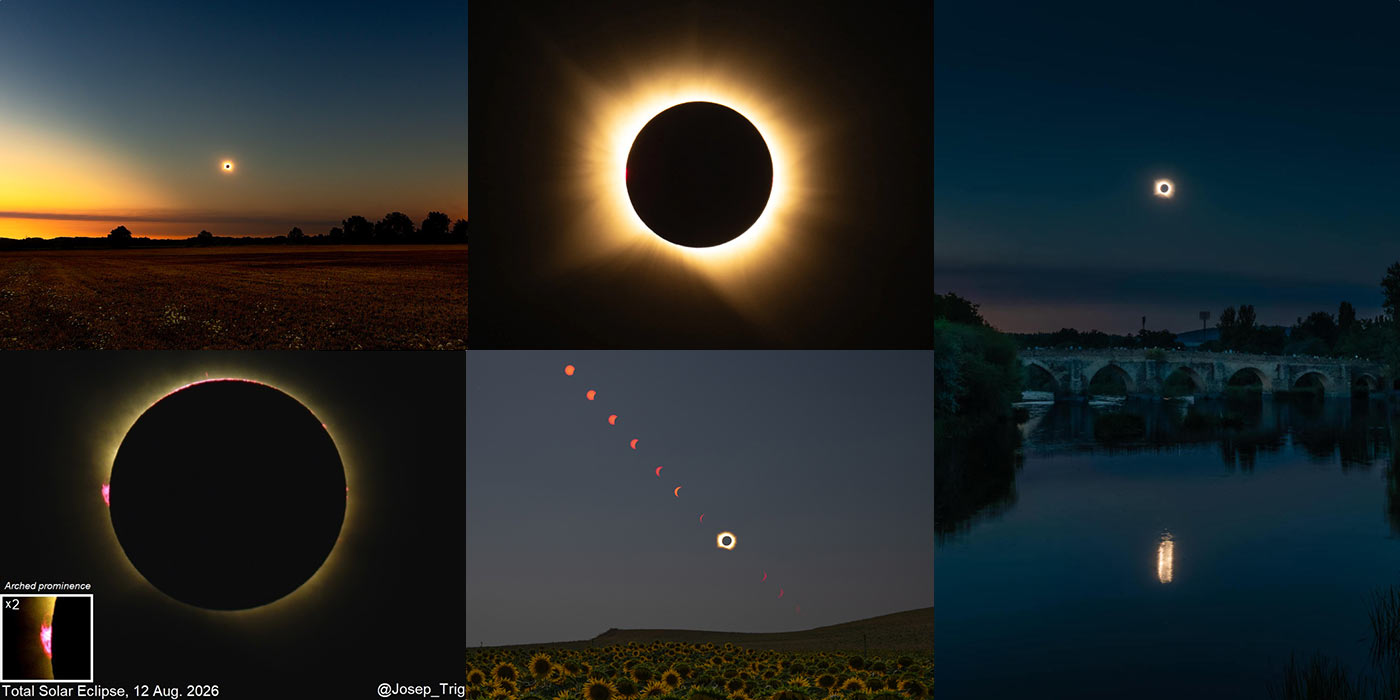
Let's celebrate the August 12 total solar eclipse through the eyes of photographers who experienced the Moon’s shadow sweeping across Spain. From Baily’s Beads and a glowing solar prominence to totality reflected in a river and framed by fields of sunflowers, these images capture both the science and extraordinary beauty of one of nature’s most spectacular celestial events. #PPOD #Eclipse
Featured Image
Aug 19, 2026
Planetary Picture of the Day - Week of August 10, 2026
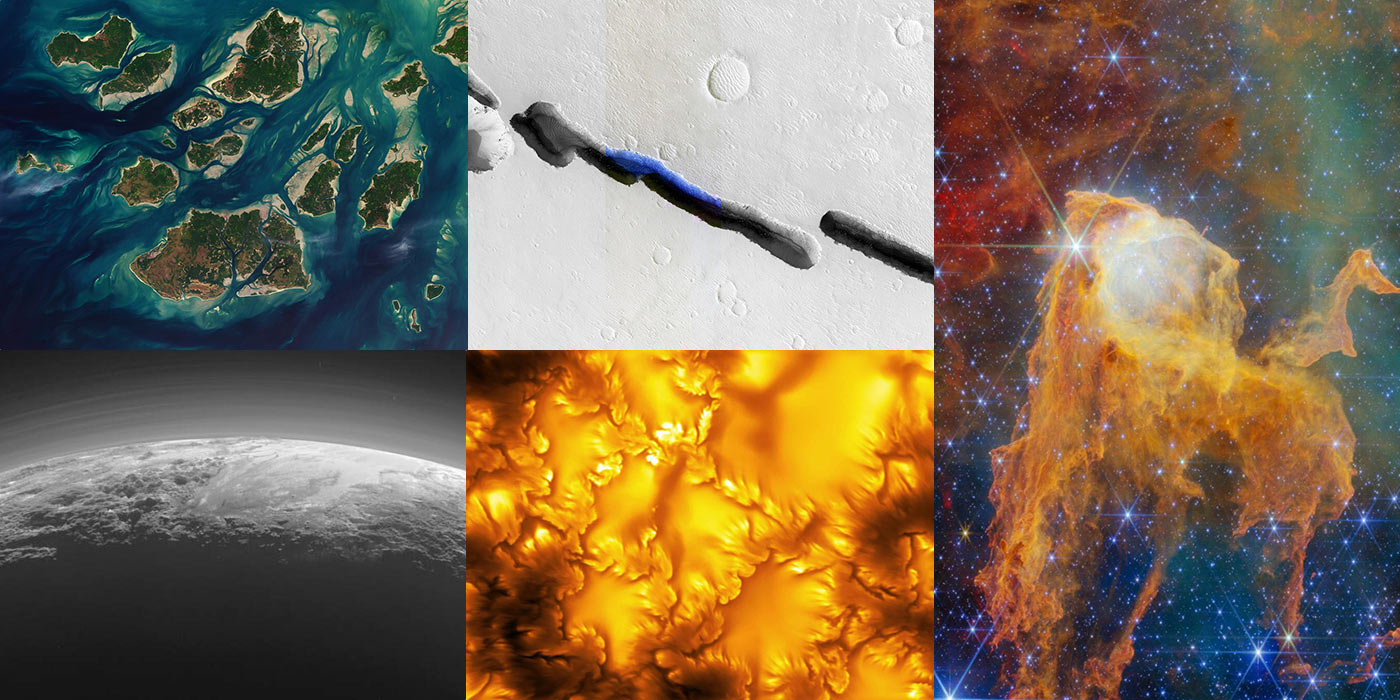
The universe is shaped by forces both immense and intricate, from fractured terrain on Mars and shifting tidal landscapes on Earth to tiny vortices dancing across the surface of the Sun. Farther afield, dramatic views of Pluto’s icy mountains and hazy atmosphere and a treasure chest of newborn stars in the Carina Nebula showcase the remarkable detail revealed by spacecraft and telescopes exploring the cosmos. #PPOD
Featured Image
Aug 12, 2026
Planetary Picture of the Day - August 3, 2026
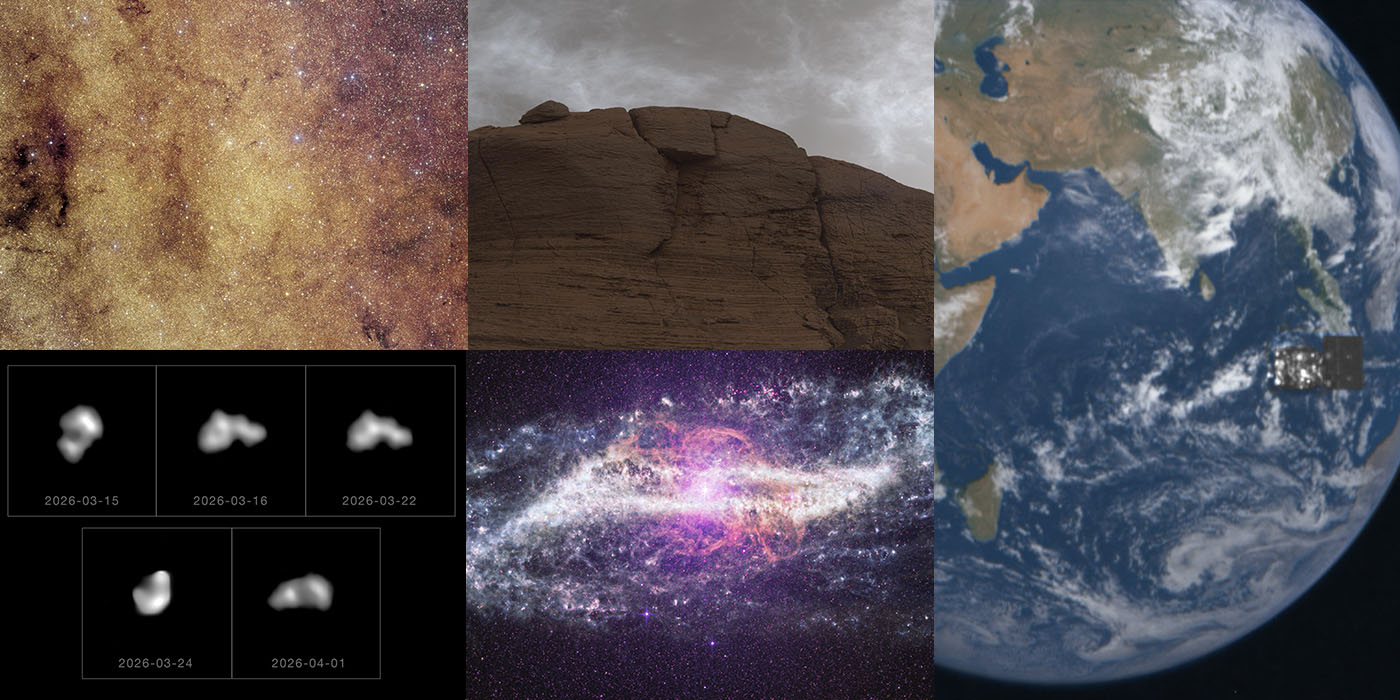
This week, we reveal hidden wonders across the cosmos, from delicate Martian clouds and a dust-shrouded galaxy to an asteroid with a never-before-seen shape and the crowded heart of the Milky Way. Together, these images showcase how new missions and advanced observatories continue to uncover surprising details about our solar system, our galaxy, and the universe beyond. #PPOD
Featured Image
Aug 5, 2026
Planetary Picture of the Day - Week of July 27, 2026
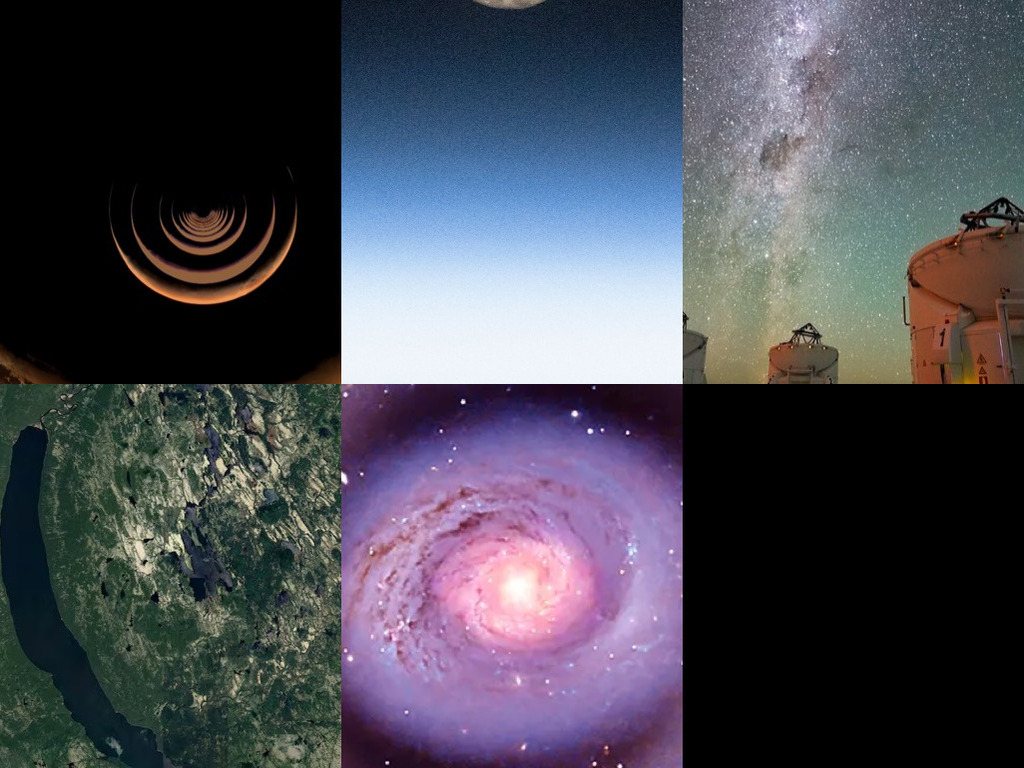
These images span the journey from our own backyard to distant galaxies, featuring Mars, the Moon, breathtaking night skies, and a fresh view of the star-forming galaxy Messier 94. Along the way, we celebrate exploration and discovery—from NASA’s Psyche mission preparing for its asteroid encounter to the revelation of a previously unknown impact crater on Earth —reminding us that there are still new wonders to uncover both on our own planet and across the cosmos. #PPOD
Featured Image
Jul 29, 2026
Planetary Picture of the Day - Week of July 20, 2026
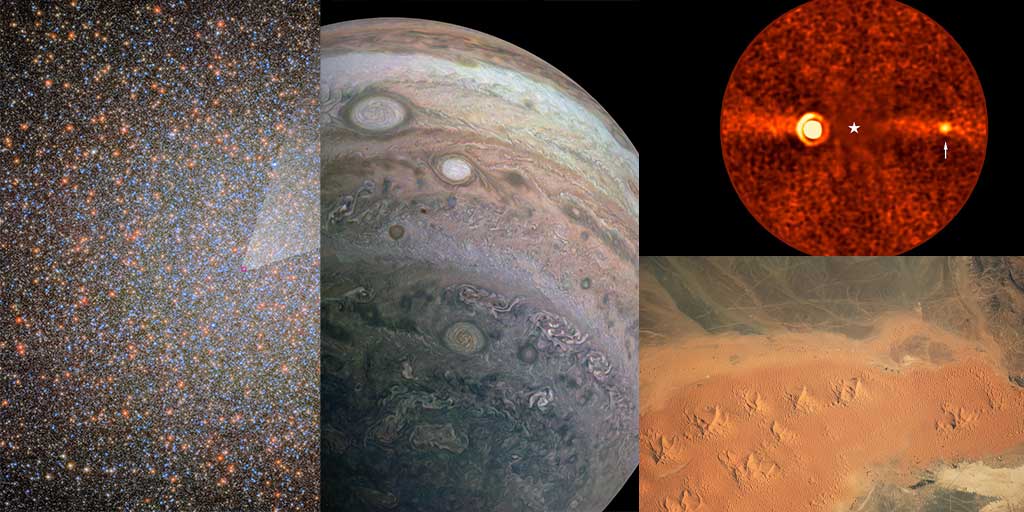
This week, we celebrate fifty years since Viking 1 became the first spacecraft to successfully land on and photograph the surface of Mars, alongside stunning new views of worlds, stars, and galaxies that continue to expand our understanding of the universe. From sculpted Sahara sand dunes and Jupiter’s colorful cloud bands to a newly discovered exoplanet and the first stellar-mass black hole identified in Omega Centauri, these images showcase the remarkable diversity of cosmic exploration. #PPOD
Research

Related Projects

Featured Image
SkyMapper • SETI • Citizen Science • Astronomy
SkyMapper: Expanding Access to Real-time Astronomy Through a Global Astronomical Network
SkyMapper and the SETI Institute are connecting educators, students and the public to live astronomical observations through a distributed astronomical network. #SkyMapper #SETI #Citizen Science #Astronomy
Featured Image
VPL
Virtual Planetary Laboratory
How can we best assess whether an exoplanet supports life? #VPL
Featured Image
Discovery and Futures Lab
What happens if life beyond Earth is discovered? The Discovery and Futures Lab at the SETI Institute fosters novel and anticipatory research at the intersection of science, society, our planet, and the search for life beyond Earth.  #Discovery and Futures Lab
Support Us

Support the
SETI Institute

Scientists are getting closer in their search for life beyond earth. But with limited federal funding for the search for extraterrestrial intelligence, supporters are the reason cutting-edge scientists can keep their eyes on the sky.