Planetary Picture of the Day Week of February 17, 2025
This week's collection includes everything melting, flowing, and/or exploding, from thawing gullies on Mars to volcanoes on the moon and Earth to a supernova remnant in the Large Magellanic Cloud.
Monday, 17 February 2025
Credit: NASA/JPL-Caltech/University of Arizona
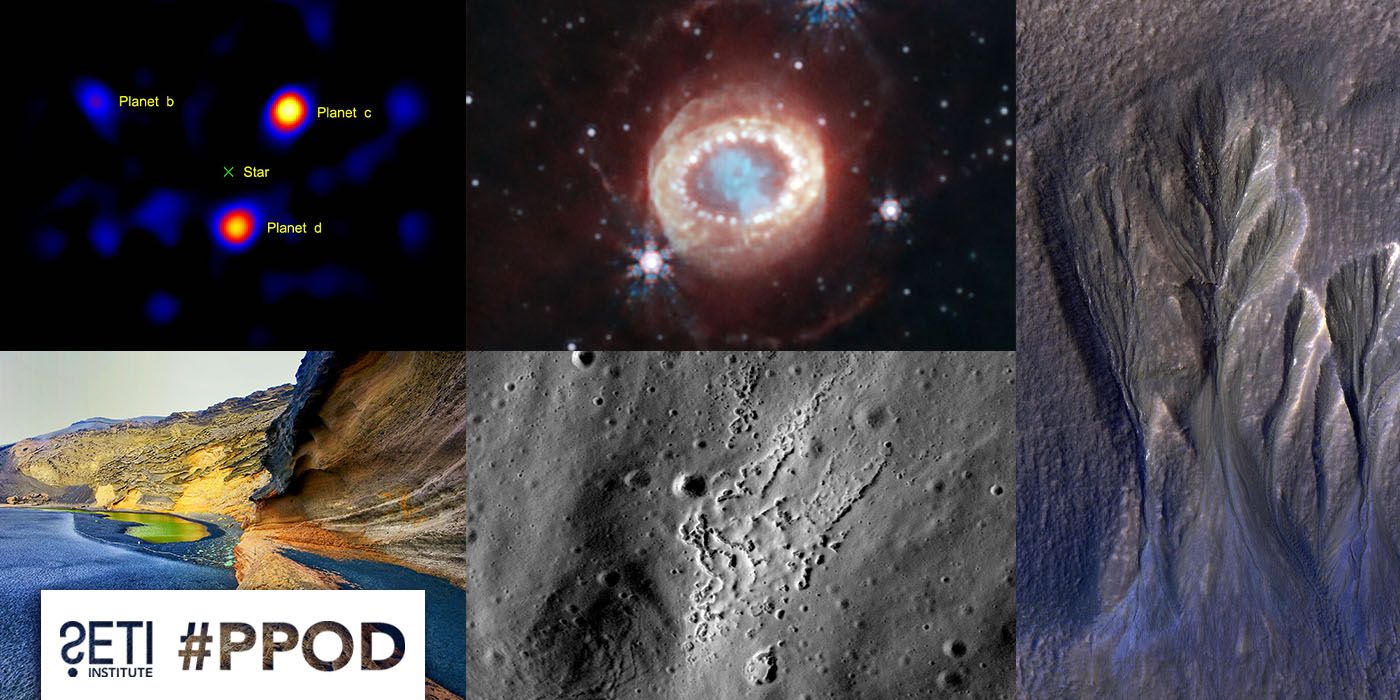
Dusty Water Ice in Mars' Terra Sirenum This image from NASA's Mars Reconnaissance Orbiter (MRO) shows white material believed to be dusty water ice lining the edges of Martian gullies in a region named Terra Sirenum. Scientists believe dust particles within this ice act similarly to dust that falls onto glaciers on Earth, warming up in sunlight and causing subsurface pockets of meltwater to form.
On Earth, the dust that builds up on glaciers is called cryoconite, and the pockets it forms are called cryoconite holes. These pockets of water on our planet are often teeming with simple life, including algae, fungi, and cyanobacteria. Scientists believe similar shallow pools of water could exist on Mars, and may also be excellent places to search for life on the Red Planet today.
This enhanced-color image was captured by MRO's HiRISE (High-Resolution Imaging Science Experiment) camera on Dec. 25, 2016.
The blue color at the bottom of the gullies is likely coarse sand (not ice); the hue would not be perceptible to the human eye. However, HiRISE can detect this color by looking at the scene in far-infrared wavelengths.
Tuesday, 18 February 2025
Credit: Miriela Rodríguez via Wikimedia Commons
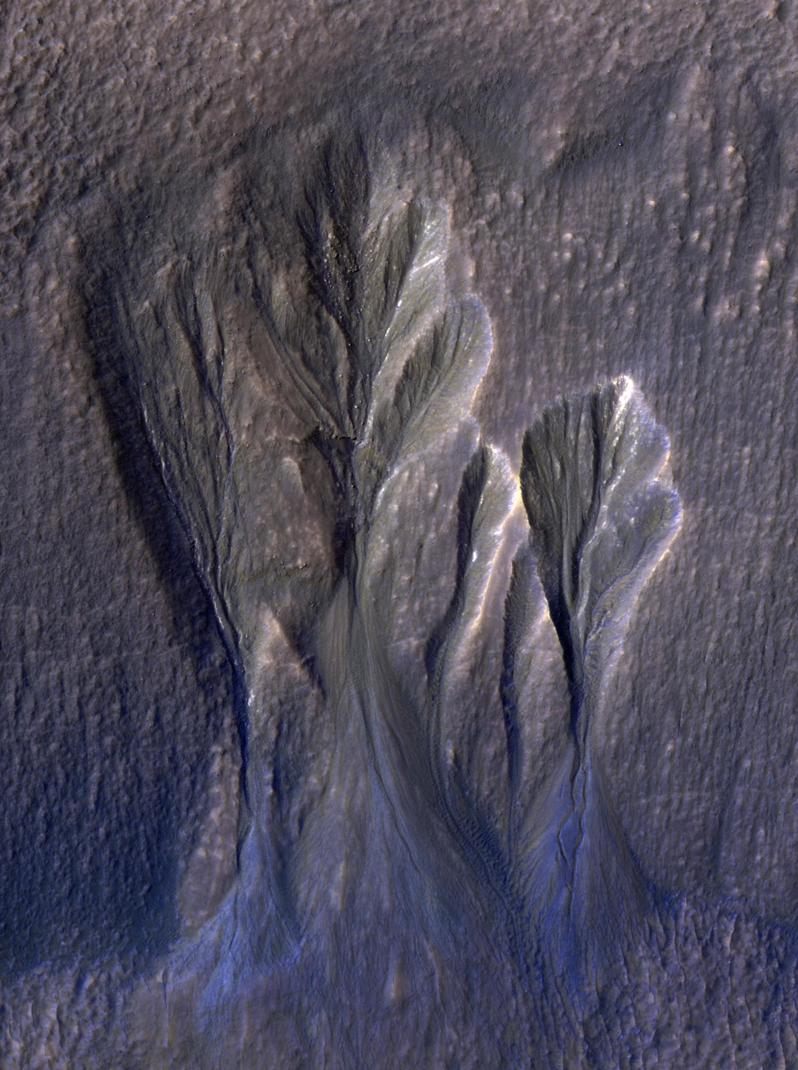
Charco de los Clicos Timanfaya National Park is a Spanish national park in the southwestern part of Lanzarote, in the Canary Islands. It covers parts of the municipalities of Tinajo and Yaiza. On the west coast of the island, an almost otherworldly landscape exists. Here, the crater of an extinct volcano submerges into the Atlantic Ocean, forming a lagoon known as the Charco de los Clicos (Green Lagoon). The lagoon's green color is caused by algae at the bottom.
Wednesday, 19 February 2025
Credit: NASA/JPL-Caltech/Palomar Observatory
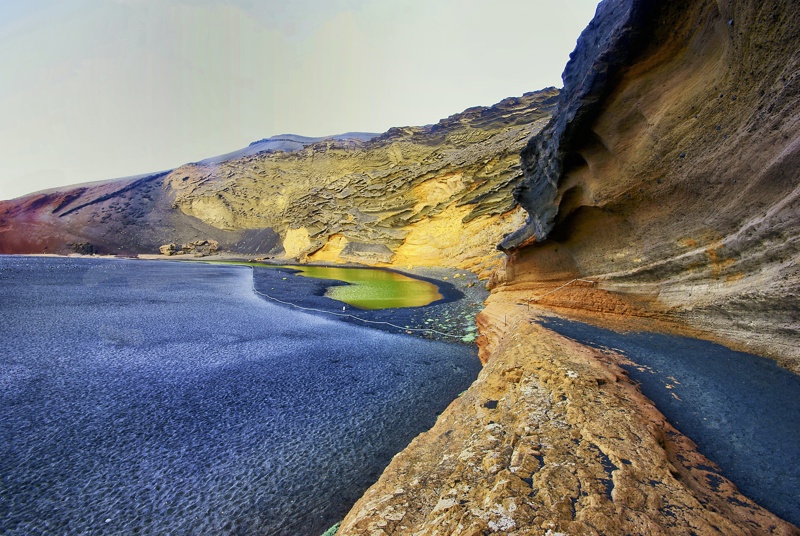
Three Planets at HR8799 This image shows the light from three planets orbiting a star 120 light-years away. The planets' star, called HR8799, is located at the spot marked with an "X." This picture was taken using a small, 1.5-meter portion of the Palomar Observatory's Hale Telescope, north of San Diego, California. This was the first time a picture of planets beyond our solar system had been captured using a telescope with a modest-sized mirror -- previous images were taken using larger telescopes. The three planets, called HR8799b, c, and d, are thought to be gas giants like Jupiter, but more massive. They orbit their host star at roughly 24, 38, and 68 times the distance between our Earth and the sun, respectively (Jupiter resides at about 5 times the Earth-sun distance).
Thursday, 20 February 2025
Credit: NASA/GSFC/Intuitive Machines
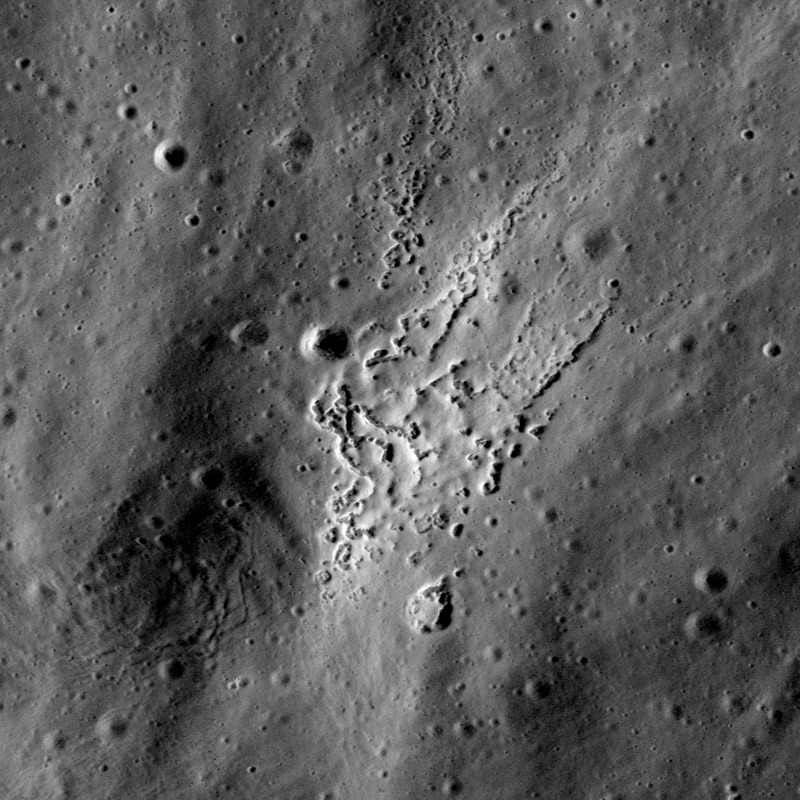
Young Volcanism? One of the early findings from NASA's Lunar Reconnaissance Orbiter was the discovery of features known as Irregular Mare Patches (IMPs) scattered across the near side of the moon. These landforms are generally considered volcanic. However, their ages are hotly debated. They may be as young as 50 million years or as old as 3.5 billion years. The Aristarchus IMP (25.045°N, 313.233°E) is one of the smallest and most enigmatic IMPs. The fact that this IMP is found within the Aristarchus crater ejecta suggests it formed after the crater, which is dated at 200 million years.
Alternatively, this IMP may have formed as part of ejecta emplacement from the Aristarchus crater forming impact. However, no other crater ejecta on the Moon exhibits a similar landform.
Friday, 21 February 2025
Credit: NASA, ESA, CSA, M. Matsuura (Cardiff University), R. Arendt (NASA’s Goddard Spaceflight Center & University of Maryland, Baltimore County), C. Fransson (Stockholm University), J. Larsson (KTH Royal Institute of Technology), A. Pagan (STScI)
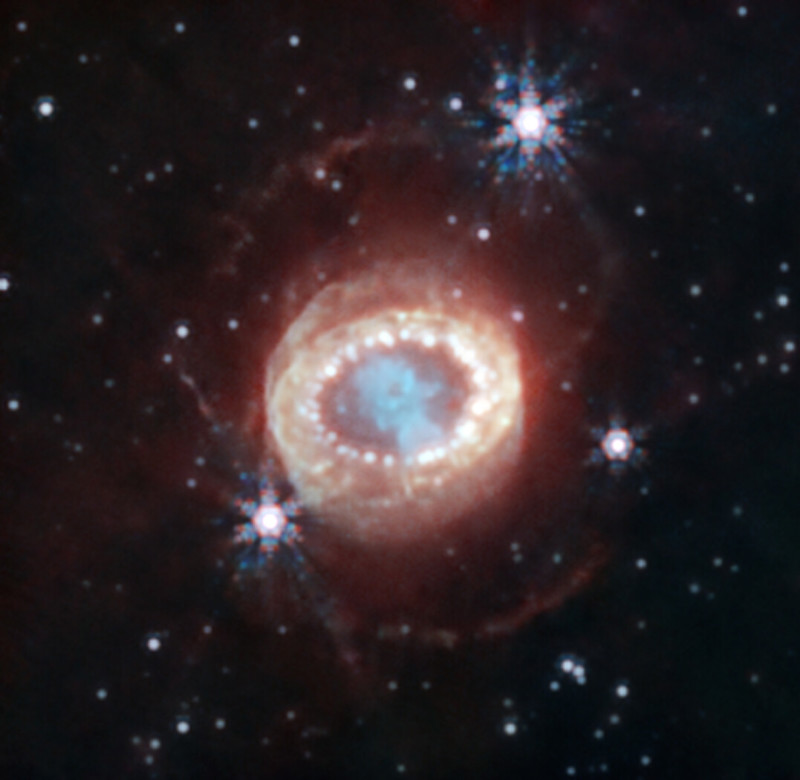
Heart and Soul Located 168,000 light-years away in the Large Magellanic Cloud, Supernova (SN) 1987A has been a target of intense observations at wavelengths ranging from gamma rays to radio for nearly 40 years, since its discovery in February of 1987. Recent observations by Webb’s NIRCam (Near-Infrared Camera) provide a crucial clue to our understanding of how a supernova develops over time to shape its remnant.
This image reveals a central structure like a keyhole. This center is packed with clumpy gas and dust ejected by the supernova explosion. The dust is so dense that even near-infrared light that Webb detects can’t penetrate it, shaping the dark “hole” in the keyhole. A bright, equatorial ring surrounds the inner keyhole, forming a band around the waist that connects two faint arms of hourglass-shaped outer rings. The equatorial ring, formed from material ejected tens of thousands of years before the supernova explosion, contains bright hot spots, which appeared as the supernova’s shock wave hit the ring. Now spots are found even exterior to the ring, with diffuse emission surrounding it. These are the locations of supernova shocks hitting more exterior material.
In this image, blue represents the light at 1.5 microns (F150W), cyan at 1.64 and 2.0 microns (F164N, F200W), yellow at 3.23 microns (F323N), orange at 4.05 microns (F405N), and red 4.44 microns (F444W).
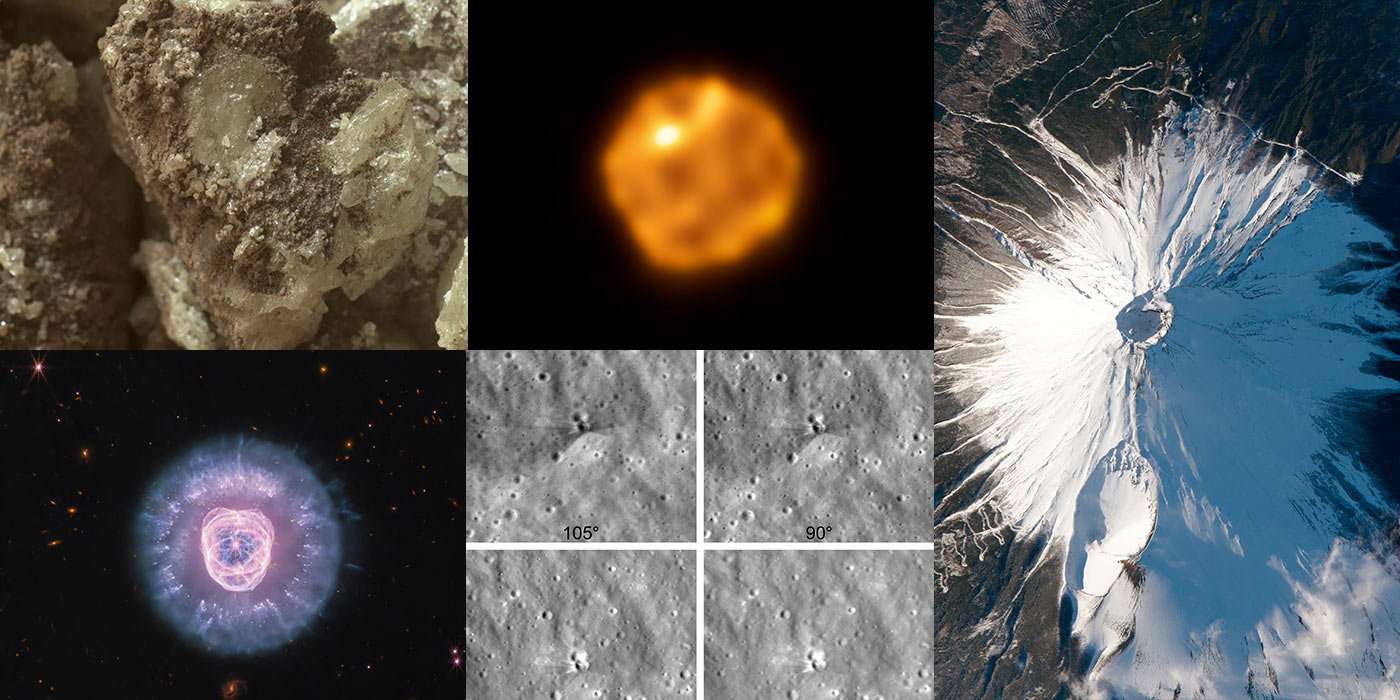
We journey from Mount Fuji as seen from orbit to the bubbling surface of Betelgeuse, exploring the forces that shape planets, moons, and stars across the cosmos. Along the way, JWST reveals the remains of a dying star, Curiosity uncovers clues to Mars’ volcanic past, and a fresh rocket impact on the Moon gives scientists a new opportunity to study how collisions reshape its surface.
#PPOD
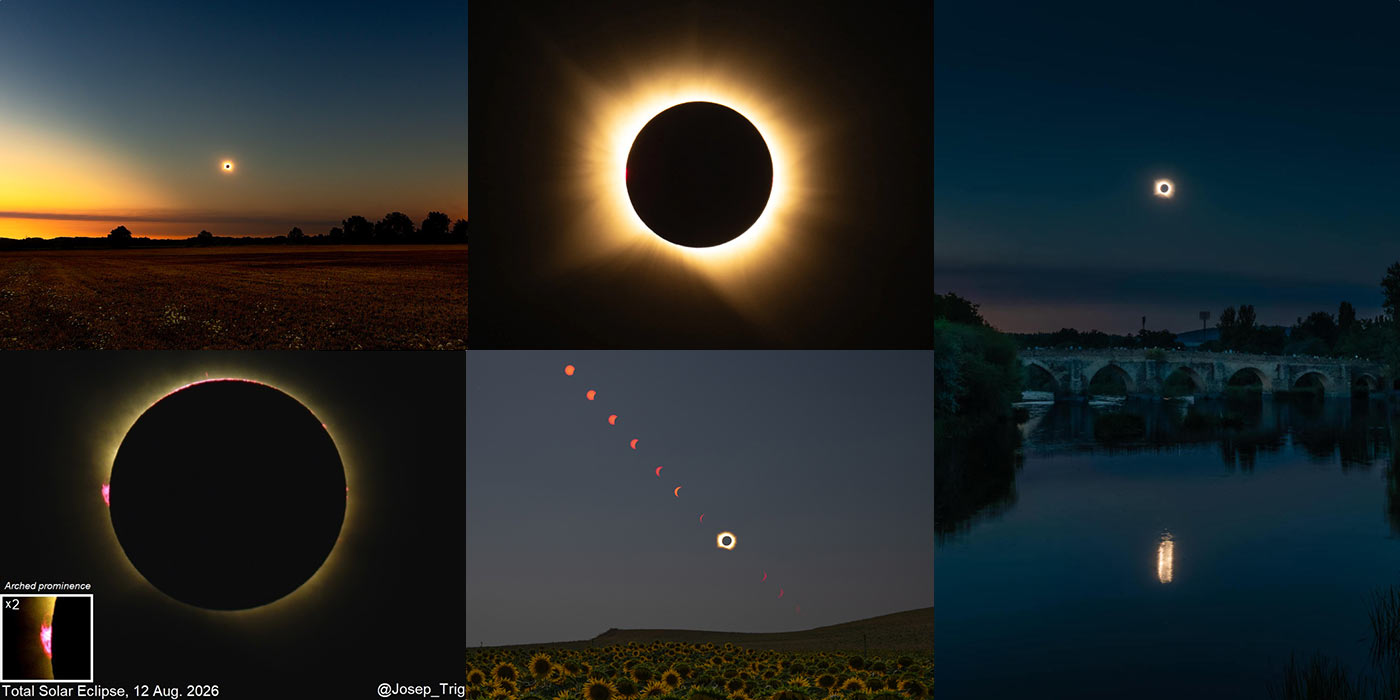
Let's celebrate the August 12 total solar eclipse through the eyes of photographers who experienced the Moon’s shadow sweeping across Spain. From Baily’s Beads and a glowing solar prominence to totality reflected in a river and framed by fields of sunflowers, these images capture both the science and extraordinary beauty of one of nature’s most spectacular celestial events.
#PPOD
#Eclipse
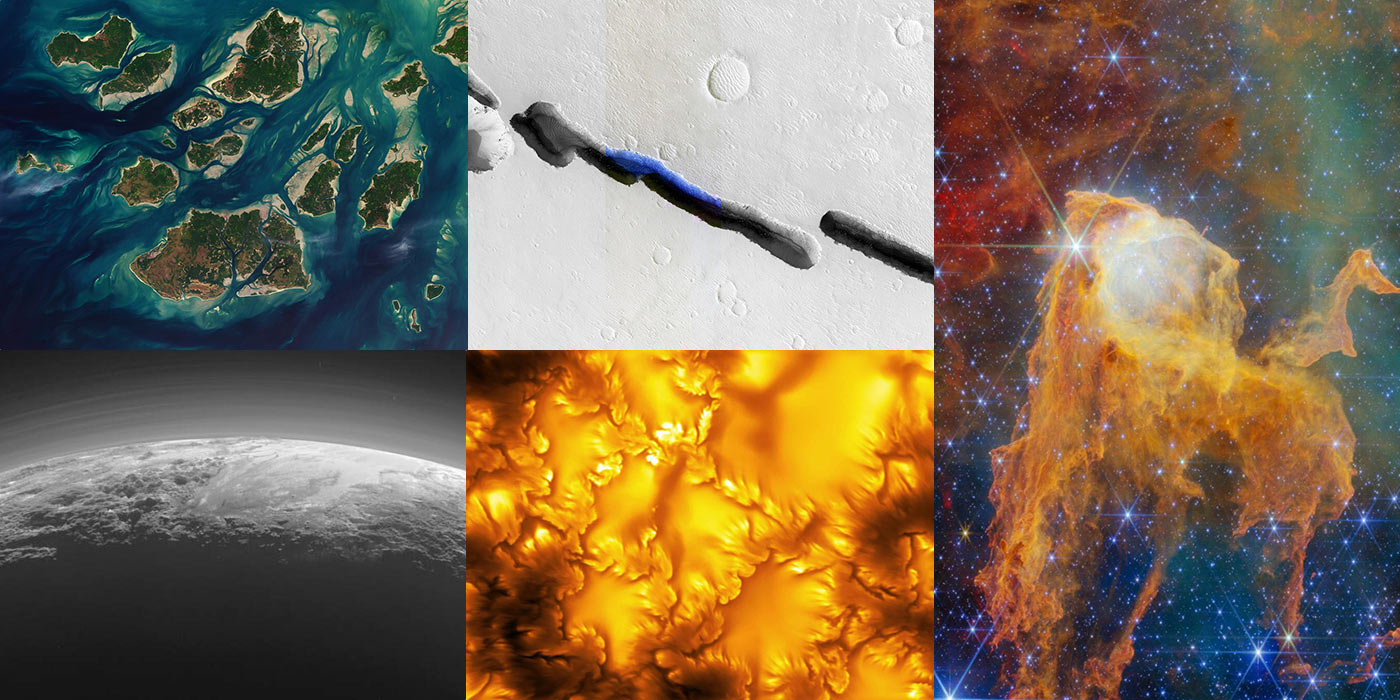
The universe is shaped by forces both immense and intricate, from fractured terrain on Mars and shifting tidal landscapes on Earth to tiny vortices dancing across the surface of the Sun. Farther afield, dramatic views of Pluto’s icy mountains and hazy atmosphere and a treasure chest of newborn stars in the Carina Nebula showcase the remarkable detail revealed by spacecraft and telescopes exploring the cosmos.
#PPOD
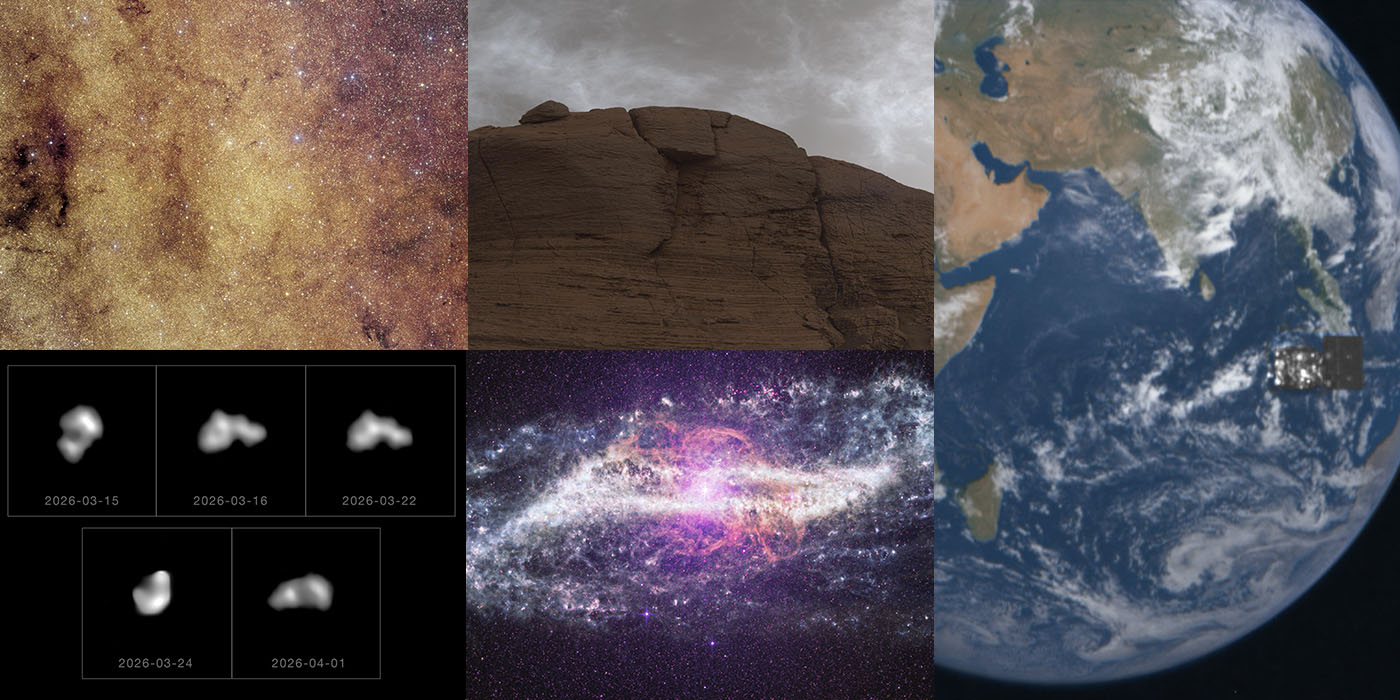
This week, we reveal hidden wonders across the cosmos, from delicate Martian clouds and a dust-shrouded galaxy to an asteroid with a never-before-seen shape and the crowded heart of the Milky Way. Together, these images showcase how new missions and advanced observatories continue to uncover surprising details about our solar system, our galaxy, and the universe beyond.
#PPOD
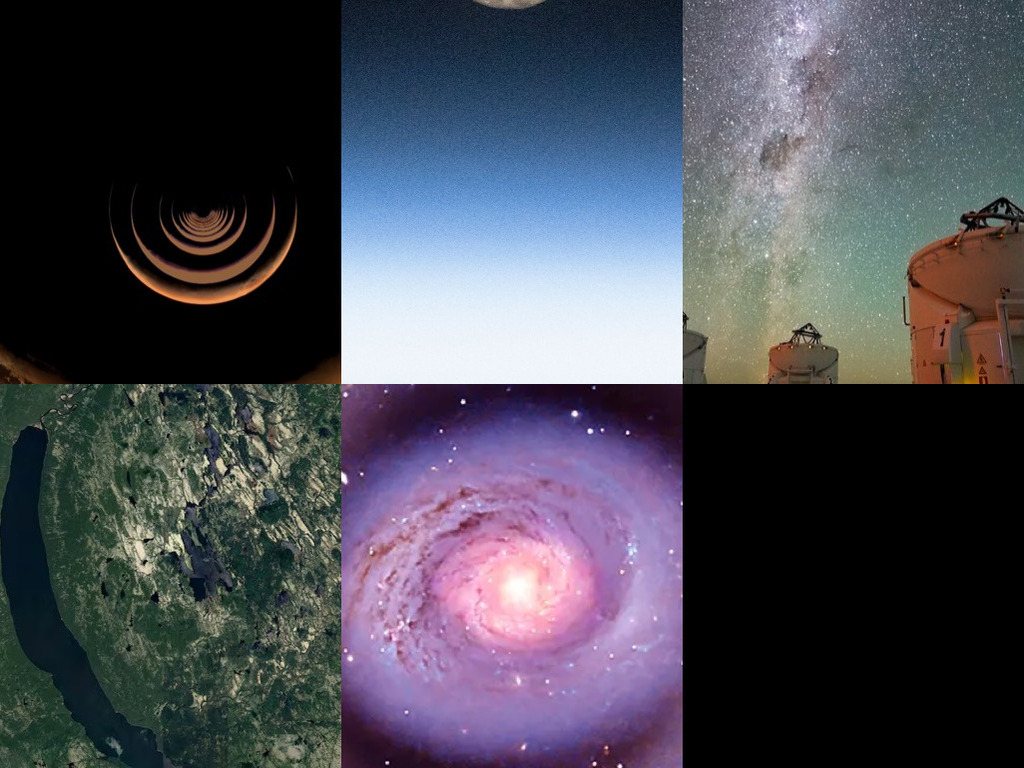
These images span the journey from our own backyard to distant galaxies, featuring Mars, the Moon, breathtaking night skies, and a fresh view of the star-forming galaxy Messier 94. Along the way, we celebrate exploration and discovery—from NASA’s Psyche mission preparing for its asteroid encounter to the revelation of a previously unknown impact crater on Earth —reminding us that there are still new wonders to uncover both on our own planet and across the cosmos.
#PPOD
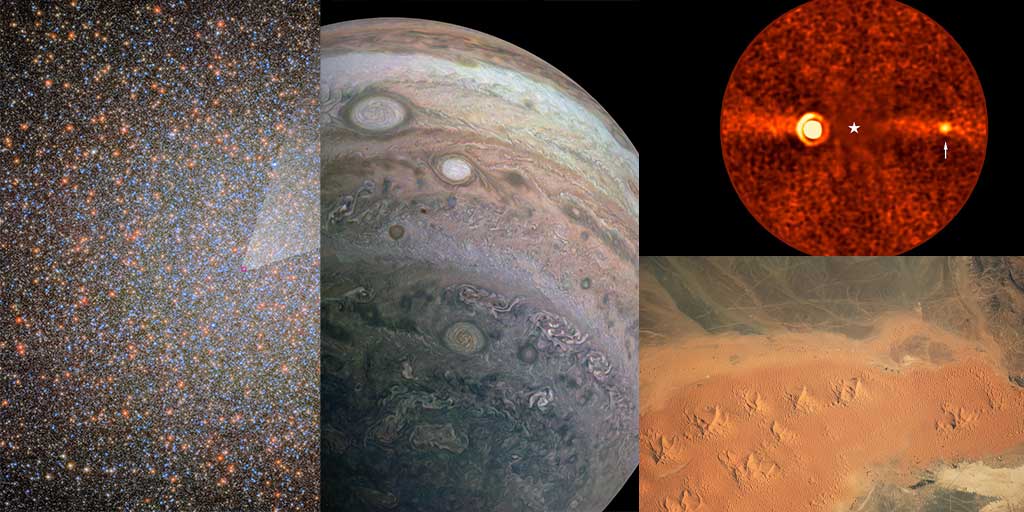
This week, we celebrate fifty years since Viking 1 became the first spacecraft to successfully land on and photograph the surface of Mars, alongside stunning new views of worlds, stars, and galaxies that continue to expand our understanding of the universe. From sculpted Sahara sand dunes and Jupiter’s colorful cloud bands to a newly discovered exoplanet and the first stellar-mass black hole identified in Omega Centauri, these images showcase the remarkable diversity of cosmic exploration.
#PPOD
We journey from Mount Fuji as seen from orbit to the bubbling surface of Betelgeuse, exploring the forces that shape planets, moons, and stars across the cosmos. Along the way, JWST reveals the remains of a dying star, Curiosity uncovers clues to Mars’ volcanic past, and a fresh rocket impact on the Moon gives scientists a new opportunity to study how collisions reshape its surface.
Let's celebrate the August 12 total solar eclipse through the eyes of photographers who experienced the Moon’s shadow sweeping across Spain. From Baily’s Beads and a glowing solar prominence to totality reflected in a river and framed by fields of sunflowers, these images capture both the science and extraordinary beauty of one of nature’s most spectacular celestial events.
The universe is shaped by forces both immense and intricate, from fractured terrain on Mars and shifting tidal landscapes on Earth to tiny vortices dancing across the surface of the Sun. Farther afield, dramatic views of Pluto’s icy mountains and hazy atmosphere and a treasure chest of newborn stars in the Carina Nebula showcase the remarkable detail revealed by spacecraft and telescopes exploring the cosmos.
This week, we reveal hidden wonders across the cosmos, from delicate Martian clouds and a dust-shrouded galaxy to an asteroid with a never-before-seen shape and the crowded heart of the Milky Way. Together, these images showcase how new missions and advanced observatories continue to uncover surprising details about our solar system, our galaxy, and the universe beyond.
These images span the journey from our own backyard to distant galaxies, featuring Mars, the Moon, breathtaking night skies, and a fresh view of the star-forming galaxy Messier 94. Along the way, we celebrate exploration and discovery—from NASA’s Psyche mission preparing for its asteroid encounter to the revelation of a previously unknown impact crater on Earth —reminding us that there are still new wonders to uncover both on our own planet and across the cosmos.
This week, we celebrate fifty years since Viking 1 became the first spacecraft to successfully land on and photograph the surface of Mars, alongside stunning new views of worlds, stars, and galaxies that continue to expand our understanding of the universe. From sculpted Sahara sand dunes and Jupiter’s colorful cloud bands to a newly discovered exoplanet and the first stellar-mass black hole identified in Omega Centauri, these images showcase the remarkable diversity of cosmic exploration.
SkyMapper and the SETI Institute are connecting educators, students and the public to live astronomical observations through a distributed astronomical network.
#SkyMapper
#SETI
#Citizen Science
#Astronomy
What happens if life beyond Earth is discovered? The Discovery and Futures Lab at the SETI Institute fosters novel and anticipatory research at the intersection of science, society, our planet, and the search for life beyond Earth.
#Discovery and Futures Lab
SkyMapper and the SETI Institute are connecting educators, students and the public to live astronomical observations through a distributed astronomical network.
What happens if life beyond Earth is discovered? The Discovery and Futures Lab at the SETI Institute fosters novel and anticipatory research at the intersection of science, society, our planet, and the search for life beyond Earth.
Scientists are getting closer in their search for life beyond earth. But with limited federal funding for the search for extraterrestrial intelligence, supporters are the reason cutting-edge scientists can keep their eyes on the sky.
)