






Planetary Picture of the Day
Week of December 18, 2023
A Martian dune field, an Icelandic eruption, and a stunning, brand new JWST image of Uranus.
Monday, December 18, 2023
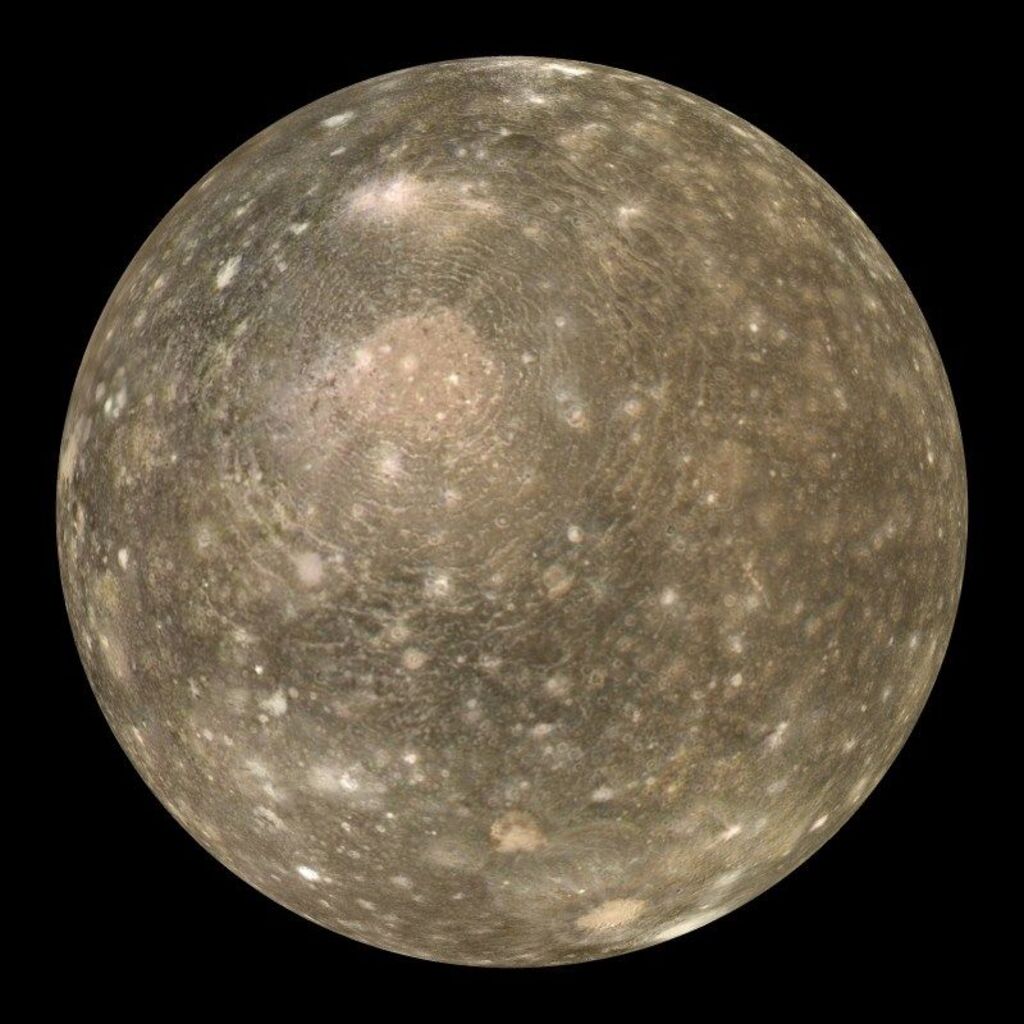
Jupiter's Callisto
Callisto as seen by the Galileo spacecraft on November 5, 1997. Callisto is Jupiter’s second-largest moon and the third-largest moon in our solar system. It’s about the same size as Mercury. Data from NASA’s Galileo spacecraft in the 1990s revealed Callisto may have a secret: a salty ocean beneath its surface. That finding put the once seemingly dead moon on the list of worlds that could possibly harbor life.
The giant impact basin Valhalla is prominent just to the left of and a bit above the center of the disk.
Tuesday, December 19, 2023
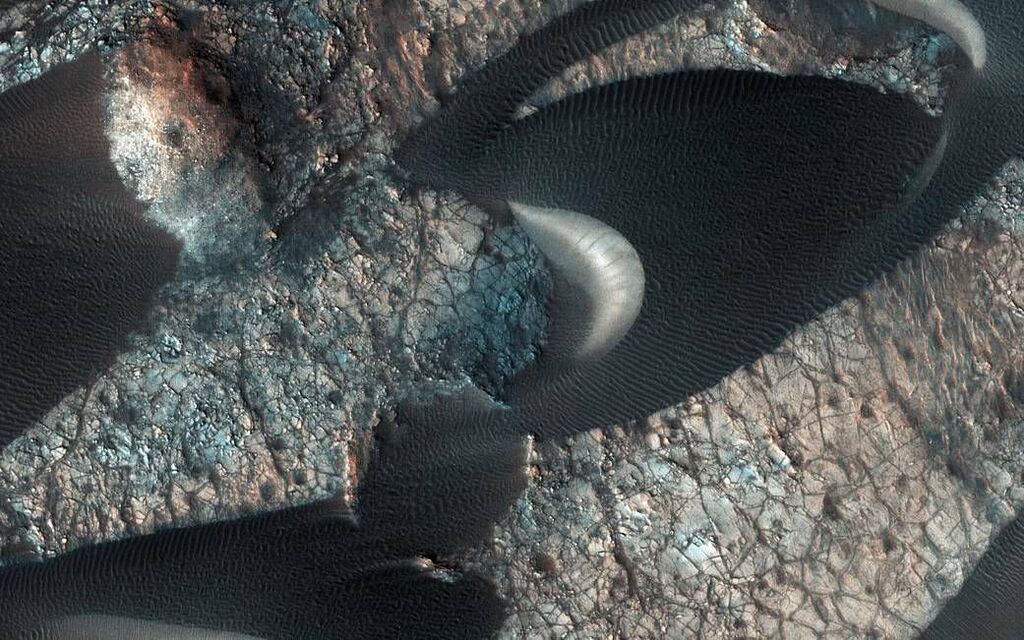
Nili Patera Dune Field on Mars
The HiRISE camera onboard NASA's Mars Reconnaissance Orbiter captured this striking image of dunes on Mars. They have an elongated crescent form and are called “barchan dunes.” They are formed by the continuous action of the wind, blowing in the same direction, giving this particular shape.
The orientation of these dunes tells us that the prevailing wind blows from the right to the left (east to west). The wind is continuously moving sand grains up the longer dune slope, towards the top. The small ripples on the slope are caused by this movement. When the sand grains arrive at the top, they fall down the steeper and shorter slope, which as a consequence, has no ripples. It is this gradual sand movement that causes the dunes to slowly move over time.
Wednesday, December 20, 2023
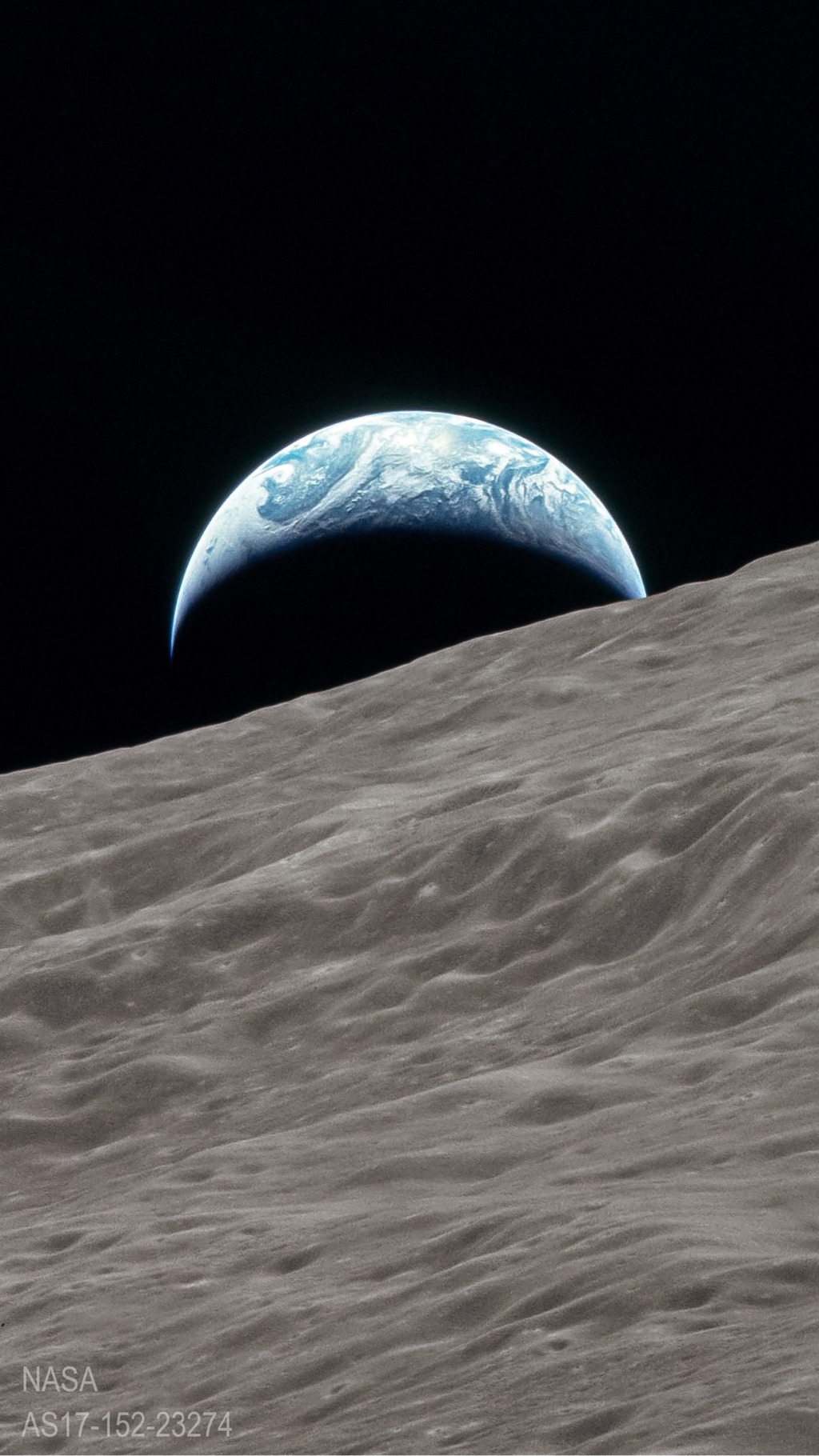
Earth-Moon Wallpaper Wednesday
The Earth is seen beyond the limb of the Moon, taken from the Command Module of Apollo 17 on December 16, 1972. (From original NASA image # AS17-152-23274).
Thursday, December 21, 2023
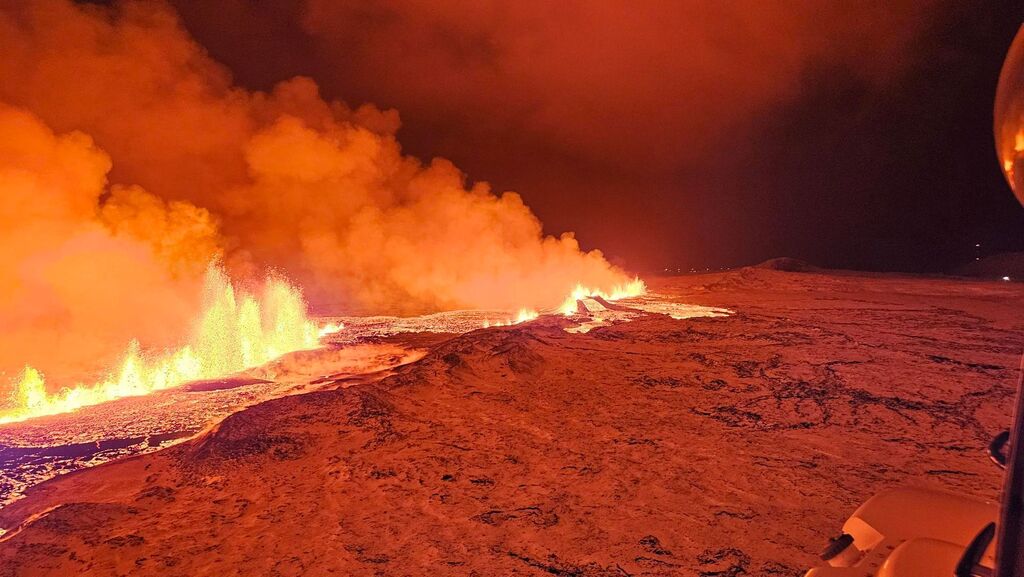
Icelandic Eruption!
This is Iceland erupting! This image, taken from the air on 19 December, is nothing short of Hadean. The new eruption fissure is about four kilometers long, painting the frosted ground with the planet’s latest coat of magmatic paint.
Friday, December 22, 2023
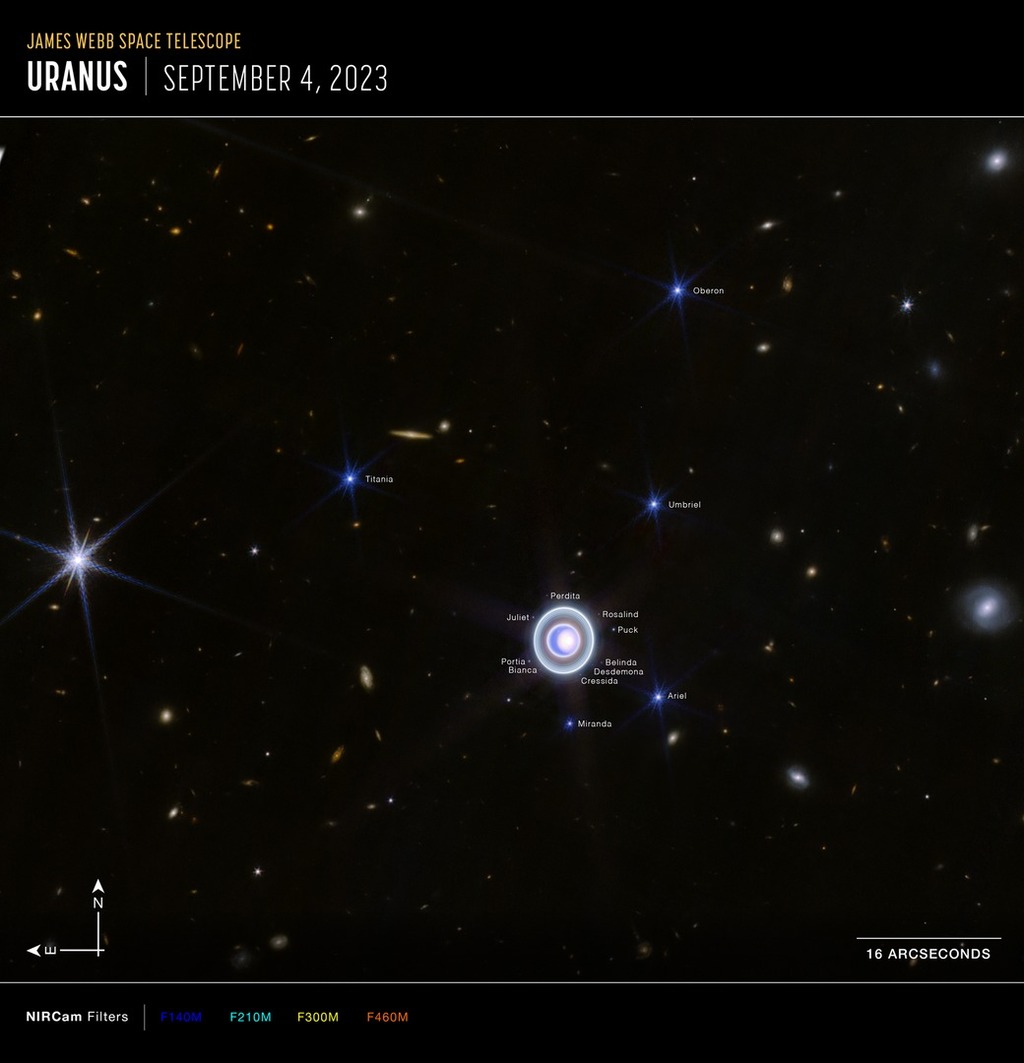
New Uranus Image Dropped!
What better way to finish out the week than with this new image of Uranus taken by the JWST?
Taken with NIRCam (Near-Infrared Camera), the picture shows the planet and its rings in new clarity. The planet’s seasonal north polar cap gleams in a bright white, and Webb’s exquisite sensitivity resolves Uranus’ dim inner and outer rings, including the Zeta ring—the extremely faint and diffuse ring closest to the planet.
This Webb image also shows 14 of the planet’s 27 moons: Oberon, Titania, Umbriel, Juliet, Perdita, Rosalind, Puck, Belinda, Desdemona, Cressida, Ariel, Miranda, Bianca, and Portia. See the second image for annotations.
News
Related News
Planetary Picture of the Day - Week of August 24, 2026
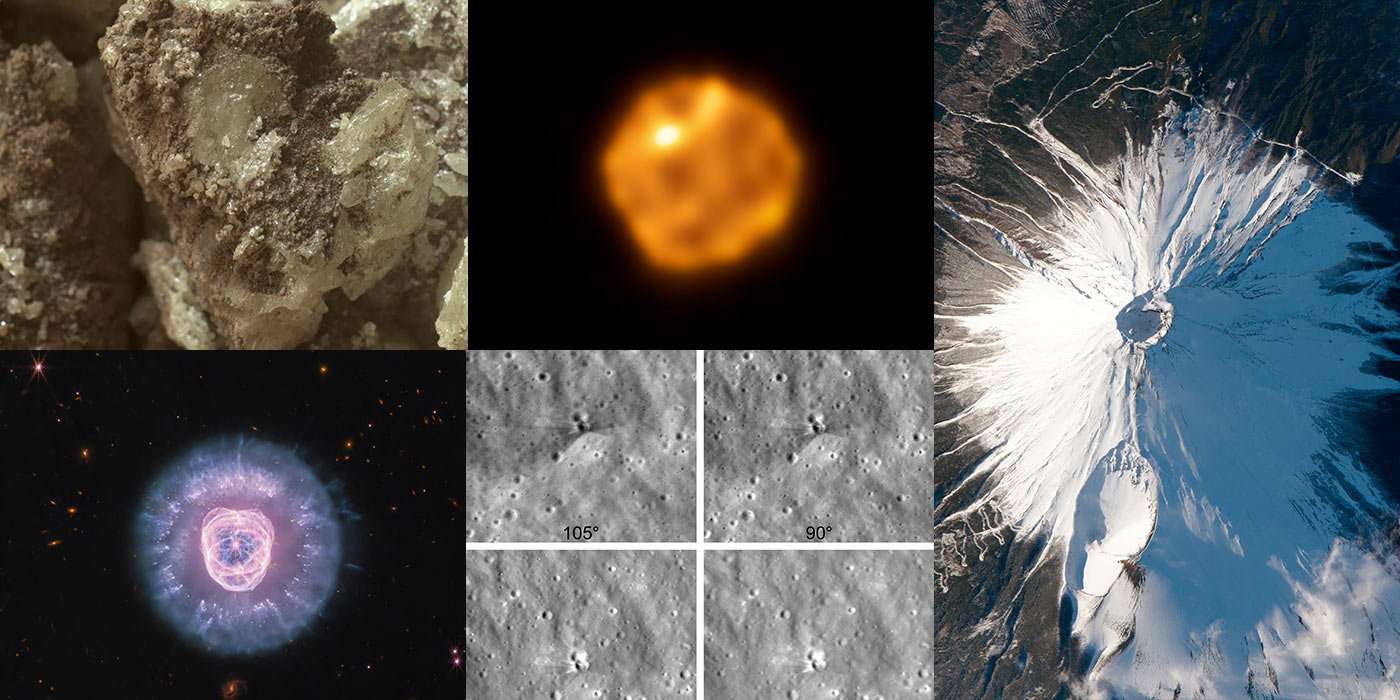
We journey from Mount Fuji as seen from orbit to the bubbling surface of Betelgeuse, exploring the forces that shape planets, moons, and stars across the cosmos. Along the way, JWST reveals the remains of a dying star, Curiosity uncovers clues to Mars’ volcanic past, and a fresh rocket impact on the Moon gives scientists a new opportunity to study how collisions reshape its surface. #PPOD

Planetary Picture of the Day - Week of August 17, 2026
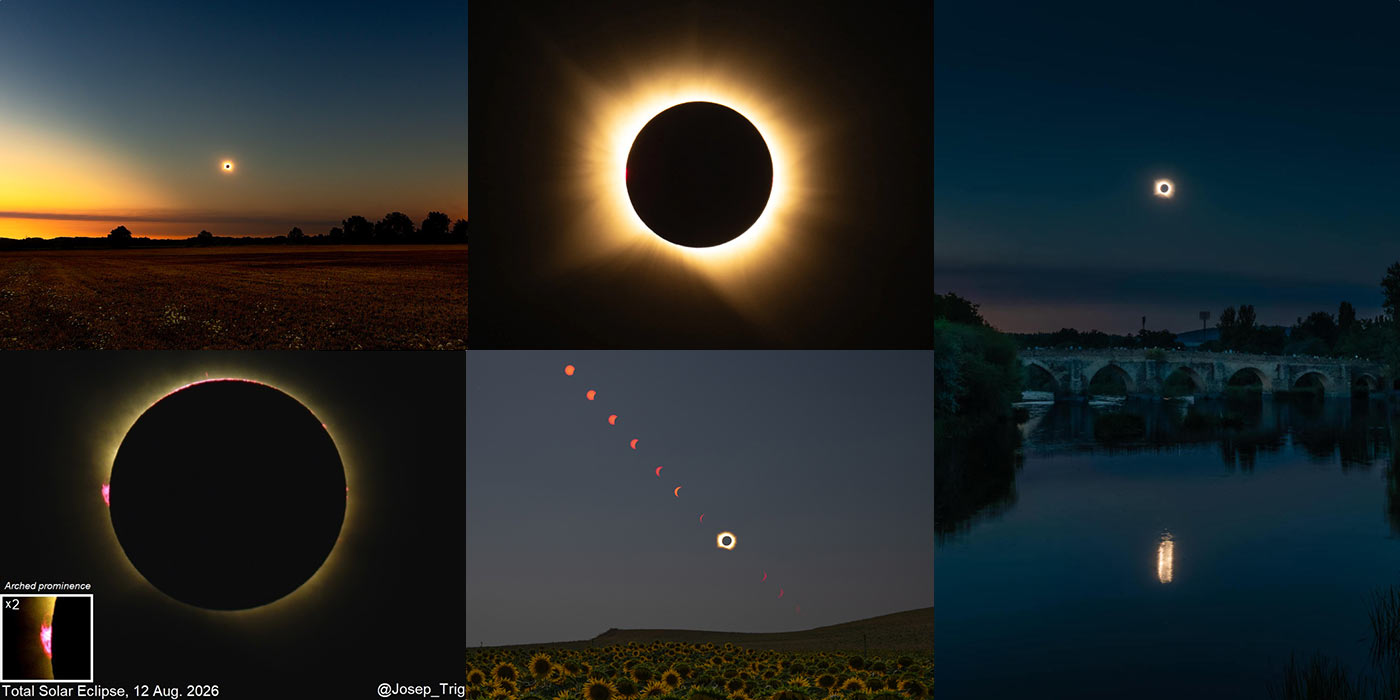
Let's celebrate the August 12 total solar eclipse through the eyes of photographers who experienced the Moon’s shadow sweeping across Spain. From Baily’s Beads and a glowing solar prominence to totality reflected in a river and framed by fields of sunflowers, these images capture both the science and extraordinary beauty of one of nature’s most spectacular celestial events. #PPOD #Eclipse
Planetary Picture of the Day - Week of August 10, 2026
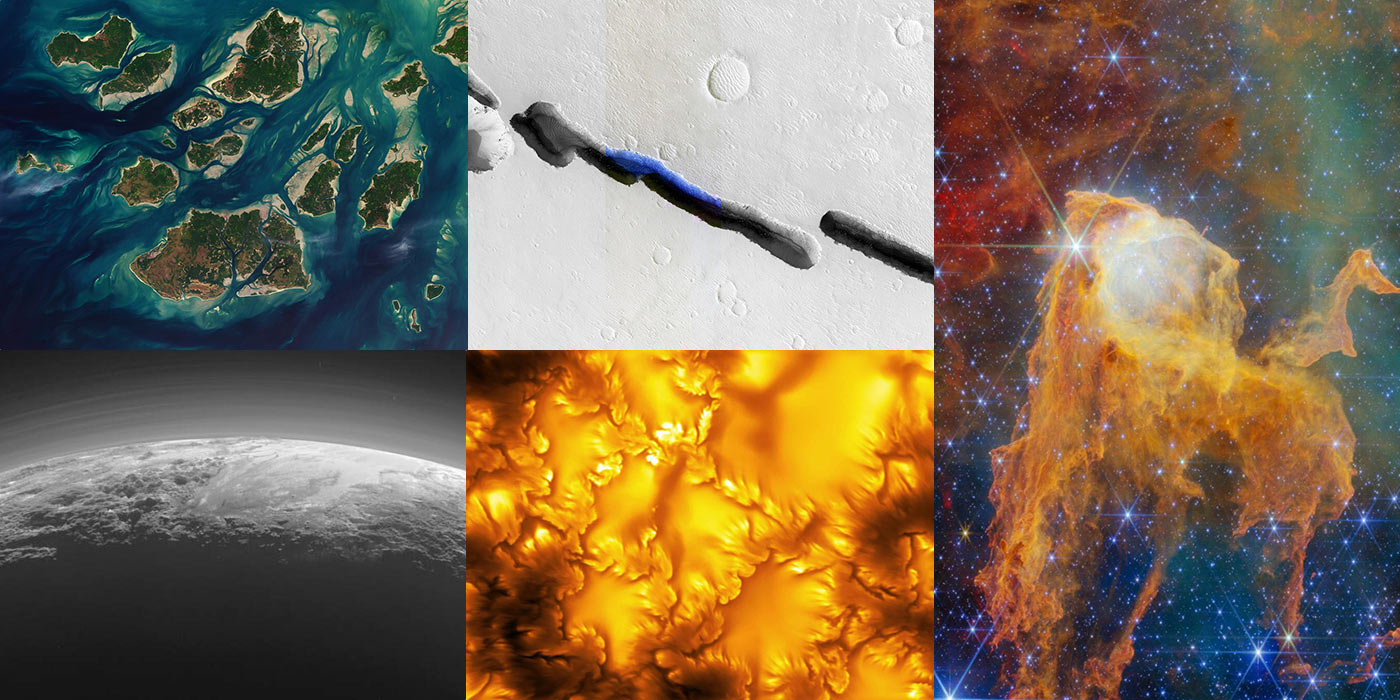
The universe is shaped by forces both immense and intricate, from fractured terrain on Mars and shifting tidal landscapes on Earth to tiny vortices dancing across the surface of the Sun. Farther afield, dramatic views of Pluto’s icy mountains and hazy atmosphere and a treasure chest of newborn stars in the Carina Nebula showcase the remarkable detail revealed by spacecraft and telescopes exploring the cosmos. #PPOD
Planetary Picture of the Day - August 3, 2026
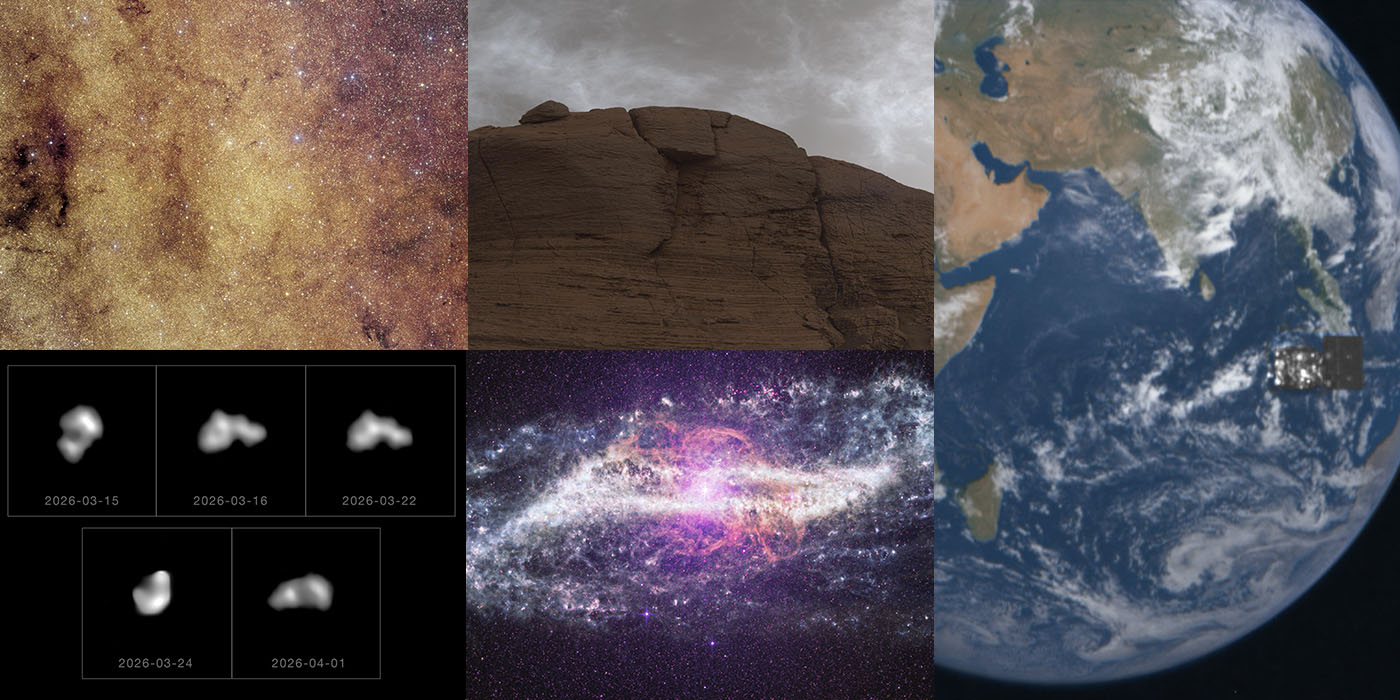
This week, we reveal hidden wonders across the cosmos, from delicate Martian clouds and a dust-shrouded galaxy to an asteroid with a never-before-seen shape and the crowded heart of the Milky Way. Together, these images showcase how new missions and advanced observatories continue to uncover surprising details about our solar system, our galaxy, and the universe beyond. #PPOD
Planetary Picture of the Day - Week of July 27, 2026
These images span the journey from our own backyard to distant galaxies, featuring Mars, the Moon, breathtaking night skies, and a fresh view of the star-forming galaxy Messier 94. Along the way, we celebrate exploration and discovery—from NASA’s Psyche mission preparing for its asteroid encounter to the revelation of a previously unknown impact crater on Earth —reminding us that there are still new wonders to uncover both on our own planet and across the cosmos. #PPOD
Planetary Picture of the Day - Week of July 20, 2026
This week, we celebrate fifty years since Viking 1 became the first spacecraft to successfully land on and photograph the surface of Mars, alongside stunning new views of worlds, stars, and galaxies that continue to expand our understanding of the universe. From sculpted Sahara sand dunes and Jupiter’s colorful cloud bands to a newly discovered exoplanet and the first stellar-mass black hole identified in Omega Centauri, these images showcase the remarkable diversity of cosmic exploration. #PPODResearch
Related Projects
SkyMapper: Expanding Access to Real-time Astronomy Through a Global Astronomical Network
SkyMapper and the SETI Institute are connecting educators, students and the public to live astronomical observations through a distributed astronomical network. #SkyMapper #SETI #Citizen Science #Astronomy
Virtual Planetary Laboratory
How can we best assess whether an exoplanet supports life? #VPL
Discovery and Futures Lab
What happens if life beyond Earth is discovered? The Discovery and Futures Lab at the SETI Institute fosters novel and anticipatory research at the intersection of science, society, our planet, and the search for life beyond Earth. #Discovery and Futures LabSupport the
SETI Institute
Scientists are getting closer in their search for life beyond earth. But with limited federal funding for the search for extraterrestrial intelligence, supporters are the reason cutting-edge scientists can keep their eyes on the sky.