Monday, 15 December 2025
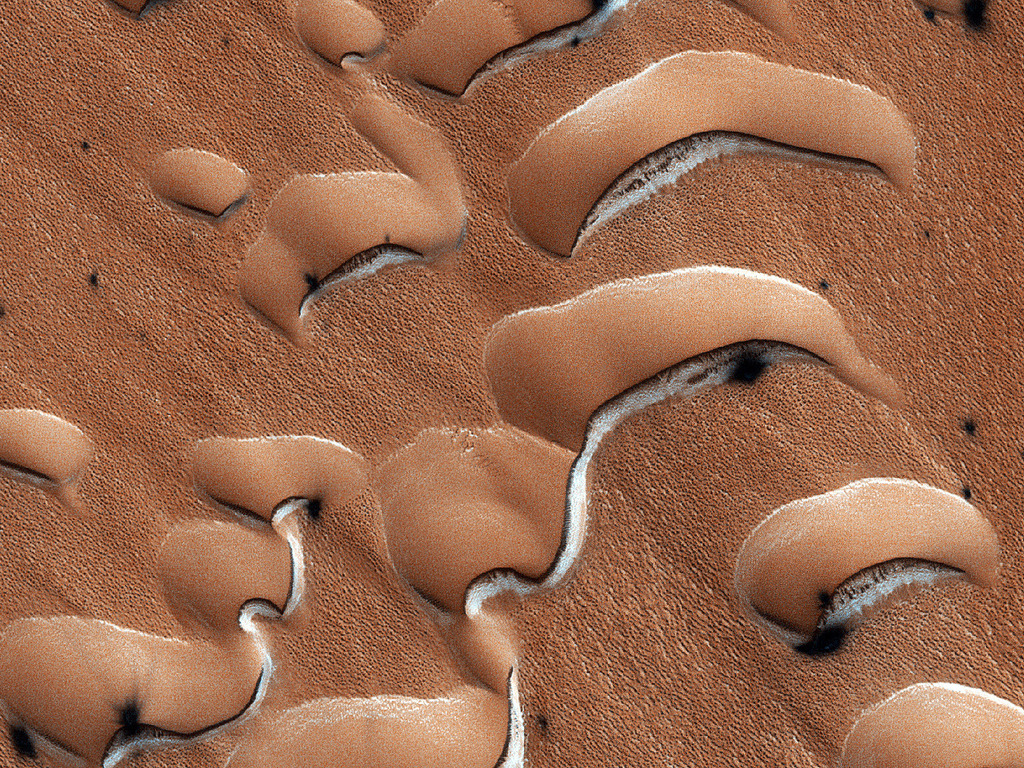
Frosted Dunes
These polar dunes on Mars show both carbon dioxide frost (the white colored areas) along with darker material that’s been exposed due to sublimation, and is blown by the wind to form these dark spots. The largest dunes can reach several hundred meters in width. Taken by the HiRISE camera onboard NASA's Mars Reconnaissance Orbiter in 2018 from 302 km above the surface. The imaged area is less than 1 km across.
Tuesday, 16 December 2025
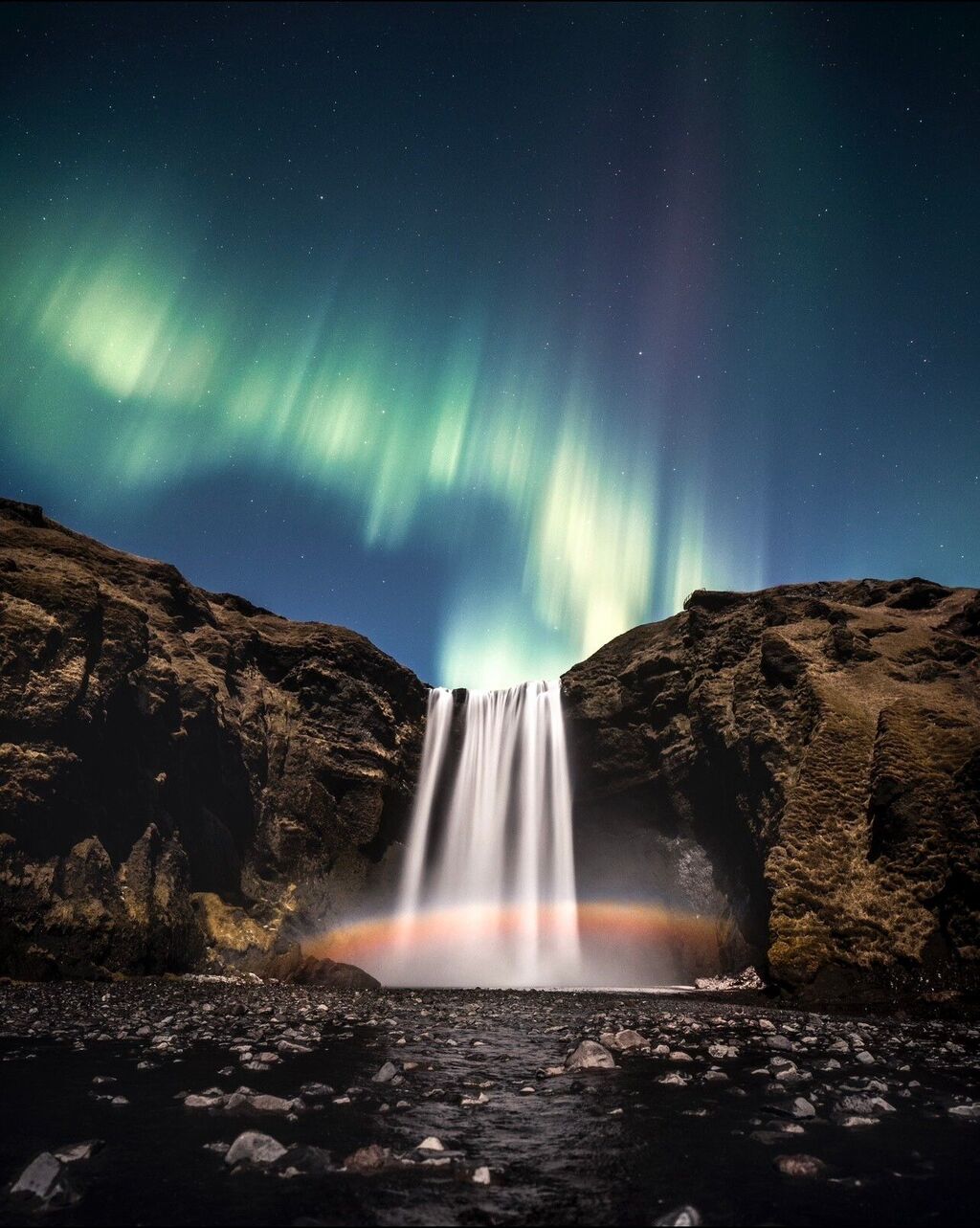
Aurora and Moonbow from Skógafoss
Night on Earth can feel uncanny, as though the colors have quietly slipped away. The familiar world flattens into shades of gray. And yet, on a few rare nights each year, color returns—suddenly and spectacularly.
When the Sun, Moon, and Earth align just right, moonlight meets the mist at the base of a great waterfall. The result is a moonbow: a rainbow born not of daylight, but of reflected lunar light.
That light begins its journey at the Sun, traveling ninety-three million miles through space before glancing off the Moon’s surface. From there, it slips into Earth’s atmosphere, scatters through countless water droplets in the falling spray, and finally enters an eye. A signal travels to the brain, and the mind reconstructs the scene as something beautiful.
The aurora borealis follows a similar logic, though its source is far more violent. Charged particles from geomagnetic storms race toward Earth, guided by magnetic fields into the upper atmosphere, where they excite atoms into glowing pillars of light. Again, the brain assembles invisible processes into visible wonder.
Moonbows and auroras are not only beautiful; they are physics.
Color carries information. It tells us about structure, about energy, about processes unfolding over time. Because light travels freely across the universe, it becomes our messenger. By studying it, we can explore distant worlds without ever leaving Earth—and learn their stories, written in color, across the dark.
Wednesday, 17 December 2025
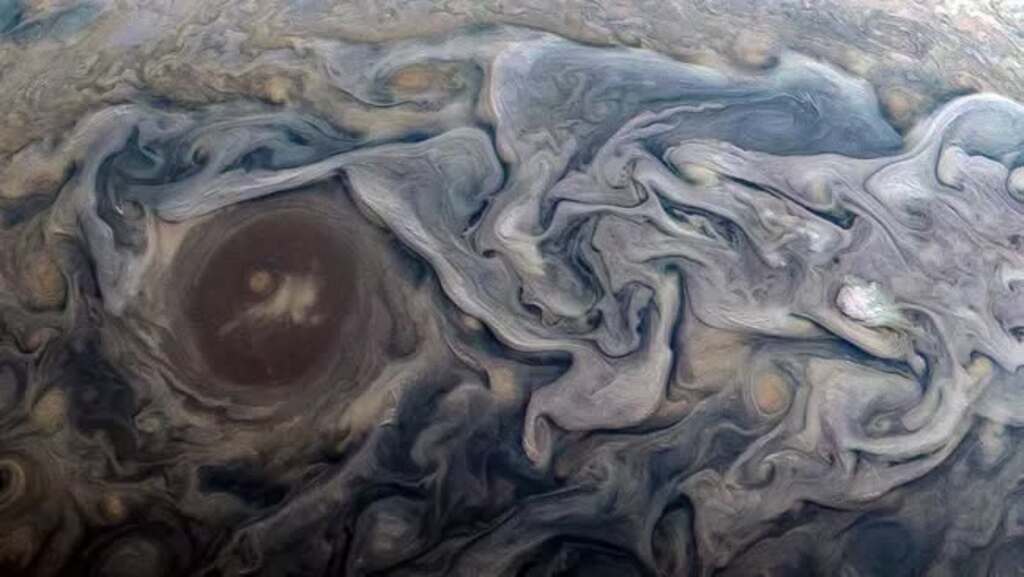
Jupiter's Marbled Clouds
This image from NASA's Juno spacecraft captures dramatic atmospheric features in Jupiter's northern hemisphere during its 18th close flyby of the gas giant. The swirling clouds surround a circular feature within the "Jet N6" region of the jet stream. Jupiter's atmosphere lacks a solid surface, allowing storms and wind patterns, or jet streams, to persist for centuries. The colors in the atmosphere come from the composition of different cloud layers made of elements like ammonia, water ice, sulfur, and phosphorus gases.
Thursday, 18 December 2025
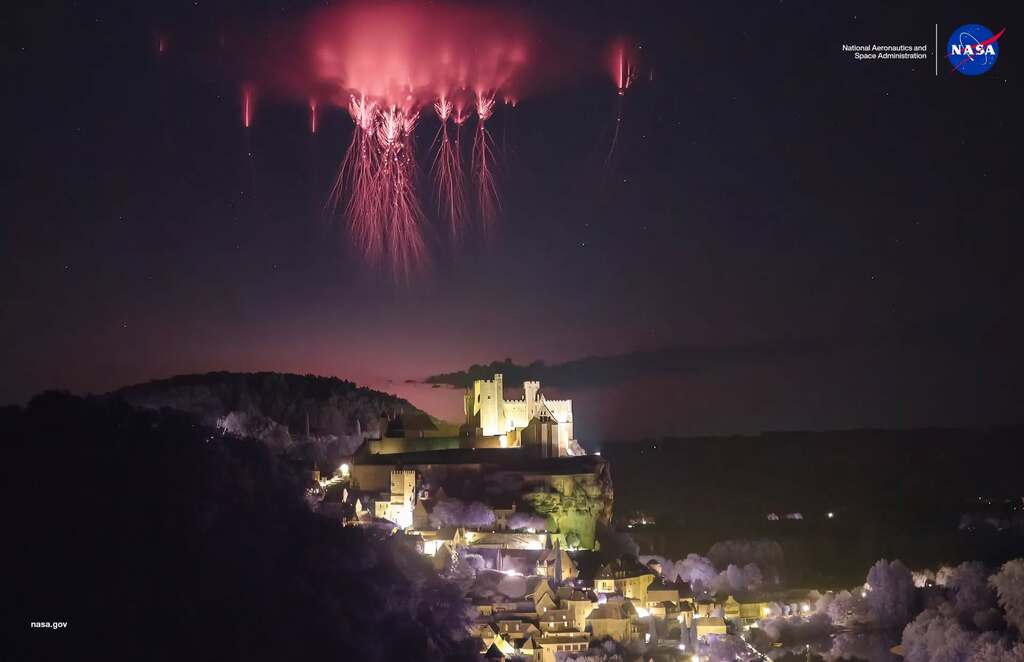
Sprites Over Château de Beynac
A flash of lightning, and then—something else. High above a storm, a crimson figure blinks in and out of existence. If you see it, you are a lucky witness of a sprite, one of the least-understood electrical phenomena in Earth’s upper atmosphere.
Sprites occur at some 50 miles (80 kilometers) altitude, high above thunderstorms. They appear moments after a lightning strike – a sudden reddish flash that can take a range of shapes, often combining diffuse plumes and bright, spiny tendrils. Some sprites tend to dance over the storms, turning on and off one after another. Many questions about how and why they form remain unanswered. Sprites are the most frequently observed type of Transient Luminous Events (TLEs); TLEs can take a variety of fanciful shapes with equally fanciful names.
Friday, 19 December 2025
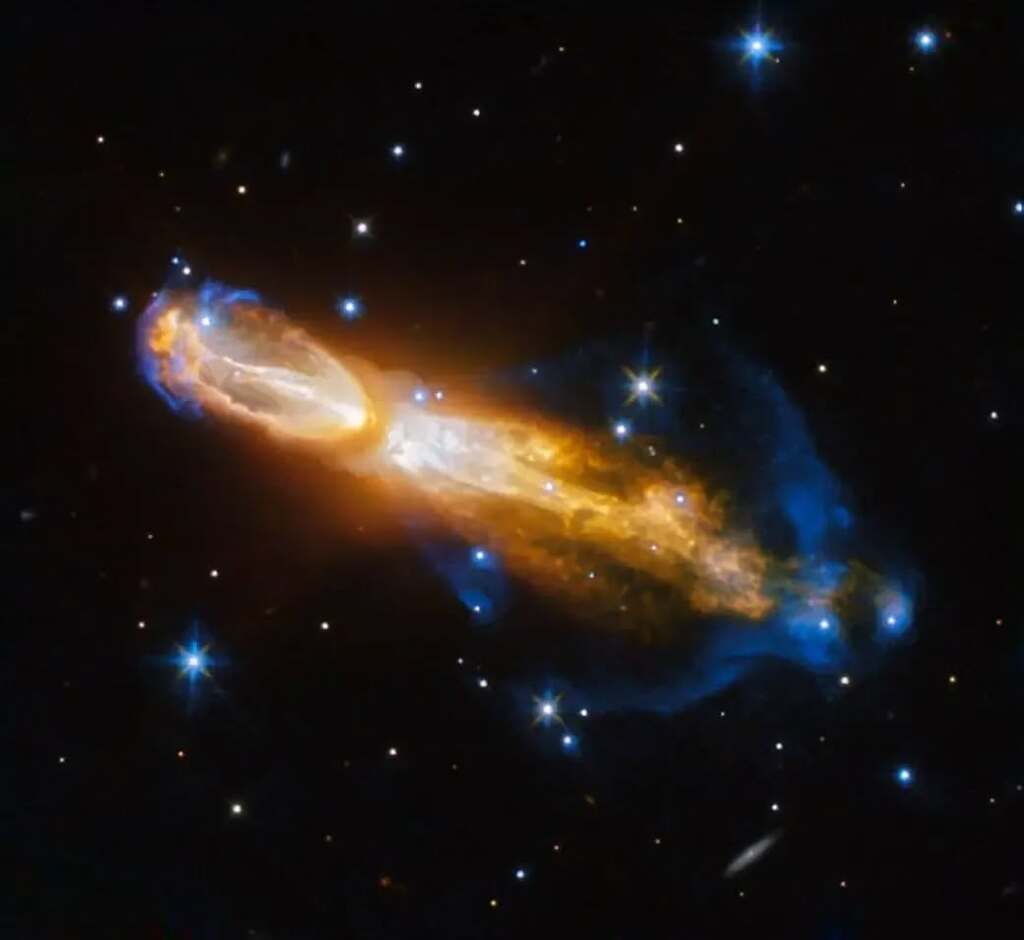
A Rare Gourd
NASA’s Hubble Space Telescope captured an uncommon sight – the death of a low-mass star – in this image of the Calabash Nebula released on Feb. 3, 2017.
Here, we can see the star going through a rapid transformation from a red giant to a planetary nebula, during which it blows its outer layers of gas and dust out into the surrounding space. The recently ejected material is spat out in opposite directions with immense speed — the gas shown in yellow is moving close to a million kilometers an hour.
Astronomers rarely capture a star in this phase of its evolution because it occurs within the blink of an eye – in astronomical terms. Over the next thousand years, the nebula is expected to evolve into a fully-fledged planetary nebula.
News
Related News
Planetary Picture of the Day - Week of August 24, 2026
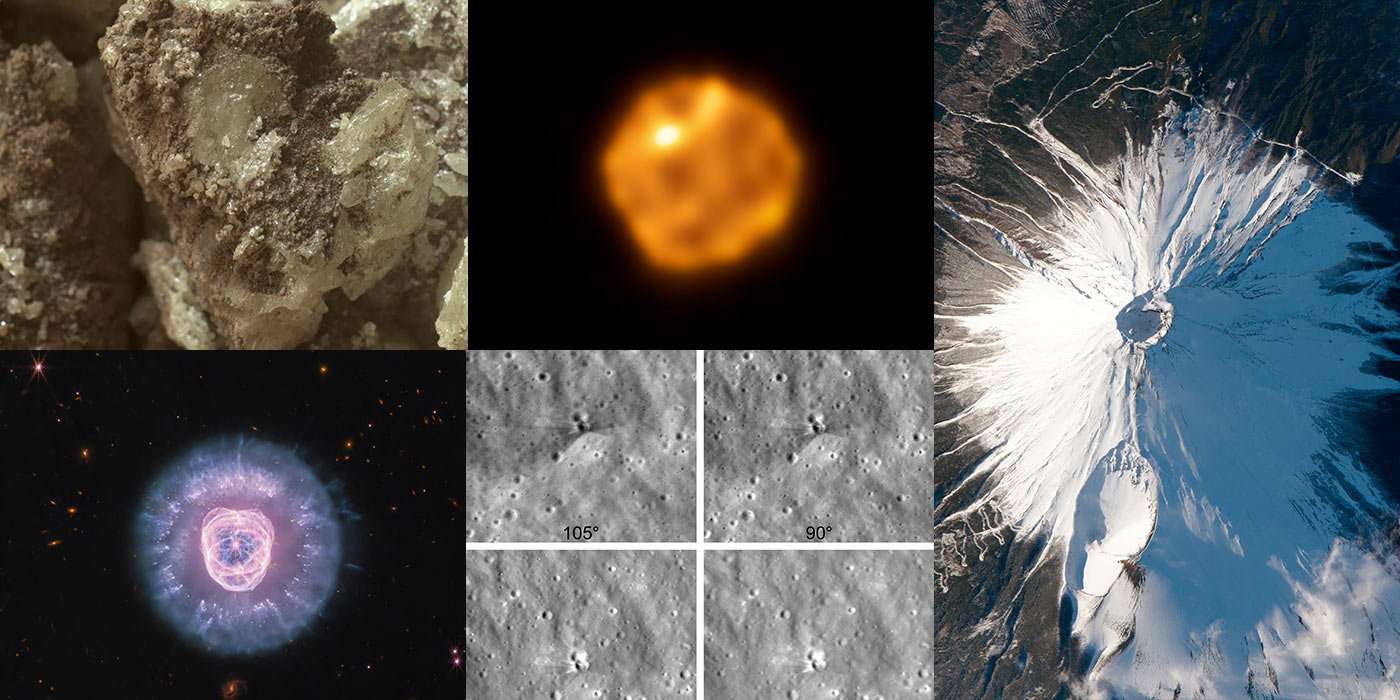
We journey from Mount Fuji as seen from orbit to the bubbling surface of Betelgeuse, exploring the forces that shape planets, moons, and stars across the cosmos. Along the way, JWST reveals the remains of a dying star, Curiosity uncovers clues to Mars’ volcanic past, and a fresh rocket impact on the Moon gives scientists a new opportunity to study how collisions reshape its surface. #PPOD
Planetary Picture of the Day - Week of August 17, 2026
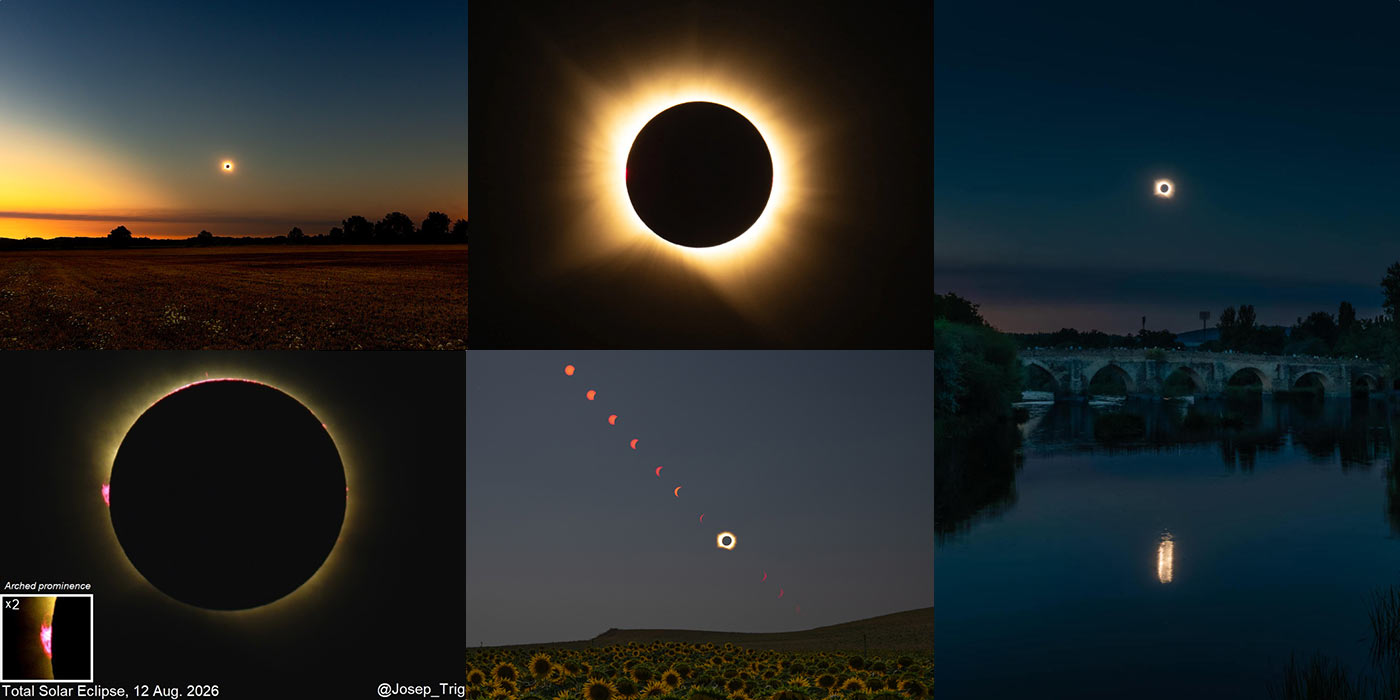
Let's celebrate the August 12 total solar eclipse through the eyes of photographers who experienced the Moon’s shadow sweeping across Spain. From Baily’s Beads and a glowing solar prominence to totality reflected in a river and framed by fields of sunflowers, these images capture both the science and extraordinary beauty of one of nature’s most spectacular celestial events. #PPOD #Eclipse
Planetary Picture of the Day - Week of August 10, 2026
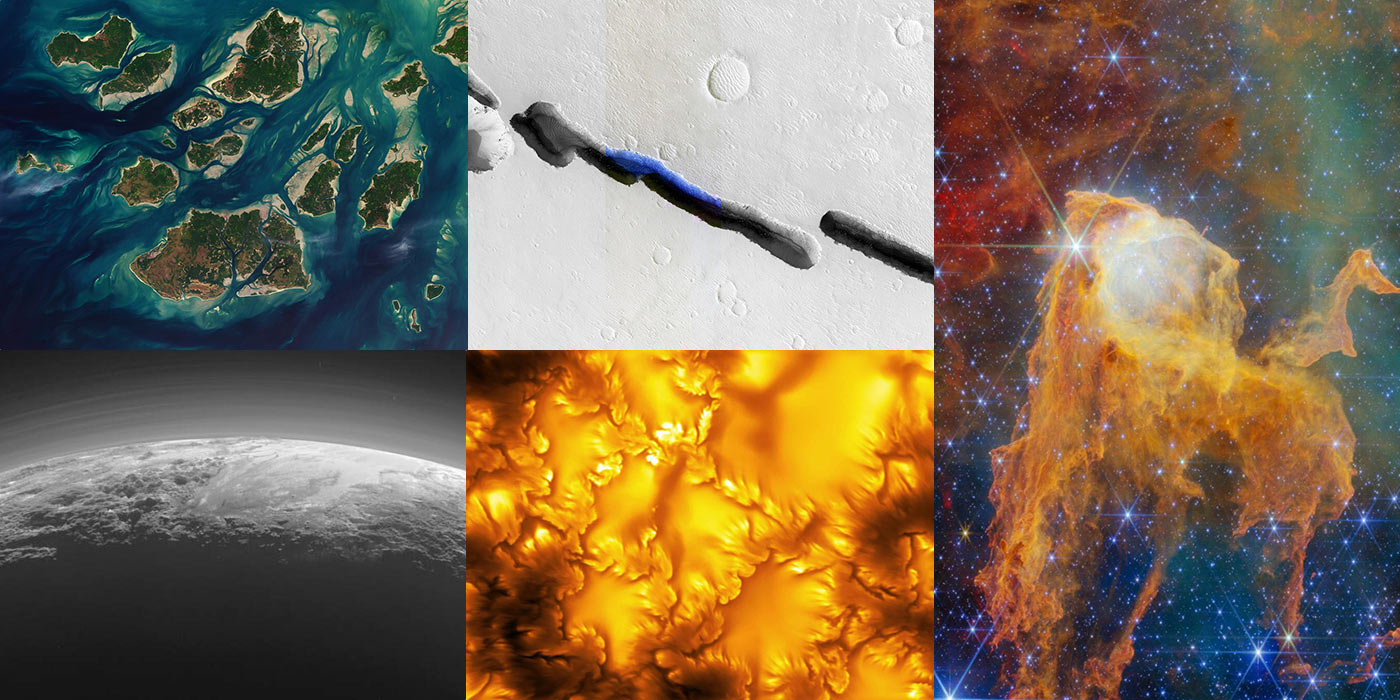
The universe is shaped by forces both immense and intricate, from fractured terrain on Mars and shifting tidal landscapes on Earth to tiny vortices dancing across the surface of the Sun. Farther afield, dramatic views of Pluto’s icy mountains and hazy atmosphere and a treasure chest of newborn stars in the Carina Nebula showcase the remarkable detail revealed by spacecraft and telescopes exploring the cosmos. #PPOD
Planetary Picture of the Day - August 3, 2026
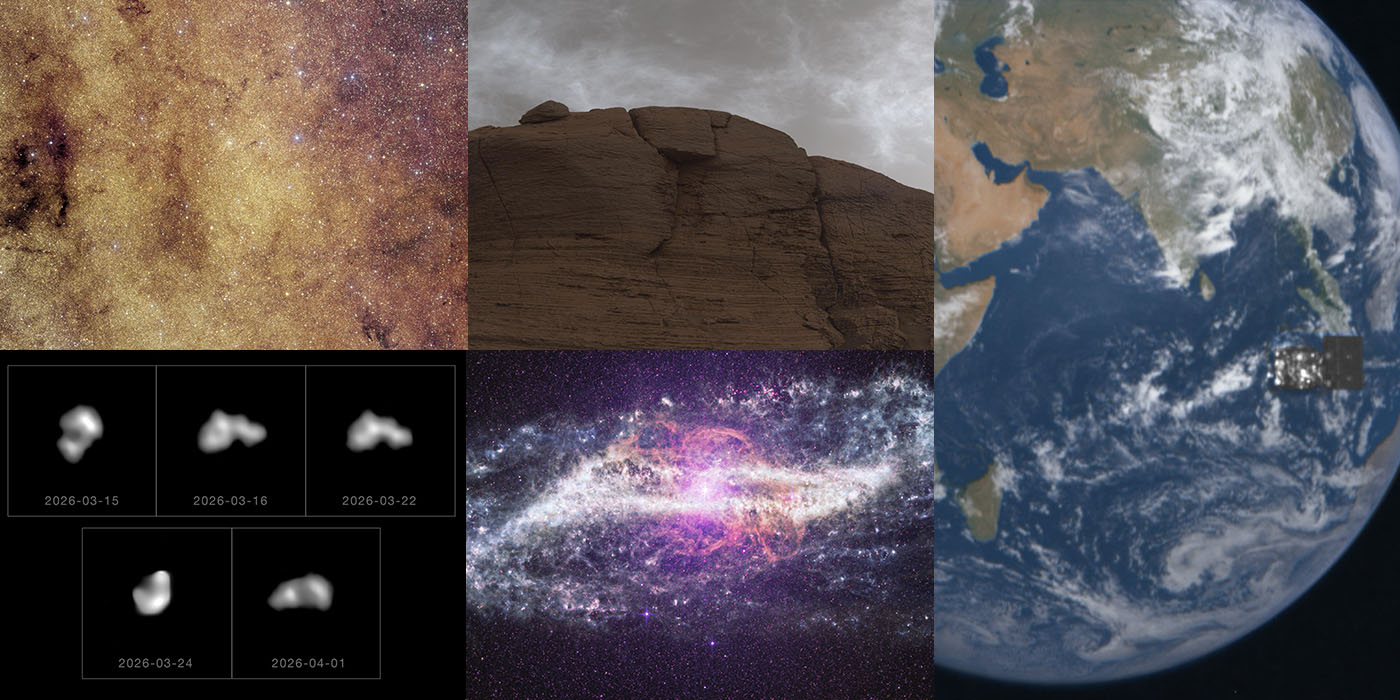
This week, we reveal hidden wonders across the cosmos, from delicate Martian clouds and a dust-shrouded galaxy to an asteroid with a never-before-seen shape and the crowded heart of the Milky Way. Together, these images showcase how new missions and advanced observatories continue to uncover surprising details about our solar system, our galaxy, and the universe beyond. #PPOD
Planetary Picture of the Day - Week of July 27, 2026
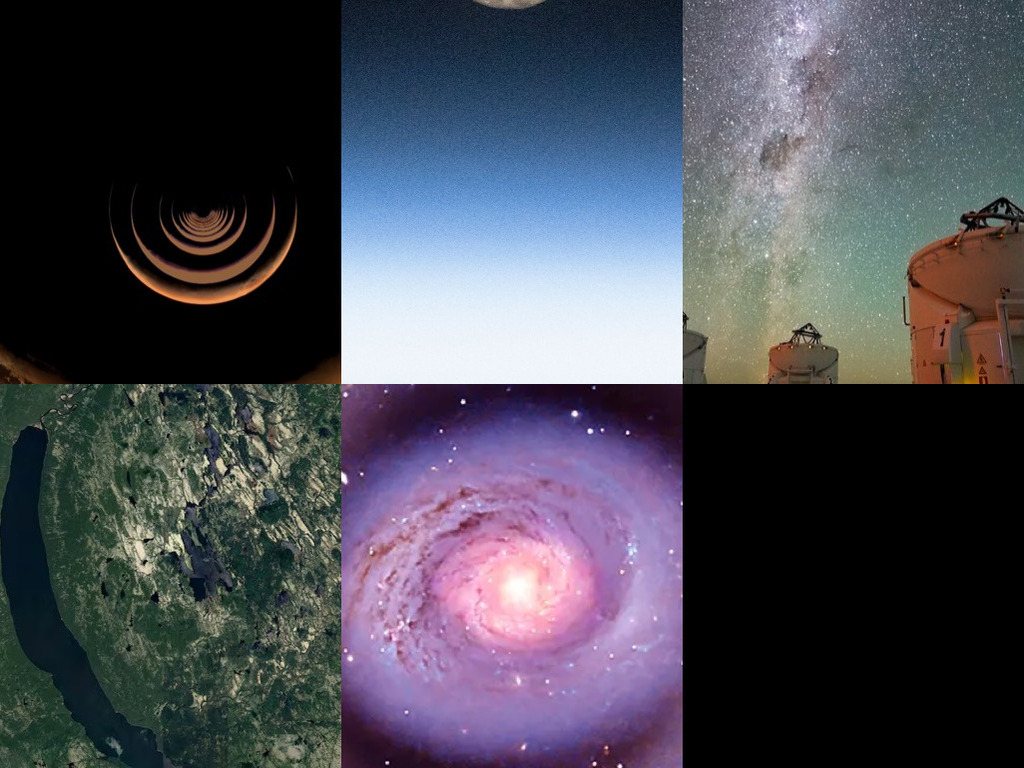
These images span the journey from our own backyard to distant galaxies, featuring Mars, the Moon, breathtaking night skies, and a fresh view of the star-forming galaxy Messier 94. Along the way, we celebrate exploration and discovery—from NASA’s Psyche mission preparing for its asteroid encounter to the revelation of a previously unknown impact crater on Earth —reminding us that there are still new wonders to uncover both on our own planet and across the cosmos. #PPOD
Planetary Picture of the Day - Week of July 20, 2026
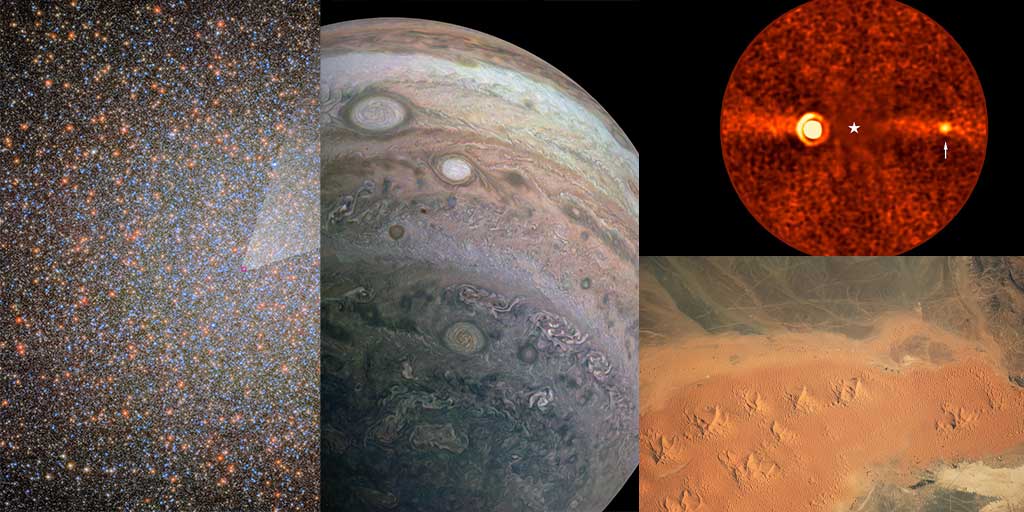
This week, we celebrate fifty years since Viking 1 became the first spacecraft to successfully land on and photograph the surface of Mars, alongside stunning new views of worlds, stars, and galaxies that continue to expand our understanding of the universe. From sculpted Sahara sand dunes and Jupiter’s colorful cloud bands to a newly discovered exoplanet and the first stellar-mass black hole identified in Omega Centauri, these images showcase the remarkable diversity of cosmic exploration. #PPODResearch
Related Projects
SkyMapper: Expanding Access to Real-time Astronomy Through a Global Astronomical Network
SkyMapper and the SETI Institute are connecting educators, students and the public to live astronomical observations through a distributed astronomical network. #SkyMapper #SETI #Citizen Science #Astronomy
Virtual Planetary Laboratory
How can we best assess whether an exoplanet supports life? #VPL
Discovery and Futures Lab
What happens if life beyond Earth is discovered? The Discovery and Futures Lab at the SETI Institute fosters novel and anticipatory research at the intersection of science, society, our planet, and the search for life beyond Earth. #Discovery and Futures LabSupport the
SETI Institute
Scientists are getting closer in their search for life beyond earth. But with limited federal funding for the search for extraterrestrial intelligence, supporters are the reason cutting-edge scientists can keep their eyes on the sky.