Wednesday, Dec 10, 2025

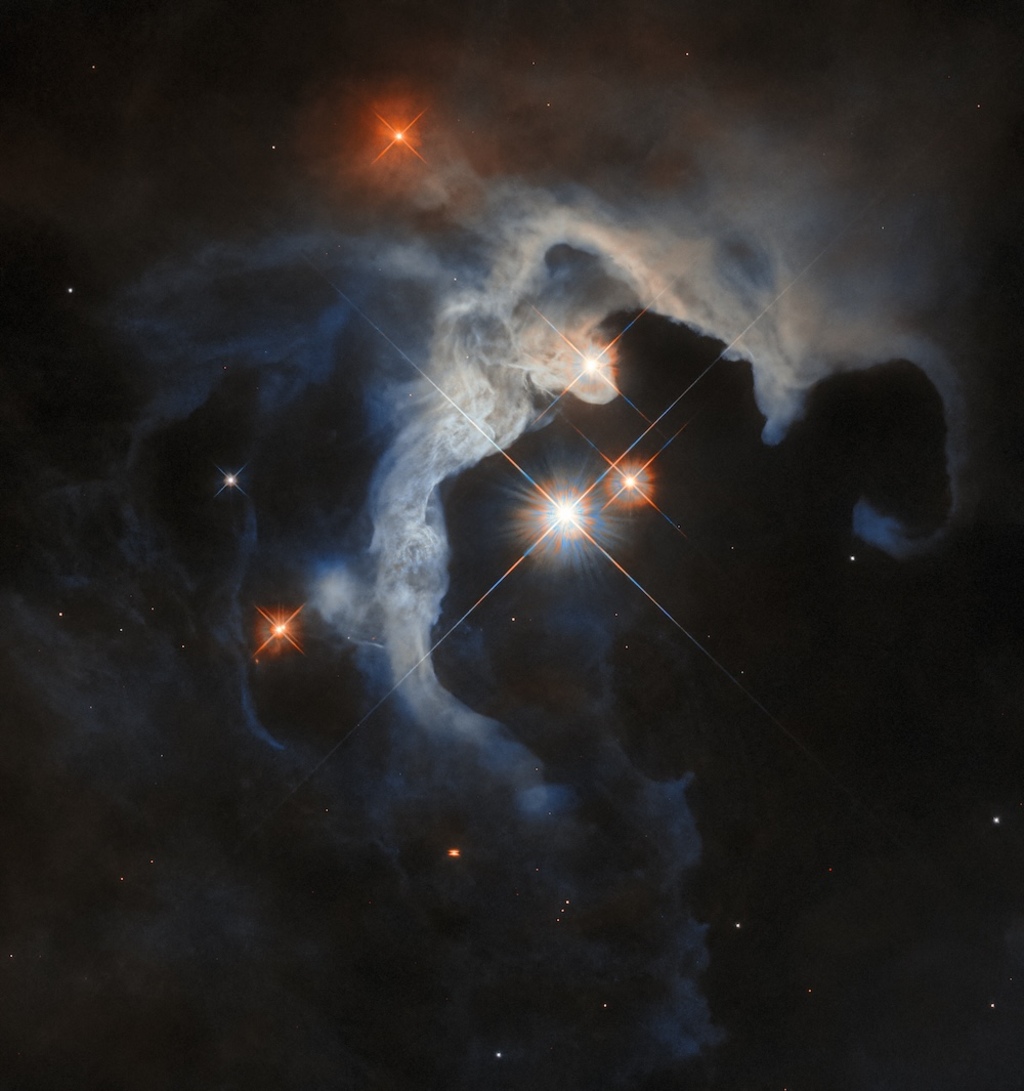
Credit: ESA/Hubble & NASA, G. Duchêne

Monday, 1 December 2025

The Young Stars of Taurus

The object captured here by the Hubble Space Telescope is a reflection nebula, identified as GN 04.32.8. Reflection nebulae are clouds of dust in space that don't emit their own light, as other nebulae do. Instead, the light from nearby stars hits and scatters off their dust, lighting them up. Because of the way the light scatters, many reflection nebulae tend to appear blue, including GN 04.32.8.

GN 04.32.8 is a small part of the stellar nursery known as the Taurus Molecular Cloud. At only roughly 480 light-years from Earth in the constellation Taurus, it's one of the best locations for studying newly forming stars. This reflection nebula is illuminated by the system of three bright stars in the centre of this image, mainly the variable star V1025 Tauri in the very centre. One of those stars overlaps with part of the nebula: it is another variable star named HP Tauri. Still, it is classified as a T Tauri star because of its similarity to another variable star elsewhere in the Taurus Molecular Complex. T Tauri stars are very active, chaotic stars at an early stage of their evolution, so it's no surprise that they appear in a prolific stellar nursery like this one! The three stars are also named HP Tau, HP Tau G2, and HP Tau G3; they’re believed to be gravitationally bound to each other, forming a triple system.

Eagle-eyed viewers might notice the small, squashed, orange spot, just left of centre below the clouds of the nebula, that’s crossed by a dark line. This is a newly formed protostar, hidden in a protoplanetary disc that blocks some of its light. Because the disc is edge-on to us, it’s an ideal candidate for study. Astronomers are using Hubble to examine it closely, seeking to learn about the kinds of exoplanets that might form in discs like it.

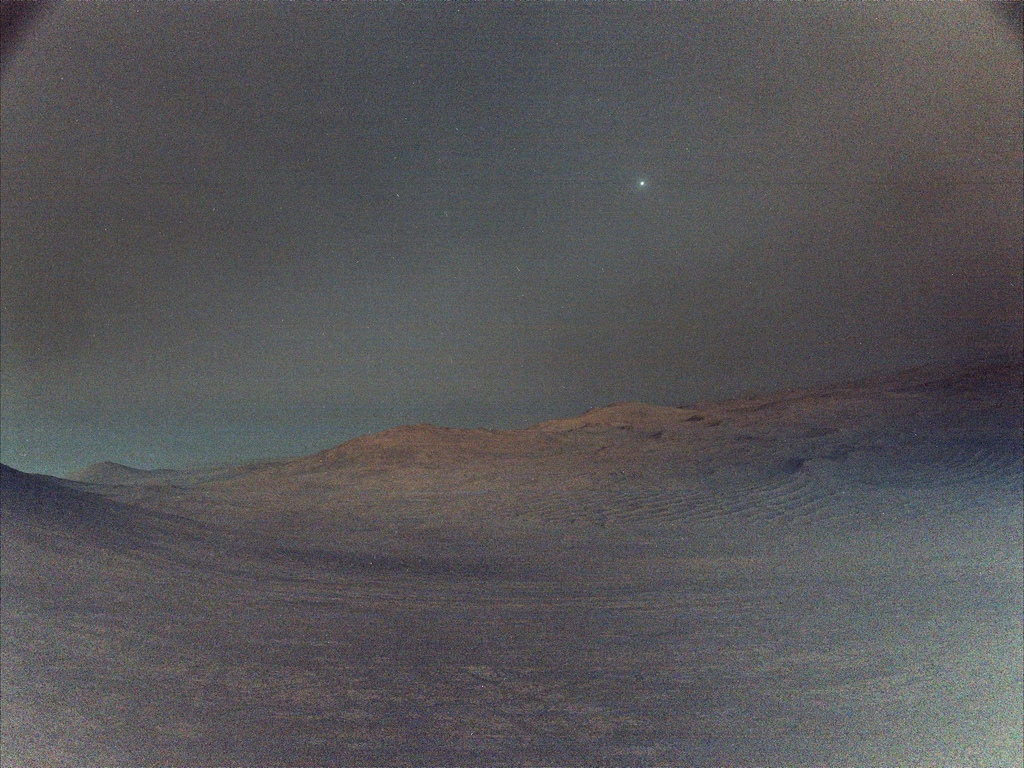
Credit: NASA/JPL-Caltech

Tuesday, 2 December 2025

Deimos Before Sunrise

NASA's Perseverance rover captured this view of Deimos, the smaller of Mars' two moons, shining in the sky at 4:27 a.m. local time on March 1, 2025, the 1,433rd Martian day, or sol, of the mission. In the dark before dawn, the rover's left navigation camera used its maximum long-exposure time of 3.28 seconds to capture 16 individual shots, which were combined into a single image that was later sent to Earth. In total, the image represents an exposure time of about 52 seconds.

The low light and long exposures add digital noise, making the image hazy. Many of the white specks seen in the sky are likely noise; some may be cosmic rays. Two of the brightest white specks are Regulus and Algieba, stars that are part of the constellation Leo.

"Woodstock Crater," at center right, is roughly a half-mile (750 meters) away from the rover. At the time, Perseverance was en route to "Witch Hazel Hill."

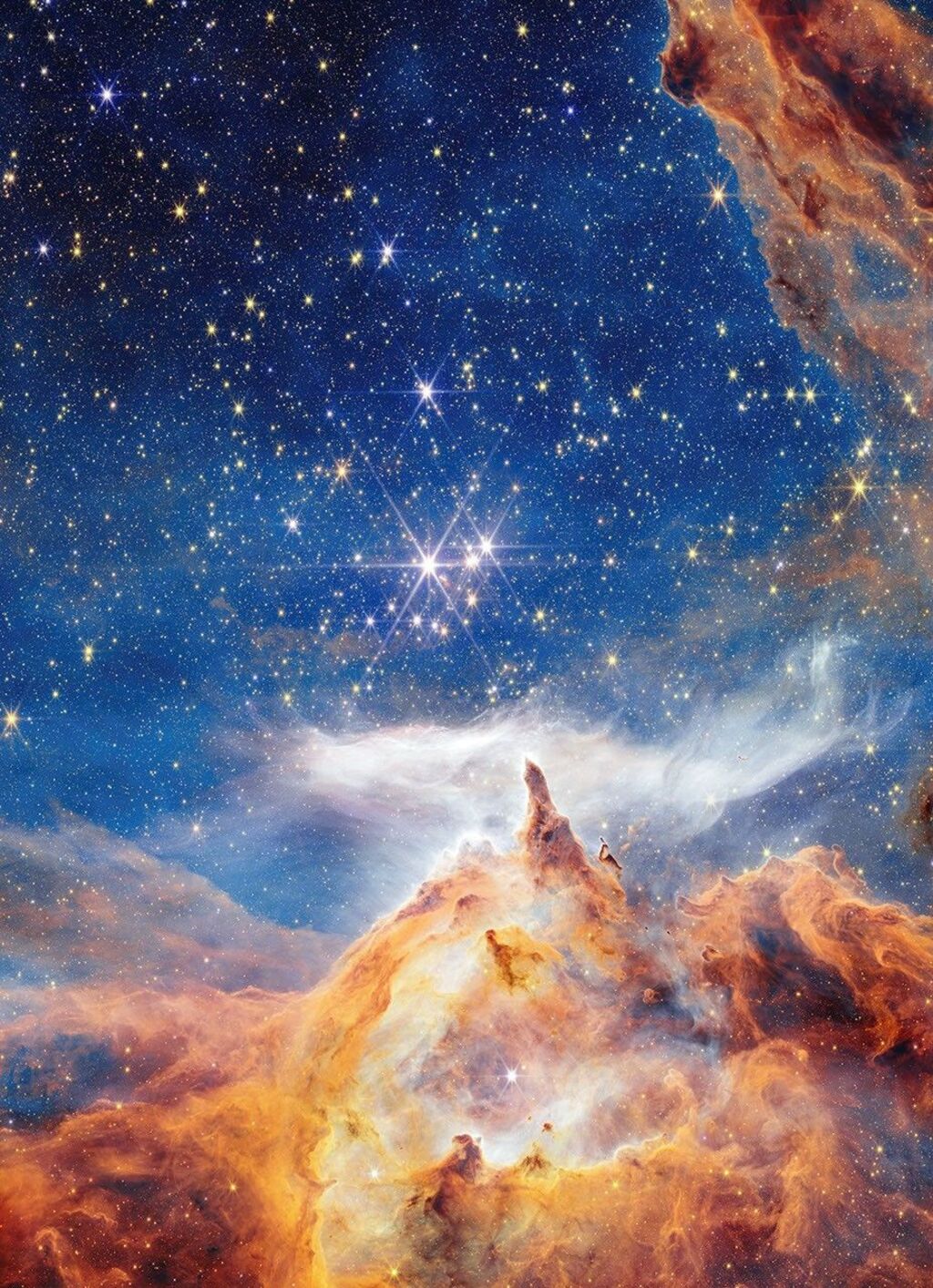
Credit: Image: NASA, ESA, CSA, STScI; Image Processing: A. Pagan (STScI)

Wednesday, 3 December 2025

Glittering Glimpse of Star Birth

This is a sparkling scene of star birth captured by NASA’s JWST. What appears to be a craggy, starlit mountaintop kissed by wispy clouds is actually a cosmic dust-scape being eaten away by the blistering winds and radiation of nearby, massive, infant stars.

Called Pismis 24, this young star cluster resides in the core of the nearby Lobster Nebula, approximately 5,500 light-years from Earth in the constellation Scorpius. Home to a vibrant stellar nursery and one of the closest sites of massive star birth, Pismis 24 provides rare insight into large and massive stars. Its proximity makes this region one of the best places to explore the properties of hot young stars and their evolution.

At the heart of this glittering cluster is the brilliant Pismis 24-1. It is at the center of a clump of stars above the jagged orange peaks, and the tallest spire is pointing directly toward it. Pismis 24-1 appears as a gigantic single star, and it was once thought to be the most massive known star. Scientists have since learned that it is composed of at least two stars, though they cannot be resolved in this image. At 74 and 66 solar masses, respectively, the two known stars are still among the most massive and luminous stars ever seen.

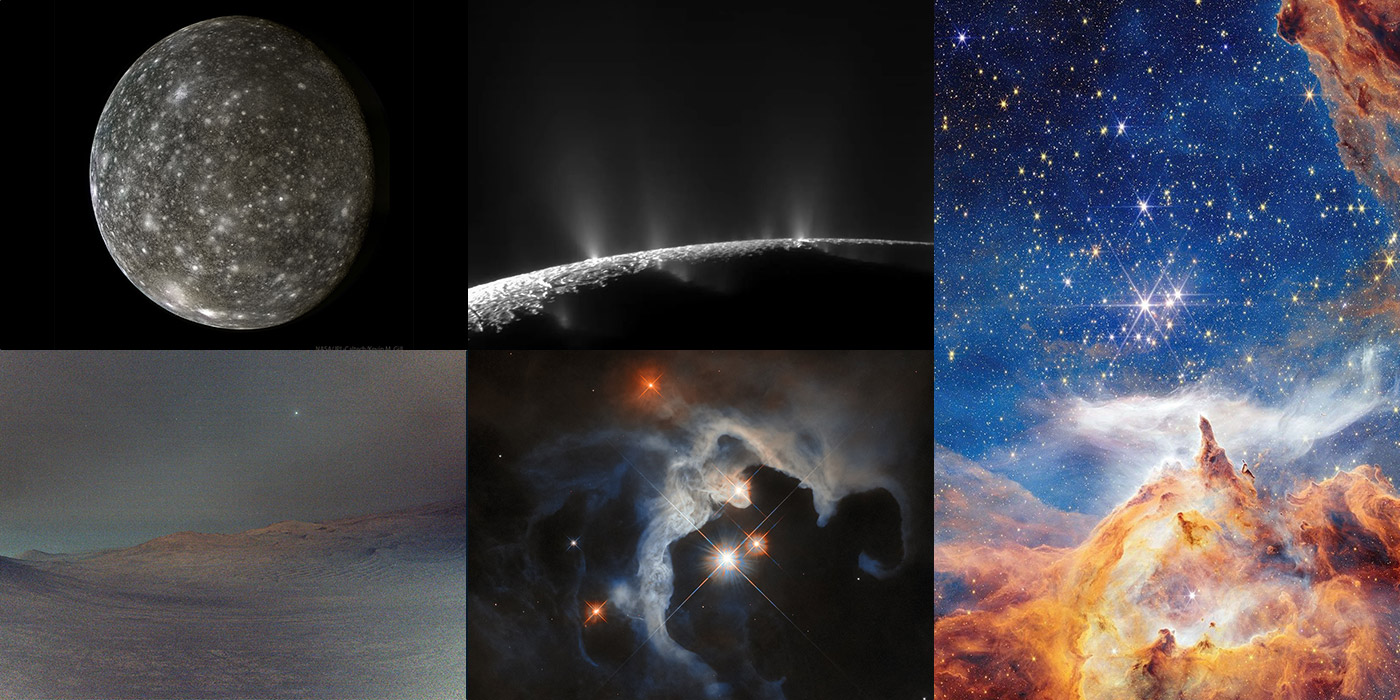
Credit: NASA, JPL-Caltech, Voyager 2; Processing: Kevin M. Gill

Thursday, 4 December 2025

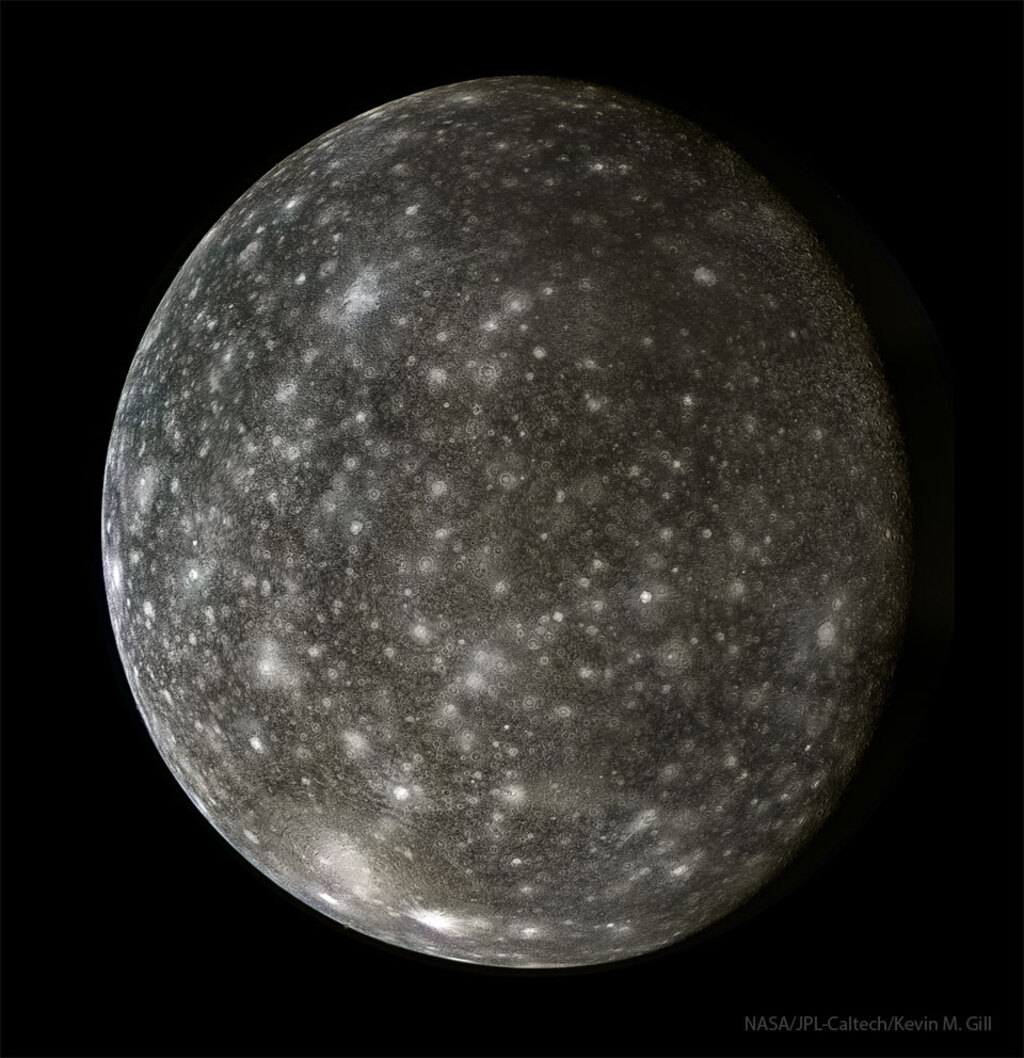
Callisto

This image from NASA's Voyager 2 spacecraft captures Callisto, the outermost of Jupiter's four large Galilean moons, at distances ranging from a flyby at 214,930 km to images from over 2 million km away. Callisto has a diameter of approximately 4,800 km, making it almost the same size as the planet Mercury. The surface is heavily pockmarked with bright spots, which are extensive meteorite impact craters that have excavated lighter, icy material from below the darker surface layer.

Voyager 2 images helped confirm that these impact features are the dominant geological characteristic of the moon. The high density of craters across the entire surface indicates an ancient, long-dead world with virtually no geological activity, such as plate tectonics or volcanism, to erase older impacts. The surface is believed to be a mixture of rock and ice dating back over 4 billion years to the early solar system. Due to its low density (less than twice that of water), scientists determined Callisto is composed of roughly equal parts rock and ice.

The Voyager 2 data, combined with Voyager 1 results, provided coverage of more than 80% of Callisto's surface.

Credit: NASA/JPL-Caltech/Space Science Institute.

Friday, 5 December 2025

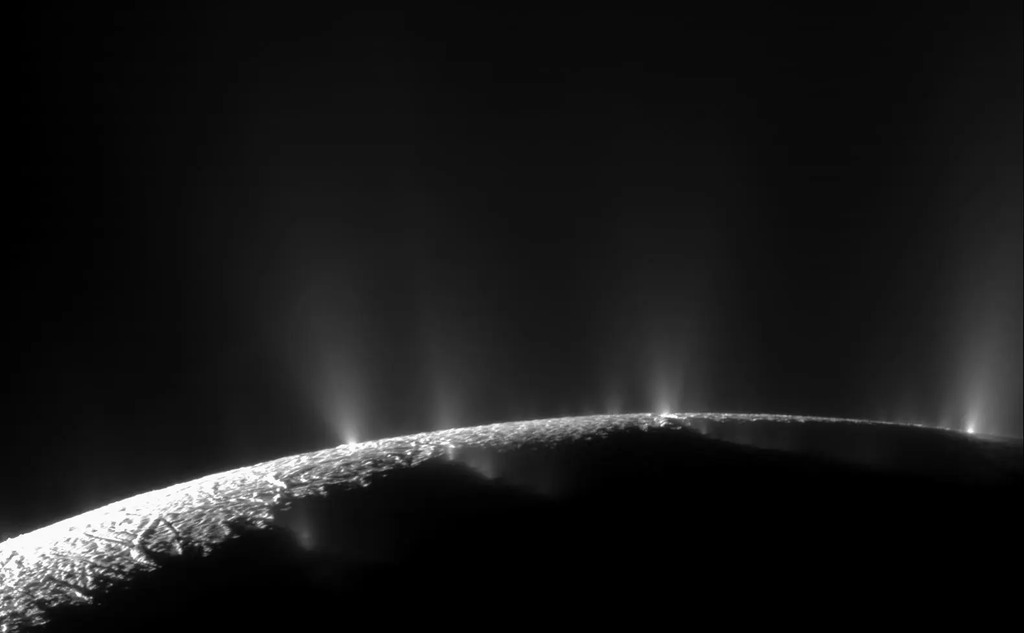
Enceladus' Plumes

Dramatic plumes, both large and small, spray water ice out from many locations along the famed tiger stripes near the south pole of Saturn’s moon Enceladus in this image released on Feb. 23, 2010. A study published in October 2025 analyzed data from NASA’s Cassini mission and found evidence of previously undetected organic compounds in a plume of ice particles like the ones seen here. The ice particles were ejected from the ocean that lies under Enceladus’ frozen shell. Researchers spotted not only molecules they’ve found before but also new ones that could pave the way for chemical or biochemical activity.

News

Related News

Featured Image
Sep 2, 2026
Planetary Picture of the Day - Week of August 24, 2026
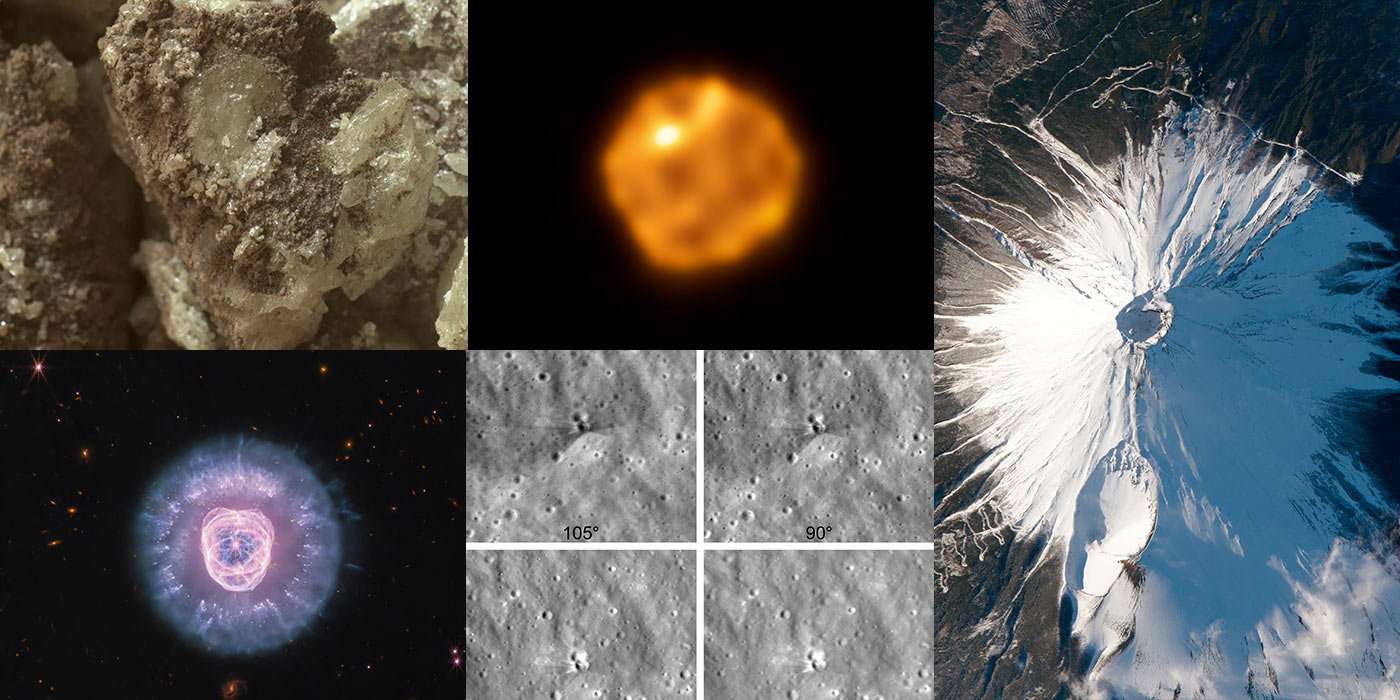
We journey from Mount Fuji as seen from orbit to the bubbling surface of Betelgeuse, exploring the forces that shape planets, moons, and stars across the cosmos. Along the way, JWST reveals the remains of a dying star, Curiosity uncovers clues to Mars’ volcanic past, and a fresh rocket impact on the Moon gives scientists a new opportunity to study how collisions reshape its surface. #PPOD
Featured Image
Aug 26, 2026
Planetary Picture of the Day - Week of August 17, 2026
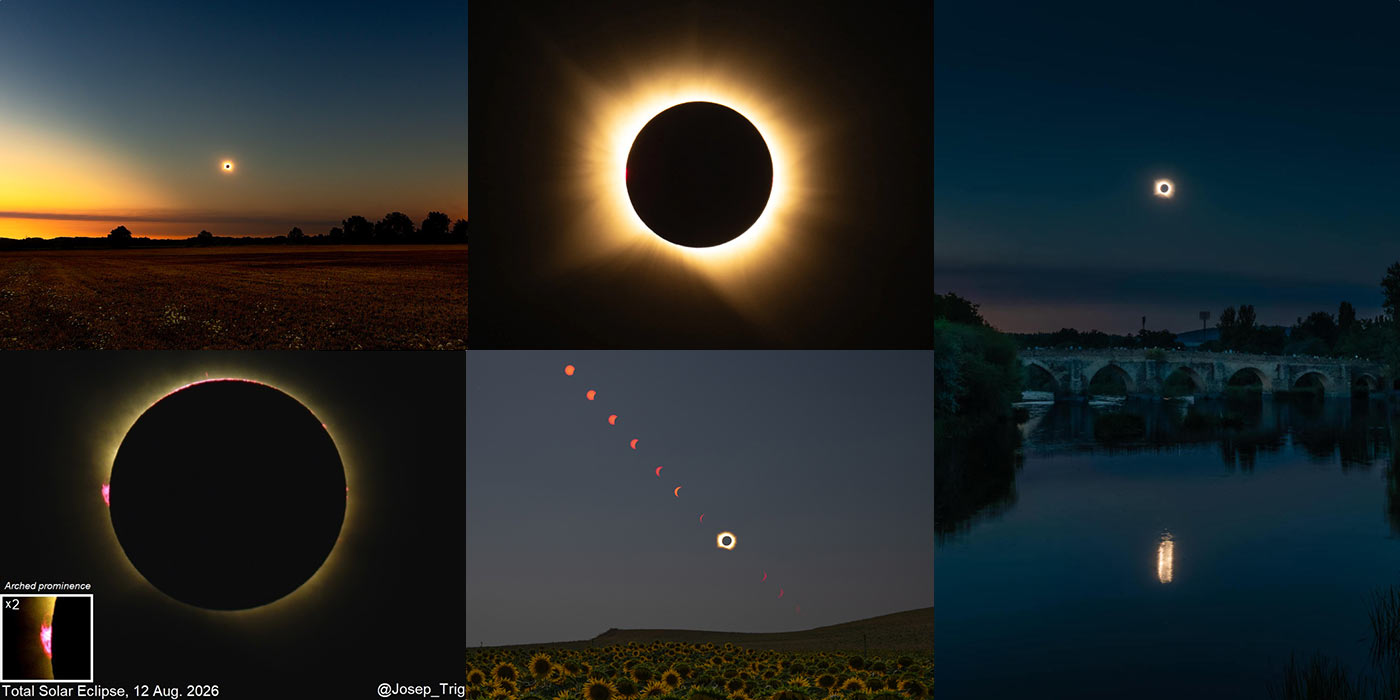
Let's celebrate the August 12 total solar eclipse through the eyes of photographers who experienced the Moon’s shadow sweeping across Spain. From Baily’s Beads and a glowing solar prominence to totality reflected in a river and framed by fields of sunflowers, these images capture both the science and extraordinary beauty of one of nature’s most spectacular celestial events. #PPOD #Eclipse
Featured Image
Aug 19, 2026
Planetary Picture of the Day - Week of August 10, 2026
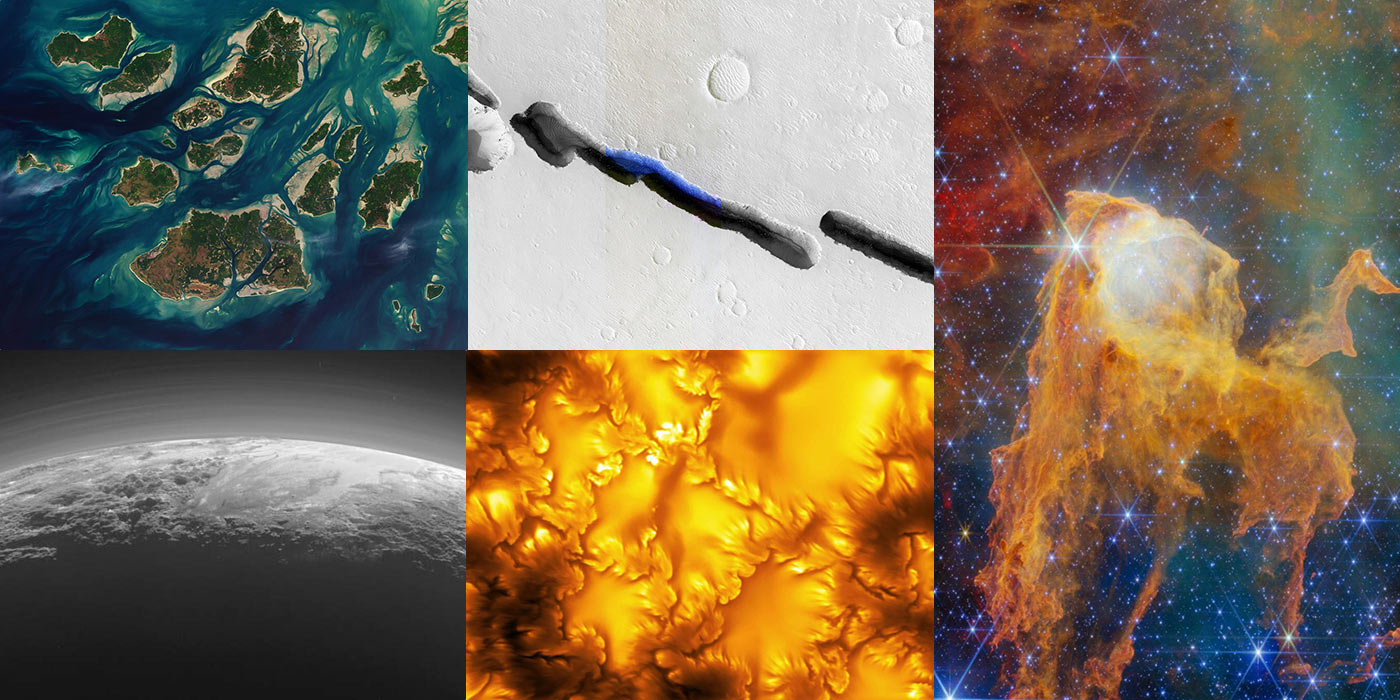
The universe is shaped by forces both immense and intricate, from fractured terrain on Mars and shifting tidal landscapes on Earth to tiny vortices dancing across the surface of the Sun. Farther afield, dramatic views of Pluto’s icy mountains and hazy atmosphere and a treasure chest of newborn stars in the Carina Nebula showcase the remarkable detail revealed by spacecraft and telescopes exploring the cosmos. #PPOD
Featured Image
Aug 12, 2026
Planetary Picture of the Day - August 3, 2026
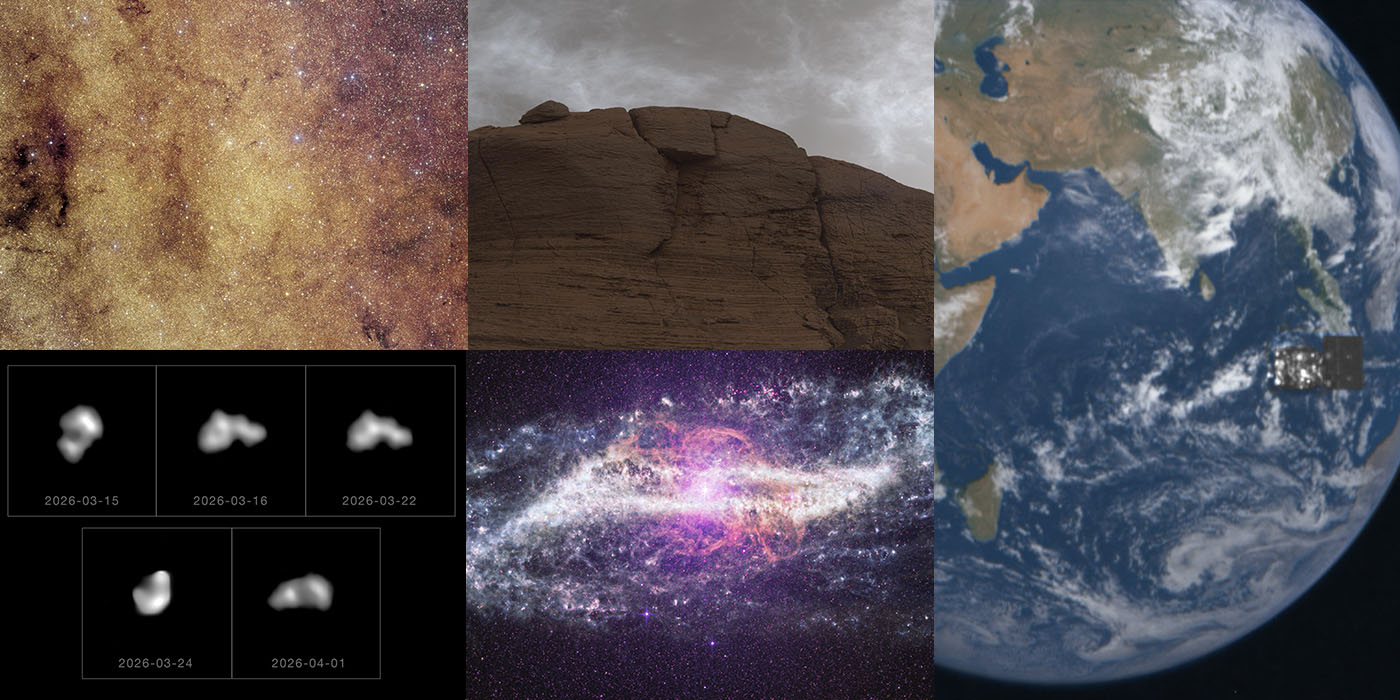
This week, we reveal hidden wonders across the cosmos, from delicate Martian clouds and a dust-shrouded galaxy to an asteroid with a never-before-seen shape and the crowded heart of the Milky Way. Together, these images showcase how new missions and advanced observatories continue to uncover surprising details about our solar system, our galaxy, and the universe beyond. #PPOD
Featured Image
Aug 5, 2026
Planetary Picture of the Day - Week of July 27, 2026
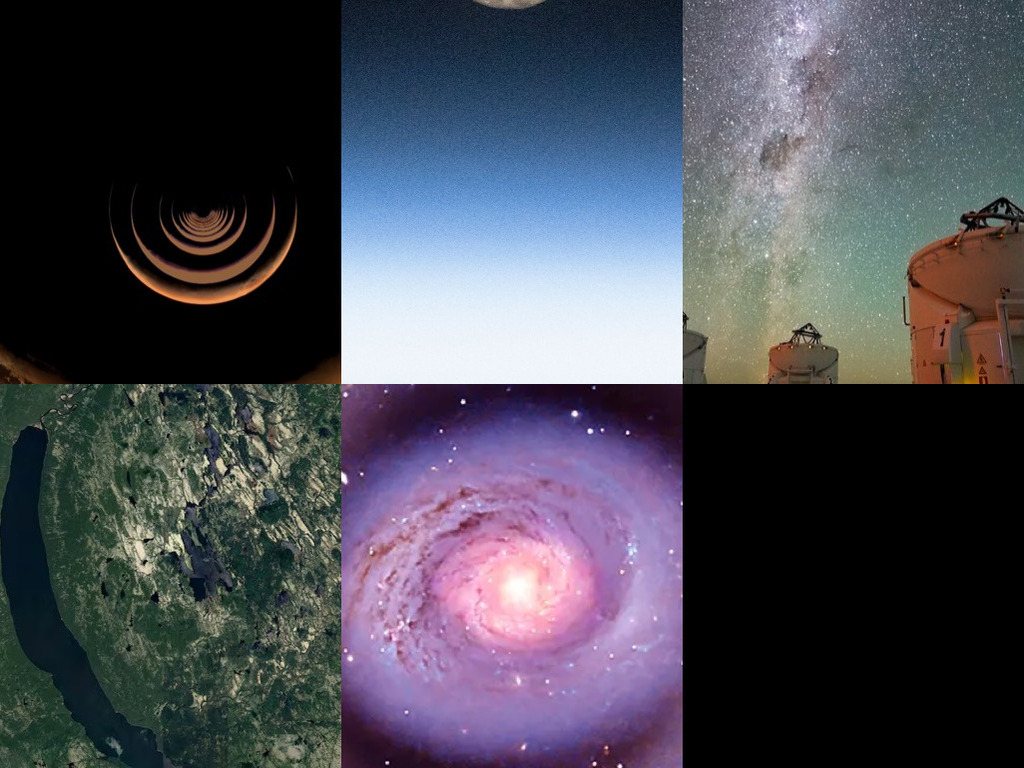
These images span the journey from our own backyard to distant galaxies, featuring Mars, the Moon, breathtaking night skies, and a fresh view of the star-forming galaxy Messier 94. Along the way, we celebrate exploration and discovery—from NASA’s Psyche mission preparing for its asteroid encounter to the revelation of a previously unknown impact crater on Earth —reminding us that there are still new wonders to uncover both on our own planet and across the cosmos. #PPOD
Featured Image
Jul 29, 2026
Planetary Picture of the Day - Week of July 20, 2026
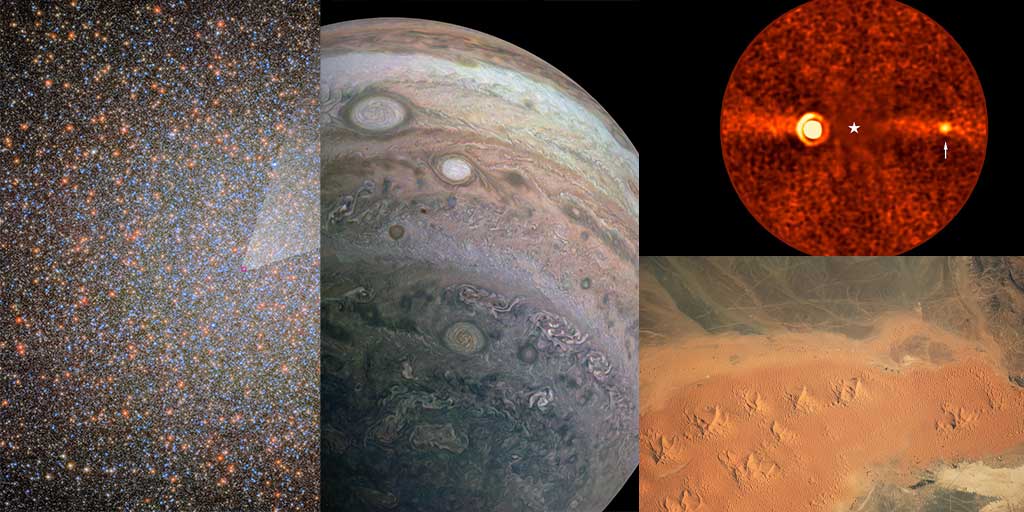
This week, we celebrate fifty years since Viking 1 became the first spacecraft to successfully land on and photograph the surface of Mars, alongside stunning new views of worlds, stars, and galaxies that continue to expand our understanding of the universe. From sculpted Sahara sand dunes and Jupiter’s colorful cloud bands to a newly discovered exoplanet and the first stellar-mass black hole identified in Omega Centauri, these images showcase the remarkable diversity of cosmic exploration. #PPOD
Research

Related Projects

Featured Image
SkyMapper • SETI • Citizen Science • Astronomy
SkyMapper: Expanding Access to Real-time Astronomy Through a Global Astronomical Network
SkyMapper and the SETI Institute are connecting educators, students and the public to live astronomical observations through a distributed astronomical network. #SkyMapper #SETI #Citizen Science #Astronomy
Featured Image
VPL
Virtual Planetary Laboratory
How can we best assess whether an exoplanet supports life? #VPL
Featured Image
Discovery and Futures Lab
What happens if life beyond Earth is discovered? The Discovery and Futures Lab at the SETI Institute fosters novel and anticipatory research at the intersection of science, society, our planet, and the search for life beyond Earth.  #Discovery and Futures Lab
Support Us

Support the
SETI Institute

Scientists are getting closer in their search for life beyond earth. But with limited federal funding for the search for extraterrestrial intelligence, supporters are the reason cutting-edge scientists can keep their eyes on the sky.