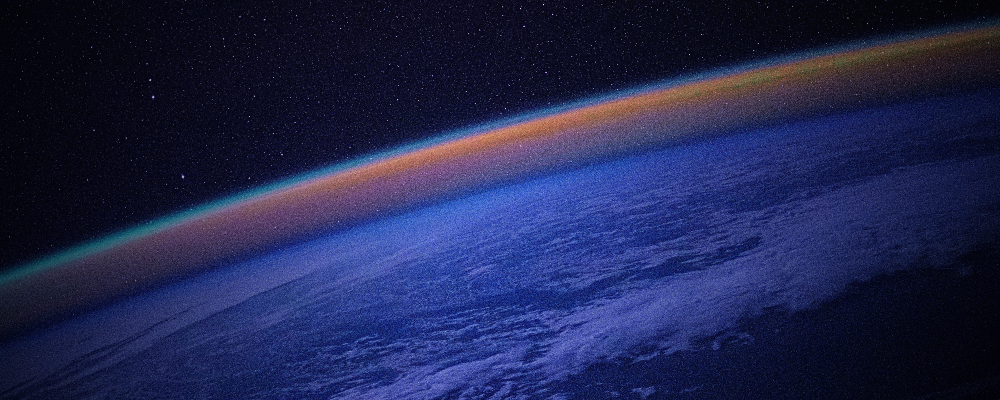
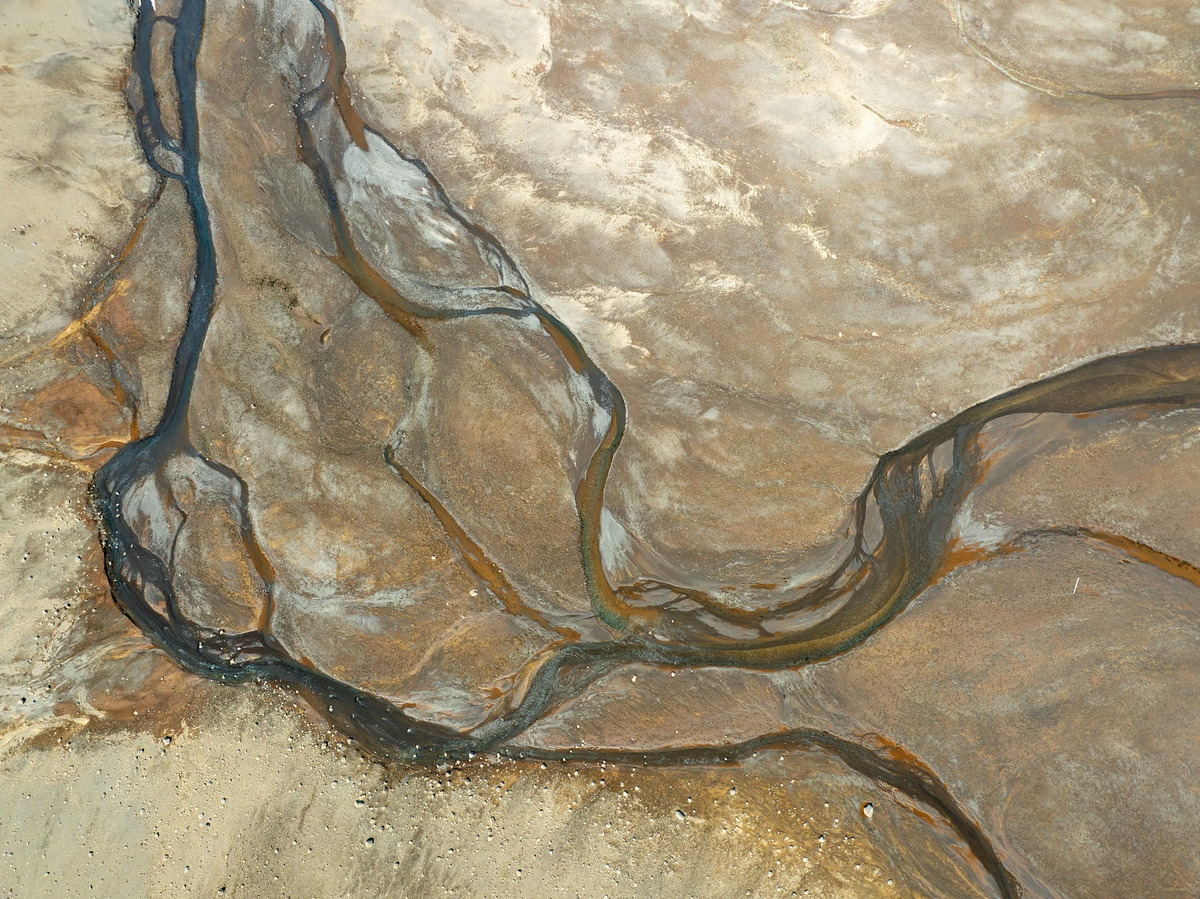
Our solar system is a wonder, whether we look back at Earth from a distance, examine planets with telescopes, or simply gaze at the night sky for meteors. Beyond that, the wider universe holds the keys to understanding where our own worlds originated, with distant exoplanets and galaxies shedding light on the early formation processes.
Monday, 25 August 2025
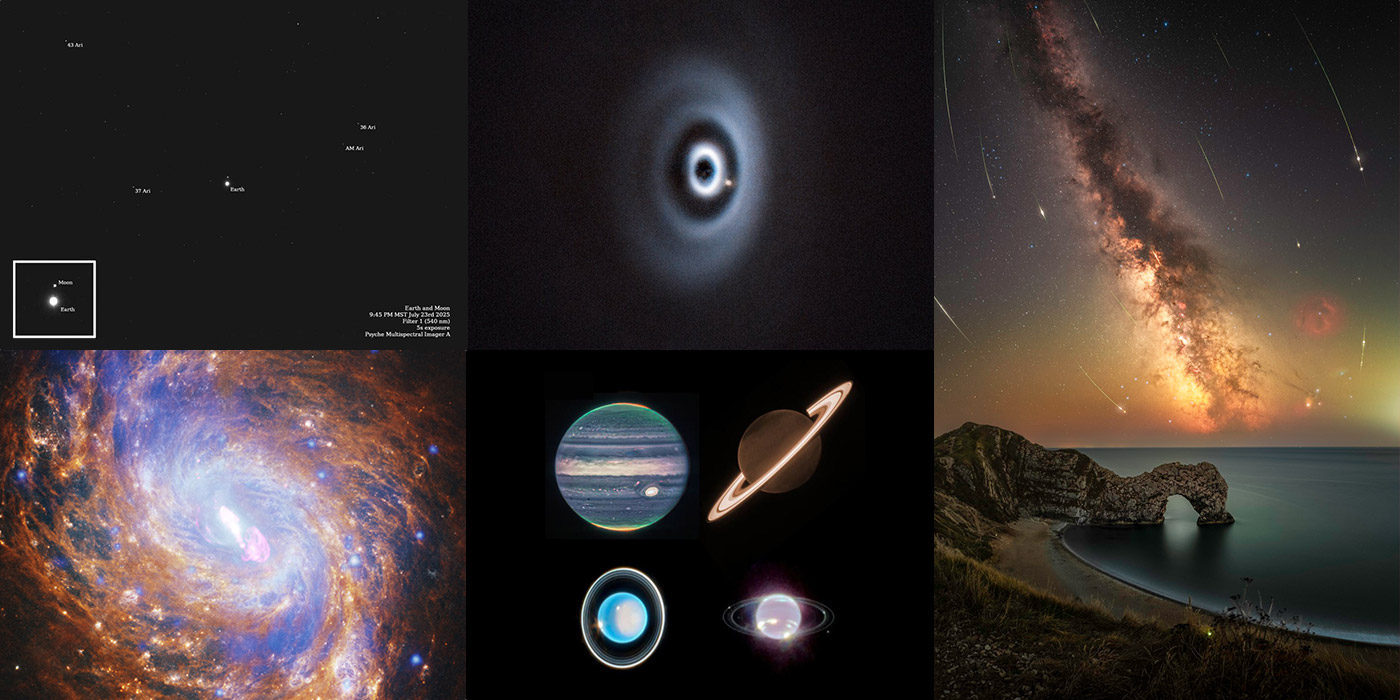
NASA's Psyche Images Earth and Moon
That bright speck isn't a star – it's Earth! And the dot above it is the Moon. The Psyche mission captured this image from 290 million kilometers away while calibrating its cameras. The spacecraft is en route to a metal-rich asteroid between Mars and Jupiter.
Tuesday, 26 August 2025
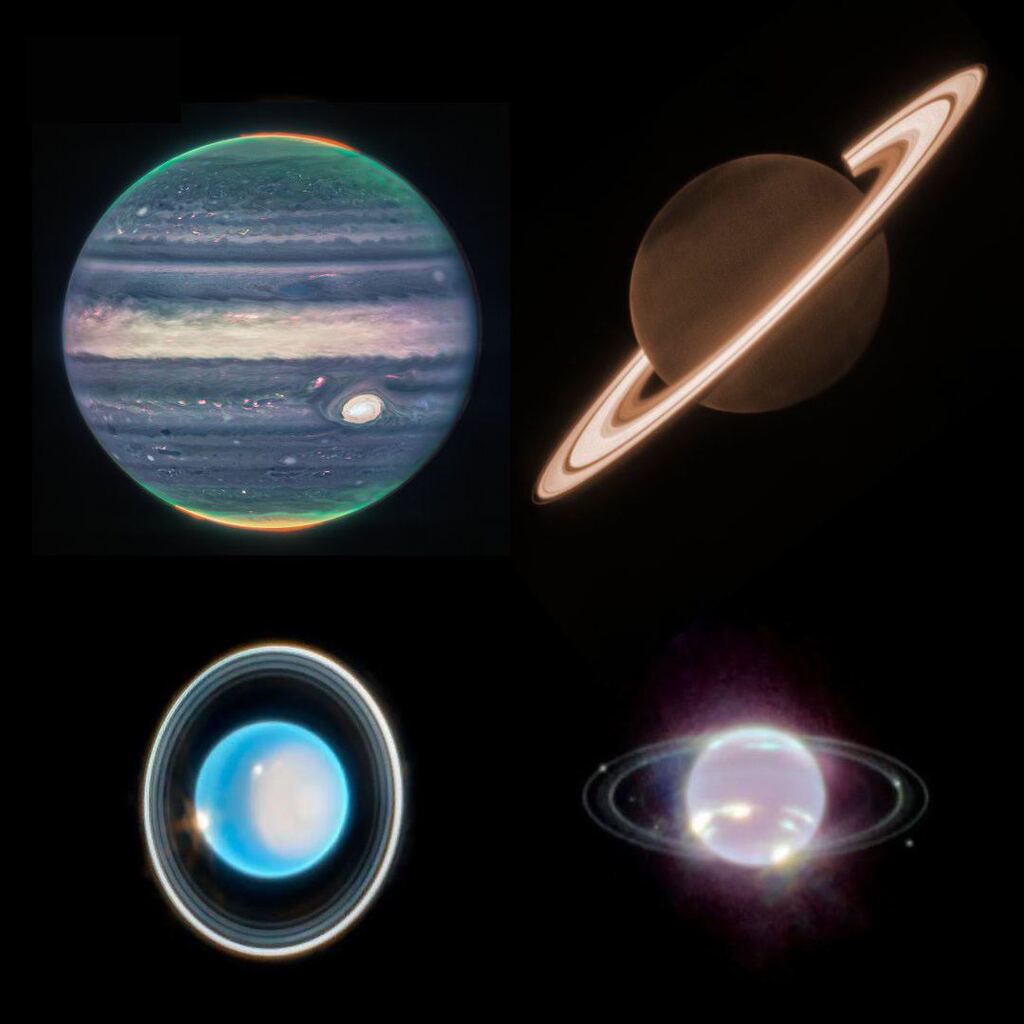
JWST's Fantastic Four!
The James Webb Space Telescope (JWST) has now captured images of all four gas giants in our solar system: Jupiter, Saturn, Uranus, and Neptune. These images are the first of their kind, and they offer a new and unprecedented view of these distant worlds.
The JWST's image of Jupiter is particularly stunning. The telescope's infrared vision allows us to see through Jupiter's thick clouds, revealing the planet's swirling atmosphere and its Great Red Spot. The planet's haze and auroras steal the show.
The JWST's images of Saturn are also remarkable. The telescope's sharp vision allows us to see the planet's rings in great detail. They appear as vibrant, thick bands glowing with a snowy hue, effortlessly upstaging the muted Saturn lurking in the background. The image also shows Saturn's atmosphere, which is a swirling mass of clouds and storms.
Next, we have the images of Uranus and Neptune. The telescope's infrared vision allows us to see these planets' atmospheres in great detail. We can see the clouds and storms that swirl around these planets, as well as the different colors of their atmospheres. Uranus and Neptune are the least explored planets in the solar system, with Voyager 2 being the only spacecraft to have visited them in the 1980s.
Wednesday, 27 August 2025
A Very Hungry Planet
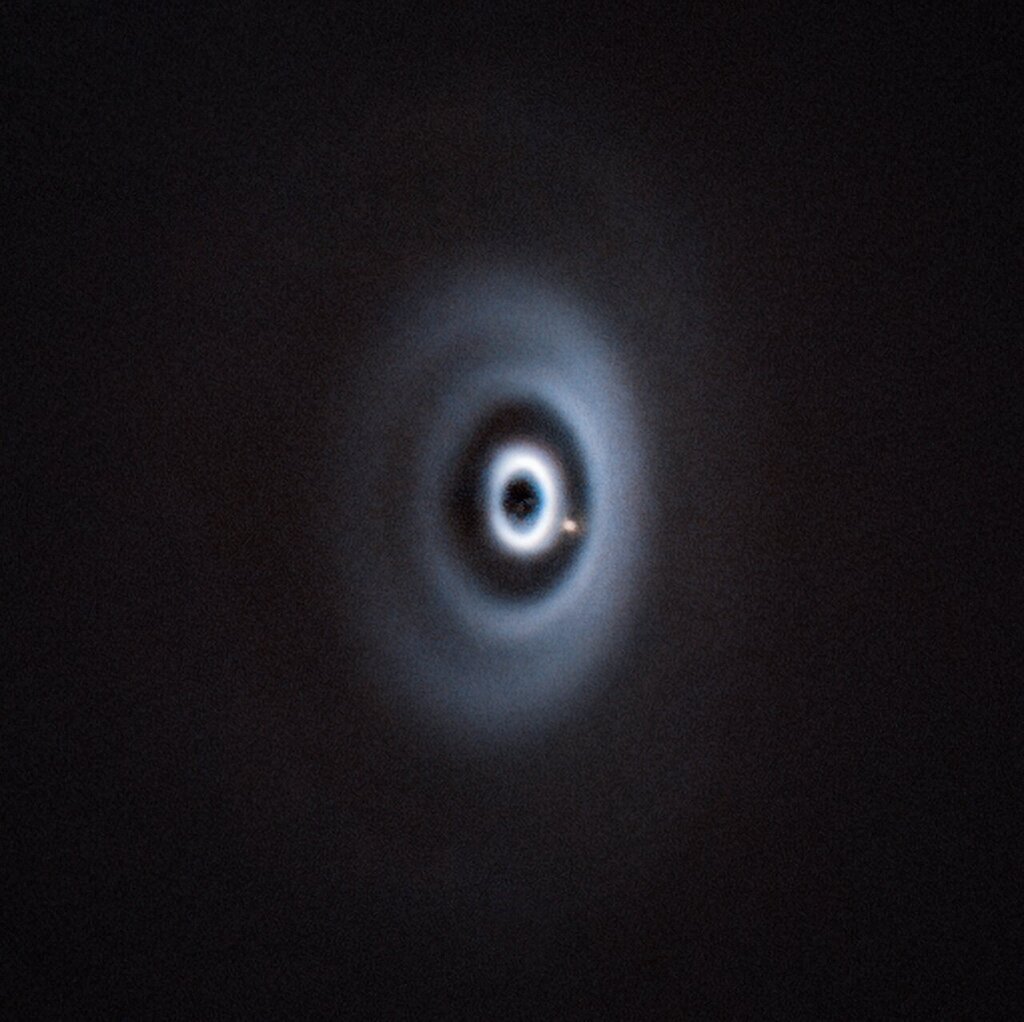
What appears to be a ripple in space is actually a newborn planet eating its way through its dusty cradle as it orbits its host star. This image, taken with ESO’s Very Large Telescope (VLT) in Chile, is the first clear detection of a baby planet in a disc with multiple rings.
These so-called protoplanetary discs surround young stars and appear as disc-shaped structures of gas and dust, often with rings, such as the one in this image. They are the birthplace of planets, and the rings are thought to indicate the presence of (hungry) planets in the disc. Initially, little particles in the spinning disc begin to accumulate and grow as gravity takes over, stealing more material from the native disc until they evolve into embryo planets.
The clear detection of the planet WISPIT 2b in this image represents a significant step forward in our understanding of how planets form. It’s about 5 times the mass of Jupiter, and its host star is a younger version of our Sun. It also reinforces the idea that gaps can be created by newly formed planets — a prediction only made in theory that has now been verified observationally.
Thursday, 28 August 2025
Lit From Within
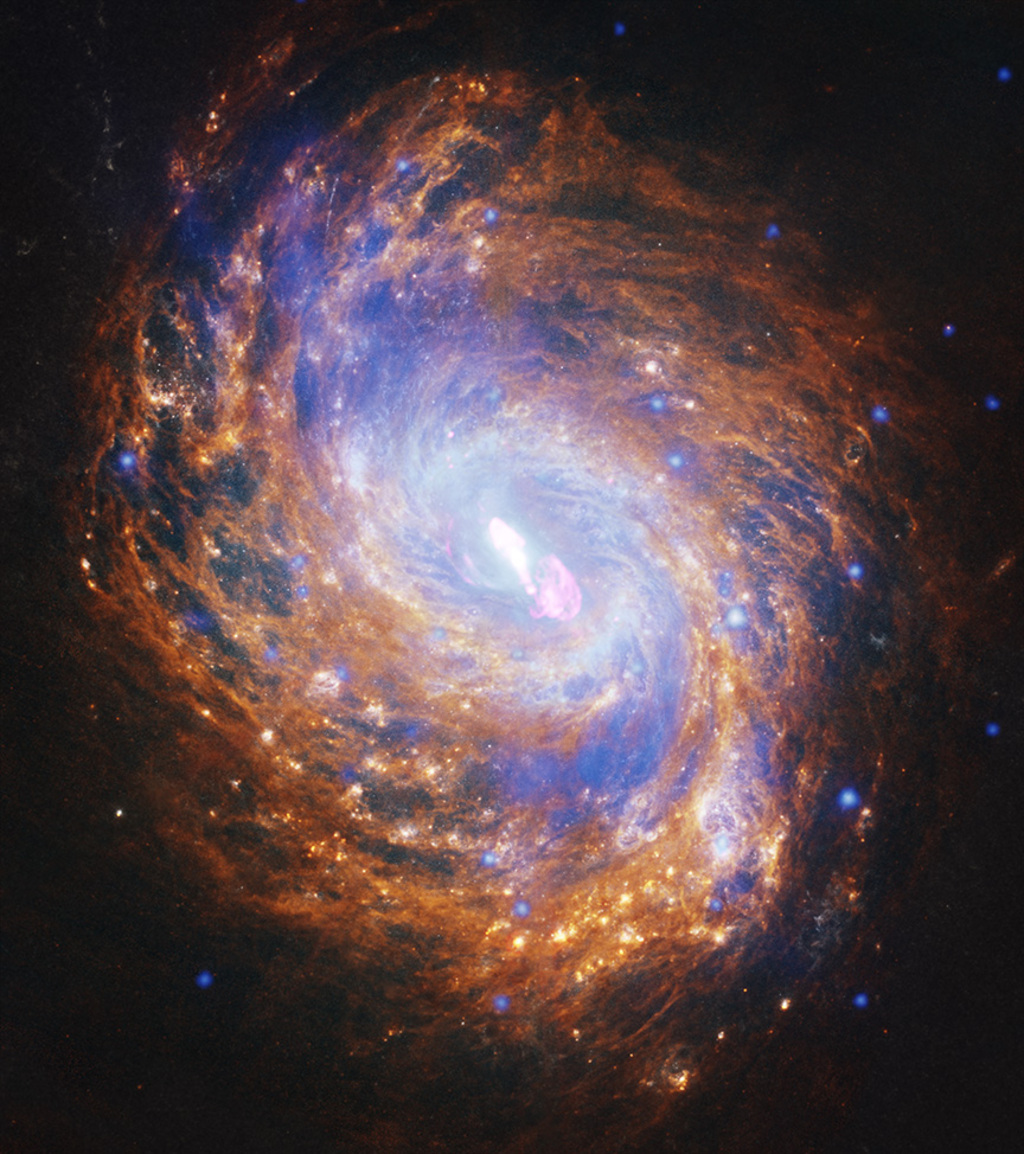
NGC 1068 is a relatively nearby spiral galaxy containing a black hole at its center that is twice as massive as the Milky Way’s. Chandra shows a million-mile-per-hour wind is being driven from NGC 1068’s black hole and lighting up the center of the galaxy in X-rays.
X-rays from Chandra (blue), radio data from NSF’s VLA (pink), and optical data from Hubble and Webb (yellow, grey, and gold).
Friday, 29 August 2025
Perseids Over Durdle Door
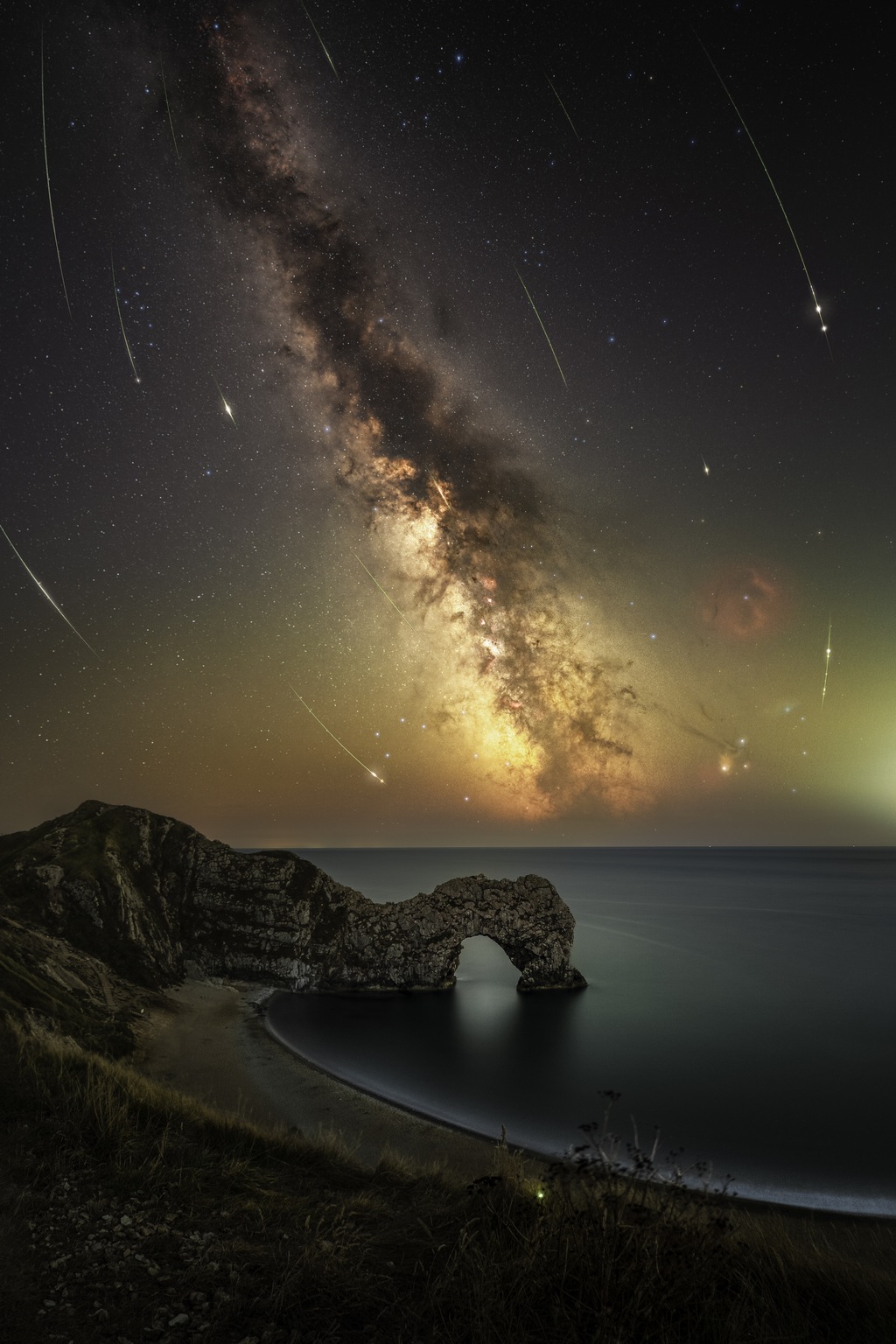
The annual Perseid meteor shower can be a magical display of falling "stars." This year's show, unfortunately, was hampered by a waning gibbous moon, making it difficult to track the meteors even under dark skies. However, astrophotographer Josh Dury accepted the challenge with this gorgeous time-lapse over Durdle Door, a natural limestone arch on the coast in Dorset, England. There are fourteen meteors captured over a seven-hour integration. The galactic core glows above the horizon as the Milky Way stretches up over the night sky.
Note the glow worm near the bottom of the picture!
News
Related News
Planetary Picture of the Day - Week of August 24, 2026
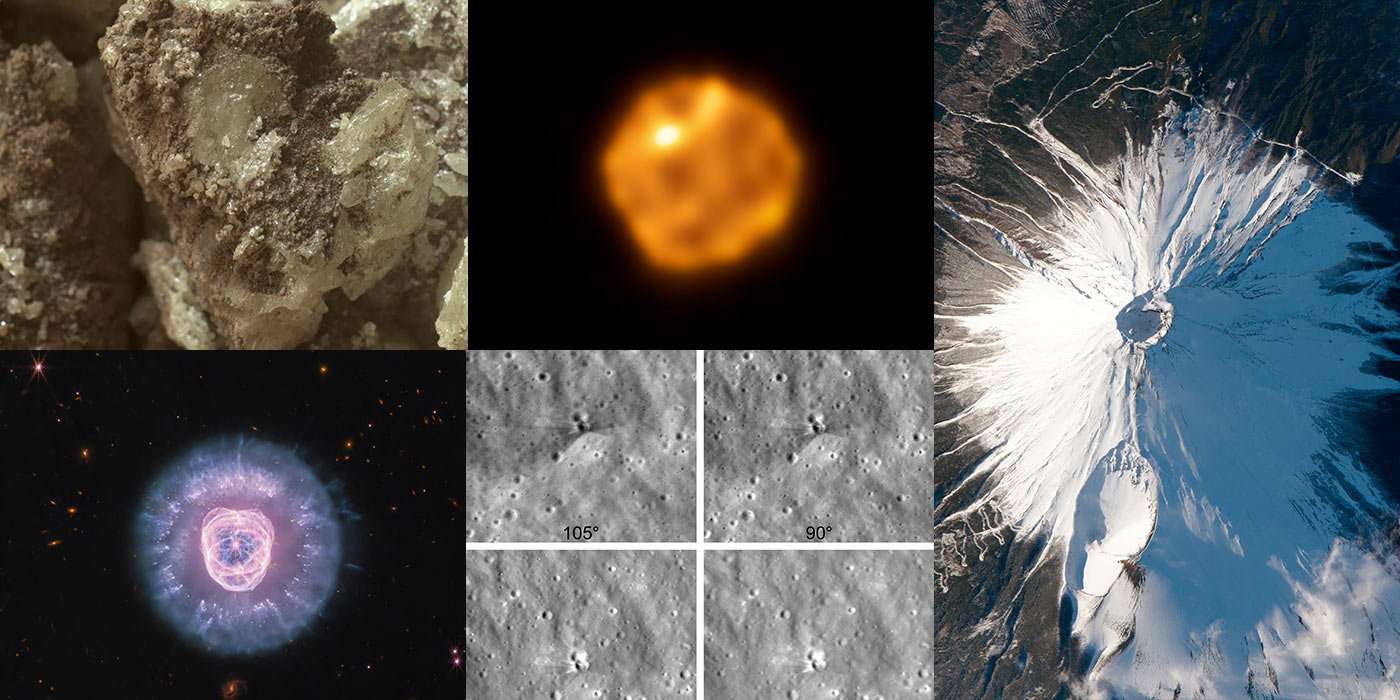
We journey from Mount Fuji as seen from orbit to the bubbling surface of Betelgeuse, exploring the forces that shape planets, moons, and stars across the cosmos. Along the way, JWST reveals the remains of a dying star, Curiosity uncovers clues to Mars’ volcanic past, and a fresh rocket impact on the Moon gives scientists a new opportunity to study how collisions reshape its surface. #PPOD
Planetary Picture of the Day - Week of August 17, 2026
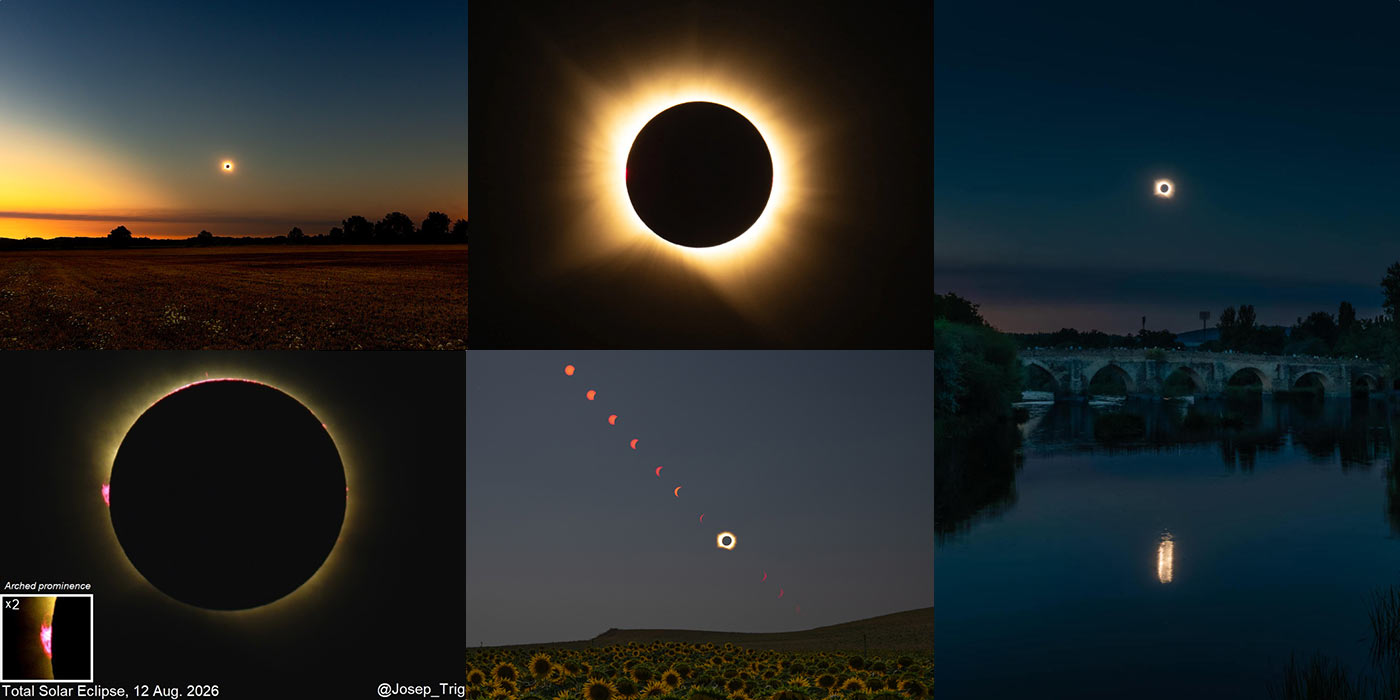
Let's celebrate the August 12 total solar eclipse through the eyes of photographers who experienced the Moon’s shadow sweeping across Spain. From Baily’s Beads and a glowing solar prominence to totality reflected in a river and framed by fields of sunflowers, these images capture both the science and extraordinary beauty of one of nature’s most spectacular celestial events. #PPOD #Eclipse
Planetary Picture of the Day - Week of August 10, 2026
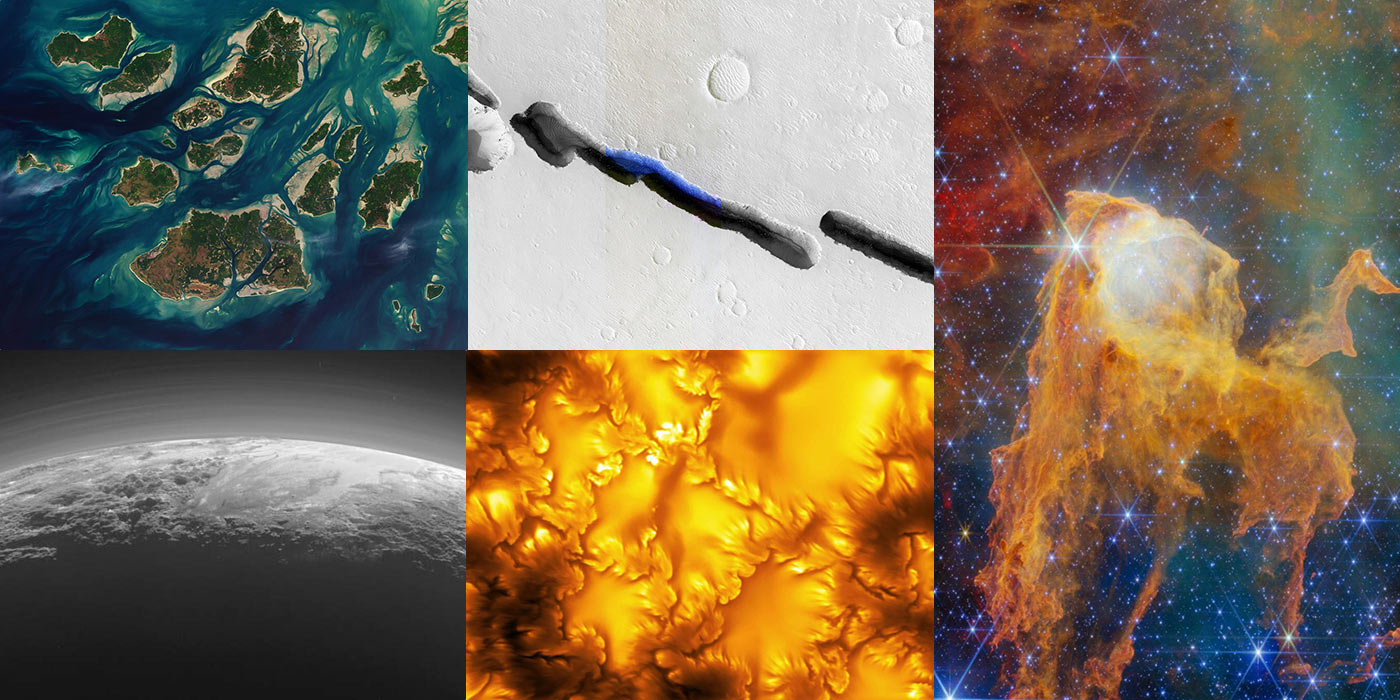
The universe is shaped by forces both immense and intricate, from fractured terrain on Mars and shifting tidal landscapes on Earth to tiny vortices dancing across the surface of the Sun. Farther afield, dramatic views of Pluto’s icy mountains and hazy atmosphere and a treasure chest of newborn stars in the Carina Nebula showcase the remarkable detail revealed by spacecraft and telescopes exploring the cosmos. #PPOD
Planetary Picture of the Day - August 3, 2026
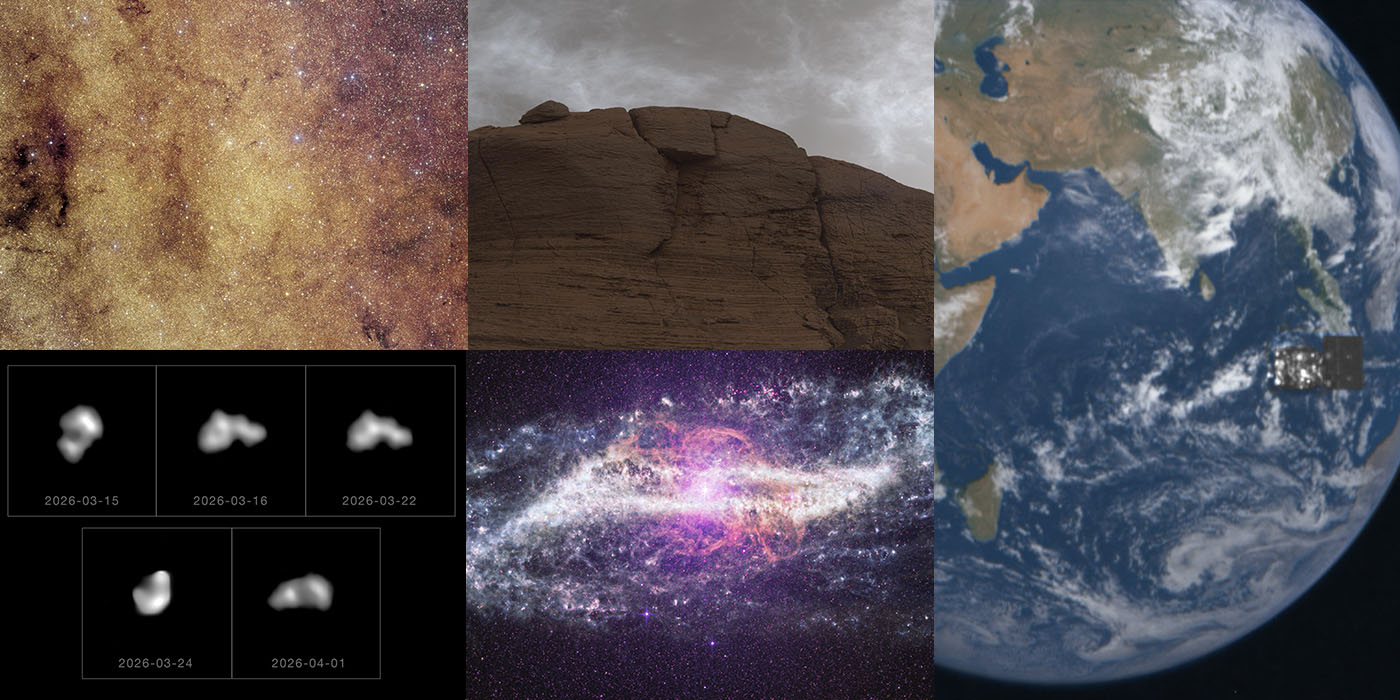
This week, we reveal hidden wonders across the cosmos, from delicate Martian clouds and a dust-shrouded galaxy to an asteroid with a never-before-seen shape and the crowded heart of the Milky Way. Together, these images showcase how new missions and advanced observatories continue to uncover surprising details about our solar system, our galaxy, and the universe beyond. #PPOD
Planetary Picture of the Day - Week of July 27, 2026
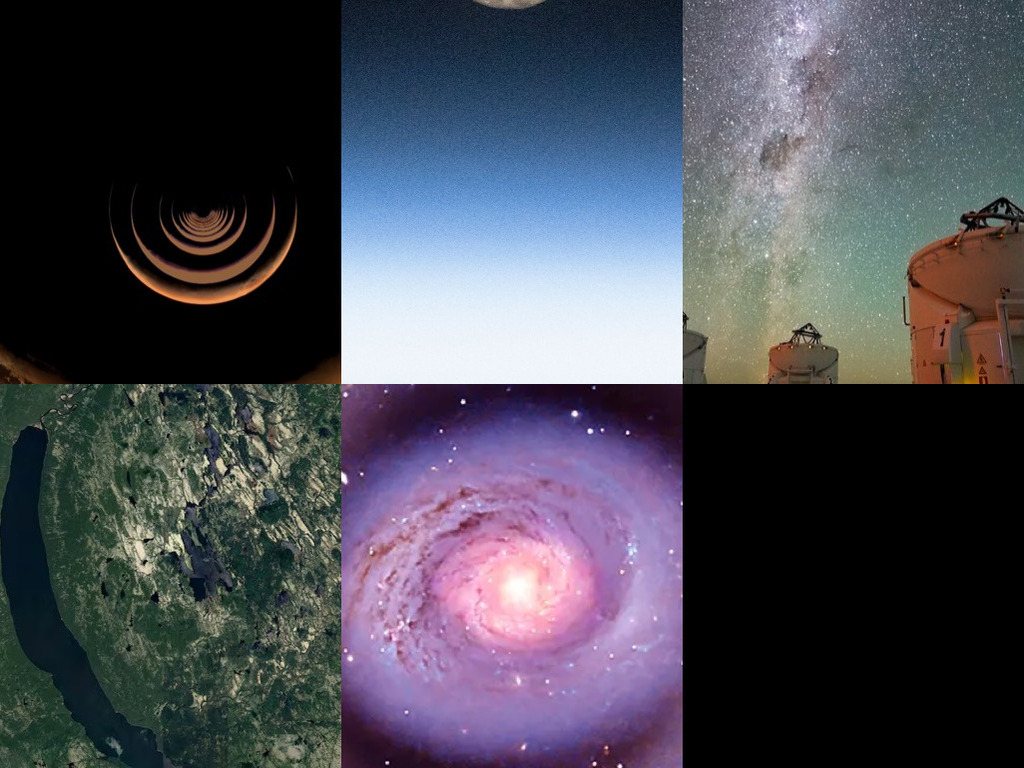
These images span the journey from our own backyard to distant galaxies, featuring Mars, the Moon, breathtaking night skies, and a fresh view of the star-forming galaxy Messier 94. Along the way, we celebrate exploration and discovery—from NASA’s Psyche mission preparing for its asteroid encounter to the revelation of a previously unknown impact crater on Earth —reminding us that there are still new wonders to uncover both on our own planet and across the cosmos. #PPOD
Planetary Picture of the Day - Week of July 20, 2026
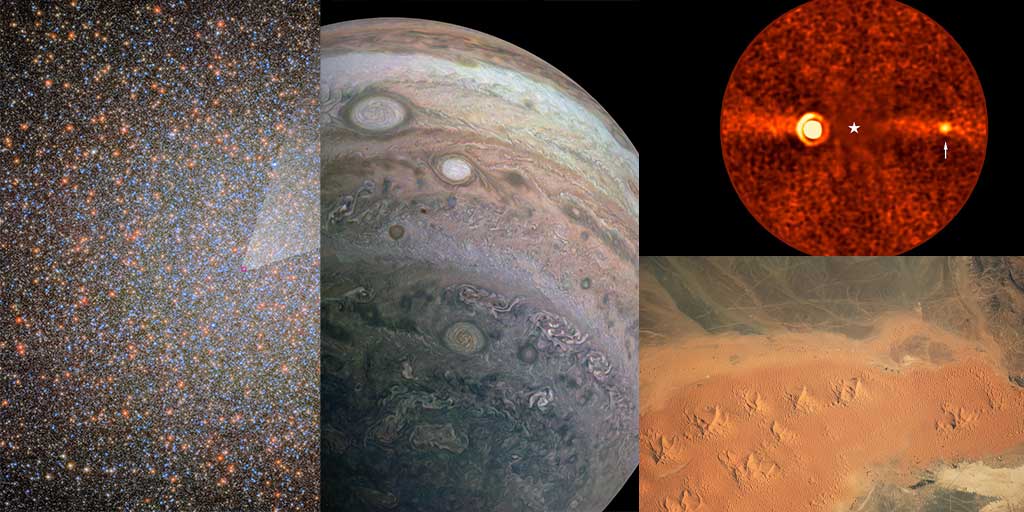
This week, we celebrate fifty years since Viking 1 became the first spacecraft to successfully land on and photograph the surface of Mars, alongside stunning new views of worlds, stars, and galaxies that continue to expand our understanding of the universe. From sculpted Sahara sand dunes and Jupiter’s colorful cloud bands to a newly discovered exoplanet and the first stellar-mass black hole identified in Omega Centauri, these images showcase the remarkable diversity of cosmic exploration. #PPODResearch
Related Projects
SkyMapper: Expanding Access to Real-time Astronomy Through a Global Astronomical Network
SkyMapper and the SETI Institute are connecting educators, students and the public to live astronomical observations through a distributed astronomical network. #SkyMapper #SETI #Citizen Science #Astronomy
Virtual Planetary Laboratory
How can we best assess whether an exoplanet supports life? #VPL
Discovery and Futures Lab
What happens if life beyond Earth is discovered? The Discovery and Futures Lab at the SETI Institute fosters novel and anticipatory research at the intersection of science, society, our planet, and the search for life beyond Earth. #Discovery and Futures LabSupport the
SETI Institute
Scientists are getting closer in their search for life beyond earth. But with limited federal funding for the search for extraterrestrial intelligence, supporters are the reason cutting-edge scientists can keep their eyes on the sky.