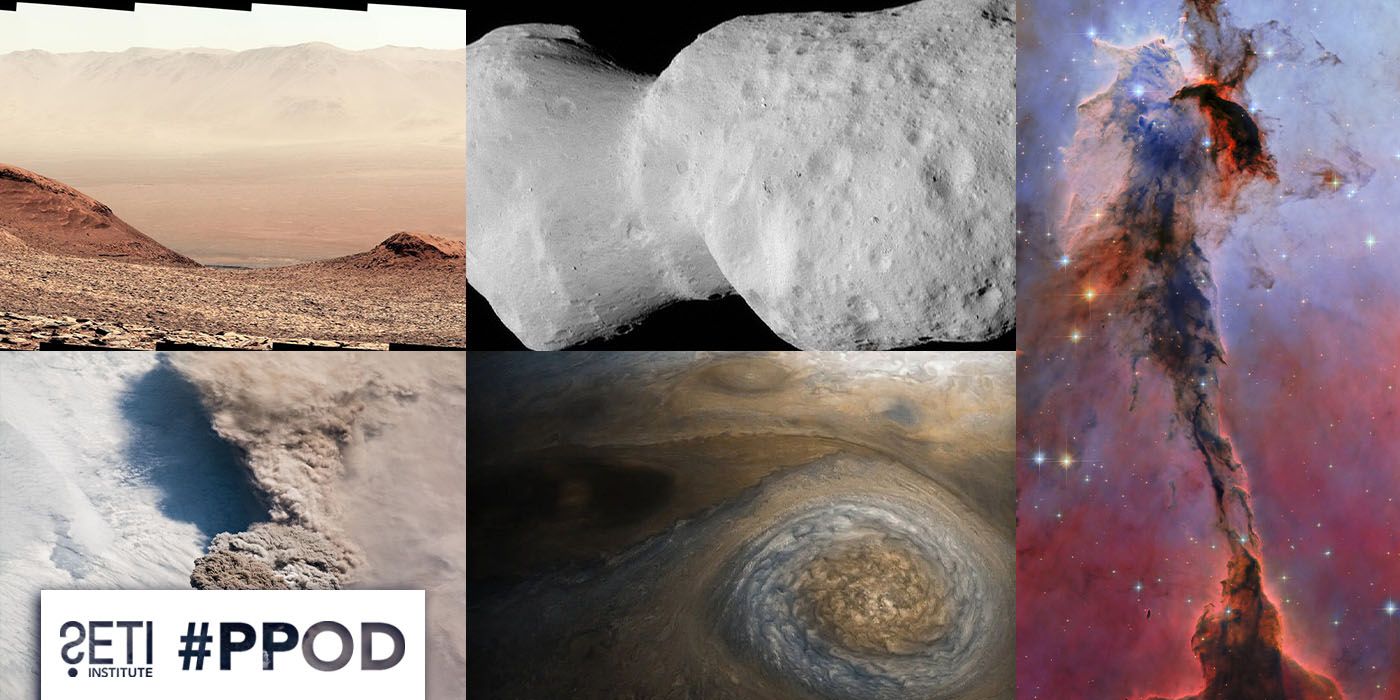
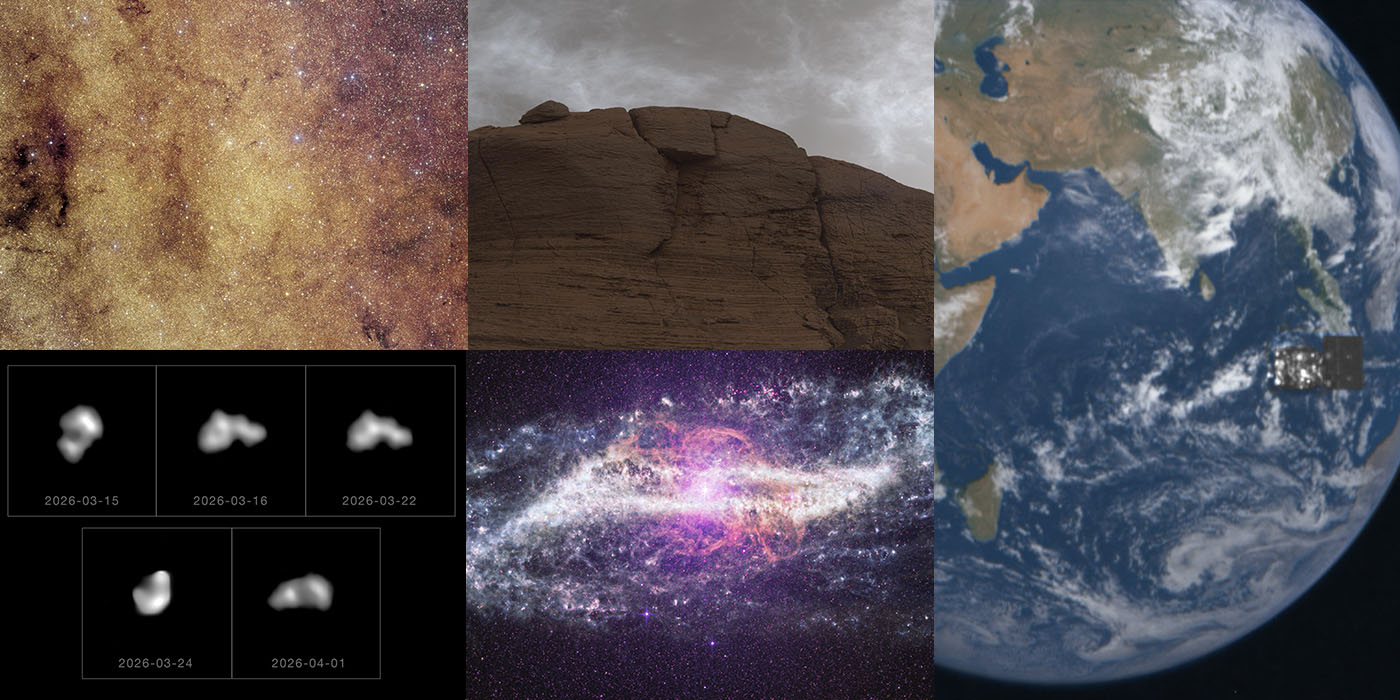
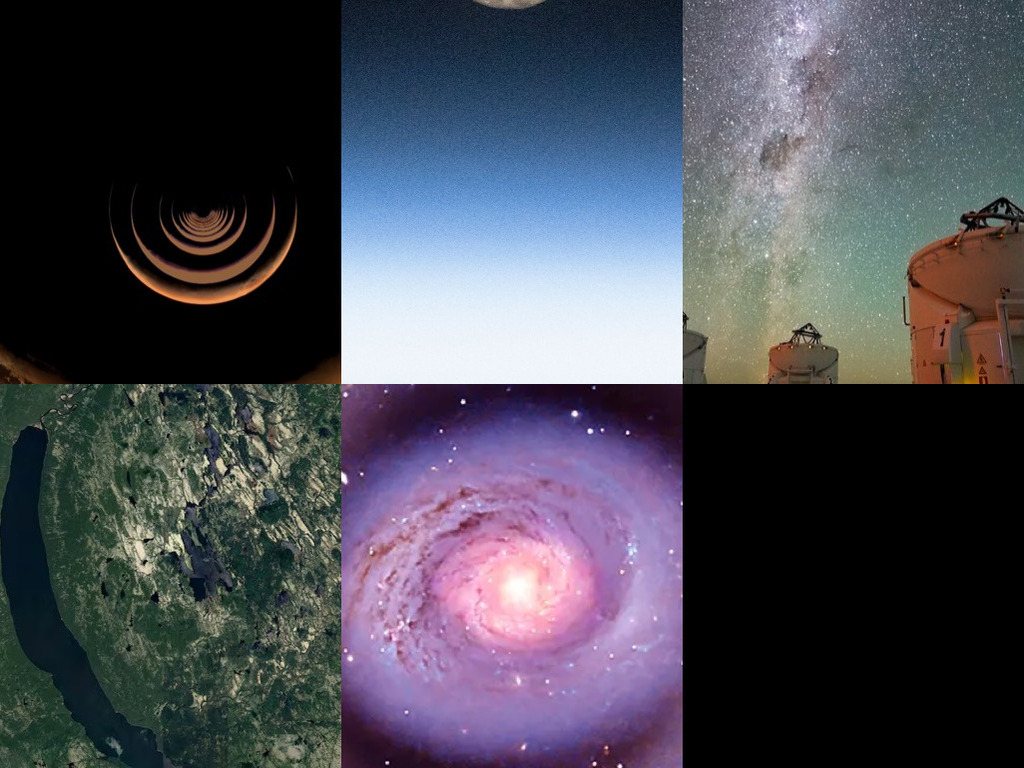
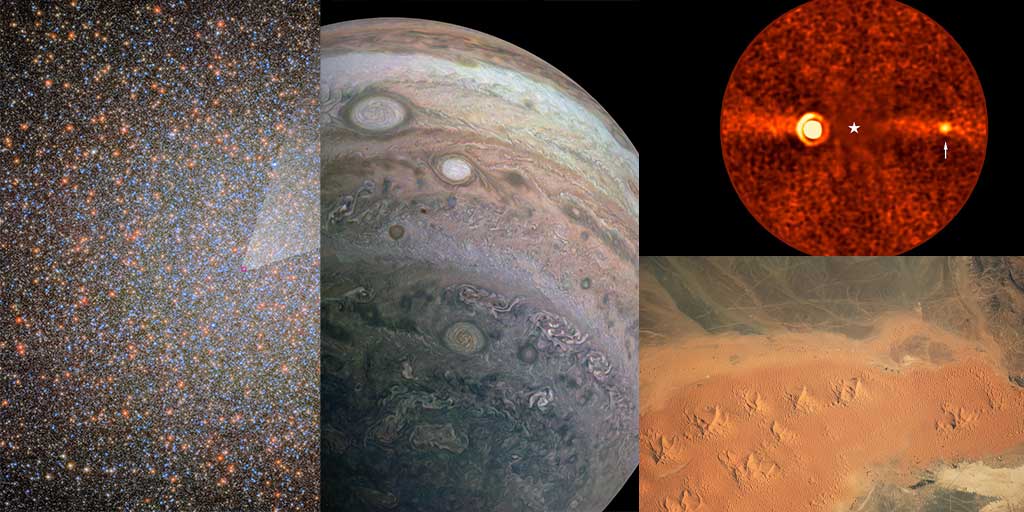
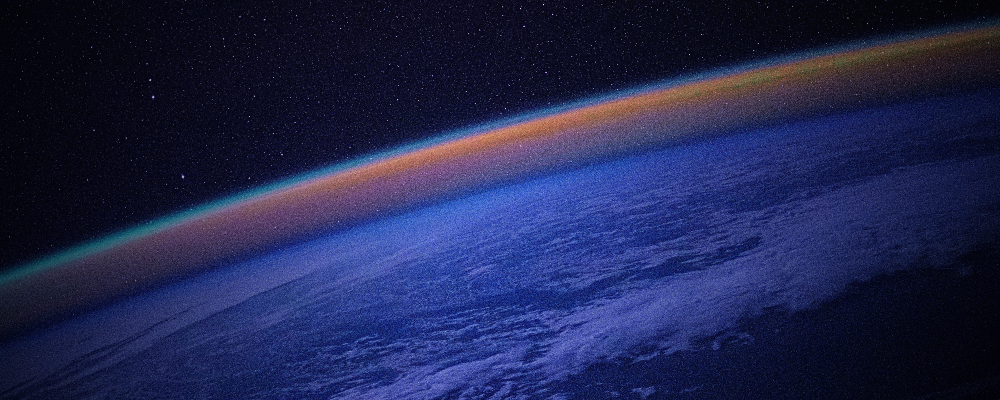
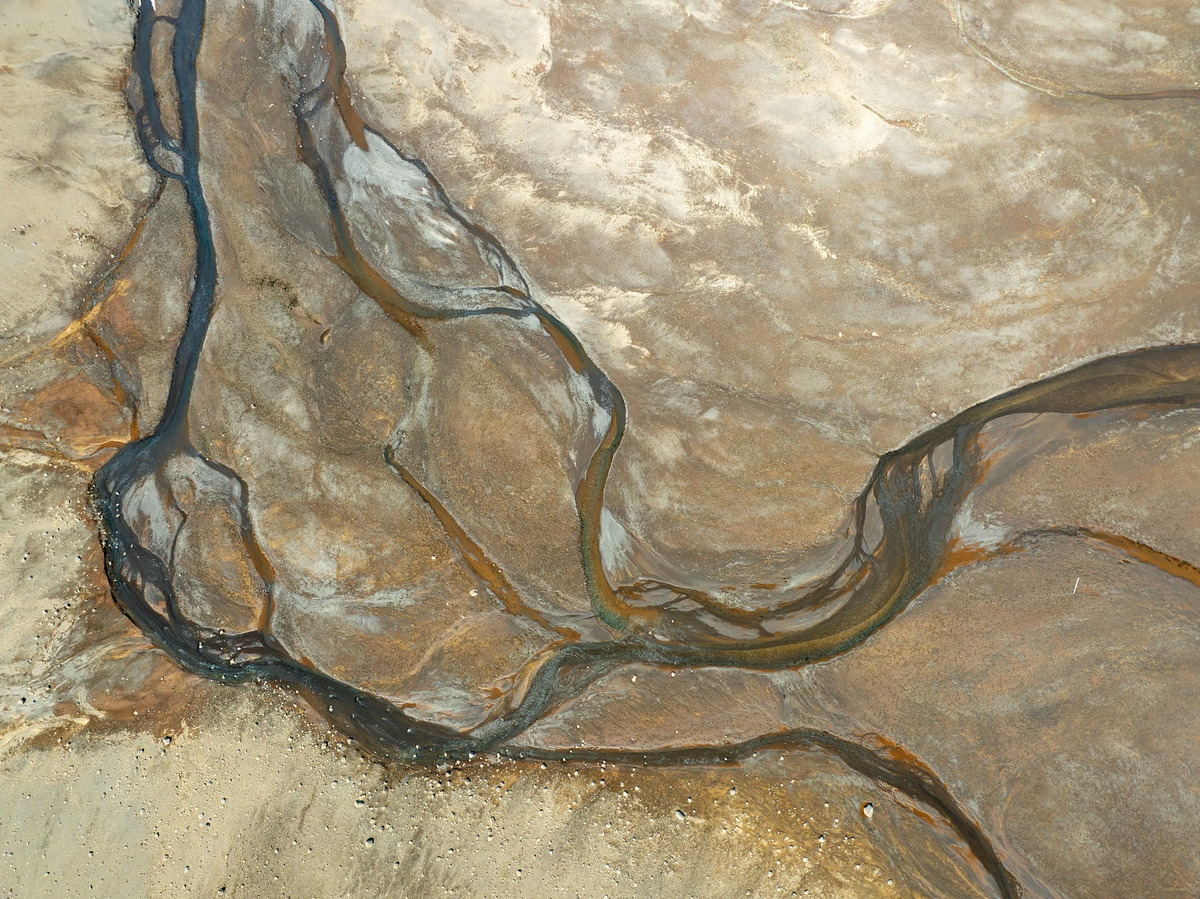
All about the spacecraft this week, with images taken by Juno, Hubble, Lucy, Curiosity, and even one from the ISS of Earth.
Monday, 21 April 2025
Credit: NASA/JPL-Caltech/SwRI/MSSS/Gerald Eichstädt and Seán Doran
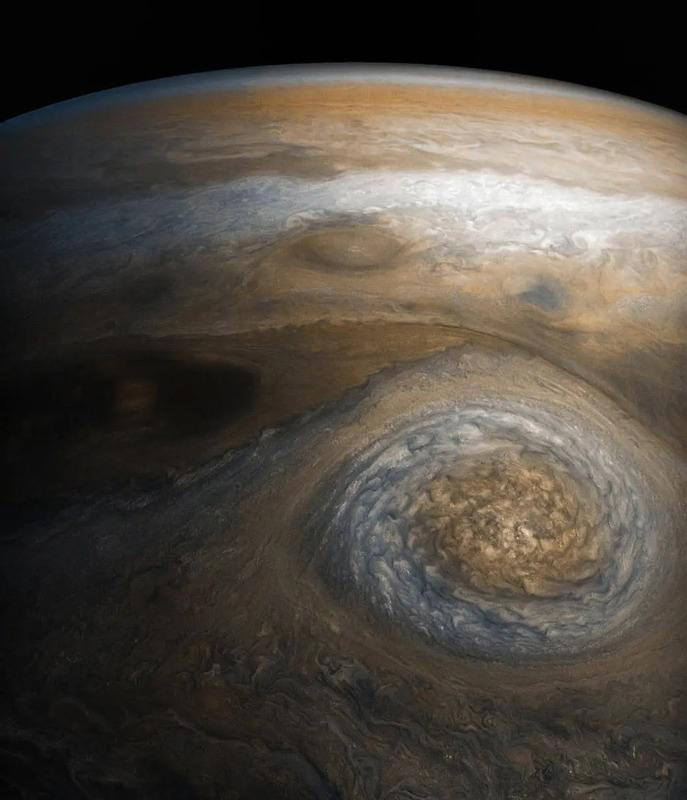
Jupiter Storm of the High North
A dynamic storm at the southern edge of Jupiter’s northern polar region dominates this Jovian cloudscape, courtesy of NASA’s Juno spacecraft.
This storm is a long-lived anticyclonic oval named North North Temperate Little Red Spot 1 (NN-LRS-1); it has been tracked since 1993 and may still be older. An anticyclone is a weather phenomenon in which winds around the storm flow in the direction opposite to that of the winds around a region of low pressure. It is the third-largest anticyclonic oval on the planet, typically around 6,000 kilometers long. The color varies between red and off-white (as it is now), but this JunoCam image shows that it still has a pale reddish core within the radius of maximum wind speeds.
Citizen scientists Gerald Eichstädt and Seán Doran processed this image using data from the JunoCam imager. The image has been rotated so that the top represents the equatorial regions, while the bottom shows the planet's northern polar regions.
Tuesday, 22 April 2025
Credit: ESA/Hubble & NASA, K. Noll
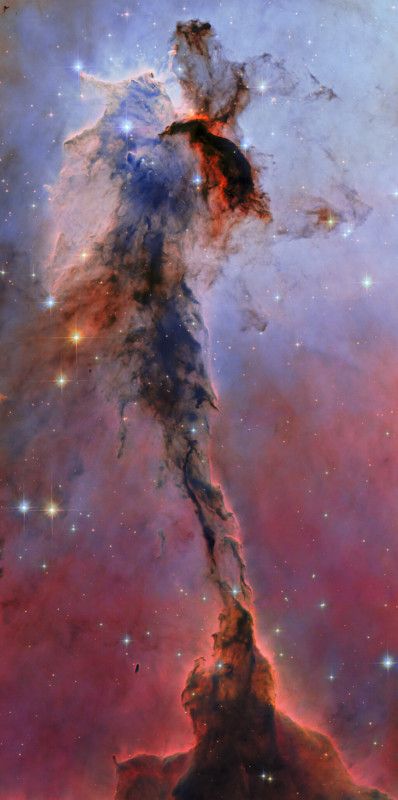
Hubble Spies Cosmic Pillar in Eagle Nebula
This newly reprocessed image, released on April 18, 2025, provides a new view of an enormous, 9.5-light-year-tall pillar of cold gas and dust. Despite its size, it’s just one small piece of the greater Eagle Nebula, also called Messier 16.
The Eagle Nebula is one of many Milky Way nebulae known for their sculpted, dusty clouds. Nebulae take on these fantastic shapes when exposed to powerful radiation and winds from infant stars. Regions with denser gas can better withstand the onslaught of radiation and stellar winds from young stars, and these dense areas remain as dusty sculptures, such as the starry pillar shown here.
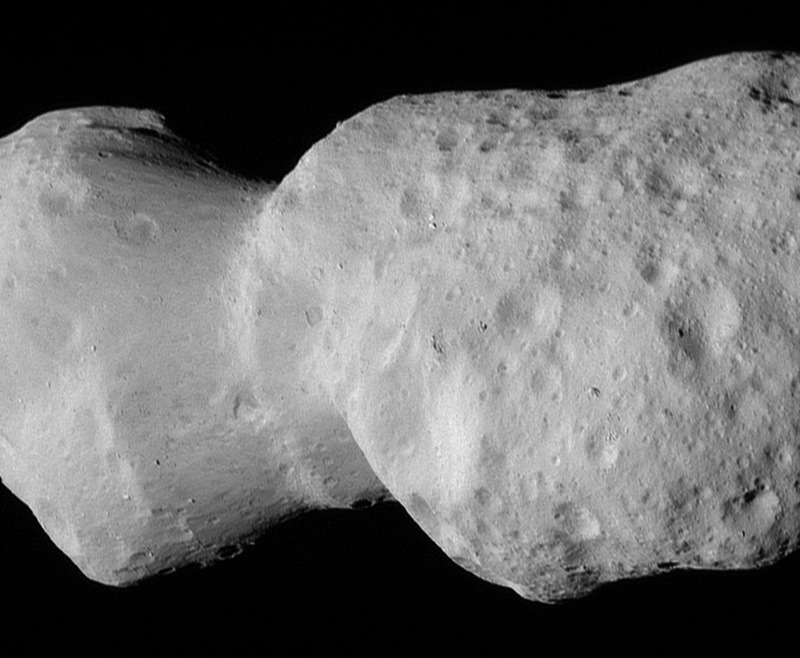
NASA’s Lucy Spacecraft Images Asteroid Donaldjohanson
The first images from the Lucy mission's flyby of asteroid Donaldjohanson reveal an elongated contact binary shape, characterized by an unusual narrow neck between the two lobes. This is one of the most detailed images returned by NASA’s Lucy spacecraft during its flyby. This image was taken at 1:51 p.m. EDT (17:51 UTC), April 20, 2025, near closest approach, from a range of approximately 1,100 km. The image has been sharpened and processed to enhance contrast.
Thursday, 24 April 2025
Credit: NASA
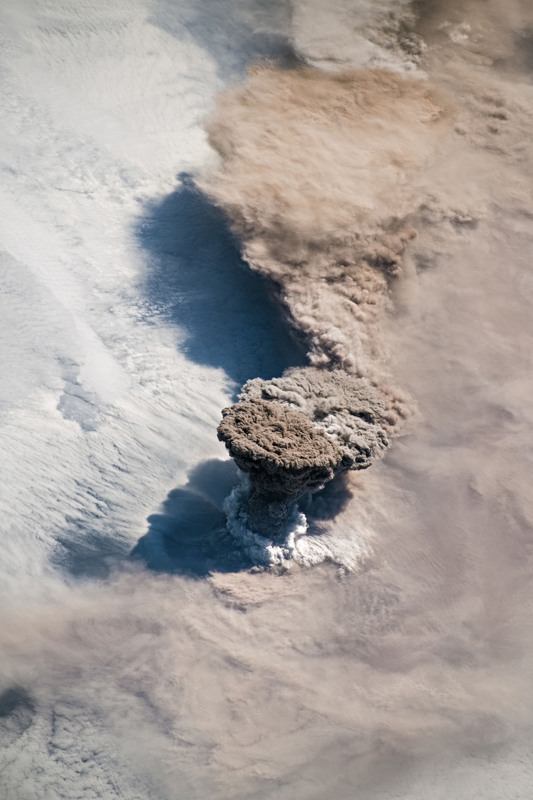
Volcanic Plume
Raikoke Volcano on the Kuril Islands rarely erupts. The small, oval-shaped island most recently exploded in 1924 and in 1778. The dormant period ended around 4:00 a.m. local time on June 22, 2019, when a vast plume of ash and volcanic gases shot up from its 700-meter-wide crater. Several satellites, as well as astronauts on the International Space Station, observed a thick plume rise and then stream east as it was pulled into the circulation of a storm in the North Pacific. On the morning of June 22, astronauts shot this photograph of the volcanic plume rising in a narrow column and then spreading out in a part of the plume known as the umbrella region. That is where the density of the plume and the surrounding air equalize, and the plume stops rising. The ring of clouds at the base of the column appears to be water vapor.
Friday, 25 April 2025
Credit: NASA/JPL-Caltech/MSSS
Curiosity Looks Downslope
NASA's Curiosity Mars rover captured this view looking back down at the floor of Gale Crater from Mount Sharp on Feb. 7, 2025, the mission's 4,447th Martian day, or sol. Curiosity continued its ascent through a mountainous region known as the sulfate-bearing unit.
Mount Sharp is a 5-kilometer-tall mountain composed of several layers formed during different eras of Martian history. By studying each layer, the rover's team can gain a deeper understanding of how the Martian environment has evolved over time, from a warmer, wetter, and more Earth-like world to the freezing desert it is today. The colors in these images have been adjusted to match the lighting conditions as the human eye would perceive them on Earth.
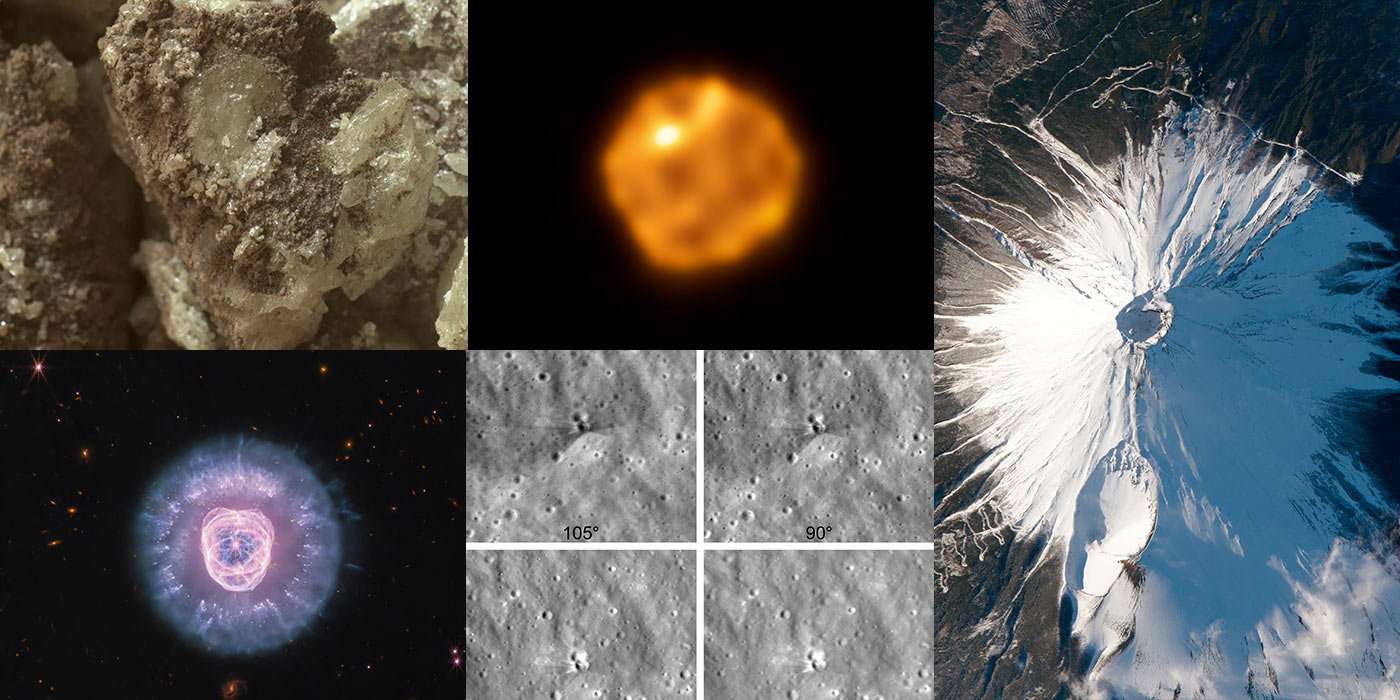
We journey from Mount Fuji as seen from orbit to the bubbling surface of Betelgeuse, exploring the forces that shape planets, moons, and stars across the cosmos. Along the way, JWST reveals the remains of a dying star, Curiosity uncovers clues to Mars’ volcanic past, and a fresh rocket impact on the Moon gives scientists a new opportunity to study how collisions reshape its surface.
#PPOD
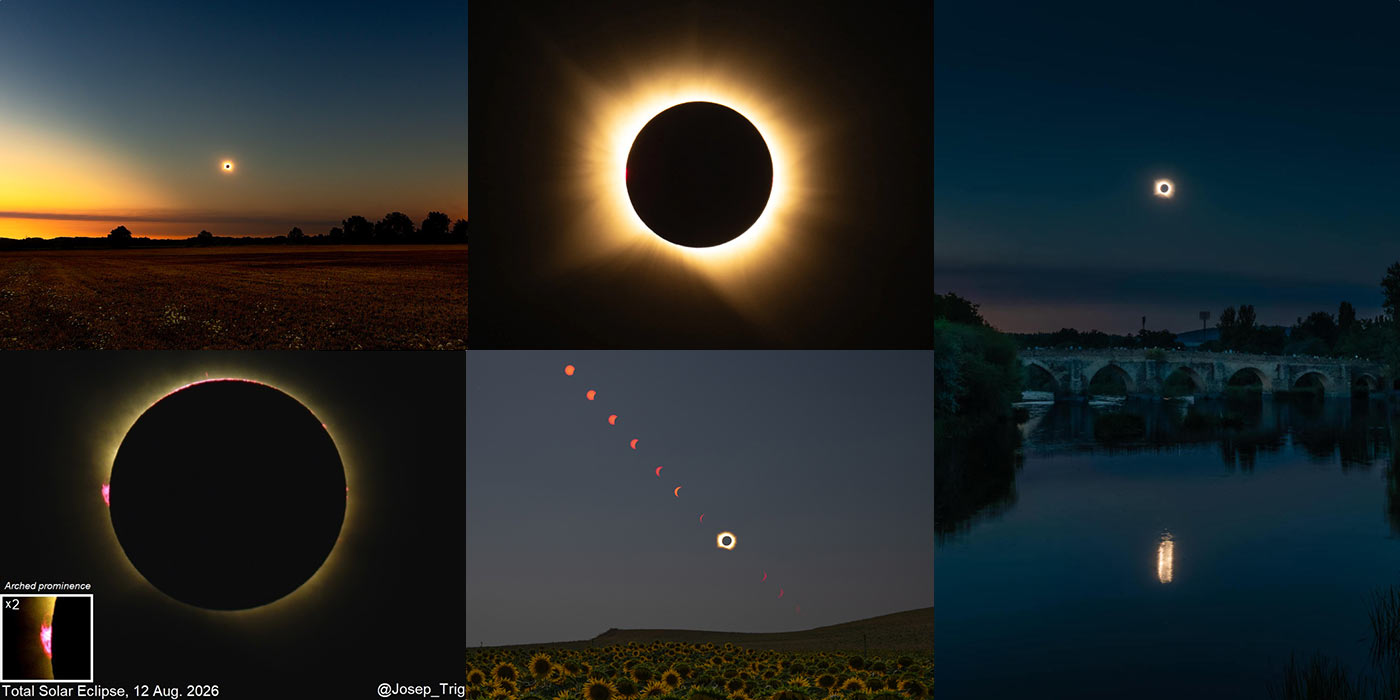
Let's celebrate the August 12 total solar eclipse through the eyes of photographers who experienced the Moon’s shadow sweeping across Spain. From Baily’s Beads and a glowing solar prominence to totality reflected in a river and framed by fields of sunflowers, these images capture both the science and extraordinary beauty of one of nature’s most spectacular celestial events.
#PPOD
#Eclipse
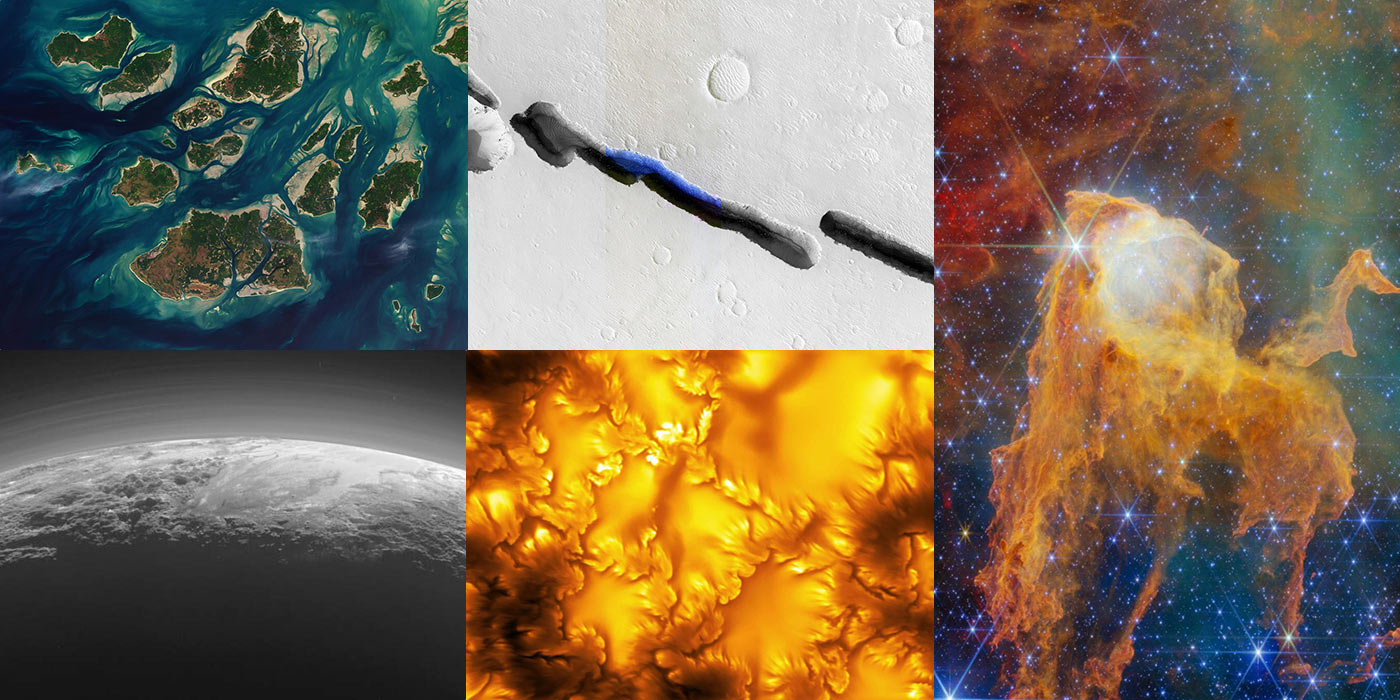
The universe is shaped by forces both immense and intricate, from fractured terrain on Mars and shifting tidal landscapes on Earth to tiny vortices dancing across the surface of the Sun. Farther afield, dramatic views of Pluto’s icy mountains and hazy atmosphere and a treasure chest of newborn stars in the Carina Nebula showcase the remarkable detail revealed by spacecraft and telescopes exploring the cosmos.
#PPOD
This week, we reveal hidden wonders across the cosmos, from delicate Martian clouds and a dust-shrouded galaxy to an asteroid with a never-before-seen shape and the crowded heart of the Milky Way. Together, these images showcase how new missions and advanced observatories continue to uncover surprising details about our solar system, our galaxy, and the universe beyond.
#PPOD
These images span the journey from our own backyard to distant galaxies, featuring Mars, the Moon, breathtaking night skies, and a fresh view of the star-forming galaxy Messier 94. Along the way, we celebrate exploration and discovery—from NASA’s Psyche mission preparing for its asteroid encounter to the revelation of a previously unknown impact crater on Earth —reminding us that there are still new wonders to uncover both on our own planet and across the cosmos.
#PPOD
This week, we celebrate fifty years since Viking 1 became the first spacecraft to successfully land on and photograph the surface of Mars, alongside stunning new views of worlds, stars, and galaxies that continue to expand our understanding of the universe. From sculpted Sahara sand dunes and Jupiter’s colorful cloud bands to a newly discovered exoplanet and the first stellar-mass black hole identified in Omega Centauri, these images showcase the remarkable diversity of cosmic exploration.
#PPOD
We journey from Mount Fuji as seen from orbit to the bubbling surface of Betelgeuse, exploring the forces that shape planets, moons, and stars across the cosmos. Along the way, JWST reveals the remains of a dying star, Curiosity uncovers clues to Mars’ volcanic past, and a fresh rocket impact on the Moon gives scientists a new opportunity to study how collisions reshape its surface.
Let's celebrate the August 12 total solar eclipse through the eyes of photographers who experienced the Moon’s shadow sweeping across Spain. From Baily’s Beads and a glowing solar prominence to totality reflected in a river and framed by fields of sunflowers, these images capture both the science and extraordinary beauty of one of nature’s most spectacular celestial events.
The universe is shaped by forces both immense and intricate, from fractured terrain on Mars and shifting tidal landscapes on Earth to tiny vortices dancing across the surface of the Sun. Farther afield, dramatic views of Pluto’s icy mountains and hazy atmosphere and a treasure chest of newborn stars in the Carina Nebula showcase the remarkable detail revealed by spacecraft and telescopes exploring the cosmos.
This week, we reveal hidden wonders across the cosmos, from delicate Martian clouds and a dust-shrouded galaxy to an asteroid with a never-before-seen shape and the crowded heart of the Milky Way. Together, these images showcase how new missions and advanced observatories continue to uncover surprising details about our solar system, our galaxy, and the universe beyond.
These images span the journey from our own backyard to distant galaxies, featuring Mars, the Moon, breathtaking night skies, and a fresh view of the star-forming galaxy Messier 94. Along the way, we celebrate exploration and discovery—from NASA’s Psyche mission preparing for its asteroid encounter to the revelation of a previously unknown impact crater on Earth —reminding us that there are still new wonders to uncover both on our own planet and across the cosmos.
This week, we celebrate fifty years since Viking 1 became the first spacecraft to successfully land on and photograph the surface of Mars, alongside stunning new views of worlds, stars, and galaxies that continue to expand our understanding of the universe. From sculpted Sahara sand dunes and Jupiter’s colorful cloud bands to a newly discovered exoplanet and the first stellar-mass black hole identified in Omega Centauri, these images showcase the remarkable diversity of cosmic exploration.
SkyMapper and the SETI Institute are connecting educators, students and the public to live astronomical observations through a distributed astronomical network.
#SkyMapper
#SETI
#Citizen Science
#Astronomy
What happens if life beyond Earth is discovered? The Discovery and Futures Lab at the SETI Institute fosters novel and anticipatory research at the intersection of science, society, our planet, and the search for life beyond Earth.
#Discovery and Futures Lab
SkyMapper and the SETI Institute are connecting educators, students and the public to live astronomical observations through a distributed astronomical network.
What happens if life beyond Earth is discovered? The Discovery and Futures Lab at the SETI Institute fosters novel and anticipatory research at the intersection of science, society, our planet, and the search for life beyond Earth.
Scientists are getting closer in their search for life beyond earth. But with limited federal funding for the search for extraterrestrial intelligence, supporters are the reason cutting-edge scientists can keep their eyes on the sky.
)