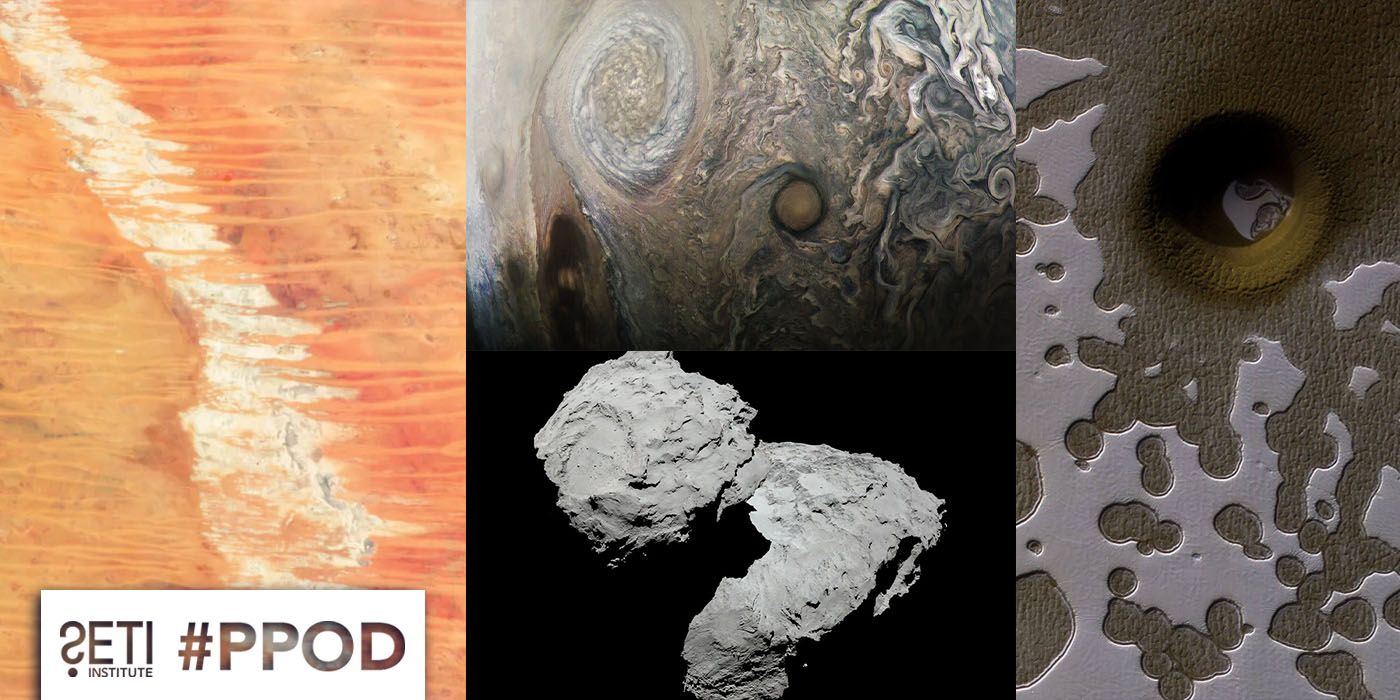
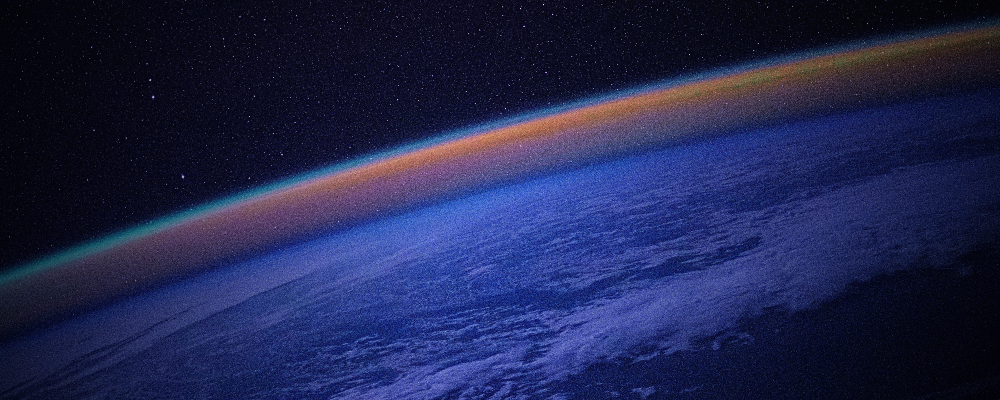
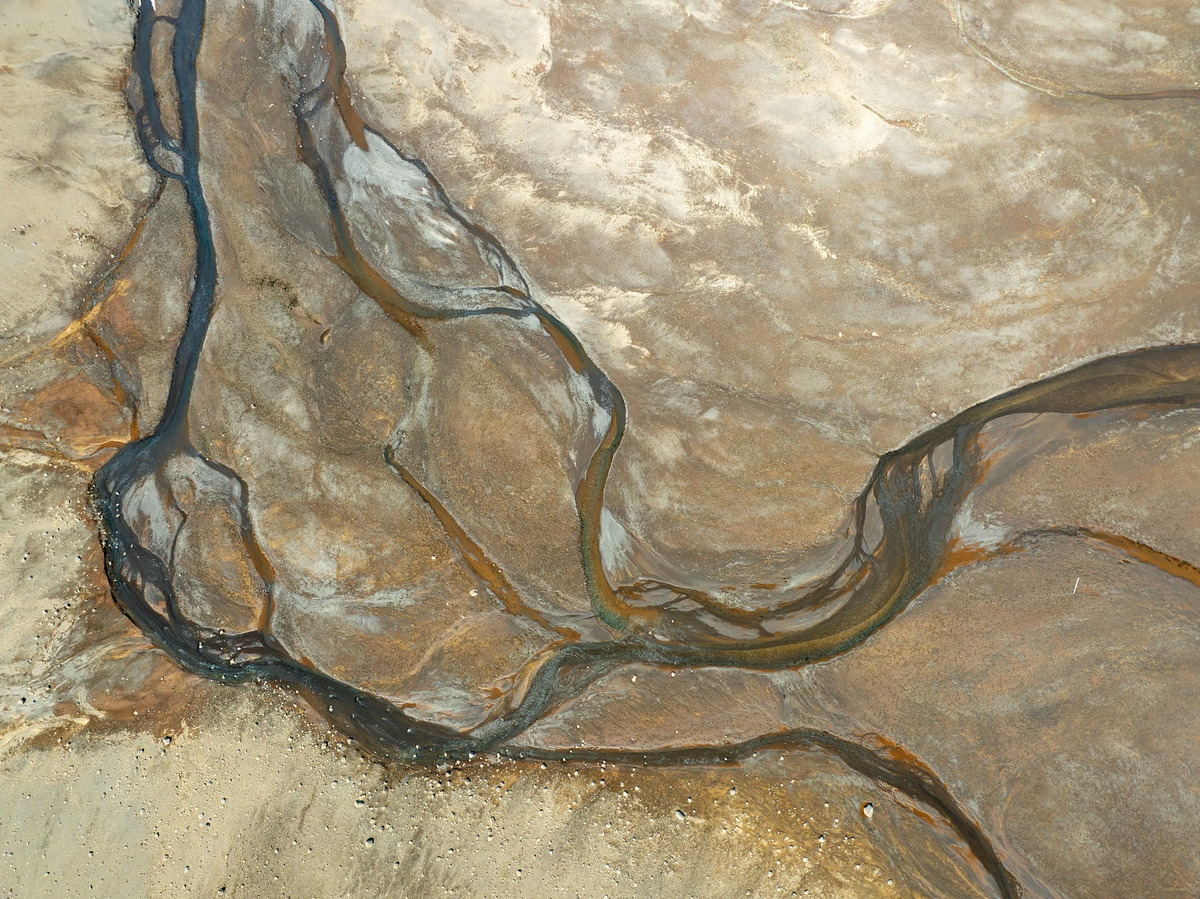
Solely planetary bodies this week, working outward from Earth to Mars, Jupiter, and comet 67P/Churyumov–Gerasimenko.
Monday, 14 April 2025
Credit: NASA
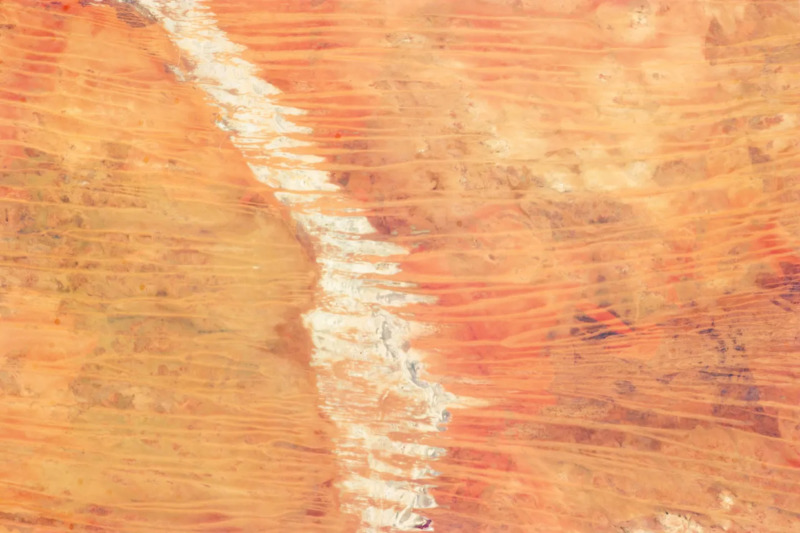
Linear Sand Dunes
On March 25, 2013, an astronaut aboard the International Space Station took this photo of the Great Sandy Desert in northwest Australia, showcasing linear dunes separated in a roughly regular fashion. When you fly over such dune fields—either in an airplane or the space station—the fire scars stand out. Where thin vegetation has been burned, the dunes appear red from the underlying sand; dunes appear darker where the vegetation remains.
Strings of narrow lakes representing ancient rivers are also present in the region. The white feature down the center of the image is Lake Auld. The color results from a cemented combination of fine, clay-like sediment and salts from the evaporation of flood waters that occasionally fill the lake. Linear dunes can be seen entering Lake Auld on the east side. During flooding events, the sand of the dune noses is dispersed, becoming incorporated into the mud and salts of the lake floor sediments. During the long, intervening dry periods, sand can blow across the lake floor to build thinner, smaller dunes, visible as linear accumulations on the west side of the lake.
Tuesday, 15 April 2025
Credit: NASA, MRO, HiRISE, JPL, U. Arizona via APOD
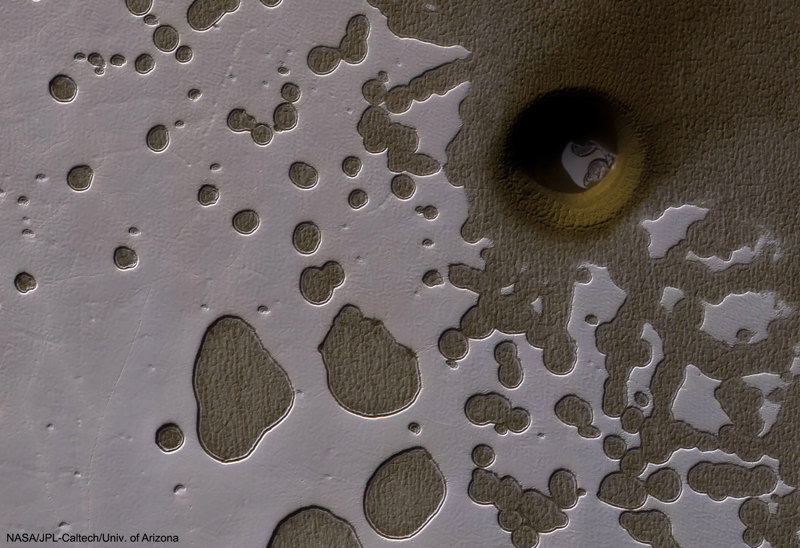
An Unusual Hole in Mars
What created this unusual hole in Mars? Actually, there are numerous holes pictured in this Swiss cheese-like landscape, with all but one of them showing a dusty, dark, Martian terrain beneath evaporating, light, carbon-dioxide ice. The most unusual hole is on the upper right, spans about 100 meters, and seems to punch through to a lower level. Why this hole exists and is surrounded by a circular crater remains a topic of speculation, although a leading hypothesis is that it was created by a meteor impact.
Holes such as this are of particular interest because they might be portals to lower levels that extend into expansive underground caves. If so, these naturally occurring tunnels are relatively protected from the harsh surface of Mars, making them relatively good candidates to contain Martian life. These pits are, therefore, prime targets for possible future spacecraft, robots, and even human interplanetary explorers.
Wednesday, 16 April 2025
Credit: NASA/JPL-Caltech/MSSS/SwRI/Kevin M. Gill
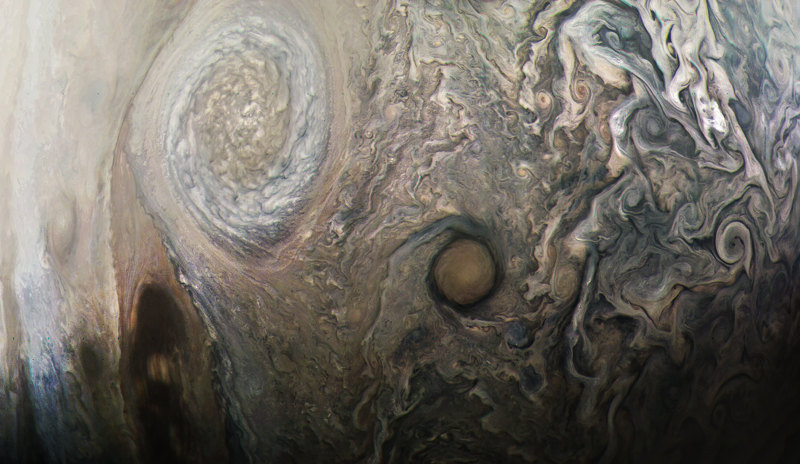
By Jove!
Fantastically beautiful imagery of storms on Jupiter by NASA's Juno spacecraft, taken from 445 km above the gas giant's atmosphere on July 10, 2017. #JunoCam
Thursday, 17 April 2025
Credit: ESA / MPS / UPD / LAM / IAA / RSSD / INTA / UPM / DASP / IDA / Daniel Macháček
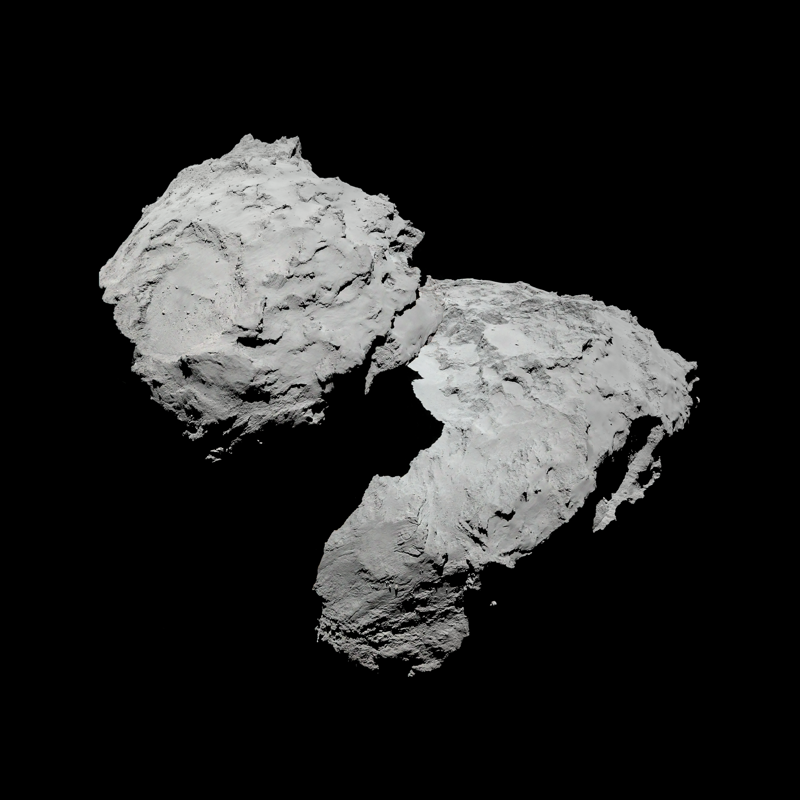
Cometary Close Up
Portrait of comet 67P/Churyumov–Gerasimenko in natural color. This image was taken with the OSIRIS NAC camera on ESA's Rosetta mission on 5 August 2014 from a range of 123 kilometers. Originating in the Kuiper Belt, 67P is a Jupiter-family comet with an orbital period of 6.45 years and will reach its next perihelion in 2028.
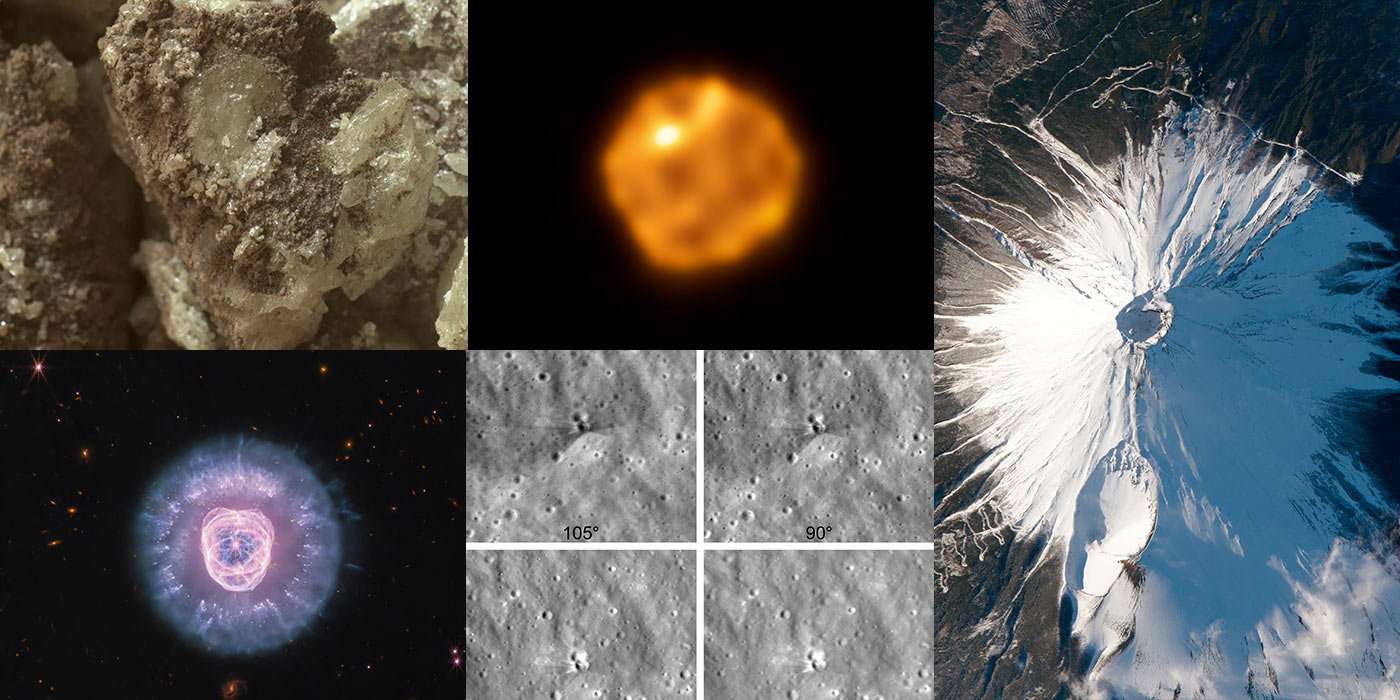
We journey from Mount Fuji as seen from orbit to the bubbling surface of Betelgeuse, exploring the forces that shape planets, moons, and stars across the cosmos. Along the way, JWST reveals the remains of a dying star, Curiosity uncovers clues to Mars’ volcanic past, and a fresh rocket impact on the Moon gives scientists a new opportunity to study how collisions reshape its surface.
#PPOD
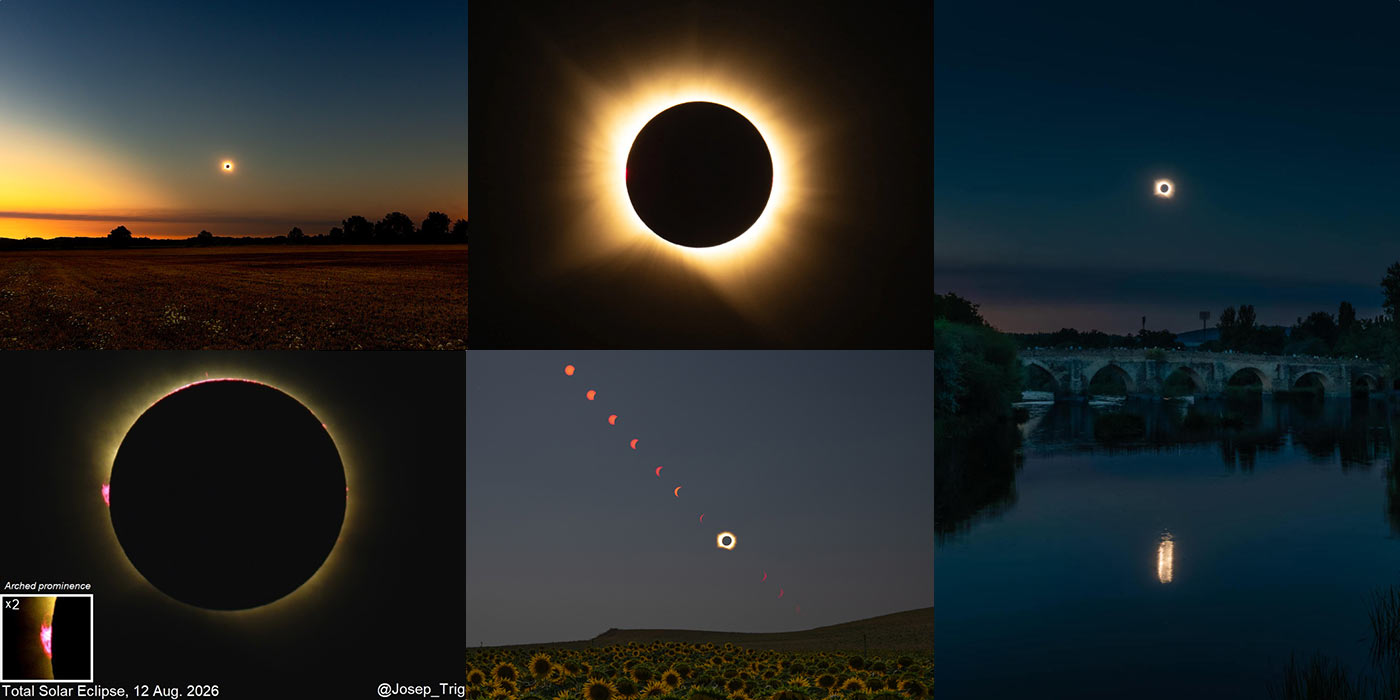
Let's celebrate the August 12 total solar eclipse through the eyes of photographers who experienced the Moon’s shadow sweeping across Spain. From Baily’s Beads and a glowing solar prominence to totality reflected in a river and framed by fields of sunflowers, these images capture both the science and extraordinary beauty of one of nature’s most spectacular celestial events.
#PPOD
#Eclipse
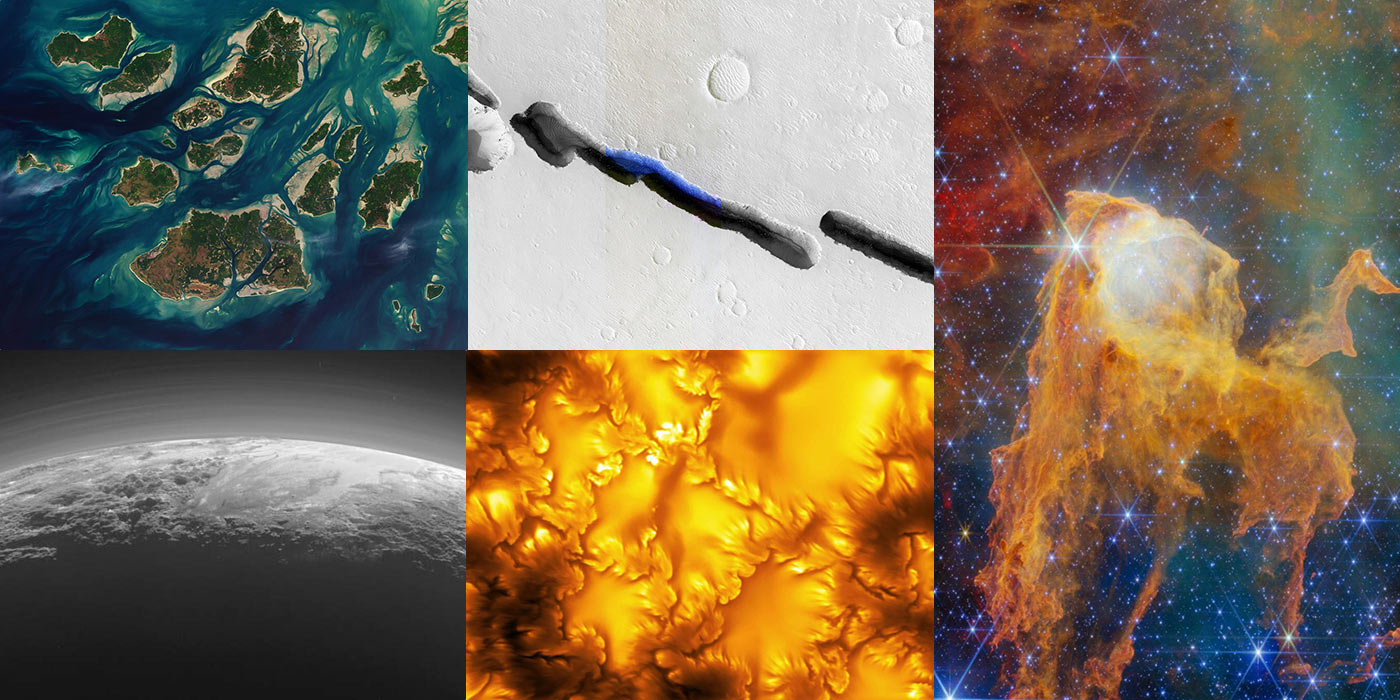
The universe is shaped by forces both immense and intricate, from fractured terrain on Mars and shifting tidal landscapes on Earth to tiny vortices dancing across the surface of the Sun. Farther afield, dramatic views of Pluto’s icy mountains and hazy atmosphere and a treasure chest of newborn stars in the Carina Nebula showcase the remarkable detail revealed by spacecraft and telescopes exploring the cosmos.
#PPOD
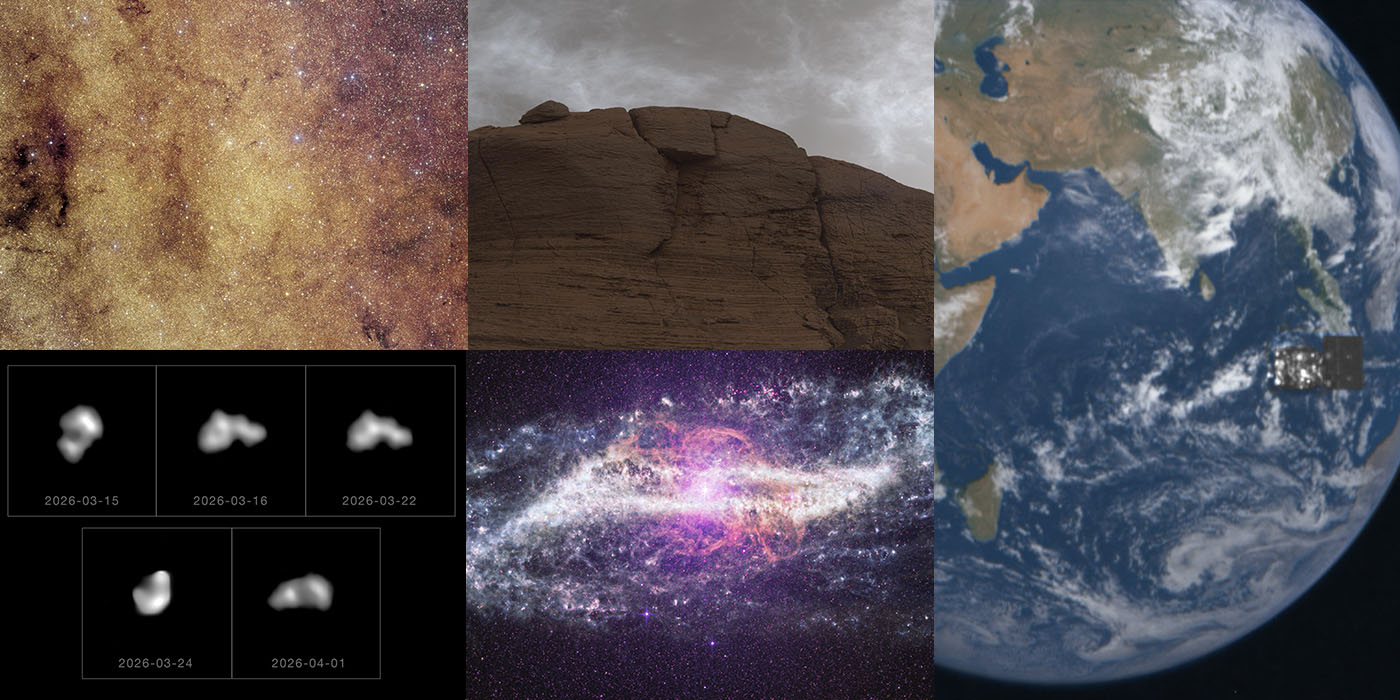
This week, we reveal hidden wonders across the cosmos, from delicate Martian clouds and a dust-shrouded galaxy to an asteroid with a never-before-seen shape and the crowded heart of the Milky Way. Together, these images showcase how new missions and advanced observatories continue to uncover surprising details about our solar system, our galaxy, and the universe beyond.
#PPOD
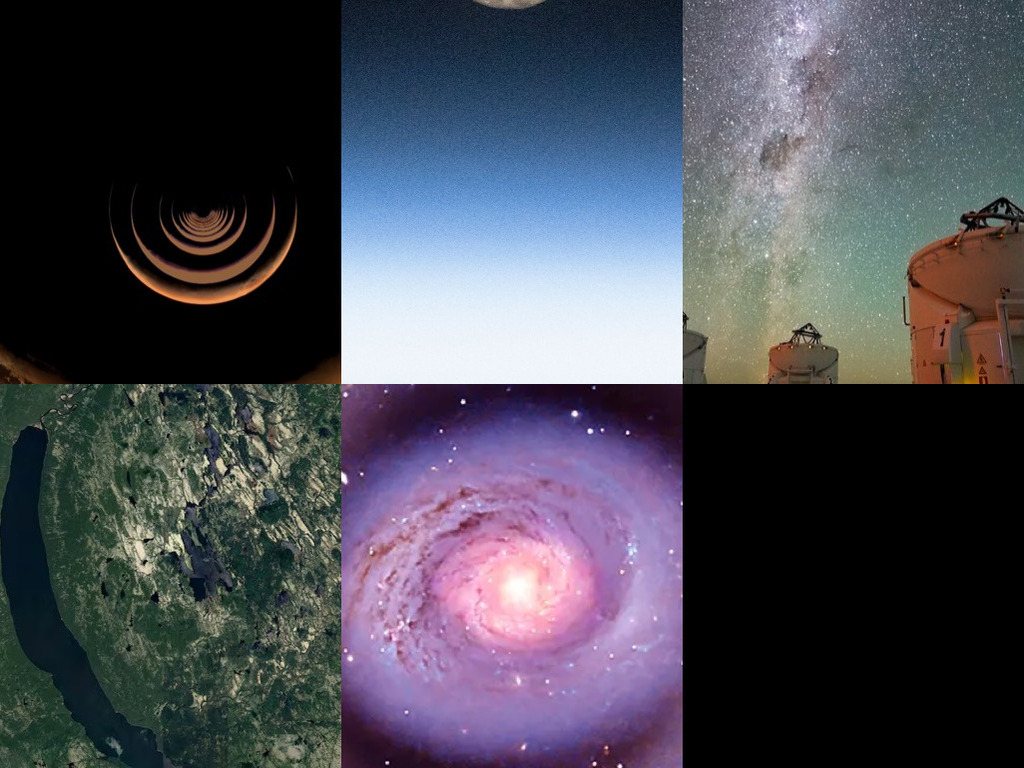
These images span the journey from our own backyard to distant galaxies, featuring Mars, the Moon, breathtaking night skies, and a fresh view of the star-forming galaxy Messier 94. Along the way, we celebrate exploration and discovery—from NASA’s Psyche mission preparing for its asteroid encounter to the revelation of a previously unknown impact crater on Earth —reminding us that there are still new wonders to uncover both on our own planet and across the cosmos.
#PPOD
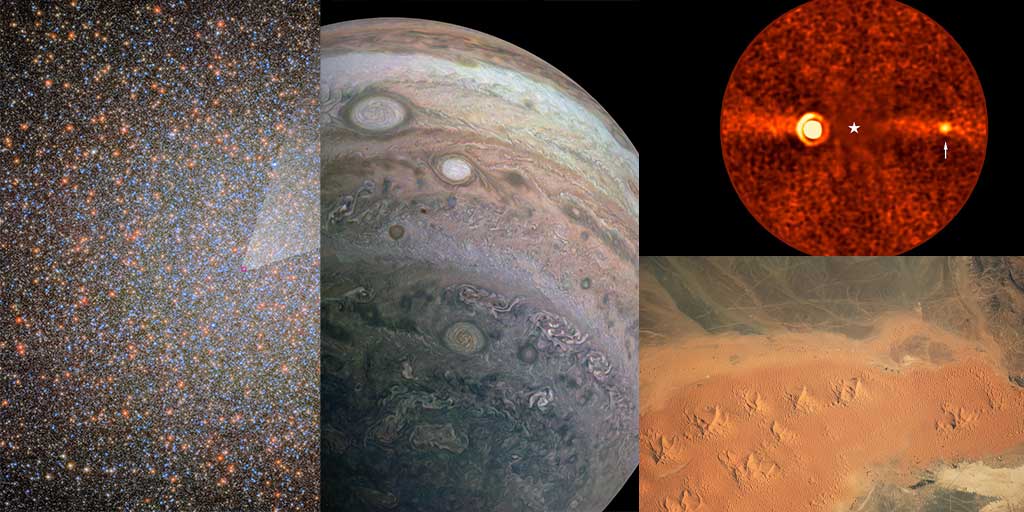
This week, we celebrate fifty years since Viking 1 became the first spacecraft to successfully land on and photograph the surface of Mars, alongside stunning new views of worlds, stars, and galaxies that continue to expand our understanding of the universe. From sculpted Sahara sand dunes and Jupiter’s colorful cloud bands to a newly discovered exoplanet and the first stellar-mass black hole identified in Omega Centauri, these images showcase the remarkable diversity of cosmic exploration.
#PPOD
We journey from Mount Fuji as seen from orbit to the bubbling surface of Betelgeuse, exploring the forces that shape planets, moons, and stars across the cosmos. Along the way, JWST reveals the remains of a dying star, Curiosity uncovers clues to Mars’ volcanic past, and a fresh rocket impact on the Moon gives scientists a new opportunity to study how collisions reshape its surface.
Let's celebrate the August 12 total solar eclipse through the eyes of photographers who experienced the Moon’s shadow sweeping across Spain. From Baily’s Beads and a glowing solar prominence to totality reflected in a river and framed by fields of sunflowers, these images capture both the science and extraordinary beauty of one of nature’s most spectacular celestial events.
The universe is shaped by forces both immense and intricate, from fractured terrain on Mars and shifting tidal landscapes on Earth to tiny vortices dancing across the surface of the Sun. Farther afield, dramatic views of Pluto’s icy mountains and hazy atmosphere and a treasure chest of newborn stars in the Carina Nebula showcase the remarkable detail revealed by spacecraft and telescopes exploring the cosmos.
This week, we reveal hidden wonders across the cosmos, from delicate Martian clouds and a dust-shrouded galaxy to an asteroid with a never-before-seen shape and the crowded heart of the Milky Way. Together, these images showcase how new missions and advanced observatories continue to uncover surprising details about our solar system, our galaxy, and the universe beyond.
These images span the journey from our own backyard to distant galaxies, featuring Mars, the Moon, breathtaking night skies, and a fresh view of the star-forming galaxy Messier 94. Along the way, we celebrate exploration and discovery—from NASA’s Psyche mission preparing for its asteroid encounter to the revelation of a previously unknown impact crater on Earth —reminding us that there are still new wonders to uncover both on our own planet and across the cosmos.
This week, we celebrate fifty years since Viking 1 became the first spacecraft to successfully land on and photograph the surface of Mars, alongside stunning new views of worlds, stars, and galaxies that continue to expand our understanding of the universe. From sculpted Sahara sand dunes and Jupiter’s colorful cloud bands to a newly discovered exoplanet and the first stellar-mass black hole identified in Omega Centauri, these images showcase the remarkable diversity of cosmic exploration.
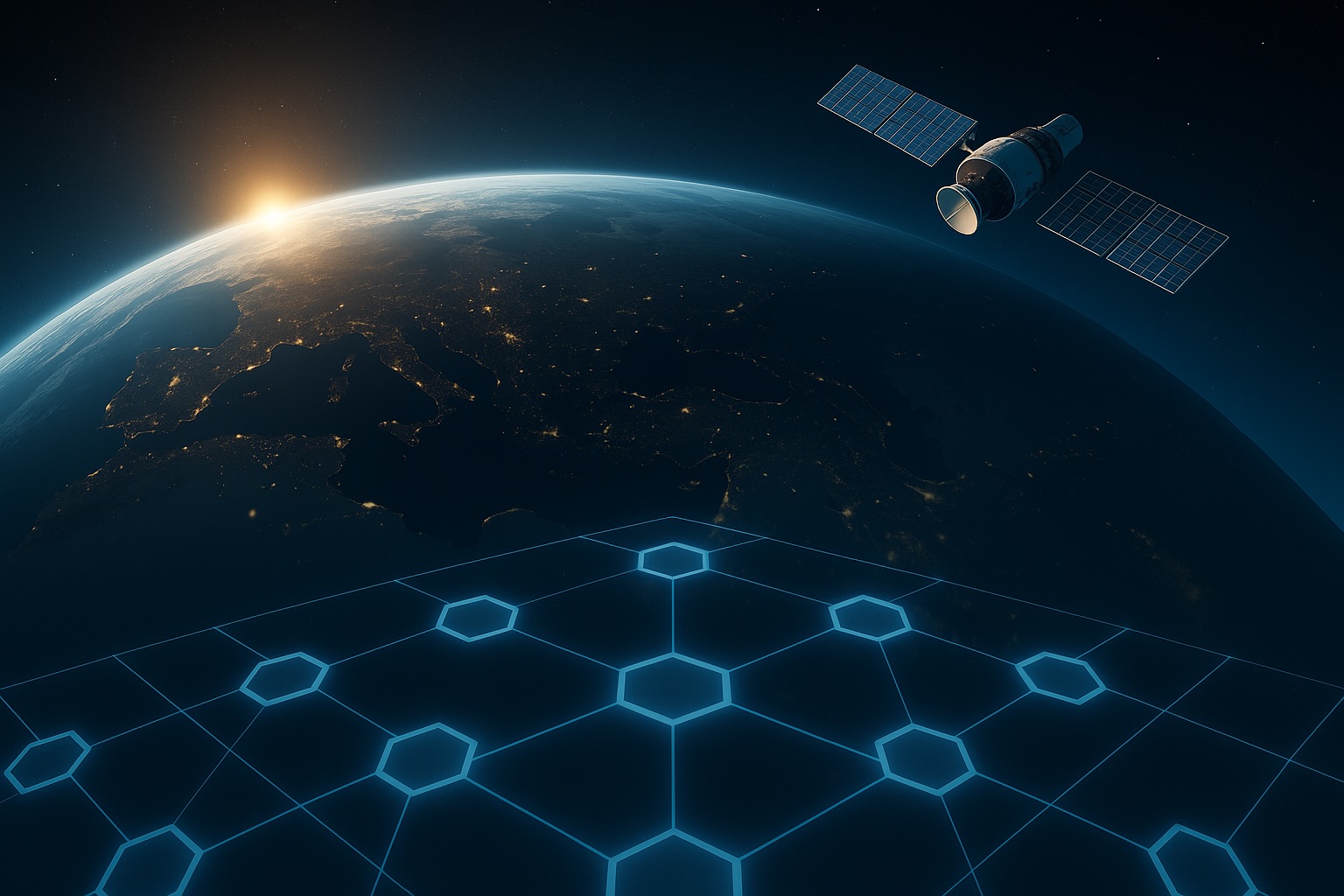
SkyMapper and the SETI Institute are connecting educators, students and the public to live astronomical observations through a distributed astronomical network.
#SkyMapper
#SETI
#Citizen Science
#Astronomy
What happens if life beyond Earth is discovered? The Discovery and Futures Lab at the SETI Institute fosters novel and anticipatory research at the intersection of science, society, our planet, and the search for life beyond Earth.
#Discovery and Futures Lab
SkyMapper and the SETI Institute are connecting educators, students and the public to live astronomical observations through a distributed astronomical network.
What happens if life beyond Earth is discovered? The Discovery and Futures Lab at the SETI Institute fosters novel and anticipatory research at the intersection of science, society, our planet, and the search for life beyond Earth.
Scientists are getting closer in their search for life beyond earth. But with limited federal funding for the search for extraterrestrial intelligence, supporters are the reason cutting-edge scientists can keep their eyes on the sky.
)