Wednesday, Apr 22, 2026

Credit: contains modified Copernicus Sentinel data (2026), processed by ESA

Monday, 13 April 2026

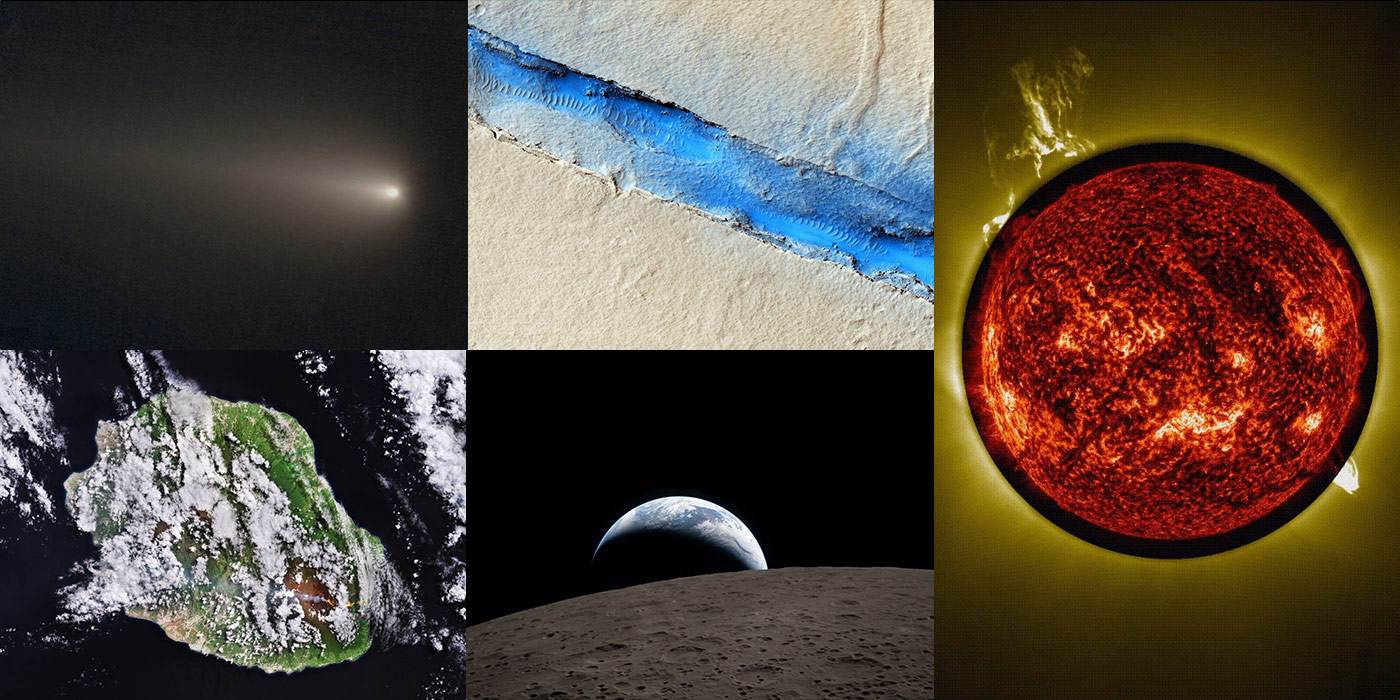
Lava Flow on Réunion Island

This Copernicus Sentinel-2 image captures an active lava flow on the Piton de la Fournaise volcano on Réunion Island.

Located in the western Indian Ocean, the island of Réunion is a French overseas department about 680 km east of Madagascar. Réunion's volcanic origins make its landscape particularly rugged in places and lushly vegetated in others. Cultivated land and cities, visible as grey-white clusters, are concentrated on the coastal lowlands. The capital and largest city is Saint-Denis, on the northern coast, mostly covered by clouds in the image.

The center of the island shelters three vast cirques, or calderas, created by huge collapses. Together they form the dormant shield volcano and the island's highest peak, Piton des Neiges (3069 m), which peeps out in brown from beneath the clouds near the center of the image.

Although Réunion hosts multiple volcanoes, only one is currently active: the Piton de la Fournaise shield volcano, one of the most active on Earth, which dominates the southeastern part of the island. This image, from 21 March 2026, shows a lava flow on its western flank, following an eruption that began in mid-February.

Credit: NASA/JPL-Caltech/Univ. of Arizona

Tuesday, 14 April 2026

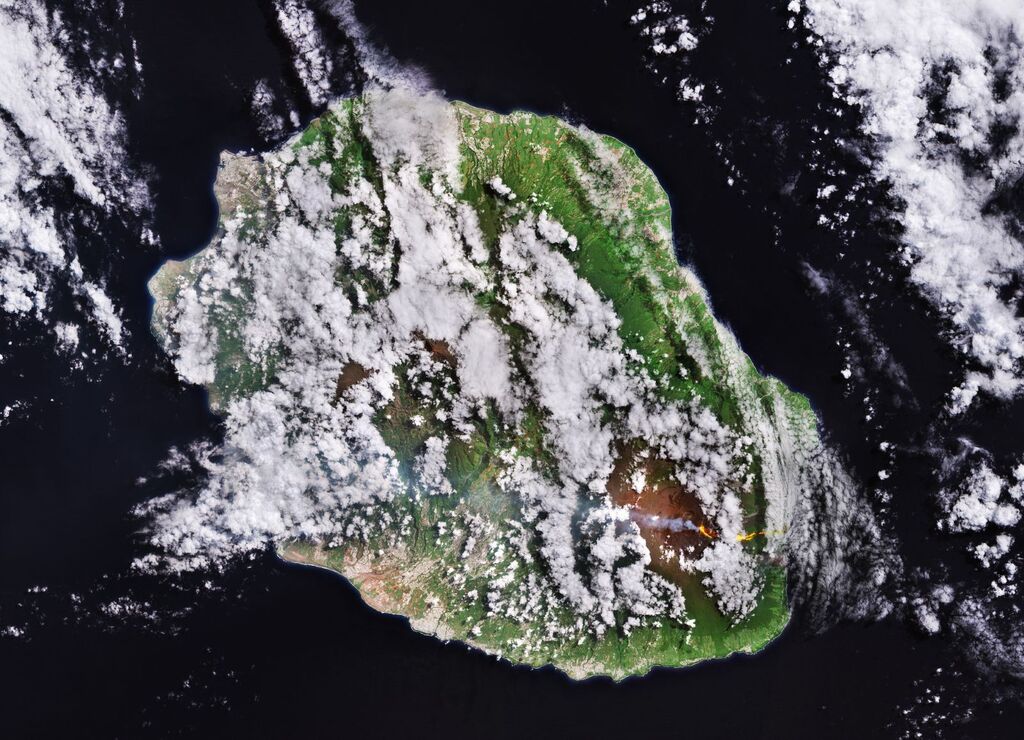
Fissure near Cerberus Fossae, Mars

The linearity of the volcanic vent shown in this HiRISE image, in conjunction with evidence of lava flow from the vent, suggests control by combined volcano-tectonic processes. The details of this vent, obtained by HiRISE, should provide insight into volcano-tectonic processes along the Cerberus Fossae fissures in two ways.

The nature of both the volcanic products along this fissure and the geometries of the linear vent will permit comparison with similar, non-volcanic fissures at Cerberus. The results from these comparisons will provide insight into the orientation of the underlying dike system that may have controlled the ascent of water to the surface in the Cerberus region.

Credit: NASA

Wednesday, 15 April 2026

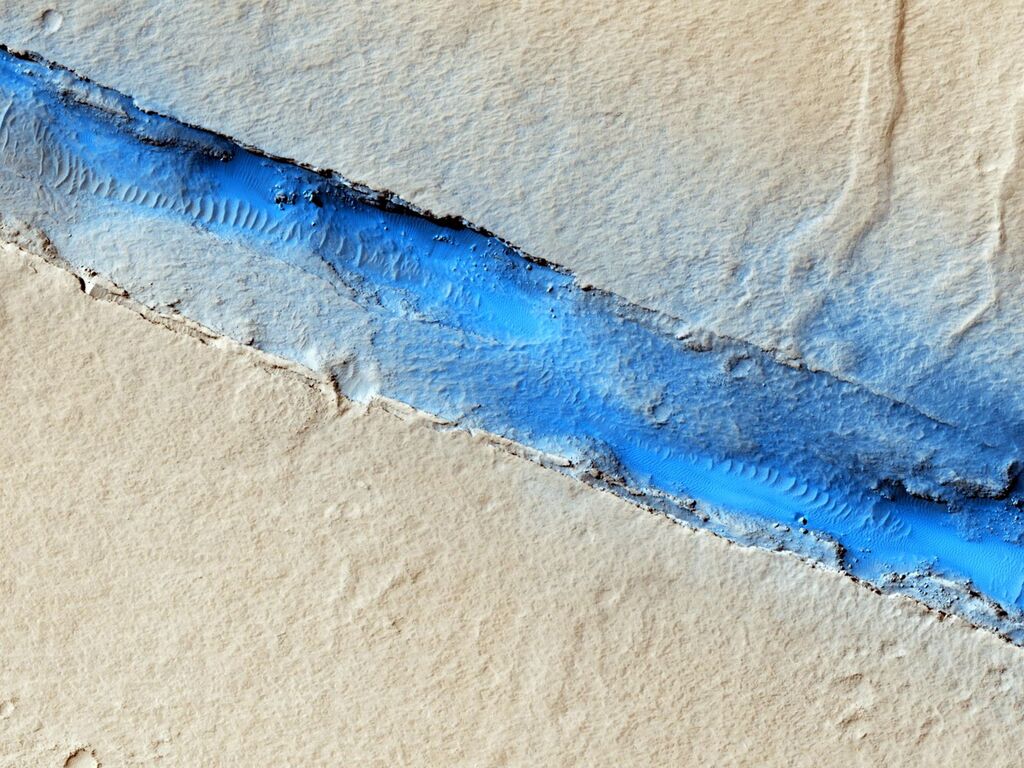
Earthset

The Artemis II crew captured this view of Earth setting on April 6, 2026. As the astronauts flew over the Moon’s far side, the crew photographed and described terrain features, including impact craters, ancient lava flows, and surface cracks and ridges formed as the Moon slowly evolved. They also noted differences in color, brightness, and texture, which provide clues that help scientists understand the composition and history of the lunar surface.

The image is reminiscent of the iconic Earthrise image taken by astronaut Bill Anders 58 years earlier as the Apollo 8 crew flew around the Moon. The Apollo 8 mission was the first crewed spacecraft to circumnavigate the Moon.

Credit: NASA, ESA, CSA, and the JWST MIRI team

Thursday, 16 April 2026

A Fiery Final Act

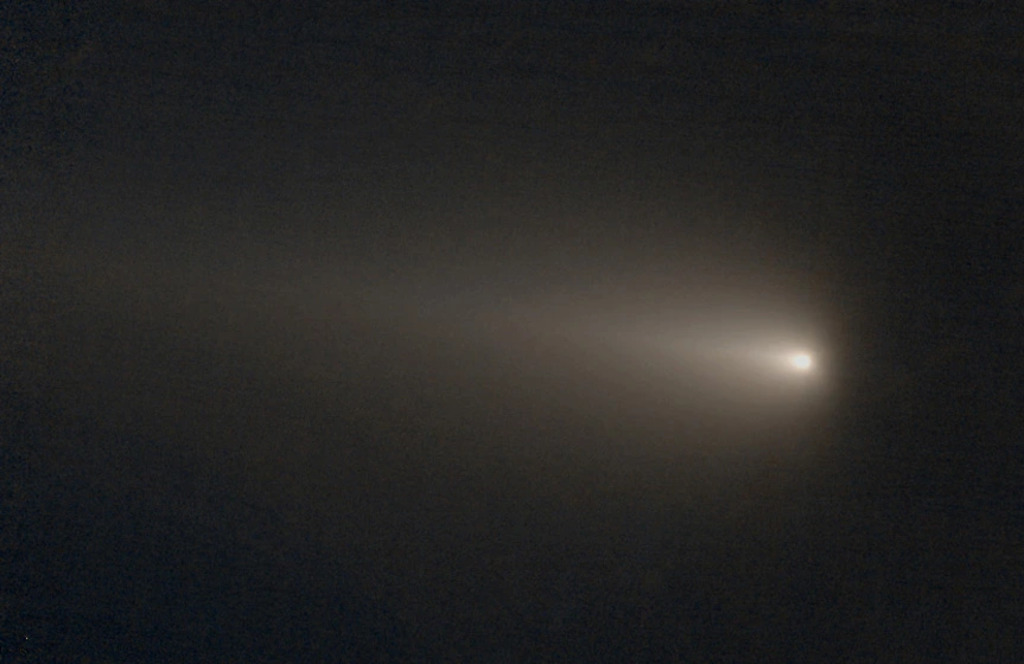
Discovered on January 13, 2026, in Chile’s Atacama Desert, Comet C/2026 A1 (MAPS) was part of the Kreutz family of “sungrazers”—comets that dive dangerously close to the Sun. The image was captured in infrared light by JWST's Mid-Infrared Instrument (MIRI) on February 7, 2026, by a team led by Qicheng Zhang and was then processed by Melina Thévenot.

On April 4, it made its dramatic close approach, passing just 161,000 km (100,000 miles) above the Sun’s surface. As it neared, sunlight scattering briefly made it shine brighter—but the intense glare made it nearly impossible to spot. Then came the finale: about 6 hours before its closest approach, the comet reached a brightness of magnitude –0.6, and shortly after, it broke apart.

A spectacular (and short-lived) reminder of just how extreme our solar system can be.

Credit: ESA/Proba-3/ASPIICS, NASA/SDO/AIA

Friday, 17 April 2026

The Sun’s Inner Corona

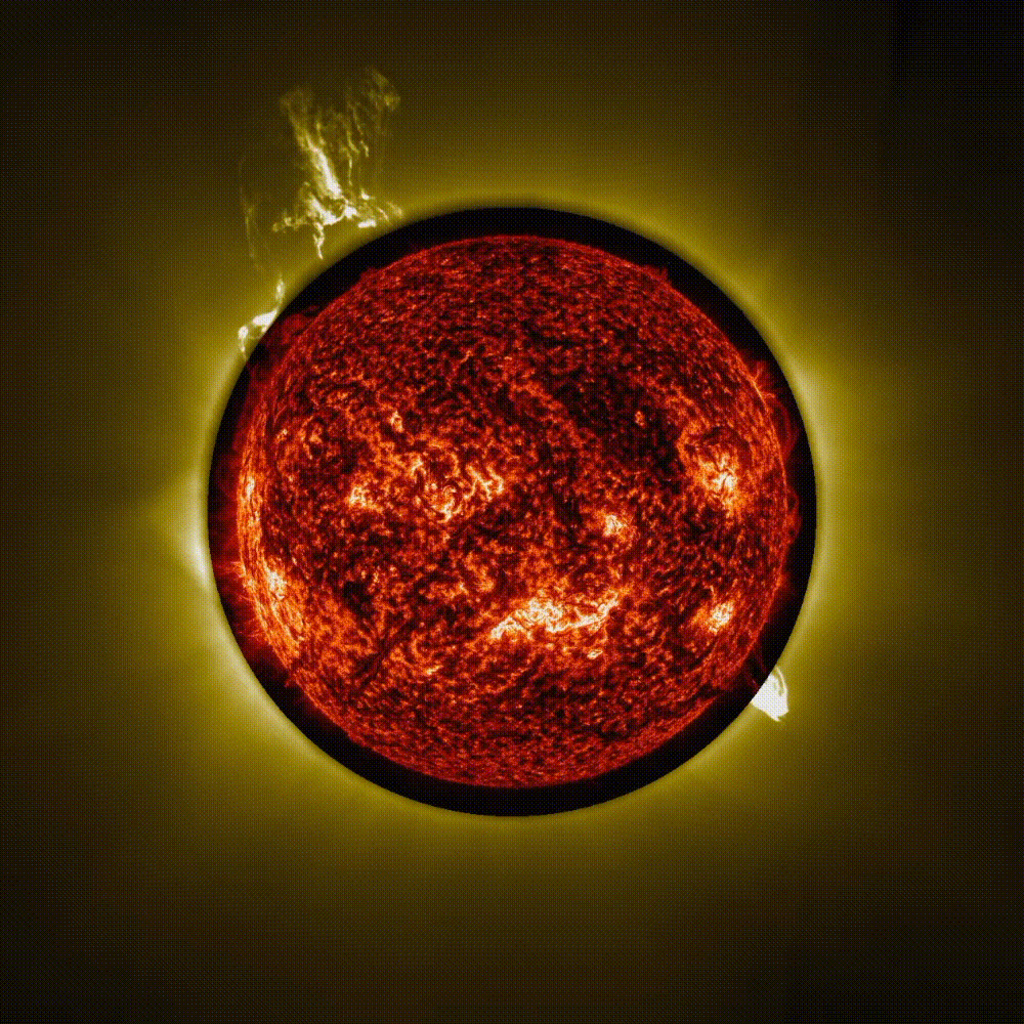
The Sun’s inner corona, the hottest part of our star's atmosphere, appears faint yellow in this image taken by the ASPIICS coronagraph aboard Proba-3. The image combines data from Proba-3’s ASPIICS coronagraph (inner solar corona in yellow) and from the Atmospheric Imaging Assembly (AIA) aboard NASA’s Solar Dynamics Observatory (solar disc in dark orange).

Seen at the 11 o'clock and 5 o'clock points are structures made of relatively cold plasma, known as prominences, although they are still around 10,000 degrees Celsius. Prominences can expand outwards from the Sun and ‘erupt’, breaking up and sending plasma in different directions. The eruptions were captured in the spectral line emitted by helium atoms, showing the solar atmosphere as a human eye would see it during a total eclipse through a yellow ASPIICS filter. The AIA image shows emission from another helium spectral line.

The remaining faint yellow glow of the corona is a result of the scattering of visible light from the Sun's surface on coronal electrons.

News

Related News

Featured Image
Sep 2, 2026
Planetary Picture of the Day - Week of August 24, 2026
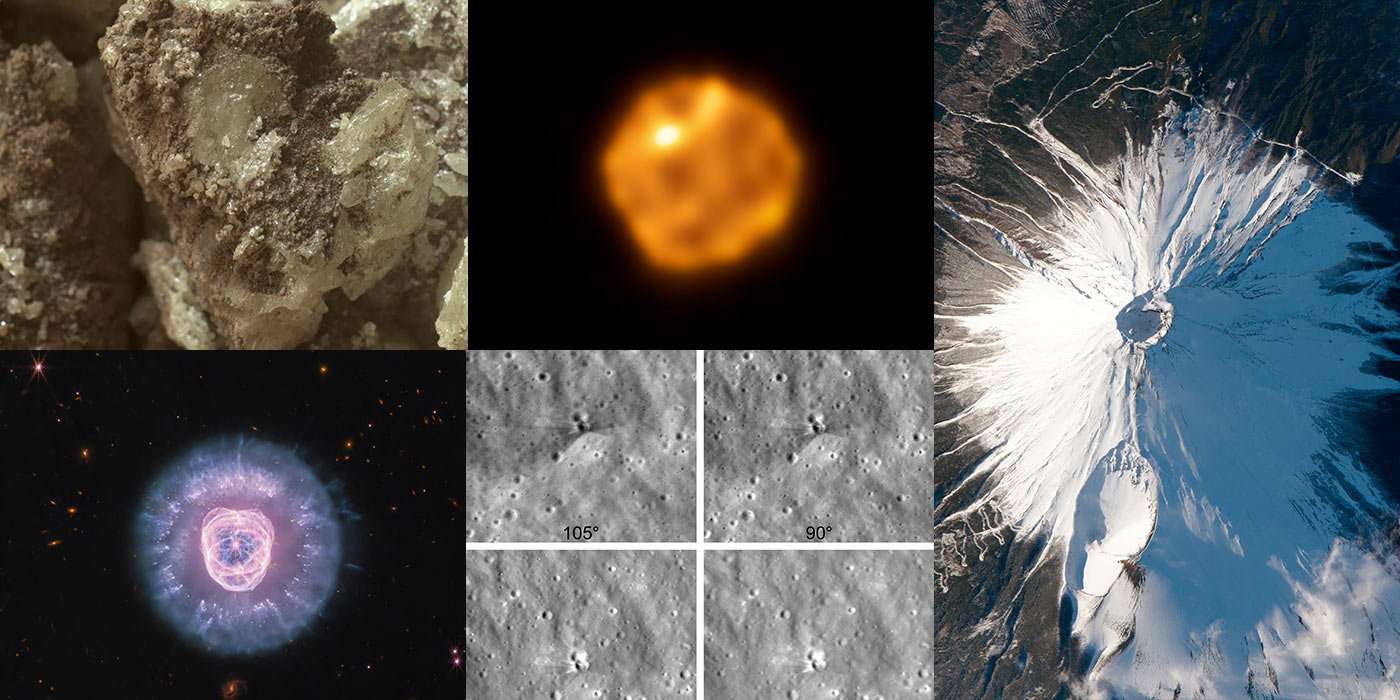
We journey from Mount Fuji as seen from orbit to the bubbling surface of Betelgeuse, exploring the forces that shape planets, moons, and stars across the cosmos. Along the way, JWST reveals the remains of a dying star, Curiosity uncovers clues to Mars’ volcanic past, and a fresh rocket impact on the Moon gives scientists a new opportunity to study how collisions reshape its surface. #PPOD
Featured Image
Aug 26, 2026
Planetary Picture of the Day - Week of August 17, 2026
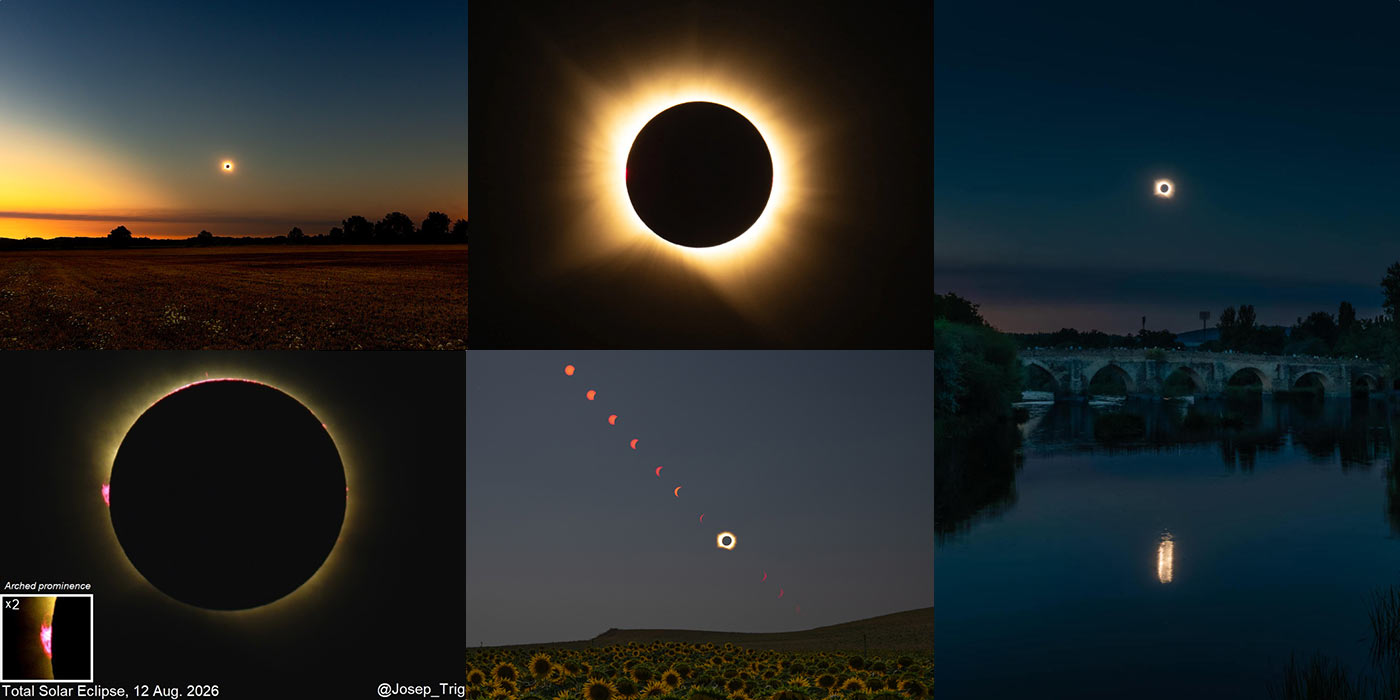
Let's celebrate the August 12 total solar eclipse through the eyes of photographers who experienced the Moon’s shadow sweeping across Spain. From Baily’s Beads and a glowing solar prominence to totality reflected in a river and framed by fields of sunflowers, these images capture both the science and extraordinary beauty of one of nature’s most spectacular celestial events. #PPOD #Eclipse
Featured Image
Aug 19, 2026
Planetary Picture of the Day - Week of August 10, 2026
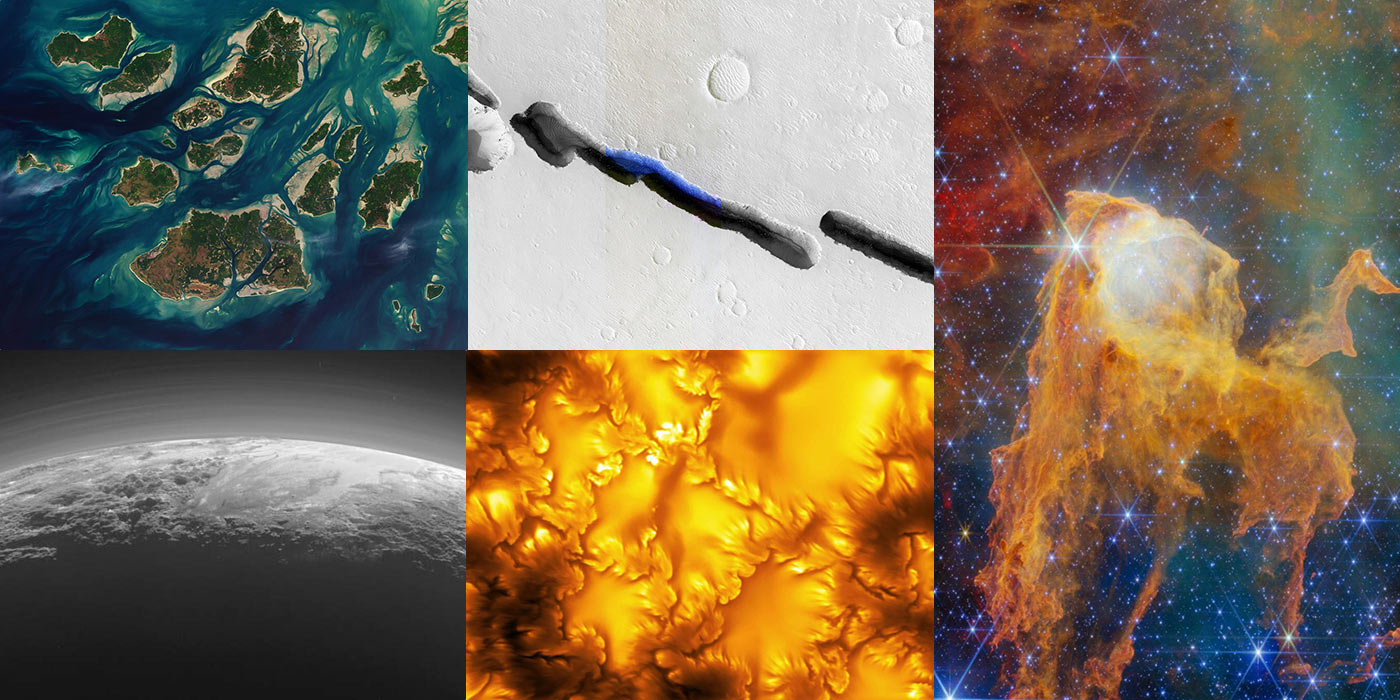
The universe is shaped by forces both immense and intricate, from fractured terrain on Mars and shifting tidal landscapes on Earth to tiny vortices dancing across the surface of the Sun. Farther afield, dramatic views of Pluto’s icy mountains and hazy atmosphere and a treasure chest of newborn stars in the Carina Nebula showcase the remarkable detail revealed by spacecraft and telescopes exploring the cosmos. #PPOD
Featured Image
Aug 12, 2026
Planetary Picture of the Day - August 3, 2026
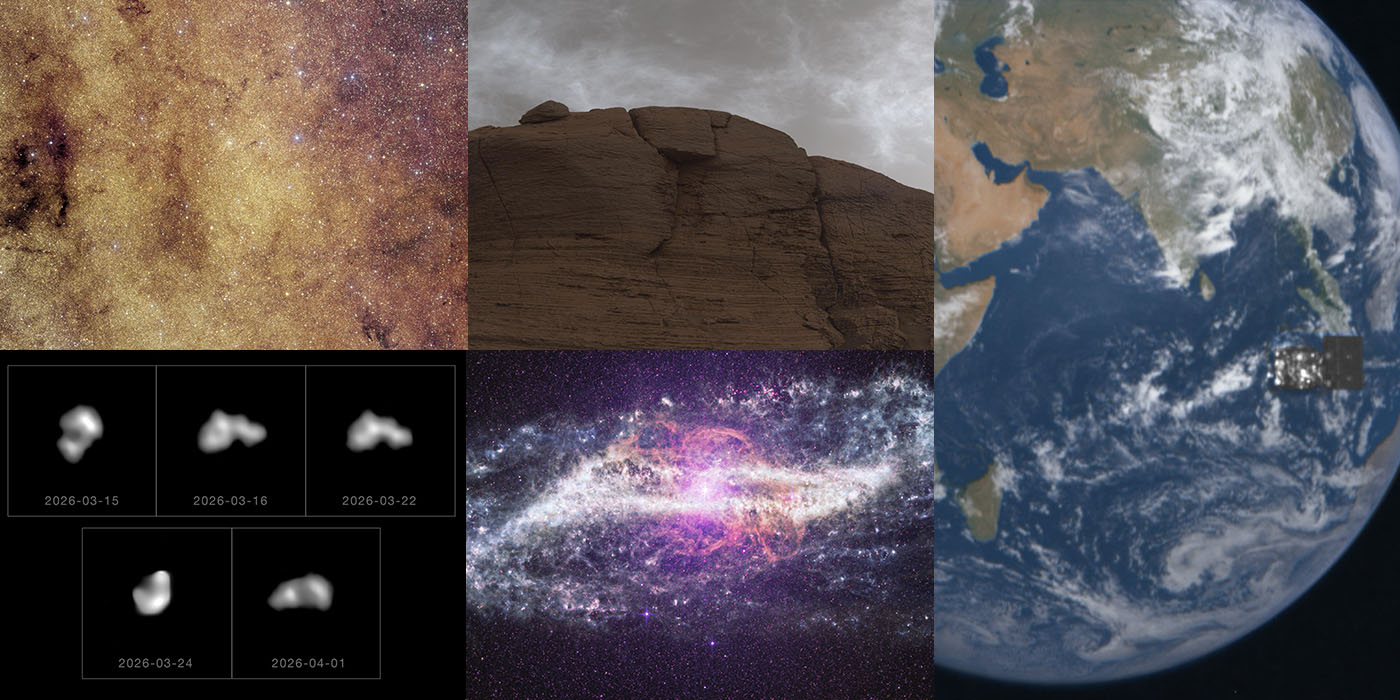
This week, we reveal hidden wonders across the cosmos, from delicate Martian clouds and a dust-shrouded galaxy to an asteroid with a never-before-seen shape and the crowded heart of the Milky Way. Together, these images showcase how new missions and advanced observatories continue to uncover surprising details about our solar system, our galaxy, and the universe beyond. #PPOD
Featured Image
Aug 5, 2026
Planetary Picture of the Day - Week of July 27, 2026
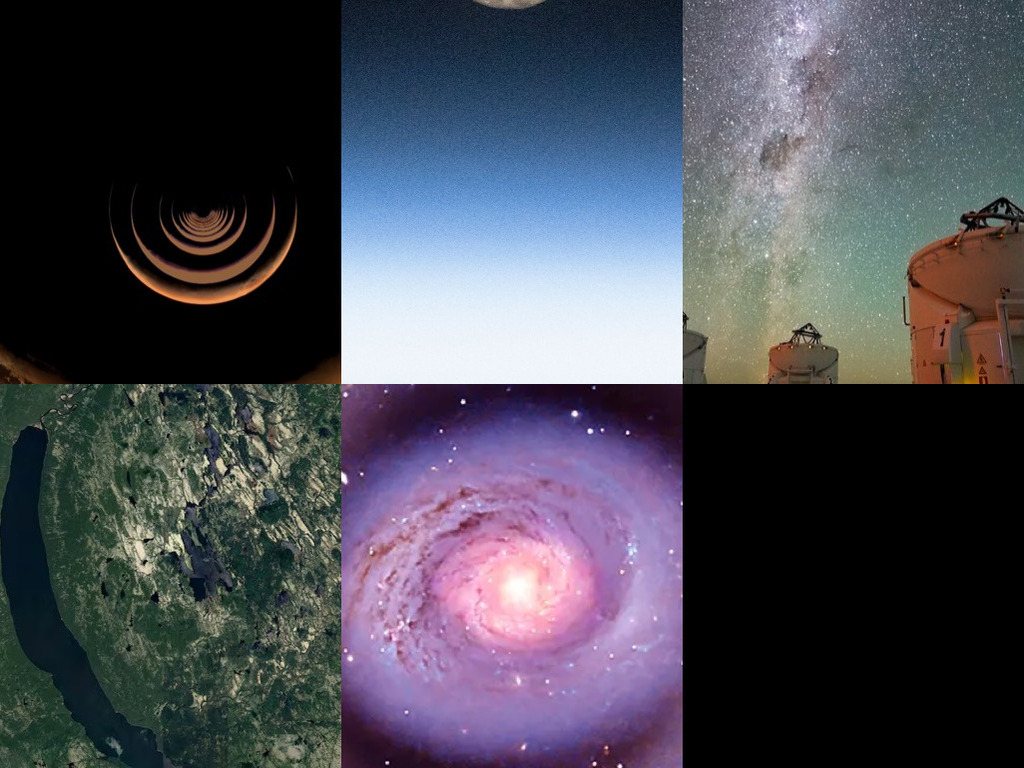
These images span the journey from our own backyard to distant galaxies, featuring Mars, the Moon, breathtaking night skies, and a fresh view of the star-forming galaxy Messier 94. Along the way, we celebrate exploration and discovery—from NASA’s Psyche mission preparing for its asteroid encounter to the revelation of a previously unknown impact crater on Earth —reminding us that there are still new wonders to uncover both on our own planet and across the cosmos. #PPOD
Featured Image
Jul 29, 2026
Planetary Picture of the Day - Week of July 20, 2026
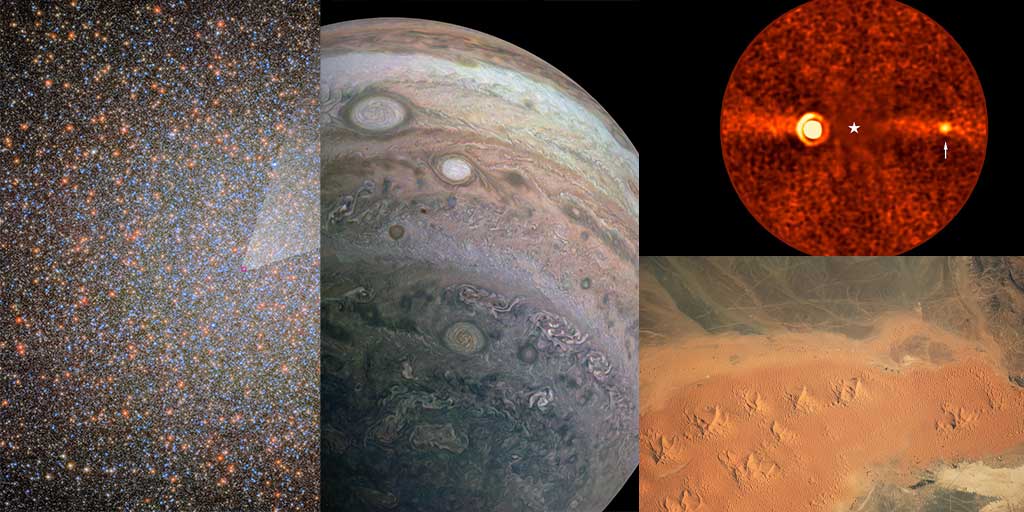
This week, we celebrate fifty years since Viking 1 became the first spacecraft to successfully land on and photograph the surface of Mars, alongside stunning new views of worlds, stars, and galaxies that continue to expand our understanding of the universe. From sculpted Sahara sand dunes and Jupiter’s colorful cloud bands to a newly discovered exoplanet and the first stellar-mass black hole identified in Omega Centauri, these images showcase the remarkable diversity of cosmic exploration. #PPOD
Research

Related Projects

Featured Image
SkyMapper • SETI • Citizen Science • Astronomy
SkyMapper: Expanding Access to Real-time Astronomy Through a Global Astronomical Network
SkyMapper and the SETI Institute are connecting educators, students and the public to live astronomical observations through a distributed astronomical network. #SkyMapper #SETI #Citizen Science #Astronomy
Featured Image
VPL
Virtual Planetary Laboratory
How can we best assess whether an exoplanet supports life? #VPL
Featured Image
Discovery and Futures Lab
What happens if life beyond Earth is discovered? The Discovery and Futures Lab at the SETI Institute fosters novel and anticipatory research at the intersection of science, society, our planet, and the search for life beyond Earth.  #Discovery and Futures Lab
Support Us

Support the
SETI Institute

Scientists are getting closer in their search for life beyond earth. But with limited federal funding for the search for extraterrestrial intelligence, supporters are the reason cutting-edge scientists can keep their eyes on the sky.