)

Wednesday, Aug 12, 2026
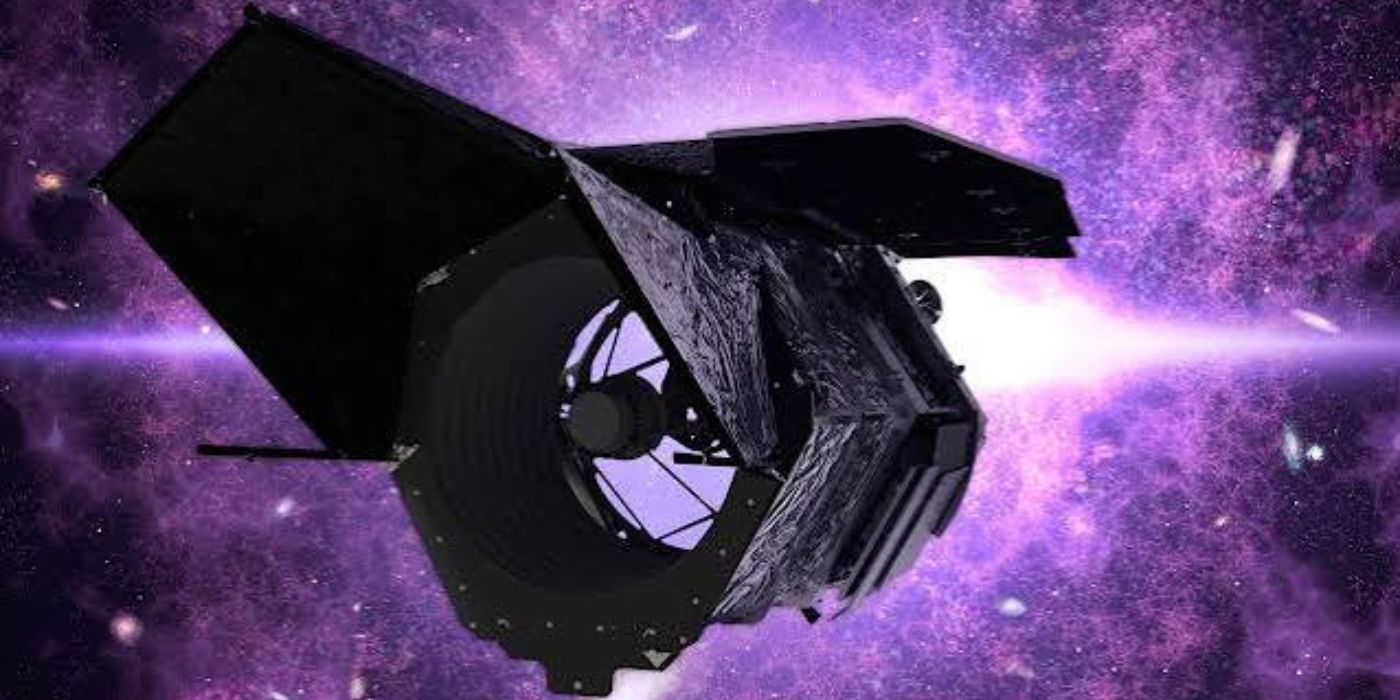
Image credit: NASA Goddard Space Flight Center Scientific Visualization Studio
At a Glance
|
Over the last three decades, astronomers have discovered the majority of exoplanets indirectly, by observing planets transit their stars or measuring the tiny gravitational pull they exert. Those techniques have revealed thousands of worlds, but actually taking a picture of one remains a challenge.
That challenge was the focus of a recent SETI Live conversation, where host Dr. Franck Marchis spoke with SETI Institute senior scientist Dr. Margaret Turnbull about NASA's upcoming Nancy Grace Roman Space Telescope and the revolutionary coronagraph instrument she helps lead.
Throughout the conversation, Dr. Turnbull returned to one central idea: Roman is not only another exoplanet mission or great observatory. That coronagraph instrument is a technology demonstration designed to prove that the next generation of telescopes will be able to directly image worlds much more like our own.
Before becoming part of the Roman mission, Dr. Turnbull’s research focused on a different question: which nearby stars would make the best places to search for life?
She explained that her own journey to the Roman mission began long before the telescope itself. She originally created catalogs of nearby Sun-like stars to guide SETI searches, identifying stellar systems that might be favorable for life. As plans for future direct-imaging missions began to take shape, those same catalogs became valuable for selecting the best targets to photograph planetary systems.
That work eventually led her to join the team developing Roman's coronagraph, spending six years working alongside engineers to turn the instrument from an idea into reality.
Why Roman Is Different
Roman is often described as NASA's next flagship observatory, and during the discussion, Dr. Marchis asked what makes it different from telescopes like the Hubble Space Telescope and James Webb Space Telescope (JWST). In response, Dr. Turnbull pointed to the coronagraph itself. By suppressing the overwhelming light from a star, the instrument allows the faint reflected light from an orbiting planet to emerge. Rather than relying solely on transits, astronomers can begin studying the planets themselves by analyzing their reflected light to learn about their atmospheres.
But accomplishing that is extraordinarily difficult.
Hiding a Star Is Much Harder Than It Sounds
Dr. Marchis compared the challenge to spotting a firefly next to a lighthouse. Dr. Turnbull added another analogy: separating a planet from its star is like trying to distinguish the width of a human hair from the length of a football field.
The planets are incredibly close to their stars while being millions to billions of times fainter, making direct imaging one of the most demanding observations in astronomy.
To overcome that challenge, Roman's coronagraph uses two deformable mirrors that continuously adjust their shapes to cancel out starlight while allowing light from an off-axis planet to pass through. Dr. Marchis described it as creating an "artificial eclipse" inside the telescope.
For Dr. Turnbull, proving that this technology works in space is one of Roman's biggest objectives, because future missions that hope to image Earth-like planets will depend on the same approach.
Looking Beyond the Light
Blocking starlight is only the first step. Once the planet's light is isolated, scientists can analyze its spectrum. Roman's first observations will focus on giant planets, looking for methane and comparing their atmospheres with Jupiter's.
Dr. Turnbull explained that these observations will help scientists understand how giant planets differ from one another, revealing differences in clouds, hazes, dust, and atmospheric structure. Rather than seeing them as distant points of light, astronomers will begin getting to know these planets as individual worlds.
A Handful of Worlds Can Still Be Revolutionary
When Dr. Marchis asked how many planets Roman might observe, Dr. Turnbull resisted giving a precise number. The exact target list, she noted, still depends on how the technology demonstration unfolds and how observations are scheduled alongside the telescope's broader science program.
One benchmark target already stands out: 47 Ursae Majoris b, a giant planet expected to be well suited for Roman's capabilities.
The mission also has another goal beyond giant planets. Roman will study exozodiacal dust. Systems such as Beta Pictoris contain both planets and extensive debris structures. Even when planets themselves are difficult to detect, their gravitational influence can sculpt surrounding dust into recognizable patterns.
Mapping those structures provides another way to understand planetary systems and their organization. By studying both planets and the dust around them, Roman will provide a more complete picture of how planetary systems develop over time.
More Than One Exoplanet Mission
Dr. Turnbull noted that Roman may even uncover previously unknown planets if the mission performs beyond expectations, although that is not its primary goal.
While much of the discussion focused on the coronagraph, she was equally enthusiastic about Roman's second major instrument. The Wide Field Instrument will conduct a large exoplanet survey using gravitational microlensing, observing millions of stars to measure how common planets are throughout the Milky Way.
Researchers may never observe many of those planets again, but together they will provide one of the most complete measurements yet of how frequently planets of different sizes occur across our galaxy.
Dr. Marchis agreed that Roman would become an important mission for exoplanet science in general, combining detailed studies of nearby systems with a much broader census of planetary populations.
Looking Toward the Next Generation
As the conversation turned toward the future, Dr. Marchis asked about the missions that could build on Roman's success.
Looking beyond Roman, Dr. Turnbull described the telescope as an essential stepping stone toward NASA's Habitable Worlds Observatory. Roman was never designed to directly image Earth-like planets. Instead, its job is to demonstrate that an advanced coronagraph using adaptive optics can operate successfully in space, giving future missions the confidence to pursue much more ambitious goals.
If that technology works as expected, future telescopes can be designed from the ground up with the specific goal of imaging rocky planets around nearby Sun-like stars and searching their atmospheres for possible signs of life.
Ten Years Later
Dr. Marchis closed the interview with an imaginative question. Suppose the two of them met again in ten years to discuss Roman's legacy. What would Dr. Turnbull hope they would be talking about?
Her answer wasn't the discovery of life or a headline-making new planet. Instead, she hoped Roman would leave astronomers with something equally meaningful: a much richer understanding of the nearby planetary systems we already know exist.
"I think we're going to feel like we know our neighbors," she said.
If Roman succeeds, its greatest legacy may not simply be the giant planets it images, but the technology it proves and the confidence it gives future missions. The telescope will help transform nearby planetary systems from distant dots into familiar worlds, and bring us one step closer to the day when we can directly image planets that truly resemble our own.
Watch the full SETI Live conversation here.
Final questions
1. Why are debris disks useful if the planets themselves are difficult to see?
Dr. Turnbull explained that dust structures can reveal the gravitational influence of planets, allowing astronomers to learn about the architecture of planetary systems even when every planet cannot be directly seen.
2. Will Roman be able to discover or image exomoons around giant planets?
No, the telescope does not have sufficient optical resolution or time-series precision to isolate an exomoon's distinct light signal from that of its parent exoplanet. Transits remain the primary method for detecting candidate exomoons and planetary rings.
3. What role will Roman's Wide Field Instrument play in exoplanet research?
According to Dr. Turnbull, it will conduct a large gravitational microlensing survey that provides a statistical picture of how common planets of different sizes are throughout the Milky Way, complementing the detailed observations made with the coronagraph.







News
Related News
Sep 4, 2026
Why Do Some Solar Eruptions Fail?
#Blog #Rebecca Robinson
Aug 25, 2026
JWST Reveals a Race Against Time for Forming Planets
SETI Institute scientist Uma Gorti co-authors one of the largest JWST studies of how planet-forming disks lose their gas #Press Releases #JWST #Astronomy #Astrophysics #Uma Gorti
Aug 24, 2026
New study reveals how space rocks become meteorites
Analysis of the atmospheric passage of 75 meteorite falls identifies seven distinct processes as space rocks melt, fragment and slow before they fall as meteorites #Press Releases #Comets, Meteors, and Asteroids #Peter Jenniskens #Meteorites #Astronomy #Stuart Pilorz
Aug 19, 2026
SETI Institute Team Looks for a New Way to Find Resources in Space
#Press Releases #Pablo Sobron #Moon #Asteroids #Planetary Exploration #Spectroscopy #Astrobiology
Aug 17, 2026
JWST’s Salty Pink Planet Surprise
#Blog #Moiya McTier
Aug 13, 2026
SETI Institute In the News: July Roundup 2026
#SETI Institute in the News #SETI Institute #Community #Peter Jenniskens #Lucian Walkowicz #Chelsea Haramia #Pascal Lee #Bill Diamond #Seth Shostak #Meteorites #SETI #UAPs #NASA Missions and Observatories #Discovery and Futures Lab #Mars
Sep 4, 2026
#Blog
#Rebecca Robinson
Aug 25, 2026
JWST Reveals a Race Against Time for Forming Planets
SETI Institute scientist Uma Gorti co-authors one of the largest JWST studies of how planet-forming disks lose their gas
#Press Releases
#JWST
#Astronomy
#Astrophysics
#Uma Gorti
Aug 24, 2026
New study reveals how space rocks become meteorites
Analysis of the atmospheric passage of 75 meteorite falls identifies seven distinct processes as space rocks melt, fragment and slow before they fall as meteorites
#Press Releases
#Comets, Meteors, and Asteroids
#Peter Jenniskens
#Meteorites
#Astronomy
#Stuart Pilorz
Aug 19, 2026
#Press Releases
#Pablo Sobron
#Moon
#Asteroids
#Planetary Exploration
#Spectroscopy
#Astrobiology
SETI Institute Team Looks for a New Way to Find Resources in Space
Aug 17, 2026
#Blog
#Moiya McTier
JWST’s Salty Pink Planet Surprise
Aug 13, 2026
#SETI Institute in the News
#SETI Institute
#Community
#Peter Jenniskens
#Lucian Walkowicz
#Chelsea Haramia
#Pascal Lee
#Bill Diamond
#Seth Shostak
#Meteorites
#SETI
#UAPs
#NASA Missions and Observatories
#Discovery and Futures Lab
#Mars
SETI Institute In the News: July Roundup 2026
Research
Related Projects

SkyMapper • SETI • Citizen Science • Astronomy
SkyMapper: Expanding Access to Real-time Astronomy Through a Global Astronomical Network
SkyMapper and the SETI Institute are connecting educators, students and the public to live astronomical observations through a distributed astronomical network. #SkyMapper #SETI #Citizen Science #Astronomy
VPL
Virtual Planetary Laboratory
How can we best assess whether an exoplanet supports life? #VPL
Discovery and Futures Lab
Discovery and Futures Lab
What happens if life beyond Earth is discovered? The Discovery and Futures Lab at the SETI Institute fosters novel and anticipatory research at the intersection of science, society, our planet, and the search for life beyond Earth. #Discovery and Futures Lab
May 17, 2026
SkyMapper: Expanding Access to Real-time Astronomy Through a Global Astronomical Network
SkyMapper and the SETI Institute are connecting educators, students and the public to live astronomical observations through a distributed astronomical network.
#SkyMapper
#SETI
#Citizen Science
#Astronomy
May 5, 2026
Virtual Planetary Laboratory
How can we best assess whether an exoplanet supports life?
#VPL
Apr 16, 2026
Discovery and Futures Lab
What happens if life beyond Earth is discovered? The Discovery and Futures Lab at the SETI Institute fosters novel and anticipatory research at the intersection of science, society, our planet, and the search for life beyond Earth.
#Discovery and Futures Lab
Support Us
Support the
SETI Institute
Scientists are getting closer in their search for life beyond earth. But with limited federal funding for the search for extraterrestrial intelligence, supporters are the reason cutting-edge scientists can keep their eyes on the sky.