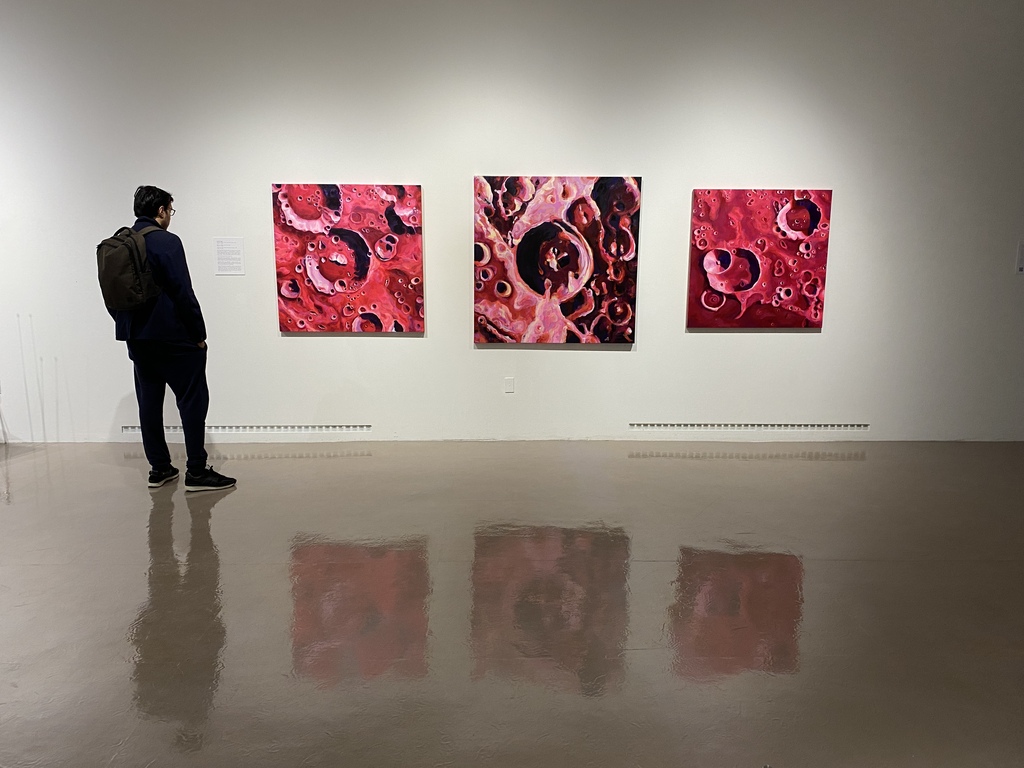
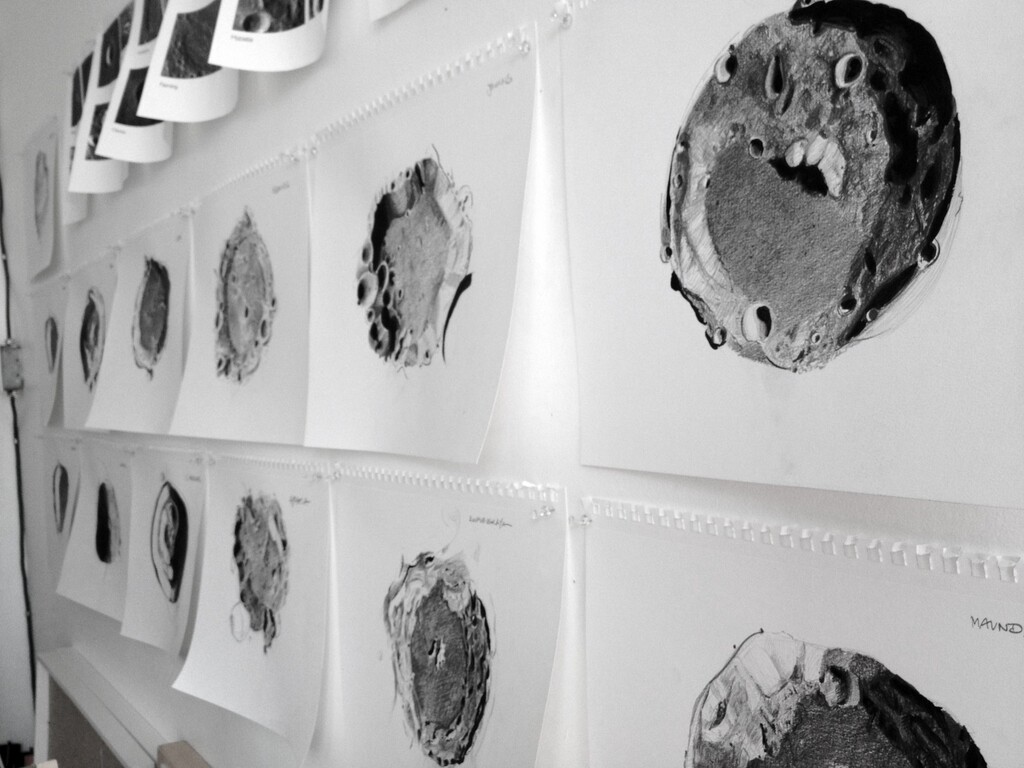
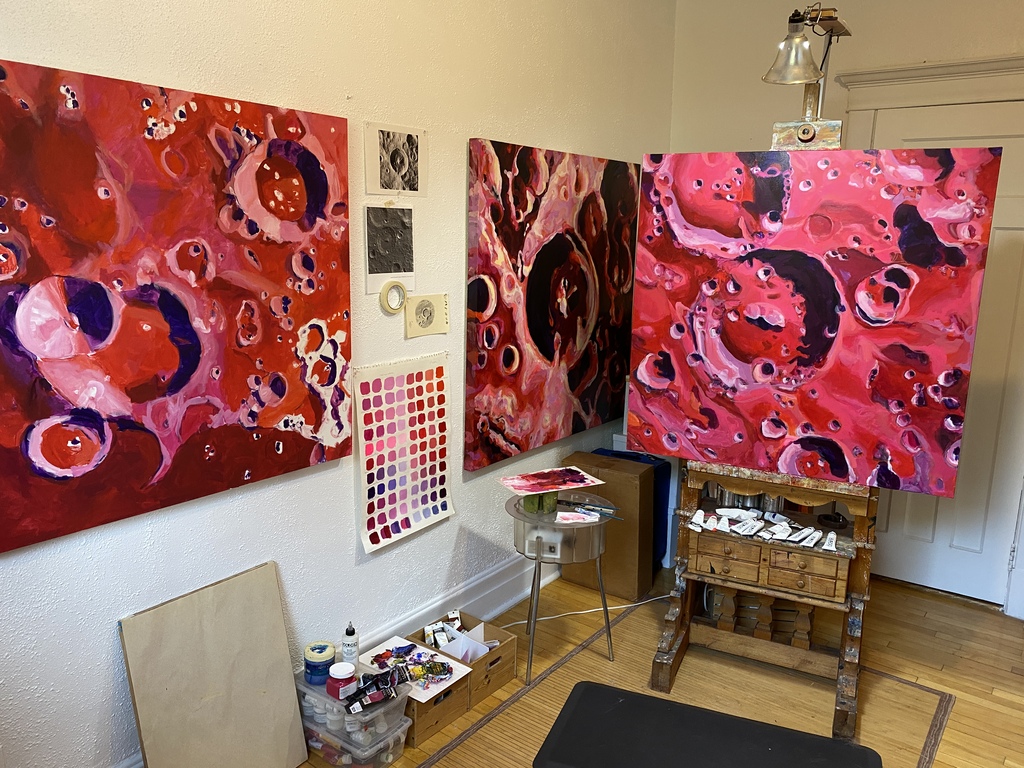
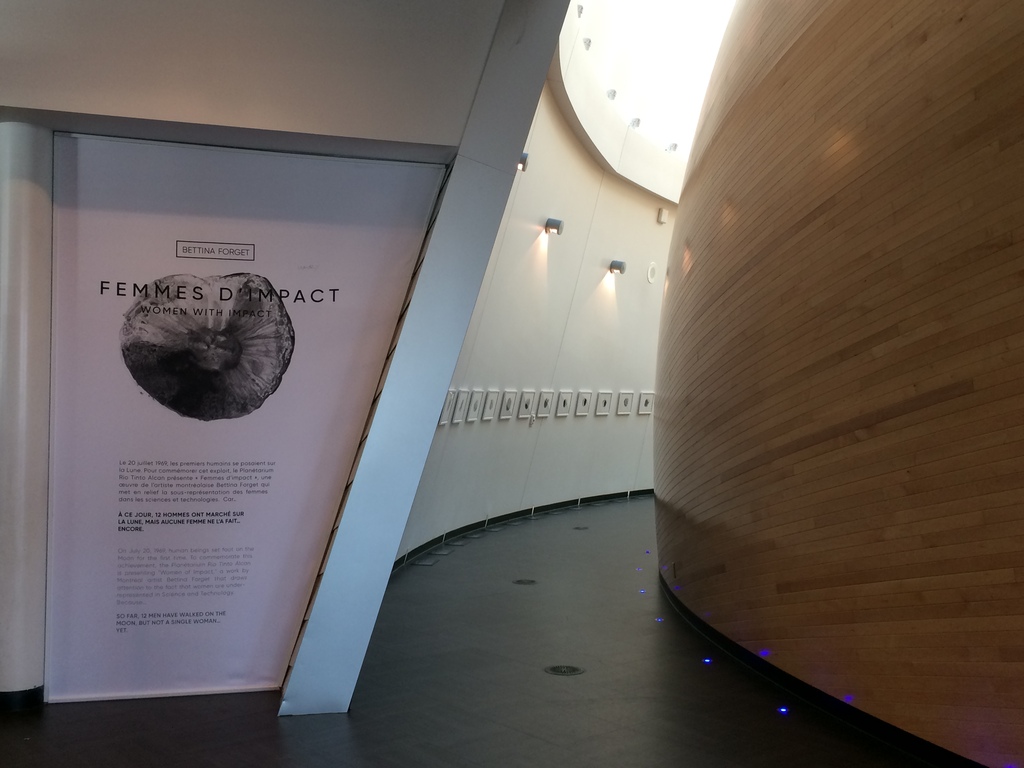
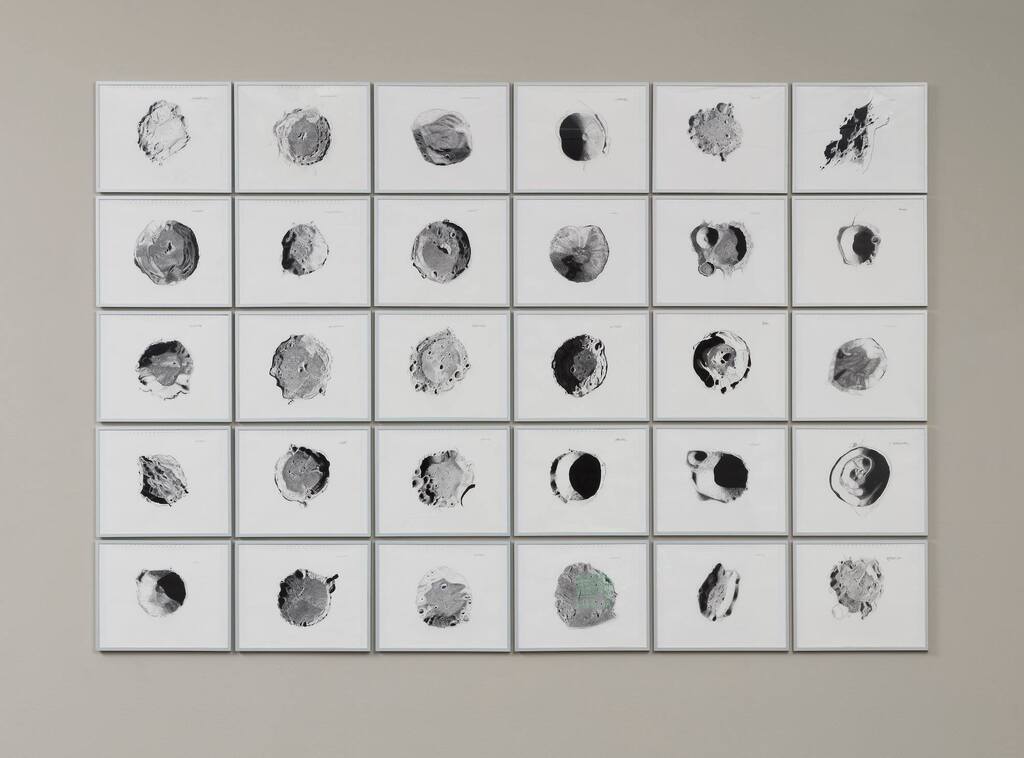
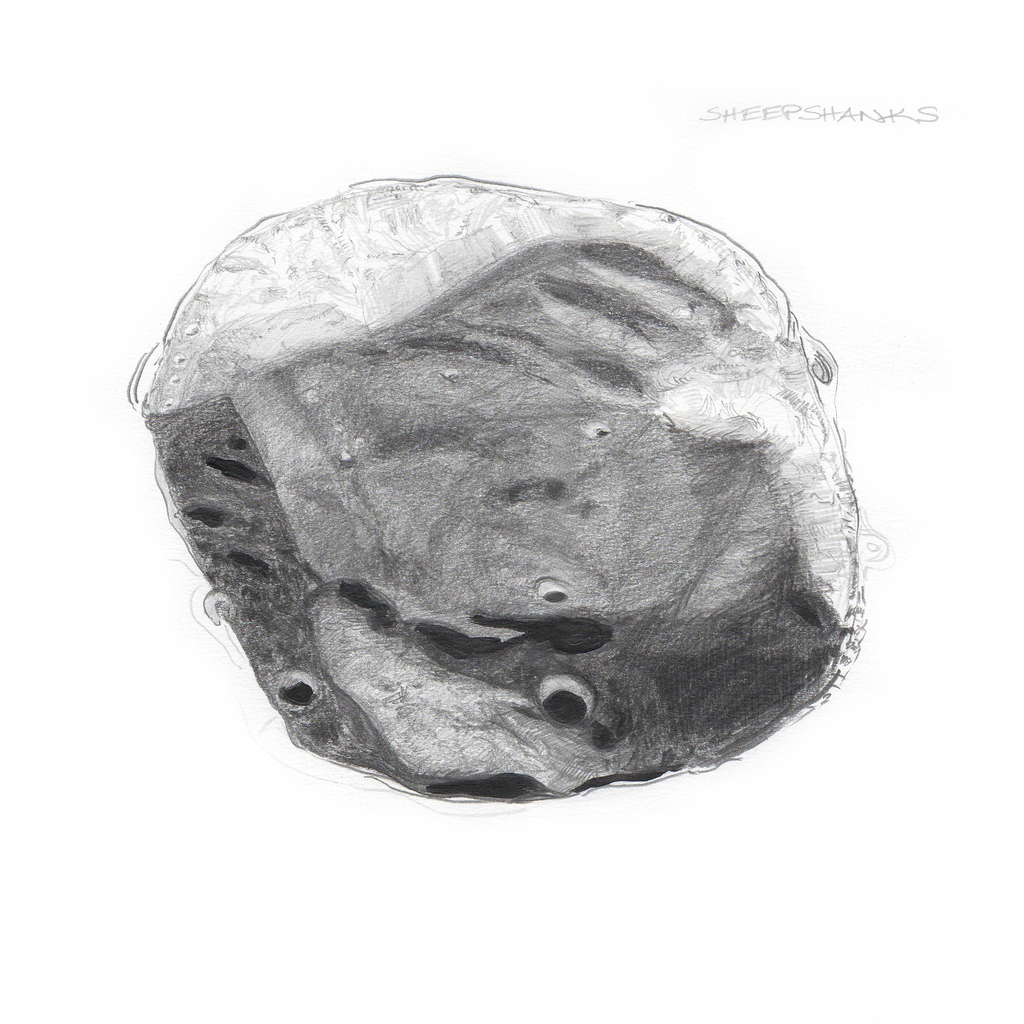
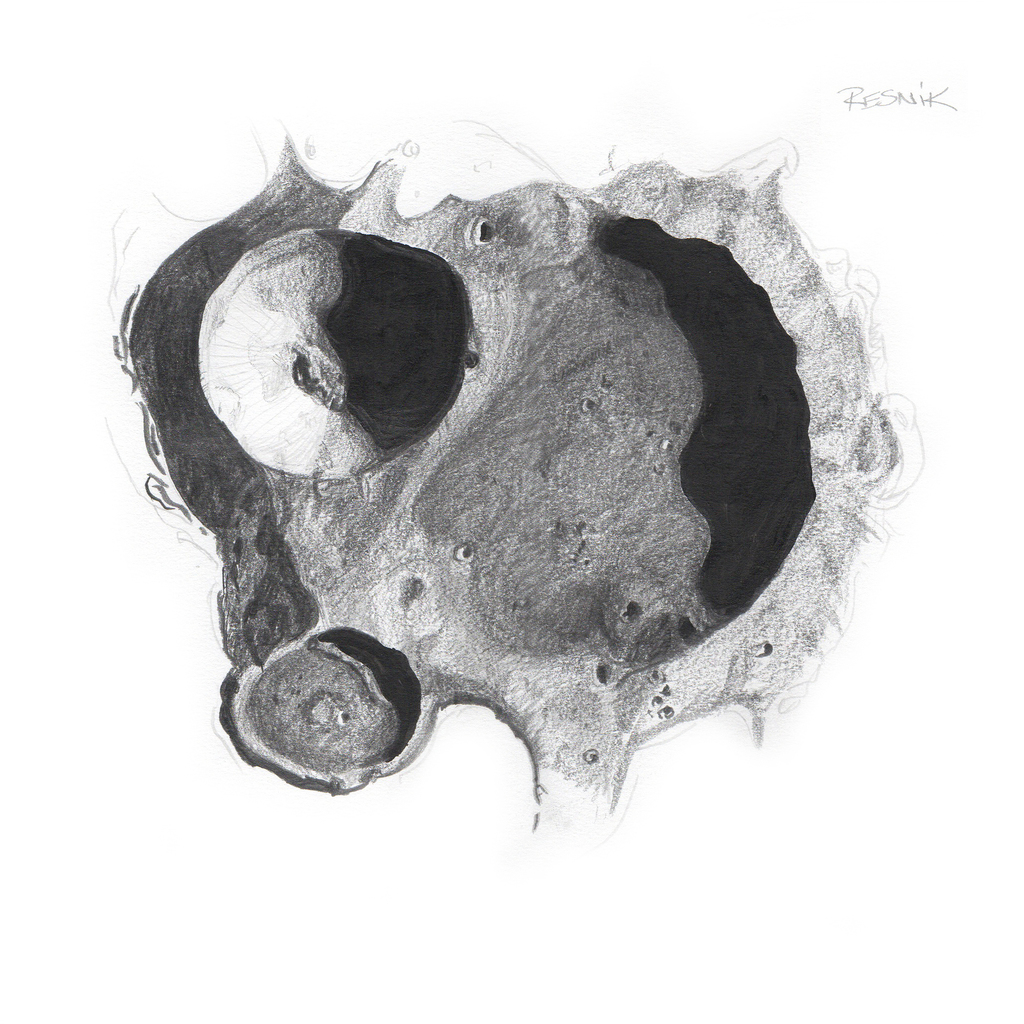
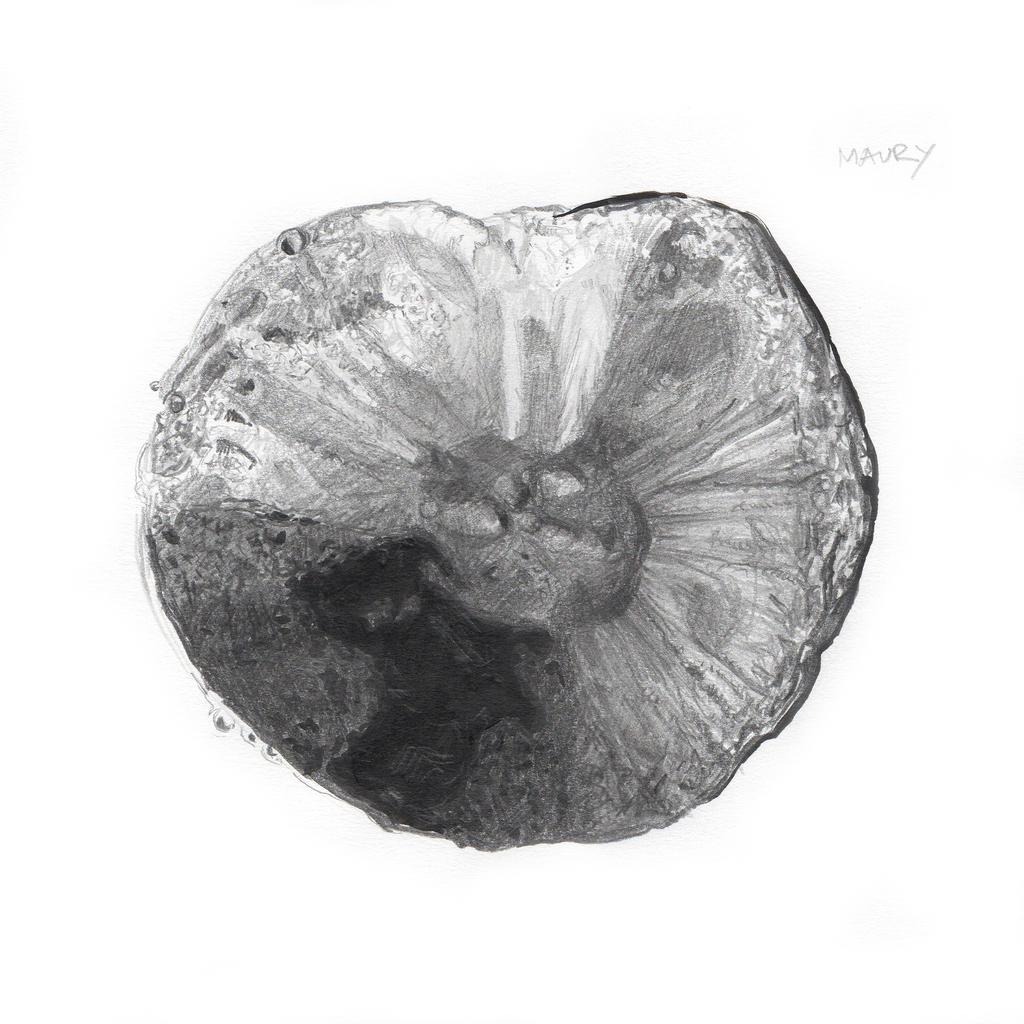
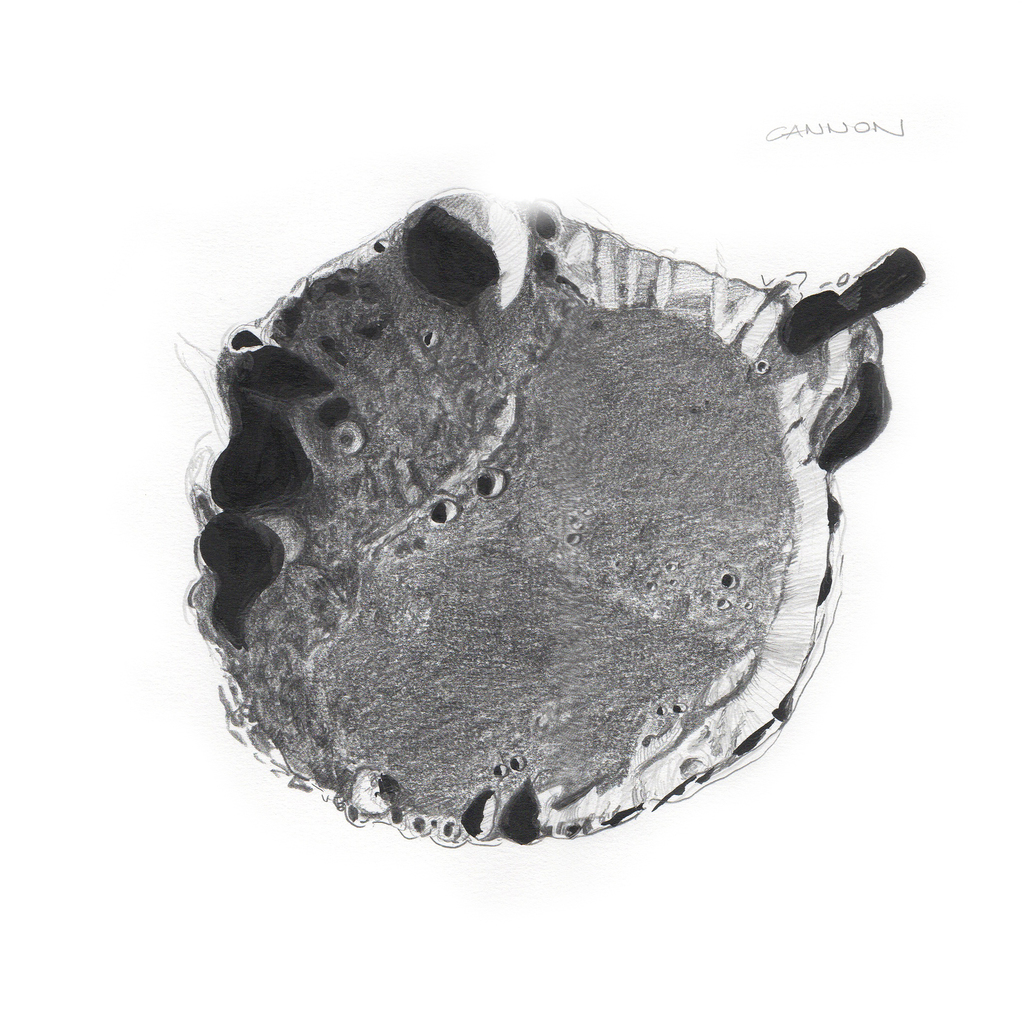
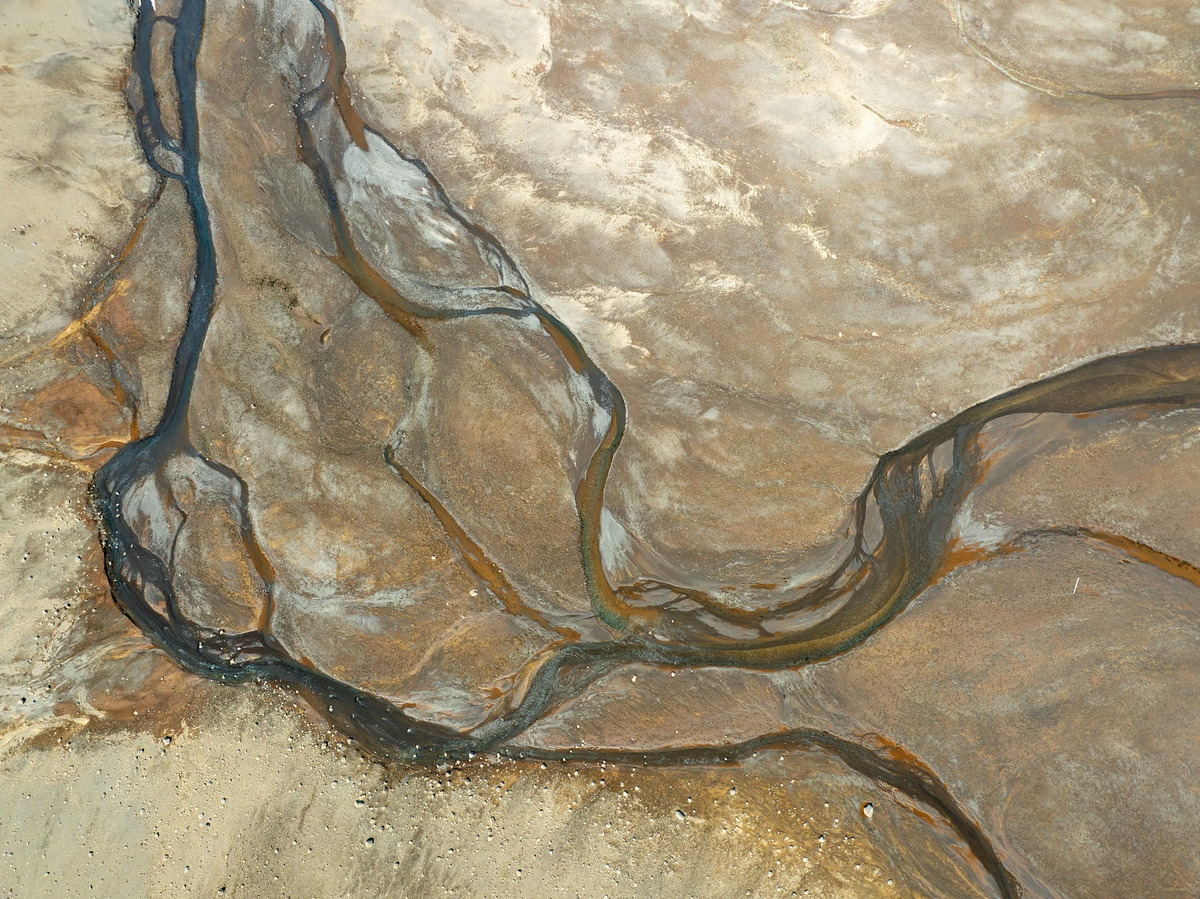
McIntosh exhibition. Credit: Bettina Forget.
Art and science have long been intertwined, each offering distinct but complementary ways of understanding our place in the universe. Bettina Forget, artist and director of the SETI Institute's Artist in Residence program, a program dedicated to reflecting and expanding on the Institute's scientific research through creative practice, brings this dialogue to the heart of her own creative work. Her Women With Impact series demonstrates that even the Moon, our closest celestial neighbor, is not simply a natural object. It is a cultural artifact, shaped as much by human history as by four billion years of impacts.
On April 1, 2026, humanity took its next giant leap in our mission to return to our closest celestial neighbor. Artemis II launched as the first crewed test flight of the Space Launch System (SLS) and the Orion spacecraft. By slingshotting around the Moon, this mission serves as a critical stepping stone toward the ultimate goal: landing a crew on the lunar surface in 2028. This upcoming era of lunar exploration is a landmark event; not only will it mark the first time since 1972 that humans have set foot on the Moon, but the Artemis program will also see the very first woman walk upon the lunar regolith.
Historically, however, the Moon has been something of a "man's world." This isn't solely because the twelve Apollo astronauts who previously walked its surface were all men, it is also written into the very map of the Moon itself. Peruse any lunar atlas and you will find a landscape populated almost entirely by male philosophers, mathematicians, and astronomers. Great figures like Plato, Kepler, and Newton have been immortalized in lunar nomenclature. Yet, an analysis of the International Astronomical Union's Gazetteer of Planetary Nomenclature reveals a stark disparity: of the 1,675 cataloged and named lunar craters, only 34 exclusively honor women. That's a scant 2%.
Why does this matter? The act of naming a place carries profound cultural weight. As cultural geographer Pierce Lewis noted, “Our human landscape is our unwitting autobiography, reflecting our tastes, our values, our aspirations.” Looking closely at a map of the Moon, one might conclude that our aspirations and values concerning space exploration are largely excluding women.
Artist Bettina Forget was confronted by this reality while observing the Moon through her telescope. Using her trusty Rückl Moon Atlas to identify the craters she was sketching at the eyepiece, she was reminded that these topographical features are named after historical figures. Curious, she consulted the Gazetteer of Planetary Nomenclature to see how many of these figures were women. While she didn't expect perfect parity, the drastic gender imbalance she discovered was jarring.
To bring visibility to this gap, Forget initiated a project of "protest by celebration," resulting in an ongoing artistic series titled Women With Impact. The title is deliberately dual-purpose. On a physical level, a crater is a hollow void in the regolith, a void that echoes the historical underrepresentation and erasure of women in science, positions of power, and the broader historical canon. Conversely, a crater is the direct result of an impact; a forceful shattering of the status quo. Through her art, the women who made profound impacts on our understanding of the universe are thrown into sharp relief.
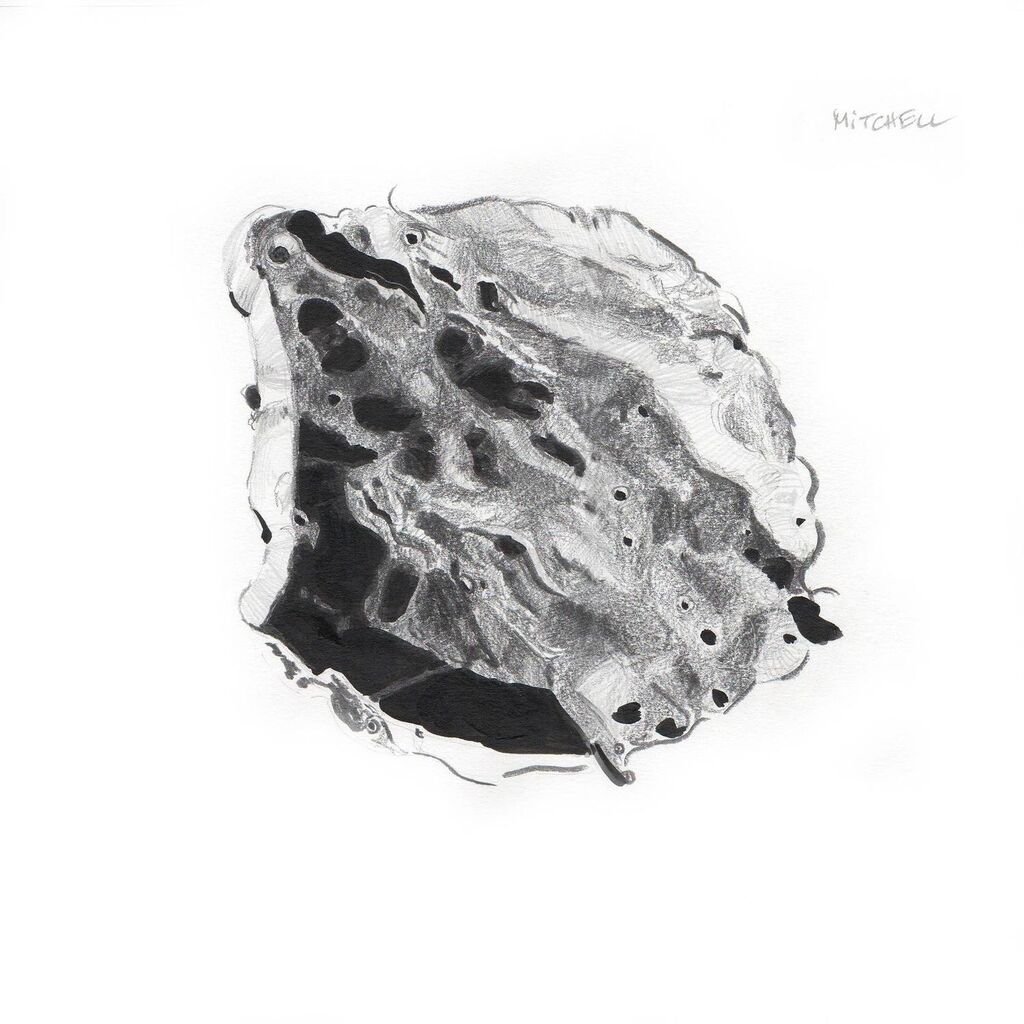
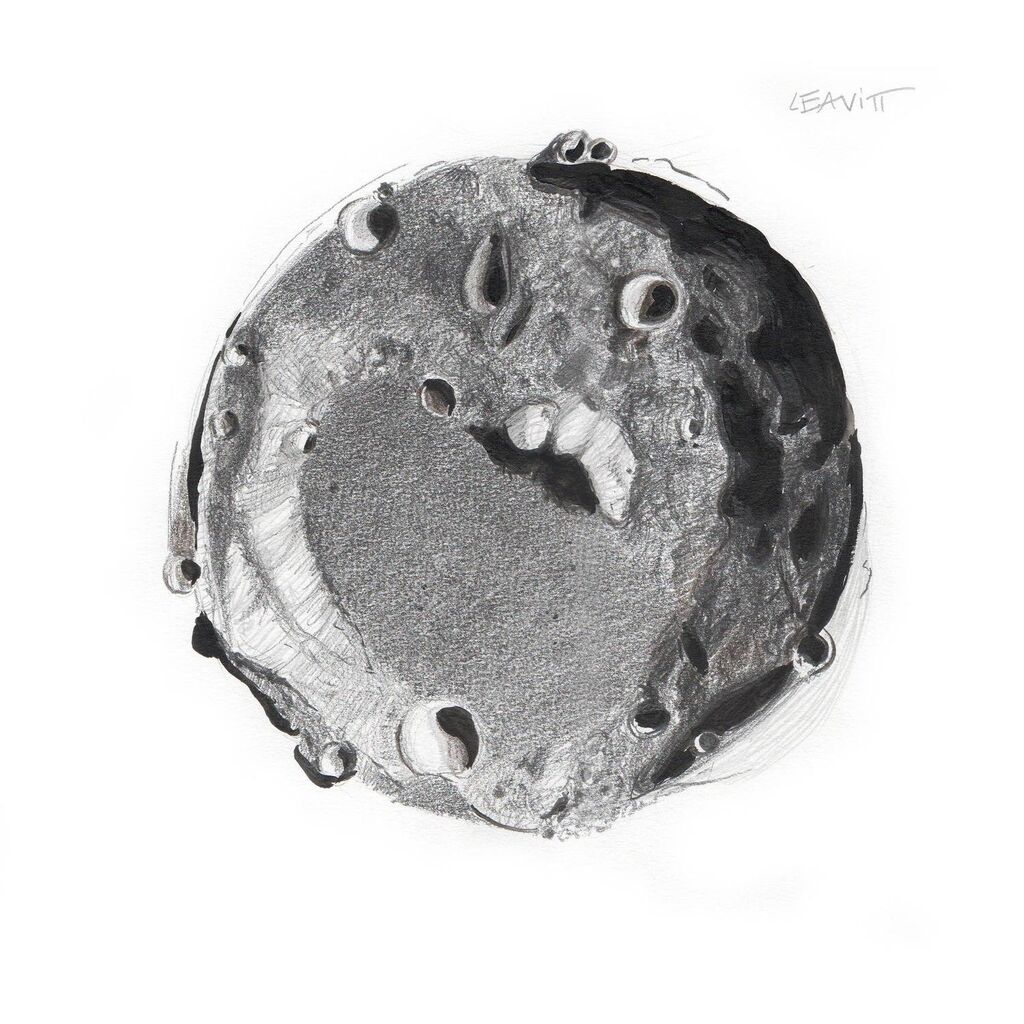
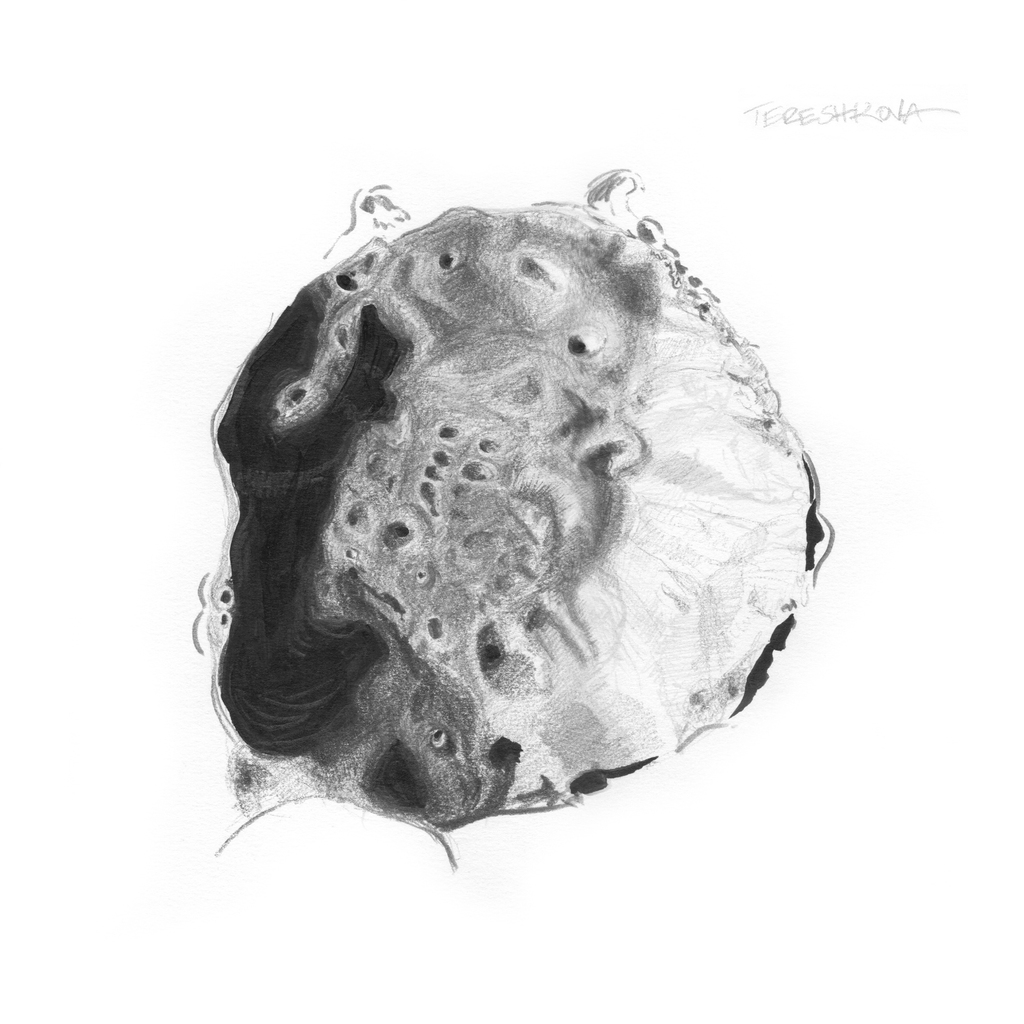
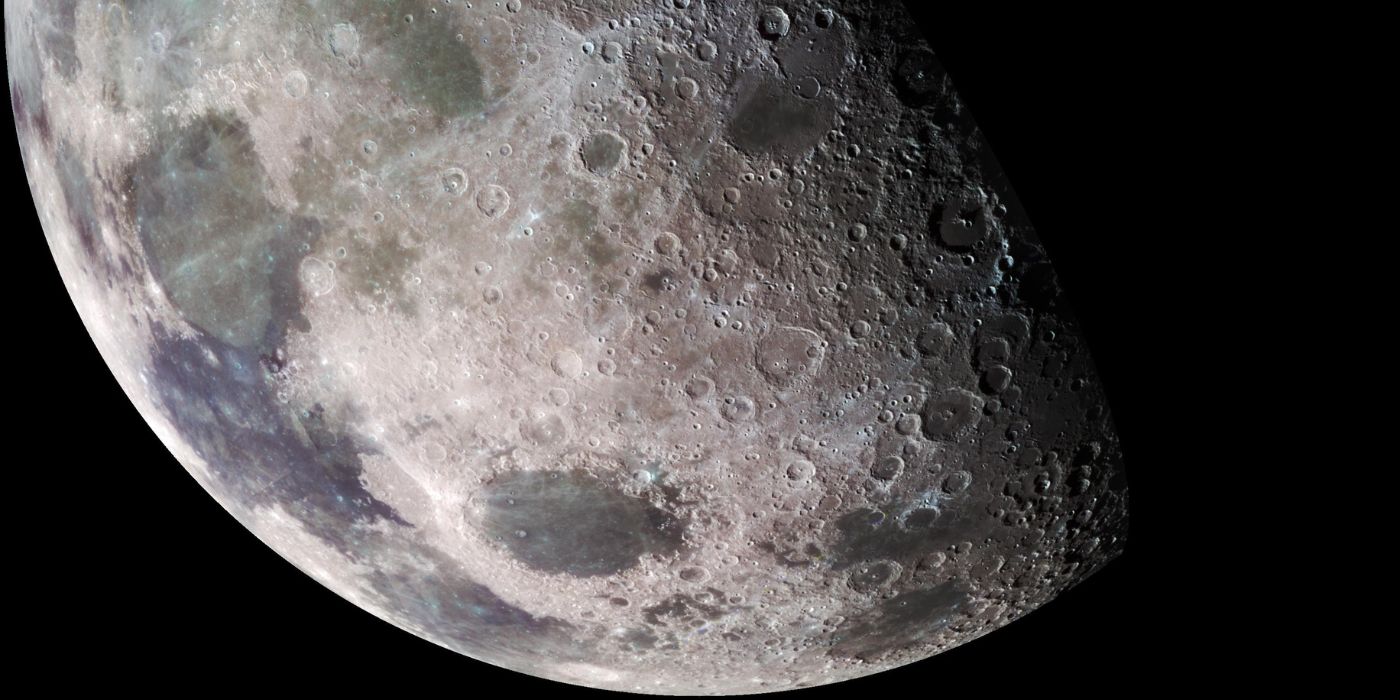
Drawing upon high-resolution data from NASA’s Lunar Reconnaissance Orbiter, Forget meticulously locates and studies these specific craters. Using acrylic paint and graphite, she then translates this data into intricate drawings, essentially portraits of the lunar surface. Many of the craters she illustrates honor the "Harvard Computers," the brilliant group of women at the Harvard College Observatory who analyzed stellar photographic plates in the late 19th and early 20th centuries. These include Annie Jump Cannon, creator of the stellar spectral classification system; Henrietta Swan Leavitt, who discovered the period-luminosity relationship of Cepheid variables; and Maria Mitchell, the first person in North America to discover a comet. Other craters in the series honor trailblazing astronauts, mathematicians, and physicists, such as Kalpana Chawla, Judith Resnik, Valentina Tereshkova, Emmy Noether, and Marie Skłodowska-Curie.
Beyond its critical lens, Women With Impact also invites a deeper appreciation of lunar science. Craters are not simply scars or empty hollows. They are records of planetary history. Their shapes, depths, and surrounding features reveal information about the Moon’s composition, age, and geological processes. By rendering each crater as a distinct visual subject, the series highlights the richness and variability of these formations and bridges aesthetic experience with scientific observation. When exhibited at the Rio Tinto Alcan Planetarium in Montreal, the works operated on both levels at once. They foregrounded the contributions of women in science and demonstrated how much knowledge can be drawn from close attention to the lunar surface.
In the latest expansion of the project, Forget has scaled up her work into large-format paintings, saturated in vibrant shades of pink. While pink is strongly associated with femininity, it tolerates more contradictions than almost any other color. Pink encompasses a wide spectrum of cultural associations, ranging from soft, powdery baby pinks to the vivid, saturated hues associated with girl power. The result is a body of work that is both celebratory and provocative and that challenges viewers to reconsider aesthetic and cultural assumptions.
There are signs of change. The International Astronomical Union has begun to address gender imbalance in planetary nomenclature. Since 2018, its Working Group for Planetary System Nomenclature has made a concerted effort to include more women when assigning new names. This aligns with the IAU’s broader commitment to advancing equality of opportunity in astronomy. For Forget, this means the project remains open-ended. When she began Women With Impact in 2016, only 27 lunar craters were named after women. As new names are added, the series continues to grow. Each new work marks both recognition gained and the long history that preceded it.
Women With Impact will be presented in Competing Cosmologies: Interpreting the Sky at the Wende Museum in Los Angeles from November 1, 2026 to October 11, 2027.
News
Related News
Researchers Propose Searching the Moon for Microscopic Technosignatures
New study outlines the first quantitative framework for searching lunar regolith for microscopic technosignatures. #Press Releases #Moon #Technosignatures #Lewis Pinault #Andrew Siemion #Astrobiology #SETI #Solar System #AI and Machine Learning #Bill Diamond
SETI Institute Achievements: Q2 2026 Activity Report
During the second quarter of 2026, the SETI Institute was especially active and made strong progress in research, education, outreach, and public engagement. Our scientists published over 80 peer-reviewed papers in fields such as SETI, astrobiology, planetary science, exoplanets, and heliophysics. #Activity Reports #Carl Sagan Center #Outreach #Education #AIR #Community #Research #SETI Institute
SETI Institute Team Looks for a New Way to Find Resources in Space
#Press Releases #Pablo Sobron #Moon #Asteroids #Planetary Exploration #Spectroscopy #Astrobiology
SETI AIR Newsletter - August 2026
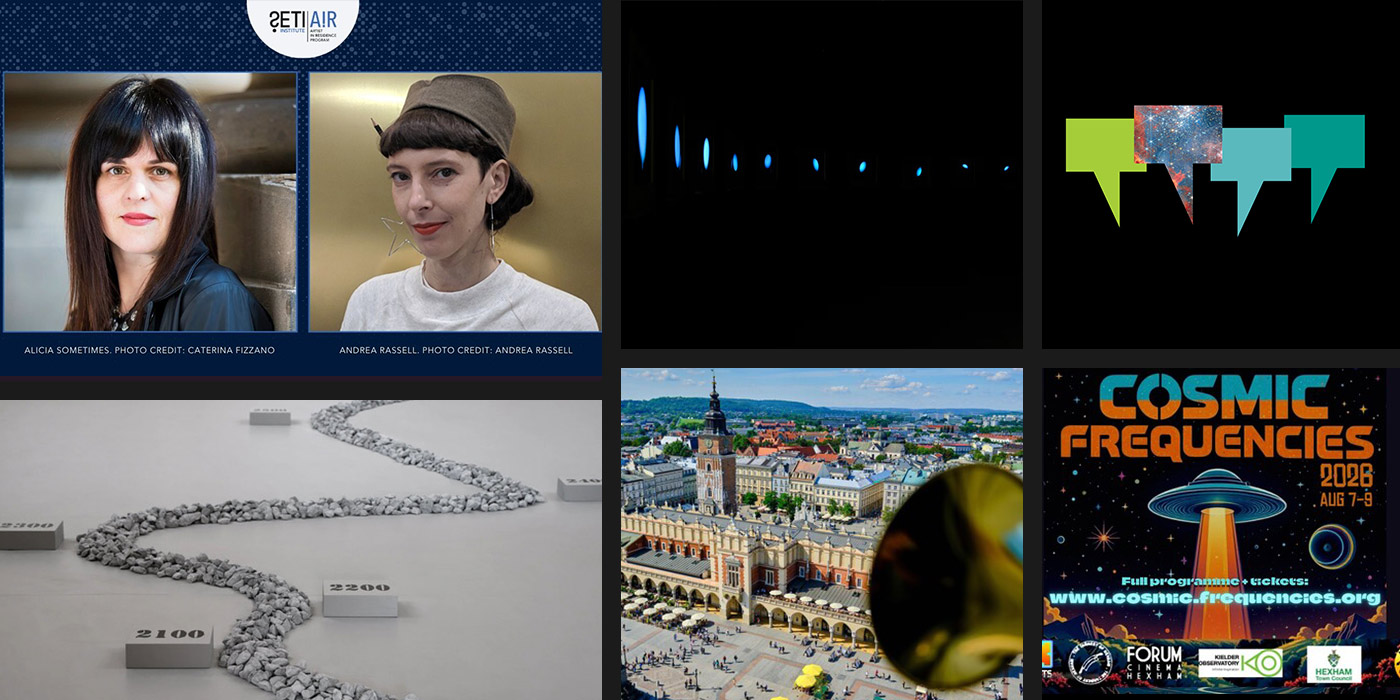
#AIR #SETI AIR Newsletter #Bettina Forget #Andrea Rassell #Alicia Sometimes #Jonathon Keats #Daniela de Paulis #Laurent Grasso
SETI Institute In the News: July Roundup 2026
#SETI Institute in the News #SETI Institute #Community #Peter Jenniskens #Lucian Walkowicz #Chelsea Haramia #Pascal Lee #Bill Diamond #Seth Shostak #Meteorites #SETI #UAPs #NASA Missions and Observatories #Discovery and Futures Lab #Mars
Hide the Star: How Roman Will See Exoplanets
#Blog #Franck Marchis #Margaret Turnbull #Nancy Grace Roman Space Telescope #Planetary Exploration #NASA Missions and Observatories #Exoplanets #Spectroscopy #AstronomyResearch
Related Projects
SkyMapper: Expanding Access to Real-time Astronomy Through a Global Astronomical Network
SkyMapper and the SETI Institute are connecting educators, students and the public to live astronomical observations through a distributed astronomical network. #SkyMapper #SETI #Citizen Science #Astronomy
Virtual Planetary Laboratory
How can we best assess whether an exoplanet supports life? #VPL
Discovery and Futures Lab
What happens if life beyond Earth is discovered? The Discovery and Futures Lab at the SETI Institute fosters novel and anticipatory research at the intersection of science, society, our planet, and the search for life beyond Earth. #Discovery and Futures LabSupport the
SETI Institute
Scientists are getting closer in their search for life beyond earth. But with limited federal funding for the search for extraterrestrial intelligence, supporters are the reason cutting-edge scientists can keep their eyes on the sky.