September 8, 2026, Mountain View, CA— The next breakthrough in the search for extraterrestrial intelligence may come not from a radio telescope, but from a microscope.
A new study led by SETI Institute Affiliate Scientist Dr. Lewis Pinault outlines a new approach to the search for extraterrestrial intelligence: examining lunar regolith for microscopic engineered particles that may have accumulated over billions of years.
Rather than searching only for radio or laser signals from civilizations that may exist today, the research explores whether technological civilizations might instead leave behind tiny, durable particles capable of surviving long after their creators disappeared.
Published as a preprint while under review by the International Journal of Astrobiology, the study presents the first quantitative framework for testing whether microscopic technosignatures could accumulate in lunar soil over billions of years. The researchers modeled how such particles could travel between stars, survive the journey, become incorporated into the lunar regolith and ultimately be detected using state-of-the-art laboratory techniques enabled by advances in microscopy, industrial materials analysis, and AI-assisted imaging.
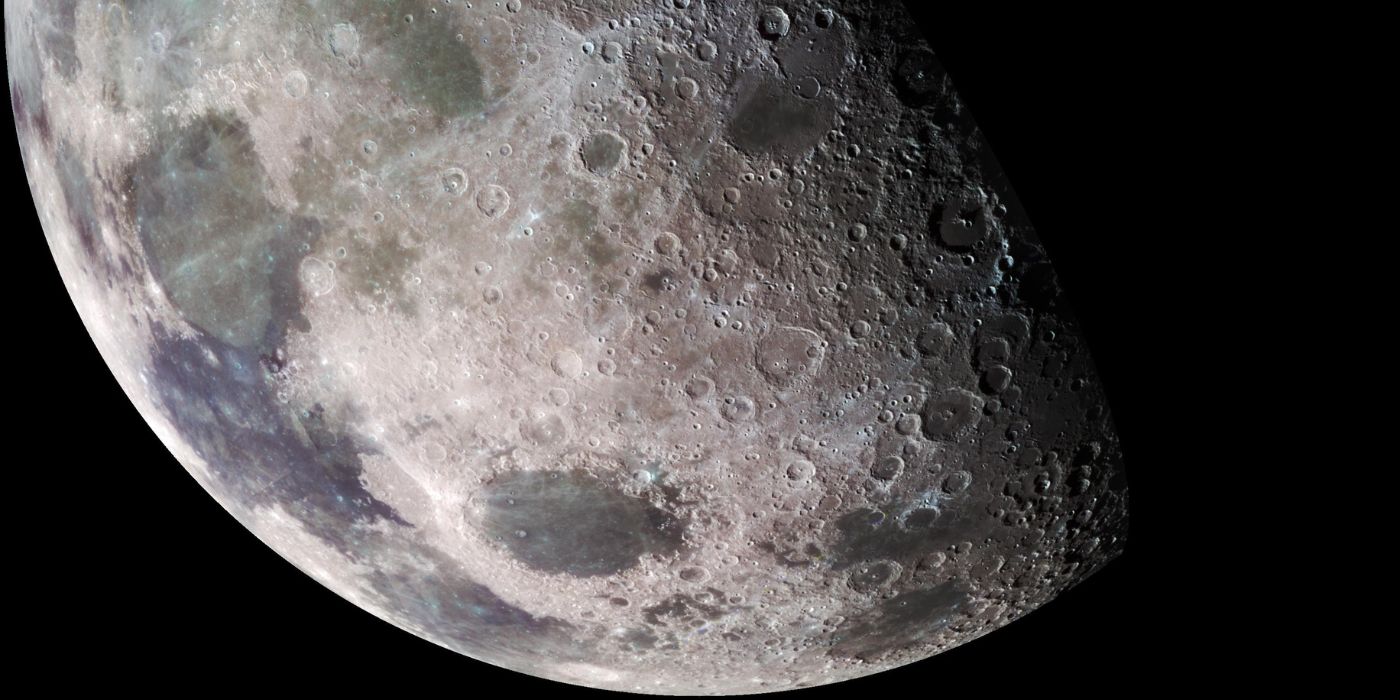
The Moon as a Four-Billion-Year Archive
"The Moon has been quietly accumulating material from space for billions of years, much of it likely billions of years older than the Moon itself,” said Pinault. “We're asking whether that ancient collection might contain microscopic traces of technologies that existed long before humans ever looked up at the sky."
Unlike Earth, the Moon has no atmosphere, flowing water, or active geology to erase ancient material. Over the last four billion years, its surface has continuously collected dust from across the Solar System and interstellar space, making it a remarkably stable archive of Milky Way history.
The researchers argue that if advanced civilizations produce durable microscopic debris—whether intentionally or as a byproduct of space exploration or large-scale engineering—a tiny fraction of those particles could eventually become embedded in the lunar regolith.
From Speculation to Testable Science
The study does not claim that extraterrestrial technosignatures have been found. Instead, it establishes a practical observational framework that future lunar sample-return missions and in situ analyses can test.
The authors estimate that carefully examining approximately one cubic meter of lunar regolith using modern microscopy, tomography, spectroscopy and AI-assisted image analysis could begin placing meaningful limits on the amount of durable artificial material produced by technological civilizations over the history of the Milky Way. These limits could, in turn, begin to constrain the number of technologically capable civilizations that may have existed over Galactic history. Even if no technosignatures are found in the first cubic meter, the search would establish the first quantitative constraints on this entirely new class of technosignatures.
The work builds on decades of earlier proposals to search the Solar System for extraterrestrial artifacts, but advances the concept by connecting astrophysical models of interstellar dust transport with lunar geology, impact science and modern analytical techniques into a single observational framework. It also highlights how recent advances in microscopy, nanoscale materials characterization and AI-assisted image analysis—many originally developed for planetary science and industrial applications—are now making such searches practically achievable.
A New Opportunity for Lunar Exploration
As NASA's Artemis program, China's Chang'e missions, and commercial lunar exploration return increasing amounts of carefully documented lunar material, researchers may soon have an unprecedented opportunity to test this new approach. As sustained human and robotic exploration of the Moon expands, in situ examination of lunar material can complement laboratory studies on Earth and further extend this new search strategy. Consequently, a growing suite of future lunar samples can be analyzed to not only better understand the Moon's history, but also to search for microscopic technosignatures preserved over billions of years.
"The concept of searching the lunar regolith for microscopic technosignatures is at once extraordinarily original and eminently reasonable,” said Bill Diamond, SETI Institute President and CEO. “This is a novel addition to the search methodologies applied to seeking evidence of technology as a proxy for life and intelligence beyond our solar system and we are excited at the prospect of bringing this to fruition.”
Co-authors include Brian C. Lacki (Breakthrough Listen), Ian A. Crawford (Birkbeck, University of London), and Andrew P. V. Siemion (SETI Institute and Breakthrough Listen).
Paper
Micron-Scale Technosignatures: How a Cubic Metre of Lunar Regolith May Begin to Constrain the Number of Past Technological Civilisations in the Galaxy
Available on arXiv: https://arxiv.org/abs/2606.24028
Submitted to the International Journal of Astrobiology and currently under peer review.
About the SETI Institute
Founded in 1984, the SETI Institute is a non-profit, multi-disciplinary research and education organization whose mission is to lead humanity’s quest to understand the origins and prevalence of life and intelligence in the Universe and to share that knowledge with the world. Our research encompasses the physical and biological sciences and leverages expertise in data analytics, machine learning and advanced signal detection technologies. The SETI Institute is a distinguished research partner for industry, academia and government agencies, including NASA and NSF.
Contact information
Rebecca McDonald
Director of Communications
SETI Institute
[email protected]
)