LaserSETI
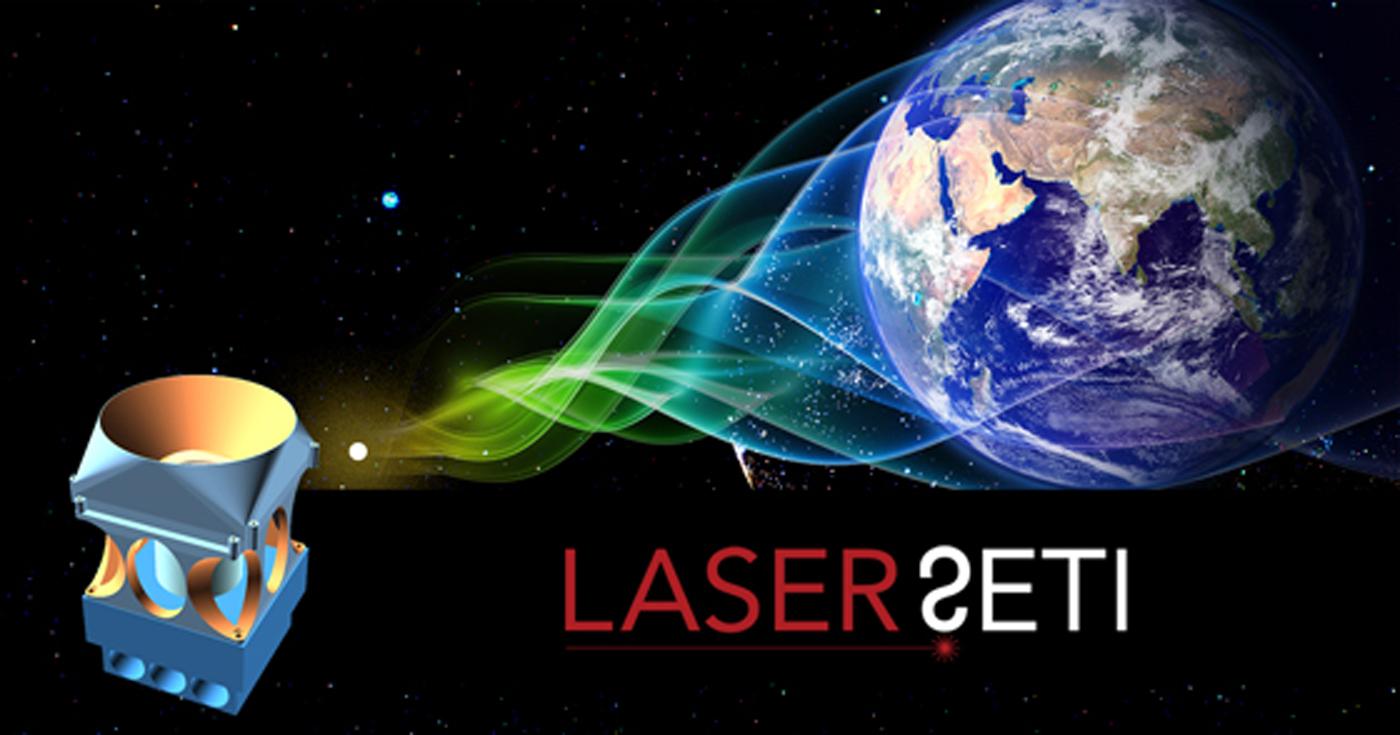
LaserSETI is the SETI Institute’s crowdfunding campaign to fund a project to place specialized cameras around the globe to look for laser flashes from deep space. It’s the first project to scan the whole sky all the time for signals from extraterrestrial intelligence. The fundraising goal is $100K to begin scaling up this project which has been in development for two years.
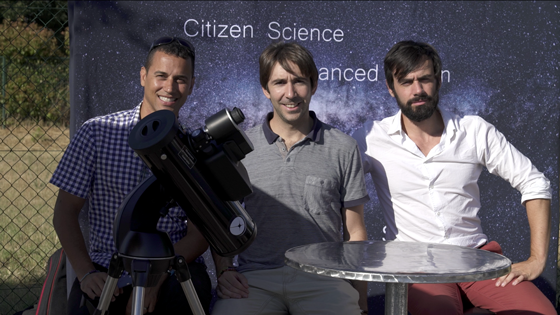
SETI Institute-Unistellar Partnership
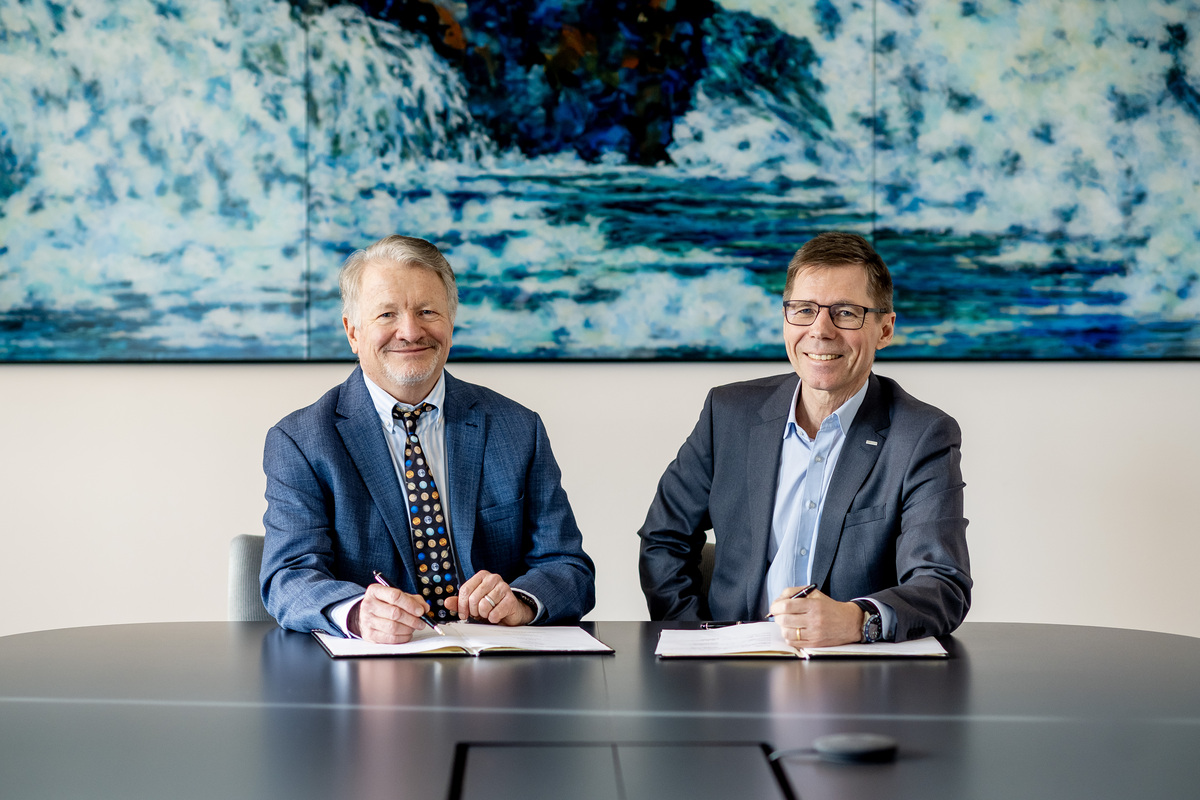
The SETI Institute and French startup Unistellar announced a partnership to commercialize a new telescope. Unistellar is developing this new type of telescope that delivers a level of quality image not previously available to amateur astronomers, that can identify the object they are observing, and that enables them to participate in observing campaigns and share the data with researchers.
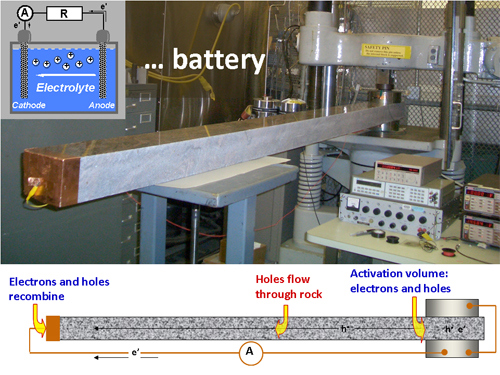
Satellites and Earthquakes
Friedemann Freund is a Senior Research Scientist at the SETI Institute whose work has included trying to understand whether it’s possible to predict earthquakes through currents produced within the Earth’s crust by rocks under extreme stress. Further, Friedemann’s research has explored whether it could be possible to detect these currents from satellites in space.
Frank Drake
Frank Drake, Chairman Emeritus of the SETI Institute, is known as the “father of SETI science” and is the creator of the Drake Equation, a probabilistic formula he wrote in 1961 to stimulate dialogue about the search for extraterrestrial intelligence. Frank created the first modern SETI experiment in 1960 at the Greenbank Observatory in West Virginia and was the first President of the Board of the SETI Institute. Frank recently participated in a Reddit Ask Me Anything (AMA) to answer questions about his work.
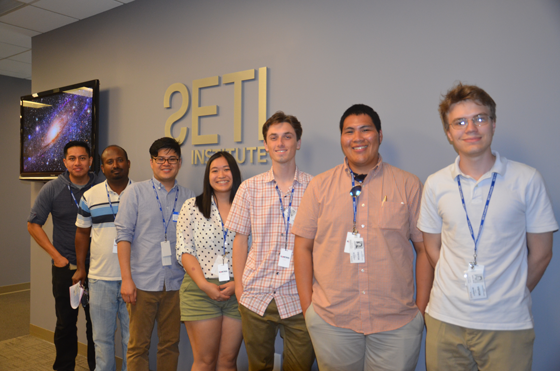
Research Experience for Undergraduates at the SETI Institute Continues
The Research Experience for Undergraduates (REU) program is in its 12th year at the SETI Institute. Funded by the National Science Foundation (NFS), the program pairs students with mentor scientists on projects that include astrobiology, microbiology, planetary geology, observational astronomy and more. One of the students, Jose Barrios, has been blogging about his experience. Jose’s mentor is SETI Institute Scientist Gerry Harp, who studies the data generated from the Allen Telescope Array (ATA).
Ross 128 – Mystery Solved
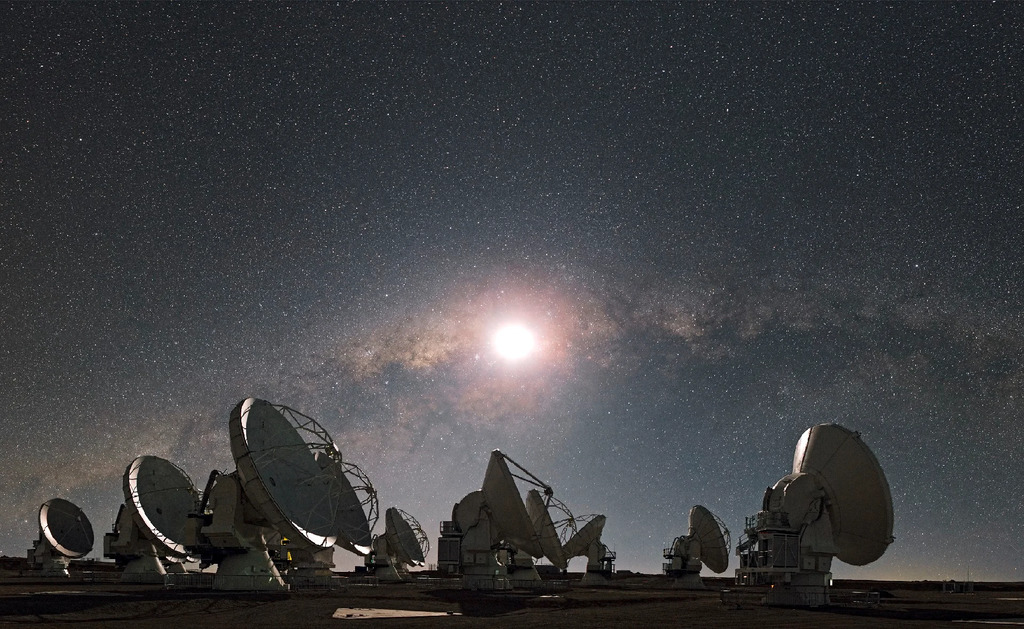
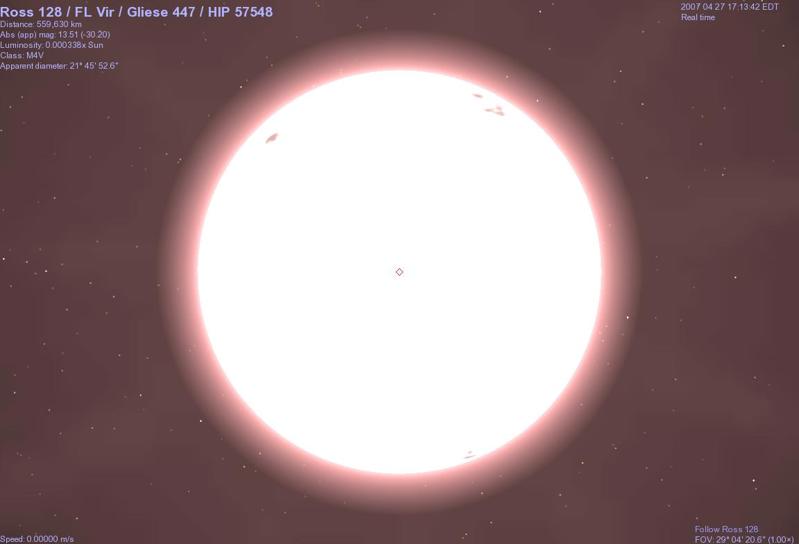
Ross 128 is a red dwarf star located in the constellation Virgo. In May, radio astronomers at the Arecibo telescope in Puerto Rico observed Ross 128 and when they analyzed the data, they detected what appeared to be repeating signal. The Allen Telescope Array (ATA) observed Ross 128 for 16 hours and detected no evidence for a signal originating from the star system. The Greenbank Telescope and Arecibo also conducted additional observations. The consensus appears to be that the original Arecibo detections were due to transmissions from Earth satellites in geosynchronous orbit.

Making Contact: A Book About Jill Tarter’s Life and Work by Sarah Scoles
Making Contact is a new book by Sarah Scoles about the life and work of SETI pioneer, Jill Tarter. Jill is one of the founders of the SETI Institute and currently holds the Bernard M. Oliver Chair at the SETI Institute. One the biggest challenges faced by Jill, other SETI researchers and the SETI Institute has been in trying to get SETI research funded, a challenge that is ongoing.
Observing the Ever-Changing Universe
Seth Shostak, SETI Institute Senior Astronomer and host of the radio show and podcast Big Picture Science, writes about the slow pace of changes in the Universe and new ways of observing phenomena in the skies. “The slow-motion gait of the heavens led our ancestors to assume that the universe was unchanging, an idea that was probably bolstered by the fact that the night sky is silent. We instinctively sense that if there’s no noise, there’s no action. But it’s all an illusion, of course.”
Facebook Live
In last week’s Facebook Live, SETI Institute President and CEO Bill Diamond talked to Senior Astronomer Seth Shostak and SETI Institute Scientist Eliot Gillum about optical SETI and their plans to observe all sky all the time with Laser SETI.
All SETI Institute Facebook Live videos can be found on our Facebook page.
Big Picture Science
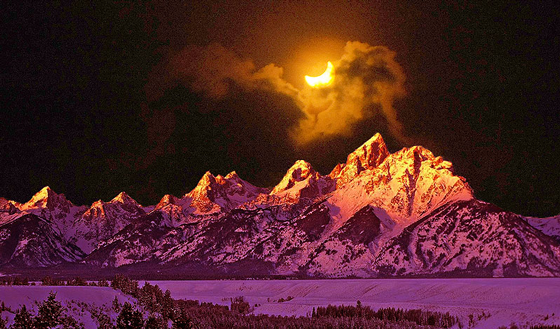
Last week, Eclipsing All Other Shows discussed the upcoming solar eclipse which will take place on August 21. This week, What Goes Around explores recycling and more.
Events
- Starship Congress 2017, , August 7-9, Monterey, CA. A conference that explores pathways to allow human exploration of the galaxy. Franck Marchis will give a presentation.
- California Academy of Sciences Astronomy Lectures, July 25, San Francisco, CA Free events that feature accessible astronomy presentations. Franck Marchis will discuss the Laser SETI project and the upcoming solar eclipse.
- StarTalk Radio, September 16-17, Seth Shostak will guest host this Neil deGrasse Tyson radio program that explores science, pop culture and comedy.
Carl Sagan Center Activity Report June 2017
The Carl Sagan Center Activity Report for June 2017 is out and can be downloaded here. Here are some highlights:
- Dale Andersen co-authored a paper that has been accepted for publication in the Journal of Microbiological Methods, ‘Comparison of two bioinformatics tools used to characterize the microbial diversity and predictive functional attributes of microbial mats from Lake Obersee, Antarctica’
- Susan Thompson was lead author of the catalog study for the Kepler survey mission
- SETI Institute scientists participated in conferences and events including the 4th Kepler/K2 Science Conference; the 3rd Planetary Data Workshop; Starmus Festival IV: Life and the Universe; and the AAS Division on Dynamical Astronomy Meeting
- Facebook Live events featured Kathryn Bywaters, Margaret Race, Susan Thompson, and Jeff Coughlin
- Lori Fenton curated the geoscience Twitter account @GeoSciTweeps for the week of June 26-July2
- Seth Shostak was interviewed by numerous print and broadcast news outlets including NBC News, KGO Radio San Francisco, Science Fantastic, and KQED
- Matt Tiscareno has been participating in the production of numerous documentaries about Cassini
- Jill Tarter, Jon Richards, and Gerry Harp to participants of the Machine Learning for SETI hackathon held June 10-11
)