)

Author: Peter Jenniskens
Friday, Apr 24, 2020
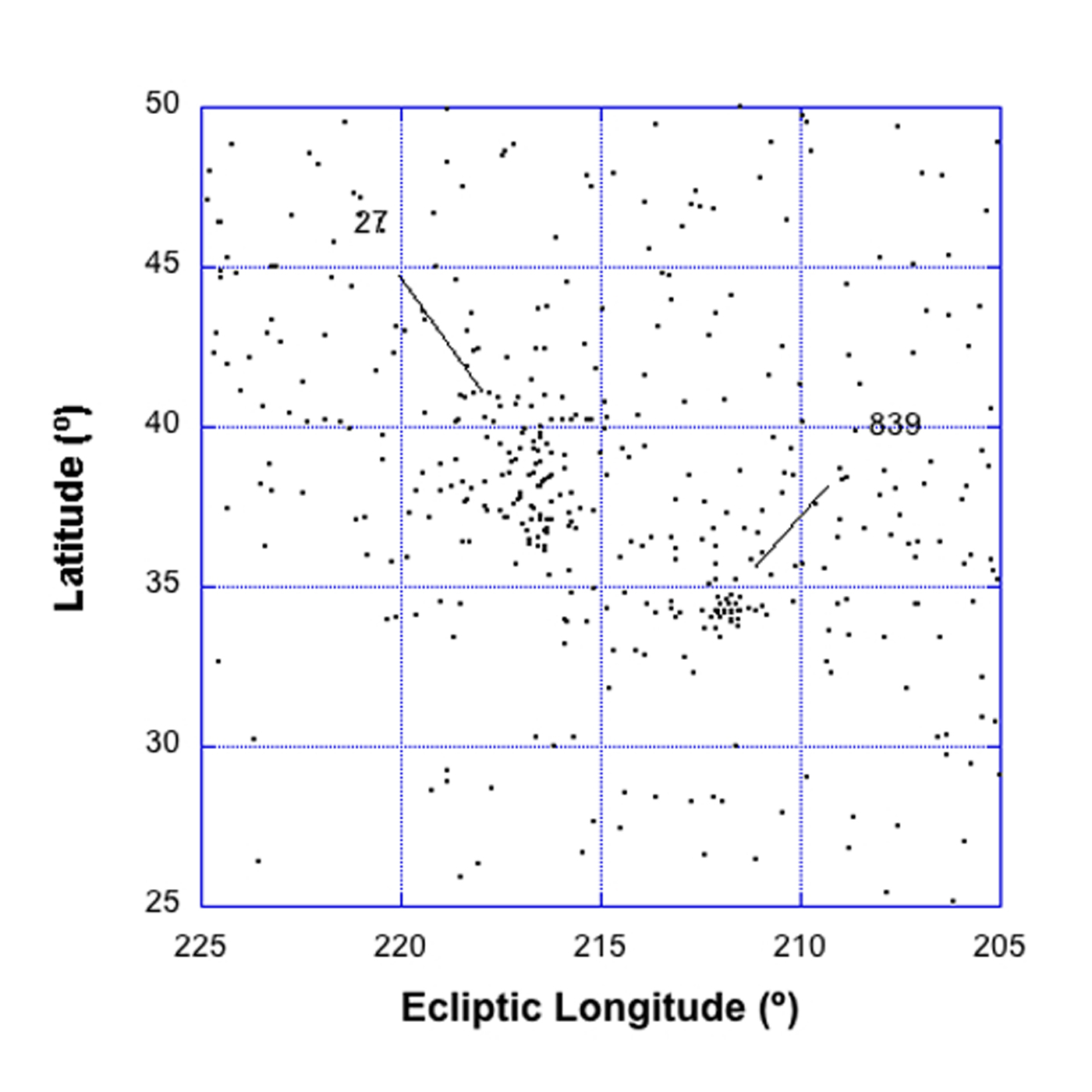
figure of 839 radiants using SETI's CAMS network.
SETI Institute astronomer Peter Jenniskens reports on some unusual activity of the Phi Serpentid meteor shower. Using the SETI Institute’s global CAMS network of low-light video surveillance cameras, Peter and his team monitor meteor showers 24/7 to record their presence and intensity. Meteor showers are caused by bits of debris shed by comets (and some asteroids) that light up when they strike the Earth’s atmosphere. By observing the direction and speed of the meteors, astronomers can calculate their orbit in space to trace the origin of the material to its parent body. The figure shows the radiants (the direction point in the sky where a meteor appears to originate) of two meteor showers observed in the constellation Serpens between April 12 and 19. Shower number 839 is the Phi Serpentid shower. It has the orbit of an unknown long period comet. It is usually quite weak, but this year the planets aligned to push the stream of debris more into Earth’s path, causing a higher rate of naked eye meteors. The flare-up was reported to the astronomical community via the IAU Central Bureau on Electronic Telegrams







News
Related News
Aug 28, 2026
New Meteor Shower Identifies Asteroid as a Cloaked Comet
#Comets, Meteors, and Asteroids #CAMS #Peter Jenniskens
Aug 25, 2026
JWST Reveals a Race Against Time for Forming Planets
SETI Institute scientist Uma Gorti co-authors one of the largest JWST studies of how planet-forming disks lose their gas #Press Releases #JWST #Astronomy #Astrophysics #Uma Gorti
Aug 24, 2026
New study reveals how space rocks become meteorites
Analysis of the atmospheric passage of 75 meteorite falls identifies seven distinct processes as space rocks melt, fragment and slow before they fall as meteorites #Press Releases #Comets, Meteors, and Asteroids #Peter Jenniskens #Meteorites #Astronomy #Stuart Pilorz
Aug 13, 2026
SETI Institute In the News: July Roundup 2026
#SETI Institute in the News #SETI Institute #Community #Peter Jenniskens #Lucian Walkowicz #Chelsea Haramia #Pascal Lee #Bill Diamond #Seth Shostak #Meteorites #SETI #UAPs #NASA Missions and Observatories #Discovery and Futures Lab #Mars
Aug 12, 2026
Hide the Star: How Roman Will See Exoplanets
#Blog #Franck Marchis #Margaret Turnbull #Nancy Grace Roman Space Telescope #Planetary Exploration #NASA Missions and Observatories #Exoplanets #Spectroscopy #Astronomy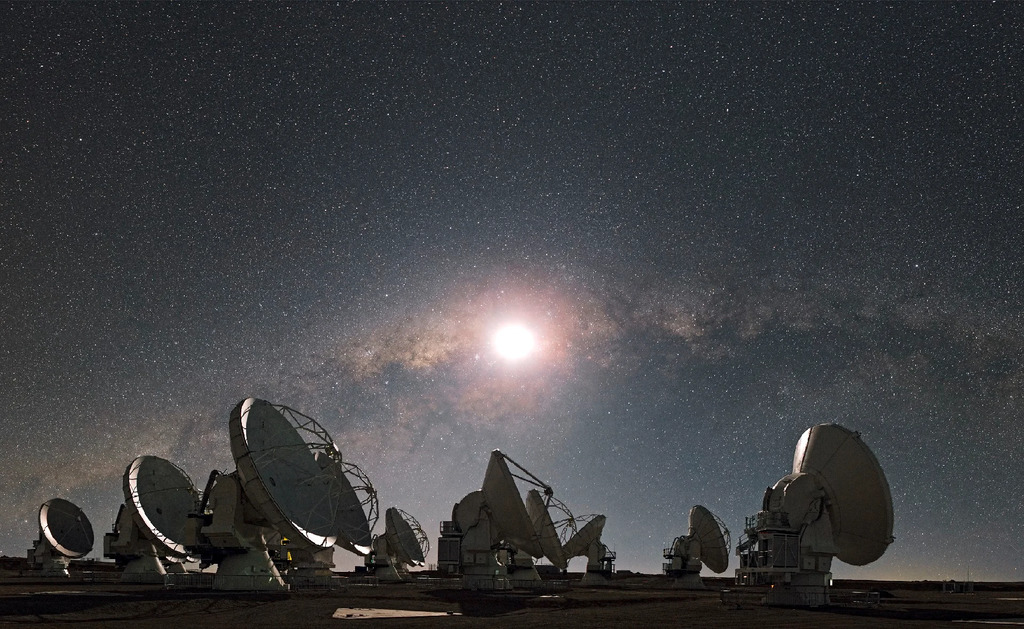
Jul 20, 2026
SETI Institute In the News: June Roundup 2026
Throughout June 2026, SETI Institute scientists, affiliates, and collaborators contributed to discussions spanning interstellar visitors, planetary science, technosignature searches, animal cognition, and the scientific process guiding the search for life beyond Earth. #SETI Institute in the News #SETI Institute #Community #Eduardo Bendek #Optical SETI #SETI #3I/ATLAS #ATA #Comets, Meteors, and Asteroids #Solar System #Franck Marchis #Ariel Graykowski #Jill Tarter #Vishal Gajjar #Radio Astronomy #Bill Diamond #Lori Marino
Aug 28, 2026
#Comets, Meteors, and Asteroids
#CAMS
#Peter Jenniskens
Aug 25, 2026
JWST Reveals a Race Against Time for Forming Planets
SETI Institute scientist Uma Gorti co-authors one of the largest JWST studies of how planet-forming disks lose their gas
#Press Releases
#JWST
#Astronomy
#Astrophysics
#Uma Gorti
Aug 24, 2026
New study reveals how space rocks become meteorites
Analysis of the atmospheric passage of 75 meteorite falls identifies seven distinct processes as space rocks melt, fragment and slow before they fall as meteorites
#Press Releases
#Comets, Meteors, and Asteroids
#Peter Jenniskens
#Meteorites
#Astronomy
#Stuart Pilorz
Aug 13, 2026
#SETI Institute in the News
#SETI Institute
#Community
#Peter Jenniskens
#Lucian Walkowicz
#Chelsea Haramia
#Pascal Lee
#Bill Diamond
#Seth Shostak
#Meteorites
#SETI
#UAPs
#NASA Missions and Observatories
#Discovery and Futures Lab
#Mars
SETI Institute In the News: July Roundup 2026
Aug 12, 2026
#Blog
#Franck Marchis
#Margaret Turnbull
#Nancy Grace Roman Space Telescope
#Planetary Exploration
#NASA Missions and Observatories
#Exoplanets
#Spectroscopy
#Astronomy
Hide the Star: How Roman Will See Exoplanets
Jul 20, 2026
SETI Institute In the News: June Roundup 2026
Throughout June 2026, SETI Institute scientists, affiliates, and collaborators contributed to discussions spanning interstellar visitors, planetary science, technosignature searches, animal cognition, and the scientific process guiding the search for life beyond Earth.
#SETI Institute in the News
#SETI Institute
#Community
#Eduardo Bendek
#Optical SETI
#SETI
#3I/ATLAS
#ATA
#Comets, Meteors, and Asteroids
#Solar System
#Franck Marchis
#Ariel Graykowski
#Jill Tarter
#Vishal Gajjar
#Radio Astronomy
#Bill Diamond
#Lori Marino
Research
Related Projects
SkyMapper • SETI • Citizen Science • Astronomy
SkyMapper: Expanding Access to Real-time Astronomy Through a Global Astronomical Network
SkyMapper and the SETI Institute are connecting educators, students and the public to live astronomical observations through a distributed astronomical network. #SkyMapper #SETI #Citizen Science #Astronomy
VPL
Virtual Planetary Laboratory
How can we best assess whether an exoplanet supports life? #VPL
Discovery and Futures Lab
Discovery and Futures Lab
What happens if life beyond Earth is discovered? The Discovery and Futures Lab at the SETI Institute fosters novel and anticipatory research at the intersection of science, society, our planet, and the search for life beyond Earth. #Discovery and Futures Lab
May 17, 2026
SkyMapper: Expanding Access to Real-time Astronomy Through a Global Astronomical Network
SkyMapper and the SETI Institute are connecting educators, students and the public to live astronomical observations through a distributed astronomical network.
#SkyMapper
#SETI
#Citizen Science
#Astronomy
May 5, 2026
Virtual Planetary Laboratory
How can we best assess whether an exoplanet supports life?
#VPL
Apr 16, 2026
Discovery and Futures Lab
What happens if life beyond Earth is discovered? The Discovery and Futures Lab at the SETI Institute fosters novel and anticipatory research at the intersection of science, society, our planet, and the search for life beyond Earth.
#Discovery and Futures Lab
Support Us
Support the
SETI Institute
Scientists are getting closer in their search for life beyond earth. But with limited federal funding for the search for extraterrestrial intelligence, supporters are the reason cutting-edge scientists can keep their eyes on the sky.