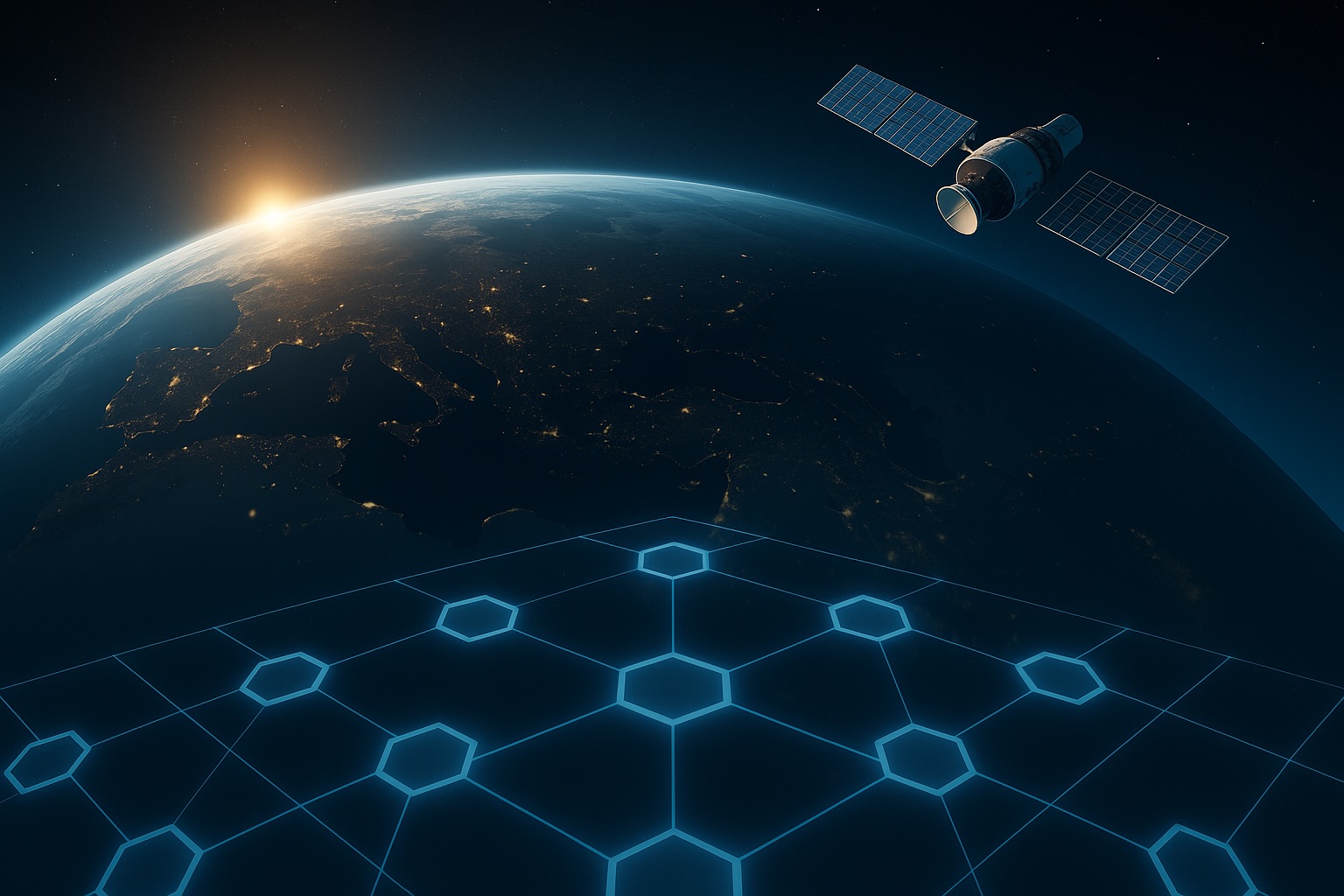
To comprehensively understand asteroid impact risks, scientists have relied on limited data sources, including all-sky video camera systems, scattered dashcams, and eyewitness accounts. Now, a collaboration led by Dr. Jeffrey Smith, a data scientist at the SETI Institute, in partnership with NASA, Sandia National Labs and the University of California, Berkeley, is pioneering an innovative approach. By repurposing data from weather satellites operated by the National Ocean and Atmospheric Administration (NOAA), specifically the Geostationary Operational Environmental Satellite’s (GOES) Geostationary Lightning Mapper (GLM) instruments, the team has developed a machine-learning algorithm to analyze the information. The GLM detects millions of lightning strikes per day using a near-infrared optical sensor to see momentary changes in light. However, a handful of these events aren't lightning but bolides—large exploding meteors in Earth's atmosphere.
“Life-threatening asteroids are, fortunately, very rare,” said Smith. “So how do we scientifically assess the risk of very rare events? Answer: we study things that are much more common and extrapolate! The GLM instruments provide a unique opportunity to detect a large variety of bright meteors, including those in the 0.1 to 3 m diameter range that can explode when entering the Earth's atmosphere (called bolides). We can use this data to calibrate entry models so that when a large object does threaten to hit the Earth, we can assess the risk and make an informed decision on how to react. Do we try to divert it or just let the harmless object burn up in our atmosphere?”
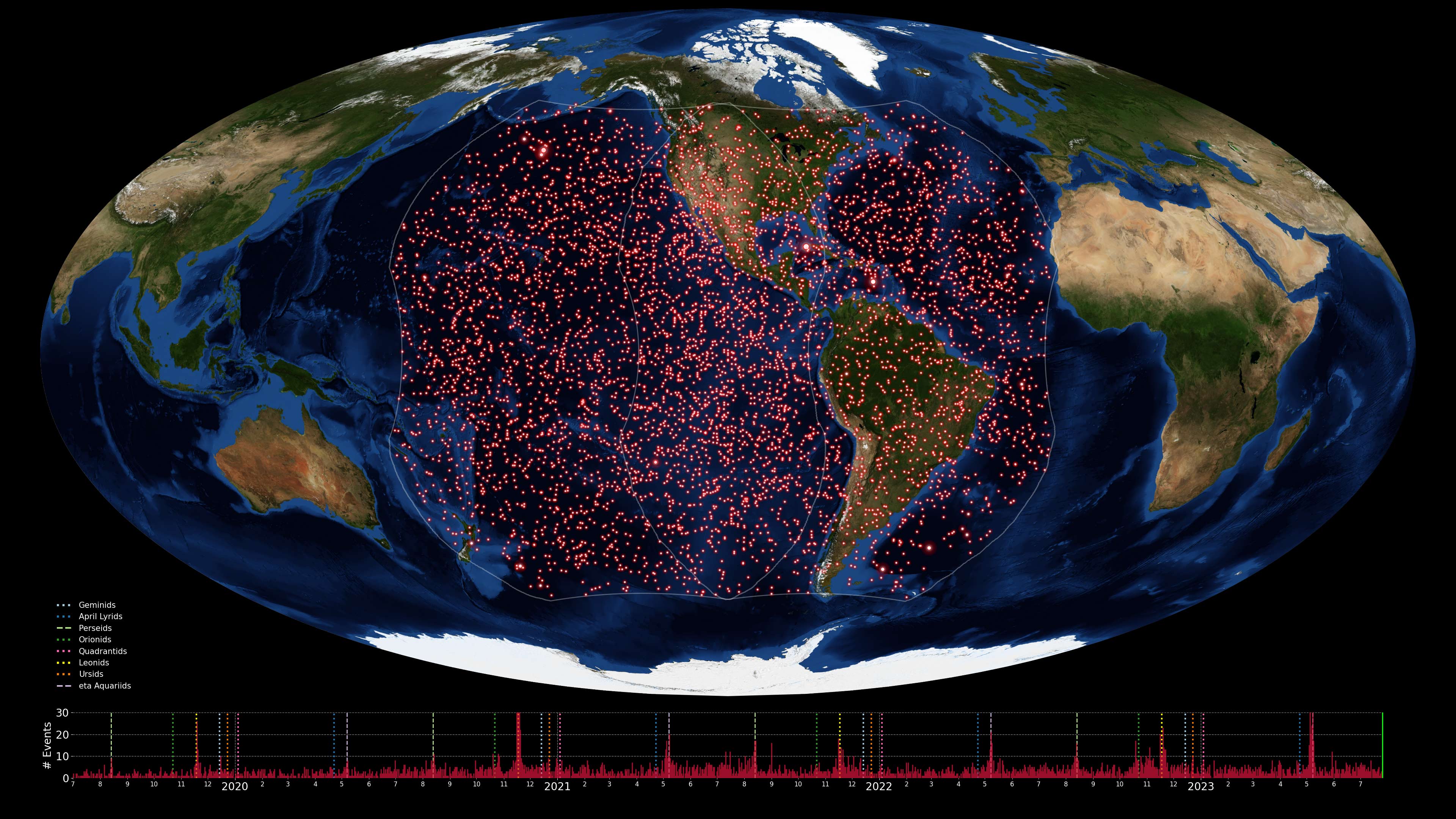
To illustrate fireball activity, the team created timelapse animations of detected bolides (exploding meteors) over four years of data collection. These animations, presented at The International Conference for High-Performance Computing, Networking, Storage and Analysis (SC23), provide insights into the frequency and potential for impact of these events. Each explosion represents one bolide. The size of the explosion relates to the brightness and, accordingly, the impact. Many of these bolides probably produced small meteorite remnants that hit the Earth’s surface, however, almost certainly none were large enough to pose a real threat.
51-second animation showing ~1 month of data/second.
12:20 minute version showing 2 days/second.
10:47 minute version showing cloud patterns in addition to the bolides.
Funded by NASA's Planetary Defense Coordination Office and using NASA high-end computing resources, the goal is to create a rich, calibrated, and statistically consistent dataset of bolide light curves to inform the planetary defense community of the risks associated with meteoroid and significant asteroid impacts. Additional information about this work can be found here: https://www.nas.nasa.gov/SC23/research/project19.html.
In addition to Smith, the team includes Robert Morris (SETI Institute), Jessie Dotson and Nina McCurdy (NASA Ames Research Center), Randy Longenbaugh (Sandia National Labs), and Anthony Ozerov (UC Berkeley).
)