December 11, 2023, Mountain View, CA -- The SETI Institute announced today the establishment of a new postdoctoral research fellowship program funded by its transformative bequest from Qualcomm Co-founder, Franklin Antonio. The first two fellowships are being announced in conjunction with the American Geophysical Union Conference (AGU) being held this week in San Francisco. The Baruch S. Blumberg Postdoctoral Fellowship for Astrobiology and the William J. Welch Postdoctoral Fellowship for SETI and Technosignatures research will offer early-career scientists a unique opportunity to bring their original research projects to the SETI Institute, fostering academic and professional growth guided by mentorship from leading experts.
“The launch of our own postdoctoral fellowship program represents a pivotal moment in the history of the SETI Institute where we can now internally fund original research in groundbreaking science domains for the next generation,” said President & CEO Bill Diamond. “These first two fellowships mark the beginning of a program that will ultimately extend across all research divisions at the Institute and attract world-class talent to further enhance our science.”
The Baruch S. Blumberg Fellowship, themed "Innovation in Astrobiology and Exploration," focuses on pioneering biosignature detection methods to push the boundaries of current research. The 2024 focus areas include:
- Signatures of Coevolution
- Universal markers of life
- Life and complexity
- Biophysical models
- Detection pathways (including AI/ML)
- Intersections of astrobiology with quantum physics
“The Baruch S. Blumberg Postdoctoral Program Fellowship will tackle the challenge of distinguishing life from non-life in planetary materials,” said Dr. Nathalie Cabrol, Director of the Carl Sagan Center for Research at the SETI Institute. “With the absence of a consensus definition for life, astrobiology has focused so far on proving non-biological origins in biosignature detection. As knowledge and technology advance, the Fellowship seeks to reduce the gray area between life and no-life, a core goal in astrobiology. With this new program focused on innovation in astrobiological exploration, talented young scientists will have the exceptional opportunity to pioneer innovative detection strategies and make critical advances in our quest for life beyond Earth.”
The William J. Welch Fellowship, centered on "Engineering the Future of Cosmic Exploration," emphasizes three critical domains:
- Advanced radio astronomical techniques
- The interstellar medium
- The development of cutting-edge instrumentation and technology in radio astronomy
"The search for technosignatures has long been hindered by the availability of long-term career options for early career scientists,” said Dr. Andrew Siemion, Bernard M. Oliver Chair of SETI Research at the SETI Institute and Director of SETI Research at the University of Oxford. “Our newly announced Postdoctoral Fellowship Program at the SETI Institute, made possible through the generous support of Franklin Antonio and honoring pioneers in the search for life beyond Earth, will serve as a wonderful beacon of opportunity for the next generation of scientists taking on our most profound questions about the universe."
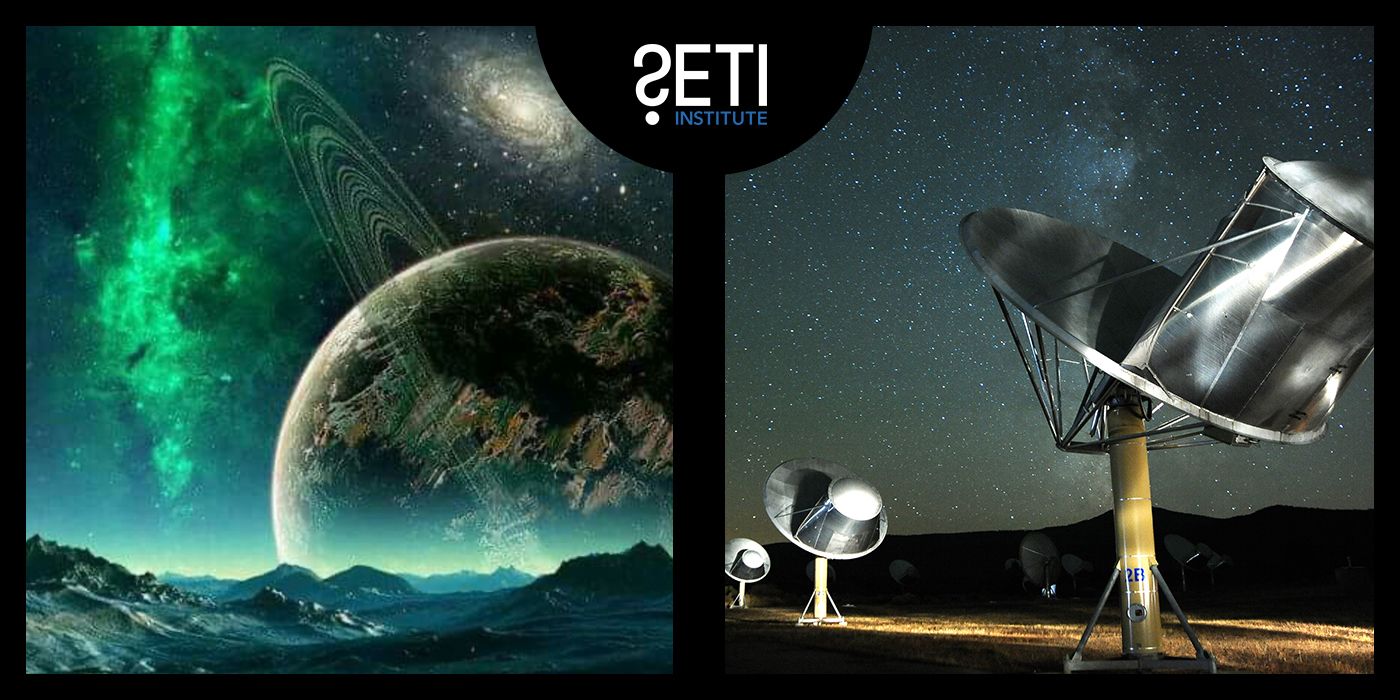
As a world-renowned multidisciplinary institute, the SETI Institute boasts over 100 Principal Investigators specializing in fields such as Astronomy and Astrophysics, Astrobiology, Climate and Biogeosciences, Exoplanets, Planetary Exploration, and Technosignatures. With access to a premier radio telescope array at Hat Creek in Northern California, Fellows benefit from engaging with top researchers and industry experts in Silicon Valley, including developing AI solutions.
These full-time, two-year fellowships offer the potential for an extension based on research progress and institutional approval. Applicants must hold a Ph.D. in a relevant field, showcase a proven research track record, and submit a compelling research proposal. Priority will be given to applicants demonstrating commitment to interdisciplinary research and teamwork.
The application window for the Baruch S. Blumberg Postdoctoral Fellowship opens on January 8, 2024, with a deadline of March 1, 2024. Selected applicants will be notified by April 30, 2024.
For the William J. Welch Postdoctoral Fellowship, applications also open on January 8, 2024, with a March 1, 2024 deadline. Final applicants will be notified by April 1, 2024.
About the SETI Institute
Founded in 1984, the SETI Institute is a non-profit, multi-disciplinary research and education organization whose mission is to lead humanity's quest to understand the origins and prevalence of life and intelligence in the universe and share that knowledge with the world. Our research encompasses the physical and biological sciences and leverages data analytics, machine learning, and advanced signal detection technologies. The SETI Institute is a distinguished research partner for industry, academia, and government agencies, including NASA and the National Science Foundation.
Contact
Rebecca McDonald
Director of Communications
SETI Institute
[email protected]
DOWNLOAD FULL PRESS RELEASE
)