Carl Sagan Center
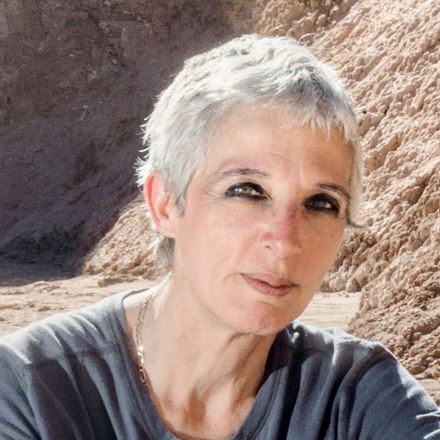
Dr. Nathalie Cabrol serves as the Director of the Carl Sagan Center at the SETI Institute (SI) since August 2015. As a chief executive of science, she manages over 120 researchers across seven divisions. She actively breaks down academic silos to promote a modular, multidisciplinary approach to the search for life in the universe. She oversees the recruiting and mentoring of early career scientists, and with the SI Science Council, develops postdoctoral fellowship opportunities, such as the Drake, Mino, and Welch fellowships, as well as discretionary internal funds programs to support innovative science, technology, and education. She establishes the SI long-term priorities and strategic vision and supports the development of partnerships with US and international research organizations to expand the SI's influence.
Research
Dr. Nathalie Cabrol's research bridges the physical exploration of extreme environments with the testing of autonomous robotic systems and the theoretical and epistemological approach of astrobiological questions. Since 2002, her work in terrestrial analogs and field exploration has taken her to the highest (20,000 ft) lakes of the Central Andes and the hyper-arid Atacama Desert. By mapping how microbial life survives intense ultraviolet radiation, low oxygen, and freezing temperatures, she establishes critical environmental analogies to the planets and moons of our solar system. The collected data are critical for modeling the habitability and life potential in the solar system, the overarching coevolution of life and its planetary environments and the rapid environmental change and its modern consequences on Earth.
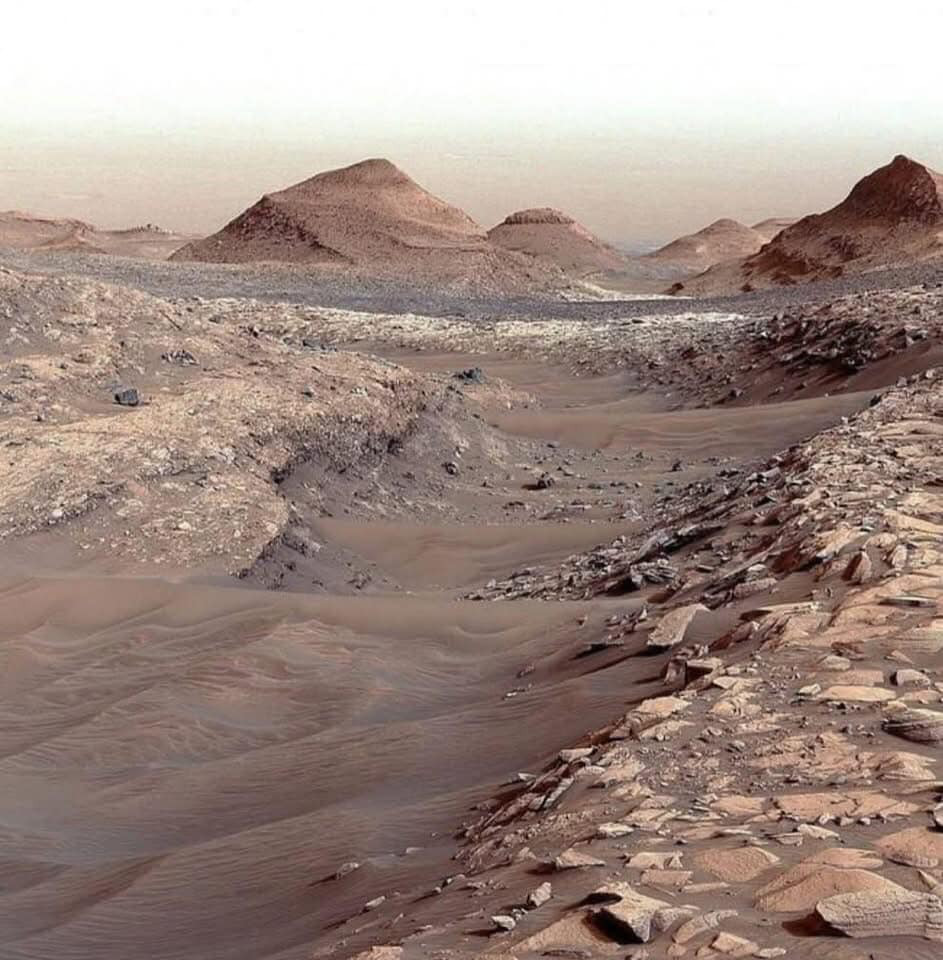
This field experience directly informs her contributions to robotic missions, field tests, payload design, and biosignature detection. From 2003 to 2010, she applied her expertise to planetary exploration as a member of Mars Exploration Rover science team, directly investigating Gusev Crater and Meridiani Planum. To optimize how future rovers operate, she led field campaigns between 2003 and 2015 utilizing the Nomad, Hyperion, and Zoe rovers, testing autonomous systems and payloads across Chilean Altiplano analogs. Her instrument development work expanded beyond Mars with the Planetary Lake Lander project (2014–2015), which spearheaded probe technologies designed to navigate the liquid hydrocarbon seas of Saturn's moon, Titan. Since 2015, she has focused heavily on refining orbit-to-ground data integration as a novel strategy for biosignature and geosignature detection on Earth and the solar system. Her current efforts include designing and developing next-generation planetary exploration instruments that leverage cutting-edge quantum technology. Dr. Cabrol actively synthesizes her experimental field data with advanced theoretical frameworks, such as quantum physics, to fundamentally decode the nature of life and intelligence.
Main Achievements
- First woman in France to receive a PhD in planetary geology (1991), Sorbonne University, France.
- Director of Research (Chief Scientist), Carl Sagan Center for Research since 2015.
- As of 2025, 600+ peer-reviewed scientific publications and proceedings of conferences, 10,720 citations (Google Scholar); 49 h-index, i10-index: 113.
- Author of 8 books and co-editor of two (another to be published in 2027), including:
- Voyages aux Frontières de la Vie (le Seuil, 2022) — Grand Prix des Lecteurs (MaxO).
- The Secret Life of the Universe (2024, Simon and Schuster) — ranked Top 10 Science/Tech books of 2024 by Donna Seaman; one of the best books of 2024 by The New Yorker and Scientific American.
- Dimensions (first sci-fi thriller novel), published 04/02/26 by Julliard, France — #1 on Amazon and FNAC; breakout hit ("Nugget") at Quais du Polar, international crime fiction festival in Lyon; national media spotlight.
- Author of 13 chapters of books.
- International public speaker.
- Listed by WIRED magazine as one of the 60 world's smartest thinkers (2026).
- Recipient of 11 NASA Group and Individual Achievement Awards, since 1999 for NASA-funded projects and the MER mission.
- Carl Sagan Lecture Award (2016).
- Gold Medal, International Water and Science Award, UNESCO/European Parliament (2000).
- New species discovered in the Licancabur lake named after Cabrol.
- Developed the field of study of impact crater lakes on Mars starting 1994.
- Spokesperson for the selection of Gusev crater as the landing site for the rover Spirit in the Mars Exploration Rover. Gusev was her primary landing site candidate, and Gale crater was her backup site for the MER mission. Gale is today's Curiosity rover landing site.
- Member of the Mars Exploration Rover science team (2002–2019) — primary activity with the rover Spirit until 2010.
- As of 2025, leader of 12 scientific expeditions in extreme environments at high altitude in the Andes (between 4,300 m – 6,000 m), including diving.
- Woman world record holder for free diving and rebreather diving at high altitude (Licancabur lake, Andes, 5,940 m).
- Guinness World Record for recording the highest UV level ever measured at the surface of the Earth at Licancabur.
- Project Scientist (Science Lead):
- NASA — Nomad rover field experiment (1997). First rover experiment in the Atacama desert with autonomous navigation.
- NASA — First Astronaut-Rover field experiment (ASRO) in Silver Lake (1999).
- NASA ASTEP — Life in the Atacama: Searching for life with rovers (2003–2006). Autonomous navigation and remote science.
- SETI NAI team (2003–2008). Impact of UV on life in some of the highest lakes on Earth.
- NASA ASTEP — Subsurface life in the Atacama desert. First autonomous drill, autonomous navigation, mapping, remote biosignature detection and exploration strategies (2011–2015).
- Project Lead (Principal Investigator):
- NASA MDAP — Systematic sedimentology of rocks and soils at Gusev crater (2007–2010).
- NASA PGG — Formation and evolution of spherules and possible planetary analogy (2007–2010).
- NASA ASTEP — Planetary Lake Lander. Simulation of a mission to Titan; autonomous remote science; development of detection algorithms; and exploration strategies (2011–2015).
- SETI NAI team — Changing planetary environments and the fingerprints of life (2015–2022). Biosignature detection and exploration strategies.
- UV-GUARD (2026–2029). Quantum-based UV detector array.
- Mentor for postdoctoral fellows, graduate, and undergraduate students.
- SETI Institute Fellow (2023).
- California Academy of Science Fellow (2016).
- World WingQuest Fellow (2007) and Women of Discovery: Air and Space (2005).
- NASA Research Council (NRC) Fellow (1996–1998), at NASA Ames.
- Large international media coverage (magazines, radio, TV, podcasts), including portraits in The Wall Street Journal, The New York Times, WIRED Magazine, Scientific American, Le Point, Le Monde, and more.
- Free spirit.
Planetary geology, physical environment and climate, and evolution of planetary habitability. Exploration of extreme environments (e.g., high altitude volcanoes and mountains, lakes, deserts. Deployment of environmental and geophysical stations. Geology, geomorphology, mapping, robotic field experiments.
)