)

Wednesday, Oct 01, 2025
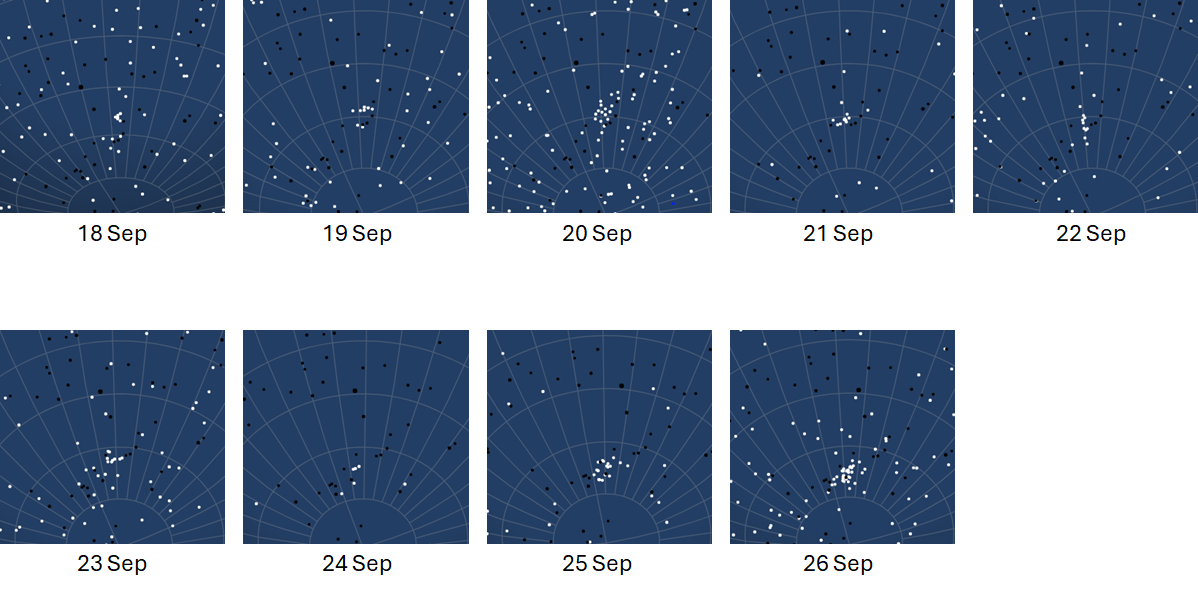
ONGOING METEOR OUTBURST OVER SOUTHERN HEMISPHERE
P. Jenniskens, SETI Institute and NASA Ames Research Center; T. Cooper and P. Mey, Cameras for Allsky Meteor Surveillance (CAMS) low-light video survey, South Africa; T. Hanke and E. Fahl, CAMS Namibia; S. Heathcote, E. Jehin, and T. Abbott, CAMS Chile; J. Scott and W. J. Baggaley, CAMS New Zealand; D. Rollinson and H. Devillepoix, CAMS Australia; and M. Odeh, United Arab Emirates Astronomical Camera Network, report a meteor outburst of a previously unknown shower in the southern hemisphere this past week, possibly ongoing. Starting at solar longitude 169 deg, in steps of 1 deg, the following number of shower members were triangulated: 1, 0, 0, 7, 2, 1, 2, 3, 6, 10. These have a compact radiant in sun-centered coordinates lambda = 159.4 +/- 1.0, beta = -70.8 +/- 0.7 deg. The geocentric radiant is near the star gamma Horologii, centered at R.A. = 40.9 +/- 2.0 deg, Decl. = -66.4 +/- 0.3 deg, with geocentric velocity 21.4 +/- 0.2 km/s around solar longitude 177.92 +/- 0.54 deg (cf. website URL: http://cams.seti.org/FDL/ for the dates of 2025 Sept. 15-26). This gamma-Hor shower is not listed in the Jenniskens (2023) *Atlas of Earth's Meteor Showers*. Orbital elements are centered at a = 3.32 AU, q = 0.964 +/- 0.002 AU, e = 0.710 +/- 0.014, i = 31.9 +/- 0.4 deg, Peri. = 25.4 +/- 0.6 deg, Node = 357.93 +/- 0.54 deg (equinox J2000.0). These orbits have a Tisserand parameter of 2.52 +/- 0.07, suggesting a parent Jupiter-family comet.
NOTE: These 'Central Bureau Electronic Telegrams' are sometimes superseded by text appearing later in the printed IAU Circulars.
(C) Copyright 2025 CBAT, 2025 September 27 (CBET 5614), Daniel W. E. Green







News
Related News
Aug 28, 2026
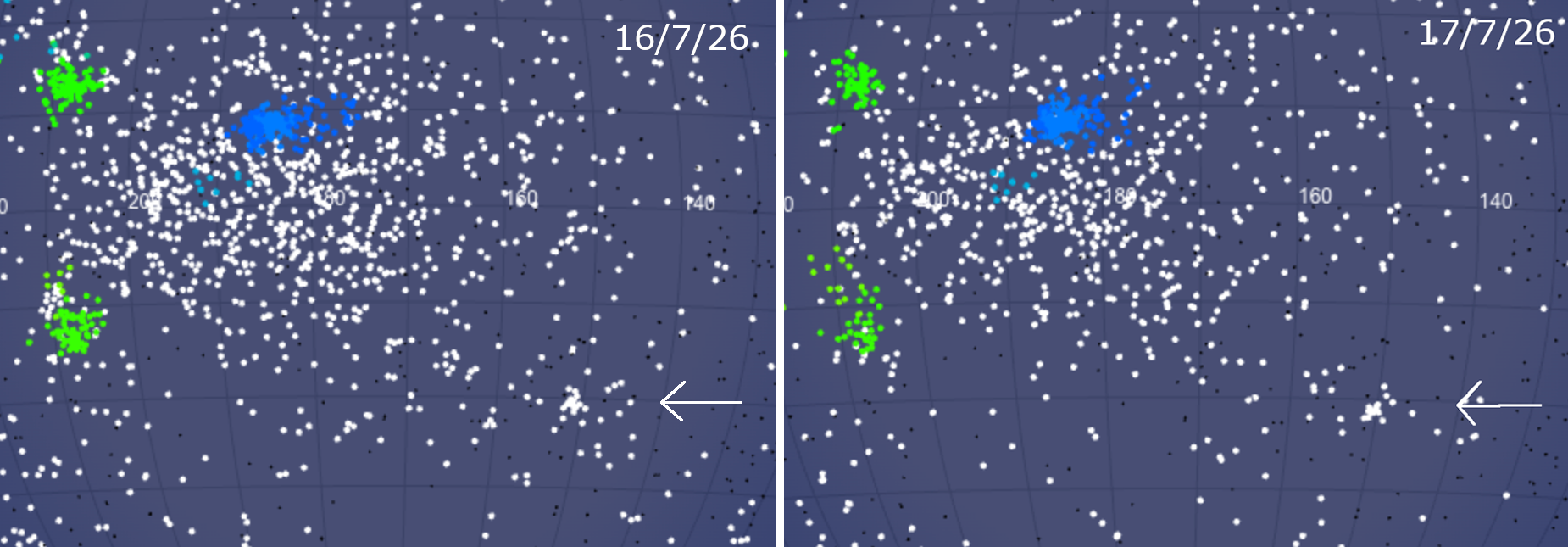
New Meteor Shower Identifies Asteroid as a Cloaked Comet
#Comets, Meteors, and Asteroids #CAMS #Peter Jenniskens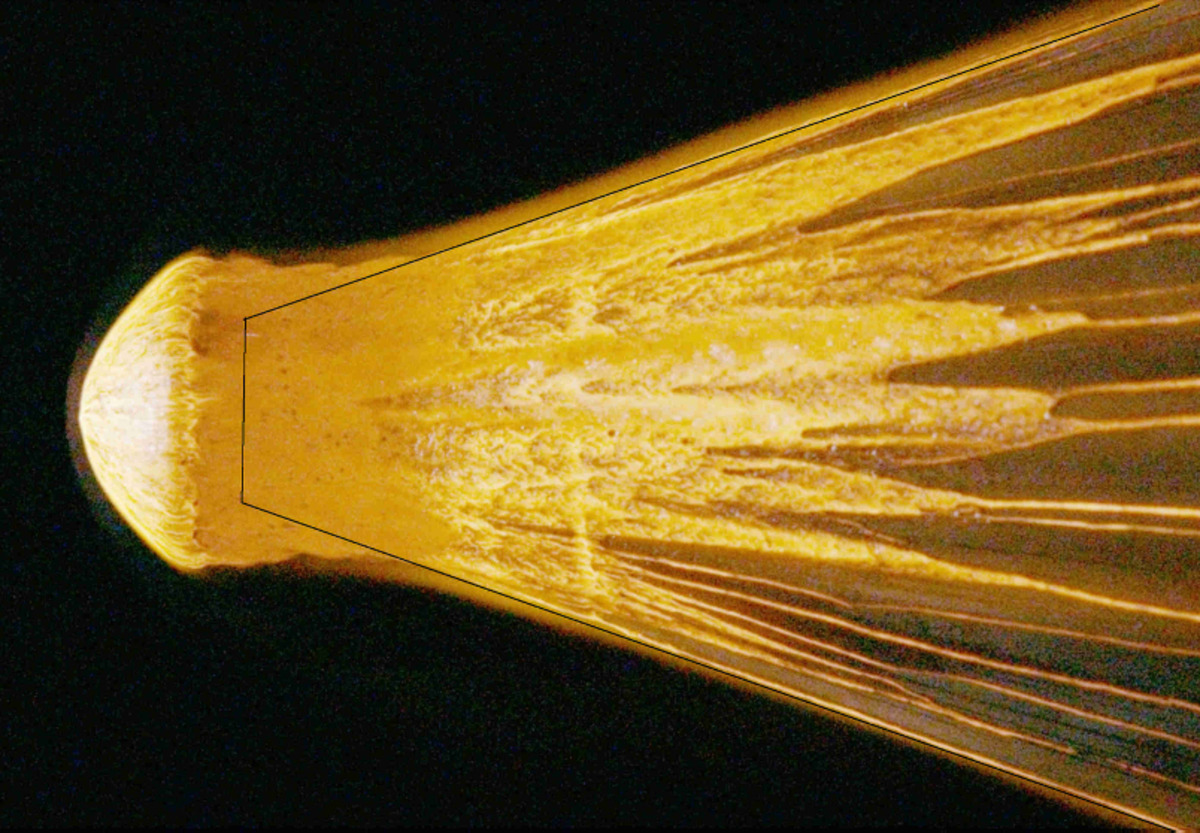
Aug 24, 2026
New study reveals how space rocks become meteorites
Analysis of the atmospheric passage of 75 meteorite falls identifies seven distinct processes as space rocks melt, fragment and slow before they fall as meteorites #Press Releases #Comets, Meteors, and Asteroids #Peter Jenniskens #Meteorites #Astronomy #Stuart Pilorz
Aug 13, 2026
SETI Institute In the News: July Roundup 2026
#SETI Institute in the News #SETI Institute #Community #Peter Jenniskens #Lucian Walkowicz #Chelsea Haramia #Pascal Lee #Bill Diamond #Seth Shostak #Meteorites #SETI #UAPs #NASA Missions and Observatories #Discovery and Futures Lab #Mars
Jul 20, 2026
SETI Institute In the News: June Roundup 2026
Throughout June 2026, SETI Institute scientists, affiliates, and collaborators contributed to discussions spanning interstellar visitors, planetary science, technosignature searches, animal cognition, and the scientific process guiding the search for life beyond Earth. #SETI Institute in the News #SETI Institute #Community #Eduardo Bendek #Optical SETI #SETI #3I/ATLAS #ATA #Comets, Meteors, and Asteroids #Solar System #Franck Marchis #Ariel Graykowski #Jill Tarter #Vishal Gajjar #Radio Astronomy #Bill Diamond #Lori Marino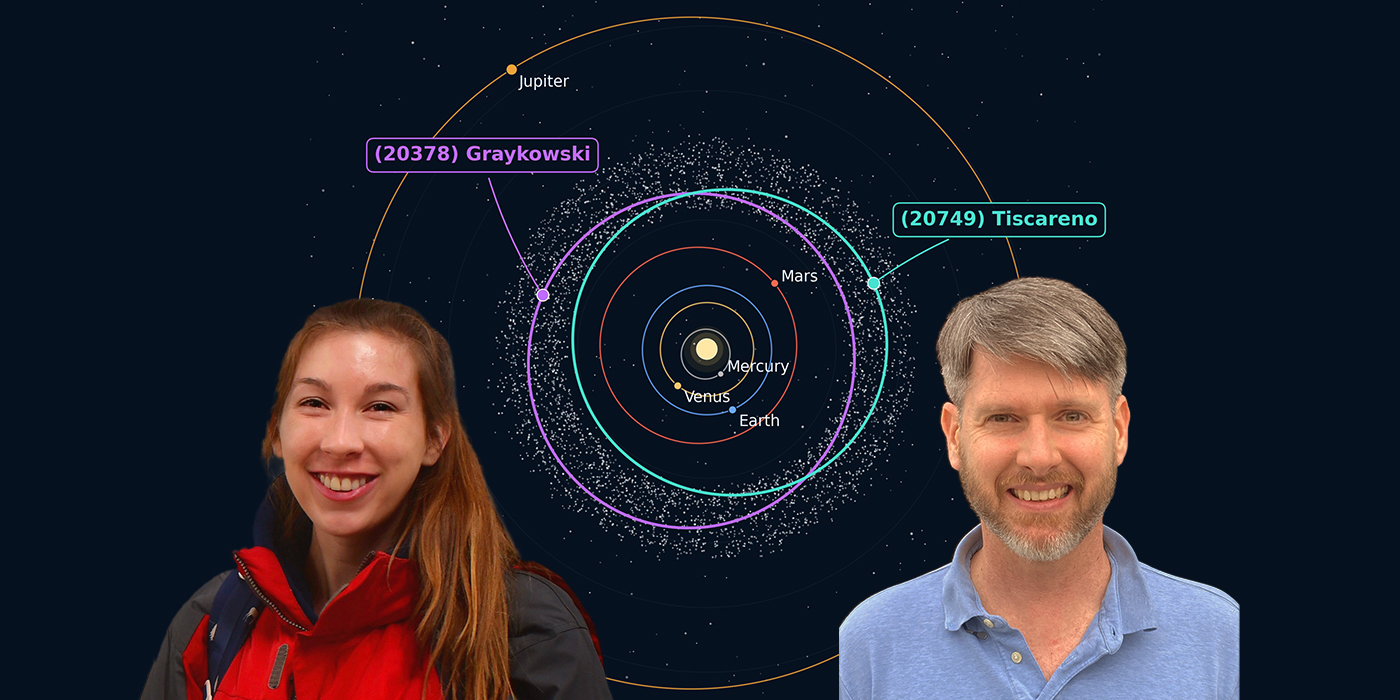
Jul 17, 2026
Two SETI Institute Scientists Honored with Asteroids Bearing Their Names
#Comets, Meteors, and Asteroids #Ariel Graykowski #Matthew Tiscareno #Planetary Astronomy #Solar System #Saturn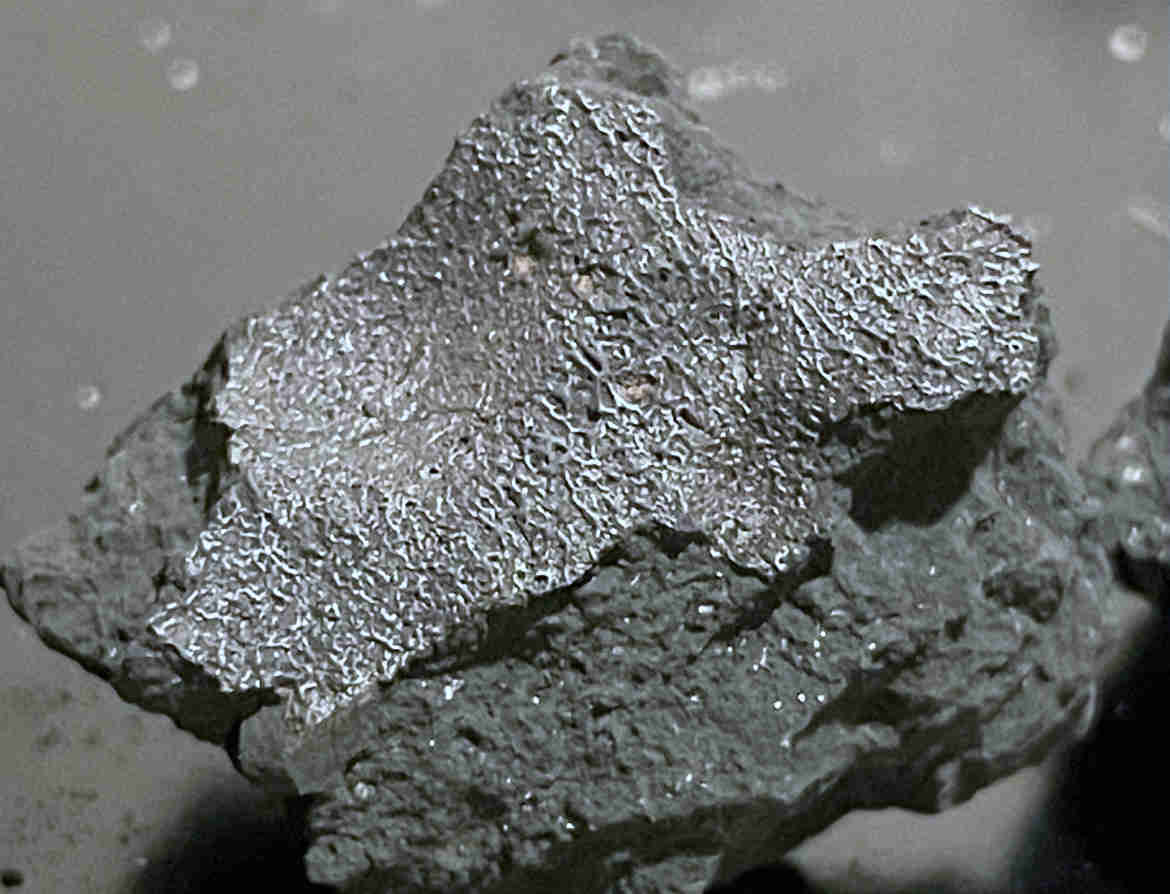
Jul 15, 2026
Alien World Chemistry Found Inside Meteorite That Struck New Jersey home
#Press Releases #Meteorites #Peter Jenniskens #JAMSTEC
Aug 28, 2026
#Comets, Meteors, and Asteroids
#CAMS
#Peter Jenniskens
Aug 24, 2026
New study reveals how space rocks become meteorites
Analysis of the atmospheric passage of 75 meteorite falls identifies seven distinct processes as space rocks melt, fragment and slow before they fall as meteorites
#Press Releases
#Comets, Meteors, and Asteroids
#Peter Jenniskens
#Meteorites
#Astronomy
#Stuart Pilorz
Aug 13, 2026
#SETI Institute in the News
#SETI Institute
#Community
#Peter Jenniskens
#Lucian Walkowicz
#Chelsea Haramia
#Pascal Lee
#Bill Diamond
#Seth Shostak
#Meteorites
#SETI
#UAPs
#NASA Missions and Observatories
#Discovery and Futures Lab
#Mars
SETI Institute In the News: July Roundup 2026
Jul 20, 2026
SETI Institute In the News: June Roundup 2026
Throughout June 2026, SETI Institute scientists, affiliates, and collaborators contributed to discussions spanning interstellar visitors, planetary science, technosignature searches, animal cognition, and the scientific process guiding the search for life beyond Earth.
#SETI Institute in the News
#SETI Institute
#Community
#Eduardo Bendek
#Optical SETI
#SETI
#3I/ATLAS
#ATA
#Comets, Meteors, and Asteroids
#Solar System
#Franck Marchis
#Ariel Graykowski
#Jill Tarter
#Vishal Gajjar
#Radio Astronomy
#Bill Diamond
#Lori Marino
Jul 17, 2026
#Comets, Meteors, and Asteroids
#Ariel Graykowski
#Matthew Tiscareno
#Planetary Astronomy
#Solar System
#Saturn
Two SETI Institute Scientists Honored with Asteroids Bearing Their Names
Jul 15, 2026
#Press Releases
#Meteorites
#Peter Jenniskens
#JAMSTEC
Alien World Chemistry Found Inside Meteorite That Struck New Jersey home
Research
Related Projects
SkyMapper • SETI • Citizen Science • Astronomy
SkyMapper: Expanding Access to Real-time Astronomy Through a Global Astronomical Network
SkyMapper and the SETI Institute are connecting educators, students and the public to live astronomical observations through a distributed astronomical network. #SkyMapper #SETI #Citizen Science #Astronomy
VPL
Virtual Planetary Laboratory
How can we best assess whether an exoplanet supports life? #VPL
Discovery and Futures Lab
Discovery and Futures Lab
What happens if life beyond Earth is discovered? The Discovery and Futures Lab at the SETI Institute fosters novel and anticipatory research at the intersection of science, society, our planet, and the search for life beyond Earth. #Discovery and Futures Lab
May 17, 2026
SkyMapper: Expanding Access to Real-time Astronomy Through a Global Astronomical Network
SkyMapper and the SETI Institute are connecting educators, students and the public to live astronomical observations through a distributed astronomical network.
#SkyMapper
#SETI
#Citizen Science
#Astronomy
May 5, 2026
Virtual Planetary Laboratory
How can we best assess whether an exoplanet supports life?
#VPL
Apr 16, 2026
Discovery and Futures Lab
What happens if life beyond Earth is discovered? The Discovery and Futures Lab at the SETI Institute fosters novel and anticipatory research at the intersection of science, society, our planet, and the search for life beyond Earth.
#Discovery and Futures Lab
Support Us
Support the
SETI Institute
Scientists are getting closer in their search for life beyond earth. But with limited federal funding for the search for extraterrestrial intelligence, supporters are the reason cutting-edge scientists can keep their eyes on the sky.