Friday, Mar 25, 2016

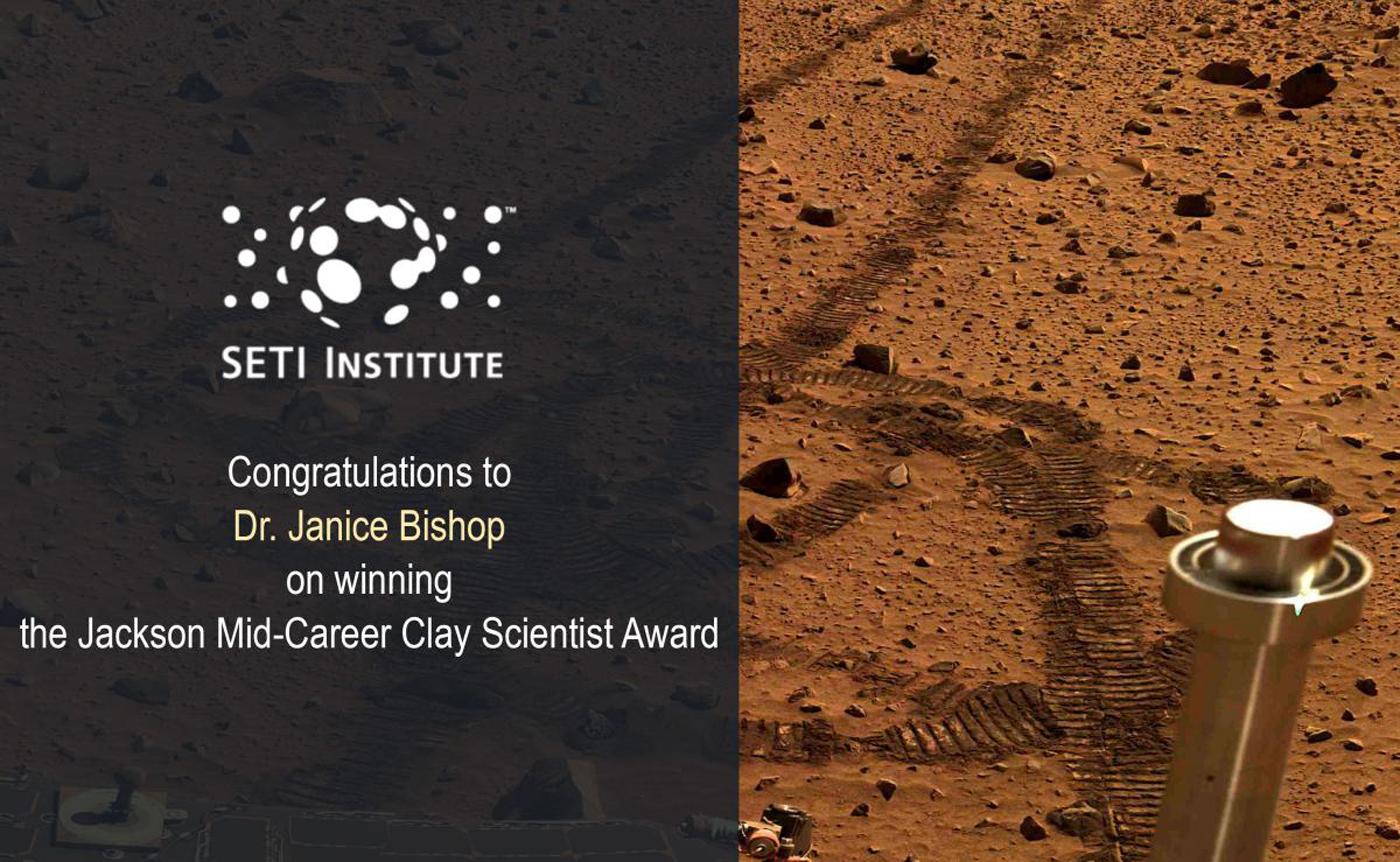
SETI Institute researcher Dr. Janice Bishop has been awarded the prestigious Jackson Mid-Career Clay Scientist Award for her work identifying clays on Mars.  She will be giving an invited lecture at the 53rd Annual Clay Minerals Society meeting in Atlanta, GA, June 6th, 2016.

“Clays are important minerals to identify on Mars because they tell us about the climate at the time of their formation,” says Janice.  “The widespread detection of clays in ancient Martian outcrops indicates that liquid water was once present on Mars and that early conditions were much different than the cold and dry environment today.”

Janice investigates clays on the Red Planet using the spectral fingerprints of these minerals collected by the Compact Reconnaissance Imaging Spectrometer for Mars (CRISM) on board the Mars Reconnaissance Orbiter. 

CRISM collects data in the visible and near-infrared wavelength region that includes spectral features due to vibrations of molecules in the mineral structure.  Janice has been analyzing spectra of terrestrial clay minerals in the lab for nearly 30 years in order to document the properties of these indicator minerals by spacecraft sent to Mars and other planets.

Over the past decade since CRISM has been in orbit at Mars, Janice has been identifying clays and associated aqueous minerals in ancient rock outcrops that provide us information on potentially habitable sites on our neighboring planet.

The Marion L. and Chrystie M. Jackson Mid-Career Clay Scientist Award is presented annually to a member of The Clay Minerals Society for the contribution of new knowledge of clay minerals science as represented by publication of scholarly and original research. 

Janice Bishop
Senior Research Scientist
Discipline: Planetary Geology, Spectroscopy, Mineralogy

Dr. Janice Bishop is a chemist and planetary scientist who explores the planet Mars using spectroscopy. Her investigations of CRISM data of Mars are revealing clays and sulfates in the ancient rocks that provide information about the geochemical environment at the time the minerals formed. Dr. Bishop studies the spectral fingerprints of minerals and rocks in the lab in order to generate a spectral library for identification of these in the Martian data. Her research also involves collecting and studying Mars analog rocks and soils at a variety of locations including volcanic islands, cold deserts, hydrothermal regions, acidic aqueous sites, and meteorites which are the only Martian samples available on Earth to date.

Another component of Dr. Bishop’s research is collecting spectra under Mars-like conditions. Spectra of many hydrated minerals change depending on the moisture level in the air and the amount of water molecules adsorbed on the surface or bound in the mineral structure. Understanding the spectral properties of mineral mixtures in the lab is also important for identifying minerals on Mars and Dr. Bishop’s group is preparing and characterizing the spectral properties of several mixture suites. More Info.

News

Related News

Featured Image
Sep 8, 2026
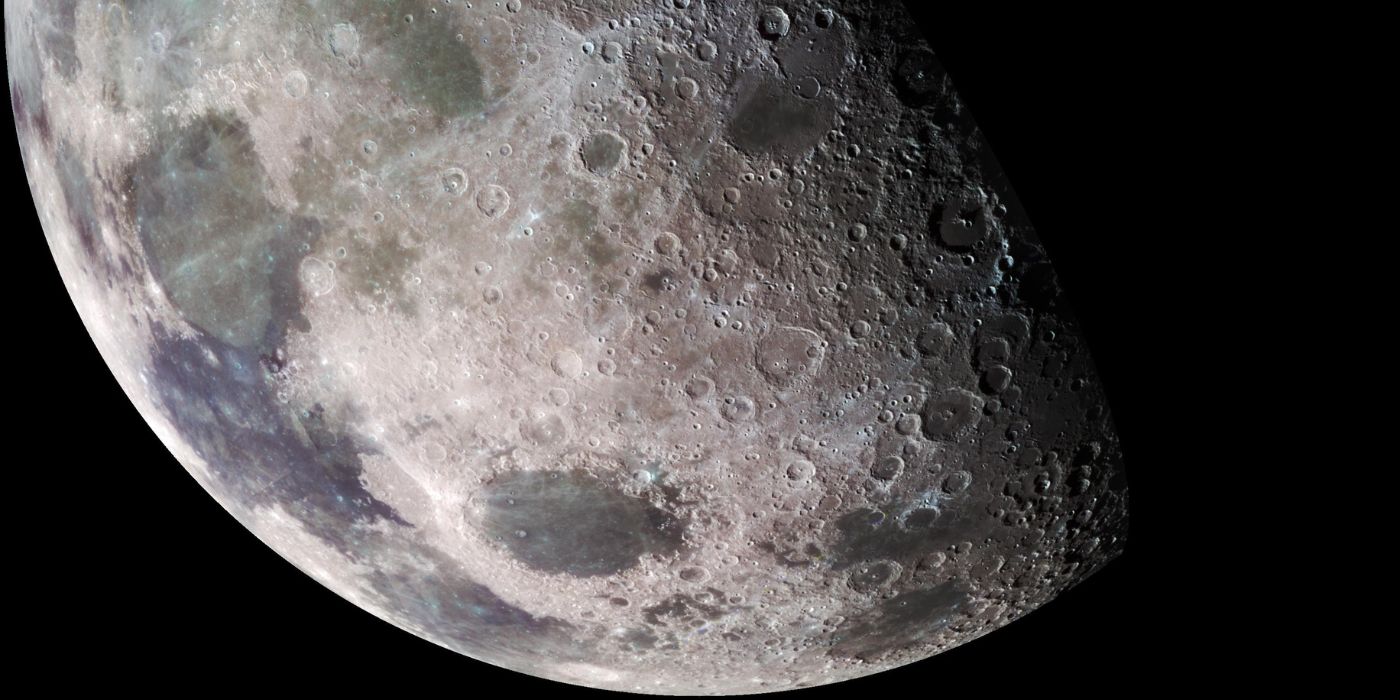
Researchers Propose Searching the Moon for Microscopic Technosignatures
New study outlines the first quantitative framework for searching lunar regolith for microscopic technosignatures. #Press Releases #Moon #Technosignatures #Lewis Pinault #Andrew Siemion #Astrobiology #SETI #Solar System #AI and Machine Learning #Bill Diamond
Featured Image
Sep 1, 2026
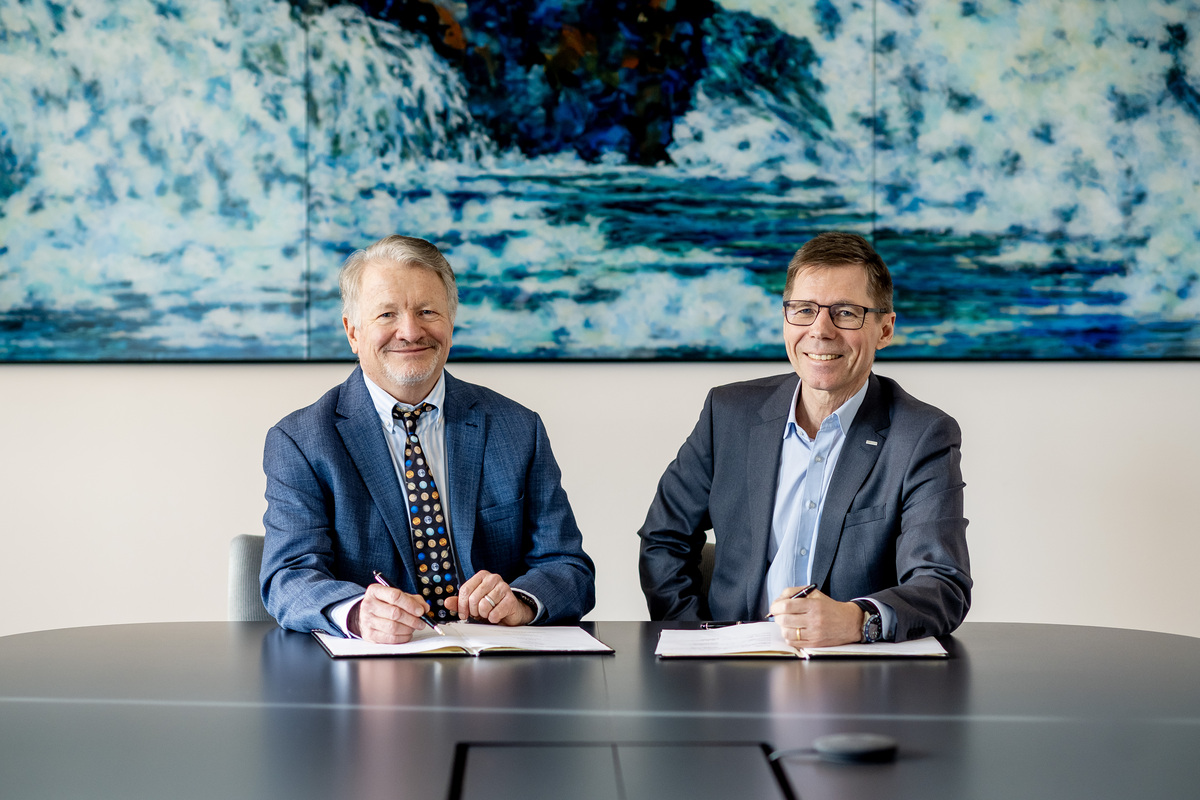
The SETI Institute and ETH Zurich join forces to search for the origin of life
ETH Zurich and the SETI Institute announced a strategic scientific partnership today. The US-based research organization will provide start-up funding for a new assistant professorship and associated research activities at ETH Zurich. #Press Releases #SETI Institute #Partnerships #ETH Zurich #Bill Diamond
Featured Image
Aug 27, 2026
SETI Institute Achievements: Q2 2026 Activity Report
During the second quarter of 2026, the SETI Institute was especially active and made strong progress in research, education, outreach, and public engagement. Our scientists published over 80 peer-reviewed papers in fields such as SETI, astrobiology, planetary science, exoplanets, and heliophysics. #Activity Reports #Carl Sagan Center #Outreach #Education #AIR #Community #Research #SETI Institute
Featured Image
Aug 19, 2026
SETI Institute Team Looks for a New Way to Find Resources in Space
#Press Releases #Pablo Sobron #Moon #Asteroids #Planetary Exploration #Spectroscopy #Astrobiology
Featured Image
Aug 13, 2026
SETI Institute In the News: July Roundup 2026
#SETI Institute in the News #SETI Institute #Community #Peter Jenniskens #Lucian Walkowicz #Chelsea Haramia #Pascal Lee #Bill Diamond #Seth Shostak #Meteorites #SETI #UAPs #NASA Missions and Observatories #Discovery and Futures Lab #Mars
Featured Image
Aug 12, 2026
Hide the Star: How Roman Will See Exoplanets
#Blog #Franck Marchis #Margaret Turnbull #Nancy Grace Roman Space Telescope #Planetary Exploration #NASA Missions and Observatories #Exoplanets #Spectroscopy #Astronomy
Research

Related Projects

Featured Image
SkyMapper • SETI • Citizen Science • Astronomy
SkyMapper: Expanding Access to Real-time Astronomy Through a Global Astronomical Network
SkyMapper and the SETI Institute are connecting educators, students and the public to live astronomical observations through a distributed astronomical network. #SkyMapper #SETI #Citizen Science #Astronomy
Featured Image
VPL
Virtual Planetary Laboratory
How can we best assess whether an exoplanet supports life? #VPL
Featured Image
Discovery and Futures Lab
What happens if life beyond Earth is discovered? The Discovery and Futures Lab at the SETI Institute fosters novel and anticipatory research at the intersection of science, society, our planet, and the search for life beyond Earth.  #Discovery and Futures Lab
Support Us

Support the
SETI Institute

Scientists are getting closer in their search for life beyond earth. But with limited federal funding for the search for extraterrestrial intelligence, supporters are the reason cutting-edge scientists can keep their eyes on the sky.