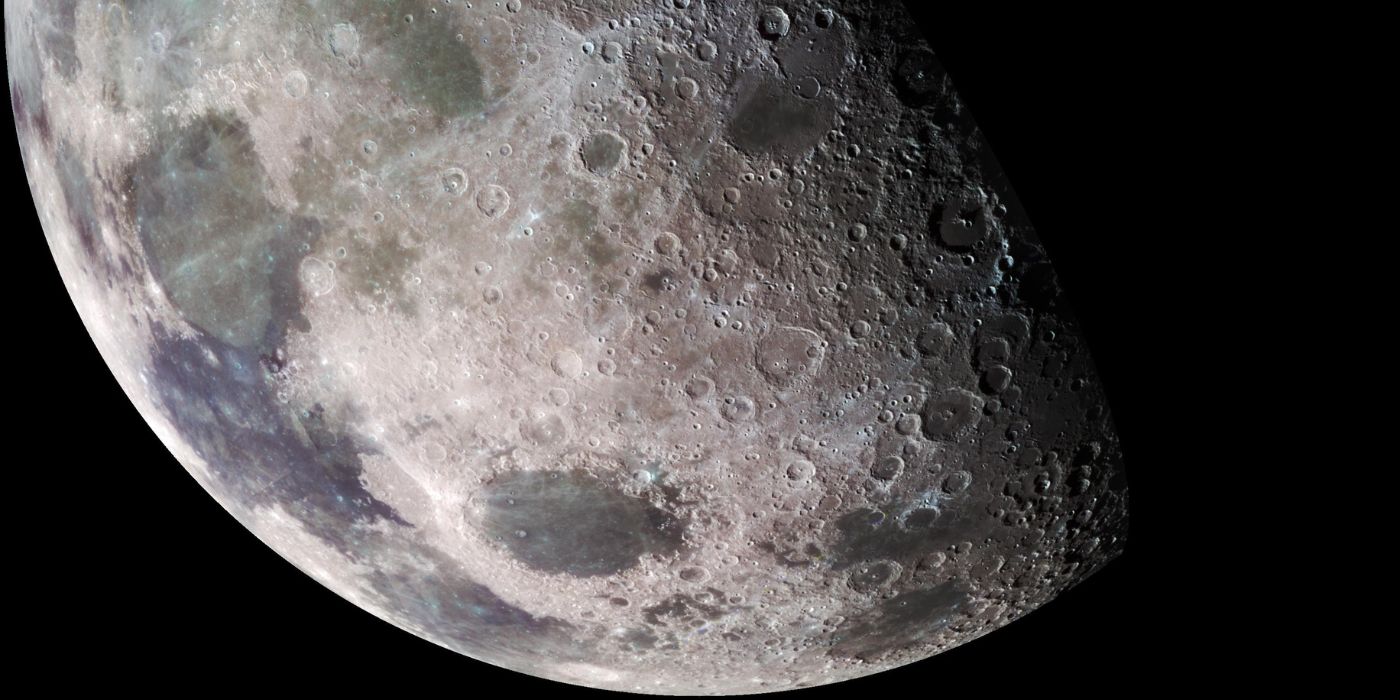
Stowaways in a small car-sized asteroid that crashed in northern Sudan in 2008 have revealed what happened to a mysterious dwarf planet that is dusting Earth with a rare type of meteorites. That dwarf planet did not survive the “Late Heavy Bombardment” that cratered the Moon surface, an international team of researchers report in the latest issue of the journal Meteoritics and Planetary Science.
“The 2008 asteroid was a small chunk of a dwarf planet that once shattered into pieces,” says consortium lead Dr. Peter Jenniskens of the SETI Institute and NASA Ames Research Center. Jenniskens and co-author Dr. Muawia Shaddad recovered fragments of the asteroid, called 2008 TC3, by searching for meteorites with students of the University of Khartoum shortly after the fall in October of 2008. The recovered meteorites are named Almahata Sitta after the fall area in Sudan.
When the dwarf planet broke up, it left a debris field in the asteroid belt between Mars and Jupiter that now supplies a steady flow to Earth of the meteorites called ureilites. The dwarf planet is known as the Ureilite Parent Body. Ureilites contain very low levels of uranium, thorium and potassium, the elements that have long-lived radioactive isotopes, making it difficult for researchers to measure the times of catastrophic heating and disruption events for ureilites.
The asteroid 2008 TC3 was composed mostly of such ureilites, but had other meteorite types mixed in that had much higher levels of those long-lived radioactive isotopes. Those stowaways still contain the noble gases from radioactive decay and can thus provide clues to the collision history of the Ureilite Parent Body.
Now, Dr. Matthias Meier of the Department of Earth Sciences at the Swiss Federal Institute of Technology (ETH) at Zürich in Switzerland, working with Dr. Kees Welten of the Space Sciences Laboratory of the University of California at Berkeley and six co-authors, report the results of analysing the noble gases in two ordinary chondrites contained within asteroid 2008 TC3. They find that the two chondrite fragments were incorporated into the ureilite host very early in the solar system history, about 4.6 billion years ago.
“After that, the Ureilite Parent Body had its final large break-up event 3.8 billion years ago,” says Meier. Hence, the Ureilite Parent Body survived for 800 million years but was destroyed at about the same time that many of the craters on the Moon were formed in a period known as the “Late Heavy Bombardment”.
“Researchers think the Late Heavy Bombardment happened when the orbits of Jupiter and Saturn suddenly started to resonate,” says Jenniskens. “That happened when Jupiter ended up traveling around the Sun exactly in half the period that Saturn did.” The resonating of Jupiter and Saturn’s orbits dramatically changed the orbits of Uranus and Neptune and consequently scattered the comets just outside of the orbit of Neptune towards the inner solar system. Those comets hit the Earth and Moon and also many objects in the asteroid belt.
It now seems that a collision towards the end of the Late Heavy Bombardment shattered this dwarf planet into many smaller asteroids that are now supplying the ureilite meteorites that fall on Earth.
“It came as a big surprise to us that this collision happened so long ago,” says Jenniskens. “That explains why the debris field of this collision in the asteroid belt can be hiding in plain sight. We are now looking to identify a dynamically old family of asteroids as the source region of our ureilites and of asteroid 2008 TC3.”
http://onlinelibrary.wiley.com/doi/10.1111/j.1945-5100.2012.01379.x/abstract
More information on work by the Almahata Sitta Meteorite Consortium can be found here:
http://asima.seti.org/2008TC3/
)