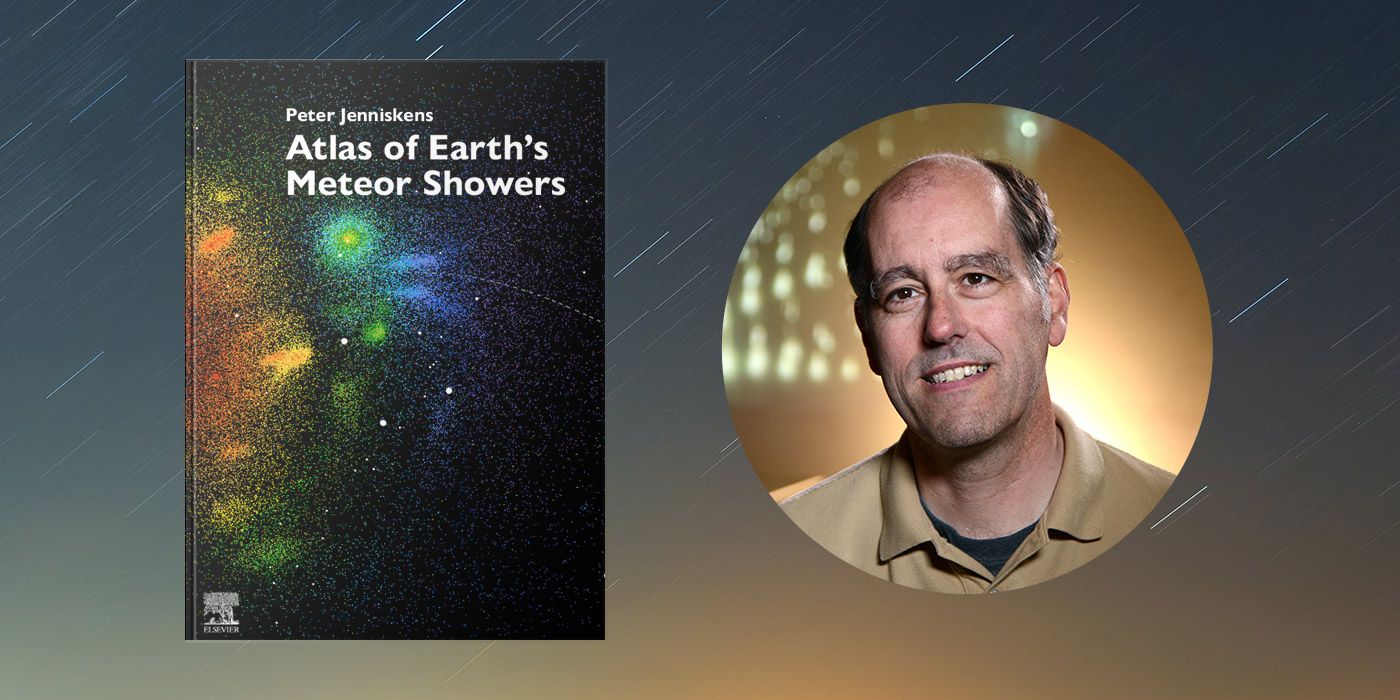
October 31, 2023, Mountain View, CA – The SETI Institute is proud to announce a new book by SETI Institute meteor astronomer Dr. Peter Jenniskens. Called "Atlas of Earth's Meteor Showers," this comprehensive guide describes over 500 meteor showers that appear in our night skies and adds a wealth of detail to the tapestry of our solar system.
"Just as in a birder's guide, the book describes the outward appearance, range, season, rarity, and physical characteristics of each meteor shower," said Jenniskens. "Some showers are around every year; others are only occasional visitors."
Those who spend an hour watching the clear sky at night, warmly dressed and seated on a reclining lawn chair in a dark location, will be rewarded with the spectacle of meteors at an average rate of ten or so per hour, more so in the pre-dawn hours.
At certain times in the year, there are more than others due to meteor showers that occur when Earth passes through streams of meteoroids from comets and primitive asteroids.
"Meteor showers are important because these streams of meteoroids can hit satellites in Earth orbit at astronomical speeds, and they point to the presence of dangerous long-period comets that can impact Earth," said Jenniskens. "Meteor showers are also a historical document of past comet orbit evolution and decay."
The new book is the culmination of over a decade of monitoring the night skies with low-light video security camera networks from locations worldwide. Jenniskens is the Principal Investigator of one of these networks called CAMS, the NASA-sponsored Cameras for Allsky Meteor Surveillance project.
"The CAMS project deploys over 600 cameras at 15 sites in ten countries all over the world, operated by both professional and amateur astronomers and institutes", said Jenniskens. "All together, we have now triangulated over 2.7 million meteors to measure their direction and speed, and from that calculated on which orbit the meteoroids approached Earth."
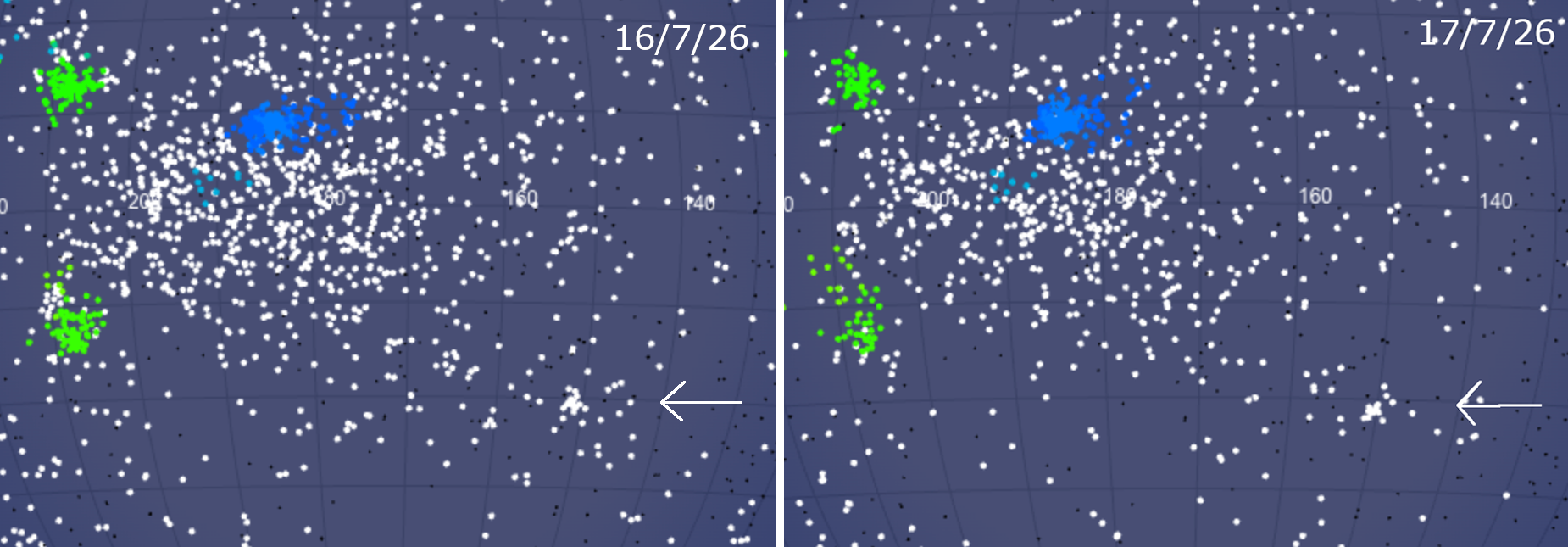
The “Atlas” combines CAMS data with the video observations of other networks and with radar observations of meteor showers to show from what directions meteoroids of different sizes impact Earth. These contributions resulted in the creation of over 400 maps showing meteor showers throughout the year.
"About half of known showers originate from long-period comets. Because they often come in at high speed, video cameras and the naked eye best detect those showers," said Jenniskens. "Only 26 out of 500 showers are so rich in small particles that they are only detected by radar."
For each shower, CAMS measured how high in the atmosphere the meteors were first detected, how they brightened and faded, and how quickly they were slowed down by the atmosphere. From that, each shower was described in activity, orbit and duration but also by the physical properties of their meteoroids.
"The light of just over one thousand meteors were analyzed for telltale emissions from sodium, iron and magnesium atoms, the resulting compositions of which were added to the shower descriptions," said Jenniskens. "Loss of sodium and low beginning heights show what fraction of matter was physically changed by heat or cosmic ray radiation."
The book also summarizes previously published meteor shower studies, adding new details.
"We added to published work on short-period showers the approximate ages of long period comet showers from calculations performed here at the SETI Institute," said SETI Institute astronomer Stu Pilorz, who collaborated with Jenniskens on this work.
The book presents an unparalleled dataset to explore for understanding the conditions under which meteoroids depart from comets and what happens to them afterward.
"But the real joy for me is that we can identify now the meteor showers you see when watching the night sky on your next camping trip," said Jenniskens. "And hopefully help you spot some of those irregular visitors to make this a big year."
The video surveillance of the night sky is ongoing to catch these rare irregular meteor showers.
Publisher Elsevier website:
https://shop.elsevier.com/books/atlas-of-earths-meteor-showers/jenniskens/978-0-323-88447-1
CAMS data visualization websites:
http://cams.seti.org/FDL/
https://meteorshowers.seti.org
About the SETI Institute
Founded in 1984, the SETI Institute is a non-profit, multi-disciplinary research and education organization whose mission is to lead humanity's quest to understand the origins and prevalence of life and intelligence in the universe and share that knowledge with the world. Our research encompasses the physical and biological sciences and leverages data analytics, machine learning, and advanced signal detection technologies. The SETI Institute is a distinguished research partner for industry, academia, and government agencies, including NASA and the National Science Foundation.
Contact
Rebecca McDonald
Director of Communications
SETI Institute
[email protected]
DOWNLOAD FULL PRESS RELEASE
)