November 20, 2025, Mountain View, CA -- The SETI Institute is pleased to open the call for applications for the 2026 Mino Postdoctoral Fellowship. This research program offers an exceptional opportunity for talented early-career scientists worldwide to contribute significant advances in the following fields:
- Origins of life and prebiotic chemistry
- Biophysics and the nature of life
- Planetary habitability and environmental limits on life
- Coevolution of life and planetary environments across spatiotemporal scales
- Modeling and theory of life-environment systems
- Comparative studies of Earth, solar system worlds, and exoplanets
- AI/ML applied to origins, nature of life, and habitability research
The successful candidate will advance (i) their field in novel ways using one, or a combination of the following approaches: advanced data analytics, novel instruments and technologies, laboratory research, fieldwork and expeditions, ground and space-based telescopes, theory, modeling, and experimentation; and (ii) the mission of the SETI Institute: to lead humanity’s quest to understand the origins and prevalence of life and intelligence in the universe and share that knowledge with the world.
“The Mino Fellowship supports pioneering research at the frontiers of life’s origins and the limits of habitability,” said Dr. Nathalie Cabrol, Director of the Carl Sagan Center for Research at the SETI Institute. “We are looking for early-career scientists who are ready to push boundaries, connect disciplines, and bring new insight to one of humanity’s most fundamental questions: how life emerges, evolves, and persists in the universe.”
Applications open on November 20, 2025, and must be submitted by January 16, 2026.
The Mino Fellowship offers mentorship in a collaborative environment with leading researchers, access to the SETI Institute's advanced facilities, and the opportunity to engage with top Silicon Valley technologists. Fellows will receive a stipend of $85,000, as well as research and travel allowances and medical benefits.
The Mino Fellowship is a full-time, two-year program, with an option for a one-year extension based upon approval. Applicants must hold a PhD in a relevant field by the start of the Fellowship and have a proven track record of research. Relocation in the Bay Area is preferred.
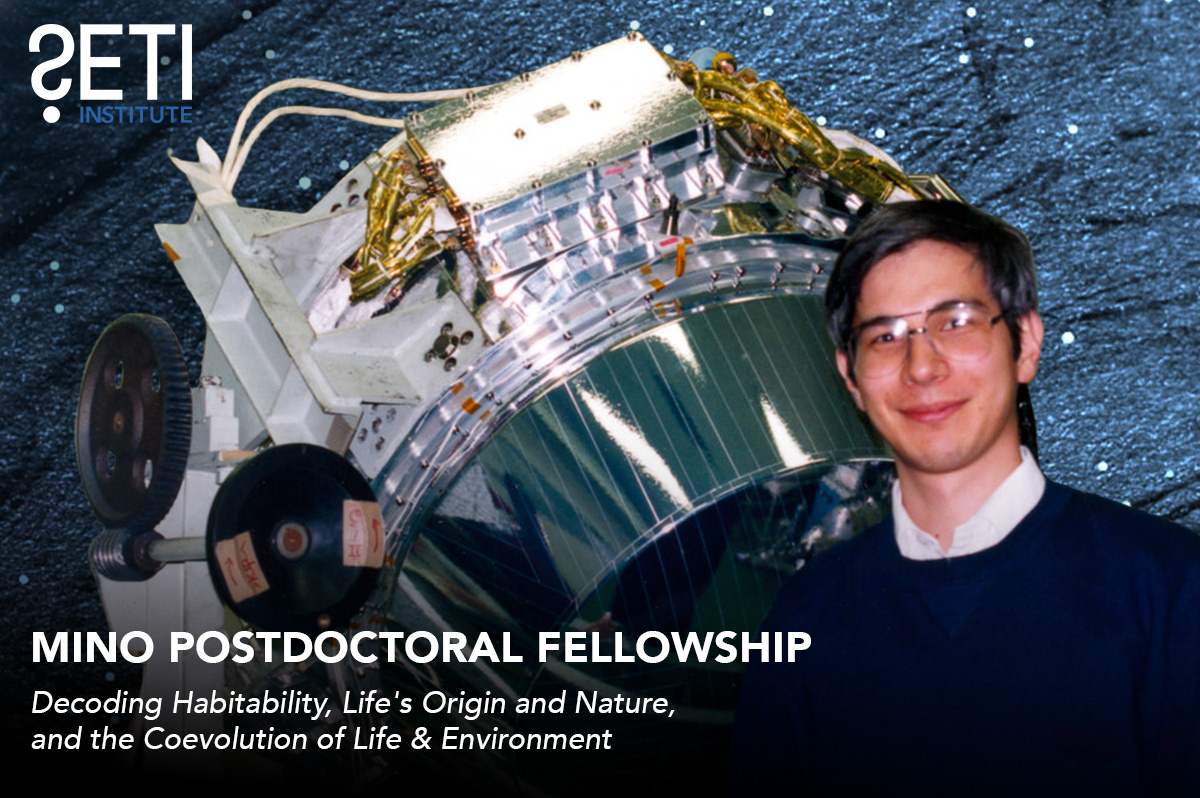
Click here for more information on the Mino Postdoctoral Fellowship and its application details.
About Minoru Freund
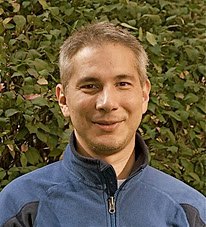 Minoru Freund (February 3, 1962 – January 17, 2012) was an accomplished physicist whose work crossed boundaries. He led pioneering efforts in nanoscale materials and neuroscience at NASA Ames Research Center. He contributed to earlier projects at NASA Goddard Space Flight Center, the Air Force Research Laboratory, and the SETI Institute, always seeking the next frontier in knowledge. He held a PhD from the Swiss Institute of Technology in Zürich (1990). Mino's peers and colleagues celebrated Mino for imagining science differently, finding connections between fields others kept apart, and asking daring questions about life, environment, and intelligence.
About the SETI Institute
Founded in 1984, the SETI Institute is a non-profit, multi-disciplinary research and education organization whose mission is to lead humanity's quest to understand the origins and prevalence of life and intelligence in the universe and share that knowledge with the world. Our research encompasses the physical and biological sciences and leverages data analytics, machine learning, and advanced signal detection technologies. The SETI Institute is a distinguished research partner for industry, academia, and government agencies, including NASA and the National Science Foundation.
Contact information
Rebecca McDonald
Director of Communications
SETI Institute
[email protected]
)