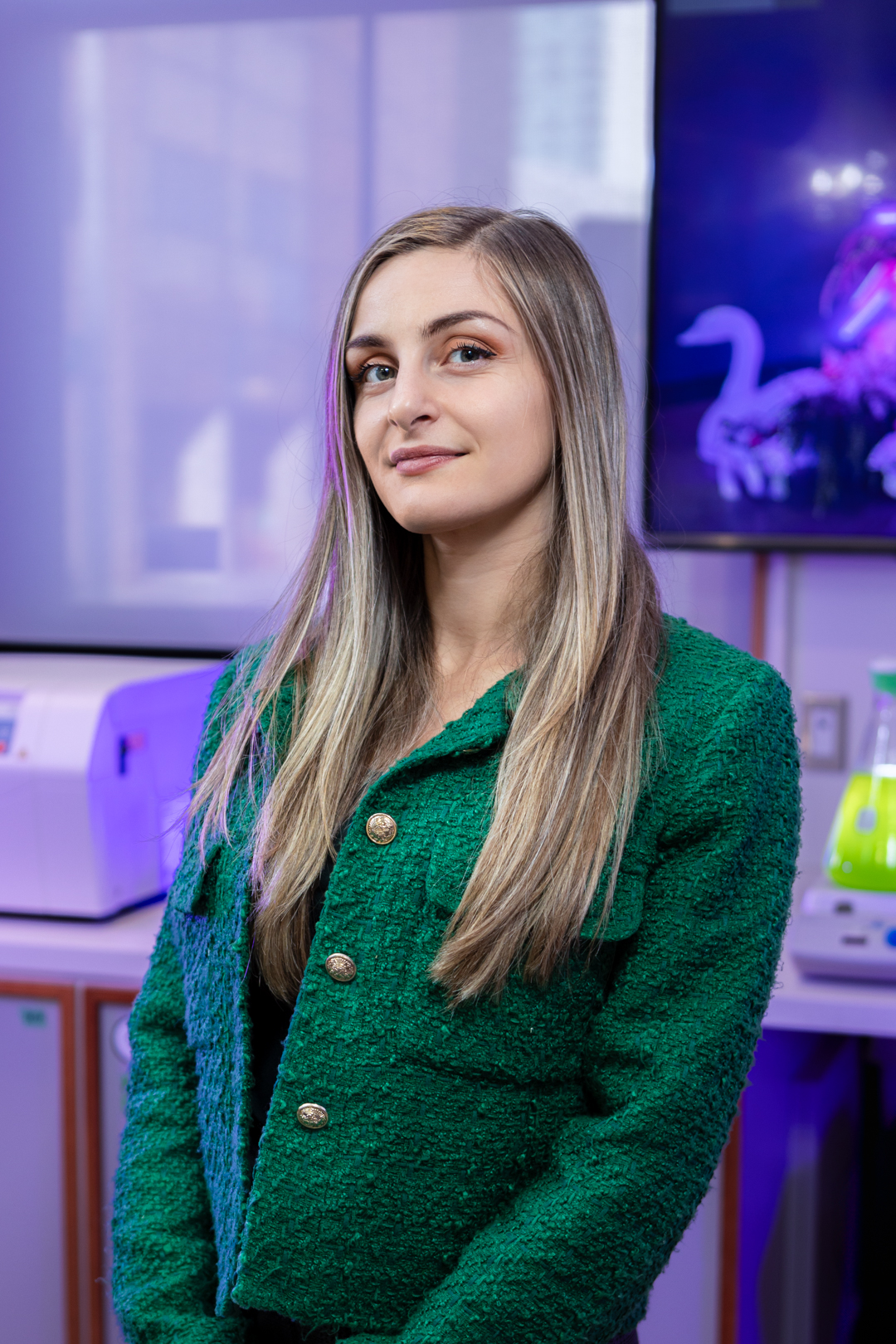
March 13, 2025, Mountain View, CA – The SETI Institute’s Artist in Residence (AIR) program announced Domenica Mediati as the recipient of its Beyond Silos STEAM residency. The residency supports STEAM educators in developing more inclusive, interdisciplinary teaching approaches that integrate art and science. Mediati is an intermedia artist and a sessional instructor in the Faculty of Education and School of Creative Arts at the University of Windsor in Ontario, Canada. She works across painting, drawing, digital animation, and bioart practices, creating landscapes and characters that reflect and explore human and non-human narratives emphasizing microbiology.
“We received highly engaging project proposals from our shortlisted candidates,” said SETI AIR Director Bettina Forget. “Domenica’s innovative project stood out as it perfectly intersects with SETI Institute research and strongly foregrounds artistic practice in STEAM Education.”
The Beyond Silos residency aims to break down disciplinary silos in art and science and create meaningful learning situations to foster innovation, risk-taking, and creative problem solving. It gives art educators financial support and resources to develop a STEAM Education project for K-12 students. Educators will complete the project during the 18-month residency in a school or in partnership with a community organization. In addition to the $14K stipend, educators will work with SETI Institute scientists, educators, and partners to develop their projects.
“I would like to thank the Beyond Silos residency advisors Emma Nordin, Director of Education at Art21, Simon Steel, SETI Institute, Deputy Director, Carl Sagan Center for Research, and Pamela Harman, SETI Institute, Director of Education for their invaluable support in helping to launch this new SETI AIR residency,” said Forget.
Since 2019, Mediati has been a leader at INCUBATOR Art Lab as a researcher, lab manager, and director of educational outreach programming. Mediati completed her BFA at the University of Windsor (2015) and her MFA at Wayne State University (2018). She has presented her artworks at various venues in the Windsor/Detroit region, as well as in Portugal and New Mexico, USA.
Mediati’s project, Cosmic Communities: Stories of Life Beyond Our World, combines hands-on BioArt, microbiology, microscopy, and digital animation practices to engage youth in SETI astrobiology research. This project is a collaboration with INCUBATOR Art Lab (https://incubatorartlab.com/), which will support the creation of educational resources for high school students.
For more information about the SETI AIR program, please visit set.org/air
About the SETI Institute
Founded in 1984, the SETI Institute is a non-profit, multi-disciplinary research and education organization whose mission is to lead humanity’s quest to understand the origins and prevalence of life and intelligence in the universe and to share that knowledge with the world. Our research encompasses the physical and biological sciences and leverages expertise in data analytics, machine learning and advanced signal detection technologies. The SETI Institute is a distinguished research partner for industry, academia and government agencies, including NASA and NSF.
Contact information
Rebecca McDonald
Director of Communications
SETI Institute
[email protected]
DOWNLOAD FULL PRESS RELEASE
)