Wednesday, Dec 18, 2024
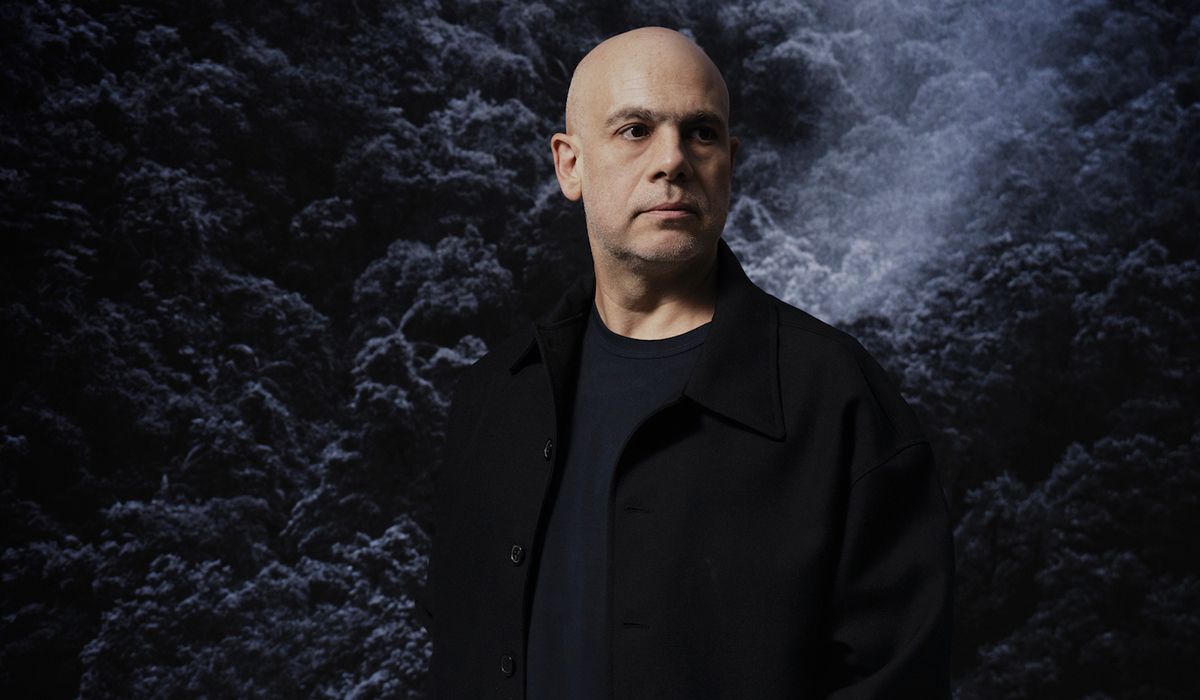
Portrait of Laurent Grasso. Credit: Tanguy Beurdeley.

The SETI Institute’s Artist in Residency (AIR) program is excited to announce that French-born conceptual artist Laurent Grasso is the winner of the Algorithmic Imaginings residency. This new SETI AIR residency explores the impact of AI technologies on art, science, and society by engaging with topics such as imaginary life, AI futures, Posthumanism, and consciousness. Laurent Grasso was one of six nominees who were invited to submit a project proposal for this residency.

Laurent Grasso creates multidisciplinary works that explore the intersections of cosmology, science, and history. He is the recipient of France’s Chevalier de l’ordre des Arts et des Lettres, the Marcel Duchamp Prize, and the Meru Art*Science Award in Bergamo, Italy. His work has been exhibited internationally at venues such as the Centre Pompidou in Paris, Mori Art Museum in Tokyo, the Kunsthaus Basel in Switzerland, the Musée d’Art Contemporain in Montréal, MASS MoCa in Massachusetts, and the Hirshhorn Museum and Sculpture Garden in Washington D.C.

By drawing on phenomena such as eclipses, auroras, and electromagnetic energy, Grasso’s films, sculptures, paintings, and photographs challenge the viewer’s perceptions by blending historical iconography with surreal, otherworldly imagery. Grasso employs techniques that create ambiguity, using anachronism, hybridity, and shifting perspectives to subvert reality and provoke new ways of thinking. Fascinated by invisible forces—whether political or electromagnetic—he investigates how these powers shape collective consciousness, offering a unique lens on history, imagination, and the unknown.

“I am absolutely delighted that Laurent is joining the SETI AIR program,” said SETI AIR program Director Bettina Forget. “All six nominees submitted exceptional proposals, but the jury was unanimous. We were compelled by Laurent’s intriguing creative concept, his thorough research, and his extensive experience collaborating with scientists and field experts. I’m very much looking forward to working with Laurent and seeing his project develop.”

The SETI AIR Algorithmic Imaginings residency is helmed by internationally recognized media art curator Zhang Ga, SETI AIR program Director Bettina Forget, and SETI AIR program Founder and Senior Advisor Charles Lindsay. Andrew Siemion, the SETI Institute’s Bernard M. Oliver Chair for SETI Research, and AI researcher Robert Alvarez, who collaborates with the SETI Institute as a mentor for its annual FDL program, bring their science and technology expertise to this residency.

This two-year residency award includes $30,000 in support and an exhibition at the prestigious ZKM | Center for Art and Media Karlsruhe, Germany. 
For more information about the SETI AIR program, please visit seti.org/air

About the SETI Institute
Founded in 1984, the SETI Institute is a non-profit, multi-disciplinary research and education organization whose mission is to lead humanity’s quest to understand the origins and prevalence of life and intelligence in the universe and share that knowledge with the world. Our research encompasses the physical and biological sciences and leverages data analytics, machine learning, and advanced signal detection technologies. The SETI Institute is a distinguished research partner for industry, academia, and government agencies, including NASA and the National Science Foundation.

Contact information
Rebecca McDonald
Director of Communications
SETI Institute
[email protected]

DOWNLOAD FULL PRESS RELEASE

News

Related News

Featured Image
Sep 8, 2026
Researchers Propose Searching the Moon for Microscopic Technosignatures
New study outlines the first quantitative framework for searching lunar regolith for microscopic technosignatures. #Press Releases #Moon #Technosignatures #Lewis Pinault #Andrew Siemion #Astrobiology #SETI #Solar System #AI and Machine Learning #Bill Diamond
Featured Image
Sep 1, 2026
The SETI Institute and ETH Zurich join forces to search for the origin of life
ETH Zurich and the SETI Institute announced a strategic scientific partnership today. The US-based research organization will provide start-up funding for a new assistant professorship and associated research activities at ETH Zurich. #Press Releases #SETI Institute #Partnerships #ETH Zurich #Bill Diamond
Featured Image
Aug 27, 2026
SETI Institute Achievements: Q2 2026 Activity Report
During the second quarter of 2026, the SETI Institute was especially active and made strong progress in research, education, outreach, and public engagement. Our scientists published over 80 peer-reviewed papers in fields such as SETI, astrobiology, planetary science, exoplanets, and heliophysics. #Activity Reports #Carl Sagan Center #Outreach #Education #AIR #Community #Research #SETI Institute
Featured Image
Aug 25, 2026
JWST Reveals a Race Against Time for Forming Planets
SETI Institute scientist Uma Gorti co-authors one of the largest JWST studies of how planet-forming disks lose their gas #Press Releases #JWST #Astronomy #Astrophysics #Uma Gorti
Featured Image
Aug 24, 2026
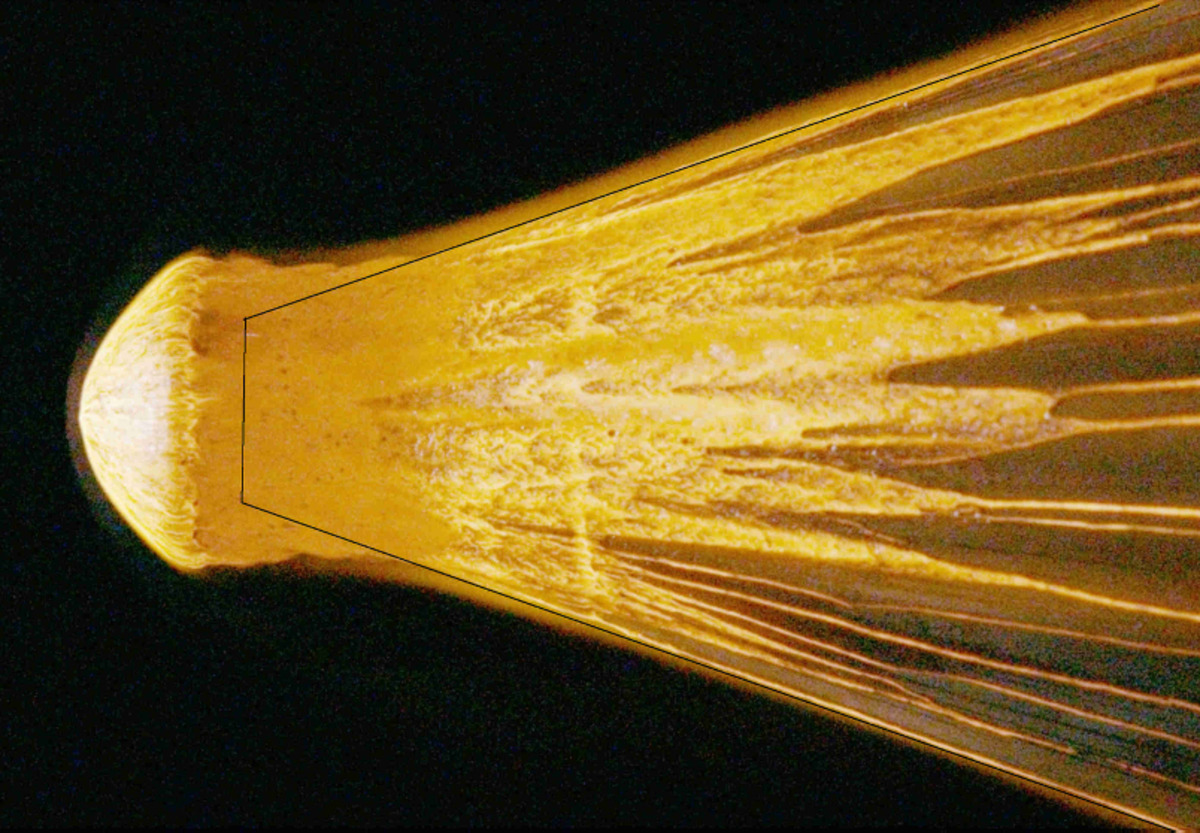
New study reveals how space rocks become meteorites
Analysis of the atmospheric passage of 75 meteorite falls identifies seven distinct processes as space rocks melt, fragment and slow before they fall as meteorites #Press Releases #Comets, Meteors, and Asteroids #Peter Jenniskens #Meteorites #Astronomy #Stuart Pilorz
Featured Image
Aug 19, 2026
SETI Institute Team Looks for a New Way to Find Resources in Space
#Press Releases #Pablo Sobron #Moon #Asteroids #Planetary Exploration #Spectroscopy #Astrobiology
Research

Related Projects

Featured Image
SkyMapper • SETI • Citizen Science • Astronomy
SkyMapper: Expanding Access to Real-time Astronomy Through a Global Astronomical Network
SkyMapper and the SETI Institute are connecting educators, students and the public to live astronomical observations through a distributed astronomical network. #SkyMapper #SETI #Citizen Science #Astronomy
Featured Image
VPL
Virtual Planetary Laboratory
How can we best assess whether an exoplanet supports life? #VPL
Featured Image
Discovery and Futures Lab
What happens if life beyond Earth is discovered? The Discovery and Futures Lab at the SETI Institute fosters novel and anticipatory research at the intersection of science, society, our planet, and the search for life beyond Earth.  #Discovery and Futures Lab
Support Us

Support the
SETI Institute

Scientists are getting closer in their search for life beyond earth. But with limited federal funding for the search for extraterrestrial intelligence, supporters are the reason cutting-edge scientists can keep their eyes on the sky.