Mountain View, CA - Asteroid Day, June 30th - What do astrophysicist Steven Hawking, Queen guitarist Brian May and the country of Luxembourg have in common? They’re all key figures in Asteroid Day - a UN sanctioned day of education to raise awareness about protecting our planet from dangerous impacts from space.
Asteroid Day is June 30th, the anniversary of the 1908 Tunguska impact, when a space rock, approximately 120 ft wide detonated in the sky, the largest impact in recent history. Asteroids and comets remain a threat to Earth.
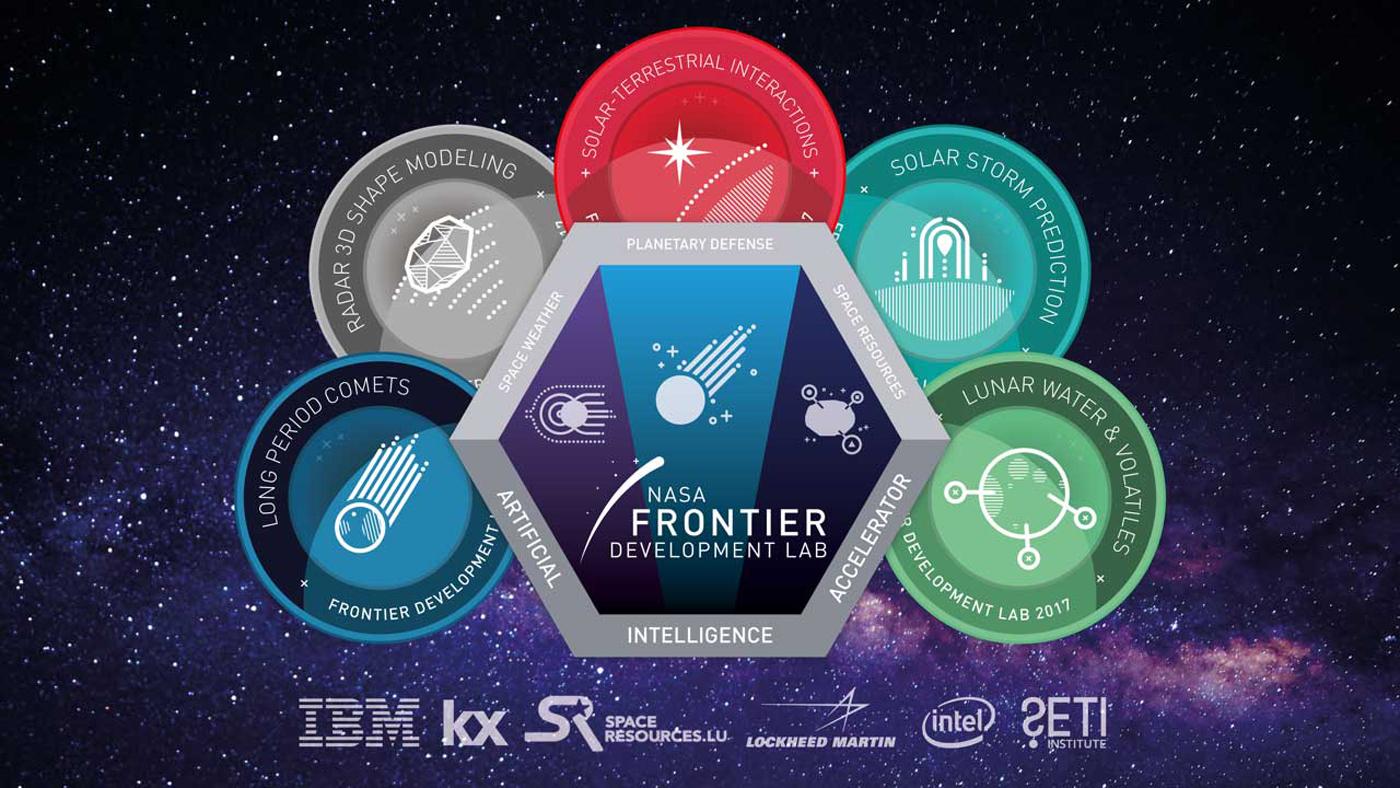
To assist in NASA’s efforts to tackle the challenge of understanding space hazards and knowing what to do about them, the Frontier Development Lab (FDL) has brought together a team of expert researchers and invited them to apply artificial intelligence to develop techniques to help protect our planet from space threats such as asteroids, comets and solar storms.
FDL is an applied artificial intelligence research accelerator and public / private partnership between NASA Ames Research Center and the SETI Institute. The program tackles knowledge gaps in space science by pairing machine learning and deep learning expertise with planetary scientists and heliophysicists at the PhD level. Interdisciplinary teams address tightly defined problems and through rapid iteration and prototyping create outputs with meaningful application to the space program.
FDL features partnerships with Luxembourg Space Resources and technology leaders in artificial intelligence from the private sector and academia including IBM, Nvidia, Lockheed Martin, USC Mascale, Kx Systems, Miso Technologies and Intel. Partners bring advanced GPU hardware, software and cloud-based resources, and provide coaching and support on cutting edge approaches.
Entering its second year, FDL strives to create research outcomes that support NASA goals, while simultaneously showcasing cutting-edge partner capabilities in deep learning and other artificial intelligence techniques.
“Grand challenges like planetary defense require ingenious new approaches. We wanted to create a platform that industrializes breakthrough work useful to the space program and the task of protecting our planet” says FDL Director, James Parr.
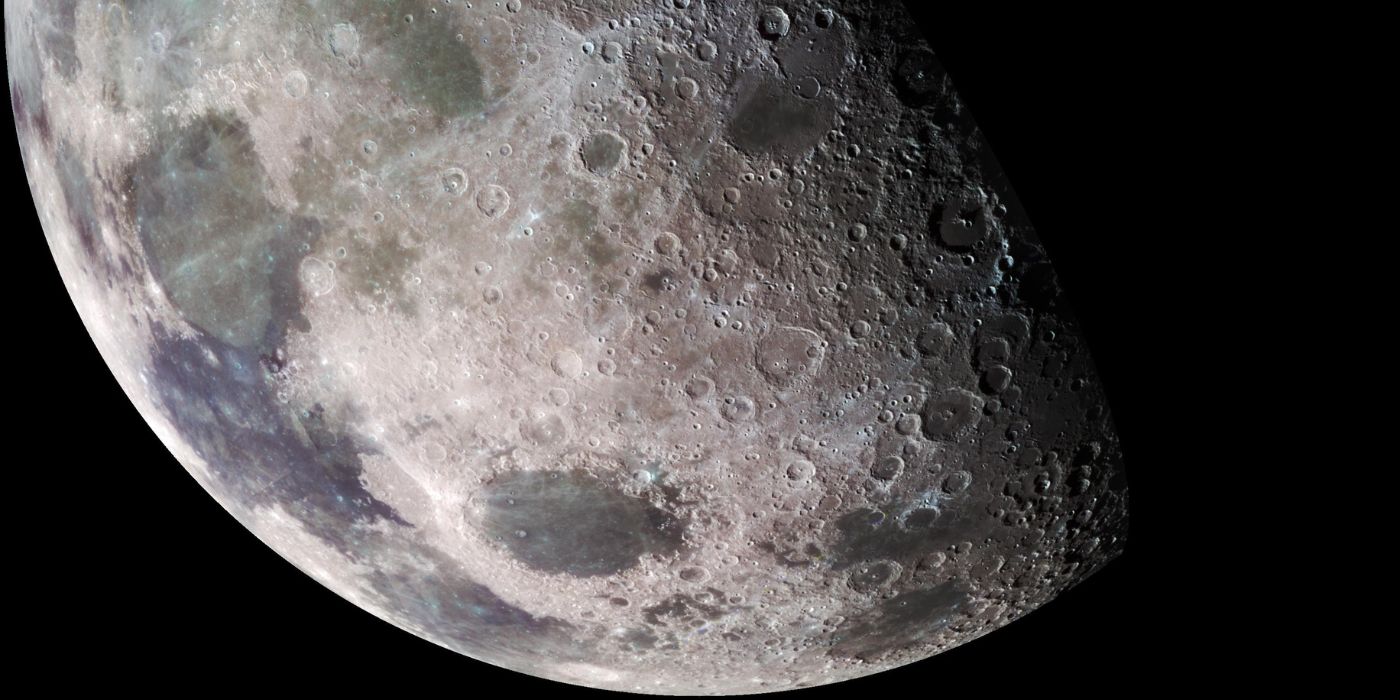
To this end, exemplary PhD researchers from around the world are gathered at FDL to tackle planetary defense and space weather challenges such as (1) using machine vision and deep learning to locate and model the orbits of long-period comets (2) automate the translation of 2D sparse radar images of asteroids into accurate 3D models to help determine shape and spin (3) use massive data mining techniques to look for new, yet unidentified space weather relationships between our star and Earth (4) use machine intelligence to detect early warning indicators of detrimental solar storms. The FDL team is also (5) apply machine vision and other data fusion techniques to look for landing sites on the Moon for obtaining lunar water.
“We are delighted to be hosting the FDL research accelerator and providing mentor support in the space sciences,” notes Bill Diamond, SETI Institute President and CEO. “This program, which brings together top postdoctoral researchers in machine learning and the physical sciences, has the potential to deliver groundbreaking results, and serve as a model for demonstrating the power of public/private partnerships and machine intelligence to tackle problems that affect everyone.”
About the SETI Institute
Founded in 1984, the SETI Institute is a non-profit, multi-disciplinary research and education organization whose mission is to lead humanity’s quest to understand the origins and prevalence of life and intelligence in the Universe and to share that knowledge with the world. Our research encompasses the physical and biological sciences and leverages expertise in data analytics, machine learning and advanced signal detection technologies. The SETI Institute is a distinguished research partner for industry, academia and government agencies, including NASA and NSF.
Contact information
James Parr
FDL Director
Email: [email protected]
Bill Diamond
SETI Institute
Email: [email protected]
Tel: +1 650 960-4510
Seth Shostak, Media Contact
SETI Institute
Email: [email protected]
Tel: +1 650 960-4530
News
Related News
Researchers Propose Searching the Moon for Microscopic Technosignatures
New study outlines the first quantitative framework for searching lunar regolith for microscopic technosignatures. #Press Releases #Moon #Technosignatures #Lewis Pinault #Andrew Siemion #Astrobiology #SETI #Solar System #AI and Machine Learning #Bill Diamond
The SETI Institute and ETH Zurich join forces to search for the origin of life
ETH Zurich and the SETI Institute announced a strategic scientific partnership today. The US-based research organization will provide start-up funding for a new assistant professorship and associated research activities at ETH Zurich. #Press Releases #SETI Institute #Partnerships #ETH Zurich #Bill Diamond
New Meteor Shower Identifies Asteroid as a Cloaked Comet
#Comets, Meteors, and Asteroids #CAMS #Peter Jenniskens
SETI Institute Achievements: Q2 2026 Activity Report
During the second quarter of 2026, the SETI Institute was especially active and made strong progress in research, education, outreach, and public engagement. Our scientists published over 80 peer-reviewed papers in fields such as SETI, astrobiology, planetary science, exoplanets, and heliophysics. #Activity Reports #Carl Sagan Center #Outreach #Education #AIR #Community #Research #SETI Institute
JWST Reveals a Race Against Time for Forming Planets
SETI Institute scientist Uma Gorti co-authors one of the largest JWST studies of how planet-forming disks lose their gas #Press Releases #JWST #Astronomy #Astrophysics #Uma Gorti
New study reveals how space rocks become meteorites
Analysis of the atmospheric passage of 75 meteorite falls identifies seven distinct processes as space rocks melt, fragment and slow before they fall as meteorites #Press Releases #Comets, Meteors, and Asteroids #Peter Jenniskens #Meteorites #Astronomy #Stuart PilorzResearch
Related Projects
SkyMapper: Expanding Access to Real-time Astronomy Through a Global Astronomical Network
SkyMapper and the SETI Institute are connecting educators, students and the public to live astronomical observations through a distributed astronomical network. #SkyMapper #SETI #Citizen Science #Astronomy
Virtual Planetary Laboratory
How can we best assess whether an exoplanet supports life? #VPL
Discovery and Futures Lab
What happens if life beyond Earth is discovered? The Discovery and Futures Lab at the SETI Institute fosters novel and anticipatory research at the intersection of science, society, our planet, and the search for life beyond Earth. #Discovery and Futures LabSupport the
SETI Institute
Scientists are getting closer in their search for life beyond earth. But with limited federal funding for the search for extraterrestrial intelligence, supporters are the reason cutting-edge scientists can keep their eyes on the sky.