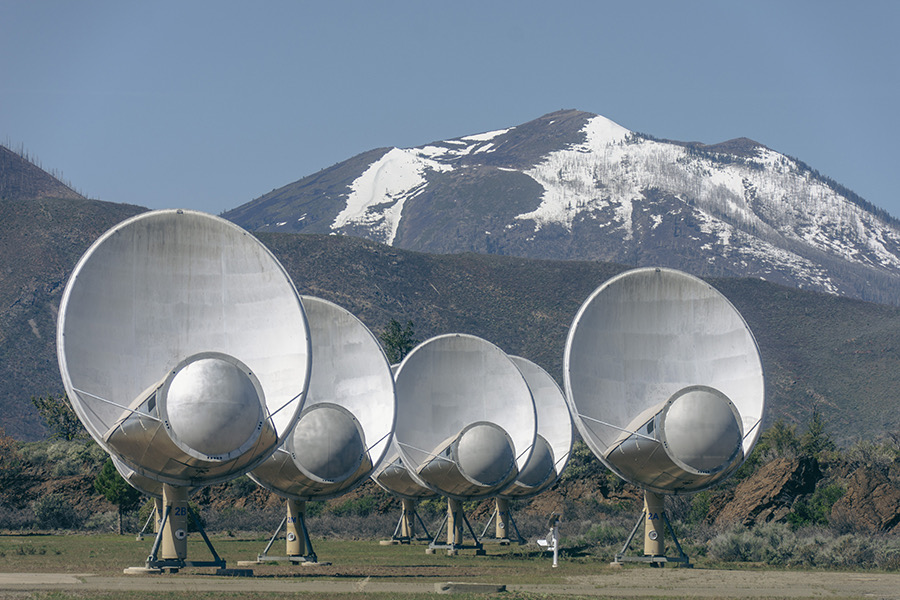
Middlesex Community College is working with the SETI Institute to allow students to participate in the ARISE Labs. Through this collaboration, students in MCC Professor of Physics Madhu Dhar’s astronomy class gain access to live digital data from the Allen Telescope Array (ATA).
“This collaboration represents a shared commitment to broadening participation in STEM (science, technology, engineering, mathematics) and making high-quality research experiences accessible to students who might not otherwise have such opportunities,” Dhar said. “Our students will not only analyze real astronomical signals but also experience collaborative, research-informed STEM learning typically reserved for larger research institutions. This partnership is especially meaningful because MCC is the first college in Massachusetts to collaborate with the SETI Institute in this capacity.”
Working with real-time datasets, students collaborate with professionals on meaningful, research-based labs to gain a deeper understanding of how scientific discovery happens. Dhar believes students gain increased confidence in data analysis, critical thinking, and collaborative problem-solving. Participation in the labs also provides networking opportunities within the scientific community.
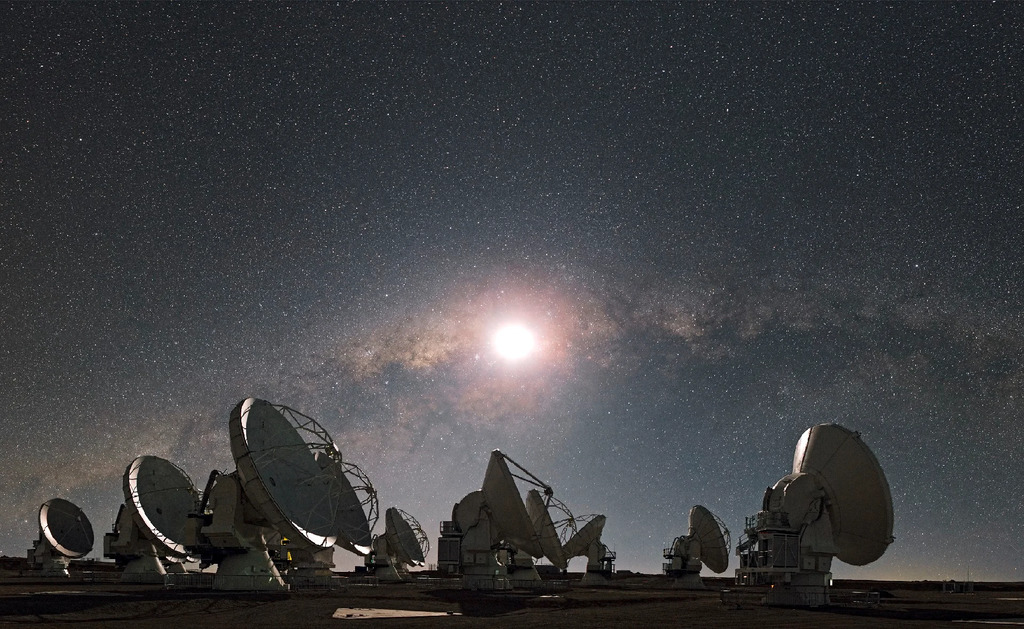
As part of the labs, MCC students analyze live or archived radio astronomy data, investigate signals, explore concepts, and learn how large-scale telescope arrays are used in research. They engage in data interpretation, hypothesis testing, and collaborative discussion.
“Hands-on learning bridges theory and practice,” Dhar said. “In physics and astronomy, abstract concepts can feel distant or inaccessible. When students work directly with real data from instruments like the Allen Telescope Array, the science becomes tangible and meaningful. Experiential learning improves retention, deepens conceptual understanding, and increases student engagement. It also helps students envision themselves as scientists rather than just learners of science.”
A nonprofit research organization, the SETI Institute is dedicated to understanding the prevalence of life and intelligence in the universe and the search for life beyond earth. The SETI Institute brings together scientists, educators and researchers working across astronomy, planetary science, astrobiology and related fields.
Part of the SETI Institute’s education initiatives, ARISE Labs provide students with access to authentic scientific data and research tools. These labs are designed to immerse students in real-world scientific inquiry rather than simulated exercises.
"Through the ARISE project – hosted at the SETI Institute and funded by generous grants from Amateur Radio Digital Communications (ARDC) – we're working to expand access to high-quality resources in radio astronomy and SETI education,” said Joel T. Earwicker, SETI Institute Assistant Research Astronomer – ARISE Lead Developer. “These resources include free and hands-on curriculum, lab equipment, and access to the ATA for both instructors and students. Our collaboration with MCC is also helping the ARISE project to expand its reach by piloting fully online lab activities, making these experiences accessible to more learners while investing in educators and the next generation of researchers. Initiatives like this help us bring real scientific exploration to more students, regardless of where or how they're learning. Here is a link to their website.”
MCC business student Heet Shah, of Lowell, attended a lecture by Earwicker in his astronomy class. In addition to being introduced to the SETI Institute, Shah enjoyed hearing about the Drake Equation and the search for observable evidence of technologically advanced life.
“This experience really deepened my understanding of how interconnected different scientific disciplines are – astronomy, biology, and even sociology all feed into the question of whether we're alone in the universe,” Shah said. “It was eye-opening to see how much of the Drake Equation is now grounded in real data – like the thousands of confirmed exoplanets – versus what remains unknown. It was inspiring to see how MCC's partnership with the SETI Institute brings that kind of cutting-edge research directly into the classroom.”
Julia Pioli is an MCC business administration student, of Winchester. After attending Earwicker’s lecture, Pioli completed the Decoding Earth Lab. Calculating the altitude necessary for geostationary orbit, they answered questions about the how the biology of Earth is detected from space.
“This experience highlighted the interdisciplinary nature of the search, blending astronomy and biology with the social sciences to address the probability of life elsewhere,” Pioli said. “I learned that we have only begun to scratch the surface, but with access to SETI and their labs, we are sure to dig much deeper, furthering scientific discoveries and our own knowledge.”
)