)

Author: Rebecca (Becca) Robinson
Thursday, Mar 26, 2026
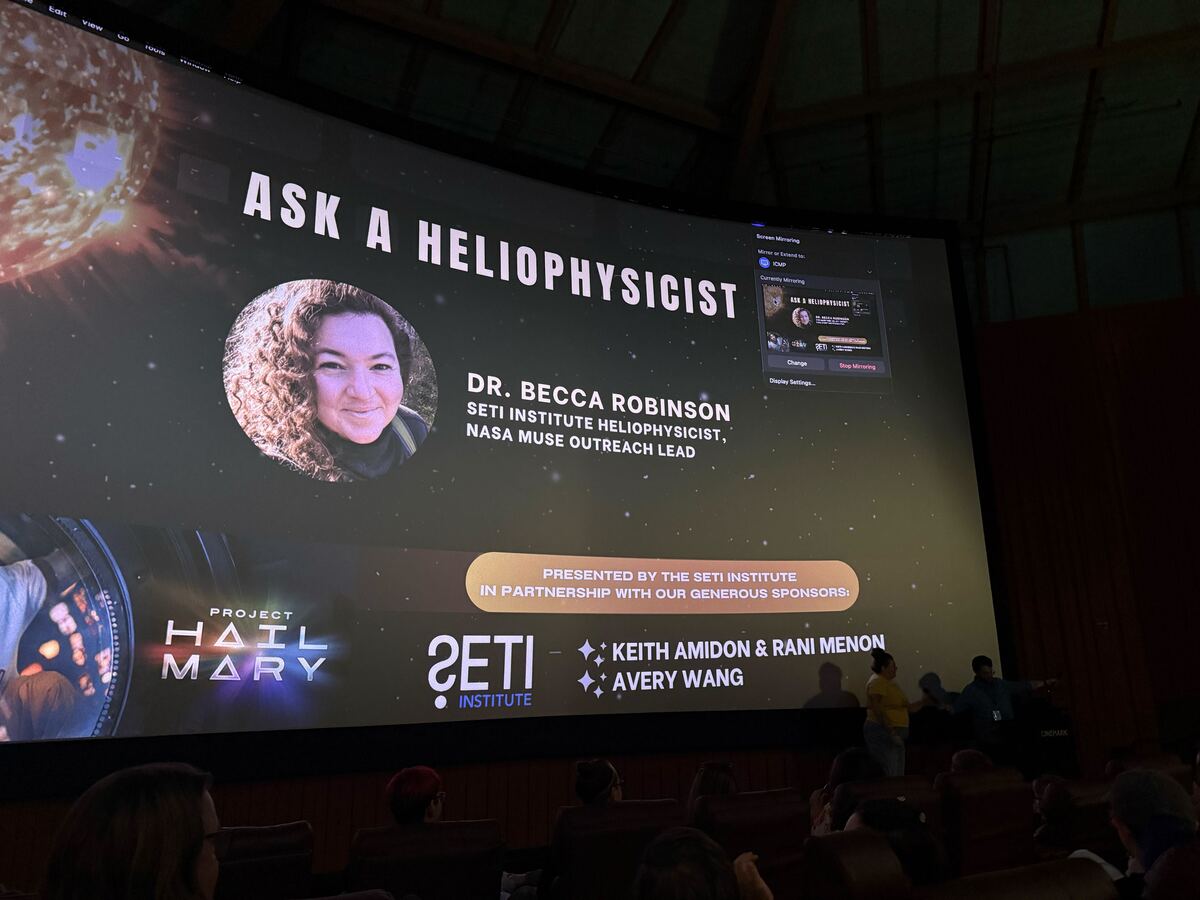
Q&A with Dr. Becca Robinson after the Project Hail Mary film screening, March 20, 2026. Image Credit: Chrissy Richey.
At a Glance:
|
Listen to this article read by AI:
Last week, the SETI Institute hosted a special opening-night screening of the film Project Hail Mary, based on the novel by Andy Weir. When the theater doors opened to our line of buzzing patrons, we nestled into Century Cinema’s cozy reclining chairs with buttery popcorn and sparkling sodas, ready to witness the sci-fi adventure film of the year!
The film opens with Ryland Grace, confused, awakening from an induced coma after a long journey through interstellar space. When it comes to Grace’s character, the film diverges from the book almost immediately. Book Grace is frightened, desperate to thread together his memories, and seems to find comfort in grounding himself in basic physical principles, even though he can’t quite remember how he knows them. Film Grace is all of those things too, but he’s portrayed to have, to put it like a true Astrophysics Barbie, significantly more of a mojo-dojo-casa-house vibe than Book Grace. This is unsurprising given the Ryan Gosling of it all, but still.

Credit: Amazon MGM Studios.
For example, Film Grace drinks heavily early on, while Book Grace only celebrates after finding hope. Film Grace reacts to the world's fate with detachment, Book Grace panics for his students. Despite these differences, both characters ultimately save the day with physics, which I love.
After the film, I had the honor of hosting the Ask a Heliophysicist portion of the evening. One of our patrons asked me to describe my favorite bit of science from the story, and I noted that I appreciate how each enormous problem that Grace and Rocky had to solve was solved by one elementary physics problem at a time. This is abundantly clear in the book, and I wish the film had more time to explore the story's problem-solving aspect. Each step forward was taken by solving for mass, for gravity, for time, for relativity – even though relativity can be a complicated concept to grasp, no four-dimensional spacetime continuum equations were needed to tackle the task at hand. No quantum chemistry, no magnetohydrodynamics, no super hard stuff – just conceptual, foundational, practical applied physics.
I was delighted to field such questions from our guests; we hopped around from physics to fiction, from astrobiology to social psychology, from Book Grace vs. Film Grace to how to identify parallel character arcs, and how to encourage humanity to work together in the face of extinction. One patron asked whether it was realistic how amateur astronomers in the story made such a huge contribution to understanding the star-dimming effects of astrophage, and I enthusiastically confirmed! “Amateur” astronomers are usually anything but amateurs, and citizen scientists continue to make tremendous discoveries that science teams often miss. Like raising children, raising a species takes a village and many more perspectives than we have dimensions.
I’d like to thank everyone who joined us for the SETI Institute’s opening-night screening of Project Hail Mary. I hope to see you all at the next one!
Keep Shining,
B
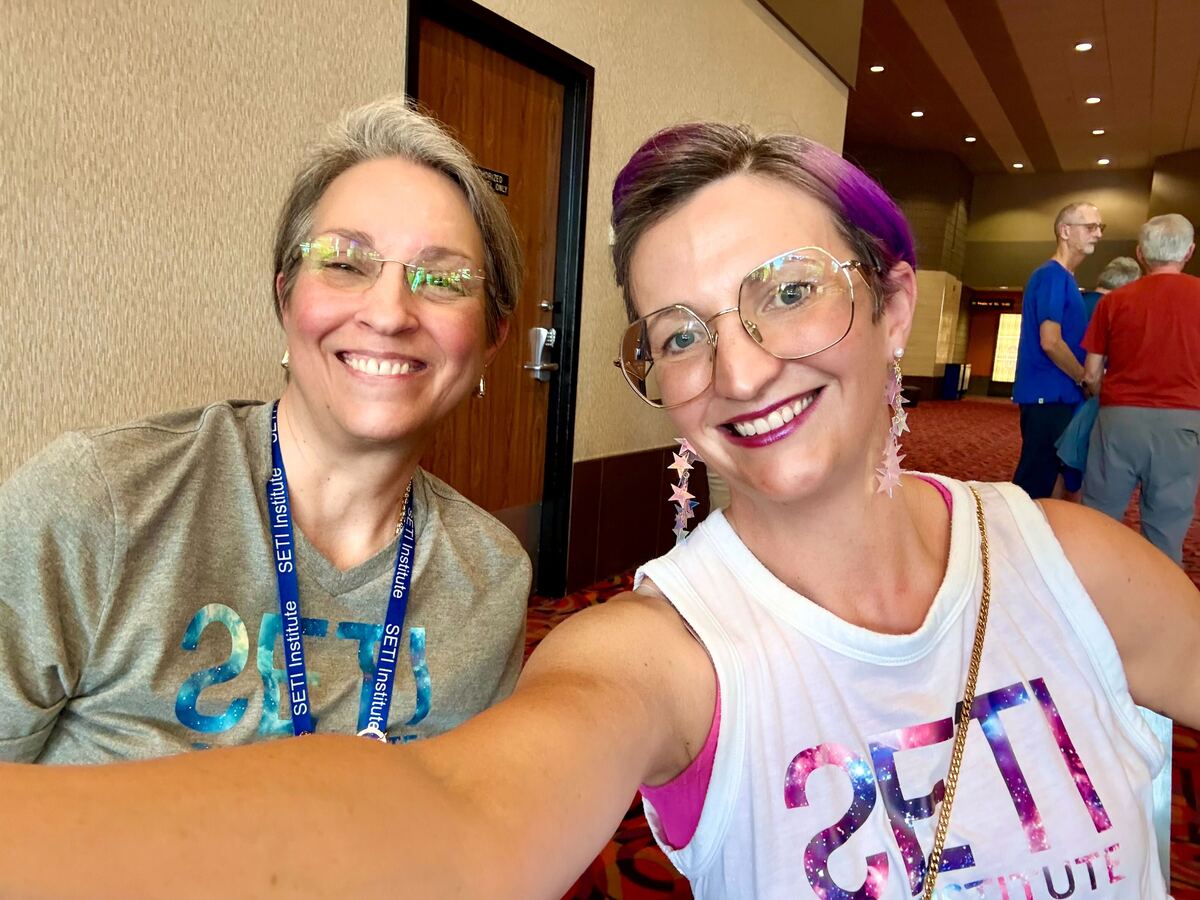
SETI Institute team, Lindarae Polaha and Chrissy Richey at the Project Hail Mary screening on March 20, 2026. Image Credit: Chrissy Richey.







News
Related News
Sep 4, 2026
Why Do Some Solar Eruptions Fail?
#Blog #Rebecca Robinson
Sep 1, 2026
The SETI Institute and ETH Zurich join forces to search for the origin of life
ETH Zurich and the SETI Institute announced a strategic scientific partnership today. The US-based research organization will provide start-up funding for a new assistant professorship and associated research activities at ETH Zurich. #Press Releases #SETI Institute #Partnerships #ETH Zurich #Bill Diamond
Aug 27, 2026
SETI Institute Achievements: Q2 2026 Activity Report
During the second quarter of 2026, the SETI Institute was especially active and made strong progress in research, education, outreach, and public engagement. Our scientists published over 80 peer-reviewed papers in fields such as SETI, astrobiology, planetary science, exoplanets, and heliophysics. #Activity Reports #Carl Sagan Center #Outreach #Education #AIR #Community #Research #SETI Institute
Aug 21, 2026
Look Up: A Lunar Eclipse on August 27
#Eclipse #Community #Andrew Fraknoi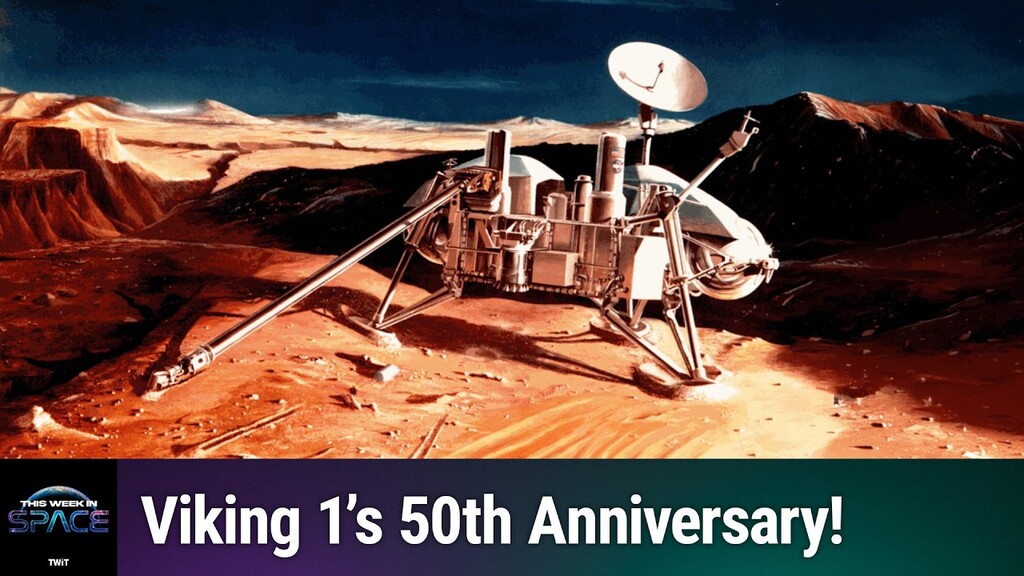
Aug 13, 2026
SETI Institute In the News: July Roundup 2026
#SETI Institute in the News #SETI Institute #Community #Peter Jenniskens #Lucian Walkowicz #Chelsea Haramia #Pascal Lee #Bill Diamond #Seth Shostak #Meteorites #SETI #UAPs #NASA Missions and Observatories #Discovery and Futures Lab #Mars
Jul 20, 2026
SETI Institute In the News: June Roundup 2026
Throughout June 2026, SETI Institute scientists, affiliates, and collaborators contributed to discussions spanning interstellar visitors, planetary science, technosignature searches, animal cognition, and the scientific process guiding the search for life beyond Earth. #SETI Institute in the News #SETI Institute #Community #Eduardo Bendek #Optical SETI #SETI #3I/ATLAS #ATA #Comets, Meteors, and Asteroids #Solar System #Franck Marchis #Ariel Graykowski #Jill Tarter #Vishal Gajjar #Radio Astronomy #Bill Diamond #Lori Marino
Sep 4, 2026
#Blog
#Rebecca Robinson
Sep 1, 2026
The SETI Institute and ETH Zurich join forces to search for the origin of life
ETH Zurich and the SETI Institute announced a strategic scientific partnership today. The US-based research organization will provide start-up funding for a new assistant professorship and associated research activities at ETH Zurich.
#Press Releases
#SETI Institute
#Partnerships
#ETH Zurich
#Bill Diamond
Aug 27, 2026
SETI Institute Achievements: Q2 2026 Activity Report
During the second quarter of 2026, the SETI Institute was especially active and made strong progress in research, education, outreach, and public engagement. Our scientists published over 80 peer-reviewed papers in fields such as SETI, astrobiology, planetary science, exoplanets, and heliophysics.
#Activity Reports
#Carl Sagan Center
#Outreach
#Education
#AIR
#Community
#Research
#SETI Institute
Aug 21, 2026
#Eclipse
#Community
#Andrew Fraknoi
Look Up: A Lunar Eclipse on August 27
Aug 13, 2026
#SETI Institute in the News
#SETI Institute
#Community
#Peter Jenniskens
#Lucian Walkowicz
#Chelsea Haramia
#Pascal Lee
#Bill Diamond
#Seth Shostak
#Meteorites
#SETI
#UAPs
#NASA Missions and Observatories
#Discovery and Futures Lab
#Mars
SETI Institute In the News: July Roundup 2026
Jul 20, 2026
SETI Institute In the News: June Roundup 2026
Throughout June 2026, SETI Institute scientists, affiliates, and collaborators contributed to discussions spanning interstellar visitors, planetary science, technosignature searches, animal cognition, and the scientific process guiding the search for life beyond Earth.
#SETI Institute in the News
#SETI Institute
#Community
#Eduardo Bendek
#Optical SETI
#SETI
#3I/ATLAS
#ATA
#Comets, Meteors, and Asteroids
#Solar System
#Franck Marchis
#Ariel Graykowski
#Jill Tarter
#Vishal Gajjar
#Radio Astronomy
#Bill Diamond
#Lori Marino
Research
Related Projects

SkyMapper • SETI • Citizen Science • Astronomy
SkyMapper: Expanding Access to Real-time Astronomy Through a Global Astronomical Network
SkyMapper and the SETI Institute are connecting educators, students and the public to live astronomical observations through a distributed astronomical network. #SkyMapper #SETI #Citizen Science #Astronomy
VPL
Virtual Planetary Laboratory
How can we best assess whether an exoplanet supports life? #VPL
Discovery and Futures Lab
Discovery and Futures Lab
What happens if life beyond Earth is discovered? The Discovery and Futures Lab at the SETI Institute fosters novel and anticipatory research at the intersection of science, society, our planet, and the search for life beyond Earth. #Discovery and Futures Lab
May 17, 2026
SkyMapper: Expanding Access to Real-time Astronomy Through a Global Astronomical Network
SkyMapper and the SETI Institute are connecting educators, students and the public to live astronomical observations through a distributed astronomical network.
#SkyMapper
#SETI
#Citizen Science
#Astronomy
May 5, 2026
Virtual Planetary Laboratory
How can we best assess whether an exoplanet supports life?
#VPL
Apr 16, 2026
Discovery and Futures Lab
What happens if life beyond Earth is discovered? The Discovery and Futures Lab at the SETI Institute fosters novel and anticipatory research at the intersection of science, society, our planet, and the search for life beyond Earth.
#Discovery and Futures Lab
Support Us
Support the
SETI Institute
Scientists are getting closer in their search for life beyond earth. But with limited federal funding for the search for extraterrestrial intelligence, supporters are the reason cutting-edge scientists can keep their eyes on the sky.