








Wednesday, Nov 02, 2022

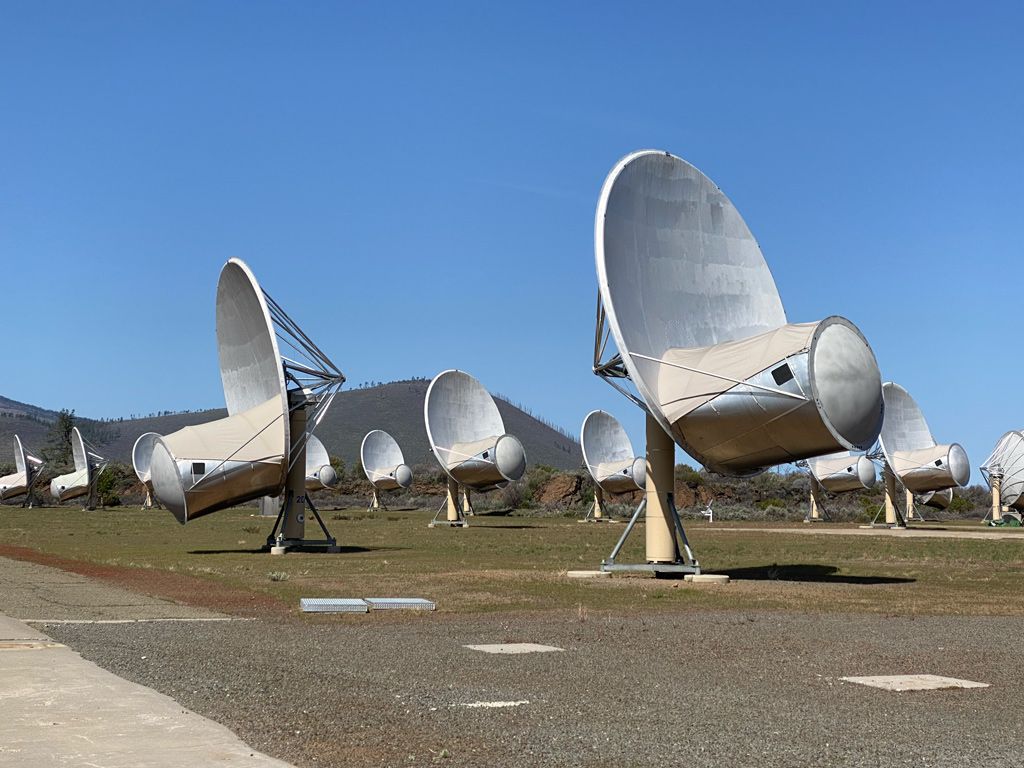
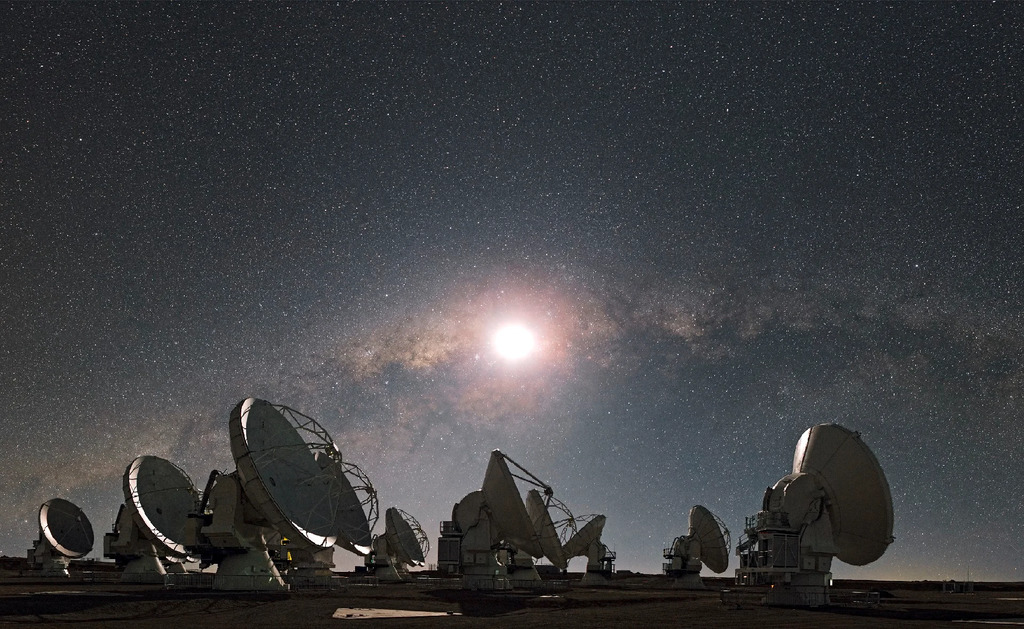
The Allen Telescope Array in Hat Creek, CA. Image Credit: Rebecca McDonald/SETI Institute.

The SETI Institute's Allen Telescope Array (ATA) has joined the quest to understand Fast Radio Bursts (FRBs), detecting eight bursts from the repeater FRB20220912a over the last few weeks. FRBs are bright flashes of radio light in the sky that last for only milliseconds. The higher frequencies from FRBs arrive before the lower frequencies, like a descending slide whistle, a characteristic known as a high dispersion measure (DM). These high DMs indicate that FRBs originate in other galaxies, but much is still unknown about their astrophysical origins. Fittingly, as humans on Earth celebrated Diwali, FRB20220912a put on a celebratory light show in the sky!

"It is absolutely great to witness the ATA effectively responding to real triggers of different astrophysical events and playing an important role in cutting-edge radio astronomy science," said Wael Farah, research scientist at the SETI Institute.

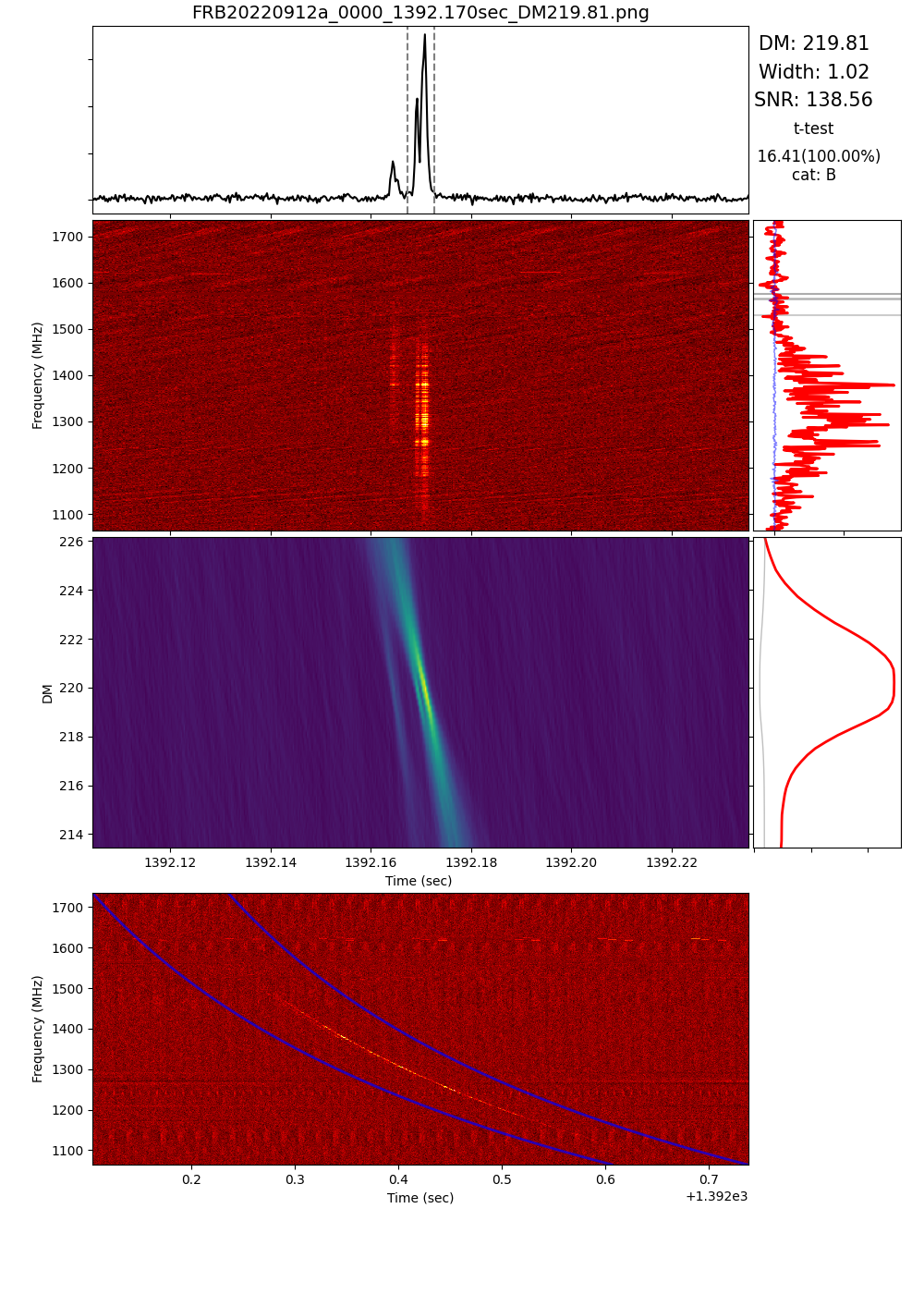
The figure below shows one of the ATA's recent FRB detections - the topmost plot shows a complex, multi-peaked profile, indicating interesting emission physics at work. The bottom-most plot shows the "slide-whistle" behavior, showing that the burst came from extragalactic distances.

And FRBs aren't the only explosions in space that the ATA has been observing. The refurbishment program of the Allen Telescope Array has turned the instrument into a facility capable of swiftly responding to calls for observations of various astronomical transient events. The ability to execute this kind of observing was proven last month when the ATA recorded data on and detected the afterglow of a bright supernova at an unprecedented timescale as reported in The Astronomer’s Telegram here.

"We knew from other telescope reports that FRB20220912a was in an active state, but it took us a few nights to finally catch a burst with the ATA,” said Sofia Sheikh, NSF MPS-ASCEND Postdoctoral Fellow at the SETI Institute. “That made it even more exciting.”

These results are published in The Astronomer’s Telegram here.

News

Related News

Featured Image
Sep 8, 2026
Researchers Propose Searching the Moon for Microscopic Technosignatures
New study outlines the first quantitative framework for searching lunar regolith for microscopic technosignatures. #Press Releases #Moon #Technosignatures #Lewis Pinault #Andrew Siemion #Astrobiology #SETI #Solar System #AI and Machine Learning #Bill Diamond
Featured Image
Sep 1, 2026
The SETI Institute and ETH Zurich join forces to search for the origin of life
ETH Zurich and the SETI Institute announced a strategic scientific partnership today. The US-based research organization will provide start-up funding for a new assistant professorship and associated research activities at ETH Zurich. #Press Releases #SETI Institute #Partnerships #ETH Zurich #Bill Diamond
Featured Image
Aug 27, 2026
SETI Institute Achievements: Q2 2026 Activity Report
During the second quarter of 2026, the SETI Institute was especially active and made strong progress in research, education, outreach, and public engagement. Our scientists published over 80 peer-reviewed papers in fields such as SETI, astrobiology, planetary science, exoplanets, and heliophysics. #Activity Reports #Carl Sagan Center #Outreach #Education #AIR #Community #Research #SETI Institute
Featured Image
Aug 13, 2026
SETI Institute In the News: July Roundup 2026
#SETI Institute in the News #SETI Institute #Community #Peter Jenniskens #Lucian Walkowicz #Chelsea Haramia #Pascal Lee #Bill Diamond #Seth Shostak #Meteorites #SETI #UAPs #NASA Missions and Observatories #Discovery and Futures Lab #Mars
Featured Image
Jul 20, 2026
SETI Institute In the News: June Roundup 2026
Throughout June 2026, SETI Institute scientists, affiliates, and collaborators contributed to discussions spanning interstellar visitors, planetary science, technosignature searches, animal cognition, and the scientific process guiding the search for life beyond Earth. #SETI Institute in the News #SETI Institute #Community #Eduardo Bendek #Optical SETI #SETI #3I/ATLAS #ATA #Comets, Meteors, and Asteroids #Solar System #Franck Marchis #Ariel Graykowski #Jill Tarter #Vishal Gajjar #Radio Astronomy #Bill Diamond #Lori Marino
Featured Image
Jul 10, 2026
SETI Institute Achievements: Q1 2026 Activity Report
#Activity Reports #Carl Sagan Center #Outreach #Education #AIR #Community #Research #SETI Institute
Research

Related Projects

Featured Image
SkyMapper • SETI • Citizen Science • Astronomy
SkyMapper: Expanding Access to Real-time Astronomy Through a Global Astronomical Network
SkyMapper and the SETI Institute are connecting educators, students and the public to live astronomical observations through a distributed astronomical network. #SkyMapper #SETI #Citizen Science #Astronomy
Featured Image
VPL
Virtual Planetary Laboratory
How can we best assess whether an exoplanet supports life? #VPL
Featured Image
Discovery and Futures Lab
What happens if life beyond Earth is discovered? The Discovery and Futures Lab at the SETI Institute fosters novel and anticipatory research at the intersection of science, society, our planet, and the search for life beyond Earth.  #Discovery and Futures Lab
Support Us

Support the
SETI Institute

Scientists are getting closer in their search for life beyond earth. But with limited federal funding for the search for extraterrestrial intelligence, supporters are the reason cutting-edge scientists can keep their eyes on the sky.